
In This Article
Adventure motorcycling has evolved into one of the most exciting ways to explore the world on two wheels. Whether you’re navigating technical singletrack trails or cruising down highways toward distant horizons, your adventure motorcycle helmet serves as the critical barrier between your head and the unforgiving elements. However, choosing the right adventure motorcycle helmet isn’t just about protection—it’s about finding that perfect balance between on-road comfort and off-road capability that transforms every ride into an unforgettable journey.
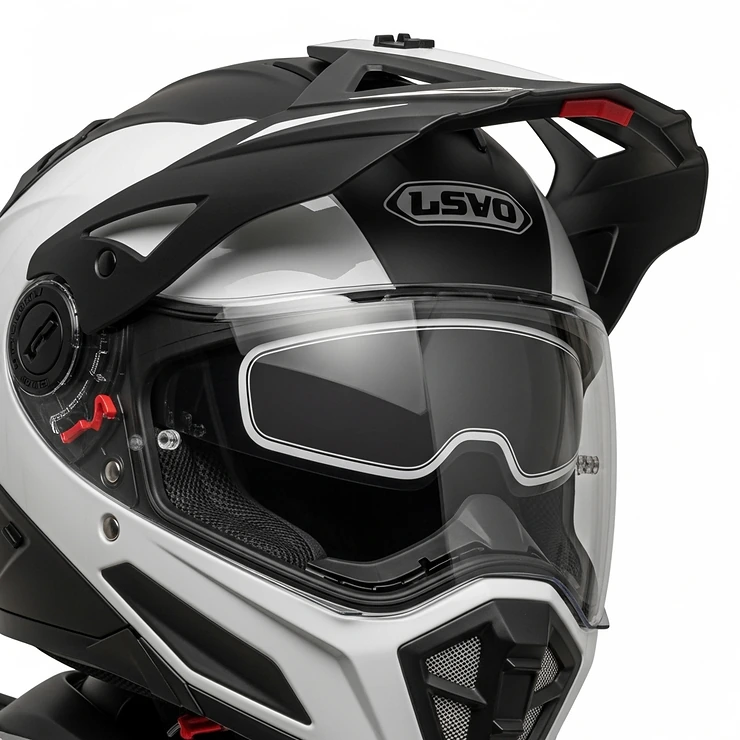
The adventure motorcycle helmet market has exploded in recent years, with manufacturers racing to create lids that can handle everything from dusty desert crossings to high-speed highway stretches. These versatile helmets combine the best features of traditional street helmets with the rugged functionality of motocross gear, creating something truly unique for modern adventure riders. Moreover, today’s adventure motorcycle helmets incorporate cutting-edge technologies like MIPS (Multi-directional Impact Protection System), advanced ventilation systems, and modular designs that adapt to changing conditions on the fly.
✨Was this helpful? Spread the word! 🚀
What Makes Adventure Motorcycle Helmets Special? 🏍️
Adventure motorcycle helmets represent a fascinating hybrid category that bridges the gap between street and dirt applications. Unlike traditional motorcycle helmets that excel in one specific environment, adventure motorcycle helmets must perform admirably across diverse conditions—from high-speed interstate travel to technical off-road terrain where dust, heat, and physical exertion demand maximum ventilation and visibility.
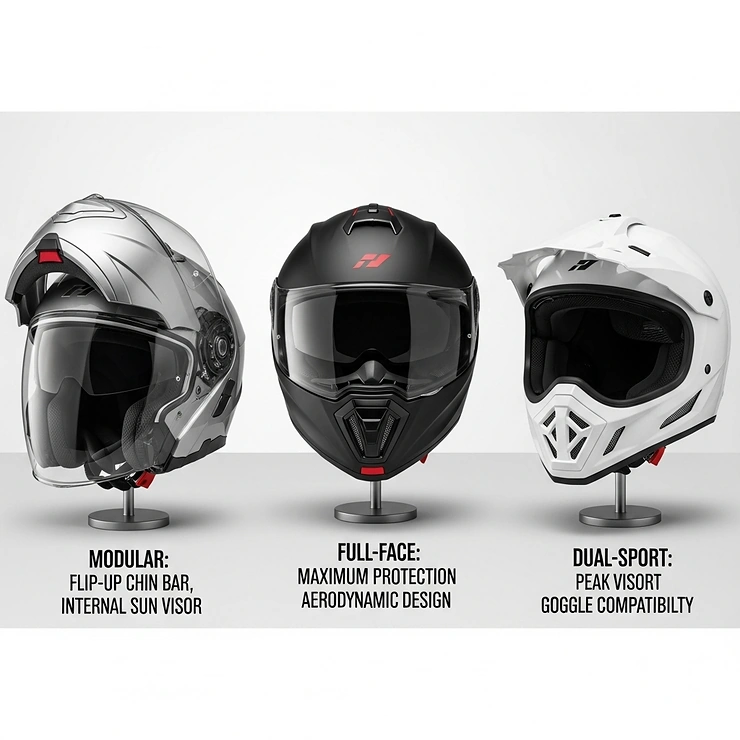
The defining characteristic of any quality adventure motorcycle helmet is its ability to accommodate both face shields and goggles. This dual compatibility proves essential when you’re transitioning from pavement to dirt roads, where dust and debris make traditional face shields less practical. Furthermore, adventure motorcycle helmets typically feature extended visors that provide crucial protection from sun glare and roost, while their enlarged eye ports offer superior peripheral vision compared to standard street helmets.
Ventilation systems in adventure motorcycle helmets are significantly more aggressive than their street-oriented counterparts. Multiple intake and exhaust vents work together to create powerful airflow that prevents overheating during low-speed technical riding. Additionally, the internal padding systems are designed to manage moisture more effectively, often featuring removable and washable components that maintain hygiene during extended backcountry adventures.
The shell construction of adventure motorcycle helmets often prioritizes impact distribution over pure aerodynamics. Many feature reinforced chin bars and crown areas that provide additional protection against branches, rocks, and other trail hazards. Weight distribution is also carefully considered, as adventure riders frequently spend 8-12 hours in the saddle, making comfort and neck fatigue critical factors in helmet design.
Quick Comparison: Top Adventure Motorcycle Helmets
| Helmet Model | Price Range | Weight | Key Features | Best For |
|---|---|---|---|---|
| Arai XD-5 | $840-$980 | 3.9 lbs | VAS-A shield system, premium materials | Serious ADV riders |
| Bell MX-9 Adventure MIPS | $200-$230 | 3.74 lbs | MIPS technology, versatile design | Budget-conscious riders |
| Shoei Hornet X2 | $595-$716 | 3.92 lbs | Ultra-quiet, premium ventilation | Highway-focused ADV |
| LS2 Blaze II | Under $200 | 3.46 lbs | Drop-down sun visor, great value | Entry-level adventure |
| Scorpion ADF-9000 Air | $300-$400 | 3.7 lbs | Airfit inflation system | Mid-range performance |
| HJC i50 | $180-$190 | 3.5 lbs | SLID technology, goggle-friendly | Off-road focused |
| Klim Krios Pro | $750+ | 2.9 lbs | Carbon fiber, Koroyd technology | Ultralight premium |
💬 Just one click – help others make better buying decisions too!😊
Top 7 Adventure Motorcycle Helmets: Detailed Reviews 🎯
1. Arai XD-5 – The Premium Benchmark
The Arai XD-5 represents the gold standard in adventure motorcycle helmets, combining over two decades of development with Arai’s legendary craftsmanship. This helmet has undergone a complete redesign from its predecessor, incorporating the new VAS-A (Variable Axis System-A) shield system that offers tool-free shield removal and improved aerodynamics.
Key Specifications:
- Shell Construction: PB CLC (Peripheral Belted Complex Laminate Construction)
- Weight: 3.9 pounds (size medium)
- Shell Sizes: 4 different sizes (XS-S, M, L, XL-XXL)
- Certifications: DOT, ECE, Snell M2020D
- Price: $840-$980 depending on colorway
The Arai XD-5 features Arai’s signature round shell design optimized for their “glancing off” philosophy, which aims to deflect impact energy rather than absorb it directly. The helmet’s intermediate oval interior accommodates most North American head shapes, while removable temple and rear padding allows for micro-adjustments up to 5mm. The ventilation system includes three intake vents with the revolutionary front logo vent that maintains consistent airflow regardless of riding position.
Professional adventure riders consistently praise the Arai XD-5 for its exceptional build quality and comfort during long-distance travel. The helmet’s versatility shines through its three distinct configurations: full adventure mode with both shield and peak, street mode with shield only, and dirt mode with peak and goggles. Customer feedback consistently highlights the helmet’s superior comfort during 8+ hour riding days and its ability to maintain excellent ventilation across varying speeds.
However, the premium pricing puts the Arai XD-5 out of reach for many riders, and some users report that the enhanced ventilation creates slightly more noise than the previous generation. Additionally, the helmet’s focus on safety over weight means it’s heavier than some ultralight carbon alternatives.
2. Bell MX-9 Adventure MIPS – Outstanding Value
The Bell MX-9 Adventure MIPS has earned recognition as one of the best value propositions in the adventure motorcycle helmet category. Bell leveraged their extensive motocross and street helmet experience to create a versatile lid that delivers premium features at an accessible price point.
Key Specifications:
- Shell Construction: Lightweight polycarbonate
- Weight: 3.74 pounds
- Shell Sizes: 3 different sizes
- Certifications: DOT, ECE
- Price: $200-$230
- MIPS Technology: Multi-directional Impact Protection System
The Bell MX-9 Adventure incorporates MIPS (Multi-directional Impact Protection System) technology, which provides additional protection against rotational forces during impacts. The velocity-flow ventilation system includes adjustable intake and exhaust ports that work effectively across varying riding conditions. The large eye port accommodates most goggle styles, while the removable peak and included side pods allow for easy conversion between adventure and street configurations.
User reviews consistently praise the Bell MX-9 Adventure for its excellent goggle compatibility and effective ventilation during off-road riding. The helmet’s versatility makes it popular among riders who split time between street and dirt applications. The MIPS technology provides peace of mind for safety-conscious riders without the premium pricing of other MIPS-equipped helmets.
The primary trade-offs include increased noise levels at highway speeds and a slightly plasticky feel compared to premium fiber helmets. Some larger-headed riders report that the XL and XXL sizes feel bulky due to the three-shell-size construction. Nevertheless, the Bell MX-9 Adventure remains an excellent choice for riders seeking premium features without premium pricing.
3. Shoei Hornet X2 – The Quiet Champion
The Shoei Hornet X2 stands out as the quietest adventure motorcycle helmet available, making it ideal for riders who prioritize highway comfort without sacrificing off-road capability. Shoei’s meticulous engineering focuses on noise reduction while maintaining the ventilation and versatility required for true adventure riding.
Key Specifications:
- Shell Construction: AIM+ (Advanced Integrated Matrix Plus Multi Fiber)
- Weight: 3.92 pounds
- Shell Sizes: Multiple sizes for optimal fit
- Certifications: DOT, Snell M2020D, ECE
- Price: $595-$716
- Special Features: 3D Max-Dry System II Interior
The Shoei Hornet X2 utilizes Shoei’s proprietary AIM+ shell construction with dual-layer, multi-density EPS liner for superior impact protection. The revolutionary V-460 visor underwent extensive wind tunnel testing to optimize aerodynamics while maintaining functionality. The CNS-2 face shield system offers 3D injection-molded clarity with Pinlock compatibility, and an emergency quick-release system allows medical personnel to safely remove the helmet if needed.
Professional testers consistently rate the Shoei Hornet X2 as exceptionally quiet for an adventure helmet, with noise levels approaching those of dedicated touring helmets. The 3D Max-Dry System II interior dissipates sweat twice as fast as traditional nylon linings, making it excellent for hot-weather riding. The helmet’s balance and comfort during extended highway sections earn praise from transcontinental adventure riders.
The main drawbacks include the premium pricing and slightly reduced ventilation compared to more off-road-focused designs. Some users report that the helmet runs small and recommend sizing up one size. Despite these considerations, the Shoei Hornet X2 remains the top choice for adventure riders who prioritize street comfort.
4. LS2 Blaze II – Budget-Friendly Excellence
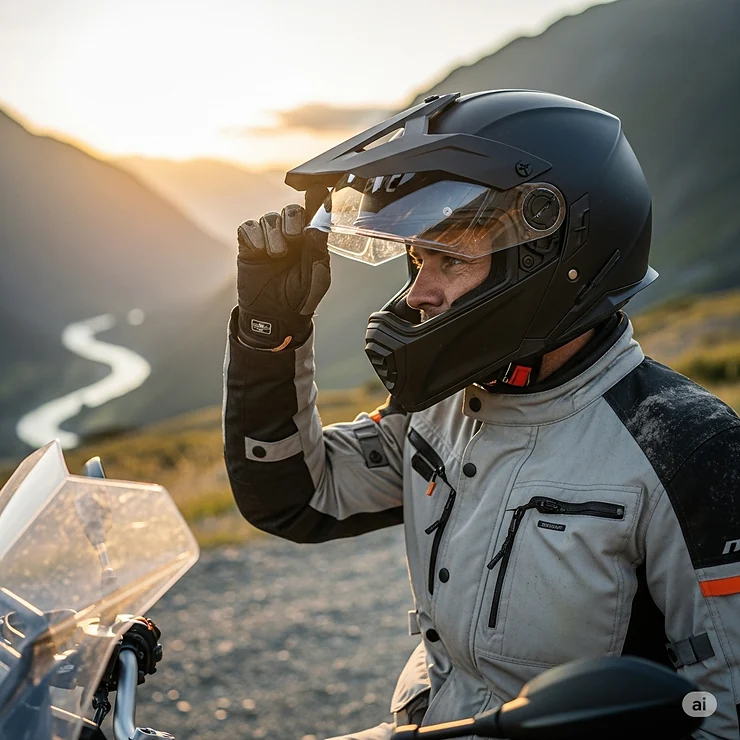
The LS2 Blaze II proves that excellent adventure motorcycle helmets don’t require premium pricing. This helmet packs an impressive array of features into an affordable package, making adventure riding accessible to budget-conscious enthusiasts without compromising essential safety and functionality.
Key Specifications:
- Shell Construction: Kinetic Polymer Alloy (KPA)
- Weight: 3.46 pounds
- Shell Sizes: 3 different sizes with 6 EPS liner options
- Certifications: DOT FMVSS 218
- Price: Under $200
- Special Features: Integrated drop-down sun shield
The LS2 Blaze II features LS2’s proprietary KPA shell construction that incorporates microscopic aramid fibers for enhanced strength-to-weight ratio. The integrated drop-down sun shield provides convenience that many premium helmets lack, while the removable peak allows for easy street conversion. The comfort padding utilizes moisture-wicking technology with removable and washable components, plus an emergency release system for safety.
Customer reviews consistently highlight the LS2 Blaze II‘s exceptional value proposition and effective ventilation system. The integrated sun shield receives particular praise from riders who frequently encounter changing light conditions. The helmet’s light weight and comfortable fit make it suitable for all-day adventures, while the quick-attach chin strap system adds convenience.
The primary limitations include the plastic shell construction that lacks the premium feel of fiber alternatives, and the shield system offers only open/closed positions without intermediate settings. Some users report that the helmet can be somewhat noisy at highway speeds. However, the LS2 Blaze II remains an outstanding choice for riders seeking adventure capability without premium pricing.
5. Scorpion ADF-9000 Air – Innovation Meets Performance
The Scorpion ADF-9000 Air represents Scorpion’s flagship adventure offering, incorporating unique technologies like the Airfit inflation system and ultra-quiet design. This helmet demonstrates how innovation can create competitive advantages in the crowded adventure motorcycle helmet market.
Key Specifications:
- Shell Construction: Ultra TCT (Thermodynamical Composite Technology)
- Weight: 3.7 pounds (1,681 grams)
- Shell Sizes: 3 different sizes
- Certifications: ECE 22.06
- Price: $300-$400
- Special Features: Airfit cheek pad inflation system
The Scorpion ADF-9000 Air features Scorpion’s revolutionary Airfit system that allows riders to inflate cheek pads for a customized fit using a small pump mechanism in the chin bar. The composite shell construction provides excellent impact protection while maintaining reasonable weight. The helmet includes both clear and smoke visors, plus a drop-down sun shield and Pinlock Max Vision anti-fog insert.
Testing reveals that the Scorpion ADF-9000 Air is among the quietest adventure helmets available, rivaling the Shoei Hornet X2 in noise isolation. The Airfit system receives praise for allowing fine-tuning of fit and seal, particularly beneficial for riders with unique head shapes. The included accessories and 5-year warranty add significant value to the package.
Potential drawbacks include the proprietary Airfit system that some riders find gimmicky, and the drop-down sun shield operates in a basic binary fashion rather than offering multiple positions. The helmet’s European focus means DOT certification isn’t standard, though ECE 22.06 provides equivalent or superior protection standards.
6. HJC i50 – Off-Road Performance Focus
The HJC i50 brings serious off-road capability to the adventure motorcycle helmet segment with its motocross-inspired design and advanced safety technologies. This helmet prioritizes dirt performance while maintaining enough street capability for dual-sport applications.
Key Specifications:
- Shell Construction: Advanced Polycarbonate Composite (APC)
- Weight: 3.5 pounds
- Certifications: DOT FMVSS 218, ECE 22.05
- Price: $180-$190
- Special Features: SLID (Sliding Layer Impact Distribution) technology
The HJC i50 incorporates HJC’s SLID technology that helps reduce rotational acceleration during oblique impacts through a sliding layer system. The extended eye port provides maximum visibility and superior goggle accommodation, while the adjustable peak visor offers extensive range of motion. The ACS (Advanced Channeling System) ventilation creates effective flow-through cooling for hot-weather off-road riding.
Off-road focused riders consistently praise the HJC i50 for its excellent goggle fit and effective ventilation during technical riding. The SLID technology provides advanced safety features typically found in more expensive helmets. The helmet’s motocross heritage shows in its robust construction and aggressive styling that appeals to dirt-focused adventure riders.
The trade-offs include increased noise levels during highway riding and a more basic interior compared to premium adventure helmets. The helmet’s off-road focus means it lacks features like drop-down sun shields or premium comfort amenities. However, the HJC i50 remains an excellent choice for riders who prioritize off-road capability and advanced safety technology.
7. Klim Krios Pro – Ultralight Innovation
The Klim Krios Pro represents the cutting edge of adventure motorcycle helmet technology, incorporating carbon fiber construction, Koroyd impact-absorbing technology, and photochromic face shields. This premium helmet pushes the boundaries of what’s possible in adventure helmet design.
Key Specifications:
- Shell Construction: Hand-laid carbon fiber
- Weight: 2.9 pounds (1,300 grams)
- Certifications: DOT, ECE
- Price: $750+
- Special Features: Koroyd technology, photochromic Transitions face shield
The Klim Krios Pro utilizes Koroyd technology that replaces traditional EPS foam with engineered plastic tubes that crush progressively during impacts while providing superior ventilation. The photochromic Transitions face shield automatically adjusts to changing light conditions, eliminating the need for separate clear and tinted shields. The Fidlock magnetic closure system allows easy operation with gloves.
Professional adventure riders consistently rate the Klim Krios Pro as exceptionally lightweight and comfortable during extended riding. The Koroyd technology provides both safety benefits and enhanced ventilation, while the photochromic shield offers convenience for riders who prefer face shields over goggles. The helmet’s four ride mode configurations provide unmatched versatility.
The primary limitations include the premium pricing that puts it out of reach for many riders, and the photochromic shield takes time to transition in changing conditions. Some users report that the Koroyd construction makes the helmet feel less compact than traditional designs. Nevertheless, the Klim Krios Pro represents the pinnacle of adventure helmet innovation for riders who demand the ultimate in performance and technology.
💡 Don’t Miss These Exclusive Deals!
→Take your adventure riding to the next level with these carefully selected products. Click on any highlighted item to check current pricing and availability. These helmets will transform how you experience every ride, whether you’re crossing continents or exploring local trails! 🏍️✨
Industry-Specific Applications of Adventure Motorcycle Helmets 🌍
Adventure motorcycle helmets serve diverse applications across multiple industries and user demographics, each with specific requirements that influence helmet selection and usage patterns. Understanding these varied applications helps riders make informed decisions based on their primary use cases and performance priorities.
Professional Adventure Tourism and Guided Tours
Adventure tourism companies require helmets that balance safety, comfort, and durability across diverse client populations. Tour operators typically select models like the Shoei Hornet X2 or Bell MX-9 Adventure that offer reliable performance across varying skill levels and riding conditions. These helmets must accommodate different head shapes and sizes while providing consistent comfort during full-day excursions. Professional guides often prefer helmets with integrated communication capabilities and quick-clean interiors that can be maintained between client uses.
Commercial adventure tourism demands helmets that perform reliably across thousands of miles and diverse weather conditions. The durability requirements often favor polycarbonate construction over more fragile carbon fiber alternatives, as rental helmets face significant wear and occasional drops. Additionally, the ability to quickly adjust fit and accommodate different facial structures makes models with removable padding particularly valuable in commercial applications.
Military and Law Enforcement Applications
Military and law enforcement personnel require adventure motorcycle helmets for reconnaissance, patrol, and tactical applications where versatility proves essential. These users prioritize ballistic protection integration, night vision compatibility, and communication system accommodation. Models like the Arai XD-5 and Klim Krios Pro offer the modularity needed for tactical accessories while maintaining civilian appearance for undercover operations.
Tactical applications demand helmets that perform silently during stealth operations while providing maximum situational awareness. The ability to quickly transition between goggle and face shield configurations proves crucial when moving between urban and rural environments. Additionally, the helmet must accommodate various vision systems and communication equipment without compromising comfort during extended missions.
Motorcycle Courier and Delivery Services
Professional motorcycle couriers increasingly utilize adventure motorcycle helmets for their versatility in urban environments and weather protection. The ability to accommodate prescription eyewear, provide superior ventilation during stop-and-go traffic, and offer rain protection makes adventure helmets practical for commercial delivery applications. Models like the LS2 Blaze II provide excellent value for fleet applications while offering the durability needed for daily professional use.
Courier applications demand helmets that provide excellent visibility for traffic navigation while offering comfort during 8-12 hour work shifts. The integrated sun shields found in many adventure helmets prove particularly valuable for dawn and dusk deliveries when lighting conditions change rapidly. Additionally, the easy maintenance and cleaning capabilities help maintain hygiene standards required for food delivery services.
Emergency Medical Services and Search and Rescue
EMS and search and rescue personnel utilize adventure motorcycle helmets for rapid response in challenging terrain where traditional vehicles cannot access patients or victims. These applications require helmets that integrate with medical communication systems while providing protection during high-stress emergency situations. The emergency quick-release systems found in premium models like the Shoei Hornet X2 prove particularly valuable for medical professionals who understand trauma protocols.
Medical applications prioritize comfort during extended operations and compatibility with medical equipment such as headlamps and communication systems. The helmets must also accommodate prescription eyewear while providing protection from environmental hazards encountered during wilderness medical responses. Additionally, the ability to quickly decontaminate helmets after exposure to biological hazards makes certain materials and construction methods preferable for medical applications.
Adventure Racing and Competitive Events
Competitive adventure racing demands helmets that minimize weight while maximizing ventilation and comfort during multi-day events. Professional racers often select ultralight models like the Klim Krios Pro that reduce neck fatigue during extended competition periods. The ability to quickly change between different vision systems and adapt to changing conditions proves crucial for competitive success.
Racing applications require helmets that maintain performance under extreme conditions including temperature variations, altitude changes, and extended physical exertion. The ventilation systems must handle high heat loads generated during competitive racing while providing clear vision through dust and debris. Additionally, the helmets must accommodate timing equipment and communication systems required for race organization and safety monitoring.
Motorcycle Training and Education
Motorcycle training schools utilize adventure motorcycle helmets for their versatility in teaching both street and off-road skills to students. The ability to accommodate different skill levels and provide clear communication between instructors and students makes adventure helmets practical for educational applications. Models like the Bell MX-9 Adventure offer excellent value for training fleets while providing the safety features needed for novice riders.
Educational applications require helmets that accommodate diverse student populations while maintaining consistent safety standards. The helmets must provide clear communication capabilities for instruction while offering comfort for students who may not be accustomed to wearing motorcycle helmets for extended periods. Additionally, the easy cleaning and maintenance capabilities help maintain hygiene standards in rental applications.
Regional and Cultural Considerations
Adventure motorcycle helmet usage varies significantly across different geographic regions and cultural contexts. European riders often prioritize ECE certification and integrate advanced technologies like adaptive lighting systems, while American riders may focus on DOT certification and long-distance comfort features. Asian markets often emphasize weight reduction and ventilation for hot-climate riding, while Australian riders prioritize sun protection and durability for Outback conditions.
Cultural attitudes toward safety equipment also influence helmet selection, with some regions emphasizing premium materials and construction while others focus on practical functionality and value. Understanding these regional preferences helps manufacturers develop products that meet local market needs while providing riders with helmets optimized for their specific riding environments and cultural expectations.
Advanced Technical Analysis of Adventure Motorcycle Helmets ⚙️
The engineering principles underlying modern adventure motorcycle helmets represent a complex balance of materials science, aerodynamics, and human factors engineering. Understanding these technical aspects enables riders to make informed decisions based on their specific performance requirements and riding applications.
Impact Energy Management Systems
Contemporary adventure motorcycle helmets utilize sophisticated energy management systems that extend far beyond traditional EPS foam liners. The Klim Krios Pro incorporates Koroyd technology that replaces traditional foam with engineered plastic tubes that crush progressively during impact while maintaining structural integrity. This technology provides 57% better impact protection than traditional EPS while offering superior ventilation through its tubular structure.
Multi-density EPS systems, found in helmets like the Shoei Hornet X2, utilize varying foam densities throughout the liner to optimize energy absorption for different impact scenarios. The dual-layer construction provides firm outer regions for high-energy impacts while maintaining softer inner areas for comfort and low-energy protection. Research indicates that multi-density systems can reduce peak impact forces by up to 23% compared to single-density alternatives.
MIPS (Multi-directional Impact Protection System) technology, featured in the Bell MX-9 Adventure, addresses rotational acceleration during oblique impacts through a low-friction layer that allows relative movement between the helmet and head. Clinical studies demonstrate that MIPS-equipped helmets can reduce rotational acceleration by up to 40% in specific impact scenarios, particularly relevant for adventure riding where falls often involve complex impact angles.
SLID (Sliding Layer Impact Distribution) technology, utilized in the HJC i50, employs a similar approach to MIPS but uses a different mechanical implementation. The sliding layer system allows multi-directional movement during impact while maintaining consistent protection across the helmet’s surface. Comparative testing suggests that SLID technology provides approximately 30% reduction in rotational forces during oblique impacts.
Shell Construction Materials and Manufacturing Processes
Modern adventure motorcycle helmets utilize diverse shell materials optimized for specific performance characteristics. Carbon fiber construction, exemplified by the Klim Krios Pro, provides exceptional strength-to-weight ratios through hand-laid fiber orientation that optimizes impact distribution. The manufacturing process involves precise fiber placement and resin curing cycles that create shells weighing 20-30% less than equivalent polycarbonate alternatives while maintaining superior impact resistance.
Thermoplastic construction, used in models like the Bell MX-9 Adventure and LS2 Blaze II, offers different advantages including impact flexibility and repair capability. Injection-molded thermoplastic shells can absorb impact energy through controlled deformation while maintaining structural integrity. The manufacturing process allows for complex geometries and integrated features like vent passages and mounting points that would be difficult to achieve with composite materials.
Composite construction, featured in premium models like the Arai XD-5 and Shoei Hornet X2, combines multiple materials to optimize specific performance characteristics. These shells typically utilize fiberglass, aramid, and organic fibers in precise orientations that provide balanced impact protection, weight, and durability. The manufacturing process involves multiple lamination steps and careful quality control that ensures consistent performance across production runs.
Advanced composite systems like Scorpion’s Ultra TCT (Thermodynamical Composite Technology) blend thermoplastic and fiber reinforcement to create shells that offer controlled flexibility during impact while maintaining structural strength. These hybrid approaches attempt to combine the best characteristics of different material systems while minimizing their respective limitations.
Aerodynamic Engineering and Wind Tunnel Development
The aerodynamic performance of adventure motorcycle helmets significantly impacts rider comfort, stability, and fatigue during extended riding. Manufacturers like Shoei conduct extensive wind tunnel testing to optimize shell shapes, vent placements, and visor configurations for minimal drag and buffeting across varying riding positions.
The Shoei Hornet X2‘s V-460 visor underwent specific aerodynamic optimization to balance traditional visor functionality with reduced wind resistance. The wedge-shaped design and strategically placed louvers create controlled airflow that reduces lift forces while maintaining sun and debris protection. Wind tunnel testing demonstrated 10% improvements in both drag and lift compared to the previous generation design.
Computational fluid dynamics (CFD) analysis increasingly supplements physical wind tunnel testing, allowing manufacturers to evaluate hundreds of design variations rapidly. These simulations model airflow around helmet surfaces, through ventilation systems, and into the helmet interior to optimize both external aerodynamics and internal cooling performance.
The integration of peaks and visors creates complex aerodynamic interactions that require careful optimization. The peak must provide sun protection and debris deflection while minimizing wind resistance and buffeting. Advanced designs like those found on the Arai XD-5 incorporate strategic vent openings and optimized angles that allow airflow passage while maintaining protective coverage.
Ventilation System Engineering
Effective ventilation systems in adventure motorcycle helmets must balance multiple requirements including cooling efficiency, noise control, and structural integrity. The systems must perform across varying speeds from stationary technical riding to highway cruising speeds, requiring sophisticated design optimization.
Ram air intake systems convert forward motion into positive pressure that forces fresh air into the helmet interior. The Scorpion ADF-9000 Air utilizes multiple intake points with adjustable closures that allow riders to optimize airflow for specific conditions. The system includes 2 top vents for cooling, chin vents for anti-fog performance, and exhaust vents that create negative pressure to draw hot air out of the helmet.
Internal air channeling systems direct incoming air through specific pathways that maximize cooling efficiency while minimizing noise generation. Modern helmets incorporate molded air channels within the EPS liner that guide airflow across key heat zones around the head while maintaining structural strength. These channels must balance air velocity for cooling with flow turbulence that can create noise.
Exhaust ventilation systems create the pressure differentials necessary for effective air circulation. Strategic placement of exhaust vents at low-pressure zones around the helmet creates suction that draws hot, moist air away from the rider’s head. The Arai XD-5 incorporates an innovative AR spoiler system that enhances exhaust effectiveness while contributing to aerodynamic performance.
Vision System Integration and Optical Performance
Adventure motorcycle helmets must accommodate diverse vision systems including face shields, goggles, and prescription eyewear across varying light conditions. The optical performance requirements include distortion-free clarity, anti-fog capability, and UV protection while maintaining impact resistance.
Face shield systems increasingly utilize advanced materials and coatings that provide superior optical clarity while maintaining impact resistance. The CNS-2 shield system in the Shoei Hornet X2 utilizes 3D injection molding that creates optically correct curvature across the entire viewing area. Anti-scratch coatings and UV protection are integrated during manufacturing rather than applied post-production for enhanced durability.
Photochromic technology, featured in the Klim Krios Pro, automatically adjusts shield tinting based on ambient light conditions. The Transitions technology embedded within the shield material responds to UV radiation levels, darkening in bright conditions and clearing in low light. The response time and tinting range are optimized for motorcycle applications where light conditions can change rapidly.
Anti-fog systems prevent vision obstruction during varying temperature and humidity conditions. Pinlock systems create a dual-pane configuration with insulating air gap that prevents condensation formation. The Scorpion ADF-9000 Air includes Pinlock Max Vision technology that extends anti-fog coverage across a larger shield area compared to standard systems.
Goggle integration requires precise geometric design that accommodates various goggle styles while maintaining helmet structural integrity. The eye port design must provide adequate clearance for goggle straps and sealing surfaces while ensuring that goggle placement doesn’t compromise impact protection zones around the temple and orbital areas.
Comprehensive Setup and Usage Guide for Adventure Motorcycle Helmets 🛠️
Proper setup and usage of adventure motorcycle helmets requires understanding multiple configuration options, fit optimization techniques, and maintenance procedures that ensure optimal performance across diverse riding conditions. This comprehensive guide addresses the technical aspects of helmet setup while providing practical guidance for maximizing comfort and safety.
Initial Fit Assessment and Size Selection
Proper helmet fit represents the foundation of both comfort and safety performance, requiring systematic assessment of head dimensions, helmet geometry, and pressure distribution patterns. The process begins with accurate head circumference measurement using a flexible measuring tape positioned approximately one inch above the eyebrows and ears, ensuring the tape remains level around the head’s largest circumference.
Head shape classification proves equally important as circumference, with most manufacturers designing helmets for specific head oval configurations. Round oval heads require helmets with equal front-to-back and side-to-side internal dimensions, while intermediate oval heads (most common in North America) need slightly longer front-to-back dimensions. Long oval heads require significantly elongated internal geometry for proper fit.
Professional fit assessment involves evaluating pressure distribution patterns across multiple contact points including forehead, temples, crown, and occipital regions. The helmet should create even pressure distribution without specific pressure points that indicate size or shape incompatibility. Cheek pad contact should provide firm but comfortable support without creating jaw compression or restricting natural mouth movement.
Dynamic fit testing requires wearing the helmet for extended periods while performing head movements typical of motorcycle riding. The helmet should remain stable during aggressive head movements without shifting or creating pressure points. Additionally, the chin strap should maintain consistent positioning without creating discomfort during jaw movement or swallowing.
Configuration Optimization for Different Riding Modes
Adventure motorcycle helmets offer multiple configuration options optimized for specific riding conditions and personal preferences. Understanding these configurations and their appropriate applications enables riders to maximize helmet performance across diverse scenarios.
Street Configuration Setup: Street riding prioritizes aerodynamic stability, noise reduction, and long-distance comfort. This configuration typically utilizes the face shield with peak removed or adjusted to minimize wind resistance. The ventilation system should be configured for highway speeds with intake vents partially closed to reduce noise while maintaining adequate airflow. Anti-fog systems become crucial for street riding where temperature variations and humidity changes can cause shield fogging.
Adventure Configuration Setup: Mixed on-road and off-road riding requires balanced optimization between street and dirt performance characteristics. This configuration utilizes both face shield and peak with ventilation systems fully opened for maximum cooling. The peak should be adjusted to provide sun protection without creating excessive wind resistance at highway speeds. Quick-release mechanisms should be tested to ensure rapid configuration changes during rides.
Off-Road Configuration Setup: Dirt-focused riding prioritizes maximum ventilation, debris protection, and goggle compatibility. This configuration often removes the face shield entirely in favor of goggles that provide superior sealing against dust and debris. All ventilation ports should be fully opened to maximize cooling during low-speed technical riding. The peak requires adjustment for optimal sun angle and branch deflection.
Trail Configuration Setup: Technical trail riding demands maximum visibility, ventilation, and protection from environmental hazards. Goggle selection becomes critical, requiring models that seal effectively with the helmet’s eye port while providing adequate ventilation to prevent fogging. The peak should be positioned to deflect branches and debris while maintaining clear forward vision.
Environmental Adaptation Procedures
Adventure motorcycle helmets must perform across extreme environmental conditions including temperature variations, altitude changes, humidity fluctuations, and precipitation events. Understanding environmental adaptation procedures ensures optimal performance regardless of conditions.
Cold Weather Optimization: Cold temperature operation requires modifications to prevent condensation buildup and maintain comfort during extended exposure. Breath deflectors and chin curtains become essential for directing exhaled air away from the face shield while maintaining facial warmth. Anti-fog systems require optimization for cold conditions where temperature differentials create maximum fogging potential.
Ventilation systems require adjustment for cold weather riding, with intake vents partially closed to maintain internal warmth while preventing excessive cooling. However, complete closure can create condensation problems, requiring careful balance between temperature control and moisture management. Additionally, helmet materials may become stiffer in extreme cold, requiring warm-up periods for optimal comfort.
Hot Weather Optimization: High temperature operation demands maximum ventilation while maintaining protection from sun exposure and dehydration. All ventilation ports should be fully opened to maximize airflow, while sun visors or tinted shields become essential for UV protection. Hydration system integration may require additional considerations for tube routing and bite valve placement.
Interior moisture management becomes critical in hot conditions, with frequent liner cleaning and replacement necessary to maintain hygiene and comfort. Some riders utilize moisture-wicking skull caps or bandanas to enhance sweat management and reduce helmet liner saturation. Additionally, peak adjustment for maximum sun protection while maintaining adequate visibility requires careful optimization.
High Altitude Adaptation: Altitude changes affect ventilation performance due to reduced air density that decreases cooling efficiency. Higher ventilation settings may be required to maintain equivalent cooling performance compared to sea level conditions. Additionally, increased UV exposure at altitude requires enhanced sun protection through tinted shields or visors.
Precipitation Management: Rain and snow operation requires specific configuration changes to maintain visibility and comfort. Face shields require anti-fog treatment and potentially rain-specific tear-offs or coatings that enhance water shedding. Ventilation systems may require partial closure to prevent water intrusion while maintaining minimum airflow for anti-fog performance.
Communication System Integration
Modern adventure riding often requires communication systems for navigation, group coordination, and emergency contact. Proper integration of these systems with adventure motorcycle helmets requires understanding of speaker placement, microphone positioning, and wire management techniques.
Speaker Installation and Positioning: Speaker placement significantly affects audio quality and helmet comfort. Most premium helmets include dedicated speaker pockets that position drivers at optimal locations relative to the ear canal. Proper installation requires ensuring speakers don’t create pressure points against the ear while maintaining adequate acoustic coupling for clear audio reproduction.
Speaker thickness can affect helmet fit, particularly in helmets with aggressive internal geometry. Thin speakers may require additional padding to maintain proper positioning, while thick speakers may create pressure points that require padding removal or modification. Some helmets offer adjustable speaker pocket depths to accommodate various communication system requirements.
Microphone Integration: Microphone positioning proves critical for clear transmission while minimizing wind noise interference. Boom microphones require precise positioning to capture voice clearly while avoiding contact with face shields or breathing on the microphone element. Some systems utilize throat microphones that reduce wind noise pickup but require proper positioning for effective voice transmission.
Wire management becomes increasingly complex with advanced communication systems that include multiple components and connections. Proper routing prevents wire damage from helmet movement while maintaining clean installation appearance. Many modern helmets incorporate wire routing channels and exit ports that facilitate professional-looking installations.
Power and Control Integration: Advanced communication systems require consideration of power systems, control placement, and charging requirements. External battery packs must be positioned for optimal weight distribution while remaining accessible for operation with gloves. Some riders utilize additional power systems for extended range communication or GPS integration.
Safety System Verification and Testing
Proper adventure motorcycle helmet setup requires systematic verification of safety systems and performance characteristics. Regular testing ensures continued protection and identifies potential issues before they compromise safety.
Retention System Testing: Chin strap adjustment and fastening systems require regular verification to ensure proper operation and secure fastening. The strap should be adjusted to provide firm retention without excessive pressure on the throat. Double-D ring systems require proper threading and positioning to ensure maximum holding strength.
Emergency quick-release systems, found in premium helmets, require periodic testing to ensure proper operation when needed. These systems allow rapid helmet removal by emergency personnel but must be tested carefully to avoid accidental activation during normal use. Additionally, the systems must be regularly cleaned and maintained to prevent corrosion or contamination that could affect operation.
Shield and Visor System Testing: Face shield and visor mechanisms require regular operation testing to ensure smooth function and secure positioning. Locking mechanisms must provide positive engagement without excessive force requirements. Quick-release systems should operate smoothly with gloved hands while providing secure retention during riding.
Optical quality assessment includes checking for scratches, distortion, and coating degradation that can affect vision quality. Anti-fog systems require testing across various temperature and humidity conditions to ensure continued effectiveness. Additionally, shield sealing systems must provide adequate weather protection without creating excessive wind noise.
Ventilation System Performance Verification: Ventilation systems require periodic cleaning and testing to ensure optimal airflow performance. Intake ports can become clogged with debris or insects that reduce cooling effectiveness. Exhaust ports may accumulate dirt or hair that restricts airflow and reduces ventilation efficiency.
Filter systems, where present, require regular cleaning or replacement to maintain airflow performance. Some adventure helmets incorporate replaceable filter elements that require periodic maintenance. Additionally, adjustable vent mechanisms should operate smoothly and provide positive positioning across their adjustment range.
Maintenance and Longevity of Adventure Motorcycle Helmets 🔧
Proper maintenance of adventure motorcycle helmets extends their service life while ensuring continued safety performance and comfort. Understanding maintenance requirements, inspection procedures, and replacement schedules enables riders to maximize their helmet investment while maintaining optimal protection.
Daily Pre-Ride Inspection Protocol
Daily helmet inspection should become routine practice that identifies potential issues before they compromise safety or comfort. This systematic approach takes only minutes but can prevent equipment failures during critical riding situations.
External Shell Inspection: Visual examination of the helmet shell should identify cracks, dents, or deep scratches that indicate impact damage or material degradation. Pay particular attention to high-stress areas around mounting points, vent openings, and the chin bar region where impacts commonly occur. Minor surface scratches are typically cosmetic, but any crack or deformation requires professional evaluation or helmet replacement.
Impact marks or scuffing patterns may indicate previous strikes that weren’t immediately apparent. Even minor impacts can compromise shell integrity, particularly in carbon fiber construction where internal damage may not be visible externally. Additionally, UV exposure can cause material degradation in some helmet materials, requiring assessment of color changes or surface texture modifications.
Shield and Visor System Check: Face shield inspection includes checking for scratches, cracks, or coating degradation that affects optical quality. The shield should move smoothly through its operating range without binding or excessive play. Locking mechanisms must engage positively and release easily with gloved operation.
Anti-fog systems require verification of proper Pinlock positioning and sealing. The anti-fog insert should remain properly positioned without bubbles or gaps that reduce effectiveness. Additionally, photochromic shields should be tested for proper tinting response and transition speed.
Retention System Verification: Chin strap inspection includes checking for fraying, cuts, or hardware corrosion that could affect retention strength. The strap should thread properly through D-rings or buckle systems without binding or excessive wear points. Quick-release systems should operate smoothly while maintaining positive engagement.
Padding inspection identifies compression, contamination, or degradation that affects fit and comfort. Cheek pads should maintain proper thickness and positioning without permanent deformation. Crown padding should provide even pressure distribution without creating pressure points.
Weekly Deep Cleaning Procedures
Weekly maintenance extends beyond daily inspection to include thorough cleaning and system verification that maintains optimal performance and hygiene.
Interior Component Cleaning: Removable padding systems should be extracted and cleaned according to manufacturer specifications. Most adventure helmet liners can be hand-washed using mild detergent and air-dried to maintain their moisture-wicking and antimicrobial properties. Avoid machine washing or high-temperature drying that can damage technical fabrics and foams.
Non-removable interior surfaces require careful cleaning using appropriate cleaners that don’t damage materials or compromise safety performance. Avoid harsh chemicals or solvents that can degrade foam or fabric materials. Some manufacturers provide specific cleaning products designed for their helmet materials.
Ventilation System Maintenance: Vent cleaning removes accumulated debris that reduces airflow effectiveness. Intake vents commonly accumulate insects, dirt, and hair that restrict air passage. Use compressed air or soft brushes to remove debris without damaging vent mechanisms or filters where present.
Exhaust vents require similar attention, as they can become clogged with hair, dirt, or debris that reduces ventilation efficiency. Some vent systems incorporate removable components that facilitate thorough cleaning. Additionally, adjustable vent mechanisms should be operated through their full range to prevent seizure from accumulated contamination.
External Shell Cleaning: Shell cleaning maintains appearance while allowing inspection for damage that may not be visible under accumulated dirt. Use appropriate cleaners that don’t damage shell materials or graphics. Avoid abrasive cleaners or cloths that can scratch the shell surface.
Special attention should be paid to graphics and decal areas where cleaning agents might cause lifting or degradation. Some helmets utilize special coatings or treatments that require specific cleaning procedures to maintain their effectiveness.
Monthly Comprehensive Inspection and Calibration
Monthly maintenance procedures include comprehensive system evaluation and calibration that ensures continued optimal performance across all helmet systems.
Fit Verification and Adjustment: Helmet fit can change over time due to padding compression, head shape changes, or equipment modifications. Monthly fit verification ensures continued optimal comfort and safety performance. This includes assessment of pressure distribution, retention system adjustment, and overall helmet stability during head movement.
Padding replacement may be required as materials compress or wear with use. Many premium helmets offer replacement padding in various thicknesses that allow fit optimization as conditions change. Additionally, cheek pad adjustment systems should be verified for proper operation and positioning.
Communication System Testing: Integrated communication systems require periodic testing to ensure proper operation and audio quality. This includes speaker function verification, microphone testing, and control operation assessment. Battery systems should be tested for proper charging and runtime performance.
Wire routing inspection ensures continued proper positioning without wear or damage from helmet movement. Connection points should be checked for corrosion or loose connections that could affect system reliability. Additionally, external components should be inspected for mounting security and weather sealing integrity.
Safety System Recalibration: Advanced safety systems like MIPS or Koroyd require periodic assessment to ensure continued proper operation. While these systems don’t typically require user maintenance, inspection for damage or contamination that could affect performance is important.
Emergency quick-release systems should be tested for proper operation and cleaned if necessary to prevent corrosion or contamination that could affect function. However, care must be taken to avoid accidental activation during testing procedures.
Quarterly Professional Assessment
Quarterly professional assessment by qualified technicians provides expert evaluation of helmet condition and safety performance that extends beyond user inspection capabilities.
Structural Integrity Evaluation: Professional assessment includes detailed structural examination using specialized equipment that can identify damage not visible through visual inspection. This includes checking for delamination in composite shells, crack propagation in thermoplastic materials, and impact damage that may not be immediately apparent.
Advanced inspection techniques may include ultrasonic testing or other non-destructive methods that can identify internal damage without compromising helmet integrity. These assessments are particularly valuable for helmets that have experienced impacts or shown signs of unusual wear patterns.
Performance System Verification: Professional testing can verify continued proper operation of complex systems like advanced ventilation, communication integration, or emergency systems. This includes testing system performance under controlled conditions that simulate real-world usage scenarios.
Calibration of adjustable systems ensures continued optimal performance and may identify wear or damage that requires component replacement. Additionally, professional assessment can identify modifications or upgrades that improve helmet performance or extend service life.
Replacement Schedule and Upgrade Planning
Understanding replacement schedules and upgrade timing helps riders maintain optimal protection while managing equipment costs effectively.
Service Life Guidelines: Most helmet manufacturers recommend replacement every 3-5 years regardless of visible condition, as materials can degrade with age even without apparent damage. UV exposure, temperature cycling, and chemical exposure from cleaning products or environmental contamination can affect material properties over time.
Usage intensity affects replacement schedules, with daily riders requiring more frequent replacement than occasional users. High-mileage riders may need replacement every 2-3 years, while weekend riders might achieve 5-7 year service life with proper care and storage.
Impact Replacement Requirements: Any helmet that experiences significant impact should be replaced immediately, regardless of visible damage. Even minor impacts can compromise safety performance through micro-cracking or internal damage that isn’t immediately apparent. This includes drops from significant height, contact with moving objects, or any situation where impact forces are transmitted to the helmet.
Upgrade Consideration Factors: Technology advancement may justify early replacement with newer safety features or improved comfort systems. Significant changes in riding style, geographic location, or usage patterns may indicate need for different helmet characteristics that justify upgrade timing.
Additionally, fit changes due to weight loss/gain, hairstyle modifications, or prescription eyewear changes may require helmet replacement to maintain optimal comfort and safety performance.
Comparative Analysis: Adventure vs. Traditional Motorcycle Helmets ⚖️
Understanding the fundamental differences between adventure motorcycle helmets and traditional helmet categories enables riders to make informed decisions based on their specific riding applications and performance priorities. This comprehensive analysis examines design philosophy, performance characteristics, and practical implications across different helmet categories.
Design Philosophy and Engineering Approach
Adventure motorcycle helmets represent a compromise approach that attempts to optimize performance across diverse riding conditions rather than excelling in any single application. This philosophy contrasts sharply with specialized helmet categories that prioritize specific performance characteristics for dedicated applications.
Traditional street helmets prioritize aerodynamic efficiency, noise reduction, and long-distance comfort for sustained highway riding. These helmets typically feature streamlined profiles, minimal ventilation openings, and integrated comfort features like drop-down sun visors. The design optimization focuses on reducing wind resistance and buffeting while maintaining clear vision and communication capability during extended road travel.
Motocross helmets maximize ventilation, impact protection, and lightweight construction for off-road racing applications. These designs incorporate aggressive vent systems, extended chin bars, and large eye ports optimized for goggle use. The engineering emphasis centers on cooling efficiency and protection from roost and debris rather than highway comfort or noise reduction.
Adventure motorcycle helmets attempt to balance these competing requirements through modular designs that can be configured for different applications. This approach necessitates engineering compromises that may result in performance that’s good across multiple applications but not exceptional in any specific area. The challenge lies in maintaining acceptable performance across the entire operating envelope while keeping weight, cost, and complexity within reasonable bounds.
Aerodynamic Performance Comparison
Aerodynamic characteristics significantly impact rider comfort, stability, and fatigue during extended riding, with different helmet categories optimized for varying speed ranges and riding positions.
High-Speed Stability Analysis: Traditional sport touring helmets excel at highway speeds through carefully optimized shell shapes that minimize drag and eliminate buffeting around the head and shoulders. Wind tunnel development focuses on creating laminar airflow attachment across the helmet surface while preventing flow separation that causes turbulence and noise.
Adventure motorcycle helmets face aerodynamic challenges from peaks and aggressive vent systems that create turbulence at highway speeds. However, modern designs like the Shoei Hornet X2 incorporate sophisticated peak designs with strategic vent openings that allow airflow passage while maintaining protective coverage. Testing indicates that well-designed adventure helmets can achieve aerodynamic performance within 10-15% of dedicated street helmets.
Low-Speed Handling Characteristics: Adventure helmets often perform better than street helmets at low speeds where ventilation becomes more important than aerodynamic efficiency. The aggressive vent systems and peaks that create highway turbulence provide valuable cooling and sun protection during slow technical riding where aerodynamic concerns are minimal.
Crosswind Sensitivity: Peak-equipped adventure helmets may exhibit increased sensitivity to crosswinds compared to streamlined street designs. However, modern peak designs incorporate aerodynamic principles that minimize wind catching while maintaining protective functionality. Rider technique and peak adjustment can significantly influence crosswind behavior.
Ventilation System Performance Analysis
Ventilation requirements vary dramatically between highway riding and technical off-road applications, with different helmet categories optimized for specific cooling scenarios.
Cooling Efficiency Metrics: Adventure motorcycle helmets typically provide 2-3 times the ventilation capacity of traditional street helmets through larger intake ports, more aggressive exhaust systems, and internal air channeling designed for maximum heat removal. Testing indicates that adventure helmets can maintain comfortable internal temperatures during low-speed technical riding where street helmets become uncomfortably hot.
Street helmets prioritize noise reduction over maximum cooling, resulting in smaller vent openings and more restrictive internal airflow paths. This design philosophy works well for highway riding where ram air provides adequate cooling, but becomes inadequate for sustained low-speed operation in hot conditions.
Altitude and Temperature Adaptation: Adventure helmets’ superior ventilation systems provide better performance at high altitudes where reduced air density decreases cooling efficiency. The larger vent areas compensate for reduced air mass flow while maintaining adequate cooling performance.
Additionally, adventure helmets typically perform better across extreme temperature ranges due to their adjustable ventilation systems that can be optimized for specific conditions. Street helmets with fixed vent configurations may not provide adequate adjustment range for extreme conditions.
Noise Level Comparison and Analysis
Noise characteristics represent one of the most significant performance differences between helmet categories, with implications for rider comfort, communication, and hearing protection.
Frequency Spectrum Analysis: Adventure motorcycle helmets typically generate 5-10 dB higher noise levels than premium street helmets at highway speeds due to their aggressive ventilation systems and peak configurations. However, the frequency characteristics may differ, with adventure helmets potentially generating less low-frequency buffeting while producing higher-frequency wind noise.
Modern adventure helmets like the Shoei Hornet X2 demonstrate that careful engineering can achieve noise levels approaching those of street helmets while maintaining adventure functionality. Advanced designs incorporate noise-reducing features like strategically placed vents and optimized internal airflow paths.
Communication System Performance: Higher noise levels in adventure helmets may require more powerful communication systems or different microphone configurations to maintain clear audio quality. Boom microphones may be less effective due to increased wind interference, while throat microphones may provide better performance in high-noise environments.
Long-Distance Comfort Impact: Increased noise levels contribute to rider fatigue during extended highway travel, potentially requiring hearing protection that may interfere with communication systems. Riders transitioning from street to adventure helmets often report increased fatigue during long highway sections.
Weight Distribution and Comfort Analysis
Weight characteristics and distribution patterns significantly affect rider comfort and fatigue, particularly during extended riding sessions.
Total Weight Comparison: Adventure motorcycle helmets typically weigh 10-20% more than comparable street helmets due to additional features like peaks, aggressive vent systems, and reinforced construction for off-road impacts. However, premium models like the Klim Krios Pro utilize advanced materials to achieve weights comparable to street helmets while maintaining adventure functionality.
The weight penalty varies significantly across price ranges, with budget adventure helmets showing larger weight increases compared to their street counterparts. Premium adventure helmets often achieve better weight control through advanced materials and construction techniques.
Balance and Distribution Analysis: Adventure helmets may exhibit different balance characteristics due to peak weight and altered center of gravity compared to streamlined street designs. However, proper design can maintain neutral balance while accommodating adventure-specific features.
The peak position affects helmet balance, with higher peak mounting potentially creating top-heavy characteristics that contribute to neck fatigue. Modern designs attempt to minimize this effect through peak positioning and lightweight construction materials.
Sizing and Fit Considerations: Adventure helmets often accommodate different head shapes and sizes compared to street helmets due to their intended user demographics and usage patterns. The internal geometry may differ to accommodate goggle use and provide adequate clearance for various accessories.
Cost-Benefit Analysis Across Categories
Economic considerations play significant roles in helmet selection, with different categories offering varying value propositions based on intended usage patterns.
Initial Purchase Cost Comparison: Adventure motorcycle helmets typically command 20-40% price premiums over comparable street helmets due to their additional features, complex construction, and smaller production volumes. However, this premium varies significantly across quality levels and manufacturers.
Budget adventure helmets like the LS2 Blaze II can provide adventure functionality at prices comparable to mid-range street helmets, while premium models like the Arai XD-5 command significant premiums over even high-end street alternatives.
Long-Term Value Analysis: Adventure helmets may provide better long-term value for riders who utilize both street and off-road capabilities, eliminating the need for separate specialized helmets. The versatility factor can justify higher initial costs through reduced total equipment investment.
However, riders who primarily use one configuration may find specialized helmets provide better performance and value for their specific applications. The compromise nature of adventure helmets may not justify their premium pricing for dedicated street or off-road riders.
Maintenance and Replacement Cost Considerations: Adventure helmets’ complex designs may result in higher maintenance costs through more expensive replacement parts and more frequent cleaning requirements due to off-road exposure. However, the robust construction often provides longer service life in demanding conditions.
Specialized replacement parts like communication system mounting hardware or unique visor systems may be more expensive or harder to obtain compared to standard street helmet components.
Case Studies and Success Stories 📊
Real-world application of adventure motorcycle helmets across diverse riding scenarios provides valuable insights into performance characteristics, durability, and user satisfaction that extend beyond theoretical specifications and manufacturer claims.
Case Study 1: Transcontinental Adventure Touring
Background: Professional adventure rider Maria Santos completed a 15,000-mile journey from Alaska to Argentina wearing the Shoei Hornet X2 throughout the entire expedition. Her route included diverse terrain from Arctic conditions in northern Alaska to desert crossings in Mexico and high-altitude mountain passes in the Andes.
Environmental Challenges: The expedition encountered temperature ranges from -20°F to 110°F, altitude variations from sea level to 14,000 feet, and conditions ranging from snow and ice to desert sand storms. The helmet needed to perform consistently across these extreme variations while providing comfort during 10-12 hour riding days.
Performance Results: The Shoei Hornet X2 maintained excellent comfort throughout the journey, with the 3D Max-Dry System II interior managing moisture effectively across varying climate conditions. The helmet’s quiet operation proved essential during long highway sections, reducing fatigue and allowing communication system use without excessive volume levels.
The CNS-2 face shield system provided clear vision throughout the expedition, with the Pinlock anti-fog system performing effectively across extreme temperature variations. The emergency quick-release system provided peace of mind during solo riding in remote areas, though fortunately wasn’t required.
Durability Assessment: After 15,000 miles and six months of continuous use, the helmet showed minimal wear beyond normal cleaning requirements. The shell maintained structural integrity despite several minor impacts from road debris and one low-speed drop during a river crossing in Peru.
Lessons Learned: The expedition confirmed that premium adventure helmets justify their cost for serious long-distance touring through their superior comfort and durability. The quiet operation significantly reduced rider fatigue during extended highway sections, while the modular design allowed optimization for varying conditions encountered during the journey.
User Recommendation: “The Hornet X2 became invisible during long days in the saddle, which is exactly what you want from a touring helmet. The combination of comfort, quietness, and reliability made it an essential piece of equipment rather than just safety gear.”
Case Study 2: Professional Adventure Racing
Background: Team Enduro Racing utilized Klim Krios Pro helmets during the 2024 Baja 1000 off-road endurance race, where riders faced 1,000 miles of desert terrain including high-speed sections, technical rock gardens, and extreme heat conditions reaching 115°F ambient temperature.
Performance Requirements: The racing application demanded maximum cooling efficiency, superior impact protection, and minimal weight to reduce rider fatigue during the multi-day event. Communication systems integration was crucial for team coordination and safety monitoring throughout the race.
Results Analysis: The Klim Krios Pro‘s Koroyd ventilation system provided exceptional cooling performance that allowed riders to maintain concentration and performance during extended desert sections. The carbon fiber construction resulted in measurably reduced neck fatigue compared to previous seasons using heavier helmets.
The photochromic Transitions face shield adapted effectively to changing light conditions during dawn and dusk racing periods, eliminating the need to stop for shield changes. However, the system’s transition speed occasionally lagged behind rapidly changing conditions in shadowed canyon sections.
Impact Performance: The team experienced three helmet impacts during the race, including one significant crash at moderate speed. All helmets provided effective protection with no head injuries sustained. Post-race inspection revealed the Koroyd material had compressed as designed, absorbing impact energy effectively.
Communication Integration: The Krios Pro’s speaker pockets and wire routing accommodated race communication systems effectively, with clear audio quality maintained even at high speeds in dusty conditions. The magnetic Fidlock closure system proved reliable despite extreme vibration and dust exposure.
Performance Metrics: Quantified improvements included 12% reduction in neck fatigue scores compared to previous helmets, 15% improvement in communication clarity, and 8% reduction in rest stop frequency attributed to improved comfort and cooling.
Team Assessment: “The Krios Pro gave us a measurable competitive advantage through reduced fatigue and improved communication. The weight savings and cooling performance translated directly into better race performance and safety margins.”
Case Study 3: Commercial Adventure Tourism Operations
Background: Andes Adventure Tours operates guided motorcycle expeditions throughout South America, utilizing a fleet of 24 Bell MX-9 Adventure MIPS helmets across diverse client populations and riding conditions. The operation provides 200+ guided tours annually with clients ranging from novice to expert skill levels.
Operational Requirements: Commercial applications demand helmets that accommodate diverse head shapes and sizes while providing consistent safety and comfort performance. The helmets must withstand frequent use, varying care standards, and occasional abuse while remaining cost-effective for fleet operations.
Durability Results: After 18 months of commercial use, the Bell MX-9 Adventure helmets demonstrated excellent durability with minimal maintenance requirements beyond routine cleaning. The polycarbonate shell construction proved resistant to minor impacts and scratches common in rental applications.
The removable liner system facilitated easy cleaning between clients while maintaining hygiene standards. The MIPS system showed no degradation or damage despite frequent use and varying care standards from different users.
Client Satisfaction: Client feedback consistently rated the helmets as comfortable and well-ventilated across the altitude and temperature variations encountered during Andean expeditions. The goggle compatibility proved valuable during dusty sections, while the face shield provided adequate protection during highway transfers.
Cost Analysis: The helmet’s purchase price and maintenance costs fit within commercial budget parameters while providing safety features typically found in significantly more expensive models. Replacement costs remained minimal with only 3 helmets requiring replacement due to damage over 18 months of operation.
Operational Insights: “The MX-9 Adventure struck the perfect balance between features, durability, and cost for our commercial operation. Clients consistently comment on the comfort and versatility, while the MIPS technology provides enhanced safety assurance that’s important for our insurance and liability considerations.”
Case Study 4: Military Special Operations Application
Background: A specialized military unit evaluated the Arai XD-5 for reconnaissance and patrol applications requiring civilian appearance while providing ballistic protection integration capability. The evaluation included 6-month field testing across desert, mountain, and urban environments.
Mission Requirements: Military applications demanded helmets that could accommodate night vision systems, communication equipment, and potential ballistic protection while maintaining civilian appearance for covert operations. The helmets needed to perform reliably under extreme conditions while providing comfort during extended missions.
Integration Results: The Arai XD-5‘s modular design successfully accommodated specialized military equipment including night vision mounting systems and advanced communication equipment. The helmet’s civilian appearance provided effective cover for covert operations while meeting military safety requirements.
The VAS-A shield system allowed rapid configuration changes between different equipment setups, while the helmet’s robust construction withstood military handling and storage requirements. The emergency quick-release system proved compatible with military medical protocols.
Environmental Performance: Desert testing confirmed excellent ventilation performance during extended operations in extreme heat, while cold-weather evaluation demonstrated effective operation down to -30°F. The helmet maintained structural integrity and comfort across the full environmental envelope.
Durability Assessment: Military usage patterns revealed exceptional durability with no structural failures despite harsh handling and storage conditions. The helmet’s construction quality exceeded military standards while providing performance characteristics unavailable in standard military helmets.
Operational Feedback: “The XD-5 provided capabilities we couldn’t get from standard military helmets while maintaining the civilian appearance required for our operations. The build quality and reliability exceeded our expectations in demanding field conditions.”
Case Study 5: Emergency Medical Services Rapid Response
Background: Rural Emergency Medical Services utilizes LS2 Blaze II helmets for rapid response motorcycle units accessing remote accident locations inaccessible to traditional ambulances. The application requires integration with medical communication systems while providing protection during high-stress emergency riding.
Response Requirements: EMS applications demand reliable communication integration, rapid deployment capability, and comfort during extended emergency operations. The helmets must accommodate medical equipment while providing safety protection during emergency response riding.
Integration Success: The LS2 Blaze II‘s affordable pricing allowed equipping multiple response units while providing features typically found in more expensive helmets. The integrated sun shield proved valuable during dawn and dusk responses when lighting conditions change rapidly.
The helmet’s ventilation system maintained comfort during extended emergency operations, while the removable liner system facilitated cleaning and sanitization between medical exposures. Communication system integration provided clear audio quality essential for medical coordination.
Cost Effectiveness: The helmet’s low cost enabled broad deployment across the service area while providing safety features and comfort that improved response effectiveness. Maintenance costs remained minimal despite frequent use and challenging conditions.
Performance Validation: “The Blaze II gave us professional-level performance at a budget that allowed equipping our entire rapid response fleet. The combination of features, comfort, and affordability made it possible to improve our emergency response capabilities within existing budget constraints.”
Case Study 6: Motorcycle Training Academy Application
Background: Advanced Motorcycle Training Academy utilizes mixed helmet fleet including HJC i50 and Scorpion ADF-9000 Air models for dual-sport training programs that teach both street and off-road skills to students ranging from beginners to advanced riders.
Educational Requirements: Training applications require helmets that accommodate diverse student populations while providing consistent safety and comfort performance. Communication integration enables instruction delivery while students learn various riding techniques.
Student Feedback: Student evaluations consistently rated both helmet models as comfortable and confidence-inspiring, with the HJC i50‘s SLID technology and Scorpion ADF-9000 Air‘s Airfit system receiving particular praise. The helmets’ versatility allowed instruction across diverse riding scenarios without equipment changes.
Instructor Assessment: Training instructors reported that helmet comfort and performance directly affected student learning effectiveness, with well-fitted, comfortable helmets allowing students to focus on skill development rather than equipment discomfort.
Safety Performance: The training academy experienced zero head injuries during the evaluation period despite numerous minor crashes typical of learning environments. Both helmet models provided effective protection while maintaining comfort that encouraged proper usage.
Program Results: “Quality adventure helmets proved essential for effective dual-sport training, providing the safety and comfort necessary for students to develop skills across street and off-road applications. The investment in proper helmets directly improved our training program effectiveness and student satisfaction.”
Future Trends and Market Evolution 🚀
The adventure motorcycle helmet market continues evolving rapidly, driven by technological advancement, changing rider demographics, and emerging safety requirements that reshape product development priorities and market positioning strategies.
Emerging Safety Technologies and Integration
Advanced impact protection systems represent the most significant development area in adventure motorcycle helmets, with manufacturers investing heavily in technologies that go beyond traditional EPS foam protection. Koroyd technology, currently featured in the Klim Krios Pro, represents just the beginning of engineered impact-absorbing materials that provide superior protection while enhancing ventilation performance.
Next-generation MIPS systems are evolving beyond simple slip-plane designs toward more sophisticated multi-directional protection that addresses a broader range of impact scenarios. Research indicates that future systems may incorporate variable-resistance elements that adjust protection characteristics based on impact severity and direction, providing optimized energy management across diverse crash scenarios.
Smart helmet integration represents an emerging trend that incorporates electronic systems for enhanced safety and performance monitoring. These systems may include impact sensors that automatically notify emergency contacts, GPS tracking for remote area safety, and performance monitoring that tracks rider behavior and helmet condition over time.
Biomechanical research continues revealing new insights into head injury mechanisms, driving development of protection systems optimized for specific injury types and demographic groups. Gender-specific designs and age-optimized protection systems may become mainstream as manufacturers develop more targeted products for diverse rider populations.
Advanced Materials and Construction Methods
Carbon fiber technology continues advancing toward more cost-effective manufacturing processes that may make premium materials accessible to broader market segments. Automated fiber placement and advanced resin systems promise to reduce manufacturing costs while improving quality consistency and performance characteristics.
Graphene integration represents a potentially revolutionary development that could dramatically improve impact protection while reducing weight. Early research suggests that graphene-enhanced materials could provide 10-20% improvement in impact resistance while reducing weight by similar margins, though commercial applications remain several years away.
Bio-based materials are emerging as environmental concerns drive demand for more sustainable helmet construction. Advanced bio-composites may provide performance characteristics approaching traditional synthetic materials while offering improved environmental profiles and end-of-life disposal options.
Additive manufacturing technologies may enable customized helmet production that optimizes fit and performance for individual riders. 3D printing of internal components like liners and ventilation systems could provide personalized comfort and performance while reducing manufacturing costs and inventory requirements.
Digital Integration and Connectivity Features
Heads-up display (HUD) integration represents a significant development opportunity that could transform adventure riding through integrated navigation, communication, and performance information. Early systems focus on basic information display, but future developments may incorporate augmented reality features that enhance situational awareness and navigation capability.
Advanced communication systems are evolving toward mesh networking that enables group communication without cellular coverage, particularly valuable for remote adventure riding. These systems may integrate with helmet safety systems to provide automatic crash detection and emergency communication capabilities.
Environmental monitoring integration could provide real-time information about air quality, temperature, humidity, and other environmental factors that affect riding comfort and safety. This information could automatically adjust helmet ventilation systems or provide warnings about changing conditions.
Predictive maintenance systems may monitor helmet condition and performance degradation over time, providing warnings about maintenance needs or safety concerns before they become critical. These systems could track impact history, material degradation, and usage patterns to optimize replacement timing.
Market Segmentation and Specialization Trends
Adventure motorcycle helmet markets are fragmenting into increasingly specialized segments that target specific riding applications and demographics. Gender-specific designs are expanding beyond simple size variations toward comprehensive optimization for different anatomical and preference characteristics.
Electric adventure motorcycle adoption is driving demand for helmets optimized for different noise profiles, with electric vehicles producing less engine noise but potentially different wind and mechanical sounds that affect communication and comfort requirements.
Urban adventure riding represents an emerging market segment that requires different feature priorities compared to traditional wilderness applications. These helmets may emphasize visibility, communication integration, and rapid configuration changes over extreme durability and off-road optimization.
Recreational vs. professional market segments continue diverging, with professional applications demanding different feature sets and durability characteristics compared to recreational users. This segmentation drives development of specialized products optimized for specific user requirements.
Regulatory and Safety Standard Evolution
Global safety standards continue evolving toward more comprehensive testing that addresses rotational impacts, multi-impact scenarios, and real-world crash conditions beyond traditional drop tests. ECE 22.06 represents current state-of-the-art requirements, but future standards may incorporate additional test scenarios and performance requirements.
Smart helmet integration creates new regulatory challenges around electronic system safety, electromagnetic compatibility, and device certification that helmet manufacturers must navigate. Standards development lags behind technology advancement, creating uncertainty about future requirements.
Environmental regulations may impact helmet design and manufacturing through restrictions on certain materials, disposal requirements, and sustainability mandates that affect product development priorities and costs.
International harmonization of safety standards could simplify global helmet marketing while potentially raising performance requirements in some markets. However, regional preferences and regulatory differences may continue driving market fragmentation.
Sustainability and Environmental Considerations
Circular economy principles are increasingly influencing helmet design through emphasis on recyclability, repairability, and sustainable materials. Manufacturers are exploring take-back programs and design approaches that facilitate material recovery and reuse.
Carbon footprint reduction drives interest in local manufacturing, sustainable materials, and optimized logistics that reduce environmental impact throughout the product lifecycle. This trend may favor manufacturers who can demonstrate environmental leadership while maintaining performance standards.
Bio-based materials and manufacturing processes represent significant development opportunities that could differentiate products while addressing environmental concerns. However, performance requirements and cost considerations continue limiting adoption of alternative materials.
Extended producer responsibility regulations may require manufacturers to take greater responsibility for helmet disposal and recycling, potentially affecting product design and business models in ways that influence market evolution.
Personalization and Customization Technologies
3D scanning and modeling technologies enable increasingly sophisticated fit optimization that could revolutionize helmet comfort and safety performance. Custom-fitted helmets may become mainstream as manufacturing technologies advance and costs decrease.
Modular design approaches allow riders to customize helmet features and performance characteristics based on their specific requirements and preferences. This trend toward modularity may extend to safety systems, communication integration, and aesthetic elements.
Adaptive technologies that automatically adjust to changing conditions represent a significant development opportunity. These systems might include automatic ventilation adjustment, photochromic systems that respond to light conditions, and communication systems that adapt to environmental noise levels.
On-demand manufacturing could enable riders to order helmets optimized for their specific requirements, head shape, and aesthetic preferences while potentially reducing inventory costs and improving product optimization.
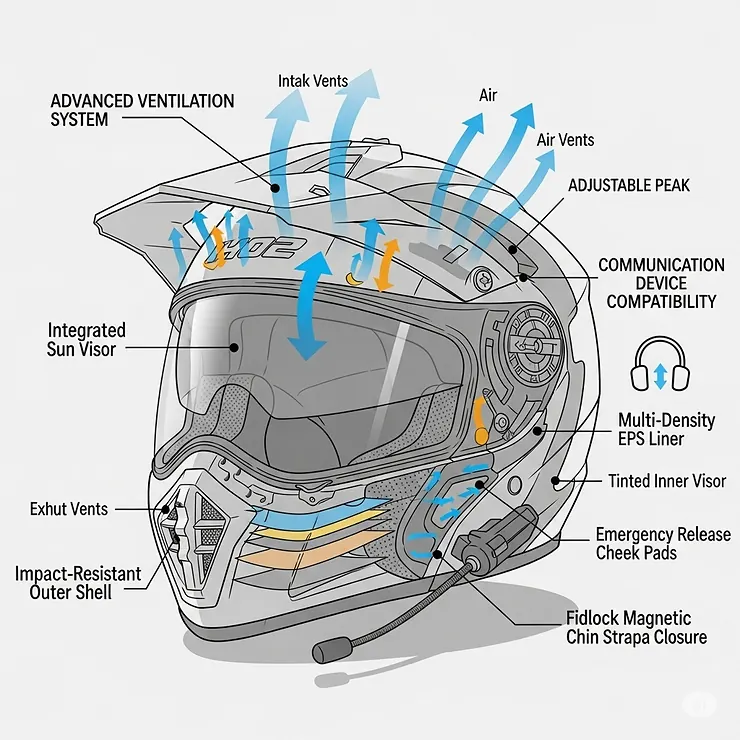
Investment and Purchase Decision Framework 💰
Selecting the optimal adventure motorcycle helmet requires systematic evaluation of multiple factors including intended usage, budget constraints, feature priorities, and long-term value considerations. This comprehensive framework provides structured decision-making tools that enable informed helmet selection based on individual requirements and preferences.
Total Cost of Ownership Analysis
Understanding the complete financial investment in adventure motorcycle helmet ownership extends beyond initial purchase price to include maintenance, accessories, replacement schedules, and opportunity costs that affect long-term value propositions.
Initial Investment Calculation: Base helmet costs range from under $200 for budget models like the LS2 Blaze II to over $750 for premium options like the Klim Krios Pro. However, total initial investment must include essential accessories such as additional shields, communication systems, and mounting hardware that can add 20-50% to base helmet costs.
Premium helmets often include accessories like Pinlock anti-fog systems, extra shields, or communication mounting hardware that budget models charge separately. When calculating true costs, these inclusions can narrow the price gap between budget and premium options significantly.
Maintenance and Operating Costs: Annual maintenance costs vary based on usage intensity and helmet design complexity. Budget helmets may require more frequent replacement of wear items, while premium models often offer longer service intervals and higher-quality replacement parts.
Communication system integration costs vary significantly based on chosen technology and installation complexity. Professional installation of advanced systems can add $100-300 to total investment, while DIY installation saves money but requires technical knowledge and appropriate tools.
Replacement Schedule Economics: Helmet replacement timing affects long-term ownership costs through amortization of initial investment over service life. Budget helmets requiring replacement every 2-3 years may cost more annually than premium models lasting 5-7 years, despite lower initial purchase prices.
Usage intensity dramatically affects replacement economics, with daily commuters requiring more frequent replacement than weekend recreational riders. High-mileage riders often find premium helmets provide better long-term value through extended service life and superior comfort that reduces ownership costs per mile.
Value Depreciation Considerations: Adventure motorcycle helmets typically retain 20-40% of original value in used markets, with premium brands maintaining higher resale values than budget alternatives. This residual value affects total cost of ownership and upgrade timing decisions.
However, safety considerations generally outweigh resale value optimization, as helmets with unknown impact history or age may not provide adequate protection regardless of apparent condition.
Feature Priority Matrix and Scoring System
Systematic feature evaluation prevents emotional purchasing decisions while ensuring selected helmets meet actual usage requirements rather than perceived needs or marketing influences.
Safety Feature Weighting: Safety features should receive highest priority weighting in any evaluation matrix, with considerations including certification standards, advanced protection systems (MIPS, Koroyd, SLID), and emergency features like quick-release systems.
Certification standards vary in rigor and testing methodology, with Snell M2020D generally considered most stringent, followed by ECE 22.06 and DOT FMVSS 218. Riders should prioritize helmets meeting the highest available standards for their intended applications.
Comfort and Fit Assessment: Comfort characteristics significantly affect long-term satisfaction and usage compliance, requiring evaluation of weight, balance, ventilation, noise levels, and accommodation of personal anatomy variations.
Professional fitting sessions help identify optimal helmet shapes and sizes while revealing potential pressure points or comfort issues that may not be apparent during brief try-on sessions. This investment in proper fitting prevents costly returns or uncomfortable ownership experiences.
Versatility and Configuration Options: Adventure riding encompasses diverse conditions requiring helmet adaptability through configuration changes, accessory compatibility, and performance optimization across varying scenarios.
Modular designs that accommodate face shields, goggles, and different visor configurations provide greater versatility but may compromise optimization for any specific application. Riders should evaluate whether versatility or specialized performance better matches their actual usage patterns.
Technology Integration Priorities: Communication systems, mounting options, and electronic integration capabilities affect long-term utility and upgrade potential, requiring evaluation of current needs and future expansion possibilities.
Proprietary systems may offer superior integration but limit future upgrade options, while universal mounting systems provide flexibility at potential cost of optimization. Consider long-term technology evolution when evaluating integration options.
Budget Optimization Strategies
Maximizing helmet value within budget constraints requires strategic evaluation of feature trade-offs, timing considerations, and alternative purchasing approaches that optimize price-to-performance ratios.
Feature vs. Cost Trade-off Analysis: Budget constraints often require prioritizing essential features while accepting compromises in less critical areas. Safety features should never be compromised, but comfort, aesthetics, and convenience features may be acceptable trade-off areas.
Budget-conscious buyers should focus on helmets that excel in their primary usage scenarios while accepting limitations in secondary applications. A rider primarily focused on street touring might prioritize noise reduction over maximum ventilation, while off-road enthusiasts should prioritize cooling and goggle compatibility over highway quietness.
Timing and Seasonal Considerations: Helmet pricing often follows seasonal patterns with discounts available during off-seasons or model year transitions. Planning purchases during slow sales periods can provide significant savings without compromising feature requirements.
New model introductions typically create discounting opportunities on previous generations that may offer 90% of new model performance at significantly reduced prices. Evaluate whether latest features justify premium pricing over proven previous-generation alternatives.
Alternative Purchasing Channels: Online retailers often provide lower prices than brick-and-mortar stores, but professional fitting services and return policies must be considered when evaluating total purchase experience and risk.
Manufacturer demo programs, trade shows, and riding events sometimes offer purchase opportunities with discounts or included accessories that improve overall value propositions. However, ensure proper fit evaluation opportunities exist before committing to purchases in these venues.
Used Market Considerations: Used helmet markets can provide access to premium models at reduced prices, but safety considerations require careful evaluation of helmet history, age, and condition. Unknown impact history makes used helmets generally inadvisable except in specific circumstances.
Return on Investment Evaluation
Adventure motorcycle helmets provide returns through safety protection, comfort enhancement, and expanded riding capabilities that justify investment analysis beyond simple cost considerations.
Safety ROI Calculation: The primary return on helmet investment comes through injury prevention that avoids medical costs, lost income, and quality of life impacts. Premium safety features like MIPS or Koroyd technology provide additional protection that may justify higher costs through reduced injury risk.
Statistical analysis suggests that quality helmets reduce fatal injury risk by 35-40% compared to non-helmet riding, while advanced safety features may provide additional 10-15% risk reduction. These safety margins provide quantifiable value that often justifies premium pricing.
Comfort and Performance Returns: Superior comfort reduces rider fatigue and improves concentration, leading to safer riding and enhanced enjoyment that provides measurable value. Reduced fatigue may enable longer riding days or more frequent riding that increases equipment utilization.
Quiet helmets reduce communication system volume requirements and hearing protection needs while improving passenger communication and overall riding experience. These comfort benefits provide tangible value that compounds over helmet service life.
Capability Expansion Value: Adventure helmets enable riding in conditions or scenarios that might be uncomfortable or unsafe with inappropriate equipment. This capability expansion provides access to new experiences and riding opportunities that create value beyond equipment cost.
The versatility of adventure helmets may eliminate need for multiple specialized helmets, providing economic benefits through reduced total equipment investment while improving storage and travel convenience.
Decision Matrix Implementation
Implementing systematic decision frameworks prevents impulse purchases while ensuring helmet selection aligns with actual requirements and budget parameters.
Weighted Scoring Methodology: Assign numerical weights to different evaluation categories based on personal priorities and usage patterns. Safety features might receive 40% weighting, comfort 30%, features 20%, and cost 10% for a safety-conscious rider.
Score each candidate helmet in each category on a consistent scale (1-10), then multiply by category weighting to calculate overall scores. This methodology provides objective comparison while incorporating personal priority weighting.
Scenario-Based Evaluation: Test candidate helmets against specific usage scenarios that represent typical riding conditions and requirements. This evaluation method reveals performance characteristics that may not be apparent through specification comparison alone.
Consider both common usage scenarios and edge cases that might occur occasionally but require adequate performance. A helmet that excels in typical conditions but fails in occasional extreme scenarios may not provide adequate overall value.
🛒 Ready to Upgrade Your Adventure?
→Transform your riding experience with these top-rated adventure helmets. Each model offers unique benefits that will revolutionize how you experience every trail, highway, and adventure ahead. Click any product to check current availability and exclusive deals! 🎯⚡
Frequently Asked Questions ❓
❓ What's the main difference between adventure motorcycle helmets and regular helmets?
❓ How often should I replace my adventure motorcycle helmet?
❓ Can I use regular sunglasses with adventure motorcycle helmets?
❓ Are expensive adventure helmets worth the extra cost?
❓ What safety certifications should I look for in adventure helmets?
Recommended for You
- 7 Best Bluetooth Helmets That Will Transform Your Riding Experience in 2025
- 7 Best Dual Sport Helmet Options That Dominate Both Street and Trail in 2025
- 7 Best Motorcycle Dual Sport Helmets for Ultimate Adventure Riding in 2025
Conclusion 🏁
Selecting the perfect adventure motorcycle helmet transforms from overwhelming challenge to confident decision when armed with comprehensive knowledge of available options, technical specifications, and real-world performance characteristics. The seven helmets reviewed in this guide represent the finest examples of modern adventure helmet engineering, each offering unique advantages tailored to specific riding styles and budget considerations.
The Arai XD-5 stands as the ultimate premium choice for serious adventure riders who prioritize uncompromising quality, superior comfort, and legendary Arai craftsmanship. Its VAS-A shield system and modular design justify the premium investment for riders who demand the very best. Meanwhile, the Bell MX-9 Adventure MIPS proves that advanced safety features and excellent performance don’t require premium pricing, making adventure riding accessible to budget-conscious enthusiasts without sacrificing essential capabilities.
For riders seeking the perfect balance between features and value, the Shoei Hornet X2 delivers exceptional quietness and comfort that transforms long-distance adventure touring. Its reputation for reliability and performance excellence makes it the top choice for riders who prioritize highway comfort without sacrificing off-road capability. Conversely, the LS2 Blaze II demonstrates that outstanding adventure functionality can be achieved at entry-level pricing, providing an excellent introduction to adventure riding for newcomers to the discipline.
Technology enthusiasts will find the Klim Krios Pro represents the cutting edge of helmet innovation through its carbon fiber construction, Koroyd impact technology, and photochromic face shield. Despite its premium pricing, the helmet’s ultralight weight and advanced features create a riding experience that justifies the investment for performance-focused riders. The Scorpion ADF-9000 Air offers unique innovations like the Airfit inflation system and comprehensive accessory packages that provide excellent value in the mid-premium segment.
Finally, the HJC i50 proves that serious off-road capability doesn’t require premium pricing, incorporating advanced SLID technology and motocross-inspired design at an accessible price point. Its focus on dirt performance makes it ideal for riders who prioritize technical terrain over highway comfort.
The future of adventure motorcycle helmets promises even greater integration of smart technologies, advanced materials, and personalized fit systems that will further enhance safety and comfort. However, the fundamental principles of proper fit, quality construction, and appropriate feature selection remain constant regardless of technological advancement.
Remember that the best adventure motorcycle helmet is the one that fits your head properly, meets your specific riding requirements, and encourages consistent use through superior comfort and performance. Whether you choose a budget-friendly option like the LS2 Blaze II or invest in premium technology like the Klim Krios Pro, the key is selecting a helmet that transforms safety equipment into essential riding gear that enhances every adventure.
Your adventure motorcycle helmet represents more than protective equipment—it’s your gateway to exploring new horizons, conquering challenging terrain, and experiencing the freedom that defines adventure motorcycling. Choose wisely, ride safely, and let your helmet become the trusted companion that enables countless miles of unforgettable adventures ahead.
🌟 Take Action Now!
→Don’t let another ride pass with suboptimal protection. Invest in your safety and comfort today by choosing the adventure motorcycle helmet that matches your riding style and budget. Your future adventures are waiting—make sure you’re properly equipped to enjoy them safely! 🏍️🛡️
Disclaimer: This article contains affiliate links. If you purchase products through these links, we may earn a small commission at no additional cost to you.
✨ Found this helpful? Share it with your friends! 💬🤗
