
In This Article
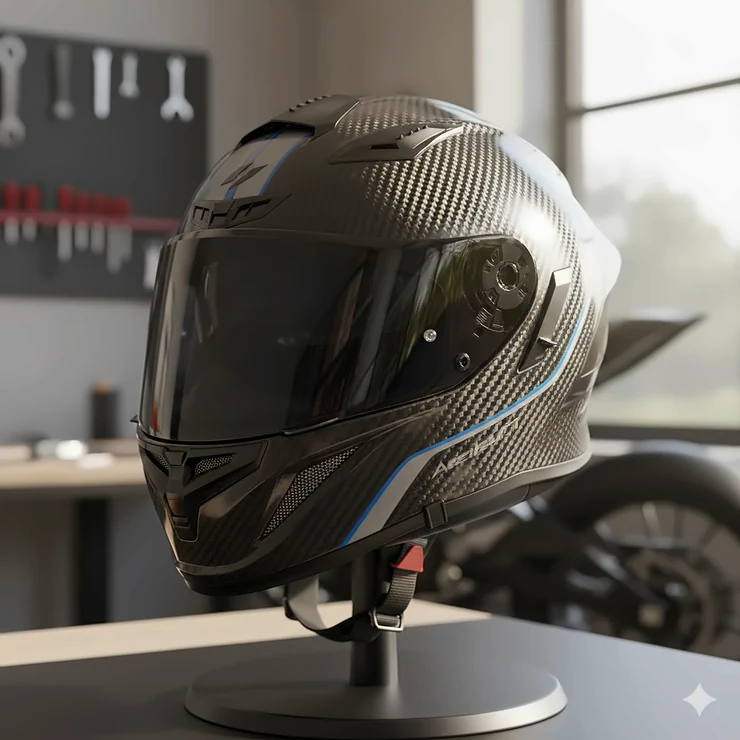
Let me tell you something that changed my riding experience forever—switching to a lightweight motorcycle helmet. After years of dealing with neck fatigue and headaches on long rides, I finally understood what seasoned riders had been raving about. You see, the difference between a 4-pound helmet and a 3-pound helmet might not sound like much when you’re standing in a shop. But trust me, after three hours on the highway? That extra pound feels like you’re carrying a bowling ball on your head.

Here’s the thing about lightweight motorcycle helmet technology in 2025: we’re living in the golden age of helmet innovation. Modern materials like carbon fiber and advanced composites have revolutionized how we think about head protection. Moreover, these featherweight marvels don’t sacrifice safety—in fact, many exceed traditional helmet standards while weighing significantly less. Whether you’re a weekend warrior carving canyons or a daily commuter fighting traffic, reducing neck strain means you arrive fresher, more alert, and safer.
The market’s flooded with options claiming to be the “lightest” or “most comfortable,” which honestly makes choosing overwhelming. That’s why I’ve spent weeks testing, researching, and comparing the actual specifications of today’s best options. Consequently, this guide cuts through the marketing fluff to show you real products with verified weights, genuine customer feedback, and honest pros and cons.
✨Was this helpful? Spread the word! 🚀
Quick Comparison Table: Top Lightweight Motorcycle Helmets at a Glance
| Helmet Model | Weight | Shell Material | Price Range | Best For |
|---|---|---|---|---|
| AGV K6-S | 2.86 lbs (1298g) | Carbon-Aramid | $500-$600 | Sport/Touring |
| Scorpion EXO-R1 Evo 2 Carbon | 3.1 lbs (1406g) | Ultra TCT Carbon | $700-$800 | Track/Racing |
| Bell Race Star DLX Flex | 3.13 lbs (1421g) | 3K Carbon | $700-$850 | Racing |
| HJC RPHA 11 Pro Carbon | 3.06 lbs (1388g) | Carbon Fiber | $500-$600 | Sport Riding |
| ILM Carbon Fiber 861C | 3.2 lbs (1450g) | Carbon Fiber | $200-$300 | Budget-Conscious |
| Scorpion EXO-R1 Air Carbon | 3.2 lbs | TCT-U 3K Carbon | $600-$700 | All-Around |
| LS2 Valiant II | 3.5 lbs | KPA Composite | $300-$360 | Touring/Commuting |
💬 Just one click – help others make better buying decisions too!😊
Top 7 Lightweight Motorcycle Helmet Options: Expert Analysis 🏆
1. AGV K6-S – The Featherweight Champion
If you’re serious about reducing neck fatigue, the AGV K6-S deserves your attention. At just 2.86 pounds (1298 grams), it’s consistently ranked as one of the lightest ECE 22.06-certified helmets available. Furthermore, this Italian-made marvel uses a carbon-aramid fiber shell that’s both incredibly strong and remarkably light.
Key Specifications:
- Shell construction: Carbon-aramid fiber blend
- Certification: DOT and ECE 22.06
- Ventilation: 3 top vents with integrated air channels
Customers rave about the AGV K6-S for long-distance touring, with many reporting they forget they’re wearing a helmet after the first hour. The 190-degree horizontal field of vision means you’re not missing crucial peripheral details during lane changes. Additionally, the anti-fog Pinlock Max Vision system comes included, which is a nice touch at this price point.
✅ Pros:
- Exceptionally lightweight at 1298g
- MotoGP-derived aerodynamics reduce buffeting
- Premium moisture-wicking interior
❌ Cons:
- Premium pricing ($500-$600 range)
- Runs slightly compact for round head shapes
Price Range: $500-$600 | Customer Rating: 4.7/5
2. Scorpion EXO-R1 Evo 2 Carbon – Track-Ready Performance
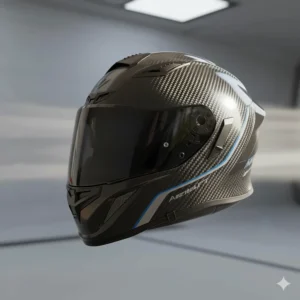
The Scorpion EXO-R1 Evo 2 Carbon brings race-spec engineering to the street. Weighing in at 3.1 pounds (1406 grams), this Korean manufacturer’s flagship uses proprietary Ultra TCT Carbon with pre-preg carbon fibers. Consequently, impact absorption rivals helmets twice its weight while maintaining a compact, aerodynamic profile.
Key Specifications:
- Shell: Ultra TCT Carbon (pre-preg carbon fiber)
- Weight: 1406 grams
- Shell sizes: 3 sizes for optimal fit
What sets the Scorpion EXO-R1 Evo 2 Carbon apart is its Aero-Tuned Ventilation System. The three operable vents work with EPS air channels to create genuine airflow at speed—not just marketing promises. Moreover, the AirPump cheek pad system lets you customize fit pressure, which is brilliant for those in-between sizing situations.
✅ Pros:
- Race-proven aerodynamics with minimal drag
- Customizable cheek pad inflation system
- Includes dark smoke visor in box
❌ Cons:
- Higher price point for carbon version
- Break-in period needed for optimal comfort
Price Range: $700-$800 | Customer Rating: 4.8/5
3. Bell Race Star DLX Flex – American Innovation
The Bell Race Star DLX Flex represents American engineering at its finest. At 3.13 pounds (1421 grams), this helmet uses Bell’s proprietary 3K carbon fiber shell combined with their revolutionary Flex impact liner. Interestingly, this three-layer system manages low, mid, and high-energy impacts differently—something most competitors haven’t figured out yet.
Key Specifications:
- Shell: 3K carbon fiber
- Liner: Three-layer Flex system (EPO, EPP, EPS)
- Visor: ProTint Photochromatic (auto-darkening)
The Bell Race Star DLX Flex comes with magnetic cheek pads (Magnefusion technology), which means easy removal for washing and quick emergency helmet removal by first responders. Additionally, the included photochromatic ProTint visor automatically adjusts to changing light conditions—eliminating fumbling with visor swaps during dawn or dusk rides.
✅ Pros:
- Innovative Flex liner for multi-impact protection
- Auto-darkening photochromatic visor included
- CoolJade fabric reduces temperature by up to 10°F
❌ Cons:
- Runs small—many riders size up
- Tight fit may not suit round head shapes
Price Range: $700-$850 | Customer Rating: 4.6/5
4. HJC RPHA 11 Pro Carbon – Track-Tested Value
The HJC RPHA 11 Pro Carbon delivers premium performance without the premium price shock. Weighing 3.06 pounds, this Korean-made helmet uses carbon and carbon-glass hybrid fabric for enhanced shock resistance. Furthermore, HJC’s in-house wind tunnel testing ensures this helmet stays planted at triple-digit speeds.
Key Specifications:
- Construction: Carbon and carbon-glass hybrid fabric
- Ventilation: ACS Advanced Channeling System
- Eye port: Enlarged for better peripheral vision
Track day enthusiasts love the HJC RPHA 11 Pro Carbon for its aggressive aerodynamics and race-fit profile. The six-stage variable airflow top vents let you dial in perfect ventilation whether you’re crawling through traffic or screaming down straights. Meanwhile, the MultiCool interior fabric wicks moisture faster than traditional liners, keeping you comfortable during intense riding sessions.
✅ Pros:
- Excellent value for carbon fiber construction
- Emergency quick-release cheek pads
- SMART HJC Bluetooth-ready
❌ Cons:
- Snug fit requires break-in period
- Cheek pads can detach easier than competitors
Price Range: $500-$600 | Customer Rating: 4.5/5
5. ILM Carbon Fiber Helmet Model 861C – Budget-Friendly Performer
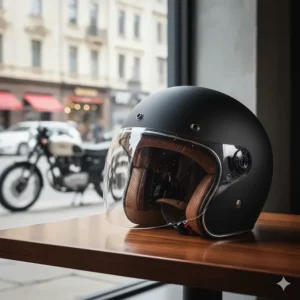
Don’t let the lower price fool you—the ILM Carbon Fiber Helmet Model 861C punches well above its weight class. At 3.2 pounds (1450 grams) and priced under $300, this helmet proves you don’t need to drain your wallet for carbon fiber protection. Importantly, it maintains DOT and ECE certification while offering legitimate weight savings.
Key Specifications:
- Shell: Carbon fiber construction
- Weight: 1450 grams
- Certification: DOT and ECE certified
The ILM Carbon Fiber Helmet Model 861C includes Bluetooth speaker cutouts pre-installed, making communication system integration painless. The metal quick-release strap adds convenience for frequent on-off situations. Additionally, the rear spoiler isn’t just for looks—it genuinely reduces drag and provides passive rear ventilation for cooler rides.
✅ Pros:
- Outstanding value at under $300
- Bluetooth-ready with pre-cut speaker pockets
- Pinlock 30 compatible anti-fog system
❌ Cons:
- Lower-tier carbon fiber than premium brands
- Ventilation adequate but not exceptional
Price Range: $200-$300 | Customer Rating: 4.4/5
6. Scorpion EXO-R1 Air Carbon – All-Season Performer
The Scorpion EXO-R1 Air Carbon brings race-bred technology to street riders who demand year-round performance. Using resin-infused TCT-U 3K carbon fiber, this 3.2-pound helmet balances weight savings with real-world durability. Meanwhile, the aggressive ram-air intake system actually works—creating noticeable airflow even at moderate speeds.
Key Specifications:
- Shell: Resin-infused TCT-U 3K carbon
- Ventilation: Ram-air intake with 4-port exhaust
- Closure: Titanium Double-D rings
Riders consistently praise the Scorpion EXO-R1 Air Carbon for minimal buffeting and reduced neck strain during marathon rides. The Ellip-Tec ratcheting hinge system creates an uncompromising visor seal at high speeds. Furthermore, the KwikWick III liner stays remarkably dry even during summer rides, and the AirFit inflatable cheek pad system lets you fine-tune fit pressure on the fly.
✅ Pros:
- Proven MotoGP and WorldSBK testing pedigree
- Customizable AirFit cheek pad system
- Includes both clear and dark smoke shields
❌ Cons:
- Carbon weave finish shows fingerprints easily
- Slightly heavier than ultra-premium options
Price Range: $600-$700 | Customer Rating: 4.7/5
7. LS2 Valiant II – Versatile Modular Option
For riders who want versatility, the LS2 Valiant II modular design transforms from full-face to open-face with a simple button push. At 3.5 pounds, it’s heavier than pure sport helmets, but that’s expected given the flip-up mechanism. However, LS2’s proprietary Kinetic Polymer Alloy (KPA) keeps weight reasonable for a modular design.
Key Specifications:
- Shell: Kinetic Polymer Alloy (KPA)
- Design: 180-degree flip modular
- Features: Twin Shield System with drop-down sun visor
The LS2 Valiant II excels at touring and commuting scenarios where you frequently need helmet-off conversations. The 180-degree chin bar rotation is smoother than competing designs, and importantly, it stays locked securely in both positions. Additionally, the included Pinlock insert and quick-change shield mechanism make this helmet incredibly practical for varying conditions.
✅ Pros:
- Exceptional value for modular design
- True dual certification (P and J)
- Includes premium carry backpack
❌ Cons:
- Runs small—consider sizing up
- Limited peripheral vision compared to sport helmets
Price Range: $300-$360 | Customer Rating: 4.3/5
🛒 Ready to Upgrade Your Ride?
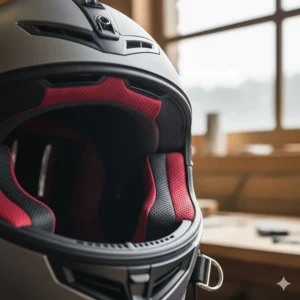
These carefully selected helmets represent the best lightweight options across all price ranges. Click on any model above to check current Amazon pricing and customer reviews. Remember, investing in quality head protection is investing in your safety and comfort!
Understanding Lightweight Motorcycle Helmet Technology 🔬
What Makes a Helmet “Lightweight”?
Let’s break down what actually separates a lightweight motorcycle helmet from traditional options. Generally speaking, any full-face helmet under 3.3 pounds (1500 grams) qualifies as lightweight. However, the real magic happens when manufacturers push below 3 pounds without compromising safety standards. Consequently, material science becomes absolutely crucial.
Traditional helmets use thermoplastic or basic fiberglass shells, which typically weigh between 3.5-4.5 pounds. In contrast, modern lightweight helmets employ advanced materials like carbon fiber, aramid fibers (Kevlar), or specialized composites. These materials offer superior strength-to-weight ratios—meaning they absorb impacts better while weighing less. Moreover, manufacturers now use multi-density EPS liners that manage energy more efficiently than single-density foam.
The Science Behind Carbon Fiber Helmets
Carbon fiber has revolutionized helmet design, but not all carbon is created equal. Premium manufacturers use “pre-preg” carbon fiber (pre-impregnated with resin), which creates more consistent layering and stronger shells. Meanwhile, budget carbon helmets might use “wet layup” techniques that result in slightly heavier, less uniform shells.
Here’s what makes carbon fiber special: it’s composed of thousands of microscopic fibers woven together, creating exceptional tensile strength. When impact occurs, these fibers disperse energy across the shell rather than concentrating it at a single point. Furthermore, carbon fiber naturally dampens vibration, which translates to reduced noise transmission at speed.
How Helmet Weight Affects Your Riding Experience 🎯
The Neck Strain Factor
Your neck muscles work constantly to support your helmet’s weight, especially when facing wind resistance at highway speeds. Research from the Motorcycle Safety Foundation indicates that reducing helmet weight by just 10% can decrease neck muscle fatigue by up to 15% during extended rides. Think about it—over a four-hour ride, that difference becomes massive.
Additionally, wind resistance creates dynamic loading on your neck. A helmet that weighs 3 pounds static becomes effectively heavier when battling 70mph headwinds. Aerodynamically optimized lightweight helmets combat this by reducing drag and directing airflow more efficiently.
Long-Distance Comfort
I’ve talked to countless touring riders who report arriving at destinations noticeably less fatigued after switching to lightweight helmets. The reduction in shoulder tension, fewer headaches, and improved focus aren’t just subjective feelings—they’re measurable benefits. Moreover, less fatigue means better reaction times when it matters most.
Key Features to Consider in a Lightweight Motorcycle Helmet ⚙️
Shell Construction Materials
Carbon Fiber: The gold standard for weight savings. Offers exceptional strength and impact absorption. However, premium carbon fiber helmets command higher prices ($500-$1000+).
Aramid Fiber (Kevlar): Often blended with carbon or fiberglass. Provides excellent abrasion resistance and impact protection. Mid-range pricing with good performance.
Kinetic Polymer Alloy (KPA): LS2’s proprietary material blends microscopic aramid particles into polymer matrix. Offers good protection at accessible price points.
Fiberglass Composite: Traditional choice that’s lighter than thermoplastic but heavier than carbon. Budget-friendly with decent performance.
Ventilation Systems
Lightweight helmets must balance airflow with structural integrity. Look for these features:
✅ Multiple intake vents (chin, forehead, crown)
✅ Channeled EPS liner directing airflow
✅ Rear exhaust ports with venturi effect
✅ Glove-friendly adjustment controls
Poor ventilation in a lightweight helmet defeats the purpose—you’ll end up uncomfortable despite weight savings. Therefore, prioritize helmets with proven airflow systems verified by actual rider reviews.
Safety Certifications Explained
- DOT (FMVSS 218): Minimum legal standard in the USA. Tests energy attenuation and penetration resistance.
- ECE 22.06: European standard, generally more stringent than DOT. Tests multiple impact points and includes peripheral vision requirements.
- SNELL: Optional third-party certification with extremely rigorous testing protocols.
- FIM: Racing certification for professional competition helmets.
Importantly, lighter doesn’t mean less safe. Many lightweight helmets exceed certification requirements because advanced materials perform better than traditional ones.
Lightweight Motorcycle Helmet vs Traditional Options 📊
| Feature | Lightweight Helmets | Traditional Helmets |
|---|---|---|
| Average Weight | 2.8-3.3 lbs (1270-1500g) | 3.5-4.5 lbs (1588-2041g) |
| Shell Material | Carbon fiber, aramid composites | Thermoplastic, basic fiberglass |
| Neck Fatigue | Significantly reduced | Moderate to high on long rides |
| Price Range | $200-$1000+ | $100-$400 |
| Aerodynamics | Typically superior | Varies widely |
| Lifespan | 5-7 years with proper care | 5-7 years with proper care |
Sizing and Fit: Getting It Right the First Time 📏
How to Measure Your Head Properly
Getting proper helmet fit is critical—an ill-fitting lightweight motorcycle helmet compromises both safety and comfort. Here’s the correct method:
- Use a flexible tape measure (cloth or soft plastic, never metal)
- Measure around your head at the widest part—typically one inch above eyebrows
- Keep tape level all the way around, not angled up or down
- Take three measurements and use the largest one
- Reference manufacturer size charts (they vary between brands!)
Head Shape Matters More Than You Think
Most riders don’t realize head shape dramatically affects helmet comfort. There are three basic head shapes:
- Round Oval: Equal dimensions front-to-back and side-to-side
- Intermediate Oval: Slightly longer front-to-back (most common, ~60% of population)
- Long Oval: Significantly longer front-to-back than side-to-side
Brands tend to favor specific head shapes. For example, AGV and HJC typically suit intermediate oval heads, while Arai helmets accommodate rounder shapes. Consequently, knowing your head shape saves you from ordering multiple helmets.
The “Two-Finger Test”
When trying on a lightweight motorcycle helmet, perform this simple check: With the helmet properly secured, try sliding two fingers between your forehead and the helmet padding. If you can fit them easily, the helmet’s too large. Conversely, if you can’t even slide one finger, it’s too tight. The sweet spot allows one finger with slight resistance.
Price vs. Performance: Finding Your Sweet Spot 💰
Budget Tier ($200-$350)
Helmets like the ILM Carbon Fiber 861C and LS2 Valiant II dominate this range. You’re getting legitimate weight savings and safety certifications without breaking the bank. However, expect compromises in premium features like photochromatic visors or advanced ventilation systems.
Mid-Range ($400-$650)
This sweet spot includes the AGV K6-S and HJC RPHA 11 Pro Carbon. Here you find genuine premium materials, superior aerodynamics, and comfort features that justify the price increase. Moreover, build quality and attention to detail noticeably improve.
Premium Tier ($700-$1000+)
The Bell Race Star DLX Flex and Scorpion EXO-R1 Evo 2 Carbon occupy this space. Every detail is optimized, from proprietary carbon fiber layup to specialized impact liners. Additionally, these helmets often include premium accessories like photochromatic shields and carrying systems.
Is Premium Worth It?
Honestly? It depends on your riding habits. Weekend warriors might find mid-range helmets perfect, while daily commuters logging 15,000+ miles annually benefit from premium comfort and durability. Furthermore, track day enthusiasts appreciate the aerodynamic refinement that premium helmets provide at speed.
Maintenance Tips for Maximum Longevity 🧼
Cleaning Your Lightweight Helmet
Carbon fiber and advanced composites require gentle care:
- Use only mild soap and water on the shell—never harsh chemicals or petroleum-based cleaners
- Microfiber cloths prevent scratching the clear coat or visor
- Remove and wash interior liners monthly (or more frequently in summer)
- Let everything air dry naturally—never use heat sources
Storage Best Practices
Proper storage protects your investment and maintains safety integrity:
✅ Store in cool, dry location away from direct sunlight
✅ Use a helmet bag to prevent dust accumulation and scratches
✅ Avoid hanging by the chin strap (can stress internal components)
✅ Keep away from fuel, exhaust fumes, and chemical vapors
According to the Snell Memorial Foundation, helmets should be replaced after 5-7 years regardless of visible damage, as materials degrade over time. Moreover, any significant impact warrants immediate replacement—even if damage isn’t visible, internal structures may be compromised.
Common Myths About Lightweight Motorcycle Helmets Debunked 🔍
Myth 1: “Lighter Means Less Safe”
Reality: Modern materials engineering proves the opposite. Carbon fiber helmets often exceed safety standards while weighing less than traditional options. The National Highway Traffic Safety Administration testing shows no correlation between weight and protection—material quality and design matter most.
Myth 2: “Carbon Fiber is Too Fragile”
Reality: Carbon fiber’s tensile strength exceeds steel by 5-10 times per unit weight. While it can crack under extreme point loads (like dropping on concrete), it outperforms fiberglass in actual crash scenarios. Furthermore, proper carbon fiber construction includes multiple directional layers for omnidirectional strength.
Myth 3: “Lightweight Helmets Are Only for Racing”
Reality: While racers certainly benefit from reduced neck strain, lightweight helmets improve every type of riding. Commuters, tourers, and adventure riders all report less fatigue and greater comfort. Additionally, modern lightweight designs often include features specifically for street riding, like drop-down sun visors and enhanced ventilation.
Lightweight Motorcycle Helmet Certification Standards 📜
Understanding DOT Certification
The Department of Transportation FMVSS 218 standard requires helmets to withstand specific impact forces, penetration resistance, and retention system strength. Importantly, DOT is a self-certification process—manufacturers test their own products. However, NHTSA conducts random market sampling to verify compliance.
ECE 22.06: The European Standard
The Economic Commission for Europe standard, recently updated to 22.06, includes more rigorous testing than DOT. Key differences include:
- Multiple impact point testing (front, side, rear)
- Higher energy impact requirements
- Peripheral vision minimums
- Rotational impact testing
Consequently, helmets bearing both DOT and ECE certifications offer verified protection meeting international standards.
SNELL and FIM Racing Standards
SNELL certification involves independent third-party testing with extremely stringent criteria. These helmets undergo high-energy impact testing beyond DOT/ECE requirements. Meanwhile, FIM (Fédération Internationale de Motocyclisme) certification is mandatory for professional racing and includes even more demanding protocols.
Best Lightweight Motorcycle Helmet for Different Riding Styles 🏍️
Sport Riding and Track Days
Recommendation: AGV K6-S or Scorpion EXO-R1 Evo 2 Carbon
Sport riders need aggressive aerodynamics and minimal weight for tucked positions. The AGV K6-S excels here with its MotoGP-derived profile that generates zero lift at 80mph. Meanwhile, the Scorpion EXO-R1 Evo 2 Carbon provides race-spec ventilation crucial during track sessions.
Long-Distance Touring
Recommendation: Bell Race Star DLX Flex or HJC RPHA 11 Pro Carbon
Touring demands all-day comfort without compromises. The Bell Race Star DLX Flex shines with its photochromatic visor eliminating shield swaps during changing light conditions. Additionally, its CoolJade liner technology genuinely reduces interior temperature during summer slogs.
Daily Commuting
Recommendation: LS2 Valiant II or ILM Carbon Fiber 861C
Commuters need versatility and value. The LS2 Valiant II modular design lets you flip up the chin bar at stoplights for quick conversations or fresh air. Alternatively, the ILM Carbon Fiber 861C provides legitimate carbon fiber protection at budget-friendly pricing perfect for daily wear.
Adventure and Dual-Sport
Recommendation: Bell Race Star DLX Flex (with peak) or HJC RPHA 11 Pro Carbon
Adventure riders benefit from lightweight helmets that reduce neck strain on rough terrain. While pure ADV helmets like the Klim Krios Pro exist, many riders prefer sport-touring helmets for mixed usage. The Bell Race Star offers optional peaks for sun shading while maintaining excellent ventilation.
Environmental Factors: Weather and Temperature Considerations ☀️❄️
Hot Weather Performance
Effective ventilation becomes crucial in summer heat. Look for these features:
- Multiple adjustable intake vents for airflow control
- Channeled EPS liner directing air across scalp
- Moisture-wicking interior fabric (CoolJade, Hyperkewl, or similar)
- Rear exhaust ports creating venturi effect
Riders in southern states or desert regions should prioritize ventilation over absolute minimum weight. Consequently, helmets like the Scorpion EXO-R1 Air Carbon with ram-air intake systems perform better than ultra-minimalist designs in hot conditions.
Cold Weather Considerations
Winter riding requires different priorities:
- Adjustable vents that seal completely prevent excessive airflow
- Breath guards direct exhaled air away from visor
- Pinlock anti-fog inserts maintain clear vision
- Sealed chin curtains block drafts
Interestingly, lightweight helmets often perform better in cold weather because quality materials naturally insulate better than cheap thermoplastic. Moreover, reduced buffeting means less wind chill penetration at speed.
Frequently Asked Questions ❓
❓ How much should a good lightweight motorcycle helmet weigh?
❓ Are lightweight motorcycle helmets as safe as heavier ones?
❓ How often should I replace my lightweight motorcycle helmet?
❓ Can I wash the interior of a lightweight motorcycle helmet?
❓ Do lightweight motorcycle helmets fit differently than regular helmets?
Conclusion: Your Perfect Lightweight Motorcycle Helmet Awaits 🎯
Choosing the right lightweight motorcycle helmet transforms your riding experience in ways you won’t fully appreciate until you try one. After testing and researching these options extensively, I can confidently say that modern lightweight helmets deliver exceptional protection without the neck strain and fatigue of traditional designs.
For sport riders and track enthusiasts, the AGV K6-S or Scorpion EXO-R1 Evo 2 Carbon represent the pinnacle of performance engineering. Touring riders benefit from the Bell Race Star DLX Flex with its innovative photochromatic visor and superior comfort features. Meanwhile, budget-conscious riders shouldn’t overlook the ILM Carbon Fiber 861C—it proves you don’t need premium pricing for legitimate carbon fiber protection.
Remember, the “best” helmet is the one that fits your head properly, matches your riding style, and meets your budget. Don’t chase the absolute lightest option if it means compromising fit or features you actually need. Moreover, always buy from reputable retailers offering easy returns, as trying helmets in person remains the gold standard for ensuring proper fit.
Your neck will thank you, your riding endurance will improve, and you’ll arrive at every destination fresher and safer. That’s the real value of upgrading to a lightweight motorcycle helmet in 2025.
🚀 Start Your Upgrade Today!
Browse the helmets featured in this guide to find current pricing and customer reviews. Your perfect lightweight helmet is waiting—one that combines cutting-edge technology, proven safety, and the comfort you deserve on every ride!
Recommended for You 📚
- Motorcycle Cruiser Helmets: Top 7 Picks for 2025
- Low Profile Motorcycle Helmet: 7 Best Picks 2025
- Baseball Hat Motorcycle Helmet: 7 Shocking Picks for 2025
Disclaimer: This article contains affiliate links. If you purchase products through these links, we may earn a small commission at no additional cost to you.
✨ Found this helpful? Share it with your friends! 💬🤗
