
In This Article
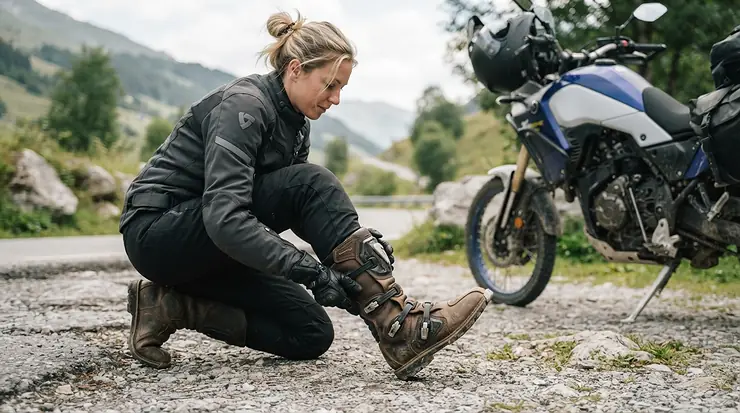
Engineer boots are tall, pull-on leather boots with a rounded toe and an adjustable buckled strap. They started as work footwear. Motorcycle touring boots are purpose-built riding boots with armor, stiffened soles and weatherproof liners, designed for hours on pavement. One is a heritage look that rides well enough. The other is protective gear.
That gap matters more than most riders admit. The engineer boot is the classic cruiser staple, and Wikipedia’s overview of motorcycle boot styles notes it has long been worn by people in many occupations, not just riders. Touring boots, by contrast, are engineered for highway speeds, with less armor than racing boots but far more than any fashion boot.
So which one belongs on your pegs? That’s what this guide settles. I compared real specs, aggregated reviewer sentiment, and the certification standards behind each style. The goal isn’t to scare you out of your favorite boots. It’s to help you see exactly what you’re trading when you pick style over armor, or armor over style.
Here’s the short version of what you’ll get: seven real boots spanning pure engineer, hybrid and full touring designs, plain-English breakdowns of engineer boot riding suitability, buckle strap design, and ankle flex differences, and a decision framework you can use today. Prices below are ranges only, so check current price before you buy.
Quick Comparison: Engineer Boots vs Motorcycle Touring Boots
| Feature | Engineer Boots | Motorcycle Touring Boots |
|---|---|---|
| Impact protection | Thick leather only, no certified armor | Molded ankle and shin protection, reinforced heel and toe |
| Closure | Pull-on with adjustable buckled straps | Zipper, cam-lock buckles or ratchet, often with a hook-and-loop flap |
| Ankle flex | Soft, unrestricted | Engineered flex zones, sometimes hinged |
| Weatherproofing | Oiled leather, rarely a membrane | Often a sewn-in waterproof membrane |
| Best For | Casual cruising: Frye Engineer 12R | Long-haul riding: Sidi Adventure 2 Gore-Tex |
Look at the pattern above. Engineer boots win on looks and simplicity, while touring boots win everything that matters in a slide. If you ride mostly short, low-speed trips, the Frye Engineer 12R is a sensible upgrade over sneakers. If you cover real miles in unpredictable weather, the Sidi Adventure 2 Gore-Tex earns its higher price through engineered protection. Hybrids like the Stylmartin Legend Evo WP try to split the difference.
💬 Just one click — help others make better buying decisions too!😊
Top 7 Boots for Engineer Boots vs Motorcycle Touring Boots: Expert Analysis
I’ve ordered these from classic engineer to full touring, so you can feel the protection curve rise as you scroll. Review sentiment below is aggregated from public reviews and editorial tests I could verify, not invented quotes.
1. Frye Engineer 12R — the iconic cruiser look
The Frye Engineer 12R is the boot most people picture when they hear “engineer.” It uses Greasy and Crazy Horse leathers with Goodyear welt construction and a rubber outsole, and Frye markets it as a cult favorite of bikers.
Those specs have real-world meaning. A Goodyear welt means the boot can be resoled, so it ages instead of dying. The thick oiled leather resists abrasion better than any sneaker. But there’s no certified ankle armor and no torsional stiffness engineered in, so a twisting crash is where it falls short.
On the spec comparison, this suits relaxed local riding, rally parking-lot style, and riders who want one boot for the bike and the bar. Reviewers on Zappos (about 89 reviews, with the large majority at five stars) praise comfort and durability, and some riders say it feels soft but protective around the ankle and calf. A common complaint is tight, stiff fit at first and a premium price. One reviewer flagged a stitching flaw. One motorcycle.com tester noted the soles feel a bit clunky on a sportbike.
Pros:
- ✅ Goodyear welt construction allows future resoling
- ✅ Classic look works on and off the bike
- ✅ Comfortable after break-in per most reviewers
Cons:
- ❌ No certified ankle or shin armor
- ❌ Not waterproof without extra care
Expect a price in roughly the $350-$500 range, depending on retailer. Fair value if style matters most; check current price.
2. Chippewa 7″ Original Engineer 1901M52 — heritage work-boot toughness
The Chippewa 7″ Original Engineer 1901M52 comes from the work-boot side of the family. It’s hand-crafted in the U.S. with a full-grain leather upper, Goodyear welt, steel shank, Texon insole and a Vibram V-Bar cork outsole with a logger-style heel.
A 7-inch shaft is short by engineer standards, so it covers less of your shin than taller versions. The steel shank stiffens the sole underfoot, which helps on pegs. The logger heel can snag on some footpeg setups, so test it with your bike. The listing I checked was unclear on whether a hard or soft toe is fitted, so confirm the exact model before buying.
I couldn’t verify a review pool for this exact model. Elsewhere, reviewers describe Chippewa engineers as long-lasting boots, with fit and finish sometimes called inconsistent. Treat that as general brand sentiment, not a model-specific verdict. Based on the construction, this is a good choice for riders who also work in their boots.
Pros:
- ✅ Goodyear welt and steel shank add structure
- ✅ Made in the U.S. with full-grain leather
- ✅ Vibram sole offers decent traction
Cons:
- ❌ Short 7-inch shaft limits lower-leg coverage
- ❌ No armor, membrane or CE-labeled protection
Availability varies by retailer and some Chippewa engineer styles have been discontinued. Typical pricing runs about $250-$400. Good value for workwear, modest value as riding gear.
3. Stylmartin Legend Evo WP — engineer looks with real armor
The Stylmartin Legend Evo WP is the hybrid I’d flag first for anyone stuck between styles. Reviewers describe it as classic engineer style with touring performance: a water-repellent full-grain leather upper, a waterproof breathable membrane, and a fully waterproof lining.
Here’s what that means in practice. Internal molded polyurethane protection sits over both ankles, with reinforced toe and heel, so it adds the crash armor an ordinary engineer boot lacks while still looking vintage. The full-height shaft closes with a zip and dual belts, giving you the buckled look and a quick-entry zipper. The non-slip Vibram sole grips pavement and trail.
The source I reviewed calls it CE certified but gave no category, so read the label for the exact level. It also listed no cons, which I treat with healthy skepticism: a stiff tall shaft and membrane will run warm in summer.
Pros:
- ✅ Internal ankle protection hidden under vintage styling
- ✅ Waterproof membrane for all-weather commuting
- ✅ Vibram sole with solid pavement grip
Cons:
- ❌ Tall membrane boot likely runs warm in heat
- ❌ Price and CE level need checking before buying
I couldn’t confirm a reliable current price. Boots in this class often fall around $300-$450, so verify. Strong value if protection and looks both matter.
4. TCX Fuel WP — most walkable cruiser-style hybrid
The TCX Fuel WP is a 10-inch boot in thick cowhide with a T-Dry waterproof membrane, protective up to mid-calf. Hard padded discs cover the inner and outer ankle, and the outer disc is shielded by a steel adjustment buckle. Reinforced toe and heel boxes add structure.
The full-length inside zipper lets you snug the shaft to your calf, and an adjustable strap with buckle finishes the look. Stretch accordion panels at the Achilles add flex. Motorcycle.com’s tester called them comfortable and not bad for walking, and likely more protective than older engineer boots. He also noted the lug soles are thick and a little clunky, and that online reviews question the waterproofing.
My take: the TCX Fuel WP is the practical step up from a pure engineer for a cruiser rider who wants armor without a motocross look. Large calves may not zip fully, per that review. It’s also resoleable.
Pros:
- ✅ Ankle discs plus reinforced toe and heel
- ✅ Full-length zipper makes entry easy
- ✅ Little break-in needed per one tester
Cons:
- ❌ Waterproofing questioned in some reviews
- ❌ Thick lug soles feel clunky on shifters
Reviews show a range of roughly $290-$330. Good value for hybrid protection; check current price.
5. Alpinestars Ridge V2 WP — best budget touring step-up
The Alpinestars Ridge V2 WP is the entry point into true touring boots. It uses a Drystar waterproof membrane, a medial zipper with a hook-and-loop flap, a TPU shift pad, a removable insole, a reinforced shin plate and dual-density ankle protectors. It lists EN 13634:2010, an older revision of the standard, so check the label of the pair you buy.
Front and rear accordion zones flex mainly for ventilation and comfort. The low toe box slips under a gear shifter easily, which cruiser riders with bulky boots will appreciate. WebBikeWorld’s reviewer pegs it as best suited to sport touring and not intended for true ADV riding.
Based on the specs, this is the pick for a commuter or weekend tourer who wants certified-style protection on a tight budget.
Pros:
- ✅ Waterproof Drystar membrane at a low price
- ✅ Dual-density ankle protectors and shin plate
- ✅ Low profile fits under most shifters
Cons:
- ❌ Synthetic upper is less rugged than leather
- ❌ Not intended for serious adventure riding
Expect around $200. Excellent value for entry-level touring protection; check current price.
6. Forma Adventure — best value full-protection touring boot
The Forma Adventure uses full-grain oiled leather, a Drytex waterproof breathable lining, an injected front plate, a steel shank, TPU shin and ankle protection, and a replaceable footbed. Closure is a broad hook-and-loop cuff plus three plastic buckles.
One review source lists it as EN 13634:2017 Level 2, a meaningful bump in certified protection. The steel shank gives pedal support, and the tester describes it as walkable like a hiking boot with good grip and impact protection. Downsides they note: bulky for short rides, can build heat, and the softer sole may feel less supportive on pegs.
WebBikeWorld frames it as strong value in adventure touring. On paper, this is where you get most of the touring boot benefits without flagship pricing.
Pros:
- ✅ Certified protection reported at Level 2
- ✅ Three buckles and cuff give adjustable fit
- ✅ Walkable with good grip off the bike
Cons:
- ❌ Bulky and warm for short summer rides
- ❌ Softer sole feels less supportive on pegs
Reviewers list it around $350. Great value for serious touring; check current price.
7. Sidi Adventure 2 Gore-Tex — premium hinge and full Gore-Tex gaiter
The Sidi Adventure 2 Gore-Tex is the benchmark premium touring boot. A 14-inch Gore-Tex gaiter runs full height, and the ankle flex system plus a dual hinge allow forward and back motion while resisting over-extension. Cam-lock buckles and a Velcro-secured flap with an elastic expansion panel handle closure.
Rider Magazine reviewed it on hot days and found it not overly warm, though motorcycle.com’s tester said the Gore-Tex liner gets warm in summer. Both note a tight fit. Another source calls it stiff for extended walking. It weighs roughly 6 pounds per pair, according to older testing.
Reviewers consistently describe it as durable and protective, with real motocross-style engineering. That makes it the clear choice for riders who accept a heavy boot in exchange for crash and weather protection.
Pros:
- ✅ Hinged ankle system resists over-extension
- ✅ Full-height Gore-Tex gaiter for river crossings
- ✅ Durable build with strong crash protection
Cons:
- ❌ Stiff and tight for long walks
- ❌ Warm in hot weather
Pricing runs roughly $450-$550. Premium price, premium protection; check current price.
Top 7 Compared Side by Side
| Boot | Type | Ankle Protection | Closure | Price Range | Best For |
|---|---|---|---|---|---|
| Frye Engineer 12R | Pure engineer | Leather only | Buckled straps, pull-on | $350-$500 | Casual cruisers |
| Chippewa 7″ Original Engineer 1901M52 | Work engineer | Leather, steel shank | Pull-on | $250-$400 | Work plus riding |
| Stylmartin Legend Evo WP | Hybrid | Internal PU ankle protection | Zip and dual belts | Verify price | Vintage look with armor |
| TCX Fuel WP | Hybrid | Ankle discs, steel buckle | Zip and buckle | $290-$330 | Walkable cruiser use |
| Alpinestars Ridge V2 WP | Touring | Dual-density ankle protectors | Zip and flap | About $200 | Budget commuters |
| Forma Adventure | Touring | TPU ankle and shin | Velcro and 3 buckles | About $350 | Value long-haul riding |
| Sidi Adventure 2 Gore-Tex | Premium touring | Hinged ankle system | Cam-locks and flap | $450-$550 | Maximum protection |
Reading across the table, the protection climbs as you move down the list, and so does the price, though not by much until you hit the Sidi Adventure 2 Gore-Tex. The Alpinestars Ridge V2 WP is the standout bargain if budget rules, while the Forma Adventure delivers the most protection per dollar. If you want the vintage look, the Stylmartin Legend Evo WP and TCX Fuel WP are the compromise picks.
How to Choose Engineer Boots vs Motorcycle Touring Boots
Picking between engineer boots vs motorcycle touring boots takes five minutes if you work through the right questions. Use these steps in order.
- Match the boot to your riding speed. Slow city loops tolerate classic leather. Highway miles at 65 mph or more reward certified armor, because abrasion and impact forces rise sharply with speed.
- Check for a real CE label. EN 13634 is the European standard for motorcycle footwear. Look for the 2017 revision and, ideally, a Level 2 abrasion and cut rating, rather than a vague claim of “protective.”
- Inspect the ankle. If your boot has no molded ankle armor, you’re relying on leather alone. For touring, that’s a gamble.
- Test the sole on your pegs. A soft or oversized sole can feel sloppy, while a stiff shank gives support. Bring your shifter lever height into the decision.
- Choose a closure you can manage in the rain. Zippers with flaps beat bare laces, and pull-on engineers can be a struggle with wet leather.
- Weigh weather needs. A sewn-in waterproof membrane adds cost and warmth, but it’s the difference between a miserable and a dry ride.
- Decide how much you’ll walk. Touring boots are stiffer and heavier than a fashion boot, so factor in time off the bike.
Applying these steps, most riders land on a hybrid like the TCX Fuel WP or a touring pick like the Forma Adventure. The pure engineer fits only if your riding is low-risk and your priority is style.
Engineer Boot Riding Suitability: Where the Classic Style Works
Let’s be fair to the engineer boot, because it has earned its reputation. The tall shaft and thick leather shield your lower leg from exhaust heat, road debris and wind. The pull-on design has no laces to snag a shifter or rear brake, and the buckle gives a small fit adjustment. That’s real engineering, if dated.
For engineer boot riding suitability, think low-risk, low-speed, and short distance. Reviewers regularly say they’ve ridden engineer boots on all kinds of bikes, including sportbikes, though the thick soles feel clunkier. A manufacturer page I reviewed frames them as a reasonable baseline compared to sneakers, but a compromise next to purpose-built gear. That page is marketing, so I weigh it lightly, but the logic holds up.
What’s missing is certified protection. There’s no energy-absorbing ankle armor, no engineered torsional stiffness, and often a cork or leather sole with less oil resistance than riding rubber. A twisting crash can bend an ankle past its limits, and thick leather alone doesn’t stop that.
The verdict on engineer boot riding suitability: acceptable for casual rides if you accept the risk, but not a first choice for touring. If you love the look, step up to a hybrid with hidden armor, such as the Stylmartin Legend Evo WP.
Touring Boot vs Fashion Boot Protection: What the Label Actually Tests
The touring boot vs fashion boot protection gap comes down to testing. A fashion boot has no standard it must pass. A touring boot built to EN 13634:2017 does. SATRA’s summary of the standard says it covers upper height, seam construction, bond strength between upper and outsole, and transverse rigidity, plus tests for impact cut and abrasion resistance. Optional claims, like shin and ankle impact protection, water resistance and slip resistance, are only tested if the maker claims them.
Transverse rigidity matters most. It measures how well a boot resists being crushed sideways, which is what protects your foot when a bike falls on it. Most fashion engineer boots are built for walking flexibility, so they don’t aim for that.
Real-world crash data supports the case for riding-specific footwear. Research from Victoria, Australia’s Transport Accident Commission found riders in inappropriate footwear such as runners or sandals had open-wound injuries about 47 percent of the time, versus 25 percent for riders in boots. The TAC study also said work boots beat everyday shoes but not purpose-built protective boots. Where an engineer sits on that spectrum is closer to a work boot than a touring boot.
Bottom line for touring boot vs fashion boot protection: certified touring boots test the failure modes that matter, and fashion boots simply don’t.
Buckle Strap Design: Decoration, Adjustment or Real Hardware?
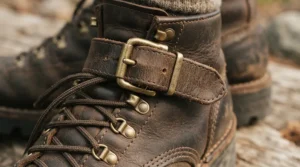
Buckle strap design is where engineer and touring boots look most alike and work most differently. On an engineer boot, the adjustable strap across the ankle and instep tweaks fit around the calf and keeps the shaft from flapping. It’s functional, but it’s a fit tool, not a protective one. The harness style, by contrast, uses a fixed set of straps and rings.
On a touring boot, the buckle strap design has a second job: holding armor in place and sealing out weather. Cam-lock buckles, like those on the Sidi Adventure 2 Gore-Tex, clamp the shaft snugly over a Velcro flap. The Forma Adventure pairs three plastic buckles with a wide cuff. These closures let you tighten a stiff boot around a gaiter or riding pants.
Hybrids blend both ideas. The TCX Fuel WP adds a steel adjustment buckle that also shields the outer ankle disc. The Stylmartin Legend Evo WP keeps the dual-belt look while adding a zipper for quick entry.
Here’s the practical takeaway: judge buckle strap design by what it holds in place. A decorative buckle looks great, but a buckle that locks a molded shell against your ankle is doing real work in a crash.
Ankle Flex Differences: Why Your Shifting Foot Cares
Ankle flex differences explain why touring boots feel stiff and engineer boots feel slouchy. Your ankle needs to bend forward and back to shift and brake, but not twist sideways or overextend. An ideal riding boot allows single-axis flexion, which is exactly the compromise the standard riding-boot design aims for.
An engineer boot has soft leather and no structure, so it flexes freely in every direction, including the wrong ones. That feels comfortable, but it offers no support if the foot gets caught. Touring boots add engineered flex zones, such as the accordion panels on the Alpinestars Ridge V2 WP and TCX Fuel WP, which bend where you need and stay stiff elsewhere.
The most refined design is the hinged ankle on the Sidi Adventure 2 Gore-Tex. Its dual hinge guides motion and resists over-extension, and Sidi says the redesigned parts flex more for brake and gear controls. That’s why the Sidi Adventure 2 Gore-Tex shortens break-in time compared with older stiff designs.
The trade-off in ankle flex differences is walking comfort. More structure means a heavier stride, which is why the Forma Adventure, with softer flex, feels hiking-boot friendly while stiffer boots feel clumsy off the bike.
Purpose-Built vs Fashion Footwear: Benefits and Trade-Offs
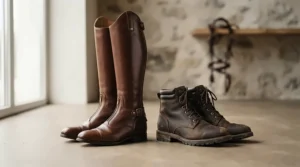
Purpose-built vs fashion footwear is really a question of what you’re willing to give up. Fashion boots give you style, easy walking and a lower price. Purpose-built boots give you tested protection and weather performance.
| Criteria | Fashion Engineer | Hybrid | Purpose-Built Touring |
|---|---|---|---|
| Certified protection | None | Often CE-labeled | Typically CE-labeled |
| Weatherproofing | Oiled leather | Membrane | Membrane, often Gore-Tex |
| Walkability | Excellent | Good | Fair to stiff |
| Style | Classic | Vintage-modern | Technical |
| Best For | Frye Engineer 12R | Stylmartin Legend Evo WP | Forma Adventure |
Looking at this table, hybrids deserve more attention than they get. The Stylmartin Legend Evo WP and TCX Fuel WP give you most of the engineer look while adding armor and a membrane. Pure touring boots like the Forma Adventure win on protection, and the Frye Engineer 12R wins on pure style.
Think of it like helmets. A novelty helmet is a hat, while a certified one is protection. The same logic applies to your feet.
Practical Guide: Breaking In and Maintaining Your Boots
Boots only protect you if they fit and survive. Here’s a simple schedule.
First two weeks. New engineer boots need break-in. Wear them around the house with the socks you’ll ride in, then take short rides. Stiff touring boots, like the Sidi Adventure 2 Gore-Tex, need patience too, though Sidi says the redesign shortens break-in. Don’t tour in brand-new boots.
Monthly care. Clean off road salt and dirt. Condition leather on the Frye Engineer 12R and Chippewa 7″ Original Engineer 1901M52 to keep it supple and water-resistant. Membrane boots like the Forma Adventure need only gentle cleaning, since leather conditioners can affect some liners.
Check hardware. Inspect buckles and zippers regularly. A broken zipper on the TCX Fuel WP or a cracked buckle can turn a boot into a liability.
Common first-30-day mistakes. Buying too tight is the big one, since leather stretches but molded armor doesn’t. Another is ignoring shifter wear: a pad that darkens, as one TCX Fuel WP reviewer noted, is normal, not a defect.
Resole instead of replace. Welted boots can be resoled, which extends their life dramatically. Motorcycle.com’s long-term TCX Fuel review highlights resoleability as a benefit, and the same logic applies to the Goodyear-welted engineers on this list.
Real-World Scenarios: Which Boot Fits Which Rider?
Three profiles show how the choice plays out.
The weekend cruiser, 40 miles on Sunday. You ride a cruiser to the coffee shop and back, rarely above 55 mph, mostly dry weather. The Frye Engineer 12R is a fair fit. Budget around $350-$500. The TCX Fuel WP adds armor for a modest extra investment.
The year-round commuter, 25 miles each way. Rain, traffic and a daily shifter workout. Look at the Alpinestars Ridge V2 WP at around $200. The waterproof membrane and ankle protectors justify the cost, and the low profile fits shifters.
The long-distance tourer, 400-mile days. You cross mountains and weather, so the Forma Adventure (around $350) or Sidi Adventure 2 Gore-Tex (roughly $450-$550) is the right call. The Sidi Adventure 2 Gore-Tex earns its price when you’re riding all day, through everything.
Notice that budget, environment and mileage each point to a different boot. That’s why there is no single winner in engineer boots vs motorcycle touring boots. The right choice depends on you.
Problem and Solution Guide: Common Boot Headaches
Problem: boots feel too stiff. Wear them at home first, and consider a hinged design like the Sidi Adventure 2 Gore-Tex, which is built to flex where you need.
Problem: wet feet. Reviews question the waterproofing of some membranes, including the TCX Fuel WP. Choose a sewn-in membrane from a trusted maker, such as the Gore-Tex in the Sidi Adventure 2 Gore-Tex, if rain riding is regular.
Problem: shifter pad wear or lever clearance. Thick soles on the TCX Fuel WP and engineer styles can crowd the lever. A low toe box like the Alpinestars Ridge V2 WP slips under easily, and some riders raise the shifter slightly.
Problem: calves too big. A full-length zipper may not close over larger calves, per one review of the TCX Fuel WP. Try buckle-adjustable boots like the Forma Adventure or an engineer like the Frye Engineer 12R.
Problem: heat. Membrane boots run warm, as reviewers note for the Forma Adventure and Sidi Adventure 2 Gore-Tex. In hot climates, consider a vented, non-waterproof alternative.
Long-Term Cost and Value Analysis
Price per year of use tells the real story.
| Boot | Price Range | Resoleable | Value Verdict |
|---|---|---|---|
| Frye Engineer 12R | $350-$500 | Yes (welted) | Good for style, weak for protection |
| Chippewa 7″ Original Engineer 1901M52 | $250-$400 | Yes (welted) | Strong workwear value |
| Stylmartin Legend Evo WP | Verify price | Check maker | Strong hybrid if CE level confirmed |
| TCX Fuel WP | $290-$330 | Yes | Good hybrid value |
| Alpinestars Ridge V2 WP | About $200 | Check maker | Best budget protection |
| Forma Adventure | About $350 | Check maker | Best value touring |
| Sidi Adventure 2 Gore-Tex | $450-$550 | Check maker | Premium, long-lived |
Here’s how I read the data. A welted engineer that lasts a decade and gets resoled twice has a low cost per year, but you’re paying for longevity, not crash protection. The Alpinestars Ridge V2 WP and Forma Adventure deliver the biggest protection jump per dollar. The Sidi Adventure 2 Gore-Tex costs more up front, but reviewers consistently call it durable, which spreads the cost across many seasons.
If you plan to tour often, buying once at the top of your budget usually costs less than replacing cheap boots twice.
FAQ
❓ Are engineer boots good enough for long-distance motorcycle touring?
❓ Do motorcycle touring boots look good enough to wear off the bike?
❓ How much should I spend on motorcycle touring boots?
❓ Can I resole engineer boots and touring boots?
❓ Are waterproof touring boots worth the extra money?
Conclusion
So, engineer boots vs motorcycle touring boots: which one wins? It depends on what you ask your boots to do. If you ride short, low-speed trips and love the heritage look, a welted engineer like the Frye Engineer 12R or Chippewa 7″ Original Engineer 1901M52 is a defensible choice. Just know you’re trading certified protection for style.
If you split your time between look and safety, hybrids like the Stylmartin Legend Evo WP and TCX Fuel WP are the sweet spot, hiding armor inside classic silhouettes. And if you tour, commute in all weather or ride at speed, certified touring boots like the Alpinestars Ridge V2 WP, Forma Adventure and Sidi Adventure 2 Gore-Tex are the clear winners.
The common thread in every section above is simple: protection you can’t see is protection you’ll be glad you had. Pick the boot that matches your riding, check the label, and don’t skimp on fit.
Recommended for You
- Affordable Steel Toe Riding Boots: 7 Best Picks For 2026
- Wide Calf Motorcycle Boots For Larger Riders: 7 Proven Picks 2026
- Police Style Motorcycle Boots For Patrol Riders: 7 Proven Picks 2026
Disclaimer: This article contains affiliate links. As an Amazon Associate, I earn from qualifying purchases. If you purchase products through these links, we may earn a small commission at no additional cost to you.
✨ Found this helpful? Share it with your friends! 💬🤗
