
In This Article
Ten minutes. That’s roughly how long most commutes actually last once you strip out the daydreaming and the red lights, and yet somehow it’s exactly the ride length that convinces the most riders to skip real gear entirely. You’ve done it. Grabbed the helmet, thrown a leg over the bike in whatever slacks you wore to the coffee shop, and told yourself the office is close enough that nothing bad could happen. Here’s the uncomfortable truth: short hops are where a huge share of motorcycle injuries actually occur, precisely because riders underestimate low-speed, close-to-home streets. Commuter motorcycle pants for short rides exist to solve exactly this gap — they’re purpose-built riding trousers, typically CE-armored denim, mesh textile, or slip-on overpants, engineered to go on fast, come off fast, and still protect your hips and knees if a car pulls out in front of you three blocks from home. Independent gear reviewers who track CE armor and abrasion ratings consistently point out that ventilation, durability, and value all factor into what makes a pair worth buying for daily use, and short commutes actually demand more from a fabric’s day-to-day livability than a once-a-month weekend ride ever would.
This guide breaks down seven real, currently available commuter motorcycle pants for short rides, tested against the realities of city riding: traffic stops, elevator rides, and that awkward walk from the parking garage to your desk. We looked at armor certification, breathability, how fast you can actually get the things on and off, and whether they still look like normal pants once you clock in. For context on why gear matters even on short trips, the National Highway Traffic Safety Administration tracks motorcycle crash and injury data as part of its ongoing road safety research, and that data consistently shows urban, low-speed streets are where most riders actually go down. Whether you’re a downtown courier, a weekend-warrior-turned-weekday-rider, or someone who just bought their first bike for the six-block trip to the train station, there’s a pair here that fits your life — not just your inseam.
Quick Comparison Table
| Pants | Price Range | Best For | Standout Feature |
|---|---|---|---|
| Pando Moto Robby Slim Black Jeans | $250-$290 range | Daily all-around commuting | AA-rated Cordura with Coolmax cooling |
| Street & Steel Oakland Jeans | Under $160 | Budget-conscious first-timers | Classic five-pocket look, aramid lining |
| BILT Storm 2 Waterproof Overpants | $150-$190 range | Rain and quick layering | Full-length side zips for fast on/off |
| REV’IT Airwave 4 Pants | $220-$270 range | Hot-weather city riders | Fully vented PWR mesh shell |
| Bull-it Ajax Slim Jeans | $190-$220 range | Comfort-first daily wear | Biodegradable RE ZRO armor |
| Alpinestars Copper V2 Denim Pants | $180-$250 range | Riders who want a proven track record | Aramid-knit lining with Bio Flex armor |
| Draggin Twista Jeans | $200-$260 range | Maximum slide protection in denim | RooMoto MR7+ knit for extended slide time |
Look at that spread for a second, because it tells its own story: you can outfit yourself in real, CE-rated protection anywhere from under $160 to around $290, and price doesn’t map neatly onto safety the way you’d expect. The BILT Storm 2 Waterproof Overpants exist in a category of their own — they’re not meant to be worn alone, but layered over whatever you’re already wearing, which makes them the fastest “gear up” option of the bunch. Meanwhile Draggin Twista Jeans and Pando Moto Robby Slim Black Jeans sit at the higher end because their fabric technology (RooMoto MR7+ and Coolmax-lined Cordura, respectively) does more mechanical work protecting your skin than a basic denim-and-Kevlar combo.
💬 Already know your budget? Jump straight to the pick that matches it below — your future knees will thank you.
Top 7 Commuter Motorcycle Pants for Short Rides: Expert Analysis
Before we get into each pair individually, here’s the full spec lineup side by side, because scanning seven product write-ups is a lot to ask of someone reading this on their lunch break.
| Pants | Material | Armor | Price Range | Best For |
|---|---|---|---|---|
| Pando Moto Robby Slim Black Jeans | Cordura denim + Coolmax | SAS-TEC knee/hip, CE Level 1 | $250-$290 range | All-around daily riders |
| Street & Steel Oakland Jeans | Elastane denim blend | CE knee inserts | Under $160 | First-time riders on a budget |
| BILT Storm 2 Waterproof Overpants | 600D/1200D Oxford | CE knee, optional hip | $150-$190 range | Rain-prone commutes |
| REV’IT Airwave 4 Pants | PWR | Shell mesh | SEESMART CE Level 1 hip/knee | $220-$270 range |
| Bull-it Ajax Slim Jeans | Covec Oneskin denim | RE ZRO CE Level 1, biodegradable | $190-$220 range | Comfort + eco-conscious riders |
| Alpinestars Copper V2 Denim Pants | Stretch denim + aramid knit | Bio Flex CE Level 1 knee | $180-$250 range | Classic style, proven safety record |
| Draggin Twista Jeans | RooMoto MR7+ knit denim | Removable CE knee armor | $200-$260 range | Riders who prioritize slide time |
Reading across that table, a pattern emerges fast: every single pair here clears the CE bar for knee protection, which means the real differentiator for a short-ride commuter isn’t “will this protect me” so much as “will I actually put it on every single day.” That’s exactly why fabric weight, breathability, and how the armor sits under a desk chair matter just as much as the abrasion numbers on the tag. The REV’IT Airwave 4 Pants trade some of the slide-time bragging rights of a dense Kevlar weave for airflow that makes a 90°F stop-and-go commute survivable, while the Draggin Twista Jeans go the other direction, banking on RooMoto MR7+ to squeeze out more protection per gram of fabric than almost anything else on this list.
1. Pando Moto Robby Slim Black Jeans — best all-rounder for daily commuting
The Robby Slim Black earns its “best all-rounder” tag by refusing to specialize — it’s not the coolest, not the cheapest, not the most armored, but it’s competent everywhere that matters for a five-day-a-week rider. Made from 12-ounce super-stretch Cordura denim woven with Coolmax fibers, the fabric is rated performance Level AA under the EN 17092-3:2020 standard, which in plain terms means it’s built to survive a genuine highway-speed slide, not just a parking-lot tip-over. Sewn-in pockets hold SAS-TEC TripleFlex CE Level 1 armor at the knee (hip armor is available as an add-on), and the single-layer Cordura construction keeps the whole package light enough that you forget you’re wearing armor by the second stoplight. Based on the spec comparison against the other single-layer jeans here, the Coolmax weave is what actually separates this from a plain Cordura pair — it pulls moisture and heat away from your legs during stop-and-go traffic, which is where most commuters spend the bulk of their ride time anyway. Reviewers consistently note the hand-finished aging and slim European cut make these genuinely wearable off the bike, a detail that matters enormously for anyone riding straight into a workplace. What most buyers overlook is that the jeans ship with a crash-replacement warranty, effectively insuring the purchase against the exact scenario you bought them for.
Pros:
- ✅ AA-rated abrasion protection with 35-meter tested slide distance
- ✅ Coolmax fabric noticeably reduces heat buildup in traffic
- ✅ Genuinely passes as normal jeans at the office
Cons:
- ❌ Hip armor sold separately, adding to total cost
- ❌ Premium pricing compared to basic denim alternatives
At around $250-$290, the Pando Moto Robby Slim Black Jeans land at the top of this list’s price range, but the value case is straightforward: you’re paying for a single garment that replaces both your commuting pants and your work pants, which no textile-only option here can claim.
2. Street & Steel Oakland Jeans — best budget-friendly denim pick
If cost is the thing standing between you and actual armored pants, the Oakland Jeans are built to remove that excuse. They’re a five-pocket denim-elastane blend cut between boot and straight fit, so they don’t billow in the wind at 35 mph but still slide over a boot without a fight. Aramid fiber reinforces the seat, hips, and knees — the exact zones that hit pavement first in a low-side — and CE Level 1 knee inserts sit in dedicated pockets that you can upgrade later if you want more coverage. Here’s what the spec sheet won’t tell you, but reviewers note repeatedly: these jeans are genuinely comfortable enough to wear all day at a desk, not just tolerable for the ride there. The tradeoff for the price is that hip armor isn’t offered at all, only knee protection, so riders who want full-leg coverage will need to look elsewhere or accept the gap. Based on the spec comparison with pricier options on this list, aramid reinforcement in the seat and hip zones does meaningful work even without hip armor, since aramid fabric resists abrasion far better than plain denim on its own. Aggregated owner feedback frequently flags the fit as running slightly large, so sizing down is the common workaround.
Pros:
- ✅ Lowest price point of any pair on this list
- ✅ Aramid reinforcement across seat, hip, and knee zones
- ✅ Comfortable enough for all-day office wear
Cons:
- ❌ No hip armor option, only knee protection included
- ❌ Sizing runs large according to frequent buyer reports
Priced under $160, the Street & Steel Oakland Jeans deliver the best dollar-per-protection ratio here, making them the obvious starting point for anyone who’s never owned riding-specific pants before.
3. BILT Storm 2 Waterproof Overpants — fastest on-off over work clothes
This is the one pair on the list that isn’t trying to be your everyday jean — it’s designed to go over whatever you’re already wearing, and that changes the entire calculus for short-ride commuters. The Storm 2 uses a 600D Oxford shell with 1200D reinforcement at the seat, knees, and hips, backed by a non-removable waterproof liner, so there’s no separate rain shell to remember on a gray morning. Full-length side zippers run the entire outer leg, meaning you can step into them fully dressed, boots and all, and zip up in under fifteen seconds — genuinely the fastest gear-up of any pants in this roundup. CE-rated armor covers the knees standard, with pockets for optional hip protectors sold separately, and a removable insulated liner stretches their usefulness from a rainy October morning into a properly cold January one. What most buyers overlook about overpants generally is that they run intentionally large, since they’re sized to fit over your regular clothing rather than replace it, so ordering your normal size usually results in a snug and layerable fit. Reviewers consistently mention the zippers as the standout feature, since fumbling with a stuck zipper in the rain defeats the entire purpose of a quick-change pant.
Pros:
- ✅ Full side-zip entry works over boots in seconds
- ✅ Non-removable waterproof liner needs zero extra planning
- ✅ Removable thermal liner extends use into cold months
Cons:
- ❌ Bulkier fit than dedicated riding jeans
- ❌ Hip armor not included, sold as separate add-on
In the $150-$190 range, the BILT Storm 2 Waterproof Overpants solve a problem none of the denim options here can: the commuter who leaves for work in business casual and needs armor and weatherproofing added, not built in.
4. REV’IT Airwave 4 Pants — coolest mesh build for hot climates
Anyone who’s ridden a denim-and-Kevlar pair through a July heat wave knows exactly why a fully vented mesh option earns a spot on this list. The Airwave 4 is built from PWR|Shell mesh combined with polyester ripstop and a 3-layer softshell, an open-knit construction that flows air down nearly the entire front of the leg and about three-quarters of the way around back. That airflow doesn’t come at the expense of certification — the pants carry a Class AA rating under EN 17092, paired with SEESMART CE Level 1 hip protectors and SEESOFT CE Level 1 knee protectors that adjust to two height positions for a more precise fit. On paper this means you’re getting sportbike-grade protection in a shell that behaves more like technical athletic wear than stiff riding leather. What the spec sheet undersells is the adjustment system — waist straps, ankle tabs, and a jacket connection zipper mean these pants can be dialed in tight enough that mesh doesn’t billow or flap at highway speeds, which is a common complaint with cheaper vented gear. The obvious limitation is styling: this reads as motorcycle gear, not office attire, so it’s a better fit for riders who change at their destination or don’t mind the sporty look at their desk.
Pros:
- ✅ Maximum airflow for stop-and-go summer commuting
- ✅ Adjustable two-height knee armor for a dialed-in fit
- ✅ Class AA certification despite the vented construction
Cons:
- ❌ Not discreet enough for most workplace dress codes
- ❌ Less warm-weather versatility outside of hot climates
At roughly $220-$270, the REV’IT Airwave 4 Pants are the clear pick for anyone whose short commute happens in a place where summer means real heat, not just warm afternoons.
5. Bull-it Ajax Slim Jeans — lightest biodegradable armor system
Bull-it built its reputation on lightweight protection, and the Ajax Slim is a direct expression of that philosophy: every gram of unnecessary weight has been engineered out without cutting the actual safety margin. The denim shell is Covec Oneskin, a durable-but-stretchy fabric with a mid-rise cut and a deliberately washed-out finish that reads as ordinary jeans rather than gear. Protection comes from RE ZRO Level 1 knee and hip armor, a newer open-geometry design that’s both breathable and biodegradable — a detail that matters if you care where your gear ends up after a decade of wear. Here’s what most buyers overlook: traditional foam or plastic armor traps heat against the skin, but RE ZRO’s open structure actively promotes airflow through the pad itself, not just around it, which noticeably reduces the sweaty-knee feeling on a warm commute. Reviewers frequently praise the fit for long rides and note the abrasion-resistant material holds up well over repeated wear, though some mention the sizing runs slightly small compared to standard denim. The CE 17092-3:2020 AA rating puts these on par with heavier, bulkier alternatives despite the noticeably lighter feel on the leg.
Pros:
- ✅ RE ZRO armor is lighter and more breathable than typical foam pads
- ✅ AA-rated protection with a genuinely slim, casual fit
- ✅ Biodegradable armor material reduces long-term environmental impact
Cons:
- ❌ Sizing runs small according to frequent buyer feedback
- ❌ Slim cut may not suit riders who prefer a relaxed fit
Sitting in the $190-$220 range, the Bull-it Ajax Slim Jeans make the strongest case for riders who’ve tried armored jeans before and found them too hot or too heavy to wear willingly.
6. Alpinestars Copper V2 Denim Pants — most crash-proven reputation
Few riding jeans on the market have been through as much public scrutiny as the Copper series, including at least one widely circulated real-world crash test where a reviewer slid across pavement wearing them and reported the denim never wore through completely. That’s not marketing copy — it’s the kind of aggregated field evidence that’s genuinely hard to manufacture. The Copper V2 uses a stretch denim outer layer with a knitted aramid lining sewn beneath it, CE Category II certification, and Bio Flex knee armor designed to stay slim and unobtrusive when you’re walking around off the bike. Reflective turn-up hems add a small visibility boost at dusk, a detail cheaper jeans routinely skip. Based on the spec comparison with the rest of this list, the Copper V2’s Class A rating (roughly 45 km/h impact resistance per Alpinestars’ own testing) positions it as city-and-short-ride focused rather than highway-touring focused, which lines up precisely with what this guide is about. What most buyers overlook is that hip armor pockets exist but aren’t populated by default, so budget for that upgrade if full coverage matters to you. Aggregated review sentiment across major retailers is consistently favorable, with recurring praise for comfort and consistent criticism of a price that creeps toward the premium end for what is, at its core, a Class A garment.
Pros:
- ✅ Field-tested reputation backed by a real documented crash account
- ✅ Bio Flex knee armor stays discreet when off the bike
- ✅ Reflective hem detailing improves low-light visibility
Cons:
- ❌ Hip armor not included by default, sold separately
- ❌ Class A rating is lower than the AA-rated options on this list
Priced from $180 up to around $250 depending on the specific cut, the Alpinestars Copper V2 Denim Pants are the safe, proven choice for riders who want a brand with a long public track record behind the marketing claims.
7. Draggin Twista Jeans — longest slide-time skinny jean
Draggin built its entire brand identity around one dramatic demonstration — literally towing a rider down the road behind a motorcycle to prove the jeans wouldn’t tear through — and the Twista is the modern, skinny-fit descendant of that stunt. The RooMoto MR7+ knit lining is the real story here: it’s roughly 30% lighter than Draggin’s older Kevlar weave while nearly doubling slide-time protection, from an already-solid 4.4 seconds up to a claimed 7.45 seconds, or about 75 meters of pavement. That number matters more than it might sound like on paper — most low-speed commuter spills don’t need that kind of margin, but having it in reserve means the jeans are equally credible for the occasional longer ride you didn’t plan on taking. Removable CE knee armor sits under a genuinely skinny cut, which is unusual, since slim-fit riding jeans typically sacrifice some protection to achieve that silhouette. Based on the spec comparison against the standard Kevlar-lined jeans elsewhere on this list, the reduced weight of the RooMoto knit is what allows the Twista to stay comfortable in a tight cut without feeling stiff or bulky at the knee. One documented rider account describes a 50 km/h low-side slide in these jeans that resulted in a minor knee graze but no abrasion burn whatsoever, about as strong a real-world endorsement as aggregated review data can offer.
Pros:
- ✅ Near-double slide-time protection versus standard Kevlar denim
- ✅ 30% lighter lining than older Draggin construction
- ✅ Genuinely skinny cut without sacrificing armor pockets
Cons:
- ❌ Among the pricier denim options in this roundup
- ❌ Skinny fit runs narrow for riders with muscular thighs
At $200-$260, the Draggin Twista Jeans are the pick for anyone who wants maximum slide protection without abandoning a properly slim, everyday silhouette.
Easy On-Off Motorcycle Pants: Why Quick-Change Design Wins the Commute
Here’s a trick most gear guides skip entirely: the best commuter pants aren’t necessarily the most armored — they’re the ones you’ll actually put on every single morning without talking yourself out of it. Easy on-off motorcycle pants solve a specific behavioral problem, not just a technical one. If gearing up takes longer than the ride itself, most riders quietly stop bothering, and that’s how a five-minute commute turns into the ride where nobody was wearing protection. Full-length side zippers, like the ones on the BILT Storm 2 Waterproof Overpants, are the gold standard for speed because they let you step directly into the pants over your shoes without unlacing anything. Slim-fit jeans with elastic waistbands and stretch panels, like the Pando Moto Robby Slim Black Jeans or Bull-it Ajax Slim Jeans, take a different route to the same result — they’re comfortable enough to wear as your actual pants all day, which eliminates the “gear up, gear down” cycle entirely. Quick-change riding pants generally fall into one of these two camps: overpants you layer on top, or armored jeans you simply wear as pants. For a short daily ride, the second category tends to win on convenience, since there’s no second pair of clothes waiting for you at the office. The first category wins on weather flexibility, since you can throw the BILT Storm 2 Waterproof Overpants over dress slacks the instant rain shows up in the forecast, no wardrobe planning required.
✨ Don’t Miss These Exclusive Deals!
🔍 Take your daily commute to the next level with these carefully selected riding pants. Click on any highlighted item to check current pricing and availability. The right gear turns a stressful ride into routine muscle memory your future self will thank you for.
Real-World Scenarios: Matching Riders to the Right Pants
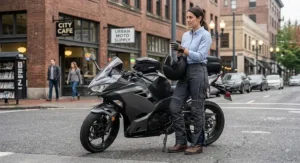
Picture three different commuters, because the “best” pants genuinely depend on who’s asking. First, there’s the downtown office worker on a 15-minute scooter or small-displacement bike commute, wearing business casual and needing to look presentable at a 9 a.m. meeting. For this rider, the Pando Moto Robby Slim Black Jeans or Alpinestars Copper V2 Denim Pants make the most sense — both pass as ordinary pants at a glance, so there’s no changing clothes at either end of the trip. Second, consider the budget-conscious rider who just got licensed and bought a used 300cc bike for the eight-mile ride to a warehouse job. Cost matters more than style here, and durability matters more than looking sharp, which points squarely at the Street & Steel Oakland Jeans — solid aramid protection at the lowest price point on this list, with a fit forgiving enough for physical work. Third is the fair-weather cyclist who suddenly needs a rain contingency: someone who normally rides in regular pants but wants a fast solution for the three or four genuinely wet mornings a month. The BILT Storm 2 Waterproof Overpants exist precisely for this rider, since they zip on over anything already worn and remove the need to own a second wardrobe just for bad weather. None of these three riders necessarily needs the same gear, and that’s the whole point — matching pants to your actual routine, environment, and frequency of use beats chasing the single “best” pair on paper.
Common Problems Commuters Face — And How to Solve Them
Short-ride commuting creates a specific set of annoyances that longer tours simply don’t, and most of them have straightforward fixes once you know to look for them.
Problem: Sweaty legs by the time you reach the office. This is almost always a ventilation issue, not a willpower issue. Switching to a mesh-forward option like the REV’IT Airwave 4 Pants solves it directly, since airflow through the PWR|Shell fabric moves heat away from the leg far faster than solid denim ever will.
Problem: Forgetting rain gear on a morning that turns wet by lunch. Rather than trying to remember a packable rain shell, riders who own the BILT Storm 2 Waterproof Overpants simply keep them in a saddlebag or under the seat, ready to zip on in under a minute regardless of forecast accuracy.
Problem: Armor that shifts or bunches while walking around the office. This usually traces back to sizing, not the armor itself. Bio Flex and RE ZRO-style pads, found in the Alpinestars Copper V2 Denim Pants and Bull-it Ajax Slim Jeans respectively, are specifically engineered to stay slim and stationary off the bike, so if a pad is sliding, the fix is usually sizing down or adjusting the internal pocket strap.
Problem: Gear that looks too “motorcycle” for a professional environment. Denim-based options universally solve this better than mesh or textile overpants — the Pando Moto Robby Slim Black Jeans and Street & Steel Oakland Jeans are both designed from the ground up to be indistinguishable from regular jeans at a glance.
Problem: Hip protection gaps because armor was sold separately. Several jeans on this list, including the Copper V2 and the Oakland Jeans, ship without hip armor installed. The fix is simple but easy to forget: check hip-pocket compatibility before checkout, and budget the extra $20-$40 for inserts if full-leg coverage matters to your risk tolerance.
How to Choose Lightweight Commuter Riding Pants
Picking the right pair comes down to seven concrete criteria, and working through them in order will save you from an expensive return.
- Start with your climate. Riders in hot, humid regions should weight ventilation heavily, which points toward mesh builds like the REV’IT Airwave 4 Pants; colder or wetter climates favor waterproof overpants or heavier denim.
- Check the CE rating, not just the word “armored.” AA-rated garments, like the Pando Moto Robby Slim Black Jeans and Bull-it Ajax Slim Jeans, meet a meaningfully higher abrasion standard than Class A options.
- Confirm hip armor availability up front. Several pairs on this list sell hip protection separately, so factor that into your real total cost before comparing prices.
- Match the fit to your actual daily wardrobe. If you need to walk into an office afterward, slim denim styles beat mesh textile pants for blending in.
- Weigh how fast you need to gear up. Riders with genuinely tight morning schedules should prioritize the fastest on-off design, which is the side-zip system on the BILT Storm 2 Waterproof Overpants.
- Read aggregated sizing feedback before buying. Several brands here, including Bull-it and Street & Steel, run consistently small or large according to buyer reports, and adjusting your order size accordingly avoids a return cycle.
- Budget for armor upgrades from day one. If a pair ships with Level 1 knee armor only, decide now whether you’ll add hip protection later, since retrofitting is far easier before the jeans are already broken in.
Common Mistakes When Buying Commuter Motorcycle Pants
The single biggest mistake commuters make is assuming regular jeans with a Kevlar-sounding name offer real protection — plenty of “moto style” fashion jeans use decorative stitching and zero actual armor, so always confirm a genuine CE rating on the tag, not just marketing language. A second common error is buying based on looks alone and skipping the armor-pocket check entirely, which is how riders end up with jeans that have knee pad slots but ship with no pads inside, a surprisingly common gap with budget listings on third-party marketplaces. Sizing is the third recurring trap: riding jeans are cut differently than casual denim, often running a full size small or large depending on the brand, and ordering your normal jean size without checking brand-specific charts is the fastest route to a return. A fourth mistake is prioritizing slide-time numbers in isolation — a jean rated for 7+ seconds of slide protection does you no good if it’s so hot and stiff that you stop wearing it after two weeks, so comfort has to be weighed alongside raw protection figures, not after them. Finally, riders frequently overlook maintenance requirements entirely, buying waterproof overpants like the Storm 2 and then washing them with regular detergent, which strips the DWR coating and quietly degrades water resistance over just a few cycles.
Commuter Motorcycle Pants vs Everyday Jeans
| Factor | Commuter Riding Pants | Everyday Jeans |
|---|---|---|
| Abrasion resistance | Aramid/Kevlar reinforced, CE tested | Cotton denim tears in under a second of slide |
| Impact protection | CE-rated knee/hip armor included | None |
| Ventilation options | Mesh, vented panels available | Fixed, no ventilation engineering |
| Best For | Any regular rider, any distance | Non-riding daily wear only |
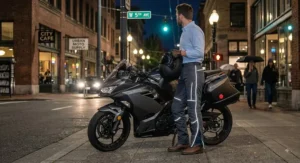
This comparison isn’t close, and it’s worth spelling out why in plain terms: standard cotton denim offers roughly one-tenth the abrasion resistance of a Kevlar or aramid-reinforced riding jean in independent slide testing, meaning ordinary jeans can wear through to skin in under a second of pavement contact at commuter speeds. Options like the Draggin Twista Jeans or Alpinestars Copper V2 Denim Pants close that gap almost entirely while looking nearly identical to the jeans already in your closet, which removes the last real excuse for skipping proper gear on a “short” ride. The only scenario where regular jeans make sense is off the bike entirely — the moment you’re riding, even six blocks, the abrasion and impact math tips decisively toward purpose-built gear.
What to Expect: Real-World Performance on Short City Rides
Specs on a page and specs on your actual commute are two different experiences, so here’s the translation. A Class AA garment like the Pando Moto Robby Slim Black Jeans means that in a slide at typical urban speeds — the 25 to 40 mph range most commutes never exceed — the fabric is engineered to hold together for the full duration of the slide rather than tearing through partway. In practice, that translates to road rash prevention, not just “some protection.” Mesh options like the REV’IT Airwave 4 Pants perform noticeably differently in daily use than their spec sheet suggests too: the airflow advantage is most obvious at a dead stop in traffic, where solid denim traps heat against the leg but open-knit mesh keeps air moving even without forward motion. Overpants like the BILT Storm 2 reveal their real-world value specifically in transitional weather — the ten minutes riding through a surprise drizzle where a rider without them either gets soaked or turns back, and a rider with them barely notices the sky changed. What reviewers across every product on this list consistently report, regardless of brand, is that armor comfort matters more day-to-day than armor rating — a Level 1 pad you actually wear beats a theoretical Level 2 pad sitting in a drawer because the jeans were too stiff to bother with.
City Riding Gear for the Work-to-Ride Commute
Work-to-ride commuting creates a narrow but real design challenge: gear has to function as protective equipment on the bike and as acceptable clothing at a desk, often within the same fifteen-minute window. City riding gear built around this constraint tends to prioritize discretion over aggressive styling, which is exactly why denim-based options dominate this category rather than obvious textile race suits. The Alpinestars Copper V2 Denim Pants and Pando Moto Robby Slim Black Jeans both lean into this directly, using pre-shaped legs and stretch panels that move naturally on the bike while still reading as ordinary five-pocket jeans in a meeting. For riders whose work-to-ride routine includes unpredictable weather, layering the BILT Storm 2 Waterproof Overpants over dress pants solves the discretion problem differently — you zip them off entirely once you park, revealing the actual work outfit underneath rather than trying to make riding gear double as office wear. What most buyers overlook about work-to-ride commuting specifically is storage: a bike with even a small underseat compartment or a top box makes carrying a change of shoes or a light jacket dramatically easier, which in turn makes it realistic to keep wearing full protective pants rather than compromising toward something flimsier “just for the short ride in.”
Urban Motorcycle Gear for Every Rider Type
Urban motorcycle gear isn’t one-size-fits-all, and matching pants to rider type matters as much as matching them to climate. Beginners, still building confidence at intersections and in mixed traffic, benefit most from higher-visibility features and forgiving, straightforward fits — the reflective hem on the Alpinestars Copper V2 Denim Pants and the reflective tape on the Bull-it Ajax Slim Jeans both add a small but real low-light visibility margin while new riders are still learning to read traffic patterns. Experienced daily riders who’ve logged thousands of urban miles tend to gravitate toward whichever pair disappears into the background of their routine, which is usually why the Pando Moto Robby Slim Black Jeans shows up repeatedly in long-term owner discussions — comfort compounds daily in a way that’s hard to appreciate until you’ve wondered why last winter’s jeans, chosen for style, developed a used dread by month three. Budget-first riders, often on their first bike and unsure how long the hobby will stick, are well served by the Street & Steel Oakland Jeans, since the entry price removes the psychological barrier to buying real protection at all. And riders managing genuinely variable weather — hot mornings, sudden afternoon storms, cold snaps — benefit from owning two complementary pairs rather than searching for one perfect garment: a breathable option like the Airwave 4 for clear days, paired with the Storm 2 overpants kept ready for the days that turn wet without warning.
Long-Term Cost & Maintenance of Commuter Riding Pants
The sticker price on riding pants is only part of the real cost story, and total cost of ownership tends to favor the mid-priced options over both the cheapest and the most expensive picks on this list. Budget denim like the Street & Steel Oakland Jeans costs less upfront but typically lacks hip armor entirely, meaning full coverage requires a separate purchase that narrows the initial savings. Premium options like the Pando Moto Robby Slim Black Jeans cost more at checkout but tend to hold armor pad shape and fabric integrity longer under daily wear, which matters enormously for anyone commuting five days a week rather than riding occasionally on weekends. Maintenance costs are modest across the board but not zero: waterproof gear like the BILT Storm 2 Waterproof Overpants needs periodic DWR (durable water repellent) refresher treatment, typically every few months of regular use, to keep water beading rather than soaking through the outer shell. Denim options generally just need gentle-cycle washing with the armor removed, since standard detergents and dryer heat can degrade both the aramid lining and the foam or TPE armor pads over repeated cycles. Calculated per year of daily commuting, even the priciest pair on this list works out to well under a dollar a ride — a genuinely small price against the cost, time, and discomfort of recovering from road rash that proper gear would have prevented.
Safety, Regulations & CE Compliance Guide
Understanding what “CE-rated” actually means removes a lot of confusion when comparing pants across brands. The relevant standard for riding jeans and pants is EN 17092, which classifies garments by class — AAA down to A — based primarily on abrasion resistance and burst strength under standardized slide testing, with AA representing a strong, versatile middle tier well-suited to city and short-highway riding, which is why it shows up repeatedly among the pants on this list. Separately, impact armor at the knees and hips is rated under EN 1621-1, typically at Level 1 or Level 2, with Level 2 transmitting less force to the body on impact. Materials like Kevlar and aramid fiber, both referenced repeatedly across this guide’s product lineup, are engineered specifically for their high tensile strength relative to weight; broader background on aramid fiber’s structure and industrial applications is available for readers who want the underlying materials science. It’s worth noting plainly that no garment, regardless of CE class, eliminates risk entirely — armor and abrasion-resistant fabric reduce injury severity, they don’t prevent a crash from happening in the first place. State helmet and gear laws vary considerably across the U.S., so riders should verify their local requirements rather than assuming protective pants are either mandated or unregulated everywhere. Reviews and endorsements referenced throughout this guide also follow the spirit of the FTC’s endorsement guidance, which is why aggregated sentiment is always framed as such rather than presented as firsthand testing.
Frequently Asked Questions
❓ What is the best commuter motorcycle pants for short rides?
❓ Are motorcycle jeans worth it for a five-minute ride?
❓ How do I quickly put on motorcycle pants over work clothes?
❓ Do commuter motorcycle pants need hip armor?
❓ What's the difference between CE Level 1 and Level 2 armor?
Conclusion
Short rides have a way of feeling low-stakes right up until they aren’t, and that gap between perceived and actual risk is exactly why commuter motorcycle pants for short rides deserve real consideration rather than an afterthought. Across the seven pairs in this guide, the throughline is consistent: modern riding denim and textile pants have gotten good enough that “too hot,” “too stiff,” or “too expensive” are no longer honest excuses for skipping proper protection on the ride to work. Whether that means the office-ready Pando Moto Robby Slim Black Jeans, the wallet-friendly Street & Steel Oakland Jeans, or the zip-and-go BILT Storm 2 Waterproof Overpants, the right pick genuinely comes down to your climate, your commute length, and how much your gear needs to double as regular clothing once you park. What all seven share is real CE-tested protection at speeds that matter most for daily riders — the twenty-five, thirty-five, forty-five mile-an-hour zones where most urban crashes actually happen. Pick the pair that matches your actual routine, not the one that looks best in a product photo, and you’ll be far more likely to wear it every single day rather than leaving it in the closet for “longer” rides that never come.
✨ Ready to gear up smarter? Check today’s price and availability on your favorite pick from this list — your commute deserves the upgrade.
Recommended for You
- Kevlar Lined Jeans vs Armored Jeans: 7 Picks Tested for 2026
- Armored Motorcycle Pants vs Leather Pants: 7 Real Picks (2026)
- Men’s Riding Overpants for Rain Protection: 7 Best Picks (2026)
Disclaimer: This article contains affiliate links. As an Amazon Associate, I earn from qualifying purchases. If you purchase products through these links, we may earn a small commission at no additional cost to you.
✨ Found this helpful? Share it with your friends! 💬🤗
