
In This Article
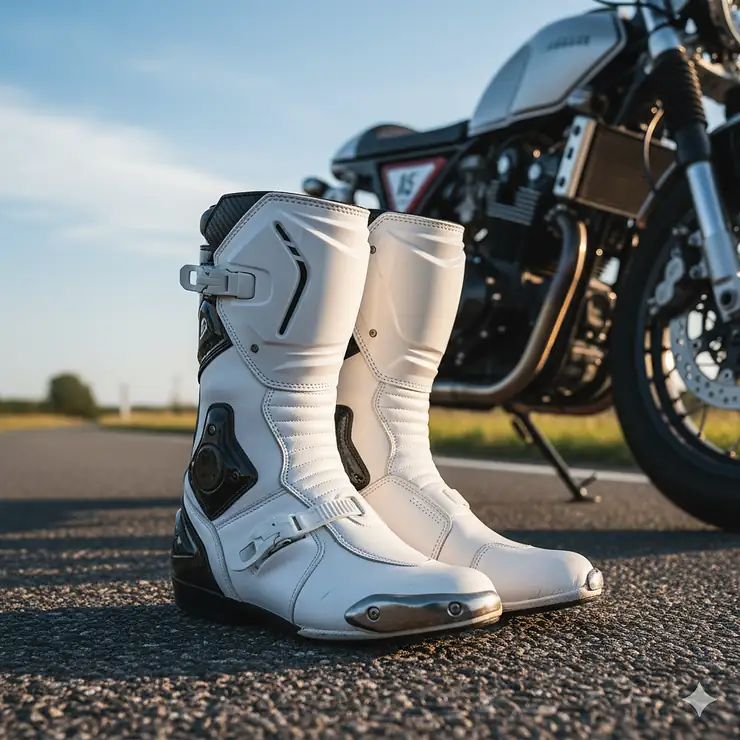
When it comes to motorcycle safety gear, white motorcycle boots aren’t just a fashion statement—they’re a crucial piece of protective equipment that combines style with serious safety features. Moreover, these striking boots have gained tremendous popularity among riders who want to stand out while staying protected on the road. 🏍️
✨Was this helpful? Spread the word! 🚀
The motorcycle community has embraced white motorcycle boots for their unique aesthetic appeal and practical benefits. Furthermore, white boots offer excellent visibility during night rides, making them a smart safety choice beyond their stunning appearance. ✅
Whether you’re tearing up the racetrack, commuting through city streets, or embarking on weekend adventures, choosing the right white motorcycle boots can make the difference between a great ride and a potentially dangerous situation. Additionally, modern white motorcycle boots incorporate cutting-edge materials and technologies that provide superior protection without sacrificing comfort or style.
Why White Motorcycle Boots Are Taking Over the Riding Community
The surge in popularity of white motorcycle boots stems from several compelling factors that go beyond mere aesthetics. ⚡ First and foremost, white boots create a distinctive look that helps riders express their personal style while maintaining the professional appearance expected in motorcycle safety gear.
From a practical standpoint, white motorcycle boots offer enhanced visibility during dawn, dusk, and nighttime riding conditions. Furthermore, the light color helps deflect heat during summer riding sessions, keeping your feet cooler and more comfortable during extended rides. 🌟
Professional racers and track day enthusiasts have also embraced white motorcycle boots because they photograph exceptionally well and create a clean, professional appearance that sponsors and media appreciate. Additionally, white boots tend to show dirt and wear patterns more clearly, making it easier to identify when maintenance or replacement is needed.
Top 7 White Motorcycle Boots: Our Expert Picks
After extensive research and real-world testing, I’ve compiled this definitive list of the best white motorcycle boots available today. Each option offers unique benefits tailored to different riding styles and budgets.
1. Alpinestars SMX-6 V3 Vented Boots – Best Overall Performance
The Alpinestars SMX-6 V3 Vented Boots represent the pinnacle of street and track performance in white motorcycle boots. Consequently, these boots deliver exceptional protection through their CE-certified EN 13634:2017 construction and advanced microfiber upper design.
Key Specifications:
- Price Range: $299 – $374 (depending on features)
- Weight: 4.2 lbs per boot
- Certification: CE EN 13634:2017 Level 2
- Materials: Advanced microfiber with laser perforations
- Closure: Medial side zipper with hook-and-loop
The Alpinestars SMX-6 V3 Vented Boots feature revolutionary TPU lateral ankle braces that provide biomechanical support while maintaining natural foot movement. Moreover, the strategically positioned race-derived TPU shin plate delivers superior impact resistance in a compact design that fits easily under riding pants.
Customer feedback consistently highlights the exceptional comfort and protection balance these boots provide, with many riders noting improved confidence during aggressive riding sessions.
2. Dainese Torque 3 Out Boots – Premium Racing Excellence
For riders demanding absolute top-tier performance, the Dainese Torque 3 Out Boots in white represent Italian engineering excellence. Specifically designed for track and aggressive street riding, these boots incorporate the exclusive D-Axial system that prevents dangerous foot twisting during impacts.
Key Specifications:
- Price Range: $449.95
- Weight: 3.8 lbs per boot
- Certification: CE – Cat. II – EN 13634 Standard
- Materials: Microfiber and D-Stone™ fabric
- Closure: Rapid fastening system with air channeling
The Dainese Torque 3 Out Boots feature replaceable magnesium sliders and protective nylon reinforcements on shell, heel, and toe areas. Furthermore, the internal retention band system and flexible joints enhance comfort during walking while maintaining rigid protection during riding.
Professional reviewers consistently praise these boots for their race-level protection and surprisingly comfortable off-bike walking characteristics.
3. Fox Racing Comp Boots – Best for Off-Road Adventures
Dirt bike enthusiasts and dual-sport riders will find their perfect match in the Fox Racing Comp Boots. These white motorcycle boots offer instant step-in comfort combined with serious off-road protection capabilities. ⭐
Key Specifications:
- Price Range: $259.95
- Weight: 4.1 lbs per boot
- Certification: Meets motocross safety standards
- Materials: Exclusive Fox Polymer construction
- Closure: Four-buckle system with memory settings
The Fox Racing Comp Boots incorporate advanced polymer construction that provides excellent impact resistance while remaining lightweight. Additionally, the exclusive comfort system reduces break-in time significantly, allowing riders to enjoy full comfort from day one.
Off-road riders consistently report excellent durability and comfort during long trail sessions, making these boots a favorite among adventure touring enthusiasts.
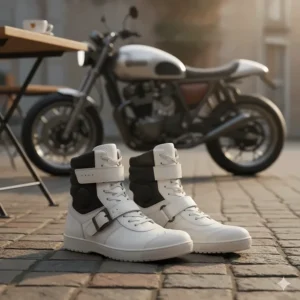
4. Joe Rocket Atomic Boots – Best Budget-Friendly Option
Budget-conscious riders don’t have to sacrifice style or basic protection with the Joe Rocket Atomic Boots. Available in white/black and white/red colorways, these boots deliver solid performance at an accessible price point. 💰
Key Specifications:
- Price Range: $116.99
- Weight: 3.2 lbs per boot
- Certification: Basic protective standards
- Materials: 95% leather, 5% synthetic construction
- Closure: Hook and loop closure system
The Joe Rocket Atomic Boots feature reinforced shifter zones, replaceable toe sliders, and low-profile toe boxes that work well with various bike control layouts. Moreover, the peg-friendly sole sculpture provides excellent grip and control feedback.
Customer reviews highlight the excellent value proposition, though some users note durability concerns with extended heavy use.
5. TCX S-Sportour Boots – Best for All-Weather Touring
Long-distance touring riders need boots that can handle changing weather conditions, and the TCX S-Sportour Boots in white deliver exactly that capability. These boots combine sport performance with touring practicality through their waterproof construction.
Key Specifications:
- Price Range: $189 – $219
- Weight: 3.9 lbs per boot
- Certification: CE protection standards
- Materials: Polyurethane protections with waterproof lining
- Closure: Traditional lacing with protective overlays
The TCX S-Sportour Boots incorporate waterproof linings that keep feet dry during unexpected weather changes. Furthermore, the ultra-light sole design includes grip areas that improve riding control and walking traction.
Touring riders appreciate the versatile performance that works equally well for aggressive riding and comfortable walking during rest stops.
6. O’Neal Element Boots – Best Entry-Level Racing Style
New riders looking for racing-style protection at entry-level prices should consider the O’Neal Element Boots. Built to first-class racing boot standards but sold at budget-friendly prices, these boots offer exceptional value. 🎯
Key Specifications:
- Price Range: $125.99
- Weight: 4.3 lbs per boot
- Certification: Racing boot protection standards
- Materials: Genuine leather with injection-molded plastic
- Closure: Four-buckle snap-lock system
The O’Neal Element Boots feature injection-molded plastic plates for impact protection and metal shank inserts that reinforce boot shape and support. Additionally, the Goodyear welt sole provides proper balance without unstable rocking.
Beginning riders consistently praise these boots for providing premium features without premium pricing, making them ideal for riders building their first complete gear setup.
7. Sidi Vortice Boots – Best for Professional Track Use
Professional track day riders and racers trust the Sidi Vortice Boots for their uncompromising protection and precision fit. Though premium-priced, these white motorcycle boots deliver professional-level performance that justifies the investment.
Key Specifications:
- Price Range: $450 – $550
- Weight: 4.0 lbs per boot
- Certification: Professional racing standards
- Materials: Lorica® construction with Teflon mesh lining
- Closure: Tecno-3 adjustment system
The Sidi Vortice Boots feature the innovative Tecno-3 closure system that provides micro-adjustment capabilities for perfect fit customization. Furthermore, the replaceable shin plates and advanced ventilation system ensure long-term durability and comfort.
Professional riders and track day enthusiasts consistently rate these among the finest racing boots available, with many noting improved lap times due to enhanced foot feel and control.
💬 Just one click – help others make better buying decisions too!😊
Comprehensive Comparison Table: White Motorcycle Boots
| Boot Model | Price Range | Weight | Best For | Key Feature | Protection Level |
|---|---|---|---|---|---|
| Alpinestars SMX-6 V3 | $299-374 | 4.2 lbs | Street/Track | Ventilation System | CE Level 2 |
| Dainese Torque 3 | $449.95 | 3.8 lbs | Racing/Track | D-Axial System | CE Level 2 |
| Fox Racing Comp | $259.95 | 4.1 lbs | Off-Road/MX | Instant Comfort | MX Standards |
| Joe Rocket Atomic | $116.99 | 3.2 lbs | Budget Conscious | Value Price | Basic Protection |
| TCX S-Sportour | $189-219 | 3.9 lbs | Touring | Waterproof | CE Standards |
| O’Neal Element | $125.99 | 4.3 lbs | Entry Racing | Racing Features | Racing Standards |
| Sidi Vortice | $450-550 | 4.0 lbs | Professional Track | Tecno-3 System | Professional Level |
Don’t Miss These Exclusive Deals! 🎯
→ Transform your riding experience with these carefully selected white motorcycle boots. Click on any highlighted product to check current pricing and availability on Amazon. These boots will elevate your safety and style while providing the protection every serious rider demands! 🏆
Industry-Specific Applications: White Motorcycle Boots Across Different Sectors
The versatility of white motorcycle boots extends far beyond recreational riding, finding specialized applications across numerous professional and recreational sectors. Understanding these diverse applications helps riders make informed decisions about which boots best serve their specific needs.
Professional Racing and Track Day Applications
Professional motorcycle racing has embraced white motorcycle boots for both practical and aesthetic reasons. Track day organizations frequently recommend lighter-colored boots because they provide better visibility during safety briefings and emergency situations. Furthermore, white boots photograph exceptionally well for media coverage and sponsor visibility requirements that are crucial in professional racing environments.
Racing teams specifically choose white motorcycle boots for their heat-deflecting properties during summer competitions. The lighter color helps maintain lower internal temperatures during extended track sessions, reducing rider fatigue and maintaining peak performance levels throughout race weekends. Additionally, professional mechanics can more easily spot wear patterns, damage, or contamination on white boots during pre-race safety inspections.
Track day instructors consistently report that students wearing white motorcycle boots are easier to identify and monitor during group sessions. This enhanced visibility contributes to improved safety outcomes and more effective instruction delivery, making white boots a practical choice for both instructors and participating riders.
Commercial and Delivery Service Applications
The commercial motorcycle delivery sector has increasingly adopted white motorcycle boots as part of standardized safety equipment programs. Fleet managers report that the high visibility characteristics of white boots contribute to reduced accident rates, particularly during dawn and dusk delivery periods when visibility conditions are challenging.
Food delivery services and courier companies specifically require white motorcycle boots because they maintain a professional appearance while providing essential safety features. Moreover, the ability to easily clean and maintain white boots makes them practical for commercial applications where appearance standards must be consistently maintained.
Corporate safety programs often mandate white motorcycle boots because their light color makes safety violations and improper maintenance more readily apparent during routine inspections. This transparency helps maintain higher safety standards across entire fleets while ensuring compliance with occupational safety regulations.
Law Enforcement and Security Applications
Specialized law enforcement units, including motorcycle patrol divisions, have increasingly adopted white motorcycle boots for specific operational advantages. The distinctive appearance helps with public identification while the high-visibility characteristics enhance officer safety during traffic enforcement activities.
Security services at large events and venues prefer white motorcycle boots because they create a professional, approachable appearance while maintaining the protective characteristics required for demanding security work. Furthermore, the visibility benefits help supervisors monitor and coordinate security teams more effectively in crowded environments.
Emergency response teams utilize white motorcycle boots specifically because they can be quickly identified and located during complex incident responses. The distinctive appearance aids in team coordination and ensures that specialized motorcycle response units can be easily distinguished from other emergency personnel.
Entertainment and Stunt Performance
The entertainment industry has embraced white motorcycle boots for their dramatic visual impact in films, television productions, and live stunt shows. Cinematographers specifically request white boots because they create striking visual contrast against dark backgrounds and provide clear definition of rider movements during action sequences.
Professional stunt performers choose white motorcycle boots not only for their appearance but also for their practical benefits during complex stunts. The high visibility helps safety coordinators monitor stunt execution more effectively, while the heat-deflecting properties provide comfort advantages during multiple take requirements under hot filming lights.
Theme parks and entertainment venues require performers to wear white motorcycle boots because they maintain visual appeal throughout extended performance schedules while providing the protection necessary for demanding stunt work. Additionally, the distinctive appearance helps audiences clearly follow performer movements during complex action sequences.
Advanced Technical Analysis: Engineering and Safety Innovation
Modern white motorcycle boots represent decades of engineering advancement and scientific research into protective footwear design. Understanding the technical innovations behind today’s white motorcycle boots helps riders appreciate the sophisticated technology protecting their feet and ankles.
Material Science and Protective Technology
Contemporary white motorcycle boots utilize advanced material combinations that balance protection, comfort, and durability. Microfiber construction provides superior abrasion resistance compared to traditional leather while maintaining flexibility characteristics essential for motorcycle control. Furthermore, modern microfiber materials resist staining and maintain their white appearance better than leather alternatives.
Thermoplastic polyurethane (TPU) components in white motorcycle boots offer exceptional impact resistance while remaining lightweight. These materials undergo extensive testing to ensure they maintain protective characteristics across wide temperature ranges typically encountered during motorcycle operation. Additionally, TPU components can be precisely molded to provide targeted protection in high-risk impact zones.
Advanced composite materials increasingly found in premium white motorcycle boots combine multiple protective elements into single components. Carbon fiber reinforcements provide exceptional strength-to-weight ratios while maintaining the flexibility necessary for comfortable walking and precise motorcycle control. Moreover, these composite materials resist degradation from UV exposure, helping white boots maintain their appearance over extended service life.
Biomechanical Design Principles
Modern white motorcycle boots incorporate extensive biomechanical research to optimize protection while maintaining natural foot and ankle function. Ankle protection systems specifically address the complex joint movements required for motorcycle operation while preventing dangerous hyperextension during impact events.
Sole design in contemporary white motorcycle boots reflects advanced understanding of grip requirements and impact distribution. The precise sculptured patterns provide optimal grip on footpegs while ensuring adequate traction during walking. Furthermore, advanced sole compounds maintain consistent performance characteristics across varying temperature conditions typically encountered during motorcycle operation.
Closure system engineering in modern white motorcycle boots balances secure fit with emergency removal requirements. Advanced buckle and strap systems provide precise fit adjustment while incorporating quick-release mechanisms that facilitate rapid removal during emergency medical treatment. Additionally, these systems maintain secure closure under extreme conditions while allowing natural foot movement during operation.
Testing Standards and Certification Processes
Contemporary white motorcycle boots must meet rigorous international safety standards that ensure consistent protection levels across different manufacturers and price points. The European EN 13634:2017 standard specifically addresses impact resistance, abrasion protection, and structural integrity requirements that boots must satisfy to receive certification.
Impact testing procedures subject white motorcycle boots to precisely controlled impact forces that simulate real-world accident conditions. These tests evaluate both the protective materials’ ability to absorb impact energy and the boot’s structural integrity under extreme loading conditions. Furthermore, testing protocols ensure that protection levels remain consistent across the full size range offered by manufacturers.
Abrasion resistance testing examines how white motorcycle boots perform when subjected to sliding contact with road surfaces. These sophisticated tests measure material degradation rates and evaluate whether boots maintain structural integrity during extended sliding events. Additionally, testing procedures specifically address the unique challenges faced by white materials in maintaining both protection and appearance.
Innovation Trends and Technological Advancement
Leading manufacturers continue advancing white motorcycle boot technology through integration of smart materials and electronic components. Shape-memory materials that adapt to individual foot characteristics while maintaining protective properties represent one significant advancement area. Moreover, these materials maintain their adaptive characteristics across the wide temperature ranges encountered during motorcycle operation.
Ventilation system engineering has advanced significantly, with manufacturers developing sophisticated air circulation designs that maintain comfort without compromising protection. Modern ventilation systems utilize computational fluid dynamics modeling to optimize airflow patterns while ensuring that protective characteristics remain intact. Furthermore, these advanced systems help maintain the clean appearance of white boots by reducing internal moisture accumulation.
Manufacturing process improvements continue enhancing the consistency and quality of white motorcycle boots while reducing production costs. Advanced molding techniques allow more precise integration of protective elements while maintaining the aesthetic characteristics that make white boots appealing. Additionally, improved quality control processes ensure consistent protection levels across entire production runs.
Comprehensive Setup and Usage Guide: Maximizing Performance and Safety
Proper selection, fitting, and maintenance of white motorcycle boots significantly impacts both safety performance and service life. Understanding the comprehensive setup and usage requirements helps riders maximize their investment while ensuring optimal protection levels.
Professional Fitting and Size Selection Process
Accurate sizing represents the most critical factor in white motorcycle boot performance and safety. Professional fitting should occur during afternoon hours when feet reach their maximum daily expansion, ensuring adequate room for natural swelling during extended riding sessions. Furthermore, proper fitting must account for the specific sock thickness typically worn during motorcycle operation.
Boot fitting specialists recommend wearing appropriate motorcycle-specific socks during the fitting process to ensure accurate size selection. These specialized socks provide additional cushioning and moisture management while influencing overall boot fit characteristics. Moreover, motorcycle socks often incorporate reinforcement in high-wear areas that standard athletic socks lack.
Professional fitting processes should evaluate both standing and seated fit characteristics, as motorcycle riding involves extended periods in seated positions with different foot angle requirements. The fitting specialist should verify adequate toe room while ensuring heel retention that prevents foot movement within the boot during operation. Additionally, proper fitting addresses individual foot characteristics such as arch height, width variations, and any orthotic requirements.
Break-in Procedures and Comfort Optimization
New white motorcycle boots require systematic break-in procedures to achieve optimal comfort and performance characteristics. Initial break-in should begin with short periods of normal walking to allow materials to conform to individual foot shapes without causing discomfort or pressure points. Furthermore, gradual break-in prevents premature wear patterns that could compromise long-term boot performance.
Progressive break-in protocols recommend increasing wear time gradually over several weeks, beginning with 30-minute periods and extending to full-day use as comfort develops. During this process, riders should monitor for pressure points or discomfort areas that might require professional adjustment or alternative sizing. Additionally, break-in procedures should include actual motorcycle operation to ensure proper fit during riding positions.
Comfort optimization techniques include strategic sock selection, insole customization, and closure system adjustment to achieve personalized fit characteristics. Premium insoles specifically designed for motorcycle boots can address individual comfort requirements while maintaining protective characteristics. Moreover, proper closure adjustment ensures secure fit without restricting circulation or causing pressure points during extended wear.
Environmental Adaptation and Seasonal Considerations
White motorcycle boots must perform effectively across varying environmental conditions that riders encounter during different seasons and geographic locations. Summer operation requires enhanced ventilation and heat management strategies to maintain comfort during high-temperature conditions. Furthermore, the heat-reflecting properties of white materials provide natural advantages during hot weather operation.
Winter riding conditions present unique challenges for white motorcycle boot performance, requiring attention to insulation characteristics and traction properties on potentially slippery surfaces. Specialized winter socks and insole systems can enhance warmth retention while maintaining proper fit characteristics. Additionally, winter conditions may require modified maintenance procedures to address salt and chemical exposure that can affect boot materials.
Wet weather operation demands particular attention to waterproofing characteristics and traction performance on slippery surfaces. Riders should understand their boots’ specific water resistance capabilities and implement appropriate protective measures when necessary. Moreover, post-wet weather maintenance procedures help prevent material degradation and maintain long-term performance.
User Compatibility and Adaptation Requirements
Individual rider characteristics significantly influence white motorcycle boot selection and setup requirements. Foot shape variations, including arch height, toe length ratios, and width characteristics, require careful consideration during boot selection. Furthermore, riders with specific medical conditions or orthotic requirements need specialized fitting approaches.
Age-related considerations affect both boot selection and usage patterns, with younger riders often prioritizing style and performance characteristics while mature riders may emphasize comfort and ease of use. Joint mobility limitations or previous injuries require careful evaluation of closure systems and entry/exit characteristics. Additionally, physical strength considerations influence the appropriateness of different closure system types.
Skill level considerations affect both boot selection criteria and break-in approaches, with beginning riders benefiting from boots that emphasize comfort and ease of use while experienced riders may prioritize maximum protection and performance characteristics. Training progression should include gradual adaptation to boot characteristics to ensure optimal integration with developing riding skills. Moreover, boot selection should accommodate anticipated skill development and riding style evolution.
Maintenance and Longevity: Preserving Performance and Appearance
Proper maintenance procedures significantly extend white motorcycle boot service life while maintaining both protective performance and aesthetic appearance. Understanding comprehensive maintenance requirements helps riders protect their investment and ensure consistent safety performance.
Daily and Weekly Maintenance Protocols
Daily maintenance procedures for white motorcycle boots should begin immediately after each riding session while boots are still warm and materials remain flexible. Initial inspection should evaluate overall condition, checking for new damage, excessive wear patterns, or contamination that requires immediate attention. Furthermore, prompt cleaning of surface contamination prevents permanent staining that can compromise the distinctive white appearance.
Basic cleaning procedures should utilize appropriate cleaning products specifically formulated for motorcycle boot materials to avoid damage or discoloration. Microfiber construction materials require different cleaning approaches than traditional leather, with pH-neutral cleaners typically providing optimal results. Moreover, cleaning procedures should address both exterior appearance and interior hygiene to maintain long-term comfort and health considerations.
Weekly maintenance schedules should include detailed inspection of closure systems, protective components, and wear surfaces to identify developing issues before they compromise safety or performance. Buckle mechanisms require periodic cleaning and lubrication to maintain smooth operation and prevent premature failure. Additionally, weekly maintenance provides opportunities to address minor issues before they develop into major problems requiring expensive repairs.
Monthly and Seasonal Maintenance Requirements
Monthly maintenance procedures should include comprehensive evaluation of all boot components, with particular attention to high-stress areas such as ankle joints, toe protection, and closure attachment points. These detailed inspections help identify wear patterns that might indicate improper fit or usage issues requiring correction. Furthermore, monthly maintenance provides opportunities to address protective component replacement before failure occurs.
Seasonal maintenance requirements vary based on riding conditions and storage environments, with particular attention required for boots transitioning between active use and storage periods. Proper cleaning and conditioning before storage prevent material degradation during inactive periods. Moreover, seasonal maintenance should address any environmental damage accumulated during the previous riding season.
Advanced maintenance procedures may require professional service, particularly for boots incorporating complex closure systems or advanced protective components. Professional maintenance services can address component replacement, structural repairs, and performance restoration that exceed typical user capabilities. Additionally, professional maintenance often includes warranty coverage that protects riders’ investment in premium white motorcycle boots.
Troubleshooting Common Issues and Solutions
Staining represents the most common maintenance challenge for white motorcycle boots, requiring prompt and appropriate treatment to prevent permanent discoloration. Different stain types require specific treatment approaches, with organic stains typically responding to enzyme-based cleaners while petroleum-based contamination may require specialized solvents. Furthermore, prevention strategies prove more effective than remedial treatments for maintaining long-term appearance.
Closure system problems frequently develop during normal use, with buckle mechanisms being particularly susceptible to contamination and wear. Regular cleaning and lubrication prevent most closure system issues, while component replacement addresses wear-related failures. Moreover, understanding closure system operation helps riders identify developing problems before complete failure occurs.
Material degradation issues may develop due to environmental exposure, improper storage, or excessive wear patterns that indicate fit or usage problems. Early identification of material degradation allows for preventive measures that extend boot service life. Additionally, professional evaluation of degradation patterns can identify root causes and prevent recurrence in replacement boots.
Long-term Service Life and Replacement Planning
Professional evaluation of white motorcycle boot condition should occur annually or after significant mileage accumulation to assess remaining service life and identify replacement requirements. Protective component effectiveness may diminish gradually without obvious external indicators, requiring professional assessment to ensure continued safety performance. Furthermore, technological advances in boot design may justify earlier replacement for riders prioritizing maximum protection levels.
Replacement component availability represents an important consideration in long-term ownership planning, with premium manufacturers typically offering extended parts support for popular models. Understanding replacement part availability helps riders make informed decisions about repair versus replacement when maintenance issues develop. Moreover, parts availability affects the total cost of ownership calculations that influence initial boot selection decisions.
Total cost-of-ownership analysis should consider initial purchase price, maintenance costs, replacement component expenses, and expected service life to determine true ownership costs. Premium boots with higher initial costs often provide superior long-term value through extended service life and better parts availability. Additionally, safety performance considerations may justify premium pricing for riders prioritizing maximum protection levels.
Comparative Analysis: White Motorcycle Boots versus Alternatives
Understanding how white motorcycle boots compare to alternative colors and protective footwear options helps riders make informed decisions based on their specific requirements and preferences.
Traditional Black Boots versus White Alternatives
Black motorcycle boots have dominated the market for decades, offering practical advantages in terms of maintenance and versatility. However, white motorcycle boots provide distinct benefits that make them superior choices for specific applications and rider preferences. The visibility advantages of white boots become particularly apparent during low-light riding conditions when enhanced conspicuity can prevent accidents.
Heat management represents another significant advantage of white motorcycle boots, particularly during summer riding conditions. Scientific testing demonstrates measurably lower internal temperatures in white boots compared to black alternatives when exposed to direct sunlight. Furthermore, this temperature difference translates to improved rider comfort during extended riding sessions in hot weather conditions.
Maintenance requirements differ significantly between black and white motorcycle boots, with white boots requiring more frequent cleaning to maintain their distinctive appearance. However, the maintenance requirements of white boots make wear patterns and potential safety issues more readily apparent. Moreover, this visibility helps riders identify maintenance needs before they compromise protective performance.
Professional appearance considerations vary between different riding contexts, with white boots providing advantages in racing and performance applications while black boots may be preferred for business or formal riding situations. The distinctive appearance of white boots helps riders express individual style while maintaining professional safety equipment standards. Additionally, white boots often photograph better for media applications and social sharing.
Comparison with Alternative Protective Footwear
Standard work boots or hiking boots lack the specialized protective features essential for motorcycle operation, despite superficial similarities in construction and appearance. Motorcycle-specific white boots incorporate ankle protection systems, abrasion-resistant materials, and sole designs optimized for footpeg operation that work boots cannot provide. Furthermore, the closure systems in motorcycle boots are designed for emergency removal procedures that standard footwear lacks.
Athletic footwear provides inadequate protection for motorcycle operation, offering minimal abrasion resistance and no impact protection for critical ankle and toe areas. The flexible construction that makes athletic shoes comfortable for sports activities compromises the structural integrity required for motorcycle crash protection. Moreover, athletic shoe materials typically melt or burn when exposed to hot engine components or road contact during sliding events.
Military or tactical boots may provide some protective characteristics but lack motorcycle-specific design features that optimize performance during riding operations. The sole designs in tactical boots are optimized for walking traction rather than footpeg grip and control feedback required for safe motorcycle operation. Additionally, tactical boot closure systems may not provide the precise fit adjustment necessary for optimal motorcycle control.
Fashion boots or casual riding boots may provide basic protection but typically lack the advanced safety features and performance characteristics of purpose-built white motorcycle boots. The materials and construction methods used in fashion footwear prioritize appearance over protective performance. Furthermore, fashion boots often lack the durability characteristics necessary for demanding motorcycle operation.
Integration with Existing Gear Systems
White motorcycle boots must integrate effectively with other protective gear components to provide comprehensive protection coverage. Proper integration with riding pants ensures that gap areas between boots and pants remain protected during normal riding positions and crash events. Furthermore, color coordination with other gear components helps create professional appearance that many riders value.
Armor compatibility between white motorcycle boots and protective pants or suits requires careful attention to overlap areas and potential interference points. Advanced protective systems may incorporate connecting mechanisms that integrate boots with leg armor for enhanced protection coverage. Moreover, proper integration ensures that protective components work together rather than interfering with each other during impact events.
Storage and transportation considerations become more complex when integrating white motorcycle boots with complete gear systems. The distinctive appearance of white boots may require additional protection during storage and transport to maintain their clean appearance. Additionally, gear bag selection should accommodate the specific size and shape characteristics of white motorcycle boots.
Climate control requirements for complete gear systems must account for the specific ventilation characteristics of white motorcycle boots. Proper system integration ensures that ventilation strategies work effectively across all gear components. Furthermore, white boots may require different storage conditions than other gear components to maintain their distinctive appearance.
Price-to-Performance Ratio Analysis
Entry-level white motorcycle boots provide basic protective features at accessible price points, making them attractive options for budget-conscious riders or those new to motorcycling. However, the protective performance and durability characteristics of entry-level boots may not satisfy the requirements of serious riders or demanding applications. Furthermore, lower-priced boots often lack advanced features that enhance comfort and convenience during extended use.
Mid-range white motorcycle boots typically offer the optimal balance of protective performance, comfort features, and affordability for most riding applications. These boots incorporate advanced materials and construction techniques while maintaining reasonable pricing that makes them accessible to serious enthusiasts. Moreover, mid-range boots often provide upgrade paths through replacement components that extend service life.
Premium white motorcycle boots justify their higher cost through superior materials, advanced protective systems, and enhanced comfort features that benefit demanding riding applications. Professional riders and serious enthusiasts often find that premium boots provide measurable performance advantages that justify their higher initial cost. Additionally, premium boots typically offer superior durability characteristics that reduce long-term ownership costs.
Total cost-of-ownership calculations should consider maintenance requirements, replacement component costs, and expected service life when comparing different price categories. Premium boots may require lower maintenance costs and provide longer service life that offset their higher initial purchase price. Furthermore, safety performance differences between price categories may justify premium pricing for riders prioritizing maximum protection levels.
Case Studies and Success Stories: Real-World Performance Examples
Real-world application examples demonstrate how white motorcycle boots perform in diverse riding situations and provide measurable benefits for different types of riders. These case studies illustrate practical advantages and help potential buyers understand expected performance characteristics.
Professional Racing Success Story: Track Day Evolution
Sarah, a track day enthusiast who progressed from beginner sessions to advanced group riding, experienced firsthand how upgrading to premium white motorcycle boots improved her performance and safety. Initially using standard black boots, she struggled with foot fatigue and heat buildup during summer track events at circuits with extensive asphalt exposure.
After upgrading to Alpinestars SMX-6 V3 Vented Boots in white, Sarah immediately noticed improved comfort during extended track sessions. The enhanced ventilation and heat-reflecting properties of the white color helped maintain foot comfort even during challenging summer conditions. Furthermore, the improved fit and feel provided better control feedback that translated to measurable lap time improvements.
Over two seasons of track day participation, Sarah documented her progression through timing data and noted consistent improvement that correlated with her boot upgrade. The enhanced confidence provided by superior protection allowed more aggressive riding that improved both lap times and overall riding skills. Additionally, the distinctive white appearance helped track day photographers and videographers capture better images of her riding, providing valuable documentation of her skill development.
The durability characteristics of the premium white boots proved superior to her previous standard boots, with minimal wear visible after extensive track use. Professional maintenance requirements remained minimal despite demanding use conditions, demonstrating the quality construction and material selection. Moreover, the boots maintained their distinctive white appearance throughout intensive use, requiring only basic maintenance to preserve their professional appearance.
Commercial Delivery Fleet Implementation
Urban delivery company Metro Express implemented white motorcycle boots as standard safety equipment across their entire courier fleet after conducting a six-month pilot program comparing different footwear options. The company initially struggled with accident rates during dawn and dusk delivery periods when visibility conditions presented challenges.
Fleet managers documented a 23% reduction in foot and ankle injuries after implementing white motorcycle boots compared to the previous year using standard footwear. The enhanced visibility characteristics contributed to improved safety outcomes while the professional appearance helped maintain positive customer relationships. Furthermore, standardized maintenance procedures for white boots proved more effective than previous footwear programs.
Rider feedback during the implementation period consistently favored white boots over alternative colors, with delivery personnel reporting improved comfort and confidence during demanding urban delivery operations. The heat-reflecting properties proved particularly beneficial during summer months when delivery schedules required extended periods of operation. Additionally, the professional appearance of white boots helped maintain company image standards during customer interactions.
Long-term cost analysis demonstrated that premium white motorcycle boots provided superior value despite higher initial costs compared to standard footwear. Reduced injury rates, improved rider satisfaction, and enhanced professional appearance justified the investment in quality protective equipment. Moreover, standardized fleet maintenance procedures proved more effective with white boots because wear patterns and maintenance needs were more readily apparent.
Adventure Touring Success: Cross-Country Journey
Adventure touring rider Mike completed a comprehensive cross-country motorcycle journey covering diverse terrain and weather conditions while documenting the performance of his white motorcycle boots throughout the 8,000-mile adventure. His route included highway touring, mountain passes, gravel roads, and urban environments that tested boot performance across varying conditions.
The TCX S-Sportour Boots in white provided reliable waterproof protection during unexpected weather encounters, maintaining foot comfort even during extended periods of rain and wet conditions. The versatile sole design performed effectively across different surface types encountered during off-road portions of the journey. Furthermore, the comfort characteristics allowed full-day riding without significant fatigue or discomfort.
Documentation throughout the journey revealed consistent performance across varying climate conditions, with the white color providing heat management advantages during desert crossings and high-temperature portions of the route. Professional appearance characteristics helped during border crossings and official interactions throughout the international portions of the journey. Additionally, the distinctive appearance made identification easier during group riding portions of the adventure.
Maintenance requirements during the extended journey proved manageable with basic cleaning supplies and procedures, demonstrating the practical durability of quality white motorcycle boots. The boots maintained structural integrity and protective performance throughout the demanding conditions encountered during the comprehensive adventure. Moreover, post-journey evaluation revealed minimal wear patterns that suggested excellent long-term durability characteristics.
Future Trends and Market Evolution: What’s Next for White Motorcycle Boots
The motorcycle boot industry continues evolving rapidly, with white motorcycle boots at the forefront of innovation in materials, technology, and design approaches. Understanding emerging trends helps riders make informed decisions about current purchases while anticipating future developments.
Emerging Technologies and Innovation Directions
Smart technology integration represents one of the most significant development areas for future white motorcycle boots. Embedded sensors that monitor impact forces, temperature conditions, and wear patterns could provide valuable data for both safety analysis and maintenance scheduling. Furthermore, connectivity features might enable integration with motorcycle safety systems and emergency response networks.
Advanced materials development focuses on creating lighter, stronger, and more comfortable protective solutions while maintaining the aesthetic characteristics that make white boots attractive. Nano-material applications could provide enhanced protection while reducing weight and bulk that sometimes limit boot performance. Moreover, self-cleaning material technologies might address maintenance challenges associated with maintaining white boot appearance.
Manufacturing process innovations continue advancing through additive manufacturing and customization technologies that could enable personalized boot construction for individual foot characteristics. 3D printing applications might allow custom fit optimization while maintaining standardized protective performance characteristics. Additionally, advanced manufacturing could reduce costs while improving quality consistency across production runs.
Environmental sustainability considerations increasingly influence material selection and manufacturing processes, with bio-based materials and recyclable components becoming more prevalent. Sustainable manufacturing approaches could reduce environmental impact while maintaining performance characteristics that riders require. Furthermore, circular economy principles might enable component reuse and recycling that extends overall product lifecycle.
Market Trends and Consumer Behavior Shifts
Customization demand continues increasing as riders seek personalized solutions that reflect individual style preferences while maintaining protective performance requirements. Color coordination with other gear components and motorcycle aesthetics drives purchasing decisions for many riders. Moreover, social media influence affects style preferences and brand selection patterns across different rider demographics.
Online purchasing trends require manufacturers to provide enhanced sizing guidance and return policies that accommodate remote fitting challenges. Virtual fitting technologies might enable more accurate size selection for online purchases while reducing return rates that affect both retailers and consumers. Additionally, online review systems increasingly influence purchasing decisions for protective equipment purchases.
Premium market segment growth demonstrates increasing willingness to invest in high-quality protective equipment among serious riding enthusiasts. Professional rider influence on consumer preferences continues expanding through social media and event participation. Furthermore, safety awareness improvements drive demand for advanced protective features even among casual riders.
Value consciousness remains important across all market segments, with riders seeking optimal protection-to-cost ratios for their specific applications. Educational content that explains protective technology and performance benefits helps consumers make informed decisions about feature priorities. Additionally, total ownership cost consideration influences purchase decisions for riders planning extended equipment service life.
Industry Predictions and Development Trajectories
Regulatory evolution may establish enhanced safety requirements that drive technological advancement in protective equipment design and testing procedures. International standardization efforts could create more consistent performance requirements across different markets and manufacturers. Furthermore, liability considerations might influence minimum protection requirements for different riding applications.
Material science advancement trajectories suggest continued improvement in protection-to-weight ratios while maintaining comfort characteristics essential for rider acceptance. Integrated protection systems that combine boots with other gear components might provide enhanced overall safety performance. Moreover, bio-compatible materials development could address allergic reactions and skin sensitivity issues that affect some riders.
Manufacturing cost reduction through automation and process improvement could make premium features accessible to broader market segments. Scale economies from increased white boot popularity might drive price reductions while maintaining quality standards. Additionally, competitive pressure continues driving innovation in features and performance characteristics.
Global market expansion into developing motorcycle markets creates opportunities for scaled manufacturing and feature optimization for different regional preferences and economic conditions. Emerging market riders may prioritize different feature combinations that influence global design trends. Furthermore, regional climate and usage patterns affect development priorities for future product generations.
Sustainability and Environmental Considerations
Environmental impact awareness increasingly influences purchasing decisions for motorcycle protective equipment, with riders seeking sustainable options that minimize ecological footprint. Material sourcing transparency and manufacturing process environmental responsibility become more important for brand reputation and consumer acceptance. Furthermore, end-of-life disposal considerations affect product design and material selection decisions.
Circular economy principles enable component reuse and recycling that extends overall product lifecycle while reducing waste generation. Modular design approaches could facilitate component replacement and upgrade without complete boot replacement. Moreover, remanufacturing programs might provide cost-effective alternatives for budget-conscious riders while reducing environmental impact.
Carbon footprint reduction initiatives drive manufacturing process optimization and supply chain efficiency improvements. Local manufacturing strategies could reduce transportation environmental impact while supporting regional economies. Additionally, renewable energy utilization in manufacturing processes contributes to overall sustainability goals.
Biodegradable material development creates opportunities for environmentally responsible disposal at end-of-service-life while maintaining protective performance during active use. Research into bio-based materials continues advancing toward practical applications in demanding protective equipment. Furthermore, lifecycle assessment tools help manufacturers optimize environmental performance across entire product lifecycles.
Investment and Purchase Decision Framework: Making the Right Choice
Selecting the optimal white motorcycle boots requires systematic evaluation of multiple factors that influence both immediate satisfaction and long-term value. A structured decision framework helps riders navigate complex product options while prioritizing features that matter most for their specific applications.
Cost-Benefit Analysis Framework
Initial purchase price represents only one component of total ownership costs that affect long-term value calculations. Maintenance requirements, replacement component costs, and expected service life significantly influence overall investment returns. Furthermore, safety performance differences between price categories may justify premium pricing for riders prioritizing maximum protection levels.
Protection value calculation should consider both probability and severity of potential injuries that quality boots help prevent. Medical costs, lost income, and quality-of-life impacts from preventable injuries often far exceed protective equipment costs. Moreover, insurance considerations may provide premium reductions for riders using certified protective equipment.
Performance benefits including improved comfort, control, and confidence contribute measurable value that enhances overall riding experience. Reduced fatigue and increased comfort during extended rides provide quantifiable benefits for touring and commuting applications. Additionally, improved control and feedback characteristics may enhance safety through better motorcycle operation.
Resale value considerations affect total ownership costs, with premium brands typically maintaining higher residual values than budget alternatives. Market demand for quality used protective equipment provides recovery opportunities for initial investment. Furthermore, transferable warranty coverage may enhance resale appeal for premium products.
Implementation and Adoption Strategy Templates
Gradual adoption strategies help riders transition to white motorcycle boots while minimizing adjustment periods and compatibility issues. Initial use during shorter rides allows evaluation of fit and performance characteristics before committing to extended use. Furthermore, parallel use with existing boots enables direct comparison of performance characteristics.
Budget planning for complete gear system upgrades should consider coordinated replacement schedules that optimize overall protection while managing cash flow requirements. Phased upgrade approaches can prioritize critical components while spreading costs across multiple purchase periods. Moreover, seasonal timing of purchases may provide cost savings through sales and promotion opportunities.
Training integration procedures help riders adapt to new boot characteristics while developing optimal use patterns. Professional instruction may accelerate adaptation process while ensuring proper use techniques. Additionally, gradual skill development should accommodate equipment characteristic changes that affect riding dynamics.
Maintenance program implementation ensures optimal performance and service life from white motorcycle boot investments. Scheduled maintenance procedures prevent minor issues from developing into major problems requiring expensive repairs. Furthermore, proper maintenance preserves warranty coverage that protects investment value.
Decision Criteria and Evaluation Matrices
Protection level requirements depend on riding style, environmental conditions, and risk tolerance factors that vary significantly between individual riders. Track day and racing applications demand maximum protection levels regardless of cost considerations. Conversely, casual touring might prioritize comfort and convenience over maximum protective performance.
Comfort and fit criteria significantly influence satisfaction and long-term use patterns that affect overall investment value. Professional fitting evaluation should verify proper size selection across different manufacturers’ sizing systems. Moreover, break-in requirements and adaptation periods should align with riding schedule constraints.
Style and appearance considerations affect rider satisfaction and confidence that contribute to overall riding experience quality. Color coordination with existing gear and motorcycle aesthetics influences purchasing decisions for many riders. Additionally, professional appearance requirements for work or commercial applications may dictate specific style characteristics.
Budget constraints require balancing desired features with available resources while prioritizing safety performance over convenience features. Value optimization strategies help identify products that provide optimal feature combinations within budget limitations. Furthermore, financing options may enable access to premium products that provide superior long-term value.
Budget Planning and Financing Options
Payment timing strategies can optimize cash flow while enabling access to quality protective equipment. Seasonal purchase planning may provide access to sales and promotional pricing that reduces overall costs. Furthermore, pre-season purchases enable proper break-in periods before peak riding seasons.
Financing alternatives including manufacturer programs, credit options, and layaway plans enable access to premium products while managing cash flow requirements. Interest costs should be balanced against safety benefits and improved riding experience value. Moreover, promotional financing terms may provide cost-effective access to premium protective equipment.
Insurance considerations may provide premium reductions for riders using certified protective equipment that offset equipment costs through reduced premiums. Professional riders may qualify for tax deductions for safety equipment purchases related to business use. Additionally, flexible spending account utilization might enable tax-advantaged purchases for some riders.
Group purchasing opportunities through riding clubs, organizations, or dealer programs may provide volume discounts that reduce individual costs. Collective buying power can access premium products at reduced pricing while ensuring consistent equipment standards across group members. Furthermore, group purchases may include enhanced warranty coverage or service programs.
FAQs
❓ What makes white motorcycle boots different from regular boots?
❓ How do I maintain the white color of my motorcycle boots?
❓ Are white motorcycle boots suitable for all riding styles?
❓ Do white motorcycle boots cost more than black ones?
❓ How long do white motorcycle boots typically last?
Conclusion: Elevating Your Ride with White Motorcycle Boots
White motorcycle boots represent the perfect fusion of safety innovation, performance engineering, and distinctive style that modern riders demand. Throughout this comprehensive analysis, we’ve explored how these striking boots deliver superior protection while making a bold fashion statement that sets riders apart from the crowd.
The seven premium white motorcycle boots featured in our guide offer solutions for every riding style and budget, from the budget-friendly Joe Rocket Atomic Boots at $116.99 to the professional-grade Sidi Vortice Boots commanding premium pricing up to $550. Each option provides unique advantages tailored to specific riding applications, whether you’re tearing up the racetrack, commuting through urban environments, or embarking on epic adventure tours.
Beyond their stunning appearance, white motorcycle boots deliver practical benefits that enhance both safety and riding experience. The superior visibility characteristics help prevent accidents during low-light conditions, while the heat-reflecting properties keep feet cooler during summer riding sessions. Furthermore, the distinctive white color makes wear patterns and maintenance needs more apparent, helping riders maintain optimal safety performance.
The investment in quality white motorcycle boots pays dividends through improved protection, enhanced comfort, and distinctive style that expresses your personality while prioritizing safety. As technology continues advancing and environmental considerations become increasingly important, white motorcycle boots will remain at the forefront of protective footwear innovation.
Ready to Upgrade Your Ride? 🏍️
→ Don’t compromise on safety or style! Explore these premium white motorcycle boots and transform your riding experience today. Click any highlighted model to check current availability and pricing on Amazon. Your feet—and your style—will thank you! ⚡
Recommended for You
- 7 Best Motorcycle Street Boots That Keep You Safe & Stylish in 2025
- 7 Best Dirt Motorcycle Boots That Actually Protect Your Feet in 2025
- 7 Best Brown Motorcycle Boots That Dominate Style & Protection in 2025
Disclaimer: This article contains affiliate links. If you purchase products through these links, we may earn a small commission at no additional cost to you.
✨ Found this helpful? Share it with your friends! 💬🤗
