

In This Article
Here’s a scene that plays out in paddock parking lots every single weekend: a rider shows up for their first track day, helmet under one arm, brand-new leathers still creased from the box, and then tech inspection stops them cold — sneakers. No ankle coverage, no armor, nothing that would survive a low-speed tip-over let alone a real crash. It’s an expensive, embarrassing way to learn that footwear isn’t optional. Finding genuinely budget racing boots for amateur racers is trickier than it sounds, because “budget” and “safe” have to coexist, and most buying guides either push $600 flagship boots or steer you toward a $40 Amazon knockoff with no real protection inside it. This guide splits the difference. We researched seven real, currently available boots spanning true entry-level pricing up to serious mid-pack performance, so you can walk into your next track day with feet that are actually covered — literally and figuratively. Ankle injuries are among the most common lower-body injuries in motorcycling, which is exactly why most footwear designed to reduce them is built around a dedicated boot category rather than repurposed hiking or work boots. Whether you’re chasing your first track license or just tired of borrowed gear, here’s what’s actually worth your money.
What Are Budget Racing Boots for Amateur Racers?
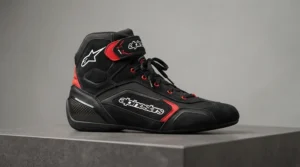
Budget racing boots for amateur racers are CE-certified motorcycle boots — typically priced between roughly $150 and $650 — that combine ankle bracing, shin and toe armor, and a race-oriented sole, without the flagship pricing of pro-level MotoGP boots. They’re built to pass track day tech inspection while staying affordable for weekend riders who aren’t chasing a factory contract.
Quick Comparison Table
| Boot | Price Range | Ankle Protection | Best For |
|---|---|---|---|
| ILM BRC1 | Under $200 | TPU shin/heel/toe armor | First-time track day riders |
| TCX RT-Race Pro Air | $300-$330 range | Anti-twist Double Flex Control | Budget riders wanting real race tech |
| Alpinestars SMX-6 V3 Vented | $300-$350 range | TPU lateral ankle brace | Most amateur trackday riders |
| Forma Ice Pro Flow | $400-$450 range | Injection-molded FCS pivot system | Wide feet, hot-weather tracks |
| Sidi ST Air | $400-$460 range | External replaceable ankle guards | Riders who keep boots for years |
| Gaerne GP-1 Evo | $400-$530 range | Carbon composite Floating System | Riders wanting Italian build quality |
| Alpinestars Supertech R Vented | $550-$650 range | Race-proven flagship brace | Serious amateurs, ex-racers |
Looking at the spread above, the real story isn’t budget versus premium — it’s that the $300-$350 range is doing most of the heavy lifting for amateur racers right now, with three of our seven picks landing there. The Alpinestars SMX-6 V3 Vented and TCX RT-Race Pro Air both punch well above their price tag on paper, while the Alpinestars Supertech R Vented exists for riders who’ve already decided cost is secondary to squeezing out every last percent of protection.
💬 Just one click — help others make better buying decisions too!😊
Top 7 Budget Racing Boots for Amateur Racers: Expert Analysis
1. ILM BRC1 — best true entry point under $200
The ILM BRC1 opens our list because it’s genuinely the cheapest way into a CE-rated race boot without stepping down to a glorified sneaker. Its two-layer build pairs a shock-damping inner bootie with an armored outer shell, and the large-format TPU plates at the shin, heel, toe, and shifter area do real work absorbing impact rather than just looking tough.
In practice, that layered construction means a low-speed slide is far less likely to end in a fractured toe or torn ankle ligament than it would in a standard riding shoe. This is the boot for someone who isn’t sure track days are their thing yet and doesn’t want to drop $400 to find out — beginners on a strict budget, or riders picking up a second pair for a track-day rental bike, get the most obvious win here.
Verified third-party review data on the BRC1 is thinner than on legacy brands like Alpinestars or Sidi, since it’s a newer entrant to the category; what’s publicly available points to solid heel and shin ventilation and an easy side-zip-plus-buckle closure, though long-term durability claims should be taken with more caution than they would for a 20-year-old model. Pros:
- ✅ Lowest CE-rated entry price on this list
- ✅ Dual-layer construction with real TPU armor zones
- ✅ Side zip and quick-lock buckle speed up putting them on
Cons:
- ❌ Limited long-term durability data compared to established brands
- ❌ Less refined ankle bracing than mid-tier competitors
Priced under $200, the ILM BRC1 is the value play for someone testing the track-day waters — just budget for an upgrade once you know you’re staying in the sport.
2. TCX RT-Race Pro Air — most race tech under $400
The TCX RT-Race Pro Air is what happens when a mid-priced boot borrows engineering straight from MotoGP paddocks. Its Fasten Fit Control system runs an internal lace through the boot lining, letting you dial in a millimeter-precise fit that a simple zip-and-buckle boot can’t match, and that translates directly into less foot movement — and less blister-inducing friction — during a 20-minute track session.
The anti-twist Double Flex Control joint at the ankle is the more important spec, though: it’s a polyurethane hinge engineered to control rotation, which is precisely the motion that snaps ankles in a tip-over. Based on the spec sheet, this boot is aimed at riders who’ve done a handful of track days and know they want a boot that flexes naturally when walking the paddock but locks up under a sideways crash load — not a first-timer who just needs something legal.
Owner discussions on enthusiast forums consistently mention a squeak when walking and describe the fit as snug and race-oriented, while also praising the rigidity and build quality after well over a year of regular track use, including a few off-track slides. Pros:
- ✅ Internal lacing gives a genuinely custom fit
- ✅ CE Cat. II certified to EN 13634
- ✅ Reportedly holds up through repeated track seasons
Cons:
- ❌ Some owners report a walking squeak
- ❌ Snug fit can be unforgiving for wider feet
At around $300-$330, this is what most buying guides mean when they say “the best sub-$400 race boot” — and the research backs that reputation up.
3. Alpinestars SMX-6 V3 Vented — the sweet spot for most amateur trackday riders
If you only read one entry on this list, make it this one, because the Alpinestars SMX-6 V3 Vented is the boot most amateur racers should actually buy. Alpinestars kept the third-generation SMX-6 at essentially the same launch price as the outgoing model, and the redesigned ergonomic last, laser-perforated microfiber upper, and TPU-reinforced front and back flex zones mean you’re getting current-generation race tech without a current-generation price hike.
What most buyers overlook about this model is that it isn’t simply a street boot with race styling — the TPU lateral ankle brace is genuinely built to control side-to-side ankle movement during a crash, which is the exact failure mode that ends amateur racers’ seasons early.
Reviewers who’s compared it directly to the outgoing SMX-6 V2 note a real trade-off worth knowing about: crush protection dropped from Level 2 to Level 1, and the outer ankle brace flexes more easily than before, meaning this generation trades a bit of raw stiffness for everyday comfort and walkability. That’s a fair swap for a street-and-track boot, less so if you’re racing wheel-to-wheel every weekend. Pros:
- ✅ CE certified to EN 13634:2017
- ✅ Same launch price as the previous generation
- ✅ Laser-perforated upper keeps feet cool on hot track days
Cons:
- ❌ Crush protection downgraded from Level 2 to Level 1 versus the prior version
- ❌ Outer ankle brace is less stiff than the SMX-6 V2
At $299.95-$349.95 depending on colorway and Drystar options, this is the boot that balances protection, comfort, and price better than anything else in this roundup.
4. Forma Ice Pro Flow — best for wide feet and hot circuits
Forma built its reputation on adventure boots, but the Forma Ice Pro Flow proves the Italian brand can hang with race-focused competitors too. Its anti-torsion F.C.S. frame and pivot system are engineered to let the ankle move naturally through a normal riding range while locking up hard under a torsional crash load — in plain terms, you get walkable comfort in the paddock and real bracing when it matters. The vented, perforated microfiber upper paired with an internal air intake system is a genuine advantage on 90-degree track days, where a sealed boot can turn into a sauna by session three.
Here’s what the spec sheet won’t tell you, but rider reports consistently mention: this boot runs noticeably wide, which is either a dealbreaker or a revelation depending on your foot shape — narrow-footed riders coming from Sidi may find it sloppy, while wide-footed riders who’ve fought other Italian brands for years finally get a boot that doesn’t pinch.
Aggregated owner reviews on major retail sites skew heavily positive, repeatedly citing strong ankle support, comfort, and a favorable protection-to-price ratio, with the most common complaint being a stiff, noticeable break-in period and a recommendation to size up. Pros:
- ✅ Wide-fit friendly compared to narrower Italian competitors
- ✅ Strong ventilation for hot-weather track days
- ✅ Replaceable stainless steel toe sliders
Cons:
- ❌ Noticeable break-in period before full comfort
- ❌ Runs wide, which can be an issue for narrow feet
Currently priced in the $400-$450 range depending on retailer promotions, it’s a strong value against pricier flagship boots that don’t ventilate nearly as well.
5. Sidi ST Air — buy once, replace parts forever
Sidi built its whole reputation on this idea: race boots should be rebuildable, not disposable. The Sidi ST Air carries that philosophy through external, individually replaceable components at the ankle, heel, and toe, so a scuffed slider or cracked shin plate doesn’t mean buying an entirely new boot — you just order the part. That matters enormously for amateur racers doing frequent track days, where toe sliders and heel cups take the brunt of repeated cornering wear.
Based on the spec comparison against its competitors, the ST Air’s ankle bracing is consistently rated among the strongest in this price bracket, which is exactly why it’s earned a reputation as a “buy it once” boot among riders who log dozens of track days a season.
Real owner feedback is mixed on one specific point worth flagging honestly: several riders report the sole wearing out faster than expected given the price point, even while praising the boot’s fit consistency and torsional protection — a reminder that even trusted brands have known weak spots, and that regularly checking sole wear is smart maintenance regardless of which boot you choose. Pros:
- ✅ Externally replaceable armor and sliders
- ✅ Consistently praised for ankle-torsion protection
- ✅ True-to-size fit for most riders
Cons:
- ❌ Some owners report faster-than-expected sole wear
- ❌ Premium pricing versus similarly-specced competitors
At roughly $400-$460, the ST Air rewards riders who track their bike often enough to actually benefit from a rebuildable design.
6. Gaerne GP-1 Evo — the underrated Italian alternative
Ask ten amateur racers about boots and you’ll hear Alpinestars and Sidi nine times before anyone mentions Gaerne — and that’s exactly why the Gaerne GP-1 Evo deserves a spot here. Its Floating Pivot System uses carbon composite plates on both sides of the ankle to resist hyperextension and hyperflexion — the two specific failure modes responsible for most serious ankle injuries in a crash — while still allowing a full natural range of motion for walking the paddock.
What most buyers overlook about this model is that its BOA-style speed-lace closure paired with an internal zip delivers a fit precision that a standard buckle-and-velcro boot simply can’t replicate, similar in spirit to the TCX RT-Race’s internal lacing but executed with a different mechanism.
Enthusiast forum discussions comparing the GP-1 directly against Sidi and TCX consistently describe its ankle brace as noticeably sturdier and more confidence-inspiring than the more common plastic braces on competing boots, even as some riders openly wonder whether the sole compound will prove as long-lasting as TCX’s well-regarded rubber. That’s an honest unknown rather than a confirmed weakness, and it’s worth factoring in if long-term durability data matters more to you than day-one feel. Pros:
- ✅ Carbon composite ankle brace resists hyperextension
- ✅ Replaceable magnesium toe sliders
- ✅ Made in Italy with premium materials
Cons:
- ❌ Long-term sole durability is less documented than rival brands
- ❌ List price runs higher than nameplate competitors, though street pricing narrows the gap
Street pricing typically lands in the $400-$530 range, making this the pick for riders who want a less common boot with genuinely serious ankle engineering.
7. Alpinestars Supertech R Vented — the podium-proven flagship
Every roundup needs an aspirational entry, and the Alpinestars Supertech R Vented earns its place as the boot amateur racers upgrade to once they’re fully committed. This is Alpinestars’ definitive racing boot, worn by a roster of professional racers across multiple championships, and the redesigned front flex area, rear bellow, top gaiter, shin plate, and 3D mesh inner bootie represent years of direct feedback from riders who crash at speeds most amateurs will never approach.
Here’s what the spec sheet won’t fully convey: extensive perforation throughout the upper means this is also one of the coolest-running boots on this list, which matters enormously if your local circuit sees triple-digit summer heat.
Riders discussing ankle protection on enthusiast forums repeatedly single this boot out as feeling like “a slipper” in daily wear while still delivering serious brace-level support in a crash, and — notably — several specifically mention it doesn’t develop the walking squeak that plagues some competing race boots over time. That combination of comfort and confidence is precisely why so many amateur racers eventually trade up to it once they’ve outgrown their first boot. Pros:
- ✅ Race-proven design used across professional championships
- ✅ Extensive perforation for serious heat management
- ✅ Reported to stay quiet and comfortable over years of use
Cons:
- ❌ Highest price on this list by a wide margin
- ❌ Arguably more boot than a true beginner needs on day one
At $550-$650 depending on retailer and colorway, it’s not a starter boot — but for the serious amateur racer, it may be the last boot you ever need to buy.
Top 7 Products: Specs, Price & Value Snapshot
| Boot | CE Standard | Ventilation | Price Range | Best For |
|---|---|---|---|---|
| ILM BRC1 | CE protective rated | Heel/shin vents | Under $200 | First trackday, tight budget |
| TCX RT-Race Pro Air | EN 13634 Cat. II | Perforated upper | $300-$330 | Budget riders wanting race tech |
| Alpinestars SMX-6 V3 Vented | EN 13634:2017 | Laser-perforated | $300-$350 | Most amateur trackday riders |
| Forma Ice Pro Flow | CE certified | Vented + air intake | $400-$450 | Wide feet, hot climates |
| Sidi ST Air | CE certified | Perforated | $400-$460 | Frequent trackday riders |
| Gaerne GP-1 Evo | EN 13634:2017 | Perforated (Air) | $400-$530 | Riders wanting rare Italian build |
| Alpinestars Supertech R Vented | CE certified (flagship) | Extensive perforation | $550-$650 | Serious amateurs, ex-racers |
The pattern across this table is worth calling out directly: every single boot here, even the sub-$200 ILM BRC1, carries a CE protective rating, which means the real differentiator between tiers isn’t “safe versus unsafe” — it’s refinement, replaceability, and how the ankle brace behaves under repeated real-world abuse. If your budget tops out around $300-$350, the Alpinestars SMX-6 V3 Vented or TCX RT-Race Pro Air deliver the most track-relevant engineering per dollar spent.
How to Choose Budget Racing Boots for Amateur Racers
- Confirm the CE rating first. Look for EN 13634:2017 certification before comparing anything else — a boot without it isn’t a race boot, regardless of styling.
- Match the boot to your actual riding frequency. Occasional track days favor value picks like the ILM BRC1; weekly sessions justify replaceable-part boots like the Sidi ST Air.
- Prioritize ankle bracing over aesthetics. The lateral brace is the single feature most responsible for preventing serious injury in a low-side.
- Check ventilation against your local climate. A sealed boot at a 100-degree track day isn’t just uncomfortable — heat fatigue affects reaction time.
- Factor in replaceable parts. Sliders and heel cups wear out; boots that let you swap them, like the Gaerne GP-1 Evo, save money over multiple seasons.
- Try before you commit if at all possible. Italian brands like Sidi run narrow, Alpinestars runs generous, and Forma runs wide — sizing charts only get you partway there.
- Budget for a break-in period. Nearly every boot on this list needs several wears before the ankle hinge and sole settle in comfortably.
Entry Level Track Boots vs Premium Race Boots
The gap between entry level track boots and premium race boots isn’t as wide as marketing copy suggests, and understanding exactly where it lies will save you from overspending. Every boot in this guide, from the sub-$200 ILM BRC1 up to the $650 Alpinestars Supertech R Vented, meets a real CE protective standard, meaning the baseline safety floor is higher than most new riders assume. What premium pricing actually buys is refinement: better ventilation engineering, more sophisticated ankle-hinge systems that flex naturally while walking but lock under crash loads, replaceable wear parts, and materials that hold up to dozens of track weekends instead of a handful. An entry level boot like the TCX RT-Race Pro Air delivers a genuinely race-oriented hinge system for a third of the flagship price, but it won’t have the years of professional-racer feedback baked into something like the Alpinestars Supertech R Vented. For most amateur racers doing fewer than fifteen track days a year, that gap in refinement matters far less than the gap in your bank account — which is exactly why the mid-tier boots on this list outsell the flagships by a wide margin among weekend racers.
Cheap Racing Boots for Beginners: Common Mistakes When Buying
Shopping for cheap racing boots for beginners comes with a predictable set of pitfalls, and avoiding them matters more than chasing the lowest price tag. The first mistake is buying a boot with no verifiable CE certification at all — plenty of Amazon listings use racing imagery and armored-looking plastic without ever citing EN 13634, and that’s a red flag worth taking seriously. The second is assuming ankle-height sneakers or work boots satisfy track day requirements; most organizations explicitly require boots that extend well above the ankle and fasten with a buckle or zip, not laces, because laced boots can loosen or catch during a slide. The third mistake is sizing based on street-shoe habits rather than the manufacturer’s specific chart, since race boots run narrower or wider by brand in ways that don’t map cleanly to sneaker sizing. Fourth, beginners often skip the break-in period entirely and show up to their first track day in stiff, unworn boots, which affects both comfort and the natural flex needed for good bike control. Finally, don’t buy the absolute cheapest option purely to save money if it means sacrificing a genuine CE rating — the ILM BRC1 proves you don’t have to choose between an affordable price and real certified protection.
Ankle Support in Racing Boots: Features That Actually Matter (And Those That Don’t)
Ankle support is the single most misunderstood spec category in racing footwear, largely because marketing language rarely distinguishes between genuine bracing and decorative padding. What actually matters is a mechanical hinge or brace system — like the carbon composite plates in the Gaerne GP-1 Evo or the TPU lateral brace in the Alpinestars SMX-6 V3 Vented — engineered to resist the specific twisting and hyperextension motions responsible for most crash-related ankle injuries, tested against the EN 13634 protective footwear standard that governs motorcycle boot certification. What doesn’t matter nearly as much: thick padding alone, which feels reassuring in a showroom but does little against a genuine torsional crash load, and boot height by itself, since a tall boot with a weak hinge still fails the way a short one does. Reviewers comparing the outgoing Alpinestars SMX-6 V2 against the newer V3 specifically flagged a softer, less stiff outer ankle brace on the redesigned model — proof that even flagship brands sometimes trade real bracing strength for everyday comfort, and that spec sheets alone don’t always tell the full story. If ankle protection is your top priority, prioritize boots with a named, engineered brace system over ones that simply advertise “reinforced” ankle areas without specifying how.
Track Day Licensing Gear Rules: What Your Boots Must Meet
Track day licensing gear rules vary by organization, but the boot requirement is remarkably consistent across nearly every reputable trackday and licensing body in the country. The overwhelming standard is straightforward: motorcycle-specific boots that fully cover and extend above the ankle, fastened by a buckle or zipper rather than laces, which several organizations explicitly prohibit due to the risk of laces loosening or snagging during a slide. Some organizations go further, requiring boots to extend to approximately mid-calf, and nearly all of them require zero exposed skin between the boot top and your leathers or riding pants when your foot is on the peg. One well-known trackday organization’s published policy captures the standard language almost every group uses: ankle-covering, buckle-or-zip-fastened boots are mandatory, full stop, with heavily armored boots specifically recommended rather than optional. If you’re planning to pursue an actual racing license down the road rather than just recreational track days, expect even stricter scrutiny at tech inspection, since licensing bodies typically require documented CE certification rather than simply visual approval. The practical takeaway: any boot on this list will clear tech inspection at essentially every trackday organization in the country, which is precisely why we built this guide around genuinely certified options rather than lookalike gear.
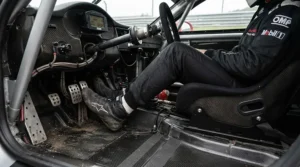
Practical Usage Guide: Breaking In Your Racing Boots the Right Way
Boot break-in is the step beginners skip most often, and it’s also the fastest way to turn a great boot into a miserable first track day. Start by wearing new boots around the house for short stretches — twenty to thirty minutes at a time — over several days before your first ride, which lets the ankle hinge and sole flex naturally without forcing a full day’s abuse onto stiff, unyielding material. Pay close attention to pressure points at the top of the foot and around the ankle bone during this period; persistent pain in the same spot after multiple wears often signals a sizing issue rather than something that will simply “work itself out.” Once you’re on the bike, expect the first one or two track sessions to feel noticeably stiffer than they will by session five or six, particularly with boots like the Forma Ice Pro Flow and Gaerne GP-1 Evo, both of which owner reviews consistently flag as needing real break-in time before reaching full comfort. A common mistake in the first thirty days is over-tightening buckles or laces to compensate for a boot that still feels loose in the ankle — resist that urge, since a too-tight closure restricts the natural flex the hinge system is designed to provide. Finally, inspect toe sliders and heel cups after your first few sessions; replaceable-part boots like the Sidi ST Air and Gaerne GP-1 Evo make this an easy five-minute maintenance check rather than a reason to buy new boots entirely.
Real-World Scenarios: Which Boot Fits Your Racing Life
Picture three amateur racers standing in the same paddock. The first is a college student doing her second-ever track day on a borrowed 300cc bike, budget maxed out after paying for the track fee and gas money — for her, the ILM BRC1 or TCX RT-Race Pro Air make the most sense, delivering genuine CE protection without threatening her semester budget. The second is a weekend warrior in his late thirties who rides eight to ten track days a season on his own liter bike and has already worn through one pair of cheap boots — he’s the exact rider the Alpinestars SMX-6 V3 Vented was built for, balancing real protection, all-day comfort, and a price that doesn’t sting when he eventually needs a second pair. The third is a former club racer easing back into the sport after a few years away, riding aggressively enough that comfort and heat management matter as much as raw protection — for him, the Alpinestars Supertech R Vented or Gaerne GP-1 Evo reflect both his budget and his pace on track. None of these riders are wrong to choose differently, because the right boot depends less on how fast you are and more on how often you’re actually lacing up and how much risk tolerance your wallet can handle if something needs replacing next season.
Long-Term Cost & Maintenance
The sticker price on a racing boot tells you almost nothing about what it’ll actually cost you over three seasons of track days. A $180 ILM BRC1 that needs full replacement after one hard season of use may end up costing more per track day than a $350 Alpinestars SMX-6 V3 Vented that lasts three seasons with normal wear, simply because the total cost of ownership divides across far more track time. Boots with externally replaceable parts — the Sidi ST Air and Gaerne GP-1 Evo both qualify — shift the long-term math further in their favor, since a $40 replacement slider extends the boot’s usable life instead of forcing a full repurchase. Maintenance itself is minimal but matters: wipe down leather and microfiber uppers after wet sessions, check zippers and buckles for grit buildup that can cause premature failure, and inspect toe sliders every few track days since that’s the wear point most likely to fail first during an actual slide. Riders logging heavy annual mileage on track should budget for replacement sliders or a fresh heel cup roughly once a season, which is a fraction of the cost of a brand-new boot and keeps the original protective structure intact for years longer than most riders expect.
What to Expect: Real-World Track Day Performance
Specs on a page rarely translate directly to what a boot feels like at 9 a.m. on cold tires during your first session of the day. Expect any boot on this list to feel noticeably stiffer in the first twenty minutes than it will by your third or fourth lap, as body heat and repeated flexing gradually loosen up the ankle hinge and sole. Ventilated boots like the Forma Ice Pro Flow and Alpinestars Supertech R Vented genuinely earn their reputation on hot afternoon sessions, where a sealed boot can leave your feet swimming in sweat by session four — a real comfort difference, not just a marketing claim. On cornering feel specifically, boots with a narrower, race-oriented last, like the TCX RT-Race Pro Air and Sidi ST Air, tend to deliver a more precise sense of the footpeg than wider, more generously cut boots, which matters more as your pace and confidence increase over a season. And in the moment that actually counts — a low-side or tip-over — every boot here is designed to do the same fundamental job: keep your ankle from twisting past its safe range while the rest of your gear absorbs the slide. That’s the real-world payoff of the certification and engineering discussed throughout this guide, even if you never think about it again until the one time you need it.

Frequently Asked Questions
❓ What boots do I need for my first track day?
❓ How much should I spend on my first pair of racing boots?
❓ Are cheap racing boots actually safe for track days?
❓ How long does it take to break in racing boots?
❓ Can I wear regular motorcycle riding boots instead of race-specific boots at a track day?
Conclusion
Choosing between budget racing boots for amateur racers ultimately comes down to being honest about how you actually ride, not how you imagine you’ll ride by August. If you’re not yet sure track days are a long-term habit, the ILM BRC1 gets you certified and safe without a painful financial commitment. If you’re already hooked and doing this regularly, the Alpinestars SMX-6 V3 Vented remains the smartest all-around buy on this entire list, and boots like the Sidi ST Air or Gaerne GP-1 Evo reward riders who want years of use out of a single, rebuildable pair. And if you’ve fully committed to the sport, the Alpinestars Supertech R Vented is there waiting once your budget and your pace both justify it. Whichever boot you choose, remember that the certification and engineering discussed throughout this guide only matter if you actually wear the thing — a great boot sitting in your gear bag protects nobody. Buy something that fits, break it in properly, and get out there.
✨ Ready to gear up? Check current prices on today’s picks before your next track day fills up!🏁
Recommended for You
- Professional Racing Boots: 7 Best Picks for 2026
- Racing Motorcycle Boots for Trackdays: 7 Proven Picks for 2026
- Gauntlet Gloves for Adventure Riding: 7 Best Picks for 2026
Disclaimer: This article contains affiliate links. As an Amazon Associate, I earn from qualifying purchases. If you purchase products through these links, we may earn a small commission at no additional cost to you.
✨ Found this helpful? Share it with your friends! 💬🤗
