
In This Article
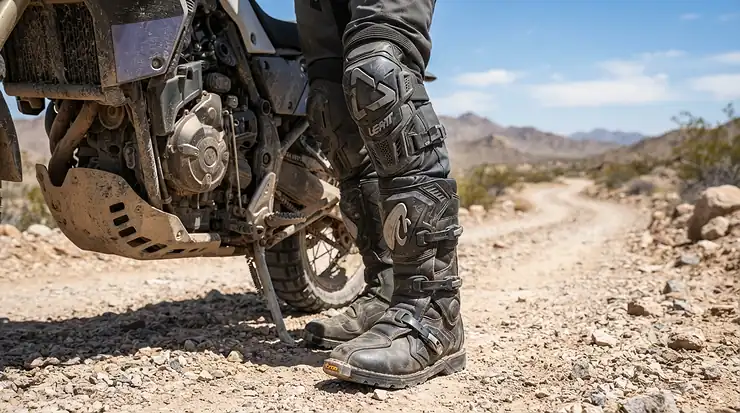
Tall motorcycle boots for cruiser riders are mid-calf to near-knee riding boots, usually 10 to 14 inches of shaft. They shield the ankle, shin and calf with leather or microfiber, often with armor and zippered closures, and they still look right next to chrome and a low saddle.

Here’s the thing about a cruiser: your feet live out in front of you. Floorboards, forward controls, highway pegs — whatever your bike offers, your shins and calves lead the charge into wind, rain, gravel and the occasional kamikaze bug. A sport rider tucked behind a fairing never deals with that kind of exposure. It’s why the right tall boot matters more on a Softail than most riders realize.
The instinct to cover up has research behind it. Wikipedia’s motorcycle boot entry points to University of Lyon research suggesting that both knee-high and ankle-height boots lowered foot and ankle fracture risk. So height isn’t just a fashion decision. It’s part of the protection.
I dug through spec sheets, retailer listings and published reviews to land on seven real boots. They run from a budget-friendly Tourmaster to a Sidi built like an adventure-bike tank. I judged each one on what a cruiser rider needs: boot shaft height, tall boot shin coverage, calf zippers, and how the boot behaves in a real cruiser riding position. Where I couldn’t verify something, I say so.
Prices below are ranges as of this research. Always check current price before you buy.
Quick Comparison: 7 Tall Cruiser Boots at a Glance
| Boot | Shaft Height | Standout Feature | Price Range | Best For |
|---|---|---|---|---|
| Tourmaster Epic | ~12 in (front) | Stretch panels, budget shin cover | Budget tier (check current price) | Tight budgets, tall coverage |
| Milwaukee Leather Classic 14-Inch Harness | 14 in | 2.2 mm cowhide, zipper plus lacing | ~$185-$225 range | Value-minded harness-look riders |
| Harley-Davidson Distortion | Mid-calf | Goodyear welt, full-grain leather | Mid-range (check current price) | Classic-look daily riders |
| Alpinestars Web Gore-Tex | ~8.7 in (22 cm) | Gore-Tex, side zip, adjustable calf strap | Mid-$300s to ~$400 | Wet-weather touring |
| Frye Harness 12R | ~11-12 in | Heritage harness styling | Premium (check current price) | Style-first short rides |
| Dainese Torque 4 | ~12 in | Race-grade ankle protection | Premium (predecessor listed in the mid-$400s) | Sport-leaning cruiser riders |
| Sidi Adventure 2 Gore-Tex | ~13.4 in (34 cm) | Full-height Gore-Tex, replaceable buckles | ~$450-$600 range | Long-distance, all-weather riders |
Looking at the table, the Milwaukee Leather Classic 14-Inch Harness and Tourmaster Epic deliver the most shaft per dollar. If rain is your enemy, the Sidi Adventure 2 Gore-Tex and Alpinestars Web Gore-Tex justify their higher tickets. The Frye Harness 12R is the odd one out: gorgeous, but its price buys style, not armor.
💬 Just one click — help others make better buying decisions too!😊
Top 7 Tall Motorcycle Boots for Cruiser Riders: Expert Analysis
1. Tourmaster Epic — cheapest route to 12 inches of shin cover
If your budget is tight but your shins aren’t getting any tougher, start here. Rider Magazine’s review called the Tourmaster Epic the tallest boot its reviewer had ever evaluated, with the front of the shaft running a good 12 inches. That matters in practice. Twelve inches puts material right up near the knee crease, so flicked gravel and road spray hit boot instead of skin. The construction is PU leather, a polyurethane stand-in for cowhide, with accordion stretch panels front and back that keep walking from feeling like wading through drainpipes.
Based on the spec comparison, this is a coverage-first boot, not a heritage piece. PU won’t age or resist abrasion like thick cowhide, so think dependable commuter armor rather than a forever boot. A vented “Air” version also exists for hot climates.
I couldn’t verify current aggregated buyer ratings for this exact production run. The published review praised comfort and mobility from those stretch panels, but check recent buyer feedback before ordering.
Pros:
- ✅ Around 12 inches of front shaft for real shin coverage
- ✅ Stretch panels make walking and bent-knee riding easier
- ✅ Vented “Air” variant available for summer
Cons:
- ❌ PU leather won’t match cowhide for long-term durability
- ❌ Bulkier look than classic cruiser boots
Price: budget tier, so check current price. Value verdict: the strongest height-per-dollar play on this list.
2. Milwaukee Leather Classic 14-Inch Harness — tallest shaft here at a value price
At 14 inches, this is the tallest shaft in the lineup, and it doesn’t carry a boutique price. The Classic harness line uses 2.2 mm full-grain cowhide, full adjustable lacing and an inside side zipper. The combo is smarter than it sounds. Lacing lets you dial in calf circumference, while the zipper handles the daily wrestling match of getting in and out. Fourteen inches lands near the base of the knee, so tall boot shin coverage is close to maximum. On shorter legs, though, it can crowd the bend behind the knee.
Here’s what to weigh: this suits riders with average-to-long lower legs who want a classic harness silhouette without the heritage-brand markup. The “waterproof leather” language is marketing, so treat it as water-resistant until proven otherwise.
On one retail listing, a verified buyer described the fit as true to size and comfortable. That’s a single data point, not a trend. One specialty retailer lists a men’s Classic variant as meeting EN 13634:2017, but variants differ, so check the label on your exact pair.
Pros:
- ✅ 14-inch shaft maximizes calf and shin cover
- ✅ Zipper plus lacing gives easy entry and adjustable fit
- ✅ Thick 2.2 mm cowhide upper
Cons:
- ❌ Waterproof claims are unverified
- ❌ Very tall on shorter legs
Price: roughly the $185-$225 range at the specialty retailer I checked. Value verdict: excellent for the height.
3. Harley-Davidson Distortion — Goodyear-welted mid-calf classic
The Harley-Davidson Distortion is the boot most cruiser riders picture when they close their eyes. It has a full-grain leather upper, a mid-calf shaft, a cushioned lining and Goodyear welt construction. That welt is the quiet hero. It means a cobbler can resole the boot instead of you tossing it when the tread goes, which is a real long-term cost advantage.
Mid-calf sits between short ankle boots and true tall boots. You get lower-shin coverage and a traditional look, but not the near-knee protection of the Milwaukee or Sidi. It’s a good fit for riders who want a daily boot that also works at the bar.
An Amazon-derived listing I found showed roughly 4.5 stars across about 900 ratings. That’s aggregated sentiment, and numbers shift, so confirm current figures. Sizing comments were mixed, with at least one buyer finding the boot large.
Pros:
- ✅ Goodyear welt allows resoling
- ✅ Full-grain leather upper
- ✅ Instantly recognizable cruiser styling
Cons:
- ❌ No CE rating cited on retailer listings
- ❌ Lace-up only, so no zipper convenience
Price: mid-range, so check current price. Value verdict: fair for the look and repairability, weaker on certified protection.
4. Alpinestars Web Gore-Tex — waterproof workhorse for rainy rides
Rain ruins boots and moods in equal measure. The Alpinestars Web Gore-Tex answers with a Gore-Tex membrane in a full-grain cowhide upper. Retailer specs list a shaft of about 22 cm (roughly 8.7 inches) and certification to EN 13634:2017. It adds shin and ankle protection, heel and toe caps, a shift panel, reflective material at the heel and a replaceable footbed.
The side zipper sits under a leather flap, and a listing for the Web 2 variant mentions an adjustable Velcro closure around the calf. Both are useful when you can’t reach laces from forward controls.
Honest take: at around 8.7 inches this is more tall-ish than tall. It makes sense if you want certified protection and dry feet with less shaft than the Sidi.
Retailer reviews skew strongly positive on waterproofing and comfort. The recurring advice is to order a size up, as one buyer did after finding the first pair too tight.
Pros:
- ✅ Gore-Tex keeps feet dry in downpours
- ✅ Certified to EN 13634:2017
- ✅ Side zip plus adjustable calf closure
Cons:
- ❌ Shorter shaft than true tall boots
- ❌ Pricey next to value options
Price: mid-$300s to around $400 range. Value verdict: strong if weather and certification top your list.
5. Frye Harness 12R — the look, with a big caveat
Nothing says “I own a leather jacket and a plan” like the Frye Harness 12R. It has oiled leather, a harness ring and strap, a squared toe and a roughly 11-to-12-inch shaft, depending on size and style. The shaft height is right in the sweet spot for cruiser riders who want presence.
The caveat is a big one. This is a heritage boot, not a motorcycle-specific protective boot. I found no CE rating and no ankle armor, so the shaft height gives you abrasion and debris cover but not impact protection. Treat it as style-first for short rides, or wear it only if you accept that trade.
Buyers on a major shoe retailer praise comfort and style. One reviewer, a longtime Chippewa wearer, preferred it to Chippewa’s harness boot, and another urged shoppers to check sizing before ordering.
Pros:
- ✅ Iconic harness silhouette
- ✅ Comfort praised in buyer reviews
- ✅ Welt construction per retailer listings
Cons:
- ❌ No motorcycle armor or CE rating found
- ❌ Premium pricing for non-protective build
Price: premium bracket, so check current price. Value verdict: great boot, questionable riding gear.
6. Dainese Torque 4 — race-grade ankle protection in a 12-inch shaft
The Dainese Torque 4 is a sport boot crashing a cruiser party, and plenty of riders on power cruisers and bagger-sport hybrids will welcome it. RevZilla lists an average height of 12 inches, with microfiber and D-Stone construction, increased ankle protection, a Groundtrax sole, a replaceable heel slider and a full accordion tongue. Larger sizes add calf room, and size 44 fits closer to a US 10.5.
Its predecessor, the Torque 3 Out, used a rear zipper with Velcro strips for calf adjustment and carried CE Level 2 certification. Check the Torque 4’s label for its own rating.
The tradeoff is aesthetics. Racing graphics and cruiser chrome don’t always share a mood. But the shin coverage and ankle control are class-leading. On retailer listings the Torque 3 Out held about 4.5 stars across 24 reviews, a small sample.
Pros:
- ✅ 12-inch shaft with strong tall boot shin coverage
- ✅ Heavy ankle protection and replaceable slider
- ✅ Lightweight for its protection level
Cons:
- ❌ Racing look clashes with classic cruisers
- ❌ Premium price
Price: the Torque 3 Out listed in the mid-$400s before replacement, so expect similar or higher. Value verdict: best pure protection per inch here.
7. Sidi Adventure 2 Gore-Tex — maximum shin coverage, rain or shine
If you ride through everything, this is the heavyweight. The Sidi Adventure 2 Gore-Tex carries a full-height 14-inch Gore-Tex gaiter and a shaft of about 34 cm (roughly 13.4 inches) at size 44. Closure is hook-and-loop plus two adjustable, replaceable buckles. It has a big TPU shin plate, TPU ankle support and a flex system that quiets the walking squeak. Rider Magazine’s review found it tight over a size 11 foot, tough to slide off, and not overly warm in 100-degree temperatures.
Weight is the cost of that coverage: about 6 pounds per pair, per Web Bike World’s review. A cruiser rider doing 300-mile days gets a boot that disappears in weather. A rider doing 10-mile hops may find it overbuilt.
RevZilla’s listing shows 4.5 stars across 191 reviews, with customers advising a larger size if you’re between sizes. Sidi is known for a narrow cut.
Pros:
- ✅ Full-height waterproof liner
- ✅ Large TPU shin plate and ankle support
- ✅ Replaceable buckles extend boot life
Cons:
- ❌ Heavy at around 6 pounds
- ❌ Adventure styling and tight fit
Price: roughly the $450-$600 range. Value verdict: pricey, but the most complete tall boot here.
Practical Usage Guide: Break-In, Setup and a 30-Day Maintenance Plan
A tall boot out of the box is a negotiation, not a gift. Spend the first week making peace.
Break-in: Wear them around the house for an hour at a time in the socks you’ll ride in. Flex the ankle, squat, and mimic a heel-toe shift. If a pressure point shows up, address it now, not on an interstate.
Setup: With lacing, snug the instep and loosen the calf. With calf zippers, zip fully, then lock any Velcro or strap so the shaft doesn’t flap. Set buckles so the boot stays closed without cutting circulation.
First 30 days, common mistakes:
- Overtightening calf closures, which numbs feet by mile 40
- Drying wet leather by a heater, which cracks it
- Skipping conditioner on new leather
- Forcing stiff zippers instead of lubricating them
Maintenance rhythm: Wipe mud after wet rides. Condition leather every few months, or sooner in dry climates. For Gore-Tex boots, rinse gently and avoid high-pressure washing. Check zipper teeth and stitching monthly. Welted boots like the Harley-Davidson Distortion can be resoled, so don’t toss them at the first sole wear.
Real-World Scenarios: Matching Tall Boots to Real Riders
These are hypothetical profiles, built so you can see how the choices play out.
The budget weekender. About $200 to spend, mostly dry weather, a few thousand miles a year. The Milwaukee Leather Classic 14-Inch Harness gives tall coverage and classic looks, while the Tourmaster Epic wins if you want maximum shaft for the least money. Skip the pricier Gore-Tex boots until rain becomes routine.
The year-round tourer. Twelve thousand miles, rain a few times a month, long days. The Sidi Adventure 2 Gore-Tex is the match for full-height waterproofing and replaceable buckles. If you want less weight and a lower shaft, the Alpinestars Web Gore-Tex keeps certified protection and dry feet in a lighter package.
The style-first short-trip rider. Bar nights, short hops, a love of leather. The Frye Harness 12R or Harley-Davidson Distortion deliver the look, but be honest with yourself: the Frye lacks armor, and the Distortion’s listings don’t cite CE certification. Add a certified boot for any highway day.
The sport-cruiser hybrid. If you ride a power cruiser hard in the twisties, the Dainese Torque 4 brings race-level ankle control without losing a tall shaft.
✨ Don’t Miss These Top Picks!
🔍 Take your cruiser riding to the next level with these carefully selected boots. Click on any highlighted item to check current pricing and availability. These picks will help you build comfortable, protected miles your whole crew will envy!
Problem → Solution Guide: Five Tall-Boot Headaches Fixed
Problem 1: The shaft bunches behind the knee. Rear shaft height matters as much as front height. Look for stretch or accordion panels, like those on the Tourmaster Epic, and consider a shorter shaft if you have a compact lower leg.
Problem 2: Textile pants snag on tall boots. One rider commenter on a women’s riding site noted that tall boots can be awkward with textile riding suits. Wear pants over the boot for rain defense, as RevZilla notes that overlapping a waterproof pant with a tall waterproof boot blocks water entry. If the pant won’t fit, switch to a mid-calf boot.
Problem 3: You can’t reach laces on forward controls. Choose side or rear zippers plus a Velcro or buckle closure, as on the Alpinestars Web Gore-Tex, so you can adjust at a stop.
Problem 4: Feet cook in summer. Choose vented variants, like the Tourmaster “Air” line, and wear moisture-wicking socks. Don’t buy Gore-Tex for scorching climates unless you ride in rain often.
Problem 5: Stiff boots fight your shifter. Look for a dedicated shift panel, like the one on the Alpinestars Web Gore-Tex. Break in the boot with heel-toe motions before long rides.
How to Choose Tall Motorcycle Boots for Cruiser Riders
- Decide your shaft height. Aim for 10 to 12 inches if you’re average height, and 13 to 14 inches if you’re tall or want maximum cover. Check both front and rear height.
- Confirm certification. Look for EN 13634:2017 on the label and read the level, because “CE-ish” marketing means nothing.
- Decide on waterproofing. Gore-Tex boots like the Sidi Adventure 2 Gore-Tex earn their price in rain, but they run warmer.
- Pick your closure. Calf zippers plus Velcro or buckles beat laces alone on forward-control bikes.
- Check the sole and shift zone. Floorboard riders need a flat, grippy sole and a reinforced shift area.
- Try them with your riding pants. Confirm the pant leg can fit over or under the shaft.
- Match price to mileage. A boot you ride in 200 days a year deserves a bigger budget than one for ten Saturdays.
Boot Shaft Height Explained: What the Numbers Mean
Boot shaft height is the measurement from the sole’s heel up to the top of the boot’s shaft. It’s the single spec that determines how much leg you protect. Treat any number without context carefully.
Retailers list shaft heights per size, and taller sizes have taller shafts. For example, the Sidi Adventure 2 Gore-Tex lists about 34 cm at size 44, the Torque 3 Out about 27 cm at size 44, and the Alpinestars Web Gore-Tex about 22 cm at size 44. In inches, that’s roughly 13.4, 10.6 and 8.7.
As a rough guide, short boots run about 5 to 6 inches (Harley-Davidson’s Brake Buckle is listed at 6 inches), mid-calf runs about 8 to 9, and tall runs 10 to 14. Always check whether the listing means front height, rear height or an average. A 14-inch shaft that’s lower in the back than the front fits very differently from one that’s uniformly tall.
Boot shaft height also interacts with the certification label. The 2017 version of EN 13634 added a height rating to the numbers on the tag, so a boot can earn a lower overall level purely because of a shorter shaft.
Cruiser Rider Boot Height: Picking the Right Number for Your Body and Bike
Cruiser rider boot height isn’t just about preference. It’s about leg length, seat height and how you sit. Shorter riders often find tall shafts bulky and restrictive when working shifters, according to guides aimed at shorter riders. Taller riders with long inseams, like the 6’2″ reviewer with a 34.5-inch inseam in the Sidi write-up, often love the extra height.
Rules of thumb for cruiser rider boot height:
- Shorter inseam or low seat: 8 to 11 inches, with stretch panels.
- Average build: 10 to 12 inches, such as the Dainese Torque 4 or Frye Harness 12R.
- Tall or long-haul: 13 to 14 inches, such as the Milwaukee Leather Classic 14-Inch Harness or Sidi Adventure 2 Gore-Tex.
If you like the cruiser look in a slightly shorter package, Sidi’s Canyon 2 Gore-Tex is described by RevZilla as part cruiser, part touring. At the time of research it was listed around the mid-$300s. Measure your calf too, because a tall shaft that’s too narrow will cut off circulation faster than it protects.
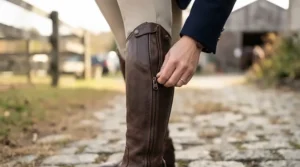
Cruiser Riding Position and Why It Changes the Boot Math
The cruiser riding position is relaxed, upright and feet-forward. Your knees open, your shins face the wind and your feet rest on floorboards or forward pegs. That changes the boot decision in four ways.
First, exposure. Forward feet mean your shins catch more spray, debris and engine heat than they would on a standard or sport bike. Tall boot shin coverage isn’t a luxury here.
Second, flex. The cruiser riding position asks for less ankle flex than a sport bike, so a stiffer, more protective boot is less of a penalty. The shift lever still demands a boot that doesn’t fight a heel-toe motion.
Third, closure access. You can’t easily lean down to retie. Calf zippers and Velcro closures are faster than laces.
Fourth, clearance. Floorboards and heel shifters punish bulky welts. Check that the sole profile and shaft don’t snag on controls or saddlebag supports.
Tall Boot Shin Coverage: Protection, Standards and What the Labels Say
Tall boot shin coverage protects against abrasion, flying debris, engine heat and, with armor, impact. Armor matters because leather alone doesn’t stop a hard hit. The Sidi Adventure 2 Gore-Tex has a large TPU shin plate, the Alpinestars Web Gore-Tex includes shin and ankle reinforcement, and the Dainese Torque 4 concentrates on the ankle.
Certification is where marketing meets reality. The current standard is EN 13634:2017, and Bikes Republic notes that the year refers to the standard’s revision, not when your boot was made. The 2017 version also added a height number, so labels now show four digits covering height, abrasion, impact cut and transverse rigidity, at Level 1 or Level 2.
For example, a label reading 1-2-2-2 can still be rated overall Level 1 because of boot height alone. In the U.S., CE is not a federal requirement for boots, but it remains the best shorthand for tested protection. Boots without it, like the Frye Harness 12R, rely on leather alone.
Calf Zippers: Features That Actually Matter
Calf zippers decide whether you love your boots at 6 a.m. and 6 p.m. Here’s what separates good ones from gimmicks.
Placement. Inside side zippers, like the Milwaukee Leather Classic 14-Inch Harness, keep the hardware away from the shifter. Rear zippers, as on the Torque 3 Out, offer a wide opening but can press into the back of a bent knee.
Cover. A leather storm flap, as on the Alpinestars Web Gore-Tex, protects teeth from grit and water. Without one, zippers jam sooner.
Backup closure. Velcro strips or buckles keep a zipper from carrying the load alone. They also let you adjust calf circumference at a stop.
Durability. Zipper failures are a common complaint category. One buyer on a Harley-Davidson listing reported a zipper breaking in under a year. Lubricate zippers, avoid forcing them over bulky pants, and don’t over-stuff the boot.
Marketing loves “waterproof zippers,” but treat that claim carefully unless a gaiter or flap backs it up.
Tall vs Short Motorcycle Boots: Which Wins for Cruisers?
| Factor | Tall Boots | Short Boots |
|---|---|---|
| Shin and calf coverage | Strong | Minimal |
| Weather protection | Excellent with overlap | Limited |
| Ease on and off | Needs zipper/straps | Easy |
| Walking comfort | Heavier | Lighter |
| Style | Classic, bold | Casual, versatile |
| Best For | Long rides, bad weather, maximum cover | Short hops, hot climates |
Short boots like Harley-Davidson’s 5- and 6-inch models have their place, but their shafts end low on the leg. For anything beyond town riding, tall wins on protection. Short boots win on comfort in heat and convenience at the bar.
The practical middle is a mid-calf boot like the Harley-Davidson Distortion. If you ride year-round, the Sidi Adventure 2 Gore-Tex and Milwaukee Leather Classic 14-Inch Harness give you coverage that short boots can’t.
Long-Term Cost & Maintenance: What a Tall Boot Really Costs
| Tier | Boots | What You Pay For | Value Call |
|---|---|---|---|
| Budget | Tourmaster Epic | Height, stretch panels | Best coverage per dollar |
| Value | Milwaukee Leather Classic 14-Inch Harness | Cowhide, 14-inch shaft | Best all-round value |
| Mid | Harley-Davidson Distortion, Alpinestars Web Gore-Tex | Welt or Gore-Tex | Pays off in rain or repairs |
| Premium | Frye Harness 12R, Dainese Torque 4, Sidi Adventure 2 Gore-Tex | Style or protection | Worth it if you ride often |
Cost per ride beats sticker price. A boot around $500 that survives five seasons of 60 rides each works out to about $1.67 a ride. A $150 boot that quits after two seasons costs about $1.25 a ride, but it protects less and you replace it sooner. Repairability tilts the math. A welted boot like the Harley-Davidson Distortion can be resoled, and the Sidi Adventure 2 Gore-Tex has replaceable buckles.
One commenter on a women’s riding site said they wore out a pair of boots in a season at over 6,000 miles a year, so mileage matters more than brand. Based on the comparison, the Milwaukee Leather Classic 14-Inch Harness and Alpinestars Web Gore-Tex hit the value sweet spots, while the Frye Harness 12R costs more for style than for riding performance.

FAQ
❓ Do I need CE-rated tall motorcycle boots for cruiser riders in the U.S.?
❓ Can I wear tall boots over or under my jeans?
❓ How do I measure my calf for tall boots?
❓ Are Frye harness boots safe for riding?
❓ How often should I condition leather riding boots?
Conclusion
Choosing tall motorcycle boots for cruiser riders comes down to three honest questions: how much leg do you want covered, how much weather do you ride in, and how much protection do you actually need?
If budget rules, the Tourmaster Epic and Milwaukee Leather Classic 14-Inch Harness deliver serious height for modest money. If rain is routine, the Alpinestars Web Gore-Tex and Sidi Adventure 2 Gore-Tex earn their prices. If you ride hard, the Dainese Torque 4 brings race-grade ankle control to a 12-inch shaft. And if style leads, the Harley-Davidson Distortion and Frye Harness 12R look the part, as long as you accept the protection tradeoffs.
Remember the fundamentals: check boot shaft height at your size, match cruiser rider boot height to your leg and bike, favor calf zippers with a backup closure, and respect the cruiser riding position that puts your shins out front. Verify EN 13634:2017 on the label before you buy.
✨ Ready to gear up?
🔍 Click on any highlighted boot to check current pricing and availability, then ride out with protected shins and a little extra swagger! 🏍️
Recommended for You
- Tan Motorcycle Boots That Match Leather Jackets: 7 Proven Picks 2026
- Red Motorcycle Boots For Sport Bikes: 7 Stunning Picks For 2026
- Black Motorcycle Boots: 7 Best Budget Picks For 2026
Disclaimer: This article contains affiliate links. As an Amazon Associate, I earn from qualifying purchases. If you purchase products through these links, we may earn a small commission at no additional cost to you.
✨ Found this helpful? Share it with your friends! 💬🤗
