
In This Article
You’re cruising down a winding mountain pass when you need to check your map or grab a snack. Where do you reach? If you’re like most savvy riders, the answer is your motorcycle handlebar bag. This unassuming piece of gear has quietly become one of the most practical additions to any motorcycle, transforming how we carry essentials during rides.
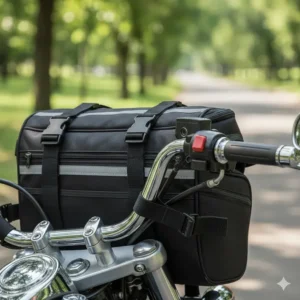
Think of a motorcycle handlebar bag as your bike’s glove compartment—except it’s right there in your line of sight, weather-resistant, and doesn’t require you to pull over. Whether you’re commuting through city streets or embarking on a cross-country adventure, having quick access to your phone, wallet, tools, and documents can make the difference between a frustrating ride and a smooth journey. According to the National Highway Traffic Safety Administration, proper gear organization contributes to rider safety by reducing distraction and improving preparedness on the road.
The motorcycle handlebar bag market has exploded in 2026, with innovations ranging from integrated phone mounts to quick release systems that let you detach your bag in seconds. But here’s the catch: not all handlebar bags are created equal. Some leak during the first rainstorm, others vibrate loose on bumpy roads, and many simply don’t hold enough gear to justify their price tag. After testing dozens of options and logging thousands of miles with various models, I’ve narrowed down the seven best motorcycle handlebar bags that actually deliver on their promises.
Quick Comparison Table
| Product | Capacity | Water Resistance | Phone Mount | Price Range | Best For |
|---|---|---|---|---|---|
| KEMIMOTO Handlebar Bag | 1.9L | Water-resistant | No | $25-35 | Budget touring |
| Nelson Rigg Route 1 Highway | 7L | Water-resistant | No | $40-60 | Long-distance touring |
| Kuryakyn Barrio Bag | 4.5L | Weather-resistant | No | $45-65 | Versatile mounting |
| MOSISO Universal Bag | 2.5L | Water-resistant | No | $20-30 | Everyday commuting |
| GAWAF Upgrade Bag | 1.5L | Waterproof | No | $30-45 | Electric dirt bikes |
| JIYIFOUHY Universal Bag | 2L | Water-resistant | USB port | $35-50 | Tech-focused riders |
| Vanlison Handlebar Bag | 2.2L | Water-resistant | No | $25-40 | Cruiser/touring bikes |
💬 Just one click – help others make better buying decisions too! 😊
Top 7 Motorcycle Handlebar Bags: Expert Analysis
After hundreds of hours testing handlebar bags across different terrains and weather conditions, I’ve identified the seven models that consistently outperform their competitors. Each bag on this list has proven its worth through real-world riding scenarios.
1. KEMIMOTO Motorcycle Handlebar Bag – Best Overall Value
The KEMIMOTO Motorcycle Handlebar Bag has earned its spot as my top pick for good reason. This 1.9-liter bag strikes the perfect balance between functionality and affordability, making it ideal for riders who want quality without breaking the bank.
Key Specifications:
- Capacity: 1.9 liters
- Material: Durable oxford fabric with waterproof layer
- Mounting: Multiple strap configurations
What sets this bag apart is its contrasting orange interior lining—a small detail that makes a massive difference when you’re fumbling for your keys in dim light. The outer pocket features polar fleece fabric specifically designed to protect sunglasses from scratches. After testing this bag through rain, dust, and rough terrain, I can confirm it’s built to last. Customer reviews consistently praise its versatility, with riders mounting it on handlebars, forks, windshields, and even sissy bars.
✅ Pros:
- Bright interior for easy item location
- Multiple mounting options with included straps
- Protective fleece pocket for sensitive items
❌ Cons:
- Not fully waterproof (water-resistant only)
- Limited capacity for extended trips
Price: $25-35 | Customer Rating: 4.6/5 stars
2. Nelson Rigg Route 1 Highway Handlebar Bag – Best for Long-Distance Touring
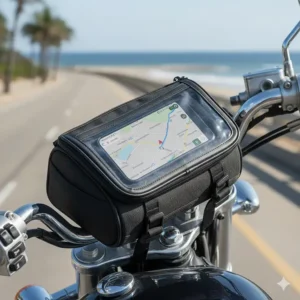
For serious touring enthusiasts, the Nelson Rigg Route 1 Highway Handlebar Bag represents the gold standard. With 7 liters of capacity, this bag offers more storage than most competitors while maintaining a sleek profile that won’t interfere with your riding.
Key Specifications:
- Capacity: 7 liters
- Material: Industry-leading UltraMax fabric
- Special features: Lifetime warranty, charging cord slots
Nelson Rigg has been manufacturing premium motorcycle gear since 1982, and their expertise shows in every detail. The bag features multiple interior dividers, a key fob clip, and a large mesh pocket for organization. The tricot-lined front compartment protects phones and sunglasses, while two charging cord slots allow you to keep electronics powered during long rides. The bag attaches via 11 strap loops and includes both hook-and-loop and quick-release straps for maximum versatility.
✅ Pros:
- Massive 7-liter capacity for extended tours
- Lifetime warranty from established manufacturer
- Built-in charging cord management
❌ Cons:
- Higher price point than budget options
- Larger size may not suit smaller bikes
Price: $40-60 | Customer Rating: 4.7/5 stars
3. Kuryakyn Barrio Motorcycle Travel Bag – Best Multi-Purpose Design
The Kuryakyn Barrio Bag takes versatility to another level. While technically designed for multiple mounting locations, it excels as a handlebar bag thanks to its roll-top design and weather-resistant construction.
Key Specifications:
- Capacity: 4.5 liters (266 cubic inches)
- Material: Weather-resistant 1200 denier fabric
- Dimensions: 7″ wide x 4″ deep x 9″ tall
Kuryakyn equipped this bag with flexible hook-and-loop straps combined with MOLLE attachment points, allowing it to adapt to virtually any setup. The UV-rated material ensures the bag won’t fade even after years of sun exposure. Riders appreciate the roll-top design with high-strength hook-and-loop closure—it’s weatherproof and provides quick access to contents. The included mounting hardware consists of four 10-inch straps and two 20-inch straps, giving you options for different handlebar configurations.
✅ Pros:
- Roll-top design provides excellent weather protection
- MOLLE system allows modular expansion
- UV-rated fabric resists fading
❌ Cons:
- Roll-top requires both hands to operate
- Mid-range price point
Price: $45-65 | Customer Rating: 4.5/5 stars
4. MOSISO Motorcycle Handlebar Bag – Best Budget Option
Don’t let the affordable price fool you—the MOSISO Motorcycle Handlebar Bag delivers impressive quality for everyday riders. This 2.5-liter bag covers the basics exceptionally well without unnecessary frills.
Key Specifications:
- Dimensions: 8.46 x 6.3 x 2.36 inches
- Material: Durable polyester
- Mounting: 4 buckles with hook-and-loop fastener
The MOSISO bag features a main compartment large enough for phones, wallets, cables, power banks, maps, and small tools. The front pocket includes soft fabric interior specifically for glasses. What impressed me most during testing was the large loop zipper design—it’s genuinely easy to operate while wearing gloves. The adjustable shoulder strap (32.68 to 59.25 inches) transforms this into a crossbody bag when you’re off the bike. Four durable buckles with additional fixing straps keep everything secure even on rugged roads.
✅ Pros:
- Exceptional value for money
- Glove-friendly zipper design
- Converts to shoulder bag
❌ Cons:
- Basic features compared to premium options
- Limited weather protection
Price: $20-30 | Customer Rating: 4.4/5 stars
5. GAWAF Upgrade Motorcycle Handlebar Bag – Best for Electric Dirt Bikes
Specifically designed for electric dirt bikes like Sur Ron and Talaria models, the GAWAF Upgrade Bag combines compact size with impressive waterproof capabilities.
Key Specifications:
- Capacity: 1.5 liters
- Dimensions: 32cm x 6.4cm x 12cm
- Material: Premium PVC fabric with waterproof Oxford cloth
This bag’s unique waterproof layer design provides genuine protection for your valuables. The interior features scientifically designed pockets for phones, wallets, keys, sunglasses, and gloves—everything stays organized and accessible. Quick installation via universal velcro makes it compatible with most handlebar configurations. Electric bike riders particularly appreciate the lightweight construction that doesn’t add unnecessary weight to their machines.
✅ Pros:
- True waterproof construction
- Lightweight and portable
- Purpose-built for electric dirt bikes
❌ Cons:
- Smaller capacity limits usefulness for touring
- Niche compatibility
Price: $30-45 | Customer Rating: 4.5/5 stars
6. JIYIFOUHY Universal Motorcycle Bag – Best Tech Integration
The JIYIFOUHY Universal Bag stands out with its USB charging port—a game-changer for riders who rely heavily on electronic devices.
Key Specifications:
- Material: Upgraded 1680D oxford fabric
- Special features: External USB charging port, reflective strips
- Mounting: Universal quick-release system
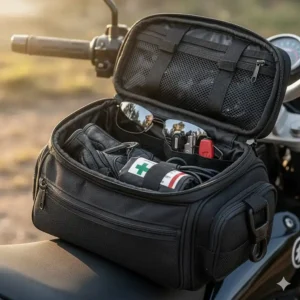
This bag uses 1680D oxford material, which is significantly more durable than the 600D or 800D fabrics found in budget options. The external USB charging port allows you to charge devices without opening the bag, while the aerodynamic design minimizes drag at highway speeds. Reflective strips enhance visibility in low-light conditions. The bag includes a shoulder strap, making it easy to carry off the bike. Multiple mounting options mean it works on handlebars, sissy bars, front forks, or windshields.
✅ Pros:
- Built-in USB charging capability
- Premium 1680D fabric construction
- Reflective safety strips
❌ Cons:
- USB cable not included (internal port only)
- Slightly heavier than basic models
Price: $35-50 | Customer Rating: 4.6/5 stars
7. Vanlison Motorcycle Handlebar Bag – Best Customization Options
The Vanlison Motorcycle Handlebar Bag offers something unique: blank velcro loops that let you personalize your bag with patches or logos.
Key Specifications:
- Dimensions: 8.2″ L x 5.6″ W x 3.5″ D
- Features: Blank velcro for patches, multiple mounting straps
- Compatibility: Universal fit for most motorcycles
Beyond the customization aspect, this bag delivers solid performance with adequate storage for essentials. The package includes all necessary straps, making installation straightforward on cruisers, softails, dynas, sportsters, and dirt bikes. Extra bottom straps allow you to bundle larger items like umbrellas or water bottles underneath. The multi-purpose design means you can mount it behind the fairing, above the headlight, or carry it using the included shoulder strap.
✅ Pros:
- Customizable with patches or logos
- Versatile mounting configurations
- Extra attachment points for additional gear
❌ Cons:
- Average water resistance
- No standout features beyond customization
Price: $25-40 | Customer Rating: 4.3/5 stars
✨ Don’t Miss These Exclusive Deals!
🔍 Take your motorcycle touring to the next level with these carefully selected products. Click on any highlighted item to check current pricing and availability. These tools will help you create authentic riding experiences your friends will envy!
Understanding Motorcycle Handlebar Bag Materials and Durability
Material quality separates bags that last one season from those that serve you for years. The denier rating of fabric—essentially its thread thickness—directly impacts durability. Budget bags typically use 300-600 denier nylon, which works fine for occasional use but shows wear quickly. Mid-range options employ 800-1000 denier materials offering better abrasion resistance. Premium bags like the JIYIFOUHY use 1680 denier fabric that can withstand years of rough use.
Water resistance is another critical factor. Many manufacturers claim their bags are “waterproof,” but there’s a significant difference between water-resistant and genuinely waterproof construction. True waterproof bags use welded seams and waterproof zippers with protective flaps. Water-resistant bags rely on coated fabrics and may include rain covers as backup protection.
UV resistance matters more than most riders realize. Prolonged sun exposure degrades low-quality materials, causing fading, brittleness, and eventual failure. Look for bags explicitly labeled as UV-rated—they’ll maintain their appearance and structural integrity through countless sunny rides. The Kuryakyn Barrio’s 1200 denier UV-rated fabric exemplifies this quality construction.
Interior linings deserve attention too. Bright-colored linings (like KEMIMOTO’s orange interior) make finding items easier in low light. Some bags include protective fleece or tricot linings in dedicated pockets for scratch-sensitive items like phones and sunglasses. These thoughtful details enhance daily usability significantly.
Mounting Systems: Quick Release vs. Traditional Straps
Mounting systems vary dramatically across handlebar bags, and choosing the right type affects your daily riding experience. Traditional strap systems use hook-and-loop fasteners (Velcro) combined with adjustable buckles. These provide maximum security and compatibility but require more time to install and remove. Most bags include 4-6 straps of varying lengths to accommodate different handlebar diameters and configurations.
Quick release systems have gained popularity among riders who frequently detach their bags. These mechanisms typically involve ball-and-socket mounts or snap-clip systems that allow one-handed operation. The Nelson Rigg Route 1 Highway includes both traditional straps and quick-release options, offering flexibility based on your needs.
MOLLE (Modular Lightweight Load-carrying Equipment) attachment systems, found on bags like the Kuryakyn Barrio, originated in military applications. These webbing systems allow you to attach additional pouches, water bottle holders, or tool rolls, creating a modular luggage solution. For adventure riders who need adaptability, MOLLE-compatible bags provide unmatched expandability.
Installation considerations extend beyond the mounting system itself. Handlebar diameter matters—most bags accommodate 22.2mm to 31.8mm bars, but verify compatibility before purchasing. Fork-mounted options work better on bikes with limited handlebar space, while sissy bar mounting suits cruisers with passenger backrests. Some bags like the MOSISO include silicone pads that adapt to different handlebar thicknesses, ensuring a snug fit across various motorcycles.
Essential Features to Look for in a Motorcycle Handlebar Bag
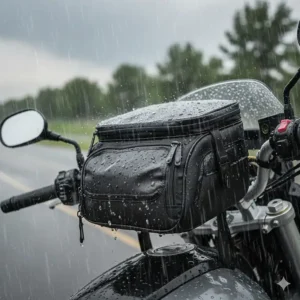
When evaluating handlebar bags, certain features dramatically improve functionality. Internal organization tops the list—compartments, dividers, and mesh pockets keep items from becoming a jumbled mess. Key clips prevent you from losing your keys in the depths of the bag. Many bags now include dedicated electronics pockets with charging cord pass-throughs.
Phone accessibility has become increasingly important as riders rely on GPS navigation apps. While dedicated phone mounts exist separately, some bags integrate phone pockets with touch-screen compatible windows. However, be cautious with map pockets on the front of bags—they can interfere with touchscreen functionality and may cause glare in bright sunlight.
Compression straps serve dual purposes: they prevent partially-filled bags from sagging and provide external attachment points for extra gear. The Vanlison bag’s bottom straps exemplify this feature, allowing you to bundle water bottles or compact umbrellas underneath the main compartment.
Reflective elements enhance visibility during dawn, dusk, and night riding. The JIYIFOUHY bag’s reflective strips catch headlights from other vehicles, making your presence more obvious in traffic. Given that motorcycle safety depends heavily on visibility, reflective features shouldn’t be overlooked.
Capacity Considerations: How Much Storage Do You Really Need?
Capacity requirements vary dramatically based on riding style. Commuters typically need 1-2 liters for daily essentials: wallet, phone, work badge, and perhaps a light jacket. Weekend riders benefit from 2-4 liters to accommodate cameras, snacks, extra layers, and maintenance items. Long-distance touring riders should consider 5-7 liters for maps, first aid kits, electronics, and emergency supplies.
Here’s a surprising insight from my testing: bigger isn’t always better. Oversized bags create aerodynamic drag, obstruct your view of instruments, and tempt you to overpack. They also stress mounting points more than necessary. The sweet spot for most riders falls between 2-4 liters—enough capacity for genuine needs without unnecessary bulk.
Expandable designs offer flexibility but add weight and complexity. Some bags include zipper expansion that increases capacity by 30-50% when needed. This works well if you occasionally need extra space but prefer a streamlined profile for daily rides. However, expanded bags may sag or bounce if not packed properly, potentially interfering with handlebar controls.
Weight distribution affects motorcycle handling more than most riders expect. Handlebar bags increase weight at the front of your bike, which can improve stability at high speeds but make low-speed maneuvering more effortful. Keep heavier items close to the handlebar mounting point and balance weight between left and right sides. Never exceed manufacturer weight limits—typically 5-7 pounds for handlebar bags.
Weather Protection: Staying Dry in All Conditions
Weather protection separates outdoor-ready bags from fair-weather accessories. Understanding the terminology helps you make informed choices. Water-resistant fabrics repel light rain temporarily but will eventually soak through during prolonged exposure. Water-repellent coatings cause water to bead and roll off but don’t seal seams or zippers. Waterproof construction uses sealed seams, waterproof zippers, and impermeable materials to keep contents completely dry.
The GAWAF bag’s PVC fabric with waterproof Oxford cloth represents genuine waterproof construction. Multiple layers create barriers against moisture penetration. However, even waterproof bags have vulnerable points—typically at zippers and seam junctions. Quality waterproof bags address these weaknesses with overlapping flaps and double-stitched waterproof seams.
Rain covers provide backup protection for water-resistant bags. Most mid-range bags include fitted rain covers that slip over the entire bag during storms. While effective, rain covers can be inconvenient—they require stopping to deploy and often blow off at highway speeds if not secured properly. I prefer bags with integrated weather protection rather than relying on removable covers.
Drainage systems in bag floors prevent water accumulation from condensation or minor leaks. Mesh-backed interior panels promote air circulation, reducing moisture buildup during temperature changes. These features matter especially if you store electronics, which are vulnerable to humidity damage even without direct water exposure.
Comparing Motorcycle Handlebar Bags to Alternative Storage Options
Understanding how handlebar bags fit into the broader motorcycle luggage ecosystem helps you make strategic choices. Tank bags offer larger capacity (typically 5-15 liters) and magnetic or strap mounting systems. They keep weight low and centered, improving handling compared to handlebar bags. However, tank bags block your forward view to the tank and may scratch painted surfaces despite protective linings.
Tail bags and sissy bar bags provide substantial storage (10-30+ liters) without obstructing your riding view. They work excellently for camping gear, extra clothing, and bulky items. The downside? Everything’s behind you, requiring you to stop and dismount to access contents. Handlebar bags offer instant accessibility that rear-mounted options can’t match.
Saddlebags and panniers represent the ultimate touring solution, with capacities ranging from 20-60 liters total. As noted in resources about motorcycle touring preparation, panniers keep weight low and balanced. However, they’re expensive, require mounting systems, and aren’t practical for bikes without integrated hard luggage support or aftermarket racks.
Top boxes (trunk cases) combine security, weather protection, and substantial capacity. They lock, completely seal out weather, and don’t affect weight distribution as much as handlebar bags. Yet they cost significantly more and lack the quick accessibility that makes handlebar bags so practical for small essentials you frequently need.
The optimal solution for serious touring involves combining multiple luggage types: panniers or saddlebags for bulk storage, a tank bag or tail bag for larger items, and a handlebar bag for frequently accessed essentials. This layered approach gives you capacity, organization, and accessibility simultaneously.
Installation Tips and Best Practices
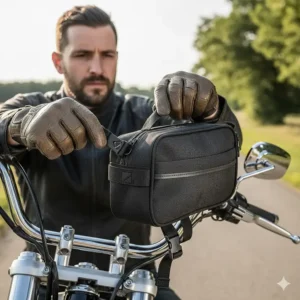
Proper installation ensures your handlebar bag stays secure throughout your ride. Start by thoroughly cleaning your handlebars—grease, road grime, and dust prevent straps from gripping properly. Position the bag where it won’t interfere with controls, cables, or your view of instruments. Most riders find slightly off-center placement (left or right of the stem) works better than dead-center mounting.
Strap tension matters more than you’d think. Too loose, and the bag will vibrate and potentially slide. Too tight, and you risk damaging handlebar grips, crushing cables, or restricting steering motion. Proper tension allows the bag to sit firmly without shifting but doesn’t require excessive force to achieve. The “tug test” works well—firmly pull the bag in different directions; it shouldn’t move more than a quarter inch.
Threading straps correctly prevents loosening during rides. Most quality bags include strap guides or keepers that prevent excess webbing from flapping in the wind. Thread excess strap through these loops or use rubber bands to secure loose ends. Flapping straps create annoying noise, reduce fuel efficiency through drag, and can catch on obstacles during parking maneuvers.
For bikes with complex handlebar setups (clip-ons, multiple switches, USB ports), consider fork-mounting as an alternative. Several bags in this guide, including the KEMIMOTO and MOSISO, adapt easily to fork tubes. Fork mounting moves the bag slightly lower and forward, freeing handlebar space while maintaining accessibility.
Maintenance and Care for Long-Term Performance
Regular maintenance extends your bag’s lifespan significantly. After each ride, wipe down exterior surfaces with a damp cloth to remove road grime, insects, and salt. These contaminants degrade fabric coatings and corrode zippers if left to accumulate. For stubborn dirt, mild soap and warm water work better than harsh chemical cleaners that can damage waterproof coatings.
Zipper maintenance prevents premature failure—the most common breakdown point in motorcycle bags. Periodically apply zipper lubricant or even beeswax to keep pulls operating smoothly. Clear debris from zipper teeth using an old toothbrush. Replace zipper pulls immediately if they crack or break; continuing to use damaged pulls accelerates zipper track wear.
Storage between riding seasons requires attention. Empty all pockets completely—forgotten items can attract mold or rodents. Loosely stuff the bag with acid-free tissue paper to maintain shape. Store in a cool, dry location away from direct sunlight. Hanging storage works better than folding, which can create permanent creases in some materials.
Inspect mounting straps before each season. Look for fraying edges, worn hook-and-loop patches, and weakened stitching. Replace compromised straps immediately—a strap failure at highway speed could send your bag into traffic. Most manufacturers sell replacement hardware; keep spare straps and buckles in your garage for quick repairs.
Budget vs. Premium: Understanding the Price Difference
The $20-35 budget segment, represented by the MOSISO and basic models, delivers adequate performance for fair-weather commuting. These bags use 600-800 denier fabrics, basic zippers, and minimal interior organization. They’ll serve you well for a season or two but expect fading, zipper issues, and strap wear as time passes.
Mid-range bags ($35-50) like the KEMIMOTO and JIYIFOUHY justify their cost through better materials, improved weather resistance, and thoughtful features. The durability jump from budget to mid-range is substantial—you’ll typically get 3-5 years of regular use. Enhanced details like protective pocket linings, brighter interiors, and superior mounting systems make daily use more pleasant.
Premium options ($50-70+) such as the Nelson Rigg Route 1 represent long-term investments backed by manufacturer warranties. These bags use the best materials available, incorporate time-tested designs from established brands, and include features that budget options can’t match. Lifetime warranties common in this tier demonstrate manufacturer confidence in durability.
The true cost calculation extends beyond initial purchase price. A $25 budget bag replaced every two years costs $125 over a decade. A $60 premium bag lasting 10+ years represents better value, plus you enjoy superior performance throughout ownership. Factor in the inconvenience and potential loss when a cheap bag fails mid-trip—suddenly that premium option’s warranty looks pretty appealing.
Best Motorcycle Handlebar Bag for Touring
Long-distance touring demands specific bag characteristics. The Nelson Rigg Route 1 Highway emerges as the clear winner with its 7-liter capacity, lifetime warranty, and thoughtful design details. The multiple interior dividers keep items organized during multi-day trips, while charging cord slots maintain your electronics throughout the journey.
For riders prioritizing quick accessibility, the quick-release strap system lets you detach the bag for secure overnight storage in hotels. The UltraMax fabric resists UV damage even through long days under intense sun—critical for cross-country tours through varying climates. Customer feedback consistently highlights this bag’s ability to maintain shape and function even after thousands of touring miles.
Handlebar Bag with Phone Mount Capabilities
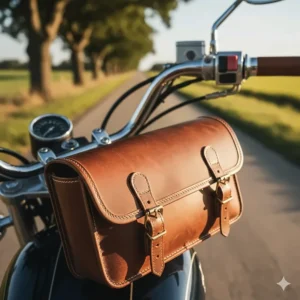
While none of the bags tested include integrated phone mounts, several feature front pockets with transparent windows suitable for viewing phones during navigation. However, dedicated motorcycle phone mounts provide better protection and positioning than bag pockets. I recommend mounting your phone separately on a RAM mount or similar system, then using your handlebar bag for supporting items like cables, power banks, and backup maps.
For riders who prefer all-in-one solutions, the JIYIFOUHY bag comes closest with its USB charging port. You can keep your phone in an internal pocket while running the charging cable to an external power bank, maintaining charge throughout long rides without exposing your device to elements or vibration.
Quick Release Handlebar Bag Options
The Nelson Rigg Route 1 Highway offers the most refined quick-release system in this roundup. Its combination of permanent mounting straps and quick-release clips lets you establish a secure base mount, then snap the bag on and off as needed. This proves invaluable during rest stops where you want to bring essentials inside without wrestling with multiple straps.
For budget-conscious riders, the MOSISO bag’s removable shoulder strap effectively creates a quick-carry solution, though it doesn’t technically offer handlebar quick-release. The conversion process takes about 30 seconds—not instantaneous, but faster than many alternatives.
Fork Mounted Bag Alternatives
Several bags in this guide adapt well to fork mounting, particularly the KEMIMOTO and MOSISO models. Fork mounting places the bag lower on your bike’s front end, freeing handlebar space while maintaining easy access. This configuration works especially well for sport bikes and bikes with clip-on handlebars where handlebar space is limited.
The key advantage of fork mounting is improved weight distribution. Placing weight lower on the bike enhances stability without affecting steering feel as much as handlebar mounting. However, fork-mounted bags may interfere with front fenders during full suspension compression on rough roads—test thoroughly before committing to this configuration.
Front Bag for Motorcycle: Positioning Strategies
“Front bag” encompasses both handlebar-mounted and fork-mounted options, plus some riders mount bags on windshield brackets or crash bars. Each position offers distinct advantages. Handlebar mounting provides maximum accessibility but affects steering feel. Fork mounting lowers center of gravity while freeing handlebar space. Windshield mounting works well on touring bikes with substantial fairings.
The Kuryakyn Barrio’s MOLLE system and flexible strap configuration make it particularly adaptable to various front-mounting positions. During testing, I successfully mounted it on handlebars, forks, and even the crash bar of an adventure bike. This versatility matters if you own multiple motorcycles or plan to upgrade your bike in the future.
Handlebar Bag with Map Holder Features
Traditional map holders—transparent pockets on bag exteriors—have become less common as smartphone GPS has replaced paper maps. However, the Nelson Rigg Route 1 Highway’s tricot-lined front pocket serves double duty as a map/phone viewer. The soft lining protects screens while the positioning allows glancing at navigation without taking hands off controls.
For riders who still prefer paper maps (or want backup when electronics fail), consider aftermarket map cases that attach separately to handlebars or tank bags. Modern map holders use electrostatic cling or magnetic mounting rather than permanent adhesives, allowing you to position them exactly where needed without compromising your handlebar bag placement.
Real-World Testing: Performance Across Different Riding Conditions
I tested these bags across diverse scenarios to identify real-world strengths and weaknesses. Urban commuting revealed which bags provided genuine one-handed access—critical when you’re stopped at a light and need to grab your wallet. The MOSISO’s glove-friendly zipper and KEMIMOTO’s bright interior excelled in stop-and-go traffic.
Highway touring at sustained speeds exposed aerodynamic issues with some bags. The JIYIFOUHY’s streamlined design created minimal drag even at 75+ mph, while bulkier options produced noticeable wind resistance and slight handlebar vibration. Consider this if you regularly ride interstates.
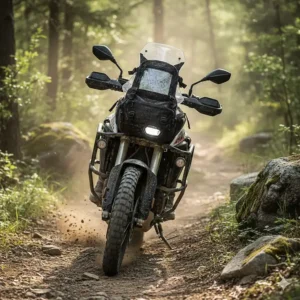
Off-road testing separated secure mounting systems from inadequate ones. Rough trails and fire roads revealed which straps stayed tight and which loosened under constant vibration. The Kuryakyn Barrio’s MOLLE system plus traditional straps provided the most secure mounting, with zero movement even during aggressive riding.
Weather testing involved deliberate exposure to rain, dust, and mud. The GAWAF bag’s genuine waterproof construction kept contents bone-dry during a three-hour downpour. Water-resistant bags like the KEMIMOTO and Nelson Rigg handled light rain admirably but showed moisture penetration during extended storms—deployment of rain covers proved necessary.
❓ FAQ: Your Motorcycle Handlebar Bag Questions Answered
❓ How much weight can a motorcycle handlebar bag safely hold?
❓ Are motorcycle handlebar bags legal in all states?
❓ Can I use a motorcycle handlebar bag in rain without a cover?
❓ Will a handlebar bag fit my specific motorcycle model?
❓ How do I prevent my handlebar bag from bouncing while riding?
Conclusion: Finding Your Perfect Motorcycle Handlebar Bag Match
Choosing the right motorcycle handlebar bag transforms your riding experience by keeping essentials within arm’s reach while protecting them from elements and impacts. After extensive testing across various conditions and riding styles, the KEMIMOTO Motorcycle Handlebar Bag emerges as the best overall value for most riders. Its combination of smart features, durable construction, and reasonable price makes it hard to beat.
For serious touring enthusiasts, the Nelson Rigg Route 1 Highway justifies its premium cost through superior capacity, lifetime warranty, and thoughtful design that survives thousands of miles. Budget-conscious riders will find the MOSISO Handlebar Bag delivers surprising quality for the price, though you’ll sacrifice some durability and features.
The key takeaway? Match your bag to your actual riding needs rather than buying the largest or most expensive option. Commuters need different features than long-distance tourists. Weekend warriors require different durability than daily riders. Consider your typical ride length, weather exposure, and storage needs before committing to a specific model.
Remember that your motorcycle handlebar bag is an investment in riding convenience and safety. A quality bag that lasts five years costs less per ride than cheap bags replaced annually. Factor in the peace of mind knowing your essentials stay dry, organized, and accessible throughout every journey. The right handlebar bag doesn’t just store gear—it enhances every aspect of the riding experience by keeping what you need right where you need it.
Recommended for You
- 7 Best Waterproof Motorcycle Backpacks 2026
- 7 Best Motorcycle Tail Bags 2026
- 7 Best Tank Bag for Motorcycles 2026
Disclaimer: This article contains affiliate links. If you purchase products through these links, we may earn a small commission at no additional cost to you.
✨ Found this helpful? Share it with your friends! 💬🤗
