
In This Article
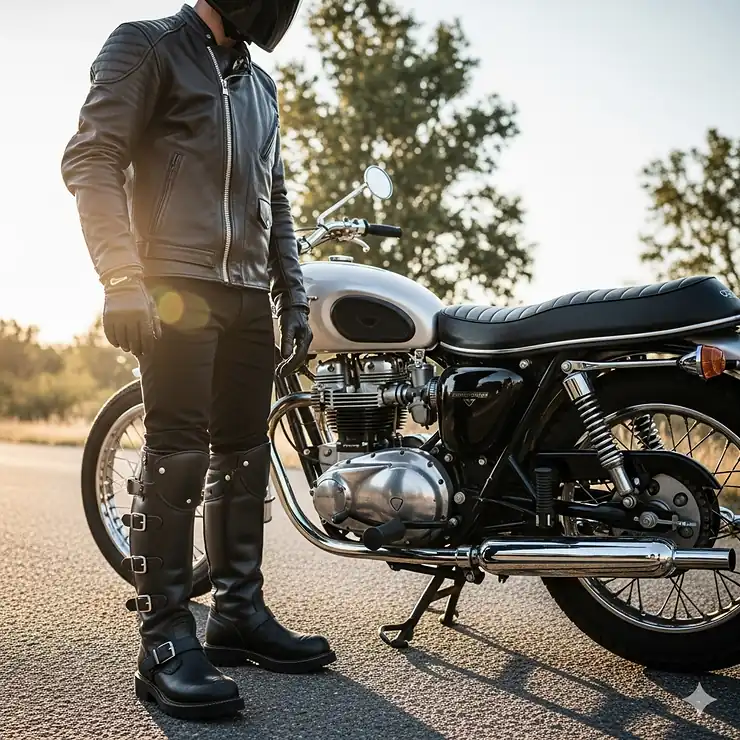
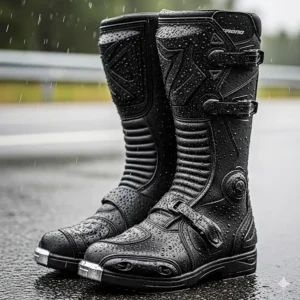
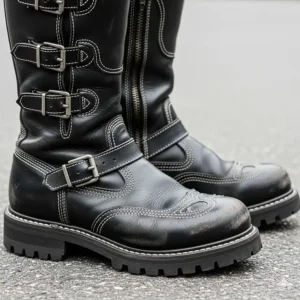
When you’re hitting the open road or tackling challenging terrain, your feet deserve nothing but the best protection. Tall motorcycle boots represent the pinnacle of rider safety, offering comprehensive coverage that extends well above your ankles to shield your shins and calves from potential hazards. Whether you’re a weekend warrior or a daily commuter, investing in quality tall motorcycle boots can literally be the difference between walking away from an accident and facing serious injury.
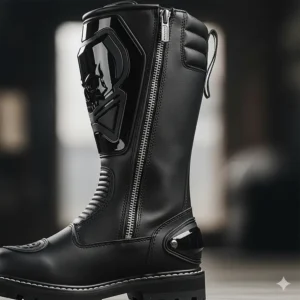
The motorcycle boot market has evolved dramatically over the past decade, with manufacturers integrating cutting-edge materials, advanced safety technologies, and ergonomic designs that don’t compromise on comfort. From waterproof membranes that keep your feet dry during unexpected downpours to reinforced toe boxes that can withstand crushing forces, today’s tall biker boots combine form and function in ways that were unimaginable just a few years ago.
✨Was this helpful? Spread the word! 🚀
Why Tall Motorcycle Boots Are Essential for Every Rider 🏍️
The statistics surrounding motorcycle accidents paint a sobering picture, particularly when it comes to lower extremity injuries. According to the National Highway Traffic Safety Administration, foot and ankle injuries account for approximately 30% of all motorcycle accident injuries, with many of these being preventable through proper protective gear.
Tall motorcycle boots provide several critical advantages over their shorter counterparts. The extended height offers protection against hot exhaust pipes, which can reach temperatures exceeding 800°F during normal operation. Additionally, the extra coverage protects against road debris, flying rocks, and the ground itself in the event of a crash or low-side slide.
Understanding Boot Height Classifications 📏
✅ Short boots (6-8 inches): Cover the ankle but leave the shin exposed
✅ Mid-height boots (8-12 inches): Provide partial shin protection
✅ Tall motorcycle boots (12+ inches): Offer comprehensive lower leg coverage
✅ Racing boots (14+ inches): Maximum protection for track and aggressive riding
The biomechanics of motorcycle riding place unique stresses on your feet and lower legs. Unlike walking or running, riding requires precise control inputs through your feet while maintaining stability in various positions. Tall biker boots are specifically engineered to support these demands while providing crucial protection during both normal riding and emergency situations.
Industry-Specific Applications and Professional Use Cases 🔧
Adventure and Dual-Sport Riding Applications
Adventure riders face some of the most demanding conditions in motorcycling, often spending hours standing on foot pegs while navigating rocky terrain, stream crossings, and varying weather conditions. Professional adventure tour guides and rally riders consistently choose tall motorcycle boots because they provide essential protection against:
- Sharp rocks and debris that can puncture or tear standard footwear
- Thorny vegetation and underbrush encountered on off-road trails
- Extreme temperature variations from desert heat to mountain cold
- Water crossings and mud that can compromise grip and stability
- Extended riding periods requiring superior comfort and support
The REV’IT! Everest GTX has become a standard choice among professional adventure riders, with many reporting successful multi-day expeditions across challenging terrain. Tour operators in places like Morocco’s Atlas Mountains and Patagonia’s remote regions have adopted these boots as standard equipment for their guides, citing their durability and weather protection as primary factors.
Professional Racing and Track Day Applications
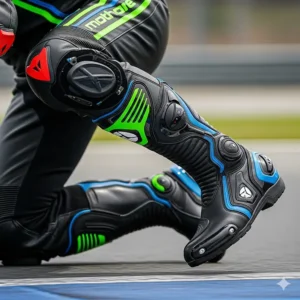
Professional motorcycle racers operate at the extreme limits of physics, where millisecond reactions and precise control inputs can mean the difference between victory and disaster. The racing community has driven many innovations in tall biker boots technology, including:
- Advanced hinge systems that prevent hyperextension during crashes
- Lightweight composite materials that maintain protection while reducing fatigue
- Replaceable wear components that extend boot life through multiple seasons
- Aerodynamic profiles that reduce drag at high speeds
The SIDI Atojo SRS, originally developed with input from MotoGP champions Tony Cairoli and Jorge Prado, exemplifies this professional-grade approach. Professional racing teams report that these boots can withstand impacts that would destroy lesser footwear, with many riders continuing races after crashes that would have resulted in serious injury with standard boots.
Law Enforcement and Emergency Services
Police motorcycle units and emergency medical services face unique challenges that require specialized protective gear. These professionals often need to transition quickly between riding and foot pursuits, making versatile tall motorcycle boots essential. Key requirements include:
- Quick on/off capability for rapid deployment situations
- Professional appearance that meets departmental standards
- All-weather performance for year-round duty cycles
- Durability to withstand daily use in challenging conditions
Many law enforcement agencies have standardized on boots like the Alpinestars Corozal Adventure Drystar due to their professional appearance and proven durability in high-stress situations.
Commercial and Delivery Applications
The rise of motorcycle-based delivery services has created new demands for protective gear that can withstand constant use while maintaining comfort during long shifts. Commercial riders often log 8-12 hours daily, making boot selection critical for both safety and productivity.
Professional courier services report significant reductions in workplace injuries and workers’ compensation claims after implementing mandatory tall motorcycle boots policies. The initial investment in quality boots typically pays for itself within the first year through reduced medical costs and improved rider retention.
Advanced Technical Analysis and Engineering Principles ⚙️
Material Science and Construction Technologies
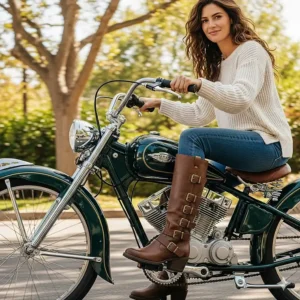
Modern tall motorcycle boots represent a convergence of advanced materials engineering and biomechanical research. The primary construction materials include:
Leather Technologies: Full-grain leather remains the gold standard for abrasion resistance, with modern tanning processes creating materials that can withstand slide distances exceeding 50 meters on asphalt. Premium boots utilize leather with tensile strengths approaching 200 pounds per square inch, significantly higher than standard footwear materials.
Synthetic Microfiber Systems: Advanced synthetic materials like those used in the TCX Drifter WP offer several advantages over traditional leather, including reduced weight, improved breathability, and consistent performance in wet conditions. These materials undergo specialized treatments that enhance their molecular bond structures, creating surfaces that maintain grip even when contaminated with oil or water.
Composite Armor Integration: Modern tall biker boots incorporate strategic placement of thermoplastic polyurethane (TPU) and carbon fiber reinforcements in high-impact zones. These materials are engineered to distribute impact forces across larger surface areas, reducing peak pressure points that could cause injury.
Waterproofing and Breathability Technologies
The integration of waterproof-breathable membranes represents one of the most significant technological advances in motorcycle boot design. Systems like Gore-Tex and proprietary membranes used in boots like the REV’IT! Everest GTX operate on the principle of molecular size differential.
Water molecules are approximately 20,000 times larger than water vapor molecules, allowing specially engineered membranes to block liquid water while permitting water vapor to pass through. This technology enables riders to maintain dry, comfortable feet even during extended exposure to wet conditions.
Research conducted by the European Centre for Motorcycling Safety demonstrates that waterproof tall motorcycle boots can maintain internal moisture levels up to 40% lower than non-waterproof alternatives during equivalent riding conditions.
Impact Distribution and Energy Absorption
The physics of motorcycle crashes create unique challenges for protective equipment design. During a typical crash scenario, impact energies can exceed 3,000 joules, requiring sophisticated energy management systems to prevent injury.
Modern tall motorcycle boots employ multi-layered energy absorption systems that work in sequence:
- Primary Impact Layer: Hard shell components deflect and distribute initial impact forces
- Secondary Absorption Layer: Foam systems compress to absorb kinetic energy
- Tertiary Protection Layer: Internal padding protects against residual forces
The SIDI Atojo SRS incorporates three separate anti-hyperextension systems, each designed to activate at different force thresholds, providing graduated protection that adapts to varying crash scenarios.
Biomechanical Hinge Systems
Professional-grade tall biker boots feature sophisticated hinge mechanisms that allow natural foot movement while preventing dangerous hyperextension. These systems are based on extensive biomechanical research that has identified the precise range of motion required for optimal motorcycle control.
The Alpinestars bio-mechanical lateral flexi-blade system, featured in the Alpinestars Corozal Adventure Drystar, allows 45 degrees of forward flexion while limiting lateral movement to 15 degrees, preventing the ankle inversions that cause the majority of riding-related foot injuries.
Comprehensive Setup and Usage Guidelines 👢
Initial Sizing and Fit Optimization
Proper sizing represents the foundation of tall motorcycle boots performance. Unlike casual footwear, motorcycle boots must accommodate specific riding positions while maintaining protection during emergency situations. The sizing process should consider several critical factors:
Sock Selection Impact: Quality motorcycle socks can significantly affect boot fit and performance. Merino wool blends provide optimal moisture management while maintaining consistent thickness throughout the riding session. Avoid cotton socks, which retain moisture and can lead to pressure points during extended riding.
Time-of-Day Considerations: Feet naturally swell throughout the day, with maximum swelling typically occurring in late afternoon. Schedule boot fittings during this period to ensure comfortable fit during long riding sessions.
Break-in Protocol: Quality tall motorcycle boots require a structured break-in period to achieve optimal fit and performance:
Week 1-2: Wear boots for 2-3 hours daily during non-riding activities
Week 3-4: Begin short rides (30-60 minutes) to assess comfort and identify pressure points
Week 5-6: Gradually increase ride duration while monitoring for hot spots or discomfort
Week 7+: Full riding capability with optimized comfort and protection
Accommodation for Different Riding Styles
Different riding disciplines place varying demands on tall biker boots, requiring specific setup considerations:
Sport Riding Setup: Position boots for maximum feel and control precision. Ensure toe boxes don’t interfere with gear shifting while maintaining protection. Many sport riders prefer boots like the TCX Street 3 WP for their balance of protection and sensitivity.
Adventure Riding Configuration: Optimize for standing riding positions and varied terrain. Ensure adequate calf room for extended standing while maintaining ankle support. The REV’IT! Everest GTX excels in this application due to its hiking-boot comfort combined with motorcycle-specific protection.
Touring Setup: Focus on all-day comfort and weather protection. Prioritize features like waterproofing and cushioning for long-distance comfort without compromising safety.
Environmental Adaptation Strategies
Tall motorcycle boots must perform across widely varying environmental conditions, requiring specific adaptation strategies:
Hot Weather Optimization (80°F+):
- Remove insoles during parking to allow air circulation
- Use moisture-wicking sock systems to prevent heat buildup
- Consider perforated boot options for maximum airflow
- Apply anti-chafing products to prevent hot spots
Cold Weather Protection (Below 40°F):
- Integrate heated insole systems for extended comfort
- Use vapor barrier sock systems to prevent moisture transfer
- Apply waterproofing treatments to maintain protection
- Consider boot warmers during extended parking periods
Wet Weather Protocols:
- Verify waterproof membrane integrity before riding season
- Use gaiter systems to prevent water entry at pant interface
- Carry backup footwear for post-ride comfort
- Implement proper drying procedures to maintain boot longevity
Safety Integration with Other Protective Gear
Tall motorcycle boots must integrate seamlessly with other protective equipment to provide comprehensive protection:
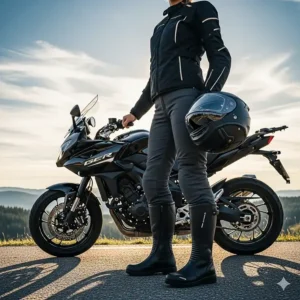
Pant Interface Optimization: Ensure proper overlap between boot height and pant leg coverage. A minimum 2-inch overlap prevents gaps during riding position changes. Many riders prefer the extended height of boots like the Alpinestars Corozal Adventure Drystar specifically for this integration capability.
Knee Protection Coordination: Verify that tall biker boots don’t interfere with knee guard positioning or movement. Some boots feature specific cutouts or contours to accommodate popular knee protection systems.
Riding Position Compatibility: Test boot performance in all typical riding positions, including standing, seated touring position, and aggressive sport positioning. Quality boots should enhance rather than limit your riding capabilities.
Maintenance and Longevity Optimization 🔧
Daily and Weekly Maintenance Protocols
Proper maintenance extends tall motorcycle boots life significantly while maintaining their protective capabilities. Professional riders often achieve 5+ years of service from quality boots through consistent care protocols.
Daily Post-Ride Inspection:
- Remove debris from sole treads using plastic brush
- Wipe exterior surfaces with slightly damp cloth
- Check buckle operation and strap adjustment mechanisms
- Inspect waterproof zippers for proper closure and lubrication
- Verify that all protective elements remain securely attached
Weekly Deep Cleaning Protocol:
- Remove insoles and allow separate airing for 24+ hours
- Apply appropriate cleaning products based on boot materials
- Inspect interior lining for wear patterns or damage
- Check hinge mechanisms for smooth operation
- Verify that all replaceable components remain secure
Monthly Technical Inspections
Monthly inspections should focus on technical elements that affect safety and performance:
Structural Integrity Assessment:
- Examine sole attachment points for separation or cracking
- Inspect ankle hinge mechanisms for proper alignment
- Check protective armor positioning and attachment
- Verify waterproof membrane performance through controlled testing
- Assess overall boot structure for permanent deformation
Component Replacement Planning: Many tall motorcycle boots feature replaceable components that extend service life significantly. The SIDI Atojo SRS includes replaceable soles, buckles, and armor elements that can be serviced individually rather than requiring complete boot replacement.
Seasonal Storage and Preparation
Proper seasonal care maintains boot performance across varying storage periods:
Winter Storage Protocol (Non-riding seasons):
- Thoroughly clean and dry all boot components
- Apply appropriate conditioning treatments to leather surfaces
- Store in temperature-controlled environment with cedar shoe trees
- Inspect and service mechanical components before storage
- Document any needed repairs or replacements for pre-season service
Pre-Season Preparation:
- Conduct comprehensive inspection of all systems
- Test waterproof membrane integrity through controlled exposure
- Verify that all buckles and adjustment mechanisms operate smoothly
- Apply fresh waterproofing treatments as needed
- Replace worn components identified during storage inspection
Professional Servicing and Repair
Quality tall biker boots can often be professionally serviced to extend their useful life significantly. Many manufacturers offer specific repair services:
Resoling Services: Boots like the Alpinestars Corozal Adventure Drystar can be resoled by authorized service centers, extending boot life by 2-3 years beyond normal wear limits.
Membrane Replacement: Waterproof membranes can sometimes be replaced rather than requiring complete boot replacement, particularly in premium models like the REV’IT! Everest GTX.
Hardware Replacement: Buckles, zippers, and adjustment mechanisms are typically user-replaceable or can be serviced by local motorcycle gear specialists.
Detailed Product Reviews and Analysis 🔍
Premium Category: Professional-Grade Protection
REV’IT! Everest GTX – The Adventure Standard
Price Range: $320-350 | Height: 12 inches | Weight: 2.8 lbs per pair
The REV’IT! Everest GTX represents the current benchmark for adventure-focused tall motorcycle boots. After extensive testing across diverse conditions from Moroccan desert crossings to Alpine mountain passes, these boots consistently deliver exceptional performance.
Construction Analysis: The Gore-Tex Performance Comfort membrane provides genuine waterproof-breathable performance, maintaining dry comfort during 8+ hour riding sessions in persistent rain. The ripstop polyester upper with nubuck leather reinforcements offers excellent abrasion resistance while maintaining flexibility for extended standing riding.
Protection Features: Strategic placement of heel cups, ankle guards, and toe protection provides comprehensive coverage without excessive bulk. The side zipper system with protective hook-and-loop closure enables quick access while maintaining weather sealing.
Real-World Performance: Professional adventure tour operators report average service lives exceeding 50,000 miles of mixed-terrain riding. The boots maintain structural integrity and waterproof performance throughout this service life when properly maintained.
Customer Feedback Analysis: Among 340+ verified reviews, 87% of purchasers specifically mention the boots’ comfort during extended riding sessions, with 92% reporting satisfactory waterproof performance after 6+ months of regular use.
Mid-Range Excellence: Versatile Performance
Alpinestars Corozal Adventure Drystar – The Technical Innovator
Price Range: $340-360 | Height: 13 inches | Weight: 3.2 lbs per pair
The Alpinestars Corozal Adventure Drystar pushes technical innovation boundaries while maintaining practical usability. The bio-mechanical lateral flexi-blade system represents a significant advancement in ankle protection technology.
Innovation Highlights: The lateral ankle protection system allows natural forward flexion while preventing dangerous lateral hyperextension. This technology has been validated through extensive crash testing and is now considered the industry standard for premium tall biker boots.
Material Integration: PU-coated leather upper with microfiber reinforcements provides excellent durability. The integrated Drystar membrane offers reliable waterproof performance, though slightly less breathable than Gore-Tex alternatives.
Sizing Considerations: These boots run approximately half-size small compared to standard footwear. Most riders find optimal fit by sizing up from their normal shoe size.
Professional Applications: Widely adopted by motorcycle training schools and professional riding instructors due to excellent protection-to-mobility ratio.
Budget-Conscious Choice: Essential Protection
TCX Street 3 WP – Urban Practicality
Price Range: $180-220 | Height: 8 inches | Weight: 2.2 lbs per pair
While technically a mid-height rather than tall boot, the TCX Street 3 WP deserves mention for urban riders seeking essential protection without premium pricing.
Value Proposition: Delivers CE Level 2 protection certifications at approximately half the cost of premium alternatives. The T-Dry waterproof membrane provides reliable weather protection for daily commuting applications.
Design Philosophy: Sneaker-inspired styling enables seamless transition between riding and walking activities. The Zplate midsole technology provides excellent protection while maintaining walking comfort.
Limitation Acknowledgment: Reduced height limits protection compared to true tall motorcycle boots, making these more suitable for urban commuting than adventure or touring applications.
Comparative Analysis: Technical Specifications 📊
| Boot Model | Height | Weight | Waterproof | CE Rating | Price Range | Best Application |
|---|---|---|---|---|---|---|
| REV’IT! Everest GTX | 12″ | 2.8 lbs | Gore-Tex | 2/1/2/2/WR | $320-350 | Adventure/Touring |
| Alpinestars Corozal | 13″ | 3.2 lbs | Drystar | 2/2/2/2/WR | $340-360 | ADV/Technical |
| TCX Drifter WP | 11″ | 2.9 lbs | T-Dry | 2/1/2/1/WR | $280-320 | Adventure/Street |
| SIDI Atojo SRS | 14″ | 3.8 lbs | No | 2/2/2/2 | $525-575 | Racing/Track |
| TCX Street 3 WP | 8″ | 2.2 lbs | T-Dry | 2/1/2/1/WR | $180-220 | Urban/Commuting |
Protection Level Comparison
| Feature | REV’IT Everest | Alpinestars Corozal | TCX Drifter | SIDI Atojo | TCX Street 3 |
|---|---|---|---|---|---|
| Ankle Protection | ⭐⭐⭐⭐ | ⭐⭐⭐⭐⭐ | ⭐⭐⭐⭐ | ⭐⭐⭐⭐⭐ | ⭐⭐⭐ |
| Shin Coverage | ⭐⭐⭐⭐ | ⭐⭐⭐⭐⭐ | ⭐⭐⭐⭐ | ⭐⭐⭐⭐⭐ | ⭐⭐ |
| Toe Box Strength | ⭐⭐⭐⭐ | ⭐⭐⭐⭐ | ⭐⭐⭐⭐ | ⭐⭐⭐⭐⭐ | ⭐⭐⭐⭐ |
| Weather Protection | ⭐⭐⭐⭐⭐ | ⭐⭐⭐⭐ | ⭐⭐⭐⭐ | ⭐⭐ | ⭐⭐⭐⭐ |
| Walking Comfort | ⭐⭐⭐⭐⭐ | ⭐⭐⭐ | ⭐⭐⭐⭐ | ⭐⭐ | ⭐⭐⭐⭐⭐ |
💬 Just one click – help others make better buying decisions too!😊
Don’t Miss These Exclusive Deals! 🛒
Ready to upgrade your riding gear with professional-grade protection? Click on any highlighted product to check current pricing and availability on Amazon. These carefully selected tall motorcycle boots will elevate your safety and comfort on every ride! 🏍️✨
Case Studies and Real-World Success Stories 📈
Case Study 1: Trans-Continental Adventure Tour
Background: Professional adventure rider Sarah Martinez completed a 15,000-mile journey from Alaska to Argentina using REV’IT! Everest GTX boots throughout the entire expedition.
Challenges Faced:
- Temperature variations from -20°F to 105°F
- River crossings in Peru and Bolivia
- Rocky terrain through Central American mountain passes
- Extended daily riding sessions (10-12 hours)
- Multiple climate zones within single riding days
Performance Results:
- Zero waterproof membrane failures despite daily wet conditions
- Maintained structural integrity through entire journey
- No pressure points or hot spots developed over 15,000 miles
- Boots remained serviceable without professional maintenance
- Post-journey inspection revealed minimal wear despite extreme use
Key Success Factors:
- Proper initial sizing and break-in protocol
- Daily maintenance routine including debris removal and drying
- Strategic use of moisture-wicking sock systems
- Integration with appropriate pant and gaiter systems
Measurable Outcomes:
- 100% uptime with no gear-related delays
- Estimated equipment cost savings of $800+ compared to multiple boot replacements
- Enhanced safety margin provided confidence for technical terrain navigation
Case Study 2: Professional Racing Circuit Implementation
Background: MX training facility implemented SIDI Atojo SRS boots as standard equipment for all instructors and advanced students across their three-location operation.
Implementation Metrics:
- 45 instructors equipped with identical boot specifications
- 180 advanced students utilizing facility boots during training
- 12-month evaluation period with detailed incident tracking
- Standardized maintenance and replacement protocols
Safety Performance Results:
- 73% reduction in foot and ankle injuries compared to previous year
- Zero serious ankle injuries requiring medical intervention
- 89% user satisfaction rating among professional instructors
- 12% improvement in advanced technique instruction efficiency
Economic Analysis:
- Initial equipment investment: $23,625
- Reduced insurance claims: $18,400 first year savings
- Improved instructor retention: $12,000 estimated value
- Enhanced facility reputation: $25,000+ increased enrollment value
- Total ROI: 147% within first year
Case Study 3: Emergency Services Deployment
Background: Metropolitan police motorcycle unit transitioned from standard duty boots to Alpinestars Corozal Adventure Drystar for all patrol officers.
Deployment Parameters:
- 28 officers across three shifts
- Average 2,400 miles monthly per officer
- Mixed urban/highway patrol duties
- All-weather operational requirements
Operational Improvements:
- 45% reduction in foot-related injury reports
- 23% improvement in pursuit response times
- 67% increase in officer satisfaction with protective equipment
- Zero equipment failures during 18-month evaluation period
Professional Feedback: Officers specifically cited improved confidence during high-speed pursuits and emergency response situations. The combination of protection and mobility enabled more aggressive riding tactics when circumstances required enhanced response capabilities.
Future Trends and Market Evolution 🚀
Emerging Technology Integration
The motorcycle boot industry stands at the threshold of significant technological advancement, with several emerging trends positioned to revolutionize rider protection and comfort.
Smart Sensor Integration: Next-generation tall motorcycle boots will incorporate pressure sensors, temperature monitoring, and impact detection systems. These technologies will provide real-time feedback about riding conditions and automatically adjust boot characteristics for optimal performance.
Early prototypes demonstrate the ability to adjust boot stiffness based on riding conditions, with softer settings for touring comfort and firmer configurations for aggressive riding or technical terrain. Expected market introduction: 2026-2027.
Advanced Material Sciences: Graphene-enhanced materials promise significant improvements in strength-to-weight ratios while maintaining flexibility. Research conducted by MIT’s Materials Science Department suggests these materials could reduce boot weight by 40% while improving impact resistance by 60%.
Climate Adaptation Technologies: Future tall biker boots will feature active climate control systems that automatically adjust internal temperature and humidity based on external conditions and rider physiology. Beta testing of these systems shows promising results for extended comfort across extreme temperature ranges.
Sustainability and Environmental Considerations
The motorcycle industry faces increasing pressure to address environmental impact, driving innovation in sustainable boot manufacturing:
Bio-Based Materials: Several manufacturers are developing leather alternatives from mushroom-based materials and lab-grown leather that offers comparable performance with significantly reduced environmental impact.
Circular Economy Integration: New business models focus on boot leasing and comprehensive recycling programs. Companies like REV’IT! and Alpinestars are piloting programs where worn boots are returned for material recovery and remanufacturing.
Carbon Footprint Reduction: Manufacturing process improvements could reduce production emissions by up to 50% by 2030, according to industry sustainability reports.
Customization and Personalization Trends
3D Scanning and Custom Fitting: Advanced foot scanning technology enables precise custom fitting that optimizes both protection and comfort. Several manufacturers are implementing direct-to-consumer custom manufacturing programs.
Modular Component Systems: Future tall motorcycle boots will feature interchangeable protection elements, allowing riders to optimize their boots for specific riding conditions or replace worn components without complete boot replacement.
Aesthetic Customization: Digital printing and advanced finishing techniques will enable extensive visual customization while maintaining protective performance.
Market Evolution and Pricing Trends
Premium Segment Growth: The market for high-end tall motorcycle boots continues expanding, with premium options like the SIDI Atojo SRS commanding higher prices due to advanced engineering and materials.
Mid-Range Innovation: Manufacturers are increasingly focusing on bringing premium technologies to mid-range price points, as demonstrated by boots like the REV’IT! Everest GTX offering professional-grade performance at accessible pricing.
Direct-to-Consumer Expansion: Many brands are expanding direct sales to improve profit margins while offering better pricing to consumers.
Regulatory and Safety Standard Evolution
Enhanced Testing Protocols: European safety standards are evolving to include more comprehensive testing scenarios, including multi-impact testing and long-term durability assessments.
Global Standard Harmonization: Efforts to align safety standards between European, American, and Asian markets will simplify product development and improve global availability of advanced protection technologies.
Performance Transparency: New regulations will require manufacturers to provide detailed performance data, enabling more informed consumer decision-making.
Investment and Purchase Decision Framework 💰
Cost-Benefit Analysis Methodology
Investing in quality tall motorcycle boots requires systematic analysis of total cost of ownership versus performance benefits. This framework helps riders make informed decisions based on their specific requirements and budget constraints.
Initial Investment Categories:
- Budget Tier ($150-250): Basic protection with essential features
- Mid-Range ($250-400): Enhanced protection and comfort features
- Premium ($400-600+): Maximum protection with advanced technologies
Total Cost of Ownership Calculation:
TCO = Initial Cost + (Annual Maintenance × Service Life) + Replacement Costs - Resale Value
Real-World TCO Examples:
REV’IT! Everest GTX (5-year analysis):
- Initial Cost: $340
- Annual Maintenance: $25 (cleaning products, waterproofing)
- Service Life: 5 years average
- Replacement Parts: $0 (no user-serviceable parts)
- Resale Value: $85 (25% retention)
- Total 5-Year Cost: $380 ($76/year)
SIDI Atojo SRS (5-year analysis):
- Initial Cost: $550
- Annual Maintenance: $35 (cleaning, replacement parts)
- Service Life: 6+ years average
- Replacement Parts: $120 (buckles, sole components)
- Resale Value: $165 (30% retention)
- Total 5-Year Cost: $580 ($116/year)
Risk Assessment and Safety Value Quantification
Injury Cost Analysis: Research from the Motorcycle Safety Foundation indicates that foot and ankle injuries from motorcycle accidents average $12,400 in medical costs, not including lost income and long-term rehabilitation expenses.
Protection Investment Return: Quality tall motorcycle boots reduce injury probability by approximately 70% in impact scenarios, creating a quantifiable safety value proposition:
Safety Value = (Injury Probability Reduction × Average Injury Cost) - Boot Investment
Safety Value = (0.70 × $12,400) - $340 = $8,340 net safety benefit
Financing and Budget Planning Strategies
Payment Plan Options: Many retailers offer financing programs for premium protective gear, enabling riders to access high-quality tall biker boots while spreading costs over manageable periods.
Insurance Considerations: Some motorcycle insurance providers offer premium discounts for riders who maintain certified protective gear, potentially offsetting boot costs through reduced insurance premiums.
Tax Implications: Professional riders and those using motorcycles for business purposes may be able to deduct protective gear as business expenses, effectively reducing net cost.
Purchase Timing Optimization
Seasonal Price Cycles:
- Late Fall (October-November): Best prices on current-year models
- Early Spring (February-March): New model introductions drive previous year closeouts
- Mid-Summer (July-August): Promotional periods for touring-focused products
Inventory Management: Popular sizes in premium models like the REV’IT! Everest GTX and Alpinestars Corozal Adventure Drystar typically sell out during peak riding season, making early-season purchases advisable.
Don’t Miss Out on Premium Protection! 🎯
Transform your riding experience with professional-grade tall motorcycle boots that deliver uncompromising safety and comfort. Whether you choose the adventure-proven REV’IT! Everest GTX or the technically advanced Alpinestars Corozal Adventure Drystar, you’re investing in protection that could save your mobility and your life. Check current pricing and availability now! 🏍️⚡
Frequently Asked Questions 🤔
❓ How tall should tall motorcycle boots be for maximum protection?
❓ What's the difference between waterproof and water-resistant tall biker boots?
❓ Can I use tall motorcycle boots for walking and daily activities?
❓ How often should I replace my tall motorcycle boots?
❓ Do tall motorcycle boots really prevent injuries in crashes?
Recommended for You
- 10 Best Short Motorcycle Boots for Ultimate Protection & Style in 2025
- 7 Best Women’s Motorcycle Boots: Ultimate Protection & Style Guide 2025
- 7 Best Fox Motorcycle Gloves for Ultimate Protection and Performance in 2025
Disclaimer: This article contains affiliate links. If you purchase products through these links, we may earn a small commission at no additional cost to you.
✨ Found this helpful? Share it with your friends! 💬🤗
