
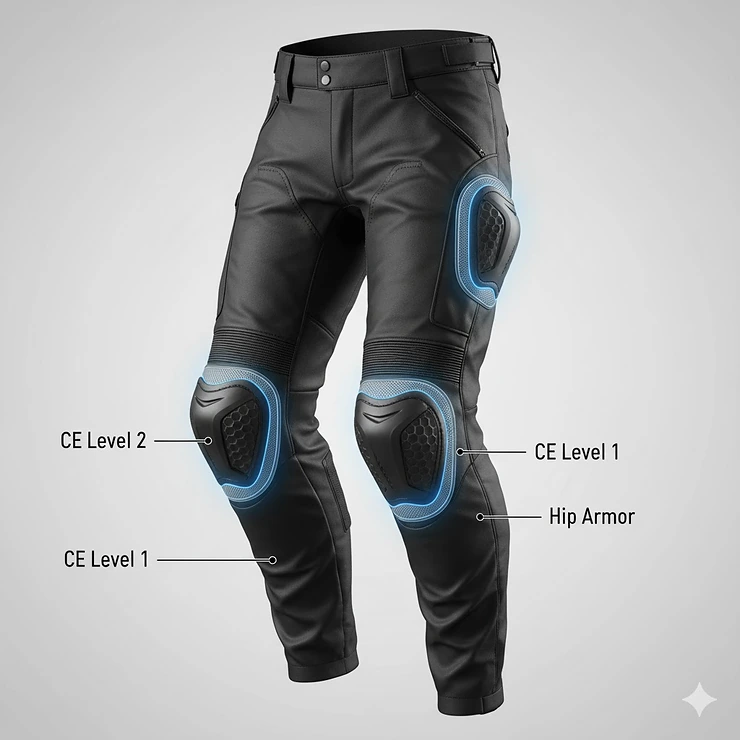
In This Article
Here’s something most riders learn the hard way: your legs are the most vulnerable part of your body on a motorcycle. While everyone obsesses over helmets (rightfully so), they often overlook the crucial protection that armored motorcycle pants provide. I’ve seen too many riders hit the pavement in regular jeans, and trust me, denim offers about as much protection as tissue paper when you’re sliding at 40 mph.
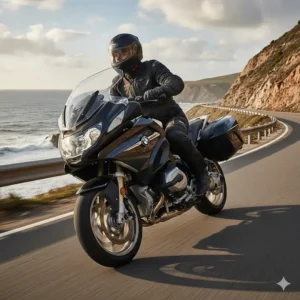
The statistics are sobering. According to research from the George Institute for Global Health, motorcyclists who wore motorcycle pants with armor were significantly less likely to require hospital admission compared to those without protective lower-body gear. In fact, riders wearing proper protective pants reduced their risk of lower limb soft-tissue injuries by over 60% compared to regular clothing.
But here’s where it gets interesting: not all armored motorcycle pants are created equal. Some use genuine CE-certified armor that can withstand serious impacts, while others—well, let’s just say they’re about as protective as wearing sweatpants to a demolition derby. The market has exploded with options in 2025, from budget-friendly choices under $100 to premium gear that costs more than some people’s monthly rent.
In this comprehensive guide, I’ll walk you through the 7 best armored motorcycle pants currently available, breaking down everything from CE certification levels to abrasion-resistant materials. Whether you’re a weekend warrior or a daily commuter, you’ll find the perfect pair to keep your legs intact when things go sideways.
Quick Comparison Table
| Product | Price Range | Armor Level | Material | Best For | Rating |
|---|---|---|---|---|---|
| BYKR Cordura Pants | $60-$80 | Removable CE | 600D Cordura | Budget buyers | 4.2/5 |
| HWK Dual Sport Pants | $75-$90 | CE-1 (claimed) | 600D textile | Value seekers | 4.0/5 |
| ILM PJN1 Riding Jeans | $90-$120 | CE Level 1/2 | Stretch denim + Aramid | Street riders | 4.5/5 |
| ILM P04 Touring Pants | $85-$110 | CE-1 armor | 600D polyester | All-season touring | 4.4/5 |
| JAG Protective Pants | $70-$95 | CE PT1 armor | Water-resistant textile | Dual-sport riders | 4.3/5 |
| RFG Cordura Pants | $80-$105 | CE-certified | Waterproof Cordura | Adventure riding | 4.3/5 |
| Alpinestars Premium Line | $250-$450 | CE Level 2 | Premium materials | Performance riders | 4.8/5 |
💬 Just one click – help others make better buying decisions too!😊
Top 7 Armored Motorcycle Pants: Expert Analysis
1. BYKR Motorcycle Armored Cordura Overpants
The BYKR Motorcycle Pants represent one of the most popular budget-friendly options in the armored pants category, and for good reason. These pants pack impressive features into an affordable package that won’t drain your bank account.
Key Specifications:
- Material: 600D Cordura textile with 1000D reinforcements
- Armor: Removable knee and hip protectors
- Price: $60-$80
What caught my attention about these pants is their versatility. The removable armor system means you can wear them as regular cargo pants when you’re off the bike, and the double-layered knee construction adds an extra margin of safety where you need it most. Customer feedback highlights their comfort during extended rides, though some users note the armor pockets could be more secure.
Pros:
✅ Excellent value for money
✅ Comfortable fit with cargo pockets
✅ Removable armor for versatility
Cons:
❌ Armor retention could be better
❌ Limited color options
2. HWK Dual Sport Motorcycle Pants
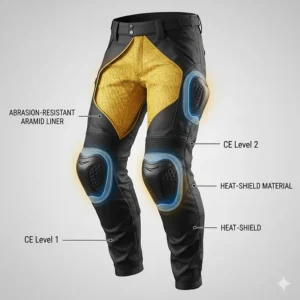
The HWK Motorcycle Pants have built a dedicated following among budget-conscious riders, though they come with an important caveat I need to address upfront. These pants claim to use 600D Cordura fabric and CE-certified armor, but independent testing has raised questions about these certifications.
Key Specifications:
- Material: 600D polyester (marketed as Cordura)
- Armor: Removable knee and hip pads
- Price: $75-$90
Despite the certification concerns, many riders report satisfactory performance for casual riding and commuting. The pants feature a micro-mesh liner and water-resistant membrane that works well in varied weather conditions. The lifetime warranty offered by HWK adds peace of mind, though serious riders should consider upgrading to verified CE-certified options.
Pros:
✅ Budget-friendly pricing
✅ Lifetime warranty
✅ Good ventilation system
Cons:
❌ Questionable CE certification
❌ Not genuine Cordura fabric
3. ILM Motorcycle Riding Pants PJN1 (Armored Jeans)
Here’s where things get stylish without sacrificing safety. The ILM PJN1 Motorcycle Jeans blend urban aesthetics with serious protection, making them perfect for riders who want to look casual while staying protected.
Key Specifications:
- Material: Stretch denim with Aramid lining
- Armor: CE Level 2 knees, CE Level 1 hips (removable)
- Price: $90-$120
What makes these jeans special is the strategic Aramid fabric reinforcement in high-impact zones—buttocks and leg sides up to the knees—providing fire and abrasion resistance where it matters. The stretch denim construction offers surprising flexibility, and riders consistently praise the comfortable fit that doesn’t scream “motorcycle gear.” Multiple inseam lengths ensure a proper fit for different heights.
Pros:
✅ Stylish street appearance
✅ Flexible CE protectors stay soft in cold weather
✅ Multiple inseam options available
Cons:
❌ Not fully waterproof
❌ Premium pricing for denim style
4. ILM P04 Adventure Touring Pants
The ILM P04 Motorcycle Pants are built for riders who demand versatility across all four seasons. These textile pants excel at adaptability, featuring a detachable waterproof liner and extensive ventilation options.
Key Specifications:
- Material: 600D polyester Oxford with reinforced knees
- Armor: CE-1 removable knee and hip protectors
- Price: $85-$110
The adjustable ventilation system is the standout feature here. Thigh vents and rear vents can be opened for summer riding or closed for cooler conditions, making these pants genuinely suitable for year-round use. Front and rear reflective design enhances low-light visibility, crucial for safety during dawn and dusk rides. The adjustable waist and lower leg closures ensure a secure, wind-resistant fit.
Pros:
✅ Excellent ventilation control
✅ Reflective safety features
✅ Affordable all-season solution
Cons:
❌ Only CE-1 armor (not Level 2)
❌ Bulkier than slim-fit options
5. JAG Motorcycle Protective Pants
JAG Motorcycle Protective Pants bring solid protection and practical features at a competitive price point. These dual-sport pants are designed for riders who venture both on-road and off-road.
Key Specifications:
- Material: Water-resistant Cordura textile
- Armor: CE PT1 certified knee and hip armor
- Price: $70-$95
The water-resistant textile construction shields against light rain and road spray effectively, though heavy downpours might overwhelm the fabric. Customer reviews highlight the comfortable breathable lining and strategic ventilation panels that keep you cool during summer rides. The machine-washable design with removable armor makes maintenance hassle-free—just pull out the protectors and toss them in the wash.
Pros:
✅ CE PT1 certified protection
✅ Machine washable convenience
✅ Reflective calf piping for visibility
Cons:
❌ Not fully waterproof
❌ Some users report sizing runs large
6. RFG Waterproof Cordura Motorcycle Pants
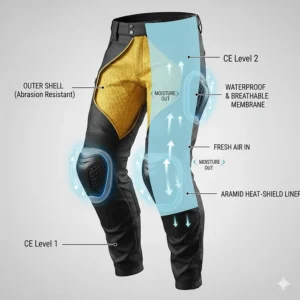
The RFG Motorcycle Pants distinguish themselves with genuine waterproof construction and reinforced double-stitching that promises extreme durability. These pants target riders who frequently encounter wet conditions.
Key Specifications:
- Material: Waterproof Cordura fabric
- Armor: CE-certified removable knee and hip armor
- Price: $80-$105
The optimal airflow system deserves special mention—strategically placed vents provide superior breathability without compromising water resistance. High-visibility reflective details enhance night safety, an essential feature that too many budget pants overlook. The double-stitched seams provide reassurance that these pants can withstand long-term use and potential crash scenarios.
Pros:
✅ Truly waterproof construction
✅ High-visibility reflective details
✅ Reinforced seam strength
Cons:
❌ Heavier than lightweight alternatives
❌ Limited style variety
7. Alpinestars Premium Motorcycle Pants
For riders who refuse to compromise on protection, Alpinestars represents the gold standard in motorcycle protective gear. Their premium pants collection offers the highest level of CE certification and materials quality available.
Key Specifications:
- Material: Premium leather or high-grade textile
- Armor: CE Level 2 Nucleon armor
- Price: $250-$450
Alpinestars pants feature their proprietary Nucleon Flex Plus armor—highly flexible and adaptive with a thin profile for optimal comfort. Many models achieve CE Class A or AA certification under EN 17092 standards, meaning they’ve been independently tested for abrasion resistance, tear strength, and seam integrity. The ergonomic design with stretch accordion panels ensures maximum mobility without sacrificing protection.
Pros:
✅ Highest CE protection levels
✅ Superior material quality
✅ Proven crash performance
Cons:
❌ Premium pricing
❌ May require break-in period
✨ Don’t Miss These Exclusive Deals!
🔍 Take your motorcycle safety to the next level with these carefully selected armored pants. Click on any highlighted product to check current pricing and availability. These protective pants will help you ride with confidence knowing you’re protected!
Understanding CE Certification for Motorcycle Armor
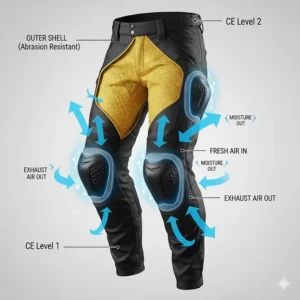
If you’ve been shopping for armored motorcycle pants, you’ve probably seen terms like “CE Level 1,” “CE Level 2,” and various class ratings thrown around. Let me break down what these actually mean for your protection.
What Does CE Mean?
CE stands for “Conformité Européenne” (European Conformity), which is basically the EU’s way of saying “this gear has been tested and meets safety standards.” While CE certification isn’t legally required in the United States, it’s become the global benchmark for motorcycle protective equipment quality.
According to the European EN 1621-1:2012 standard for impact protectors, armor must undergo rigorous testing. Here’s what matters:
CE Level 1 Armor:
- Maximum transmitted force: 35 kN or less
- Suitable for casual riding and commuting
- Generally thinner and more comfortable
CE Level 2 Armor:
- Maximum transmitted force: 20 kN or less
- Provides significantly better impact absorption
- Recommended for high-speed or aggressive riding
- Often bulkier but offers superior protection
Research from D3O, a leading armor manufacturer, confirms that Level 2 armor absorbs substantially more impact energy—critical when you’re hitting the pavement at highway speeds.
Garment Certification: Classes AAA to C
Beyond individual armor pieces, entire pants can receive CE certification under the EN 17092 standard. Understanding these classes helps you match gear to your riding style:
Class AAA: Track-level protection with mandatory limb armor. These pants are built for high-speed crashes and offer the maximum abrasion resistance available. Think racing leathers.
Class AA: Balanced protection for touring and sport riding. Exceeds Class A requirements while maintaining reasonable flexibility and weight.
Class A: Basic protection suitable for urban riding. Made from materials that provide minimum abrasion and impact resistance.
Class C: Designed only to hold armor in place—the garment itself provides minimal protection.
Here’s the reality check: most budget armored pants don’t carry full garment certification. They may include CE-rated armor, but the pants material itself hasn’t been tested for abrasion resistance or seam strength. This doesn’t make them useless, but understand what you’re getting.
Materials Matter: Breaking Down Fabric Technology
The fabric your armored motorcycle pants are made from might be even more important than the armor itself. After all, in most crashes, you’re sliding on pavement, not experiencing direct impacts. Let me explain the key materials you’ll encounter.
Cordura: The Industry Workhorse
Cordura is a brand name for a heavy-duty nylon fabric that’s become synonymous with motorcycle gear. You’ll see it referenced in “denier” numbers—essentially, how thick the fibers are:
- 600D Cordura: Good basic protection, commonly found in budget to mid-range pants
- 1000D Cordura: Enhanced abrasion resistance, often used in high-impact zones
- 1680D Cordura: Premium protection level, typically reserved for expensive gear
Here’s something crucial: not all fabrics labeled “Cordura-like” are genuine Cordura. Some manufacturers use the term loosely to describe any thick nylon. Authentic Cordura carries specific tags with serial numbers—if you don’t see these, question the claim.
Aramid Fibers: The Heavy Hitters
Aramid is a synthetic fiber family that includes famous names like Kevlar and Twaron. These materials offer exceptional abrasion and heat resistance—the same stuff used in bulletproof vests. In motorcycle jeans, Aramid panels are strategically placed in impact zones while regular denim covers less vulnerable areas.
The advantage? You get serious protection in pants that look like regular jeans. The disadvantage? Aramid doesn’t breathe well, so these pants can get hot in summer.
Leather: The Traditional Champion
Leather remains the gold standard for abrasion resistance, particularly in racing applications. Quality motorcycle leather (1.2-1.4mm cowhide) can withstand serious sliding without tearing through. However, leather offers virtually no breathability, requires special care, and costs significantly more than textile alternatives.
Waterproof vs. Water-Resistant
Understanding this distinction saves disappointment. Water-resistant fabrics repel light rain and road spray but will eventually soak through in sustained downpours. Waterproof pants use sealed seams and membrane technology (like Gore-Tex) to keep you dry in any conditions—but they’re heavier and more expensive.
How to Choose the Right Armored Motorcycle Pants
Picking the perfect armored motorcycle pants isn’t rocket science, but it does require considering several factors beyond just price. Here’s my proven framework for making the right choice.
1. Match Protection to Your Riding Style
Urban commuters can get away with Class A certified pants or quality jeans with CE armor. You’re typically riding at lower speeds with frequent stops, so maximum abrasion resistance isn’t as critical.
Highway tourers should invest in Class AA pants with CE Level 2 armor. Higher sustained speeds mean more severe potential crashes—this isn’t where you want to cut corners.
Track riders and sport enthusiasts need Class AAA protection, preferably leather pants with Level 2 armor. Your riding environment involves maximum risk, so you need maximum protection.
Adventure riders require versatile pants with waterproof capabilities, good ventilation, and durable construction that can handle both on-road and off-road abuse.
2. Verify Armor Placement and Retention
Quality matters, but so does positioning. The armor needs to stay exactly where it’s supposed to be during a crash. Check these points:
- Knee armor should sit directly over your kneecap when in riding position
- Hip armor must cover your hip bones and upper thighs
- Pockets should have secure closures preventing armor from shifting
- Try the riding position in-store if possible—some armor rides up or down
Many riders make the mistake of checking fit while standing. Remember, you’ll be sitting on a bike, so test the fit in a riding crouch.
3. Consider Climate and Riding Conditions
Your local weather dramatically impacts which pants work best. Living in Seattle? Waterproof construction becomes non-negotiable. Phoenix rider? Prioritize ventilation and lighter materials.
Cold weather riders: Look for thermal liners, windproof materials, and insulation layers
Hot weather riders: Prioritize mesh panels, ventilation zips, and lighter-weight fabrics
All-season riders: Detachable liners and adjustable vents offer the versatility you need
4. Don’t Ignore Fit and Comfort
Here’s the brutal truth: the safest pants in the world won’t protect you if they’re so uncomfortable that you leave them in the closet. Proper fit isn’t just about comfort—it’s about ensuring armor stays positioned correctly.
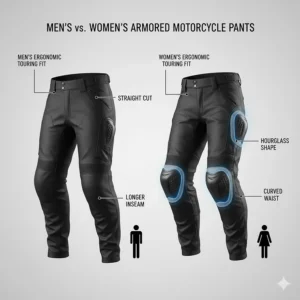
Inseam length matters: Too short exposes your ankles; too long bunches up and restricts movement Waist adjustment: Should accommodate layers underneath without being loose Knee articulation: Pre-curved construction reduces fatigue during long rides Crotch gusset: Prevents uncomfortable pressure points in the riding position
5. Budget Realistically
Quality armored motorcycle pants range from $70 to $500+. Here’s how to think about investment:
Under $100: Expect basic protection with questionable certifications. Fine for occasional riders who prioritize budget over verified safety standards.
$100-$200: Sweet spot for most riders. Genuine CE armor, decent materials, and reliable construction without breaking the bank.
$200-$350: Premium materials, verified certifications, advanced features like waterproofing and superior ventilation.
$350+: Top-tier brands like Alpinestars, Dainese, and Rev’IT with extensive testing, race-grade materials, and comprehensive warranties.
Common Mistakes to Avoid When Buying Armored Pants
After helping dozens of riders choose protective gear, I’ve seen these mistakes repeated over and over. Learn from others’ errors.
Mistake #1: Trusting Unverified CE Claims
Just because a product listing says “CE certified” doesn’t make it true. Look for specific details: What standard? What level? Which testing body? Legitimate CE certification includes documentation showing the notified body that performed testing.
Some manufacturers stick CE-looking tags on armor that’s never been tested. Real CE tags include traceable numbers and testing facility information.
Mistake #2: Buying Pants That Are “Close Enough” in Fit
Motorcycle pants aren’t like regular pants—proper fit is critical for safety. Armor that shifts out of position during a crash offers zero protection. Always try before you buy when possible, and don’t hesitate to return ill-fitting pants.
Mistake #3: Ignoring Maintenance Requirements
That premium leather? It needs regular conditioning. Those waterproof pants? The DWR coating requires reapplication. Failing to maintain your gear reduces its protective capabilities over time. Choose pants whose maintenance requirements match your commitment level.
Mistake #4: Overlooking Visibility Features
The National Highway Traffic Safety Administration reports that visibility plays a major role in preventing accidents. Pants with reflective elements can literally save your life by making you more visible to other drivers, especially in low-light conditions.
Mistake #5: Prioritizing Style Over Safety
I get it—you want to look good. But those slim-fit jeans with fake “armor” won’t save your skin during a slide. If you must prioritize appearance, choose quality motorcycle jeans with genuine Aramid reinforcement and proper CE armor rather than fashion jeans with decorative padding.
Maintenance and Care for Your Armored Motorcycle Pants
Proper maintenance extends the life of your pants and ensures they perform when you need them. Here’s how to keep your gear in fighting shape.
Washing and Cleaning
Textile pants: Most can be machine washed on gentle cycle with mild detergent. Always remove armor first. Air dry—never use high heat, which can damage waterproof membranes and synthetic materials.
Leather pants: Never machine wash. Use leather cleaner and conditioner every few months. Wipe down after rides to remove road grime before it sets in.
Jeans with Aramid: Turn inside out, wash in cold water, air dry. Heat can degrade Aramid fibers over time.
Armor Inspection
Every few months, inspect your armor for:
- Cracks or permanent deformation
- Loose stitching in armor pockets
- Degraded foam or crumbling material
- Proper positioning when pants are worn
Replace armor showing any damage—it’s designed to absorb one major impact, not multiple crashes.
Storage Tips
- Hang pants rather than folding to prevent permanent creases
- Store in cool, dry location away from direct sunlight
- Don’t store in compressed position (like stuffed in a bag long-term)
- Keep away from petroleum products that can degrade synthetic materials
When to Replace Your Pants
Even without crashes, protective gear degrades over time. Replace your armored motorcycle pants if:
- They’ve been in a crash (even if damage isn’t visible)
- Material shows significant wear, thinning, or tears
- Armor no longer fits securely in pockets
- Waterproof coating fails despite retreatment
- They’re more than 5-7 years old (materials degrade with age)
According to research published by the George Institute for Global Health, worn or damaged protective clothing showed failure rates exceeding 25%, potentially exposing riders to serious injury during crashes.
The Science Behind Motorcycle Crash Protection
Understanding the physics of motorcycle crashes helps you appreciate why proper gear matters so much.
Impact vs. Abrasion Injuries
Motorcycle crashes typically involve two injury mechanisms:
Impact injuries occur when you hit objects or the ground directly. This is where armor saves you—distributing force across a larger area and absorbing energy that would otherwise shatter bones. The National Highway Traffic Safety Administration research confirms that proper armor significantly reduces fracture risk.
Abrasion injuries happen during slides. At 40 mph, human skin tears away from muscle in about 0.5 seconds of pavement contact. Quality abrasion-resistant fabrics like Cordura or Aramid can withstand 4-6 seconds of sliding—enough to slow down significantly before the material fails.
Real-World Crash Data
A comprehensive study of motorcycle crashes in Australia found striking results. Riders wearing motorcycle pants with armor showed 65% reduction in lower limb soft tissue injuries compared to those in regular clothing. However, the study revealed an important limitation: protective pants didn’t significantly reduce fracture rates except when combined with proper motorcycle boots.
This highlights why complete protective gear matters—pants alone aren’t enough. You need the whole system: helmet, jacket, pants, gloves, and boots working together.
The Temperature Factor
Here’s something most riders don’t know: Some armor performs differently at various temperatures. Quality CE-certified armor maintains its protective properties from -10°C to +40°C. Cheap foam padding can become rigid in cold weather or too soft in heat, reducing protection exactly when you need it most.
Armored Pants vs. Regular Jeans: The Real Difference
Let’s settle this debate once and for all with actual data and real-world examples.
Regular denim jeans offer virtually no protection in motorcycle crashes. At 30 mph impact speeds, typical 12-14oz denim tears through in under 0.3 seconds. You might as well wear shorts.
Motorcycle-specific jeans with Aramid reinforcement can withstand 4-6 seconds of sliding—a massive difference. Add CE armor for impact protection, and you’ve got genuine safety that looks like regular pants.
Textile motorcycle pants with Cordura construction and armor provide superior abrasion resistance lasting 6+ seconds of sliding, plus better impact protection than jeans. The tradeoff? They look like motorcycle gear, not street clothes.
Leather pants remain king for abrasion resistance, handling 7+ seconds of sliding before failure. Combined with proper armor, they’re the choice for maximum protection scenarios like track riding.
The bottom line? Street-style motorcycle jeans with genuine Aramid and CE armor beat regular jeans by a country mile while maintaining casual aesthetics. For maximum protection, textile or leather pants with verified armor win.

FAQ Section
❓ What's the difference between CE Level 1 and Level 2 armor in armored motorcycle pants?
❓ Can I wear armored motorcycle pants over regular jeans?
❓ How often should I replace the armor in my motorcycle pants?
❓ Are waterproof motorcycle pants actually breathable?
❓ Do I really need CE-certified armor, or is foam padding sufficient?
Conclusion: Making the Smart Choice for Your Safety
After examining 7 top armored motorcycle pants and diving deep into protection technology, here’s the bottom line: your legs deserve the same attention you give your head when it comes to safety gear.
The perfect armored motorcycle pants balance three critical factors—protection level, comfort, and budget. For most riders, the sweet spot sits between $90-$200, where you get genuine CE-certified armor, quality abrasion-resistant materials, and construction that’ll last multiple seasons.
If budget is tight, the BYKR Cordura Pants or HWK Dual Sport Pants provide basic protection without emptying your wallet. Mid-range riders will find excellent value in the ILM P04 or JAG Protective Pants, offering solid all-around performance. Those who demand the absolute best protection should seriously consider Alpinestars or other premium brands—your skin is worth the investment.
Remember, the safest motorcycle pants are the ones you’ll actually wear consistently. That uncomfortable pair sitting in your closet offers zero protection. Choose pants that fit your riding style, local climate, and comfort preferences, ensuring they become part of your standard riding routine.
According to NHTSA data, proper protective gear including armored pants significantly reduces injury severity during crashes. With motorcycle fatalities reaching record highs in recent years, investing in quality protective equipment isn’t optional—it’s essential insurance for the life you want to keep living.
Ride smart, ride protected, and never compromise on the gear that keeps you safe. Your future self will thank you for making the investment today.
Recommended for You
- 7 Best Womens Motorcycle Pants 2025 – Safety & Style Guide
- 7 Best Motorcycle Pants for Men 2025 | Expert Reviews & Guide
- 7 Best Motorcycle Riding Pants 2025: Ultimate Protection Guide
Disclaimer: This article contains affiliate links. If you purchase products through these links, we may earn a small commission at no additional cost to you.
✨ Found this helpful? Share it with your friends! 💬🤗
