

In This Article
Adventure boots for street and dirt are mid-to-tall protective motorcycle boots that combine CE-rated armor, a waterproof membrane, a stiff-but-hinged ankle and a lugged sole. They’re built to handle highway miles, gravel detours and the long walk to the gas station without making you swap footwear. In short, they’re hybrid street dirt motorcycle boots.
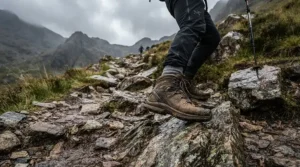
Think of the category as the Swiss Army knife of rider footwear. Motorcycle boots range from ankle-high sneakers to near-knee-high racing and motocross designs. Adventure boots sit in the awkward, brilliant middle. Motocross boots protect like a bank vault but walk like a cement mixer, and street sneakers walk beautifully but offer little once the pavement ends. Adventure boots for street and dirt split that difference.
This guide covers seven real boots across budget, mid-range and premium tiers. We cover boot flex zones, pavement comfort, trail durability and a full adventure boot versatility comparison. Everything here comes from published specs, published expert field tests and aggregated owner feedback. I haven’t worn these boots, so expect analysis, not war stories.
Quick Comparison: Adventure Boots for Street and Dirt at a Glance
| Boot | Price Range | Waterproofing | Height | Best For |
|---|---|---|---|---|
| Forma Adventure Low | $250-$300 | Drytex | Below calf | Budget riders, wide feet |
| REV’IT! Everest GTX | Mid-$300s | GORE-TEX | Mid-height | Commuters who walk a lot |
| Fox Racing Defend ADV | Mid-$300s | GORE-TEX | Mid-cut | Gravel touring, quick adjustment |
| TCX Drifter WP | Around $400 | T-Dry | Tall | Balanced all-rounders |
| Alpinestars Corozal V2 Adventure Drystar | $350-$400 | Drystar | Tall | Protection-first dual-sport |
| Sidi Adventure 2 Gore-Tex | Around $450 | GORE-TEX | Tall | Long-haul mixed surfaces |
| Fox Racing Motion X Off Road | Around $500 | Waterproof membrane | Tall | Dirt-leaning adventure |
Price is the least interesting column here. The Forma Adventure Low shows how little you need to spend for a waterproof, grippy boot, while the Fox Racing Motion X Off Road costs roughly double and buys protection you may never use on pavement. The middle of the table, especially the TCX Drifter WP and Fox Racing Defend ADV, is where most riders find the best balance of protection and walkability.
💬 Just one click — help others make better buying decisions too!😊
Top 7 Adventure Boots for Street and Dirt: Expert Analysis
Each boot below gets the same treatment: specs translated into real-world meaning, a who-it’s-for take, and aggregated reviewer sentiment. Pros and cons come from published specs and recurring review themes.
1. Forma Adventure Low — wide-foot comfort without the premium price
The Forma Adventure Low wins by being easy to live in. It has a Drytex waterproof lining, a dual-density lugged sole and a below-the-calf cut. Published weights run roughly 2 to 2.6 pounds per boot. That lugged sole grips wet sidewalks and loose gravel better than the smooth wedge on city-only boots. The short shaft also means none of the ski-boot stiffness of taller designs, which helps pavement comfort at every stop.
Forma doesn’t pitch this boot for serious off-road work because of its light sole and short shaft. So treat it as a gravel-road, fire-road and light-trail boot. Reviewers consistently describe it as comfortable out of the box and praise the roomy fit for wide feet and calves. A common caveat is that the toe and heel boxes feel less substantial than enduro hardware. The low cut also can’t stay dry through deep crossings.
Pros:
- ✅ Comfortable straight out of the box
- ✅ Lugged dual-density sole grips gravel and wet pavement
- ✅ Roomy fit suits wide feet and calves
Cons:
- ❌ Not intended for technical off-road riding
- ❌ Low cut floods in deep water crossings
Priced in the $250-$300 range, it’s the strongest budget entry for riders who spend 80 percent of their time on asphalt.
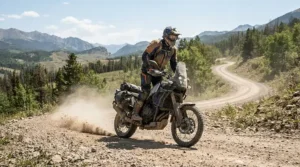
2. REV’IT! Everest GTX — featherweight GORE-TEX walker
The REV’IT! Everest GTX is the lightest boot here, listed at about 1.58 pounds per boot. It uses a Hypalon and ripstop polyester upper with nubuck, a GORE-TEX Performance Comfort membrane and a TPU ankle cup. An inner ankle zipper under a storm flap replaces buckles, so getting it on and off takes seconds. An EVA midsole and OrthoLite insole give it a hiking-shoe feel, and field testers highlight the flex zone just in front of the ankle.
My read: this is the boot for riders whose day is two-thirds walking and one-third riding. GearJunkie’s field testers scored its walkability at 9.5 out of 10, and its crush rating reached CE Level 2. Its abrasion rating is only Level 1, a trade-off for the low weight. Reviewer sentiment centers on all-day comfort and dry feet in downpours. The recurring limit is protection: the shaft is lower than true adventure boots, so it’s weaker for deep water or hard off-road riding.
Pros:
- ✅ Remarkably light at roughly 1.6 pounds per boot
- ✅ Zip entry with storm flap is fast and fuss-free
- ✅ GORE-TEX membrane keeps rain out reliably
Cons:
- ❌ Abrasion rating is only CE Level 1
- ❌ Shaft height limits deep-water and rough-terrain use
Expect to pay in the mid-$300s. It’s fair value for a commuter-first hybrid.
3. Fox Racing Defend ADV — BOA dial for one-handed micro-adjustment
The Fox Racing Defend ADV puts a BOA dial on a mid-cut GORE-TEX boot. That means you tighten or loosen it with one hand, with no buckle straps to fight at a fuel stop. D3O foam protects the ankles and tongue, a rigid TPU heel counter stabilizes the heel, and a nylon-fiberglass insole shank gives stable support on the pegs. The Ultratac outsole damps engine vibration, and the boot is CE Level 2 at roughly 2.06 pounds per boot.
Here’s what the spec sheet won’t tell you: the mid-cut leaves your upper shin exposed. GearJunkie’s tester logged about 1,200 miles on California and Oregon pavement and gravel, and the boot scored high for walkability and weather resilience. A separate MCN tester reported surprisingly good comfort straight out of the box on dirt roads and gravel tracks. The main complaint is heat. The GORE-TEX can run warm above 90 degrees Fahrenheit.
Pros:
- ✅ BOA dial allows fast one-handed adjustments
- ✅ CE Level 2 with D3O ankle protection
- ✅ Light at about 2.06 pounds per boot
Cons:
- ❌ GORE-TEX runs hot in summer heat
- ❌ Mid-cut leaves the upper shin exposed
At around the mid-$300s, it’s great value for gravel touring with only light trail detours.
4. TCX Drifter WP — the flexible all-rounder
The TCX Drifter WP has the best balance of any boot on this list. It uses full-grain leather, a T-Dry waterproof lining, CE Level 2 certification and armor over the shin, ankle and Achilles. It weighs about 2.44 pounds per boot. An accordion gusset and tapered collar seal against rain and debris, while three aluminum lever buckles with a stronger cam keep tension under strain.
GearJunkie named it best overall in its 2026 guide, and its walkability score of 9.5 matches the lightest boots here. The stitched-down sole is rebuildable, which matters for long-term value. Reviewers highlight forward ankle flex that makes it easy to walk in once broken in, plus tough buckle hardware. The trade-off: it offers slightly less lateral ankle rigidity than the Alpinestars Corozal V2 Adventure Drystar, and it’s bulkier than a street boot for casual wear.
Pros:
- ✅ Rebuildable sole extends the boot’s life
- ✅ Excellent buckle system holds tension
- ✅ Walks well for a CE Level 2 boot
Cons:
- ❌ Less lateral ankle rigidity than stiffer rivals
- ❌ Bulkier than street-oriented boots
Priced around $400, it’s the safest all-around choice for riders who split time evenly between pavement and dirt.
5. Alpinestars Corozal V2 Adventure Drystar — maximum protection that still walks
The Alpinestars Corozal V2 Adventure Drystar puts protection first. It has an oiled leather and suede upper, a Drystar membrane, TPU armor and a steel shank. Its updated Lateral Pivot System allows ankle mobility front and rear while resisting sideways twist. At roughly 2.84 pounds per boot, it’s the heaviest hybrid here. Two self-aligning ratchet buckles with memory settings keep the fit consistent.
Its low-profile shin plate makes it easier to fit adventure pants over the boot than most motocross designs. GearJunkie named it its top adventure pick, scoring crush and impact protection at 9 out of 10 and walkability at 8. Reviewers value the overbuilt ankle and the grip of the outsole. The common criticism is bulk. The top cuff also needs pant legs with a generous opening, and it feels more cumbersome on long walks than the TCX Drifter WP.
Pros:
- ✅ Overbuilt ankle and Achilles protection
- ✅ Self-aligning buckles with memory settings
- ✅ Low-profile shin plate fits under adventure pants
Cons:
- ❌ Heaviest hybrid at roughly 2.84 pounds per boot
- ❌ Cuff needs roomy pant legs
At $350-$400, it’s strong value for anyone who refuses to compromise on lower-leg armor.

6. Sidi Adventure 2 Gore-Tex — the long-haul benchmark
The Sidi Adventure 2 Gore-Tex has long been a reference point in the category. Its full-grain microfiber upper pairs with a GORE-TEX liner that runs the full height of the boot, so the waterproofing doesn’t stop at the ankle. A plastic Flex System around the ankle hinges for walking while resisting twist, and TPU guards the shin, heel and side of the foot. Published weights range from about 2.5 to 3 pounds per boot, depending on source and size.
Reviewers describe it as stiff at first and then comfortable, with flex panels doing the heavy lifting. One editor logged more than 1,500 miles and named it a top pick. Width opinions diverge: one reviewer calls it unusually roomy for an Italian boot, while another finds it narrow across the foot, so try before you commit. The practical downside is the break-in period.
Pros:
- ✅ Full-height GORE-TEX liner stays dry in deep puddles
- ✅ Hinged Flex System aids walking and resists twist
- ✅ Comfortable on long mixed-surface days once broken in
Cons:
- ❌ Stiff out of the box
- ❌ Fit width varies by reviewer
Around $450, it’s a premium price for a boot that rewards long-haul riders.
7. Fox Racing Motion X Off Road — motocross armor, adventure manners
The Fox Racing Motion X Off Road is the most dirt-leaning boot here. It uses motocross-derived hinge lockout, full TPU plating on the shin, toe, heel and calf, four forged metal buckles and an open-tread DURATEC outsole. It also has a waterproof membrane, CE Level 2 rating and replaceable soles. Published weight is about 2.06 pounds per boot.
The hinge stops hyperextension, which is why GearJunkie scored protection at 9.5 out of 10. That armor costs walkability, scored 6.5, and the dark colorway and membrane run warm. A tester rode a loaded Yamaha Ténéré 700 World Raid for 10,000 kilometers in them, and reported excellent peg grip and structural toughness. If most of your miles are remote dirt and you ride far from help, this is the boot to consider.
Pros:
- ✅ Hinge lockout and full-coverage TPU armor
- ✅ Replaceable soles and forged buckles
- ✅ Deep lugs bite on loose and wet terrain
Cons:
- ❌ Runs hot in desert and summer conditions
- ❌ Least walkable boot on this list
At around $500, it’s best for riders who need dirt protection first and street comfort second.
Adventure Boot Versatility Comparison: Seven Boots, Three Surfaces
Raw specs only go so far. GearJunkie’s field-test guide scores boots on protection, walkability and weather resilience, and those scores make an adventure boot versatility comparison far more concrete.
| Boot | Protection | Walkability | Weather | Weight/Boot | Certification |
|---|---|---|---|---|---|
| Forma Adventure Low | Not scored | Not scored | Not scored | ~2-2.6 lb | CE Level 2 per reviewers |
| REV’IT! Everest GTX | 7.5 | 9.5 | 8.5 | ~1.58 lb | Level 2 crush, Level 1 abrasion |
| Fox Racing Defend ADV | 8 | 9.5 | 9.5 | ~2.06 lb | CE Level 2 |
| TCX Drifter WP | 8.5 | 9.5 | 9 | ~2.44 lb | CE Level 2 |
| Alpinestars Corozal V2 Adventure Drystar | 9 | 8 | 8.5 | ~2.84 lb | CE Level 2 |
| Sidi Adventure 2 Gore-Tex | Not scored | Not scored | Not scored | ~2.5-3 lb | EN 13634:2017 per reviewers |
| Fox Racing Motion X Off Road | 9.5 | 6.5 | 8 | ~2.06 lb | CE Level 2 |
Weights are as published by brands and reviewers and vary by size.
Notice the trade-off: as protection scores climb, walkability falls. The Fox Racing Defend ADV leads on weather and ties for walking, while the Fox Racing Motion X Off Road leads on protection and trails on comfort. The TCX Drifter WP has the tightest spread across categories. Its score profile points to a boot that rarely feels like a compromise in any single setting.
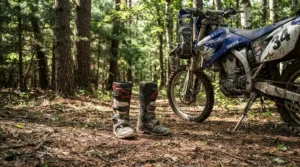
Boot Flex Zones: Where a Hybrid Boot Should Bend
Boot flex zones are the engineering secret behind every good hybrid. A boot that bends in the wrong place is dangerous, and one that doesn’t bend where you walk is miserable. Look for three zones.
The ankle hinge. Forward flex lets you walk and work the controls. Rearward and sideways resistance protects against hyperextension and twisting. The Alpinestars Corozal V2 Adventure Drystar uses a Lateral Pivot System for this. The Sidi Adventure 2 Gore-Tex uses a plastic Flex System that parallels the ankle hinge on Sidi’s road-racing boots. The Fox Racing Motion X Off Road goes further with a hinge lockout.
The forefoot. Your toes need to bend when you walk, even if the midsole stays torsionally stiff. The REV’IT! Everest GTX and TCX Drifter WP both earn praise for this combination.
The collar. A gusset or elastic panel lets the boot wrap your calf without cutting circulation.
Here’s a quick test: flex the boot forward by hand, then try to twist and bend it backward. Forward should be easy, while twist and rearward bend should be firm. If a boot fails either test, keep shopping.
Pavement Comfort: What Actually Makes a Boot Walkable
Pavement comfort sounds soft, but it’s really about geometry and weight. Three factors matter most.
Weight and balance. Heavy boots fatigue your hip flexors on long walks. The REV’IT! Everest GTX at roughly 1.58 pounds per boot feels like a hiker, while the Alpinestars Corozal V2 Adventure Drystar at roughly 2.84 pounds per boot is noticeably clunkier.
Midsole and shank. A stiff shank protects your foot from folding when a bike falls on it, but a forefoot with some flex keeps your stride natural. Boots like the TCX Drifter WP and Fox Racing Defend ADV get this balance right, per field-test scores.
Fit and closure. Pressure points kill pavement comfort. The BOA dial on the Fox Racing Defend ADV lets you fine-tune tension throughout the day. Zip entry on the REV’IT! Everest GTX lets you slip in and out quickly.
One more thing: sole design. Lugged soles like the Forma Adventure Low‘s give great grip on gravel but can feel chunky on polished floors. For pavement comfort, prioritize flex and weight over armor you won’t use.
Trail Durability: What Survives Dirt, Mud and Water Crossings
Trail durability comes from materials, construction and repairability. Here’s what to check.
Upper materials. Full-grain leather lasts longer and resists abrasion better than most synthetics, according to field-test commentary. Microfiber like Sidi’s is lighter and still tough.
Sole construction. A rebuildable stitched-down sole, like the TCX Drifter WP‘s, can extend a boot’s service life. The Fox Racing Motion X Off Road has replaceable soles. The Forma Adventure Low and other lightweight soles will wear faster on rocky terrain.
Closure hardware. Buckles and BOA dials are the weak points on many boots. GearJunkie recommends durable metal buckles that can be replaced if they break, which is why hardware matters as much as leather.
Waterproof membranes. A membrane only helps if water doesn’t enter from above. Full-height liners, like the Sidi Adventure 2 Gore-Tex‘s, or snug gaiters and cuffs matter in water crossings. Short boots such as the Forma Adventure Low can’t handle deep crossings.
Rule of thumb: the more rubble and mud you ride, the more trail durability should outrank walking comfort.
How to Choose Adventure Boots for Street and Dirt
Use this checklist to narrow your shortlist.
- Estimate your riding split. If 80 percent of your miles are pavement, favor lighter, more walkable boots like the REV’IT! Everest GTX. If dirt dominates, lean toward the Fox Racing Motion X Off Road.
- Check the CE label. Look for EN 13634:2017 with Level 2 ratings on abrasion and crush.
- Evaluate height. Mid-cut boots are lighter but expose your shin. Tall boots add protection and keep water out.
- Test boot flex zones. Forward flex should be easy, with firm resistance to twist and backward bend.
- Match the closure to your habits. Buckles are durable, BOA is fast and zips are easiest on and off.
- Confirm pant compatibility. A bulky cuff won’t fit under slim pants.
- Try them on with riding socks. Fit is personal, and reviewers disagree on width for several of these boots.
Hybrid Street Dirt Motorcycle Boots vs Dedicated Alternatives
Hybrid street dirt motorcycle boots compete against three other footwear types. Here’s how they compare.
| Feature | Hybrid Adventure Boot | Motocross Boot | Riding Shoe | Hiking Boot |
|---|---|---|---|---|
| Crash protection | High (CE Level 2 common) | Highest | Moderate | None |
| Walkability | Good | Poor | Excellent | Excellent |
| Off-road grip | Good | Moderate (smooth soles) | Poor | Good |
| Weather resistance | Often waterproof | Varies | Varies | Varies |
| Best For | Mixed-surface riders | Track and technical dirt | City commuting | Walking only |
Examples help here. The Sidi Atojo SRS is a motocross boot with strong protection but a rigid toe box that makes walking stiff. The TCX Street 3 WP is a riding sneaker with CE Level 2 and excellent walkability but no shin or calf coverage. The Danner Moto Wedge GTX looks like a work boot but isn’t CE rated and has a smooth wedge sole that’s poor in mud. Hybrid street dirt motorcycle boots land in the sweet spot for riders who want protection that doesn’t fold on pavement.
Features That Actually Matter (And Those That Don’t)
Matters: CE Level 2 certification, a stiff shank with flexible forefoot, ankle hinge or flex system, a lugged outsole, a waterproof membrane with a tight cuff, and durable closure hardware.
Doesn’t matter as much: weight differences of a few ounces, colorway, brand heritage and “extreme” marketing claims. A boot that is 0.2 pounds lighter won’t change your day, but a boot with the wrong width will.
Depends on you: BOA vs buckles vs zip. BOA is quick but can stick in dusty conditions, as long-term reviewers of other BOA boots have noted. Buckles are simple and replaceable. Zips are fast but add another potential failure point.
The most overrated feature is maximum waterproofing. GORE-TEX and similar membranes keep water out but trap heat, so the Fox Racing Defend ADV and Fox Racing Motion X Off Road both draw heat complaints. If you ride in hot climates, ventilation can matter more than a full-height liner.

Common Mistakes When Buying Adventure Boots for Street and Dirt
Buying on style alone. A boot that looks great but lacks CE certification, like some city boots, won’t protect you the same way.
Ignoring height. A low boot like the Forma Adventure Low is great for pavement comfort but won’t handle deep water. A mid-cut like the Fox Racing Defend ADV exposes your shin.
Skipping the fit test. Reviewers disagree on width for the Sidi Adventure 2 Gore-Tex, and fit varies by foot.
Overbuying protection. If you never ride technical dirt, the walkability penalty of a boot like the Fox Racing Motion X Off Road may not be worth it.
Underbuying protection. A boot built for city commutes won’t survive a hard slide on gravel.
Forgetting pant fit. The Alpinestars Corozal V2 Adventure Drystar needs a generous pant cuff. Check compatibility before you buy.
Long-Term Cost & Maintenance: What Your Boots Really Cost Per Year
Sticker price is only part of the story. A boot with a rebuildable or replaceable sole can last far longer.
| Tier | Boots | Price Range | Value Verdict |
|---|---|---|---|
| Budget | Forma Adventure Low | $250-$300 | Best entry value |
| Mid-range | REV’IT! Everest GTX, Fox Racing Defend ADV, TCX Drifter WP, Alpinestars Corozal V2 Adventure Drystar | $300-$400 | Best balance of protection and comfort |
| Premium | Sidi Adventure 2 Gore-Tex, Fox Racing Motion X Off Road | $450-$500 | Pays off for heavy mixed-terrain use |
The cost-per-year math favors repairable boots. A pair costing around $400 with a rebuildable sole that lasts five years costs around $80 per year, while a cheaper boot that lasts two years costs more per year. Fox also offers a resole program for its Motion line, according to GearJunkie. Boots with non-replaceable soles or closures may hit a hard end of life when those parts fail.
Maintenance is simple: clean after muddy rides, dry boots away from direct heat, and check buckles and closures regularly.
Safety, Regulations and Certification Guide
The benchmark standard for motorcycle footwear is EN 13634:2017, which has two protection levels. Level 2 is stricter. Per GearJunkie, Level 2 requires the front, back and sole to withstand 2.5 seconds on an abrasion belt, versus 1.5 seconds for Level 1. It also requires crush resistance of about 337 pounds, versus 214 pounds for Level 1. Dainese’s certification guide explains how labels work and what the numbers mean.
Two caveats matter. First, the standard doesn’t test crush protection at the ankle bone or toe box, even though both are vulnerable. Second, certification doesn’t account for weight, so a Level 2 boot can still be heavy.
Look for a permanent label inside the boot. Not every boot is certified: the Danner Moto Wedge GTX, for example, has D3O armor but no CE rating. CE certification is legally required in Europe and the UK, but riders elsewhere generally use it as a benchmark. Wearing certified boots is a smart baseline, but boots can’t replace good riding judgment.
Practical Usage Guide: Your First 30 Days in New Adventure Boots
New boots need a plan. Here’s a 30-day roadmap.
Days 1-7: Break in on pavement. Wear them around the house and on short walks. Stiff boots like the Sidi Adventure 2 Gore-Tex may need several days to soften. Wear your riding socks and pants during fitting so you know how everything works together.
Days 8-14: Short rides. Practice shifting and braking, and check that the boot doesn’t catch on the shifter. Make sure your pants cover the cuff, because a snug seal keeps rain out.
Days 15-30: Mixed terrain. Try gravel and light dirt. Check closures after each ride, because buckles and BOA dials can loosen with use.
Maintenance routine. Rinse mud with water, dry boots away from heat, and condition leather uppers. Remove insoles to dry. Inspect stitching and soles monthly.
Common first-30-day mistakes: over-tightening closures (restricts circulation), skipping break-in, and storing wet boots in a sealed bag.
Real-World Scenarios: Three Riders, Three Boots
The commuter with a gravel itch. She rides 20 miles each way on pavement and heads for forest roads on weekends. Her budget is around $300, and she walks a lot at work. The Forma Adventure Low offers grip and comfort at a budget price. If she wants more weather protection, the REV’IT! Everest GTX is lighter and zips on fast.
The long-distance tourer. He covers 300-mile days on a loaded adventure bike, with plenty of rain and some gravel. A tall, fully waterproof boot is the priority. The Sidi Adventure 2 Gore-Tex has a full-height liner, while the Alpinestars Corozal V2 Adventure Drystar adds extra ankle armor. If he prefers quick adjustments, the Fox Racing Defend ADV with BOA is worth a look.
The weekend trail rider. He spends most weekends on rocky singletrack and rides to the trailhead on pavement. Protection comes first. The Fox Racing Motion X Off Road offers hinge lockout and full armor, and the TCX Drifter WP is a more walkable alternative if he wants less stiffness.
For all three, budget, environment and frequency of use should drive the decision, not brand loyalty.
Frequently Asked Questions
❓ Can I wear adventure boots all day off the bike?
❓ Are low adventure boots waterproof enough for river crossings?
❓ Can adventure boots be resoled or repaired?
❓ Do GORE-TEX adventure boots run hot in summer?
❓ Which adventure boot suits wide feet best?
Conclusion
The best adventure boots for street and dirt are the ones that match your actual riding split, not your fantasy riding split. If pavement dominates your week, the REV’IT! Everest GTX and Forma Adventure Low deliver comfort at friendly prices. If you want one boot that rarely feels like a compromise, the TCX Drifter WP and Fox Racing Defend ADV are the safest all-rounders. Protection-first riders should look at the Alpinestars Corozal V2 Adventure Drystar. Long-haul tourers will appreciate the Sidi Adventure 2 Gore-Tex, and dirt-leaning riders will find the Fox Racing Motion X Off Road hard to beat.
Remember the fundamentals. Check CE certification, test boot flex zones by hand, prioritize pavement comfort if you walk a lot, and weigh trail durability if you ride rough terrain. For more background on riding protection, see this overview of motorcycle personal protective equipment. Prices change often, so check current pricing and availability before you buy.
Recommended for You
- Budget Dual Sport Motorcycle Boots: 7 Proven Picks For 2026
- Off-Road Motorcycle Boots For Trail Riding: 7 Proven Picks (2026)
- Casual Riding Shoes For Scooter Commuters: 7 Best Picks 2026
Disclaimer: This article contains affiliate links. As an Amazon Associate, I earn from qualifying purchases. If you purchase products through these links, we may earn a small commission at no additional cost to you.
✨ Found this helpful? Share it with your friends! 💬🤗
