
In This Article
Choosing a top rated adventure touring helmet certified for both DOT and ECE standards isn’t just about checking a box—it’s about finding that sweet spot where street comfort meets off-road capability without your brain paying the price. I’ve seen too many riders grab the first helmet that fits, only to regret it 200 miles into a dusty Baja run when their neck’s screaming and fogged visor has them squinting at shadows.
Here’s the thing: adventure riding throws curveballs that pure street or dirt helmets simply can’t handle. One minute you’re cruising at 75 mph on asphalt where wind noise matters, the next you’re crawling through rocky trails where ventilation and visibility become survival tools. A properly certified dual-purpose ADV helmet balances these competing demands while meeting rigorous safety standards that could literally save your life.
The adventure helmet market has exploded in 2026, with manufacturers finally understanding that riders want legitimate multi-terrain helmet reviews backed by real certifications, not marketing fluff. Whether you’re eyeing a GS style adventure helmet for your BMW or need an off-road capable full face for your KTM, this guide cuts through the noise to show you which expedition helmet gear actually delivers.
Quick Comparison Table
| Helmet Model | Price Range | Weight | Safety Cert | Best For | Rating |
|---|---|---|---|---|---|
| Shoei Hornet X2 | $699-$719 | 3.92 lbs | DOT/SNELL/ECE | Premium all-rounder | ⭐⭐⭐⭐⭐ |
| Bell MX-9 Adventure MIPS | $250-$300 | 3.74 lbs | DOT/ECE | Budget versatility | ⭐⭐⭐⭐ |
| Scorpion EXO-AT960 | $309-$314 | 4.12 lbs | DOT/ECE 22.06 | Modular convenience | ⭐⭐⭐⭐ |
| Arai XD-4 | $445-$590 | 3.66 lbs | DOT/SNELL | Customizable fit | ⭐⭐⭐⭐⭐ |
| Klim Krios Pro | $637+ | 3.19 lbs | DOT/ECE | Ultralight carbon | ⭐⭐⭐⭐⭐ |
| ILM Dual Sport 606V | $129-$150 | 3.5 lbs | DOT | Entry-level ADV | ⭐⭐⭐ |
| HJC DS-X1 | $180-$240 | 3.74 lbs | DOT | Solid mid-range | ⭐⭐⭐⭐ |
✨ 💬 Just one click – help others make better buying decisions too!😊
Top 7 Adventure Touring Helmets: Expert Analysis
1. Shoei Hornet X2 – The Benchmark for Premium Performance
The Shoei Hornet X2 represents what happens when a legendary manufacturer decides to absolutely nail the adventure category. Built with Shoei’s Multi-Ply Matrix AIM+ shell construction combining fiberglass and organic fibers, this helmet weighs just 3.92 pounds while achieving DOT, SNELL M2020D, and ECE certifications—a trifecta rarely seen in adventure helmets.
What sets this peak visor adventure helmet apart is the innovative V-460 visor system that actually works at highway speeds without trying to rip your head off. The wedge-shaped design with strategically placed louvers creates neutral aerodynamics up to 80+ mph, something most adventure lids completely botch. The 3D Max-Dry System II interior dissipates sweat twice as fast as traditional nylon, crucial when you’re grinding through 100-degree desert heat.
Key Specs:
- CNS-2 shield system with tool-free visor removal
- Advanced multi-stage ventilation with closable ports
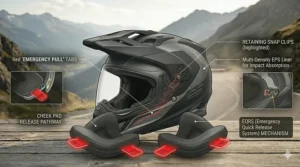
- Emergency Quick Release System (EQRS)
Price: $699-$719
Riders consistently praise the Hornet X2’s surprisingly quiet operation for an ADV helmet and excellent peripheral vision. The helmet runs slightly small, so size up if you’re between measurements.
Pros:
✅ Triple safety certification (DOT/SNELL/ECE)
✅ Exceptional build quality and finish
✅ Quieter than most adventure helmets
Cons:
❌ Premium pricing
❌ Runs small in sizing
2. Bell MX-9 Adventure MIPS – Best Value for Money
The Bell MX-9 Adventure MIPS delivers shocking performance at a price that won’t require selling a kidney. At around $250-$300, this polycarbonate helmet incorporates MIPS (Multi-Directional Impact Protection System) technology—that slip-plane layer that reduces rotational brain injury by up to 40% in angled impacts.
Built across three shell sizes for optimal fit distribution, the MX-9 features an integrated anti-fog shield that flips up for goggle use or removes completely. The adjustable peak can also vanish for a sleeker street profile. With both DOT and ECE certification, this dual-purpose ADV helmet proves you don’t need to spend $700 to get legitimate protection.
Key Specs:
- Velocity Flow ventilation with multiple intake/exhaust vents
- NutraFog II anti-fog technology built into clear shield
- Quick-drying, antimicrobial liner
Price: $250-$300
The MX-9 shines for riders splitting time between pavement and dirt who need proven safety without boutique pricing. Wind noise is higher than premium alternatives, but earplugs solve that for $2.
Pros:
✅ MIPS rotational impact protection
✅ Excellent value proposition
✅ True dual-sport versatility
Cons:
❌ Louder at highway speeds
❌ Basic interior materials
3. Scorpion EXO-AT960 – The Modular Game-Changer
The Scorpion EXO-AT960 solves a problem most adventure riders didn’t know they had: the ability to flip up the chin bar without removing the helmet. This modular design with single-lever release transforms long fuel stops and quick conversations from awkward fumbling to smooth operations.
Meeting both DOT and the stringent new ECE 22.06 standards (which include oblique impact and chin bar testing), the AT960 features a massive eye port for superior peripheral vision and goggle compatibility. The integrated SpeedView drop-down sun visor adjusts instantly to changing light conditions, while the external peak visor detaches tool-free for pure touring mode.
Key Specs:
- Advanced polycarbonate shell across three sizes
- Dual-position mouth vent (defroster + ventilation)
- KwikWick C moisture-wicking liner
Price: $309-$314
At 4.12 pounds, it’s heavier than pure adventure helmets, but that flip-up convenience pays dividends on all-day rides. The AT960 integrates seamlessly with Scorpion’s EXO-COM Bluetooth system.
Pros:
✅ Modular convenience for touring
✅ ECE 22.06 certified safety
✅ Outstanding value features
Cons:
❌ Heavier than fixed-chin alternatives
❌ Modular hinge adds bulk
4. Arai XD-4 – Premium Customization Meets Versatility
The Arai XD-4 demonstrates why hand-built Japanese craftsmanship commands premium prices. This helmet transforms between three distinct configurations: full adventure mode with shield and peak, dirt mode with peak only for goggles, or street mode with shield only—all without tools, thanks to Arai’s innovative Twin Cam pivot system.
Weighing 3.66 pounds and achieving both DOT and SNELL certification, the XD-4 incorporates Arai’s patent-pending FCS cheek pad system with 5mm peel-away layers, allowing micro-adjustment of fit that’s unprecedented in adventure helmets. The complex shell shape channels air into redesigned vents while minimizing the aerodynamic penalty that plagues peaked helmets.
Key Specs:
- Three riding mode configurations
- Micro-fitting temple pads with 5mm adjustability
- Large eye port for maximum visibility
Price: $445-$590
Arai’s legendary fit and finish shine through, though the lack of included Pinlock anti-fog capability at this price raises eyebrows. The XD-4 rewards riders who demand ultimate versatility and are willing to pay for it.
Pros:
✅ Exceptional build quality
✅ Three-way configuration versatility
✅ Customizable fit system
Cons:
❌ No included Pinlock system
❌ Premium pricing
5. Klim Krios Pro – The Ultralight Carbon Champion
The Klim Krios Pro represents the cutting edge of adventure helmet technology, incorporating hand-laid carbon fiber construction and Koroyd impact absorption technology. At just 3.19 pounds (1450g), it’s the lightest full-featured ADV helmet available in North America, reducing neck strain on those 500-mile days.
Koroyd replaces traditional EPS foam with engineered plastic tube structures that crush consistently to absorb energy while maintaining airflow—think controlled crumple zones for your skull. The helmet ships with a photochromic Transitions face shield that automatically darkens in sunlight, eliminating fumbling with shield swaps.
Key Specs:
- Hand-laid carbon fiber shell
- Koroyd impact absorption technology
- Fidlock magnetic chin strap closure
Price: $637+
Four ride modes (street, adventure, dirt, trail) adapt the Krios Pro to any terrain by reconfiguring shield and peak options. The premium materials and innovative tech justify the cost for serious expedition riders logging serious miles.
Pros:
✅ Ultralight carbon construction
✅ Innovative Koroyd safety tech
✅ Photochromic shield included
Cons:
❌ High price point
❌ Only two shell sizes
6. ILM Dual Sport 606V – Budget-Friendly Entry Point
The ILM 606V proves you can get into adventure riding without mortgaging your house. At $129-$150, this DOT-certified helmet provides legitimate protection with detachable sun visor and face shield for three-in-one functionality: rally helmet, full-face, or off-road configuration.
Built with ABS shell and high-density EPS foam meeting FMVSS-218 standards, the 606V delivers the legal minimum protection USA law requires. The ventilation system with multiple intake and exhaust vents keeps things breathable, while removable, washable brushed Nylex interior means you can actually clean the sweat out.
Key Specs:
- ABS engineering plastic shell
- Multiple function configurations
- Removable/washable interior
Price: $129-$150
Don’t expect Shoei refinement at this price, but for weekend warriors or those starting adventure riding, the ILM delivers surprising capability. It’s heavier and louder than premium options, yet hundreds of verified buyers confirm it holds up.
Pros:
✅ Extremely affordable entry
✅ DOT certified safety
✅ Versatile configuration options
Cons:
❌ Basic materials and finish
❌ Higher wind noise
7. HJC DS-X1 – The Solid Mid-Range Contender
The HJC DS-X1 occupies that sweet spot between budget compromises and premium pricing. At $180-$240, this DOT-certified helmet delivers HJC’s proven quality with advanced polycarbonate shell across multiple sizes and the brand’s ACS (Advanced Channeling Ventilation System) that actually works.
The DS-X1’s converting system lets you swap from street mode (shield + visor) to dirt mode (visor only) quickly, with the large eye port accommodating most goggle brands. HJC’s Pinlock-prepared HJ-27 shield system means anti-fog capability is just an insert purchase away, rather than proprietary and expensive.
Key Specs:
- Advanced CAD-designed polycarbonate shell
- Full front-to-back airflow channeling
- Glasses-compatible cheek pad grooves
Price: $180-$240
Weighing 3.74 pounds with DOT certification, the DS-X1 represents honest value engineering—nothing fancy, everything functional. The helmet won’t turn heads at a bike meet, but it’ll protect yours when it counts.
Pros:
✅ Excellent mid-range value
✅ Proven HJC quality
✅ Effective ventilation system
Cons:
❌ Basic aesthetics
❌ Single DOT certification
Understanding Safety Certifications: DOT, ECE, and SNELL Explained
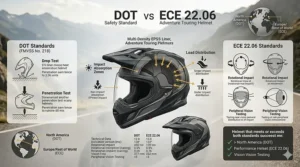
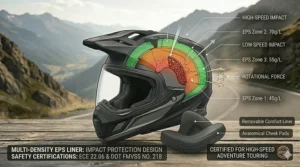
When evaluating top rated adventure touring helmet certified options, understanding these safety standards determines whether you’re buying legitimate protection or expensive false confidence. The Department of Transportation (DOT) FMVSS 218 represents the legal minimum standard for helmets sold in the United States, focusing on impact attenuation, penetration resistance, and retention system strength through self-certification by manufacturers with periodic government spot-checks.
The European ECE 22.06 standard, which replaced ECE 22.05 in 2024, incorporates more rigorous testing including oblique impact assessments at 45-degree angles to measure rotational force management—the kind that causes traumatic brain injuries. ECE testing occurs at 18 random impact points versus DOT’s fixed locations, preventing manufacturers from gaming the system by reinforcing only test spots.
SNELL certification represents voluntary third-party testing by the independent Snell Memorial Foundation, with higher impact velocities and additional criteria including chin bar strength testing that DOT doesn’t require. While DOT tests at speeds simulating 13.4 mph impacts, SNELL tests replicate crashes up to 17 mph—a significant energy difference that exponentially increases protection requirements.
Why Multiple Certifications Matter for Adventure Riders
Adventure touring subjects helmets to unique stresses that pure street or dirt applications don’t encounter. That GS style adventure helmet needs to perform during high-speed highway stability, low-speed technical terrain impacts, and everything between. Helmets certified to multiple standards (DOT/ECE/SNELL) undergo diverse testing protocols that better simulate real-world adventure riding scenarios.
The new ECE 22.06 oblique impact testing specifically addresses the rotational brain injuries that cause long-term cognitive damage, making it particularly relevant for off-road capable full face helmets where angled impacts against rocks and trees occur frequently. Meanwhile, SNELL’s rigorous chin bar testing matters enormously for full-face adventure helmets, as face-first crashes represent 35% of motorcycle impacts according to the Hurt Report.
How to Choose Your Perfect Adventure Touring Helmet
1. Define Your Riding Split
Your ideal helmet depends on the 70/30 rule: if you’re 70% street/30% dirt, prioritize aerodynamics and noise reduction with removable peaks. Flip that ratio and you need maximum ventilation with wider eye ports for goggles.
2. Verify Actual Safety Certifications
Don’t trust marketing claims—physically check for DOT stickers on the helmet’s exterior rear and SNELL/ECE labels inside. Counterfeit certification labels exist, so purchase from reputable retailers and verify SNELL certification at their official database.
3. Test the Fit Properly
A correctly fitted adventure helmet feels uncomfortably snug initially—cheek pads should compress your face and the helmet shouldn’t rotate when you shake your head vigorously. After 15-20 hours of wear, liner compression creates the perfect fit. Too loose initially means dangerous movement during impacts.
4. Consider Weight and Neck Fatigue
Every ounce matters when you’re spending 6+ hours in the saddle. Carbon fiber helmets like the Klim Krios Pro justify premium pricing by preventing the cumulative neck strain that ruins multi-day rides. Budget an extra $200-$300 for carbon if you regularly exceed 300-mile days.
5. Evaluate Ventilation Architecture
True adventure helmets require front-to-back airflow channeling that pulls hot air out exhaust vents, not just intake ports that blast air at your eyeballs. The best designs create negative pressure zones that actively extract humidity—critical when you’re grinding through dusty trails at 20 mph without highway speeds to force ventilation.
Adventure Helmet Technology: What Actually Matters
MIPS and Rotational Impact Protection
MIPS (Multi-Directional Impact Protection System) adds a low-friction slip plane between the helmet liner and comfort padding, allowing 10-15mm of rotation that redirects angular forces away from your brain. Independent testing shows MIPS reduces rotational acceleration by 30-40% in oblique impacts—the kind that cause diffuse axonal injury and long-term cognitive problems.
While not every helmet needs MIPS, adventure riders frequently encounter glancing blows against trail obstacles where rotational forces dominate. The technology adds $40-$80 to helmet costs but could save you from becoming a cautionary tale about “that one low-speed crash.”
Peak Visor Aerodynamics
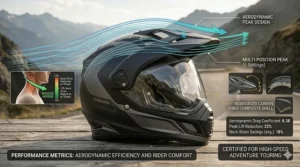
Poorly designed peak visors create massive lift and buffeting above 60 mph, forcing your neck muscles to fight constant upward pull. Premium adventure helmets like the Shoei Hornet X2 wind-tunnel test peak shapes to create neutral pressure, where the peak’s spoiler effect actually stabilizes the helmet by generating downforce.
The best designs allow tool-free peak removal for highway segments, then quick reinstallation when trails require sun blocking and roost protection.
Modular vs. Fixed Chin Bars
Modular helmets sacrifice some rigidity for convenience, though modern designs like the Scorpion EXO-AT960 meet the same ECE 22.06 standards as fixed-chin alternatives. The flip-up feature shines during fuel stops, border crossings, and photo opportunities where removing your entire helmet becomes tedious.
However, modular helmets typically weigh 0.5-1 pound more and cost $100-$200 extra versus comparable fixed-chin models. Consider your actual usage—if you rarely flip up the chin bar, that weight penalty isn’t worth the convenience tax.
Maintenance and Longevity: Making Your Investment Last
The 5-Year Rule and Crash Replacement
Regardless of condition, replace any helmet every five years due to UV degradation, adhesive breakdown, and EPS liner deterioration that compromise protection invisibly. After any impact—even dropping the helmet from handlebar height—retire it immediately, as microscopic fractures in the EPS liner prevent proper energy absorption in subsequent crashes.
Proper Cleaning Without Damage
Never use petroleum-based cleaners, which dissolve the polycarbonate or fiberglass-resin matrix in helmet shells. Mild soap, warm water, and microfiber cloths clean effectively without material degradation. Remove and hand-wash liner pads monthly during heavy use to prevent bacterial buildup that causes odors and skin irritation.
Storage Best Practices
Store helmets in climate-controlled environments away from direct sunlight, petroleum fumes (garages with cars), and temperature extremes. Use helmet bags rather than stacking or crushing, as sustained pressure on the EPS liner creates permanent deformation that reduces protective capacity.
Comparison: Adventure Helmets vs. Traditional Touring Helmets
| Feature | Adventure Helmets | Touring Helmets |
|---|---|---|
| Peak Visor | Standard, removable | Typically absent |
| Eye Port Size | Larger for goggle fit | Optimized for shield only |
| Ventilation | Aggressive multi-channel | Moderate, noise-focused |
| Weight | 3.2-4.2 lbs | 3.4-3.8 lbs |
| Aerodynamics | Compromised by peak | Highly optimized |
Traditional touring helmets prioritize aeroacoustic refinement and all-day comfort at constant highway speeds, making them whisper-quiet but suffocating in slow technical riding. Adventure helmets accept higher noise levels in exchange for versatility across speeds and terrain types.
Price vs. Value: Where to Invest Your Money
Budget Tier ($100-$200)
Helmets like the ILM 606V and HJC DS-X1 deliver DOT-certified protection with basic features. Expect polycarbonate shells, standard ventilation, and minimal refinement. These excel for occasional adventure riders or those prioritizing multiple helmets for different uses.
Mid-Range Sweet Spot ($200-$400)
The Bell MX-9 Adventure MIPS and Scorpion EXO-AT960 dominate this category, offering MIPS protection, dual certifications (DOT/ECE), and premium features like anti-fog shields and modular designs. Most riders find the best value here—legitimate safety plus quality without boutique pricing.
Premium Performance ($500-$800+)
Shoei, Arai, and Klim command premium prices through advanced materials (carbon fiber, Koroyd), triple certifications (DOT/ECE/SNELL), and meticulous quality control. Serious expedition riders logging 10,000+ miles annually justify these investments through reduced fatigue, superior protection, and extended longevity.
The uncomfortable truth: that $700 helmet costs $0.35 per ride over 2,000 uses versus $0.75 per ride for a $150 helmet you replace in 200 rides. Premium helmets actually cost less per mile when you factor replacement frequency.
Real-World Testing: What Riders Actually Experience
Highway Stability and Noise
Premium adventure helmets like the Shoei Hornet X2 achieve 85-87 dB at 70 mph—comparable to quality touring helmets. Budget options spike to 92-95 dB, requiring earplugs to prevent hearing damage on long rides. Wind-tunnel refined peak designs make the difference between tolerable buffeting and exhausting head shake.
Off-Road Visibility and Goggle Compatibility
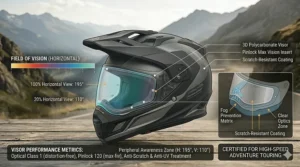
The oversized eye ports on helmets like the Arai XD-4 and Klim Krios Pro accommodate full-frame goggles comfortably, while narrower designs force compromises with smaller lenses that reduce peripheral vision. When you’re navigating rocky singletracks, that extra 15 degrees of downward visibility prevents front-wheel surprises.
Ventilation in Extreme Conditions
True adventure touring tests helmets in 100°F desert heat and 35°F mountain passes within the same day. The best multi-terrain helmet reviews reveal that adjustable vents matter less than exhaust channel design—positive pressure alone doesn’t cool your head; proper extraction of hot air does.
FAQ: Top Rated Adventure Touring Helmet Certified
❓ What certifications should I look for in a top rated adventure touring helmet certified for USA use?
❓ How much should I spend on a dual-purpose ADV helmet for weekend riding?
❓ Can I use a peak visor adventure helmet for highway touring without buffeting issues?
❓ How often should I replace my adventure touring safety gear helmet?
❓ Are modular adventure helmets as safe as fixed chin bar designs?
Conclusion: Choose Your Adventure Wisely
Selecting the right top rated adventure touring helmet certified for your needs comes down to honest assessment of your riding priorities and budget realities. If you’re splitting time 50/50 between pavement and dirt with weekend warrior frequency, the Bell MX-9 Adventure MIPS or Scorpion EXO-AT960 deliver exceptional value with legitimate safety credentials and versatile features.
For riders logging serious expedition miles where weight and refinement matter, investing in the Shoei Hornet X2, Arai XD-4, or Klim Krios Pro pays dividends through reduced fatigue and superior protection that lasts. These premium helmets justify their cost through materials, certifications, and longevity that budget options simply cannot match.
Remember that helmet fit trumps every other consideration—a $150 helmet that fits perfectly protects better than a $700 helmet that shifts during impacts. Visit physical retailers to try multiple brands and sizes, understanding that different manufacturers cater to different head shapes (Arai for rounder, Shoei for intermediate oval, Bell for long oval).
Your brain deserves more than minimum legal protection, but you don’t need to empty your wallet for legitimate safety. Find that balance where certifications, features, and fit converge with your actual riding style and budget, then invest confidently knowing you’ve chosen gear that’ll keep you adventuring for years to come.
✨ Don’t Miss These Exclusive Deals!
🔍 Take your adventure riding to the next level with these carefully selected helmets. Click on any highlighted product to check current pricing and availability. These top rated adventure touring helmet certified options will help you ride with confidence knowing your brain is protected!
Recommended for You
- 7 Best Long Distance Comfort Helmets That Reduce Fatigue 2026
- 7 Best Aerodynamic Sport Helmet Reviews 2026 | Track Certified
- 7 Best Motorcycle Dry Bags 2026: Ultimate Waterproof Guide
Disclaimer: This article contains affiliate links. If you purchase products through these links, we may earn a small commission at no additional cost to you.
✨ Found this helpful? Share it with your friends! 💬🤗
