
In This Article
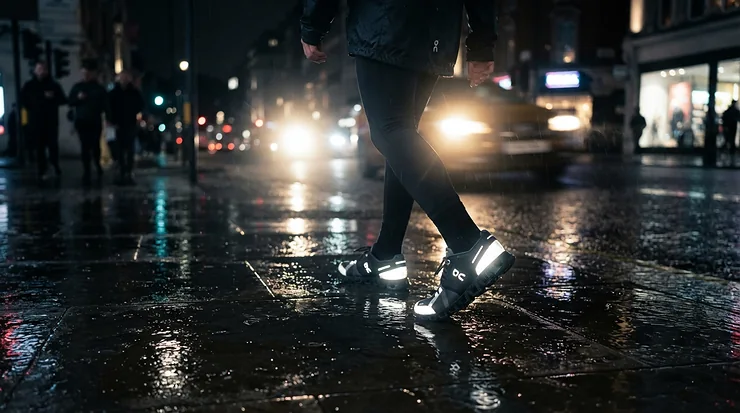
Few things sour a ride faster than the slow, creeping chill of a wet sock. You can forgive a damp jacket cuff. A soggy boot is different, because it follows you for forty miles, squelching at every stop sign. Waterproof women’s motorcycle boots for rain exist to prevent exactly that. Plenty of pairs labeled “waterproof” give up the moment a real storm rolls in.
The label tells you almost nothing on its own. What matters is the membrane, the seams, the cuff, and the way your pant leg meets your boot. This guide cuts through the marketing. I compared seven real pairs using manufacturer specs, retailer listings and published reviews. Then I added the practical material product pages skip: sealing routines, sock choices, and how to match boots to the rest of your wet-weather kit.
A quick word on membranes, because they shape every choice below. The best-known one, Gore-Tex, is a stretched fluoropolymer film. Its pores are far too small for liquid droplets but big enough for water vapor to escape. That’s the “waterproof but breathable” trick, and it’s why rain-ready women’s riding boots can keep puddles out without turning into saunas.
Everything here reflects research current to October 2026. Prices appear as ranges and tiers because they shift constantly, so check current pricing before you buy. Let’s get your feet dry.
Quick Comparison: 7 Waterproof Women’s Motorcycle Boots for Rain
| Boot | Waterproof Liner | Cut | Price Tier* | Best For |
|---|---|---|---|---|
| BILT Pro Tourer WP | Waterproof membrane lining (brand not specified in listings) | Mid-height touring | Budget | Commuters on a budget |
| Forma Swift Dry | Drytex | Ankle-height, sneaker-style | Lower mid-range | City riders in light-to-moderate rain |
| Alpinestars Stella Valencia WP | Integrated waterproof membrane | Low-cut boot | Lower mid-range | Everyday riders who dislike tall boots |
| Forma ADV Tourer | Drytex | Higher-cut touring | Mid-range | Long-distance and adventure touring |
| TCX Climatrek Surround GTX | Gore-Tex Surround | Low-to-mid, lace-up | Upper mid-range | Warm, wet climates |
| Alpinestars Stella SMX-6 V3 Drystar | Drystar | Tall sport boot | Upper mid-range | Spirited riders and track days |
| Daytona Lady Star GTX | Gore-Tex | Tall touring | Premium | Shorter riders and heavy-rain touring |
*Tiers follow a 2026 retailer roundup. Treat them as relative positions, not quotes.
Looking at the table, the BILT Pro Tourer WP is the clear entry point, while the Daytona Lady Star GTX sits at the premium end. The middle tier is where most riders will find the best balance of verified membrane technology and sensible money. If your commute includes real walking, the lace-up TCX Climatrek Surround GTX and the flexible Forma Swift Dry are the easier boots to live in off the bike. Riders who want shin coverage should look at the taller Forma ADV Tourer, Alpinestars Stella SMX-6 V3 Drystar and Daytona Lady Star GTX.
💬 Just one click — help others make better buying decisions too!😊
Top 7 Waterproof Women’s Motorcycle Boots for Rain: Expert Analysis
Each pick below follows the same logic. I look at what the spec sheet says, what it means on a wet road, and what reviewers consistently report. Where I couldn’t verify a deep pool of customer reviews, I say so rather than invent sentiment.
1. BILT Pro Tourer WP Women’s Boots — budget waterproofing with real coverage
The headline here is accessibility: a full, mid-height riding boot with a waterproof lining that doesn’t demand premium-boot money. The leather upper, steel-shank sole, oil-resistant tread and reflective heel inserts are the details that matter. A steel shank stops the sole folding under peg load. Oil-resistant tread helps on slick, rain-glazed fuel-station concrete. Reflective inserts earn their keep in murky downpour light.
Based on the spec comparison, this is a boot for commuters and newer riders who want one affordable pair for mixed weather. The catch is that the listings I reviewed don’t name the membrane brand. One boot reviewer advises choosing a reputable branded liner, because generic “waterproof” claims can disappoint in sustained rain. Treat this pair as a strong showers-and-commuting boot, and seal it diligently (more on that below).
On reviews, I couldn’t verify a large pool of independent owner reports. A 2026 roundup’s editorial verdict notes a wide fit that may feel roomy on narrow feet and styling that’s functional rather than fashionable.
Pros:
- ✅ Waterproof lining at an approachable price
- ✅ Sturdy leather upper for daily use
- ✅ Steel shank and oil-resistant tread
Cons:
- ❌ Wide fit may swim on narrow feet
- ❌ Membrane brand isn’t clearly identified
Price range: budget tier, so check current pricing. Value verdict: excellent for the money if your rain is occasional rather than relentless.
2. Forma Swift Dry Women’s Shoes — sneaker looks with a Drytex liner
The standout feature is the disguise. These look like high-top sneakers but carry a Drytex waterproof membrane, a full-grain leather upper and TPU ankle reinforcement. A dual-density rubber sole with a shock-absorbing heel insert makes foot controls feel natural. It also takes the sting out of pavement time.
What does that mean in practice? You can ride to work, walk into a meeting and not look like you’re dressed for a track day. The honest caveat is height: a reviewer describes the liner as suited to light-to-moderate rain. An ankle-height shoe has a lot less cuff to defend, so water can run down your pant leg and in over the top during a proper soaking. Pairing it with rain pants worn outside the shoe solves most of that.
Reviewer commentary highlights all-day comfort from the cushioned midsole, a CE-certified crush sole and ankle protection, and solid grip. The reported downsides are limited airflow, which can make feet warm, and stiffness on longer walks.
Pros:
- ✅ Looks casual, rides protected
- ✅ Drytex liner keeps light rain out
- ✅ Cushioned, comfortable all-day footbed
Cons:
- ❌ Short cuff admits water in downpours
- ❌ Limited airflow in warm weather
Price range: lower mid-range tier. Value verdict: great for city riders, weaker for heavy-rain touring.
3. Alpinestars Stella Valencia WP Boots — low-cut comfort with cold-rain performance
The standout is ease. A wide-opening entry, a Velcro shin flap and an instep buckle make these the boots you’ll actually put on, even when you’re running late and it’s pouring. Full-grain leather and suede, front and rear accordion flex panels, and a dual-density TPU ankle disc keep the protection light and the mobility high.
The spec sheet says “integrated waterproof membrane” without naming a brand, but a 2026 roundup credits the boot with excellent waterproofing even in cold rain. The accordion panels matter more than they sound. They let your ankle flex naturally, which reduces the pressure points where seams and membranes tend to fail first. The removable EVA footbed with Lycra lining also lets you dry the insole separately after a soaking.
Who is it for? Everyday riders who find tall boots restrictive, or those with larger calves who want an adjustable opening. The trade-off is clear: limited shin coverage, so it suits street riding rather than aggressive terrain. Published reviewers also describe it as a little bulky next to sneaker-style alternatives.
Pros:
- ✅ Excellent reported waterproofing in cold rain
- ✅ Wide opening with easy buckle closure
- ✅ Flex panels improve riding and walking comfort
Cons:
- ❌ Low cut limits shin protection
- ❌ Bulkier than sneaker-style riding shoes
Price range: lower mid-range tier. Value verdict: a smart everyday rain boot if you value convenience.
4. Forma ADV Tourer Women’s Boots — adjustable fit for big calves and long days
The standout feature is adjustability. Hook-and-loop closures and adjustable, replaceable buckles let you cinch the shaft around different calf shapes. That helps with rain, too. A snug cuff, worn under rain pants, sheds water far better than a loose one.
The spec sheet lists an oiled full-grain leather and suede upper, a Drytex liner, TPU shin and ankle protectors, a rigid nylon sole and certification to EN 13634:2017. In plain terms, you get genuine touring protection with a membrane that breathes. A retailer product note reminds buyers that breathable membranes only breathe properly with technical socks, which I cover below.
On sentiment, this is the best-documented boot in the lineup. A major U.S. retailer lists a 4.5-out-of-5 average from 71 reviews, and a UK retailer’s reviewers praise comfort, warmth, waterproofing and fit for larger calves. A recurring theme is sizing: several buyers say it runs small. One adventure-touring review reported bone-dry feet but referred to a Gore-Tex lining, while retailers list Drytex, so confirm the current spec for your model year.
Pros:
- ✅ Highly adjustable shaft for varied calf sizes
- ✅ Well-rated for comfort and waterproofing
- ✅ TPU shin and ankle protection
Cons:
- ❌ Reportedly runs small, so size up
- ❌ Sole feels stiff on long walks
Price range: roughly $250-$300 at the time of research. Value verdict: arguably the best all-round value for touring in wet weather.
5. TCX Climatrek Surround GTX Women’s Boots — Gore-Tex that vents through the sole
The standout is breathable waterproofing from underneath. Gore-Tex Surround adds vent channels in the sole, letting heat escape downward. That’s a clever answer to the “waterproof means swampy” complaint, and it makes the boot realistic for three-season use.
The upper blends tough synthetic materials with reinforced shin, ankle, toe and heel zones. An OrthoLite insole, EVA midsole and Groundtrax sole keep it comfortable on foot. Because it wears more like a technical sneaker than a tall boot, it suits riders who dismount often: café stops, campsites, fuel breaks.
The compromises are the lace-up closure, which is slower than zippers or buckles on a wet day, and a low-to-mid cut that offers less shin coverage than full adventure boots. A published roundup also notes the gear-selector pad may show wear over time. Reviewers generally praise comfort, extended breathability and sole grip.
Pros:
- ✅ Gore-Tex Surround vents heat through the sole
- ✅ Comfortable enough for real walking
- ✅ CE-rated ankle, toe and heel protection
Cons:
- ❌ Lace-up closure is slow in the rain
- ❌ Gear pad may wear sooner
Price range: upper mid-range tier. Value verdict: worth it if you ride in warm, wet climates.
6. Alpinestars Stella SMX-6 V3 Drystar Boots — race-derived protection that stays dry
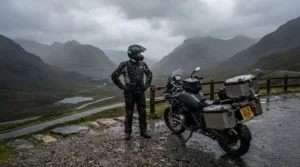
The standout is a rare combination: track-grade protection with a waterproof liner. The manufacturer lists a Drystar waterproof and breathable liner, CE certification to EN 13634:2017, a TPU lateral ankle brace, shin plate and replaceable toe sliders.
On a wet road, a sport boot’s snug, anatomical shape means less internal movement, and less movement means less chafing and fewer pump-the-water-in moments. The side zipper and lace-lock system make entry easier than most race boots, which matters when your hands are cold and wet.
This is a boot for riders who push the pace and don’t want to swap footwear when the forecast turns. The consistent reviewer complaint is stiffness until it’s broken in. Another report notes mesh panels showing wear on aggressive riders. If you mostly commute at gentle speeds, you may be paying for protection you’ll rarely use.
Pros:
- ✅ Race-derived ankle brace and shin plate
- ✅ Drystar liner handles wet weather
- ✅ Replaceable toe sliders extend lifespan
Cons:
- ❌ Stiff until fully broken in
- ❌ Mesh panels may wear on aggressive riders
Price range: roughly $340-$395 at the retailers checked. Value verdict: strong for sport riders, overkill for casual commuting.
7. Daytona Lady Star GTX Women’s Boots — Gore-Tex with built-in height for shorter riders
The standout is geometry. A built-in 2.5 cm insole lift and 6 cm heel rise help shorter riders reach the ground at stops. That’s a safety feature on slick pavement, because a confident foot-down beats a wobbly one when the road is wet.
The construction reads like a premium touring boot: hydrophobic full cowhide leather, a Gore-Tex membrane, reinforced ankle and shin zones, and a plastic-reinforced inner sole with a galvanized steel inlay. Dual side zippers and adjustable calf width make it easier to get into than a tall boot normally is. A UK reviewer notes the brand runs a repair service that stands out, which lowers long-term ownership cost.
The compromises are weight and sole bulk. Published reviews mention a heavy feel and a chunky sole that can change gear-lever feel, and the shifting adjustment takes time.
Pros:
- ✅ Built-in lift improves reach at stops
- ✅ Gore-Tex membrane with hydrophobic leather
- ✅ Dual zippers and adjustable calf width
Cons:
- ❌ Heavy feel can tire legs
- ❌ Chunky sole alters shift feel
Price range: premium tier, the highest in this roundup, so check current pricing. Value verdict: justified for riders who want repairable, long-lived boots.
Top 7 Side-by-Side: Protection, Fit and Price Tier
| Boot | Protection Highlights | Fit/Comfort Note | Price Tier | Best For |
|---|---|---|---|---|
| BILT Pro Tourer WP | Steel shank, reflective heel inserts | Wide fit | Budget | Commuting on a budget |
| Forma Swift Dry | TPU ankle, CE-certified crush sole | Relaxed, cushioned | Lower mid-range | Light-to-moderate city rain |
| Alpinestars Stella Valencia WP | Dual-density TPU ankle disc | Wide opening, flex panels | Lower mid-range | Easy daily rain riding |
| Forma ADV Tourer | TPU shin/ankle, EN 13634:2017 | Adjustable, runs small | Mid-range | Wet-weather touring |
| TCX Climatrek Surround GTX | Reinforced shin, ankle, toe, heel | Lace-up, sneaker-like | Upper mid-range | Warm, wet climates |
| Alpinestars Stella SMX-6 V3 Drystar | TPU ankle brace, shin plate, sliders | Snug, stiff at first | Upper mid-range | Sport riding in changeable weather |
| Daytona Lady Star GTX | Steel-inlay sole, shin and ankle reinforcement | Built-in lift, heavier | Premium | Shorter riders, heavy-rain touring |
Read together, the Forma ADV Tourer offers the strongest balance of documented customer satisfaction, protection and price. The Alpinestars Stella SMX-6 V3 Drystar is the pick when speed matters, and the Daytona Lady Star GTX is the pick when stand-over height and repairability matter. Budget buyers should note that the BILT Pro Tourer WP trades membrane transparency for its low price.
Women’s Waterproof Boot Sealing: A Practical Maintenance Guide
Here’s what listings never tell you: even the best membrane depends on what surrounds it. Women’s waterproof boot sealing is about keeping leather supple, seams intact and zippers clean so the liner never has to work alone. One published boot guide cautions that spray-on treatments only go so far, so think of sealing as support for the membrane, not a replacement for it.
A simple routine:
- Clean first. Brush off grit and rinse mud with lukewarm water. Dirt abrades leather and clogs breathable fabrics.
- Dry slowly. Stuff the boots with paper and leave them at room temperature, away from radiators. Fast, hot drying can crack leather and stress adhesives.
- Condition the leather. Supple leather flexes instead of cracking, and cracks are where leaks start.
- Refresh the outer repellent. Use a product the manufacturer approves for membrane boots. The membrane stays waterproof, but when the outer fabric soaks through, breathability drops and the boot can feel like it’s leaking from sweat.
- Inspect seams, zippers and cuffs before each wet season. Look for stitching pulling away and zipper flaps that no longer lie flat.
- Test before you trust. One reviewer checked a pair by standing in a bucket of water for several minutes. It’s a cheap check you can do at home before a long trip.
This routine pays for itself. Over several seasons, a pair of boots that costs in the mid-$300s and lasts four or five wet winters works out cheaper per ride than a budget pair replaced every season. Brands with repair services add even more value, as the premium Daytona shows.
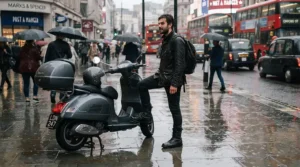
Sock Liner Moisture Wicking: The Missing Half of Dry Feet
Most riders obsess over the boot and forget the layer touching their skin. Sock liner moisture wicking is what keeps sweat from pooling inside an otherwise waterproof boot. A retailer note on the Forma boots makes the point plainly: breathable boots only breathe properly when worn with technical socks.
Why does it matter beyond comfort? The U.S. Centers for Disease Control and Prevention explains that trench foot develops when feet stay wet for long periods. Its advice is to keep feet clean and dry and wear clean, dry socks. You won’t get trench foot on a thirty-minute commute, but a day of rain touring in cold conditions is exactly the situation where damp feet stop being merely annoying.
What to wear and carry:
- A thin, synthetic or merino liner against the skin pulls moisture away. Cotton tends to hold moisture, so skip it.
- A medium outer sock adds warmth without cramming the boot. Too much volume squeezes the foot, restricts circulation and makes feet colder.
- A dry spare pair in a zip bag lets you swap at lunch. This is the cheapest comfort upgrade there is.
- A dry-out habit: pull the footbeds and let the boots air overnight.
Keep one more thing in mind. A membrane can’t reduce the sweat your own feet produce. If you ride in warm, wet weather, the vented TCX Climatrek Surround GTX and a good liner sock will outperform a heavier boot with cotton socks every time.
Rain Gear Pairing: Matching Boots to Pants, Gloves and Overboots
Boots don’t work alone. Rain gear pairing is the art of making sure water has nowhere to enter your system. The principle is simple: upper layers shed over lower layers, so water runs down and off rather than into openings. A guide from Progressive’s Lifelanes recommends a rainsuit, gloves, boots and helmet, and notes that waterproof gloves and boots reduce distractions and improve comfort in wet weather.
How cut height changes the strategy:
- Low-cut boots (Alpinestars Stella Valencia WP, TCX Climatrek Surround GTX, Forma Swift Dry): wear waterproof pants outside the boot with cuff straps so wind doesn’t lift the hem. Otherwise water runs straight in at the opening.
- Tall boots (Forma ADV Tourer, Alpinestars Stella SMX-6 V3 Drystar, Daytona Lady Star GTX): the extra shaft gives overlap room, so the pant leg can sit over the cuff and still leave you protected.
- Mid-height boots (BILT Pro Tourer WP): either way works, but outside-the-boot is safer in a downpour.
Overboots remain a fallback. One women’s riding site notes that riders without truly waterproof boots are left pulling over to fit rubber covers. That’s workable for an emergency but awkward as a plan.
Real-World Scenarios: Which Boot Fits Which Rider?
- The daily commuter on a budget: 8 miles each way, rain a few days a month. The BILT Pro Tourer WP with a thin liner sock and outer-pant routine covers it.
- The shorter rider who dreads wet stops: the Daytona Lady Star GTX adds ground reach exactly where a slippery stop makes it matter.
- The weekend sport rider: canyon roads, occasional drizzle, no desire to carry a second pair. The Alpinestars Stella SMX-6 V3 Drystar is the match.
- The wet-climate tourer: multi-day trips where boots rarely fully dry. The Forma ADV Tourer and spare socks win on value and adjustability.
✨ Don’t Miss These Exclusive Deals!
🔍 Take your rainy-day riding to the next level with these carefully selected boots. Click on any highlighted item to check current pricing and availability. These picks will help you create dry, comfortable rides you’ll actually look forward to!
What Are Waterproof Women’s Motorcycle Boots for Rain?
Waterproof women’s motorcycle boots for rain are protective riding boots built on a women-specific last, with impact protection at the ankle, heel and toe plus a waterproof, breathable membrane that blocks liquid water while letting vapor escape. They’re designed to keep feet dry during sustained wet riding without sacrificing crash protection, grip or comfort.
Three parts do the work. The outer shell sheds the first wave of water. The membrane stops what gets through. The construction (seams, cuff, closures) decides whether water finds a route in. It’s also why the same membrane can perform very differently across boots.
How to Choose Rain-Ready Women’s Riding Boots
Choosing rain-ready women’s riding boots is easier if you work through the criteria in order:
- Confirm the protection first. Look for EN 13634:2017 certification and reinforcement at the ankle, heel and toe. A dry foot that’s unprotected is a false economy.
- Check the membrane brand. Named liners such as Gore-Tex, Drytex and Drystar give you something to research. Vague “waterproof lining” claims are harder to judge.
- Match the cut to your gear. Low boots need pants worn outside. Tall boots offer overlap but can restrict larger calves.
- Prioritize fit. Women’s lasts have narrower heels and different calf shapes. A boot that moves in a slide protects less. Allow for thin liner socks.
- Think about closures. Zippers and buckles beat laces when your hands are wet and cold.
- Plan for walking. If you walk a lot off the bike, flexible soles matter.
- Budget for care. Maintenance products and spare socks are part of the real cost.
Industry testers at Motorcycle News emphasize CE-rated protection and note that cheaper boots can be perfectly adequate for many riders, so you don’t always need the top price tier to stay dry.
Waterproof Membrane Inserts Explained: Gore-Tex, Drytex and Drystar
Waterproof membrane inserts are sock-like liners sealed into the boot. They sit between the outer material and your foot, so even if the leather soaks through, the membrane keeps the inside dry. Because the liner is a separate layer, a punctured or poorly sealed insert is the single most common failure point.
What do the brand names mean for you? Gore-Tex uses a microporous membrane. The pores are tiny enough to block liquid water but permit vapor to pass, which is why it breathes. The Drytex liner in the Forma ADV Tourer and Forma Swift Dry, and the Drystar liner in the Alpinestars Stella SMX-6 V3 Drystar, serve the same purpose using each brand’s own technology.
Two practical points follow. First, a membrane only works if the outer material doesn’t saturate; when the exterior soaks, breathability drops, and the boot feels clammy. Second, the TCX Climatrek Surround GTX adds sole venting to push heat out from below, which is useful when waterproofing alone makes feet warm.
When shopping, prefer named membranes with documented construction. A reviewer-recommended rule of thumb is not to trust a boot that merely says “waterproof liner” for prolonged heavy rain.
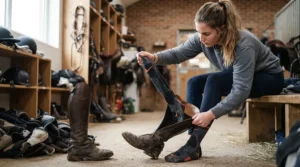
Features That Actually Matter (And Those That Don’t)
Marketing loves a long feature list. Here’s the filtered version.
What matters: a named membrane, a cuff you can seal, certified protection, a grippy sole, a footbed you can remove and dry, and closures you can operate with wet gloves.
What matters less: fashion colors, “tactical” styling and extra buckles that add weight without improving fit. Heavy lug soles can also change gear-lever feel, as reviewers note about the Daytona Lady Star GTX.
What people overlook: the shape of the shift pad and toe box. A pad that wears quickly, as some reviewers report on the TCX Climatrek Surround GTX, can end up exposing stitching to water.
Common Mistakes When Buying Waterproof Women’s Motorcycle Boots for Rain
- Buying on the word “waterproof.” Check the liner and seams. The claim alone proves little.
- Ignoring sizing quirks. Reports say the Forma ADV Tourer runs small, while the BILT Pro Tourer WP is described as wide.
- Forgetting sock thickness. A tight boot is a cold boot.
- Skipping the break-in. A stiff Alpinestars Stella SMX-6 V3 Drystar worn for the first time on a long wet trip is a recipe for blisters.
- Neglecting maintenance. Dirty, dry leather cracks.
- Choosing style over cuff height. A short cuff on a downpour commute is the fastest route to wet socks.
Waterproof Boots vs Rain Covers and Other Alternatives
Is a dedicated waterproof boot really better than covers or sprays? Here’s the comparison.
| Option | Strengths | Weaknesses | Best For |
|---|---|---|---|
| Waterproof membrane boots such as the Forma ADV Tourer | Always on, protective, breathable | Higher upfront cost, need care | Regular riders |
| Overboot covers | Cheap, packable | Awkward fit, can tear, extra step | Emergency backup |
| Non-waterproof boots plus spray | Cheapest | Limited, fades quickly | Dry climates |
| Budget waterproof boots such as the BILT Pro Tourer WP | Low cost, built-in protection | Membrane brand unclear | Occasional rain |
The table shows why dedicated boots win for anyone who rides regularly: there’s no stopping at the roadside to wrestle covers on. Covers still earn a spot in a pannier for surprise storms. Spray-only approaches are the weakest choice, since even manufacturers and reviewers note sprays can only go so far.
Price Range & Value Analysis
| Tier | Example Boots | What You Get | Trade-Off |
|---|---|---|---|
| Budget | BILT Pro Tourer WP | Waterproofing, steel shank | Unnamed membrane |
| Lower mid-range | Forma Swift Dry, Alpinestars Stella Valencia WP | Branded or integrated liners, everyday comfort | Shorter cuffs |
| Mid to upper mid-range | Forma ADV Tourer, TCX Climatrek Surround GTX, Alpinestars Stella SMX-6 V3 Drystar | Documented membranes, certified protection | Higher cost, break-in |
| Premium | Daytona Lady Star GTX | Gore-Tex, repairability, built-in lift | Weight, price |
Cost per wear is the useful lens. A pair that lasts several wet seasons and can be repaired or maintained will beat a cheaper pair replaced yearly. Even so, if you ride in rain only a handful of times each year, the BILT Pro Tourer WP is perfectly rational. The Forma ADV Tourer hits the sweet spot for regular wet-weather riders, and the premium tier only pays off for riders who value height assist and long-term repair support.
FAQ
❓ Can waterproof motorcycle boots leak in heavy rain?
❓ How long do waterproof riding boots stay waterproof?
❓ Do waterproof boots make your feet sweat more?
❓ Are waterproof women's riding boots worth it for occasional rain?
❓ Should I size up for waterproof motorcycle boots?
Conclusion
Staying dry isn’t luck. It’s a stack of sensible choices: a named membrane, a cuff that matches your pants, a sealing routine and the right socks. Of the seven pairs here, the Forma ADV Tourer is the best-documented all-rounder. The BILT Pro Tourer WP is the economical commuter pick. The Alpinestars Stella SMX-6 V3 Drystar serves riders who push hard, and the Daytona Lady Star GTX rewards those who value height and repairability. The TCX Climatrek Surround GTX, Alpinestars Stella Valencia WP and Forma Swift Dry cover everyday and warm-weather riding.
Pick the boot that matches your cut height, your climate and your budget, then back it up with maintenance and good socks. Your future self, rolling into a parking lot while everyone else squelches, will thank you.
✨ Ready to ride through the next storm with dry feet?
🔍 Click any highlighted boot above to check current pricing and availability, then gear up with confidence.
Recommended for You
- Waterproof Adventure Boots For Mud: 7 Best Dry-Feet Picks (2026)
- Enduro Boots For Beginner Off-Road Riders: 7 Proven Picks 2026
- Affordable Adventure Riding Boots: 7 Smart Buys That Last (2026)
Disclaimer: This article contains affiliate links. As an Amazon Associate, I earn from qualifying purchases. If you purchase products through these links, we may earn a small commission at no additional cost to you.
✨ Found this helpful? Share it with your friends! 💬🤗
