
In This Article
Your feet meet the pavement first in a lot of crashes. They’re also the thing most riders budget for last. That mismatch is why affordable tall riding boots exist. They’re calf-high or taller boots, roughly in the $190 to $400 range, that still carry a real protection package: ankle armor, a shin plate, a stiffened sole and, ideally, a CE label. Real boots, minus the four-figure sticker.
Why bother? Wikipedia’s overview of motorcycle personal protective equipment lays out how gear like boots, gloves and jackets fits into a rider’s overall protection. Footwear is the piece people skip because sneakers feel “good enough.” They aren’t, and the rest of this guide explains why.
Here’s the plan. We compare seven real boots, from stripped-down budget picks to mid-range workhorses. Every spec gets translated into what it means on the bike. We summarize the genuine review patterns we could find, and we say plainly when a review pool is thin. This guide is built from spec sheets, retailer review pools and published tests, not invented “I rode these for 10,000 miles” stories.
Along the way we dig into the price vs coverage tradeoff, which is where most budget buyers get burned. We also cover entry-level tall boots versus shorter shoes, how to read a CE label, and the warranty basics nobody reads until a sole peels off. If you’re hunting budget calf-high motorcycle boots, you’re in the right place.
Prices below are ranges captured at the time of research. They change constantly, so check current price before you buy.
Quick Comparison: Affordable Tall Riding Boots at a Glance
Before the deep dive, here’s the whole field on one screen. Height class, weather protection and price range are the three things that most often decide a purchase. The “Best For” column is the shortcut.
| Boot | Height Class | Weather Protection | Price Range | Best For |
|---|---|---|---|---|
| ILM BRC1 | Racing-style (verify CE label) | Vented, not waterproof | ~$190–$230 | Warm-weather commuters on a tight budget |
| Fox Ranger ADV | Tall, CE Level 2 in three tests | No membrane | Entry tier (about €200 in Europe) | Riders who want maximum protection per dollar |
| Forma Adventure | Full height (13–15 in) | Drytex waterproof lining | ~$300–$350 | Rain commuters and gravel-road explorers |
| Alpinestars Radon Drystar | ~10 in, mid-calf | Drystar waterproof | ~$245–$260 | Daily riders who walk a lot |
| TCX Drifter WP | Tall adventure leather | Waterproof lining | ~$300–$400 | Riders who want boots that double as street footwear |
| Fox Defend ADV | Tall, CE Level 2 | Weather-protective build | ~$310–$350 | Mixed pavement, gravel and light off-road |
| Alpinestars Corozal Adventure Drystar | Tall adventure | Drystar waterproof | ~$330–$360 | Adventure riders who put armor first |
Looking at the table, the Fox Ranger ADV is the standout for protection per dollar, but it skips waterproofing entirely. If you ride in rain, the Forma Adventure or Alpinestars Radon Drystar earn their extra cash. The ILM BRC1 is the cheapest ticket in, though its racing-style cut means you should confirm the height rating before assuming it’s “tall.”
💬 Just one click — help others make better buying decisions too!😊
Top 7 Affordable Tall Riding Boots: Expert Analysis
Think of this as a lineup ordered from lightest on the wallet to heaviest on features. Every entry follows the same logic: what the specs mean, who the boot suits, what real reviewers keep saying, and whether the price makes sense.
1. ILM BRC1 — cheapest route to real armor
This is where you start if the budget is the hard constraint. The ILM BRC1 packs dual-layer protection, TPU armor, an anti-torsion sole, heel and shin vents, a 3D mesh liner, and a side zip paired with a quick-lock buckle.
In practice, the vents mean airflow in July but also a wet sock in April. The side zip means you’re not wrestling laces at a gas station. The anti-torsion sole resists your foot being twisted in a fall. It’s a sport-boot silhouette rather than a true adventure boot, so check the first digit on the CE label if height matters to you.
Listings show ratings in roughly the 4.6 to 4.8 range, with reviewers praising value and ventilation. The recurring caveats are a slightly stiff break-in and extra weight. Several listings have small review pools, so treat the star average as a hint, not a verdict.
Pros:
- ✅ Armor and CE-style protection at a bargain
- ✅ Excellent ventilation for hot climates
- ✅ Side zip makes daily wear painless
Cons:
- ❌ Not built for rainy rides
- ❌ Heavier and stiffer than some rivals
Price & verdict: Around the $190–$230 range. A strong value for dry-season riders, a weak one if weatherproofing matters.
2. Fox Ranger ADV — Level 2 protection at an entry-level price
Fox positions the Fox Ranger ADV as the cheaper sibling of its Defend boot. It uses a leather upper, a seven-eyelet lace system, the ULTRATAC sole and D3O protectors. BikeSocial’s review notes it’s tall enough to count as a “tall” boot and reaches the higher Level 2 in abrasion, cut and rigidity tests.
That matters because Level 2 across those tests is unusual at this price. The catch is that there’s no waterproof membrane. Without one, the boots breathe better and dry faster, but they won’t love puddle crossings. They’re also stiff, though supportive.
Reviewer sentiment comes mostly from professional testing because the model is newer. The BikeSocial verdict was that the protection and support come in a form that’s easier to live with than a typical enduro boot. Expect a feel closer to hiking boots than moto boots.
Pros:
- ✅ Level 2 ratings in three CE tests
- ✅ Rated tall, with real shin coverage
- ✅ Tough leather that should wear well
Cons:
- ❌ No waterproof membrane
- ❌ Stiff feel needs some adjustment
Price & verdict: Fox’s entry tier, roughly €200 in Europe; check current U.S. price. For dry-weather protection per dollar, hard to beat.
3. Forma Adventure — the benchmark for entry-level tall boots
If one boot defines entry-level tall boots, it’s the Forma Adventure. The oiled full-grain leather has a vintage finish and a Drytex waterproof lining. There’s a double-density anti-slip sole, an injection-molded front plate, a plastic gear pad, and two buckles plus Velcro. Depending on size, the shaft runs about 13 to 15 inches.
Translation: genuinely tall coverage that’s light enough to walk in and quick to put on. RevZilla shows a 4.5-star average across more than 550 reviews, and reviewers repeatedly describe comfort from day one and strong waterproofing.
The honest critiques are consistent too. Protection is basic, and one review called the ankle and shin inserts flimsy. Sizing runs small, and one overland reviewer disliked the crumpling insole. Think of it as a comfort-first adventure boot.
Pros:
- ✅ Comfortable out of the box
- ✅ Waterproof lining performs well in reviews
- ✅ Full-height coverage at a friendly price
Cons:
- ❌ Armor is basic compared with pricier boots
- ❌ Fits smaller than expected
Price & verdict: Around the $300–$350 range. Excellent value if you value comfort and rain-readiness over crash armor.
4. Alpinestars Radon Drystar — waterproof comfort at about 10 inches tall
Here’s the calf-high sweet spot. The Alpinestars Radon Drystar uses a microfiber upper, a Drystar waterproof membrane, a TPU shin plate and shift pad, a vulcanized sole and reflective inserts. Retailers list it under the older EN 13634:2010 certification. A listing describes the height at roughly 10 inches.
That height is the point. It slides under pants easily, protects the shin, and doesn’t feel like moon boots when you walk to the office. Fit-wise, Alpinestars boots tend to run wider.
UK reviews sit around 4.6 to 4.7 stars, praising comfort and dryness. RevZilla shows a lower 4-star average on a smaller pool. A road-touring reviewer called the protection “just enough,” which seems fair. Several riders mention warmth in summer.
Pros:
- ✅ Waterproof and comfortable, per reviewers
- ✅ No long break-in period
- ✅ Walkable sole for everyday use
Cons:
- ❌ Warm in hot weather
- ❌ Moderate armor for aggressive riding
Price & verdict: Around the $245–$260 range. A smart daily-rider pick if you want budget calf-high motorcycle boots that behave like normal boots off the bike.
5. TCX Drifter WP — vintage looks, walkable build
The TCX Drifter WP wins fans on style. It has a grain leather upper with pull-up finishing, microfiber inserts, a waterproof lining, three adjustable buckles and a deep-lug rubber outsole. Retailers cite CE Category II certification under EN 13634. TCX’s comfort-fit ankle system is designed to resist sideways rolling.
For daily riders, that means a boot you can wear to dinner without looking like you’re heading to a motocross track. RevZilla shows about 4.5 stars across 140-plus reviews. Reviewers keep praising comfort, fit and looks.
Complaints cluster around a bulky shin guard and ankle support that’s less stiff than true adventure boots. One retailer’s summary also lists weight and cost as downsides.
Pros:
- ✅ Looks great on and off the bike
- ✅ Comfortable, with a reliable brand following
- ✅ Waterproof lining with a lugged sole
Cons:
- ❌ Shin guard feels bulky
- ❌ Softer ankle support than stiff ADV boots
Price & verdict: Roughly the $300–$400 range, with closeouts dipping lower at times. It’s the edge of “affordable,” but strong for style-minded riders.
6. Fox Defend ADV — BOA convenience with Level 2 coverage
The Fox Defend ADV carries CE EN 13634:2017 Level 2 certification. It has a TPU heel guard, an ULTRATAC sole shared with Fox’s Comp motocross boot, and a single BOA dial closure. Sizes run 8 to 14.
The BOA dial means quick, even tension and no buckles to snag. GearJunkie rated it 8.4 out of 10 and found it comfortable out of the box, with no break-in and good weather protection.
Their main complaint was that the single BOA closure needed constant adjustment during aggressive riding. They also noted a soft heel that scuffs and tears easily, and that the boots are hard to remove. Fit is relatively true to size, with a toe box wider than Sidi’s.
Pros:
- ✅ Level 2 certification with real durability
- ✅ Comfortable immediately, no break-in
- ✅ Convenient BOA closure for walking days
Cons:
- ❌ BOA needs re-tightening on rough rides
- ❌ Soft heel cuff scuffs easily
Price & verdict: Around the $310–$350 range. Best for pavement-heavy riders who sometimes hit gravel.
7. Alpinestars Corozal Adventure Drystar — most armor here, with the weight to match
This is the top of our list. The Alpinestars Corozal Adventure Drystar has leather, microfiber and suede construction, a Drystar membrane, a polymer shin plate, biomechanical ankle support and accordion flex panels. The buckles are replaceable via a single screw.
For you, that means better ankle containment than softer touring boots, and flex zones that keep it ridable. The trade-off is weight. One reviewer called the Corozals a bit heavy for walking, and another said they took a few rides to break in.
Overall sentiment is positive: durable, waterproof and comfortable. One retailer review called them decently protective for the price while wishing for more armor for hardcore use.
Pros:
- ✅ Strong ankle support and shin protection
- ✅ Durable build with replaceable buckles
- ✅ Waterproof membrane reviewed favorably
Cons:
- ❌ Heavier than softer touring options
- ❌ Needs a few rides to break in
Price & verdict: Roughly the $330–$360 range depending on version. Worth it if coverage outranks walkability.
✨ Don’t Miss These Exclusive Deals!
🔍 Take your search for affordable tall riding boots to the next level with these carefully selected options. Click any highlighted boot name to check current pricing and availability. The right pair will help you ride farther and walk away from the bike feeling confident!
What Are Affordable Tall Riding Boots? (And Why Calf-High Matters)
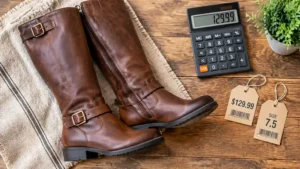
Affordable tall riding boots are calf-high or taller motorcycle boots, typically priced between about $190 and $400, that still include core protection: ankle armor, a shin plate, a reinforced sole, and ideally an EN 13634 CE label. They trade premium materials and racing-grade armor for accessible pricing without abandoning safety basics.
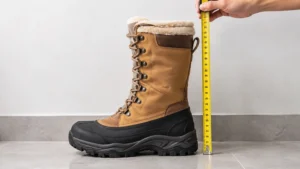
“Tall” is slippery language, so let’s pin it down. A calf-high boot like the Alpinestars Radon Drystar rises to roughly 10 inches. A full-height adventure boot like the Forma Adventure reaches 13 to 15 inches. That height shields your shin from the bike, the road and debris.
It also affects certification. A short boot can only score a 1 in the CE height test, though it can still score 2 elsewhere. If you want coverage, the height digit is your quickest tell. That’s why entry-level tall boots are worth the stretch over ankle-high riding shoes.
How to Choose Affordable Tall Riding Boots
Shopping this category is easy to get wrong because marketing language is fuzzy. Use this short sequence:
- Read the CE label first. Look for EN 13634 and the four digits (height, abrasion, cut, rigidity). A boot advertised as “CE approved” without that standard hasn’t been confirmed for motorcycle use.
- Pick your weather priority. Vented boots stay cool but leak. Waterproof membranes keep rain out but run warmer. Be honest about your climate.
- Choose a closure you’ll actually use. Buckles are reliable, laces are traditional, BOA is quick but may need re-tightening, and zips are convenient but add a weak point.
- Match the sole to your life. Stiff soles help on the pegs, while softer ones walk better. If you commute and then hike across a campus, favor walkability.
- Respect sizing quirks. The Forma Adventure runs small, and Alpinestars boots tend to run wide. Try them with your riding socks.
- Check the warranty basics. Know the term, what’s excluded, and who handles claims before you click buy.
- Set a price ceiling before browsing. It’s easy to drift upward, so decide in advance where the price vs coverage tradeoff stops making sense for you.
Price vs Coverage Tradeoff: Where Your Money Actually Goes
The price vs coverage tradeoff is the heart of this category. Spending more doesn’t scale protection in a straight line. Past a certain point you’re paying for comfort, weatherproofing, materials and brand polish, not just crash armor.
| Tier | Typical Price Range | What You Typically Get | What You Give Up |
|---|---|---|---|
| Budget sport-style (ILM BRC1) | ~$190–$230 | CE-style armor, ventilation | Waterproofing, tested adventure features |
| Entry-level tall boots (Fox Ranger ADV, Alpinestars Radon Drystar) | ~$200–$260 | Real height, Level 2 or waterproof options | Premium comfort, one of the two features |
| Mid-tier (Forma Adventure, Fox Defend ADV, Alpinestars Corozal Adventure Drystar) | ~$300–$360 | Waterproofing, flex zones, durable builds | Lightness, sometimes top-tier armor |
| Premium benchmark (Sidi Adventure 2) | Around $500 | Gore-Tex, refined fit, strong protection scores in reviews | Your wallet |
As the table shows, the biggest practical jump happens between the budget and mid tiers, where waterproofing and flex engineering arrive. The Sidi Adventure 2 is a useful benchmark: Motorcycle.com’s test scored comfort and protection very highly, but at roughly twice the price of most picks here.
For many riders, the sweet spot is the entry and mid tiers. That’s where affordable tall riding boots deliver the most protection per dollar. Go lower, and you start trading away weather or height. Go higher, and you’re often paying for refinement rather than safety.
Entry-Level Tall Boots vs Short Riding Shoes and Sneakers
Short riding shoes feel convenient, and sneakers feel free. But the protection gap is wide. Here’s how the options compare on what matters.
| Feature | Tall Adventure / Calf-High Boots | Short Riding Shoes | Everyday Sneakers |
|---|---|---|---|
| Shin coverage | ✅ Yes, via shin plate | ❌ None | ❌ None |
| Ankle support | Strong (armor, flex zones) | Moderate | Minimal |
| CE height rating | Up to 2 | Capped at 1 | None |
| Weather protection | Often waterproof | Varies | Poor |
| Walkability | Moderate (varies by boot) | High | Highest |
| Cost | Moderate | Lower to moderate | Lowest |
The pattern is clear: short shoes win on convenience, but they can never score above level 1 for height. If you want entry-level tall boots to replace shoes, the Alpinestars Radon Drystar is the closest to a “normal shoe” feel while still covering the shin. The Fox Ranger ADV and Fox Defend ADV are the better picks if you want Level 2 in key tests.
Sneakers remain the weakest choice. They lack ankle armor, stiff soles and the labeling that tells you what you’re getting.
Long-Term Cost, Maintenance and Warranty Basics
A cheap boot that dies in a year isn’t cheap. Total cost of ownership comes down to sole life, hardware, cleaning, and what the maker will fix.
Warranty basics, in plain terms: a boot warranty usually covers manufacturing defects such as sole separation, bad stitching or failed hardware. It rarely covers normal wear, crash damage or neglect. Sidi’s standard coverage, for instance, is two years against defects, and the U.S. importer’s published terms excluded soles worn out through use. They also required proof of purchase and an authorized dealer. Forma’s warranty varies by region. One Australian review referenced a 12-month term, so confirm yours locally.
Swiss retailer Galaxus publishes defect data worth noting. In its motorcycle boot category, the share of products with a defect within 24 months was roughly 0.5% for Alpinestars, 0.6% for Sidi and TCX, 1% for Dainese and 1.7% for iXS. It’s one European retailer’s data, not a U.S. guarantee, but it’s a useful reliability signal.
Practical moves: keep your receipt, register the boots if the brand allows, and buy from authorized sellers. Clean leather boots regularly, dry them naturally, and replace soles or buckles when worn. A warranty is only as good as your paperwork.
Features That Actually Matter (And Those That Don’t)
Boot marketing loves adjectives. Cut through them with a simple filter.
Matters: ankle containment, a sole that resists twisting, a shin plate, abrasion-resistant material, and a closure that stays secure. These are the features that earn the CE digits.
Matters if you ride in rain: a waterproof membrane. A reviewer of the Alpinestars Radon Drystar said they hadn’t leaked once, but that same membrane can run warm in summer.
Doesn’t matter much: extra buckles for their own sake, aggressive colorways, and “tactical” styling. The number of straps tells you nothing about crash performance.
Matters more than you’d think: fit. A boot that fits poorly gets left in the closet, and then it protects nothing. That’s why comfort-first picks like the Forma Adventure and TCX Drifter WP do well even with simpler armor.
Safety, CE Ratings and Standards: What the Labels Really Promise
Motorcycling is unforgiving. The Insurance Institute for Highway Safety reports that 6,228 motorcyclists died in crashes in 2024, and the death rate per mile traveled was nearly 27 times that for cars, citing NHTSA crash data. IIHS calls a proper helmet the most important single piece of equipment. It also notes that other motorcycle-specific gear, including boots, has been associated with better post-crash health outcomes in published research.
EN 13634:2017 is the European standard for motorcycle footwear. It tests height, abrasion resistance, cut resistance and transverse rigidity (crush resistance). Level 1 is the baseline, and Level 2 is the higher tier. A label reading 2 2 2 2 means top marks across all four.
One caution: certification shows a boot passed standardized tests. It doesn’t make you crash-proof. Still, a labeled boot gives you far more evidence than a vague “protective” claim.
Your First 30 Days: Break-In and Maintenance Guide
New boots reward a little discipline. Here’s a practical schedule.
Week 1: short rides and walking. Wear them around the house with your riding socks. Stiffer boots such as the Alpinestars Corozal Adventure Drystar may need several rides before the flex zones loosen.
Week 2: shift-lever check. Make sure you can feel the shifter and brake pedal. If the toe box feels clumsy, adjust sock thickness before blaming the boot.
Week 3: fit audit. Hot spots, heel lift or numbness mean something’s off. Check lacing or buckle position first.
Week 4: maintenance baseline. Wipe leather, dry naturally (never on a heater), and apply conditioner to oiled-leather boots like the Forma Adventure. Inspect stitching, buckle screws and sole edges.
Common first-month mistakes: wearing wet boots again without drying them, skipping a size check, over-tightening BOA or buckles, and ignoring early sole wear. Catching these early is how entry-level tall boots last.
Real-World Scenarios: Which Pair Matches Which Rider
Spec sheets are abstract, so let’s match boots to people.
The rainy-city commuter, about $300 budget. Rides 20 minutes each way, five days a week, and walks to an office. The Alpinestars Radon Drystar fits: waterproof, roughly calf-high and walkable. If rides run longer and conditions get rougher, the Forma Adventure adds height and rain-readiness.
The weekend gravel explorer, tight budget. Rides pavement to forest roads, mostly in dry weather. The Fox Ranger ADV offers Level 2 protection and tall coverage without paying for a membrane. Accept that wet crossings mean wet feet.
The style-conscious all-rounder. Wants boots that look good at a restaurant. The TCX Drifter WP is the obvious fit, provided you accept a softer ankle structure.
The first-bike student, minimal funds. Rides short distances in warm weather. The ILM BRC1 gets armor on your feet at the lowest cost. Just don’t expect it to handle storms.
Notice the pattern: the right boot comes from your riding pattern, not the spec sheet’s longest feature list.
Problem → Solution Guide: Fixing the Common Pain Points
Most complaints about budget boots are fixable.
Problem: boots run small. Several reviewers note the Forma Adventure fits smaller than expected. Solution: order a half size up, or try in person with riding socks.
Problem: feet overheat. Waterproof membranes trap heat. Solution: choose a vented option like the ILM BRC1 for summer, or rotate boots by season. Moisture-wicking socks help.
Problem: stiff soles on long walks. Solution: choose a softer touring option like the Alpinestars Radon Drystar, or accept the stiffness as the price of foot-peg support.
Problem: closure loosens on rough rides. GearJunkie flagged this on the Fox Defend ADV‘s single BOA dial. Solution: re-tighten at stops, or pick a buckle-based design for aggressive riding.
Problem: heel scuffing and wear. Solution: take off the boots carefully using the pull tabs, and clean and condition regularly.
Problem: warranty confusion. Solution: save the receipt, buy from an authorized dealer, and read the exclusions before a problem appears.
Frequently Asked Questions
❓ How much should I spend on affordable tall riding boots?
❓ Are budget calf-high motorcycle boots CE certified?
❓ Do entry-level tall boots need breaking in?
❓ What does a boot warranty usually cover?
❓ Can I walk all day in tall riding boots?
Conclusion: Spend Where It Protects You
Affordable tall riding boots don’t require a compromise on the basics. They require a clear sense of which compromise you’re making. The ILM BRC1 trades weatherproofing for price. The Fox Ranger ADV trades waterproofing for Level 2 protection. The Forma Adventure and Alpinestars Radon Drystar trade armor for comfort. The TCX Drifter WP and Fox Defend ADV bring style and convenience, and the Alpinestars Corozal Adventure Drystar puts coverage first at the cost of weight.
The deciding factors are your weather, your walking habits and the price vs coverage tradeoff you’re willing to accept. Pair that with a careful look at the CE label and the warranty basics, and you’ll make a smarter purchase than most. Whichever you choose, wear boots that carry real protection every ride.
✨ Ready to find your pair?
🛒 Click any highlighted boot name above to check current pricing and availability, and gear up with confidence. Your future self will thank you!
Recommended for You
- Short Motorcycle Boots For Scooter Riders: 7 Best Picks 2026
- Tall Motorcycle Boots For Cruiser Riders: 7 Proven Picks (2026)
- Tan Motorcycle Boots That Match Leather Jackets: 7 Proven Picks 2026
Disclaimer: This article contains affiliate links. As an Amazon Associate, I earn from qualifying purchases. If you purchase products through these links, we may earn a small commission at no additional cost to you.
✨ Found this helpful? Share it with your friends! 💬🤗
