

In This Article
Short motorcycle boots for scooter riders are ankle-height riding shoes with reinforced ankle cups, abrasion-resistant uppers and a stiffened sole. They add real crash protection to a daily commute without the bulk of full-length boots. They’re light enough to walk into the office afterward.
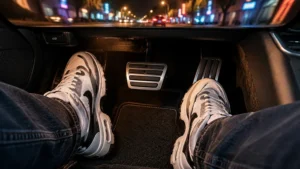
Here’s the uncomfortable truth about scooter culture. Plenty of riders armor their heads, then pilot a twist-and-go through traffic in canvas sneakers or flip-flops. Your feet sit lowest and closest to the pavement, and they’re the first thing to meet it in a tip-over. Even the U.S. National Highway Traffic Safety Administration has noted that footwear is part of the protective-gear picture and that research beyond helmets is thin. 🛵
Boots built for scooters solve a specific problem. They have to protect you, but also vanish into your day. They need to slip on fast and survive a rainy Tuesday. They shouldn’t make you look like you’re heading to a superbike track.
One note on method. Everything below comes from spec sheets, published editorial reviews and aggregated retailer ratings. None of it is hands-on testing, and I flag it wherever the review data runs thin. Prices are ranges only, because they move constantly. Check current price before you buy.
Quick Comparison: Short Motorcycle Boots for Scooter Riders at a Glance
Seven boots, three budget tiers. The table is the fast version; the analysis follows.
| Boot | Price Range | Weather Setup | Best For |
|---|---|---|---|
| Cortech Chicane Air | Around $110 | Vented | Budget summer commuters |
| Richa Slick WP | Value tier, check current price | Waterproof | Rainy-city daily riders |
| TCX Street 3 WP | Mid-$100s to low-$200s | Waterproof | Sneaker-style office riders |
| Alpinestars Faster-3 Rideknit | Roughly $170-$240 by version | Breathable knit | Hot-climate commuters |
| Dainese Metractive D-WP | Roughly $150-$350 by retailer | Waterproof | Quick on/off, dressier looks |
| Merlin Bandit D3O | Right around $300 | Varies by build | Impact-protection priority |
| Dainese Nighthawk D1 Gore-Tex Low | Premium tier, check current price | Gore-Tex waterproof | All-weather riders who’ll pay up |
Looking at the table, the Cortech Chicane Air is the cheapest way into genuine ankle armor. The Dainese Metractive D-WP is the pick when speed of getting in and out matters most. Anyone riding through wet seasons should skip the vented options and look at the waterproof rows, because wet feet end commutes faster than crashes do.
💬 Just one click — help others make better buying decisions too!😊
Top 7 Short Motorcycle Boots for Scooter Riders: Expert Analysis
The order below runs roughly from budget to premium. Each entry explains what the specs mean on a scooter, not just what they say.
1. Cortech Chicane Air — cheapest ticket to real ankle armor
Think of the Cortech Chicane Air as the gateway boot. It’s the one that gets a sneaker-loyal rider into proper footwear without a painful receipt.
WebBikeWorld’s short-boot roundup lists it as an entry-level pick at about $110. It describes reinforced armor at the toe, heel and ankle, a secure strap-and-buckle closure and a reflective heel. Reinforcement at those three points matters because low-speed scooter falls are mostly tip-overs and short slides. The ankle bone and heel take the hits. The reflective heel earns its keep at dusk, since your feet sit low and move near traffic.
The “Air” in the name signals a vented build. Based on that, this is a warm-weather boot, and I’d park it when the forecast turns wet. For riders in sunny climates who just want a step up from sneakers, the spec sheet reads sensibly.
On reviews, I couldn’t verify a deep pool of owner ratings for this model, so I won’t pretend otherwise. The editorial placement is the main evidence.
Pros:
- ✅ Reinforced toe, heel and ankle zones
- ✅ Reflective heel for low-light visibility
- ✅ Budget-friendly entry into riding footwear
Cons:
- ❌ Vented design isn’t built for heavy rain
- ❌ Limited verifiable owner-review data
Price runs around $110 (check current price). As a value verdict, it’s strong for fair-weather commuters and a poor fit for rainy climates.
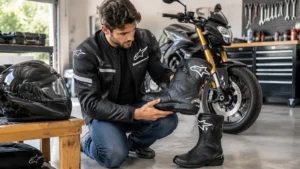
2. Richa Slick WP — lightweight waterproof value pick
The Richa Slick WP exists to prove that boots don’t have to be expensive to do their job. Begin Motorcycling names it its best-value short boot, and the editorial case is clear. It’s a lightweight short boot aimed squarely at city commuters.
The reviewers’ spec notes are short but useful. The boot is waterproof, light and offers adequate protection. “Adequate” is the honest word there. This isn’t armor for highway speeds, but scooter commutes rarely involve highway speeds. A waterproof liner at this tier is the real prize, because soggy socks are the number-one reason people abandon proper boots.
One quirk to weigh: the same review flags the gear shift pad as not very durable. On an automatic scooter you’ll never touch a shifter, so that complaint barely applies. Riders of geared vintage scooters should treat it as a real consideration.
Review data comes from editorial sources. I couldn’t verify a large customer-rating pool, and US availability varies by retailer, so confirm stock before getting attached.
Pros:
- ✅ Waterproof build at a value-tier cost
- ✅ Lightweight for all-day wear
- ✅ Commuter-focused, adequate protection
Cons:
- ❌ Gear shift pad durability is questioned
- ❌ Protection is adequate, not exceptional
Check current price, as it sits in the value tier. For rain-prone scooter commuters watching their budget, the logic holds up.
3. TCX Street 3 WP — sneaker looks, waterproof leather build
Nobody will guess the TCX Street 3 WP is a riding boot until they look at the ankle. One UK reviewer compared it to an upmarket low-cut basketball boot, which fits the low-key styling perfectly.
GearJunkie lists a leather upper with a T-Dry waterproof membrane, D30 and Zplate inserts, a GroundTrax sole and an OrthoLite insole. It weighs about 2.4 pounds, with a CE Level 2 listing and a city-commuting use case. D30 is soft armor that firms on impact, so you get protection without a clunky plate. OrthoLite means cushioning that holds up through a full day of walking around. GearJunkie rated the family 8 out of 10 and tagged it best women’s lifestyle.
Its non-waterproof sibling, the Street 3 Air, meets the EN 13634:2017 standard and holds a 4.5 out of 5 on RevZilla’s women’s listing across 13 reviews. That’s a small sample, so read it as a good sign rather than a verdict.
Pros:
- ✅ Waterproof membrane in a sneaker-style shape
- ✅ D30 and Zplate impact inserts
- ✅ Cushioned insole for off-scooter walking
Cons:
- ❌ Heavier than knit-upper competitors
- ❌ Less airflow than vented siblings
Expect a mid-$100s to low-$200s price range (check current price). As a verdict, it’s a strong all-rounder if you ride year-round and care how your shoes look.
4. Alpinestars Faster-3 Rideknit — breathable knit for hot-weather commutes
If your commute involves sweat, the Alpinestars Faster-3 Rideknit is the cool-feet answer. The seamless knit upper blends microfiber with mesh and thermo-welded construction. It flexes like a running shoe while carrying TPR sliders and protectors.
Specs worth translating: an integrated shank adds sole rigidity, and the EN 13634:2017 certification confirms a tested protection baseline. A 3D mesh liner moves air, which matters when you’re stuck at stoplights in July. WebBikeWorld’s reviewer praised the pedal-and-control feel and the cushioned sole for walking. A Motorcyclist reviewer in a hot climate said the shoes sweated on occasion but dried quickly with thin wool socks.
Aggregated ratings are solid. RevZilla shows 4.5 out of 5 across 176 reviews. A UK retailer’s customer summary praised comfort, fit and quality, though one listing noted the shoe fits smaller than expected. Size up if you’re between sizes. WebBikeWorld also calls it not cheap.
Pros:
- ✅ Excellent breathability for hot climates
- ✅ Flexible feel with TPR protection
- ✅ Strong aggregated rider ratings
Cons:
- ❌ Runs small per retailer feedback
- ❌ Knit upper isn’t a rain shoe
Roughly $170-$240, depending on version, with a waterproof Drystar variant sitting at the pricier end of that range. Check current price. It’s worth it if heat is your main enemy.
5. Dainese Metractive D-WP — easiest on and off, with a leather look
The Dainese Metractive D-WP wins for riders who live in their boots on and off the scooter. A side zipper joins the laces, and an elastic band stows the lace ends, so you can get in and out in seconds. That’s what easy on/off boots should feel like.
The build lists full-grain cowhide, a D-WP waterproof inner and rigid inserts at the ankle with soft D-Foam on the inside. It also has leather gearshift reinforcement, an Ortholite insole, an asymmetric Groundtrax sole and Goodyear welting. Certification is CE Category II to EN 13634, with a shaft about 14 centimeters high. Translation: low-profile enough to hide under trousers, robust enough to resole.
RevZilla’s 4.5 out of 5 across 19 reviews is a small but positive sample. Retailer notes suggest the women’s version runs small and that the waterproof lining breathes best with functional socks. RevZilla also flags that the model contains PFAS chemicals.
Pros:
- ✅ Side zipper makes entry and exit fast
- ✅ Full-grain leather looks office-ready
- ✅ Waterproof lining with CE Category II rating
Cons:
- ❌ No active ventilation for hot days
- ❌ PFAS flagged on retailer listing
Prices range roughly $150-$350 depending on retailer and version. Check current price. For commuters who value speed and style, it’s the best fit in this group.

6. Merlin Bandit D3O — D3O armor and a full shank
Where most short boots trade protection for comfort, the Merlin Bandit D3O leans the other way. WebBikeWorld highlights D3O-grade toe and ankle cups and a full shank through the midsole for transverse rigidity.
D3O is armor that stays flexible until it takes an impact. The full shank is what keeps your foot from folding sideways if it gets pinned. That’s useful insurance if your commute includes fast arterial roads or a scooter heavy enough to trap a foot. The trade-off is walking feel. A shank-to-the-heel sole is stiffer off the bike than a soft sneaker-style sole.
I couldn’t verify a robust pool of owner reviews for this model. The recommendation rests on the editorial spec analysis. WebBikeWorld lists it at $299.95, which puts it at the top of what scooter commuters usually spend on short boots.
Pros:
- ✅ D3O impact armor at toe and ankle
- ✅ Full midsole shank for torsion protection
- ✅ Suited to faster-road scooter commutes
Cons:
- ❌ Stiffer sole is less comfortable for walking
- ❌ Limited verifiable owner-review data
The price lands right around $300 (check current price). A rider doing 40 mph stretches will see the value. A rider doing 15 mph campus laps probably won’t.
7. Dainese Nighthawk D1 Gore-Tex Low — premium all-weather short boot
The Dainese Nighthawk D1 Gore-Tex Low is the pick for riders who commute in every season and want the best short waterproof boot. Begin Motorcycling’s editorial notes list soft, supple leather, an external TPU ankle protector, shin-protector inserts and a lightweight, comfortable feel.
Gore-Tex in the name matters. It’s a waterproof, breathable membrane, so your feet stay drier on the way in and sweat less on the way home. An external TPU ankle protector is a rigid shell over the ankle bone, a hard barrier where bare-ankle impacts hurt most. Shin inserts extend coverage a little higher than most short boots manage.
The reviewer’s single con is blunt: not cheap. I couldn’t verify a current US price, so treat it as a premium purchase and check current price. US availability may vary by season, since model lineups rotate.
Pros:
- ✅ Gore-Tex waterproofing with breathability
- ✅ External TPU ankle protector plus shin inserts
- ✅ Soft leather keeps it lightweight and comfortable
Cons:
- ❌ Premium pricing
- ❌ US availability and current price need verifying
Verdict: if rain, cold and daily use are your reality, buying once beats buying twice.
Side-by-Side Feature Matrix
| Boot | Closure | Ankle Protection | Walking Comfort | Best For |
|---|---|---|---|---|
| Cortech Chicane Air | Straps and buckles | Reinforced armor | Moderate | Budget summer riding |
| Richa Slick WP | Short-boot commuter closure | Adequate | Good | Wet-city value |
| TCX Street 3 WP | Sneaker-style | D30 and Zplate inserts | Good | Office-friendly commuting |
| Alpinestars Faster-3 Rideknit | Laces with strap | TPR sliders and protectors | Very good | Heat and long days |
| Dainese Metractive D-WP | Laces plus side zipper | Rigid insert plus D-Foam | Good | Fast on and off |
| Merlin Bandit D3O | Varies by build | D3O cups, full shank | Stiffer | Faster roads |
| Dainese Nighthawk D1 Gore-Tex Low | Short-boot design | External TPU, shin inserts | Good | All-weather premium |
This matrix shows why one “best” boot doesn’t exist. The Dainese Metractive D-WP wins convenience, the Merlin Bandit D3O wins armor and the Alpinestars Faster-3 Rideknit wins heat management. Pick the row that matches your worst daily inconvenience, then check the price range.
✨ Don’t Miss These Exclusive Deals!
🔍 Take your scooter commute to the next level with these carefully selected boots. Click on any highlighted product name to check current pricing and availability. The right pair will help you ride safer and arrive with dry, comfortable feet!
How to Choose Short Motorcycle Boots for Scooter Riders
Here’s the quick checklist. Each step carries a reason, so you can defend your pick to a skeptical friend.
- Look for a safety certification. EN 13634 is the European standard for protective footwear for motorcycle riders. Look for “EN 13634:2017” on the label, since older versions are withdrawn.
- Prioritize ankle protection. The ankle bone is the vulnerable zone. Rigid inserts or cups beat bare padding.
- Pick your weather. Waterproof for rain, vented for heat. Fighting your climate means leaving the boots in the closet.
- Check the sole. A stiffer shank adds protection, while a flexible sole adds walking comfort. Decide how much you walk.
- Test the closure. Zippers and straps speed up daily routines. Laces-only boots can become a chore.
- Mind the fit. Several listings above note small sizing. Size up if you wear thick socks, and try them with your real work socks.
- Set a budget range, then buy once. A $110 pair worn daily beats a $300 pair left at home.
Treat this as a filter, not a formula. A rider on a 49cc scooter and one on a 300cc maxi-scooter can reasonably land on different boots.
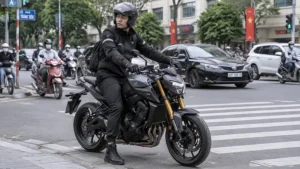
Scooter Foot Positioning: How Boot Shape Changes Your Ride
Scooter foot positioning is nothing like motorcycle footpeg positioning, and that changes which boot features matter. On a step-through, both feet rest flat on a floorboard. Your heels sit near the back edge, and your toes aim forward. There’s no shifter, and the rear brake is usually a left-hand lever.
That shapes your boot shortlist in a few ways:
- Shift pads are mostly decoration on automatics. The Richa Slick WP complaint about shift-pad durability barely matters, but vintage geared scooters are a different story.
- A thick, clunky toe box fights the floorboard. Slim, sneaker-style toes sit comfortably in tight floorboard layouts.
- Grip beats heel height. Floorboards get slick in the rain. An asymmetric tread like the Dainese Metractive D-WP Groundtrax sole is built to keep traction.
- Ankle flex matters at stops. When you put a foot down, a boot that bends naturally, like the Alpinestars Faster-3 Rideknit, saves your calves from fighting a rigid cuff.
Based on the spec comparison, short ankle boots for scooters beat tall touring boots here. Heel-to-floorboard contact stays easier, and you don’t burn energy lifting a heavy cuff every time you stop. The stiffer Merlin Bandit D3O shank asks for more adaptation, so give your feet a week to adjust.
Easy On/Off Boots: Why Closures Decide Whether You Wear Them
The best protective boot is the one you actually put on. That’s why easy on/off boots deserve their own category in a scooter rider’s thinking. Your ride might be ten minutes, and nobody wants to spend three minutes lacing for it.
Closures worth knowing:
- Side zipper plus laces: the Dainese Metractive D-WP approach. Lace them once to your preferred fit, then use the zipper daily.
- Hook-and-loop ankle strap: the Alpinestars Faster-3 Rideknit pairs laces with a strap. It adds a snug lockdown that keeps your heel from lifting.
- Straps and buckles: the Cortech Chicane Air description mentions a secure strap system, which is fast to adjust once set.
- Pure laces: fine for patient riders, annoying for delivery drivers.
Here’s the analytical angle most buyers overlook. Slow closures create a behavioral risk, because people skip protective gear when it’s inconvenient. NHTSA’s own notice on fit and comfort acknowledges that comfort shapes whether riders use gear at all. A ten-second closure is a safety feature, even if it doesn’t appear on a certification label.
One practical tip: tuck laces under the elastic or strap so they don’t catch on a scooter’s floorboard edge. It takes five seconds and avoids a ridiculous face-plant.
Lightweight Low-Height Riding Boots vs Sneakers and Tall Boots
Lightweight low-height riding boots occupy a sweet spot between everyday sneakers and full-length riding boots. Here’s how they compare on what matters.
| Feature | Sneakers | Lightweight Low-Height Riding Boots | Tall Riding Boots |
|---|---|---|---|
| Ankle protection | Minimal | Reinforced cups or inserts | Extensive |
| Calf and shin coverage | None | Limited | Full |
| Walking comfort | Excellent | Good | Poor to fair |
| On/off speed | Fastest | Fast | Slowest |
| Weather options | Limited | Waterproof or vented | Waterproof common |
| Best For | Parking-lot rides only | Daily scooter commuting | Highway or touring |
A short boot is a trade, not a cure-all. As one comparison puts it, the main downside is missing protection higher up the calf and shin. Casual trainer-style options also lean toward urban, slower-speed riding. For a scooter commuter, that trade is usually reasonable: ankle and foot protection plus walkability beats the shin coverage you’d probably skip wearing.
Looking at the comparison above, lightweight low-height riding boots win on the factors that decide whether scooter riders wear gear every day. Tall boots protect more but get left at home. Sneakers feel great until the first slide. If you regularly ride faster arterials or highways, consider the Merlin Bandit D3O or step up to taller boots.
Short Ankle Boots for Scooters: What to Expect in Real-World Performance
Specs on a tag aren’t the same as a Tuesday morning. Here’s what the published reviews suggest you’ll actually live with.
Heat. Knit and mesh uppers like the Alpinestars Faster-3 Rideknit breathe, with one reviewer describing the shoes as hard to beat in hot weather. Waterproof membranes trade away some of that airflow. The Dainese Metractive D-WP listing says it breathes best with functional socks.
Rain. Waterproof boots like the TCX Street 3 WP and the Dainese Nighthawk D1 Gore-Tex Low keep you dry, but only up to the ankle line. A deep puddle over the collar still floods you. Rain pants over the top solve that.
Walking. Softer soles like the Rideknit are comfortable all day. A full-shank design like the Merlin Bandit D3O feels firmer, so expect a break-in.
Fit. Several listings mention small sizing. Order the size you’d wear with your usual socks, and plan for a size up if you’re borderline.
Durability. Leather and resoleable welted construction, as on the Dainese Metractive D-WP, usually outlast mesh builds in daily use. Mesh is cooler, though, and cooler boots get worn more often.
Short ankle boots for scooters work best when matched to climate first and features second. A boot that fights your weather becomes a closet boot.
Features That Actually Matter (And Those That Don’t)
Marketing copy loves buzzwords. Here’s the filter.
Features that matter:
- Ankle protection. The cups, inserts or TPU shells are why you buy boots instead of sneakers.
- Certification. A tested standard beats a vague “motorcycle-inspired” claim.
- Grip. A scooter floorboard in the rain is an ice rink with ambitions.
- A closure you’ll use daily. Convenience equals compliance.
- Weather fit. Vented in warm climates, waterproof in wet ones.
Features that matter less (for scooters):
- Shift pads. Irrelevant on automatics.
- Racing slider hardware. TPU toe sliders help in high-speed slides, but a 30 mph commute rarely needs them.
- Extreme stiffness. A full shank is excellent insurance, but not if it makes you leave the boots at home.
- Colorways. Style matters for wearing them, but not for protection.
What the spec sheet won’t tell you, but reviewers hint at, is that comfort decides daily use. The TCX Street 3 WP and Alpinestars Faster-3 Rideknit earn their place because riders can wear them from morning until evening. A very protective boot that hurts by lunch is worse than a decent one you actually put on.

Low-Speed Gear Laws: What the Rules Actually Say
Here’s the practical truth about low-speed gear laws: most of them concern your head and eyes, not your feet. According to Nolo’s overview of motorcycle helmet laws, only a few states lack helmet requirements, and many states set age-based rules instead. It also notes that small mopeds and electric scooters are often exempt from helmet rules, with exceptions varying by engine size and operator age.
Eye protection is similar. Nolo explains that nearly every state requires some form of it, and a helmet with a face shield satisfies the requirement. Rules for scooters can differ from motorcycles, so classification matters: moped, motor scooter, e-scooter and motorcycle are not the same legal bucket.
In the sources I found, footwear mandates didn’t appear. That means boots are a safety choice, not a legal one, but I can’t promise your state is silent on the topic. Check your state DMV or motor vehicle code for exact wording.
Here’s the angle worth noting. Because low-speed gear laws rarely force boots on you, you’re deciding based on injury risk. That makes certification, fit and convenience more important, since nothing but your own judgment gets the boots on your feet each morning.
Practical Usage Guide: Your First 30 Days in Short Riding Boots
New boots need a plan. Here’s how to avoid the common first-month stumbles.
Week one: break in off the scooter. Wear them around the house and on short errands. Stiffer builds like the Merlin Bandit D3O need more time. Check for hot spots at the heel and little toe.
Week one, fit check. Wear your usual riding socks. Your toes should have wiggle room, and your heel shouldn’t lift when you flex your ankle.
Weeks two and three: build the routine. Leave the boots by the door where the scooter keys live. Tuck the laces so they can’t snag. If your pair has a zipper like the Dainese Metractive D-WP, set the lace tension once and use the zip daily.
Week four: maintenance basics.
- Wipe off salt and grit weekly, especially in winter.
- Let waterproof boots dry naturally, away from heaters.
- Condition leather occasionally per the maker’s guidance.
- Check soles for wear on the heel and the brake-side edge.
Common first-month mistakes: buying a size too small, skipping the sock test and storing wet boots in a closed bag. Fix those three and most problems disappear.
Real-World Scenarios: Which Boot Fits Which Rider
Profiles help more than abstract advice. Three scenarios show how the reasoning plays out.
The college student commuting 8 miles daily on a 150cc scooter. Budget is tight, weather is mixed and campus means constant walking. The Richa Slick WP gives waterproofing and light weight at a value-tier cost, and the Cortech Chicane Air works for dry seasons.
The office worker in a dressier environment. Looks matter and shoes stay on all day. The Dainese Metractive D-WP offers a leather appearance and a fast zipper, while the TCX Street 3 WP offers sneaker styling with a waterproof membrane. Both transition from scooter to meeting room.
The vacation renter on a Hawaiian island. Short boots aren’t something you pack by default, but rentals come with rules. Hawaii’s helmet statute addresses scooters leased from rental companies, so your helmet is covered. A lightweight pair like the Alpinestars Faster-3 Rideknit doubles as hot-weather walking shoes. Check the rental terms and local rules before you ride.
The common thread is matching boots to your daily friction point. Wet commute, heat, dress code or budget will point to the right pair.
Long-Term Cost & Maintenance: The Real Price of Short Riding Boots
Cost-per-use is where cheap boots and pricey boots start to look more alike. Here’s the framework.
| Tier | Example | Typical Price Range | Expected Use Case |
|---|---|---|---|
| Entry | Cortech Chicane Air | Around $110 | Fair-weather commuting |
| Mid-range | TCX Street 3 WP, Alpinestars Faster-3 Rideknit | Mid-$100s to roughly $240 | Daily, year-round |
| Upper tier | Dainese Metractive D-WP, Merlin Bandit D3O | Roughly $200-$350 | Daily, long-term |
| Premium | Dainese Nighthawk D1 Gore-Tex Low | Check current price | All-weather daily |
A $200 pair worn 250 days a year costs under a dollar per wear after the first year. A $110 pair that stays in the closet because it’s wet-weather useless costs more per actual use. Resoleable construction, like the Goodyear-welted build on the Dainese Metractive D-WP, can stretch that value further, though resoling costs and availability vary.
Based on the comparison, the smartest budget move is spending to match your worst weather, not your best. A mid-range pair that suits your climate beats a premium pair that doesn’t. Prices may vary and change, so check current price before buying.
FAQ
❓ Do scooter riders really need motorcycle boots?
❓ Are short boots safe enough for faster scooters?
❓ Can I wear riding boots with work clothes?
❓ How should short riding boots fit?
❓ Are waterproof short boots worth the extra cost?
Conclusion
Boots for scooters are about honest trade-offs. You want ankle protection, reasonable grip, weather suited to your climate and a closure you’ll tolerate on a rushed morning. Short motorcycle boots for scooter riders hit that balance better than sneakers or tall touring boots for most commutes.
To recap the picks: the Cortech Chicane Air is the budget entry, and the Richa Slick WP is the waterproof value play. The TCX Street 3 WP is the sneaker-style all-rounder, and the Alpinestars Faster-3 Rideknit is the hot-weather favorite. The Dainese Metractive D-WP is easiest on and off, the Merlin Bandit D3O is the armor-first choice and the Dainese Nighthawk D1 Gore-Tex Low is the premium all-weather pick.
Match the boot to your worst daily annoyance, check the certification and respect the sizing notes. Then wear them every ride, because protection only works when it’s on your feet. Check current price and availability before you buy, as ranges shift often. 🛵
✨ Ready to upgrade your ride?
🔍 Click on any highlighted boot above to check current pricing and availability. Pick the pair that matches your weather and your routine, and ride out with confidence!
Recommended for You
- Tall Motorcycle Boots For Cruiser Riders: 7 Proven Picks (2026)
- Tan Motorcycle Boots That Match Leather Jackets: 7 Proven Picks 2026
- Red Motorcycle Boots For Sport Bikes: 7 Stunning Picks For 2026
Disclaimer: This article contains affiliate links. As an Amazon Associate, I earn from qualifying purchases. If you purchase products through these links, we may earn a small commission at no additional cost to you.
✨ Found this helpful? Share it with your friends! 💬🤗
