
In This Article
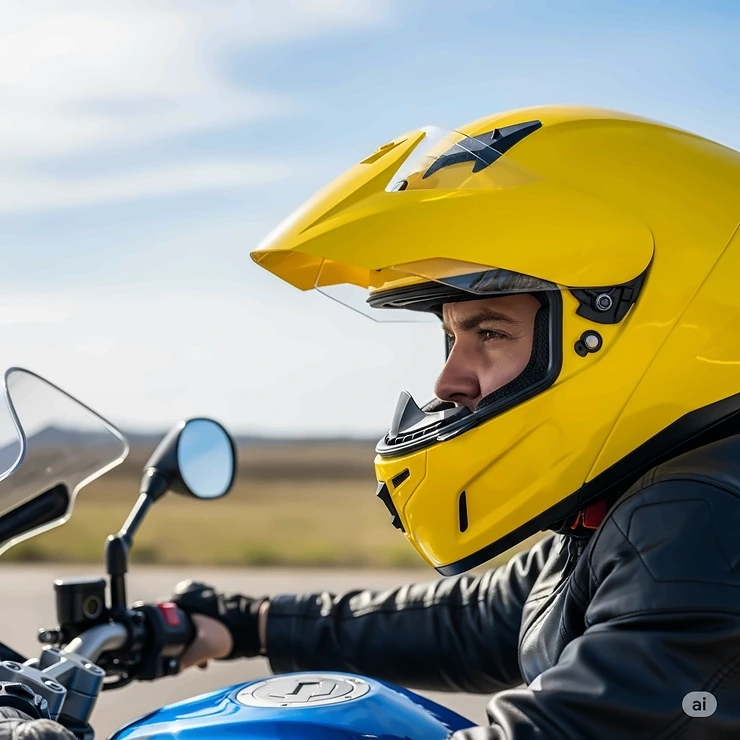
A yellow motorcycle helmet is a DOT-certified helmet finished in bright yellow or fluorescent hi-viz paint, built to make a rider easier for drivers to spot in daylight and overcast light. The color doesn’t change how the shell absorbs an impact. It changes how quickly someone behind a windshield notices you.
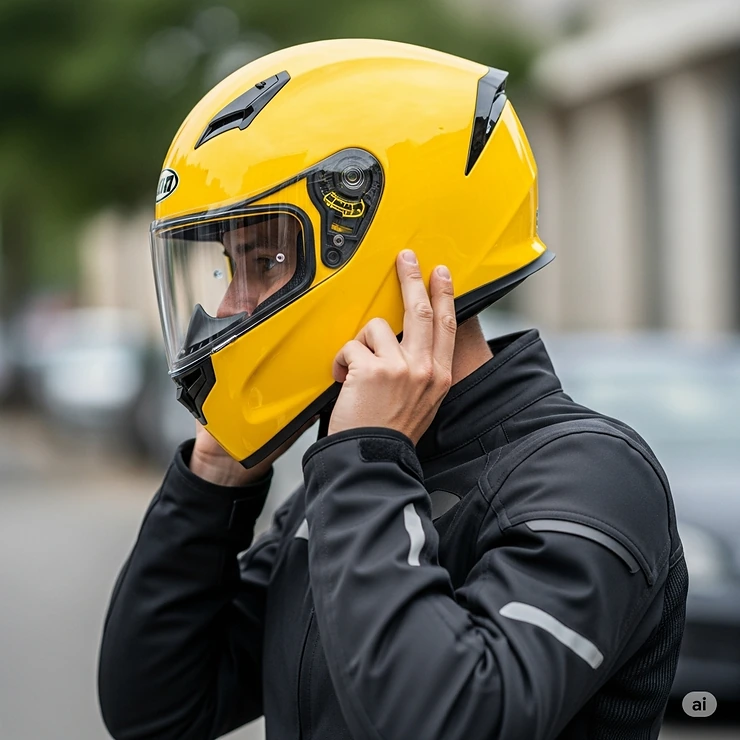
That matters more than most riders admit. Plenty of multi-vehicle crashes come down to a driver who simply never saw the bike. A New Zealand case-control study published in the BMJ found that riders in white helmets had a 24% lower risk of crash-related injury than riders in black ones, and light-colored helmets overall tracked with roughly 19% lower risk. Yellow wasn’t the headline color in that research, but the lesson travels well: bright and light beats dark, and a hi-viz yellow motorcycle helmet is about as bright as paint gets.
So here’s the plan. Below are seven real yellow motorcycle helmets, from budget picks to premium lids. Each one gets a plain-English read on what the specs mean on the road, what reviewers keep saying, and who should actually buy it. Think of it as a highlighter for your head, except this highlighter has to survive an argument with asphalt.
One honest note up front. This guide is built on spec sheets, published reviews, rider-review averages and safety-standard documents. It is not built on a garage full of helmets I’ve personally worn. Where reviews are thin, I say so. Where a colorway is hard to find, I say that too, because hi-viz graphics rotate in and out of stock faster than a pizza at a staff meeting.
Prices are ranges seen around November 2026, so check current listings before you buy. By the end, you’ll know which high visibility motorcycle helmet fits your head, your budget and your commute.
Quick Comparison: 7 Best Yellow Motorcycle Helmet Picks at a Glance
Short on time? This table lines all seven helmets up side by side. Prices are approximate and move constantly, so treat them as a compass rather than a quote. Hi-viz yellow graphics also come and go by size, so confirm availability before you fall in love with one.
| Helmet | Style | Safety labels (U.S. versions) | Approx. weight | Price range | Best for |
|---|---|---|---|---|---|
| LS2 Rapid III | Street full-face | DOT, ECE 22.06 | ~3 lb | Under $140 | First helmet on a tight budget |
| AFX FX-17 Attack | Off-road full-face (needs goggles) | DOT, ECE (per retailers) | ~3.4 lb | $60-$120 | Trail and dual-sport riders |
| HJC i10 | Street/sport full-face | DOT, Snell M2020 | ~3.8 lb | $150-$175 | Value-minded commuters |
| Scorpion EXO-R430 Paradox | Sport full-face | DOT, Snell | ~3.6 lb | $175-$200 | Snell on a modest budget |
| AGV K3 | Street full-face, sun visor | DOT, ECE 22.06 | ~3.7 lb | $320-$370 | Daily riders who want a sun visor |
| Shoei GT-Air 3 | Sport-touring, dual visor | DOT (U.S. version) | ~3.8 lb | $700-$800 | Long-distance touring |
| Arai Signet-X | Premium street/sport | DOT (Snell-rated versions listed) | See listing | $710-$820 | Narrow, long-oval heads |
Looking at the comparison above, the LS2 Rapid III delivers the best certification-per-dollar under $140, but if you want a Snell label, the HJC i10 justifies its modest step up in price. Year-round commuters should look hard at the AGV K3, since its Pinlock insert and sun visor come in the box. The Shoei GT-Air 3 and Arai Signet-X make sense mainly if you ride enough miles to spread the cost. Meanwhile, the AFX FX-17 Attack trades highway manners for a rock-bottom price and trail-ready airflow.
A quick caution on the weight column: a few ounces separate most of these lids on paper. Over a three-hour ride, though, the gap between a roughly three-pound helmet and a roughly four-pound one is something your neck will notice.
💬 Just one click — help others make better buying decisions too!😊
Top 7 Yellow Motorcycle Helmets: Expert Analysis
Every pick below covers what the specs mean in practice, what reviewers consistently report, and an honest list of trade-offs. Nothing here comes from personal testing. It all comes from published specs, standards labels and review data.
1. LS2 Rapid III — lightest budget pick with hi-viz graphics
The headline is weight: the LS2 Rapid III sits near three pounds, light enough that your neck forgets it’s there somewhere around mile fifty.
RevZilla lists the Rapid III Crypt at 2.98 pounds, and the shell is a molded High Pressure Thermoplastic that keeps costs down. It comes in three shell sizes across XS to 3XL, so smaller heads aren’t stuffed into an oversized bucket. The 3D laser-cut cheek pads aim to reduce pressure points. The labeling is the pleasant surprise at this price: the listing states it meets or exceeds DOT FMVSS 218 and ECE 22.06.
Based on the spec comparison, this is the helmet for a rider who needs a certified, bright lid this week and may upgrade later. What the spec sheet won’t tell you is that budget thermoplastic shells usually trade refinement for price. Expect a simpler liner and more wind noise than the pricier picks below. Retailers list Black/Hi-Vis Yellow versions (sometimes under model number FF820), but sizes and colorways vary.
Reviewers on RevZilla average 4.5 out of 5 for the Rapid III Crypt, and UK verified buyers praise long-ride comfort and reasonable noise for the money. Common gripes include fit running small and fogging without an anti-fog insert. One independent review of the Rapid II also noted a chin bar that crept upward while riding.
Pros:
- ✅ Roughly three pounds, easy on the neck
- ✅ DOT plus ECE 22.06 labeling at a budget price
- ✅ Glasses-friendly interior with 3D cheek pads
Cons:
- ❌ Fit can run smaller than expected
- ❌ Wind noise and fogging need earplugs and an insert
Typically under $140, it’s tough to beat on value, provided you add earplugs and an anti-fog insert to the cart.
2. AFX FX-17 Attack — cheapest route into hi-viz off-road style
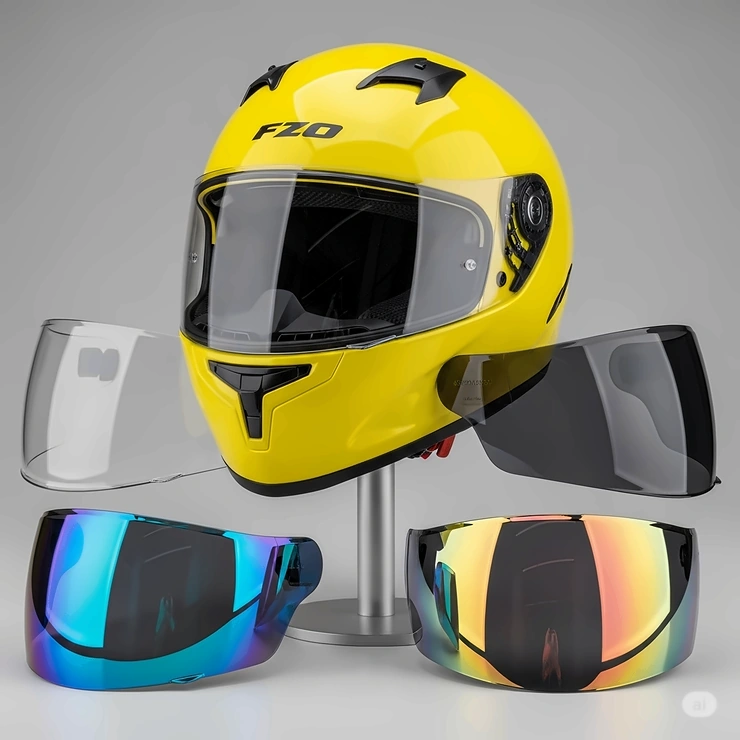
The AFX FX-17 Attack in Matte Black/Hi-Vis Yellow is basically a road-worker vest for your head, and it costs less than most dinners for two.
It uses a composite poly-alloy shell, eleven points of ventilation (chin, sides, forehead, top and rear), a double D-ring strap and an adjustable screw-on visor. A large weighs about 3.4 pounds. Eleven vents mean genuine airflow at trail speeds, where you’re hot and slow rather than cold and fast. Retailers describe it as meeting DOT and ECE standards, and sizes run XS through 4XL.
Based on the spec comparison, this is a dual-sport or trail helmet first and a commuter second. Off-road shapes leave the eyeport open for goggles, which is great for airflow and sightlines. They also tend to be louder on the highway, because the peak can catch wind at speed. Budget for goggles, since you won’t get a face shield in the box.
Review data is thin. Many retailer pages show no reviews yet, and an older FX-17 listing on RevZilla carried 4.5 out of 5 before it was discontinued. Treat it as promising rather than proven, and buy from a seller with an easy return policy.
Pros:
- ✅ Eleven vents for hot-weather airflow
- ✅ Hi-viz yellow graphic stands out on trails and roads
- ✅ Very low entry price
Cons:
- ❌ Needs goggles and gets noisy at highway speed
- ❌ Limited verified review history
Retail listings ran roughly $60-$120 at the time of research, which is excellent value for weekend trail riding and a poor fit for daily highway commuting.
3. HJC i10 — Snell-rated value in Semi-Flat Hi-Viz Yellow
The HJC i10 brings Snell M2020 and DOT certification to a price tier where plenty of rivals stop at DOT alone.
The polycarbonate composite shell weighs about 3.8 pounds. You also get three closable intake vents, a Pinlock-ready quick-change visor, speaker pockets, glasses grooves and a moisture-wicking liner. Snell is a voluntary test that’s tougher than the mandatory DOT standard, so seeing it on a helmet in the $150-$175 range is genuinely unusual. The hi-viz yellow version shows up as the Robust graphic in Semi-Flat Hi-Viz Yellow.
Based on the spec comparison, the HJC i10 suits riders who split time between weekday commuting and weekend canyon runs. Rider magazine noted that its extra weight over some rivals can be felt by the end of a full day. Pinlock inclusion is reported inconsistently across reviews, so check the box contents before assuming an insert is there.
Reviewers at Rider, Ultimate Motorcycling and webBikeWorld describe a high-value basic helmet with a plush, relatively quiet interior and strong ventilation. Their recurring complaints are a chin strap that isn’t padded along its full length, a shell finish that marks easily and extras that cost more.
Pros:
- ✅ Snell M2020 plus DOT at a mid-budget price
- ✅ Strong ventilation and plush interior
- ✅ Comms-ready speaker pockets and glasses grooves
Cons:
- ❌ Chin strap padding stops short of the neck
- ❌ Semi-flat finish scuffs and marks easily
Around $150-$175 for most graphics, it’s arguably the best sub-$200 balance of certification and comfort in this roundup.
4. Scorpion EXO-R430 Paradox — Snell certification with a sharper sport shape
The Scorpion EXO-R430 Paradox pairs a Snell-certified sport shape with a Black/Hi-Viz Yellow graphic that photographs about as loudly as it looks.
The polycarbonate shell weighs about 3.62 pounds and uses an intermediate-oval shape. The Elliptec face shield has a central locking mechanism designed to press the visor against the gasket for a tighter seal. The KwikWick C liner is removable, washable and quick-drying, which matters on sweaty summer commutes. Retailers also describe audio-system compatibility.
Based on the spec comparison, this is the sportier cousin of the HJC i10. Intermediate oval fits many heads but can pinch rounder ones, so confirm the return policy before you commit. A central-lock shield is the sort of detail that quiets whistling and keeps rain out, though real-world results vary by head shape.
RevZilla riders average 4.5 out of 5 across a couple dozen reviews at the time of research, and shopping-summary sites highlight protection, ventilation and a comfortable fit. One practical wrinkle: several hi-viz sizes showed as out of stock at some retailers.
Pros:
- ✅ Snell plus DOT certification
- ✅ Washable, quick-drying liner
- ✅ Central-lock shield for a tighter seal
Cons:
- ❌ Intermediate-oval shape may pinch rounder heads
- ❌ Hi-viz sizes sell out at some retailers
Expect roughly $175-$200, a fair price for Snell with a more aggressive look.
5. AGV K3 — sun visor and Pinlock insert included
The AGV K3 gives you two things mid-range helmets usually charge extra for: a cable-operated drop-down sun visor and a Pinlock Max Vision insert in the box.
The HIR-TH thermoplastic shell weighs about 3.72 pounds in an intermediate-oval shape, with a steel micrometric retention system. It carries DOT and ECE 22.06 labels, offers a 190° horizontal field of view and has a sun visor that removes without tools. That wide aperture helps you catch cars creeping into your lane. The built-in shade also means fewer sunglasses wrestling matches at red lights.
Based on the spec comparison, this is the daily-commuter sweet spot. Independent reviewers flag limited shell sizes, so head shape matters. Noise is the other recurring theme. The yellow version is typically the K3 Shade graphic in Grey/Hi-Viz Yellow, so verify availability by size.
RevZilla riders average 4.5 out of 5 across more than a hundred reviews. UK verified buyers praise value and an eyewear-friendly fit. A minority report wind noise, and one returned theirs over awkward visor unlocking and fogging.
Pros:
- ✅ Sun visor plus Pinlock insert included
- ✅ Wide 190° field of view
- ✅ DOT and ECE 22.06 certification
Cons:
- ❌ Wind noise at highway speeds
- ❌ Limited shell sizes can compromise fit
At roughly $320-$370 depending on graphic, the included extras make it a strong value among premium-leaning options.
6. Shoei GT-Air 3 — quiet sport-touring comfort for long hauls
The Shoei GT-Air 3 is the helmet you buy when your commute has a long highway stretch and your ears have opinions.
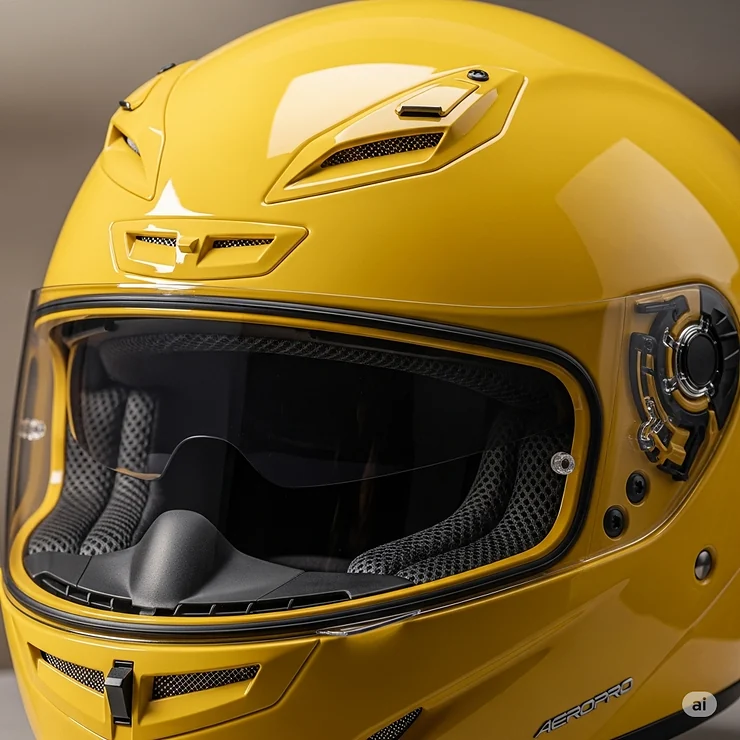
The fiberglass-composite shell weighs about 3.78 pounds, and RevZilla lists hi-viz yellow versions including Hike (Khaki/White/Hi-Viz Yellow) and Scenario (Black/Hi-Viz Yellow, listed as a closeout). You also get a dual visor with a drop-down sunshade, a Pinlock EVO insert in the box and recesses for comms speakers. One nuance from Rider magazine: the U.S. version carries DOT certification only, while other markets get ECE 22.06.
Based on the spec comparison, the premium here buys refinement, not extra protection labels. American Rider called it one of the quietest helmets it has tested. On a highway commute, less noise usually means less fatigue, which is a safety feature in its own right. Colorway availability is the catch, since closeouts can vanish quickly.
RevZilla riders average 4.5 out of 5 across more than eighty reviews, and Rider calls it exceptional for both daily commuting and touring.
Pros:
- ✅ Exceptionally quiet for highway riding
- ✅ Dual visor with Pinlock EVO included
- ✅ Comms-ready recesses for speakers
Cons:
- ❌ Premium price tag
- ❌ U.S. version is DOT-only, with no Snell or ECE label
Roughly $700-$800 at the time of research, it’s best for riders who log serious miles.
7. Arai Signet-X — handcrafted fit for long-oval heads, in fluorescent yellow
The Arai Signet-X treats Fluorescent Yellow as a core color, not a one-off graphic.
Its long-oval shape is designed for narrow heads with a more pronounced forehead, and reviewers note multiple shell sizes so smaller heads get a smaller shell. The maker’s own parts page lists Fluorescent Yellow at a list price around the low-$700s. It also warns that fluorescent and bright finishes fade with sun exposure and aren’t covered by warranty. The helmet is DOT-certified, and retailers list Snell-rated versions, so confirm the sticker on the exact helmet you buy.
Based on the spec comparison, fit is the product. If your head is long-oval, the Arai Signet-X can feel custom-made. If your head is round, it may feel like a vise with excellent manners. webBikeWorld rated the fit and liner as outstanding, and described the helmet as nearly identical to the Quantum-X apart from internal shape.
RevZilla riders average 4.5 out of 5 across more than 350 reviews on the Hi-Viz version.
Pros:
- ✅ Exceptional fit and liner comfort on long-oval heads
- ✅ Hand-built premium construction
- ✅ Fluorescent yellow is a standard color option
Cons:
- ❌ Top-of-the-market price
- ❌ Fluorescent finish fades in sunlight, warranty excluded
Expect roughly $710-$820. It pays off only if the shape matches your head.
Your First 30 Days: Fit, Setup and Fade-Proofing a Yellow Motorcycle Helmet
A new yellow motorcycle helmet isn’t finished when the box opens. The first month decides whether it stays comfortable, clear and bright.
Days 1-3: Fit and setup
Wrap a soft measuring tape just above your eyebrows and ears, use the largest reading, and match it to the maker’s chart. A good fit feels snug enough that your cheeks move when your head does. Wear it indoors for twenty minutes: pressure points that show up now won’t improve at 65 mph. If you bought a Pinlock-ready visor, such as on the LS2 Rapid III or HJC i10, install the insert before the first ride, because the AGV K3 and Shoei GT-Air 3 include one while others don’t.
Weeks 1-2: Break-in
New padding compresses slightly, so a helmet that feels very tight on day one may settle. Watch for a chin bar that rides up on the LS2 Rapid III, which is a fit signal rather than a quirk to tolerate. Add earplugs now, particularly with the AFX FX-17 Attack and AGV K3, where wind noise gets mentioned.
Weeks 3-4: Care and storage
Wipe the shell with mild soap and water, and wash removable liners by hand. Harsh solvents can damage finishes, so skip them. Then store it properly, because UV does the most damage to hi-viz paint: webBikeWorld’s guide to heat and UV notes that constant sunlight gradually degrades helmet materials and recommends shade or the bag it came in. Never leave a Scorpion EXO-R430 Paradox on a hot seat or mirror all afternoon.

Real-World Scenarios: Matching a Yellow Motorcycle Helmet to How You Ride
Specs are abstract. Here’s how three typical riders might shortlist a yellow motorcycle helmet.
Scenario A: The college commuter
You ride eight miles each way on a small bike in city traffic, with a budget around $150. Visibility is your main safety asset, so a bright shell fits the job. The HJC i10 brings Snell and DOT labels in budget territory, while the LS2 Rapid III saves money for gloves and earplugs. Add retroreflective stickers, since yellow paint does little after dark.
Scenario B: The weekend dual-sport rider
You hit dirt roads on weekends, ride maybe twice a month and want to spend about $100. The AFX FX-17 Attack suits the environment: airflow for slow, sweaty trails and a hi-viz graphic that helps friends spot you in the trees. Budget for goggles, and don’t make it your daily highway helmet.
Scenario C: The highway tourer
You log 200-plus miles a week with a budget up to $800. Noise fatigue becomes the enemy, so the Shoei GT-Air 3 earns its premium. If your head is narrow and long-oval, try the Arai Signet-X before settling. If $700 feels steep, the AGV K3 covers sun visor and Pinlock basics for far less.
✨ Don’t Miss These Top-Rated Picks!
🔍 Take your riding visibility to the next level with these carefully selected helmets. Click on any highlighted item to check current pricing and availability. These picks will help you stand out in traffic and ride with more confidence!
Problem → Solution: Fogging, Wind Noise, Glare and Night Invisibility
Even the best yellow motorcycle helmet has weak spots. Here are the five most common problems and how to fix them.
Problem 1: Fogging
Solution: Use a Pinlock insert. The AGV K3 and Shoei GT-Air 3 include one, and the LS2 Rapid III and HJC i10 are Pinlock-ready if you add your own.
Problem 2: Wind noise
Solution: Wear earplugs, adjust the neck roll and consider a quieter helmet. The Shoei GT-Air 3 has the best reputation here. The AGV K3 and AFX FX-17 Attack attract noise complaints.
Problem 3: Low-sun glare
Solution: Choose a built-in sun visor, as on the AGV K3 or Shoei GT-Air 3, instead of fumbling with sunglasses.
Problem 4: Fading paint
Solution: Store in shade or a helmet bag. Fluorescent finishes, including on the Arai Signet-X, fade over time regardless, so plan for it.
Problem 5: Invisible at night
Solution: Yellow shells rely on ambient light, so add retroreflective decals, a reflective vest and a working headlight.
Yellow vs White vs Black: Which Helmet Color Is Most Visible?
The honest answer: bright and light beats dark, but the evidence doesn’t crown one winner. The BMJ study linked white helmets with lower injury risk than black ones, and fluorescent or reflective clothing with a 37% lower risk. I’m not aware of a large crash study that ranks yellow directly against white, so treat claims that yellow wins as reasoning, not proof.
The reasoning is decent, though. Human vision is most sensitive near yellow-green wavelengths, and fluorescent pigments convert ultraviolet light into extra visible brightness. Contrast with the background matters too, so a yellow shell pops against gray asphalt and green foliage.
| Color | Daytime visibility | Overcast/dusk | Heat | Best for |
|---|---|---|---|---|
| Hi-viz yellow | Excellent | Strong, but no glow at night | Moderate | Urban commuters |
| White | Excellent, best studied | Good | Coolest | Hot climates |
| Black | Weakest | Weak | Hottest | Style only |
| Dark gray/blue | Poor | Poor | Hot | Style only |
Looking at the comparison above, hi-viz yellow and white are the two safest bets for daytime riding. Yellow likely has the edge in dim or overcast light. White wins on heat and is the best-researched color. Whichever you pick, add reflective elements for night.
How to Choose a Yellow Motorcycle Helmet: 7 Steps
- Start with fit. Measure your head and check shape, since a premium helmet that doesn’t match your head won’t protect properly.
- Confirm the DOT label. NHTSA’s guide to spotting unsafe helmets says compliant helmets carry a sticker on the outside back, and warns that stickers sold separately are invalid.
- Match the style to your riding. Street full-face for commuting, off-road shape for trails.
- Choose a finish. Fluorescent hi-viz maximizes pop, but it fades faster than a mustard-style yellow.
- Check visor tech. A Pinlock-ready or Pinlock-included visor helps in cool, damp weather.
- Weigh noise and ventilation. Reviews matter more than vent counts.
- Budget for replacement. Plan on three to five years of use.
Safety Standards Guide: DOT, ECE 22.06 and Snell in Plain English
DOT (mandatory in the U.S.)
DOT refers to FMVSS 218, and manufacturers self-certify to it. NHTSA research from 2004 estimated that wearing a compliant helmet cuts the risk of dying in a crash by about 37 percent. NHTSA doesn’t approve helmets itself, but it runs compliance testing.
ECE 22.06 (Europe and beyond)
ECE 22.06 adds rotational impact testing, which addresses twisting forces linked to brain injuries. A helmet with ECE but not DOT labeling isn’t legal for U.S. road use.
Snell (voluntary)
Ultimate Motorcycling’s standards overview notes that Snell certification is voluntary and its standards are more rigorous than DOT’s. Snell’s M2025 criteria have replaced M2020.
In practice, the HJC i10 and Scorpion EXO-R430 Paradox carry Snell, while the LS2 Rapid III and AGV K3 carry ECE 22.06 alongside DOT. The best-labeled helmet is still the one that fits your head.
Features That Actually Matter (And Those That Don’t)
What matters:
- Fit and shape. Everything else depends on it.
- Visor optics and anti-fog. Fogging is a safety problem, not an annoyance.
- Weight. Compare pounds, not marketing adjectives.
- Noise. Fatigue builds quietly.
- Retention strap. Look for solid hardware, like the double D-ring on the AFX FX-17 Attack.
What doesn’t (as much):
- Vent count. Eleven vents on the AFX FX-17 Attack doesn’t beat well-placed vents elsewhere.
- Graphics names. Paint names are marketing.
- Built-in Bluetooth. Speaker pockets, like those in the HJC i10, are enough.
- Color alone. A bright shell can’t compensate for bad fit.
The simple rule: pay for fit, visor quality and noise control. Skip fluff.
Common Mistakes When Buying a Yellow Motorcycle Helmet
- Buying color first. The prettiest hi-viz helmet is useless if it presses your forehead.
- Trusting a loose DOT sticker. NHTSA warns that some novelty sellers supply stickers separately.
- Assuming yellow glows at night. It doesn’t, so add reflective gear.
- Pairing a dark tint with a bright shell. You’ll see less, defeating the point.
- Ignoring fade. A faded fluorescent finish loses some pop.
- Buying used. You can’t verify a past crash, and padding compresses over time.
Yellow Motorcycle Helmet for Beginners, Commuters and Glasses Wearers
Beginners
Start with the LS2 Rapid III or HJC i10. Both are easy to find, relatively simple and affordable.
Daily commuters
The AGV K3 is the practical choice, with a sun visor and Pinlock in the box. Highway commuters who can stretch the budget should consider the Shoei GT-Air 3.
Riders who wear glasses
Look for glasses-friendly features. The HJC i10 has glasses grooves, the LS2 Rapid III is eyewear-compatible and the AGV K3 uses soft eyewear-fit cheek pads.
Dual-sport riders
The AFX FX-17 Attack works for trails, with goggles.
Narrow-headed riders
Try the Arai Signet-X if your head is long-oval.
Long-Term Cost & Maintenance: What a Yellow Helmet Really Costs
Most helmets last three to five years before padding and structure wear out. Dividing the price across five years gives a rough yearly cost.
| Tier | Helmets | Price range | Approx. cost per year (5 years) | Verdict |
|---|---|---|---|---|
| Budget | LS2 Rapid III, AFX FX-17 Attack | $60-$140 | $12-$28 | Best value, fewer extras |
| Mid | HJC i10, Scorpion EXO-R430 Paradox | $150-$200 | $30-$40 | Snell without the premium |
| Upper-mid | AGV K3 | $320-$370 | $64-$74 | Extras included |
| Premium | Shoei GT-Air 3, Arai Signet-X | $700-$820 | $140-$164 | Fit and refinement |
Looking at the table, the jump from mid-tier to premium costs roughly $100-$125 more per year. That’s worth it for high-mileage riders and wasteful for occasional ones. Maintenance costs are small: mild soap, a few dollars of anti-fog inserts and replacement visors. The hidden cost is fade, since a washed-out fluorescent shell loses some of the visibility you paid for.
FAQ
❓ How much should I spend on a yellow motorcycle helmet?
❓ Can I paint my helmet yellow?
❓ Are hi-viz yellow motorcycle helmets legal in every state?
❓ Is a yellow full face motorcycle helmet hotter than a white one?
❓ What size yellow motorcycle helmet should I order online?
Conclusion
A yellow motorcycle helmet won’t make you invincible, but it makes you harder to miss, and that’s a cheap edge in traffic. The BMJ research favors light and bright helmets, and hi-viz yellow fits that logic well.
For the tightest budget, the LS2 Rapid III offers DOT and ECE 22.06 labeling under about $140, while the AFX FX-17 Attack suits trail riders who own goggles. The HJC i10 and Scorpion EXO-R430 Paradox bring Snell into the $150-$200 range. The AGV K3 is the practical commuter pick, with Pinlock and a sun visor included. If you rack up highway miles, the Shoei GT-Air 3 buys quiet comfort, and the Arai Signet-X rewards narrow, long-oval heads with a standout fit.
Whichever you choose, remember the basics: confirm the DOT label, prioritize fit, add reflective gear for night and store the helmet out of direct sun to protect that bright finish.
Recommended for You
- Orange Motorcycle Helmet: 7 Best Hi-Viz Picks for 2026
- Blue Motorcycle Helmets: 7 Best Picks for 2026
- Green Motorcycle Helmet: 7 Best Picks for 2026
Disclaimer: This article contains affiliate links. As an Amazon Associate, I earn from qualifying purchases. If you purchase products through these links, we may earn a small commission at no additional cost to you.
✨ Found this helpful? Share it with your friends! 💬🤗
