
In This Article
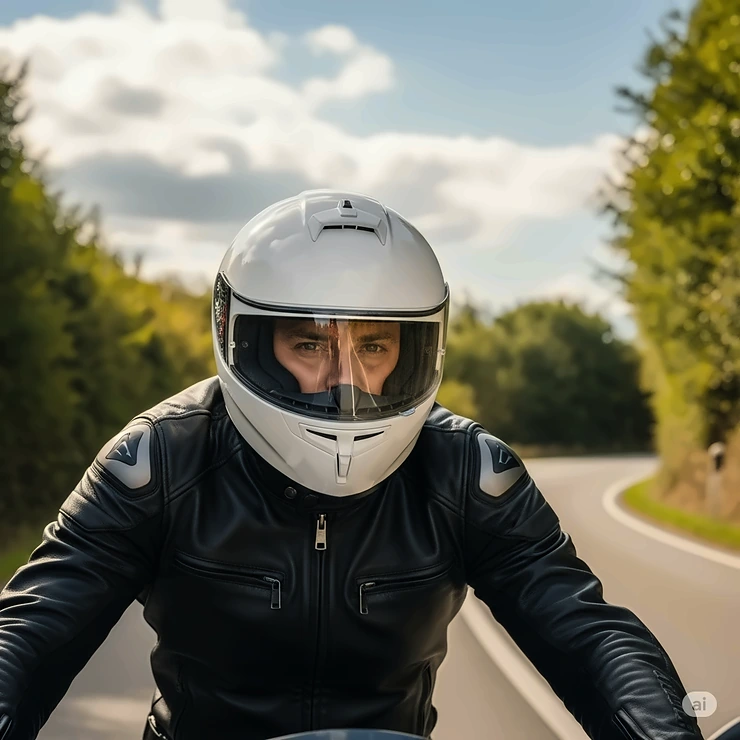
Picture a gray Tuesday morning, a four-way stop, and a driver squinting through a smeared windshield. You’re the thing they’re supposed to notice. A white motorcycle helmet is one of the cheapest ways to improve those odds, and it happens to look sharp too.
The evidence is better than most gear folklore. A well-known New Zealand case-control study in the BMJ found that riders in white helmets had a 24% lower risk of crash-related injury than riders in black helmets. Riders who self-reported any light-colored helmet saw a 19% lower risk than those in dark ones. It’s one study, it’s observational, and it isn’t a force field. But it’s a rare case where the stylish option and the smart option point the same way.
This guide covers the part the listings skip: what each spec means once you’re doing 65 on an on-ramp. We compare seven real helmets across budget, mid-range, and premium tiers. We also cover how white shells age, how safety standards differ, and which mistakes cost buyers the most money. Everything here comes from published specs and aggregated review sentiment. I haven’t worn any of these helmets, and nothing below pretends otherwise.
One note on prices. They move constantly, so you’ll see ranges, not exact figures. Check current pricing before you buy.
Quick Comparison: White Motorcycle Helmets at a Glance
| Helmet | Type | Certification | Approx. Weight | Price Range | Best For |
|---|---|---|---|---|---|
| Bell Qualifier DLX MIPS | Full face | DOT, MIPS liner | ~3.6 lb | $200-$300 | Bell Qualifier DLX MIPS: safety-per-dollar commuters |
| Shoei RF-1400 | Full face | Snell M2025D + DOT | ~3.6 lb | $650-$700 | Shoei RF-1400: long-term premium buyers |
| HJC i10 | Full face | Snell + DOT | ~3.7 lb | Under $250 | HJC i10: budget riders wanting Snell |
| Scorpion EXO-R430 | Full face | Snell + DOT | ~3.6 lb | Under $300 | Scorpion EXO-R430: sport-leaning beginners |
| ILM-313 | Full face | DOT | ~3 lb | Under $150 | ILM-313: first-time riders |
| AGV K3 | Full face | ECE 22.06 | ~3.3 lb | $250-$350 | AGV K3: all-around road riding |
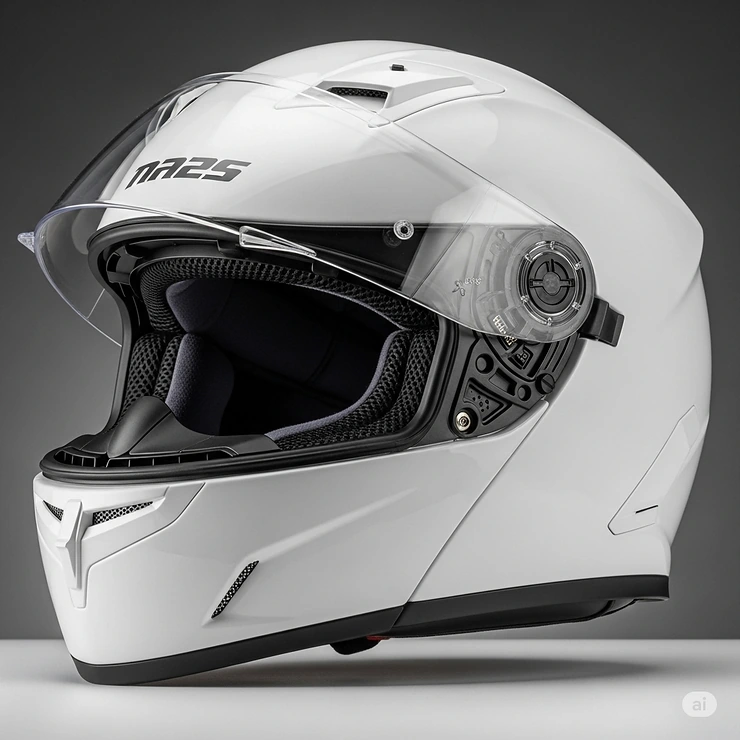
| HJC i100 | Modular | DOT, P/J dual | ~4.0-4.2 lb | Low-to-mid $300s | HJC i100: glasses wearers, touring |
Looking at the table, the ILM-313 and HJC i10 undercut everything on price, while the Shoei RF-1400 costs several times more. The extra money buys fit refinement, lower noise, and warranty length, not a different category of protection. Weight is tighter than you’d think. Five of the seven land between 3.0 and 3.7 pounds, so the HJC i100‘s extra weight is the price of its flip-up chin bar. If certification matters most, note that the Bell Qualifier DLX MIPS is the only pick here with a rotational-impact liner. Always confirm the DOT label on the exact version you buy.
💬 Just one click — help others make better buying decisions too!😊
What Is a White Motorcycle Helmet?
A white motorcycle helmet is a certified protective helmet whose shell finish is predominantly white, chosen mainly for daytime visibility and a clean look. It uses the same impact-absorbing construction as any other color. Only the paint and graphics differ. White helmets come in full face, modular, and open face styles, and they work on commuters, sport bikes, cruisers, and tourers alike.
That last point matters. Color doesn’t change the energy-absorbing liner, retention system, or shell strength. A white motorcycle helmet earns its place through where it sits in traffic and how it reads to other drivers. It does not earn it through extra impact performance. The terms white motorcycle helmets and “white lids” get used interchangeably online, but the safety logic is identical for any certified model.
The rest of this article helps you pick one that fits your head, meets the right standard, and suits how you ride.
Top 7 White Motorcycle Helmets: Expert Analysis
1. Bell Qualifier DLX MIPS — rotational protection at a mid-range price
The headline feature is the MIPS liner, a slip-plane layer meant to manage rotational forces. That’s uncommon in this price tier. The shell is polycarbonate and the helmet weighs roughly 3.6 pounds, so it’s no featherweight but won’t punish your neck on a daily commute. It also ships with a photochromic ProTint shield that darkens in bright light.
On paper, you’re getting a safety feature and a daily-use convenience that many competitors skip or sell separately. White-dominant graphics exist in the lineup, such as white/blue and red/white schemes. One review noted a Cardo communicator fitting without drama, though the manufacturer’s own Q&A says there’s no integrated comms port. Based on the spec comparison, this suits the rider who wants the best safety story per dollar and mostly rides city and highway.
Aggregated review sentiment is positive. A major retailer lists roughly 4.5 stars across 443 reviews for all colorways. The most common complaint is noise louder than owners expected. One reviewer also notes the strong ventilation feels cold in low temperatures.
Pros:
- ✅ MIPS rotational liner at a mid-range price
- ✅ Photochromic shield included in the box
- ✅ Removable, washable interior liner
Cons:
- ❌ Louder than many reviewers expect
- ❌ Aggressive venting runs cold in winter
Price: around $200-$300; strong value if safety features lead your checklist.
2. Shoei RF-1400 — the premium benchmark for long-haul comfort
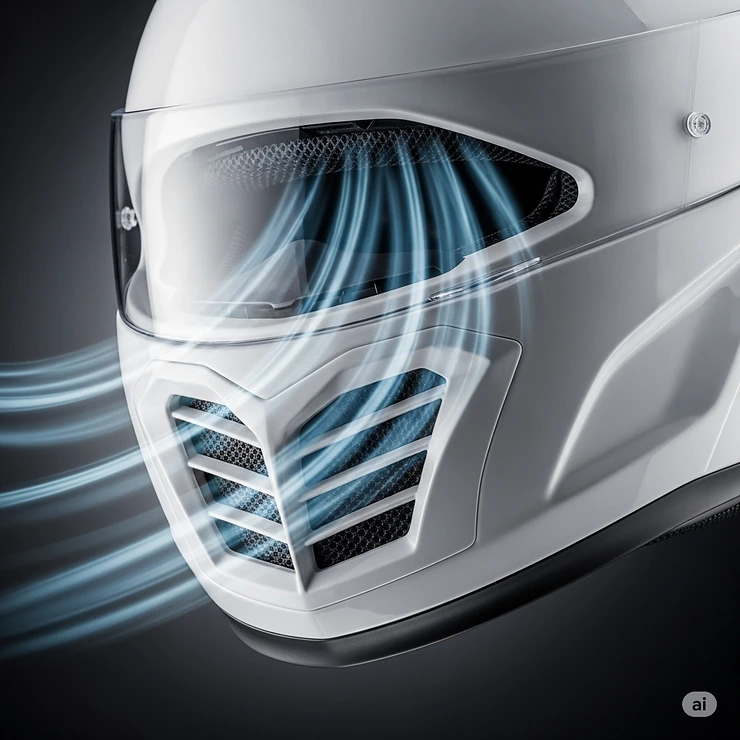
The Shoei RF-1400 is positioned as the evolution of a legendary line, and it keeps showing up as the benchmark for premium full face lids. Its multi-ply fiberglass-composite shell holds weight near 3.6 pounds, certified to Snell M2025D and DOT. The CWR-F2 shield comes with a Pinlock EVO insert, breath guard, and chin curtain, plus a five-year warranty.
What does that mean in practice? A lighter shell lowers neck fatigue on day-long rides, and the included Pinlock means fogged visors become a non-issue on cold mornings. A comparison review notes the premium buys quieter aerodynamics, tighter fit precision, and higher-end materials versus the budget rivals. Based on the spec sheet, this helmet pays off for high-mileage riders and tourers. Occasional weekend riders may not use enough of what they’re paying for.
Reviewers consistently rate it well. One major retailer shows about 4.5 stars across roughly 800 reviews for all models. A comparison review adds that fitting Bluetooth speakers may mean trimming the thick cheek pads.
Pros:
- ✅ Lighter composite shell reduces neck fatigue
- ✅ Pinlock EVO insert included
- ✅ Five-year warranty adds peace of mind
Cons:
- ❌ Costs several times more than budget options
- ❌ Bluetooth install may need pad trimming
Price: around $650-$700 new; worth it only if you ride often enough to use the refinement.
3. HJC i10 — the cheapest way into Snell certification
The standout is Snell certification at a bargain price. The HJC i10 is described as one of the cheapest Snell-rated helmets, costing roughly a quarter of the Shoei RF-1400. It weighs about 3.7 pounds and uses an Advanced Channeling Ventilation System. It’s also designed to accept Smart HJC Bluetooth units, with speaker pockets for other brands.
Weight and noise are the trade-offs. At highway speeds it’s louder than premium rivals. The Pinlock insert is sold separately, and there’s no drop-down sun visor. If you plan to buy a tinted visor or sunglasses anyway, that last gap matters less. Based on this spec picture, the helmet suits budget-minded commuters who want recognized third-party certification and good airflow.
Owner sentiment, as summarized by one comparison review, calls it a strong value pick with excellent airflow. The recurring knocks are extra weight and highway noise. I couldn’t verify a large pool of white-colorway reviews, so confirm the white option and your size before ordering.
Pros:
- ✅ Snell-rated at an entry-level price
- ✅ Excellent airflow in warm weather
- ✅ Bluetooth-ready speaker pockets
Cons:
- ❌ Noisy at sustained highway speeds
- ❌ No drop-down sun visor; Pinlock extra
Price: under $250; arguably the best certification-per-dollar deal in this list.
4. Scorpion EXO-R430 — a refined shape for sport-leaning beginners
This is the successor to the fan-favorite R420, and the standout is a smaller, refined overall shape. It’s an entry-level Snell-certified helmet with a polycarbonate shell, a snug-fitting shield gasket, and a weight around 3.6 pounds. A retailer classifies the shape as intermediate oval, meaning it’s tuned for the most common head type.
The shape detail matters because fit drives both comfort and protection. A helmet that’s too loose won’t protect properly. The older R420 earned praise as a top affordable contender, though its hands-on reviewer called the vertical field of view merely average. Treat that as a predecessor note, not a verdict on the R430. Based on the specs, this suits riders who lean sporty but aren’t ready to spend premium money.
Review data is thin. A major retailer shows 4.5 stars across just 27 reviews, so I wouldn’t treat that as a reliable consensus. A white colorway is listed in stock at the time of research.
Pros:
- ✅ Snell-certified at an accessible price
- ✅ Intermediate-oval shape fits many heads
- ✅ Sporty look with clean white styling
Cons:
- ❌ Small review pool to lean on
- ❌ Predecessor’s vertical view called average
Price: under $300; good value, but verify fit carefully.
5. ILM-313 — the budget workhorse with the biggest owner base
The pitch here is volume and value. The ILM-313 is a DOT-certified full face with an ABS shell, around 3 pounds, and a box that includes clear and tinted visors plus a neck scarf. The quick-release buckle is convenient, and the liner is removable.
Included extras mean you don’t need to buy a second visor right away. ABS is the entry-level shell material, so expect less refinement and noise control than composite models. One review roundup notes the ventilation trade-off, with three top intakes feeding a single rear exhaust. That’s fine around 35 mph, but it’s not a high-airflow design. Based on the specs, it suits first-time riders who need a legal, certified helmet without a big outlay.
Roundups cite roughly 9,600 reviews averaging 4.5 stars. Treat that as aggregated sentiment from third-party summaries, not a guarantee.
Pros:
- ✅ DOT certified at a very low price
- ✅ Two visors and neck scarf included
- ✅ Light at around three pounds
Cons:
- ❌ Limited ventilation with one rear exhaust
- ❌ ABS shell feels less refined
Price: under $150; the cheapest reasonable entry in this list.
6. AGV K3 — Italian racing heritage in an everyday road helmet
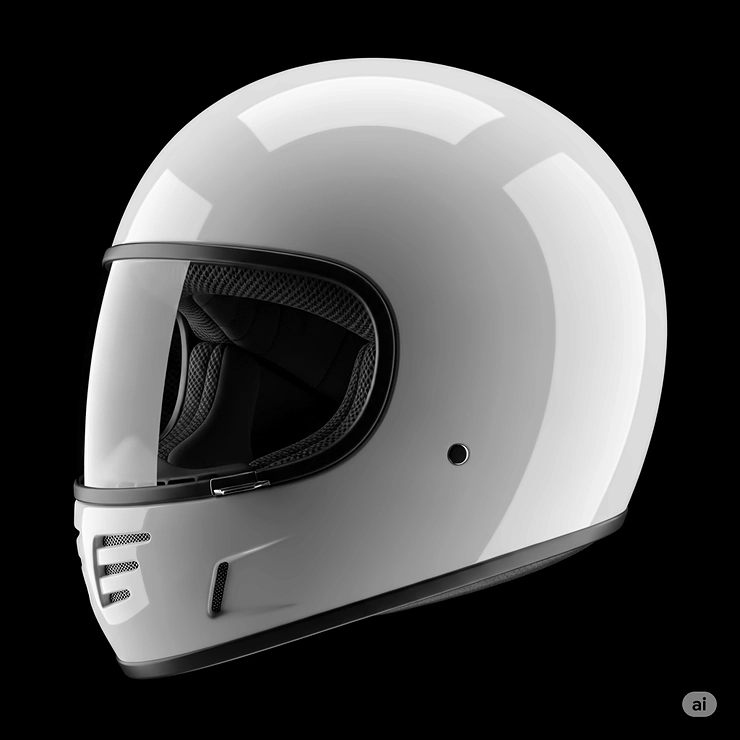
The standout is the AGV heritage in a road-friendly package. The AGV K3 uses a thermoplastic shell with multi-density EPS and weighs roughly 1,500 grams, or about 3.3 pounds. It carries ECE 22.06 approval, which tests at 18 impact points instead of the previous 6. Variants include a Pinlock and an internal sun visor, and a white “Seta White” colorway exists.
Here’s the catch. ECE 22.06 isn’t the same as US DOT certification. If you’re buying in the United States, confirm the helmet carries the DOT label on the exact version you’re purchasing. Based on the spec comparison, the AGV K3 suits all-around road riders who want light weight, a Pinlock, and an included wind deflector.
I couldn’t verify a large US review pool. Small retailer samples are favorable, with one white-colorway reviewer noting the strap felt quite tight. Treat that as an anecdote, not a trend.
Pros:
- ✅ Light at roughly 1,500 grams
- ✅ Pinlock anti-fog insert included
- ✅ Integrated sun visor on some versions
Cons:
- ❌ ECE-only versions may lack US DOT labeling
- ❌ Limited verifiable review data in the US
Price: around $250-$350, varying by version and region.
7. HJC i100 — the modular pick for glasses wearers and tourers
The flip-up chin bar is the main attraction. The HJC i100 has a fully rotating chin bar that works in open or full-face mode, an integrated sun visor, and a polycarbonate composite shell. It weighs roughly 4.0 to 4.2 pounds depending on size, which one reviewer called light for a modular. It’s also set up for Smart HJC 10B and 20B Bluetooth units.
Modulars solve everyday annoyances. You can talk to a toll-booth attendant, grab a drink, or slide on glasses without removing your whole helmet. One review notes the faceshield locks open but takes two hands or two movements to close fully. The same reviewer admits the finish isn’t at a premium level, but praises value. White is among the colors offered. Based on the specs, this suits riders who value convenience over raw weight.
A major retailer lists about 4.5 stars across 29 reviews, a small pool, so lean on the specs more than the stars.
Pros:
- ✅ Full-rotation chin bar for open or closed use
- ✅ Integrated drop-down sun visor
- ✅ Bluetooth-ready for Smart HJC units
Cons:
- ❌ Heavier than full face competitors
- ❌ Faceshield closing takes two movements
Price: low-to-mid $300s; fair value for the convenience.
How to Choose a White Motorcycle Helmet
Here are seven steps that cut through the marketing noise.
- Start with certification. Look for the DOT label first. Snell and ECE 22.06 are bonus layers, not substitutes for DOT in the US. NHTSA explains that manufacturers self-certify and the agency tests samples afterward.
- Measure your head. Use a soft tape just above your eyebrows and ears, then compare against the maker’s size chart. A helmet that is too big or too tight won’t protect properly.
- Match the shape. Most heads are intermediate oval, but check each brand’s shape notes and try before you buy if possible.
- Pick the style. Full face offers the most coverage. Modular adds convenience at the cost of weight.
- Weigh the extras. Pinlock inserts, sun visors, and Bluetooth readiness can add real value or just extra cost.
- Check noise and ventilation. Reviewers repeatedly flag noise on budget models and cold drafts on heavily vented ones.
- Set a total budget. Include the visor, Pinlock, and comms system, not just the helmet itself.
Use this list as a filter, not a ranking. The best white motorcycle helmet is the one that fits your skull and your riding pattern.
Does a White Motorcycle Helmet Really Make You Safer?
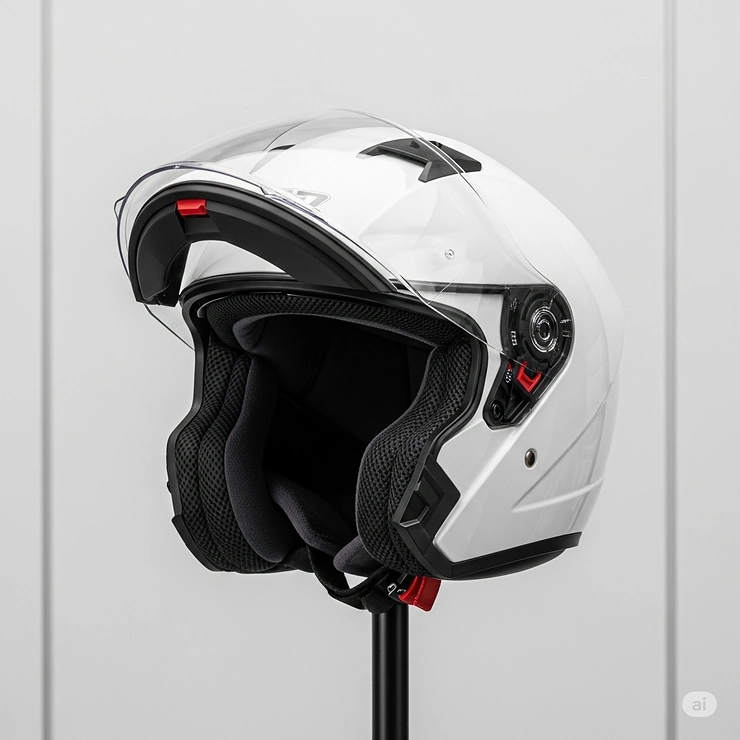
Partly, and the honest answer is more interesting than yes or no. The BMJ study compared 463 injured or killed motorcyclists with 1,233 riders from roadside surveys. A white helmet carried a 24% lower risk than black (odds ratio 0.76), and any light-colored helmet carried a 19% lower risk than dark. Reflective or fluorescent clothing showed a 37% lower risk. Daytime headlight use showed 27%.
Look at that last number. Riding with the headlight on in daylight beat the white helmet on its own. The smart move is stacking measures: white helmet, bright jacket, headlight always on.
There are caveats. The study was conducted in Auckland in the 1990s. The crash data were prospective, but the control data were collected years later. It also found no link between frontal clothing color and crash risk. And NHTSA does recommend white or bright helmets, as noted in one summary.
So a white motorcycle helmet is a cheap, evidence-backed nudge, not a guarantee. Treat it as one layer of defense alongside the helmet’s real job: absorbing impact.
White Motorcycle Helmets vs Black and Bright Colors
| Factor | White | Black | Fluorescent Yellow/Orange |
|---|---|---|---|
| Daytime visibility | Excellent | Poor | Excellent |
| Night visibility | Good; reflects light | Poor | No better than other colors |
| Heat in direct sun | Cooler | Hotter | Moderate |
| Shows dirt and scuffs | Yes | Rarely | Moderately |
| Best For | All-round visibility | Stealth style | Daytime commuting |
White holds up across conditions. Fluorescent pigments need UV light to pop, so they lose their advantage after dark. Dark reds can be hard to spot in low light, according to one visibility roundup. White gets you strong daytime visibility and decent low-light reflection without the all-or-nothing trade-off. The cost is cosmetic: white shows scuffs and bug splatter faster than black. If you ride mostly in daylight, a fluorescent shade may edge ahead. If you ride around the clock, white is the safer bet.
Features That Actually Matter (And Those That Don’t)
Matter:
- Fit and shape. Nothing else comes close.
- Certification. DOT is mandatory, and extras like Snell or MIPS are sensible bonuses.
- Pinlock readiness. A fogged visor at speed is a safety issue, not a nuisance.
- Weight. Every extra ounce adds up on a long ride. The ILM-313 sits near 3 pounds while the HJC i100 runs over 4.
- Retention system. A strap you can fasten with gloves on gets used every time.
Don’t matter as much:
- Graphics. A pretty paint job doesn’t change protection, and white-on-white keeps things simple.
- Built-in Bluetooth. Many helmets, including the HJC i10 and HJC i100, are comms-ready for add-ons.
- Marketing numbers. Venting counts and wind-tunnel claims are hard to compare across brands.
If a feature sounds exciting, ask what it changes at 60 mph. If the answer is “not much,” skip the upcharge.
✨ Don’t Miss These Exclusive Deals!
🔍 Take your riding setup to the next level with these carefully selected helmets. Click on any highlighted item to check current pricing and availability. A well-fitted white motorcycle helmet is the cheapest visibility upgrade you’ll ever make!
Safety Standards Guide: DOT, ECE 22.06, Snell, and SHARP
DOT (FMVSS 218). This is the US legal baseline. It covers energy attenuation, penetration resistance, chin strap integrity, and labeling. Manufacturers certify their own helmets and NHTSA buys samples to test them. Novelty helmets often fail nearly every requirement, which is why that DOT label matters.
ECE 22.06. The newest European standard tests at 18 impact points instead of 6. Many European helmets, like the AGV K3, carry it. It isn’t a legal substitute for DOT in US states with helmet laws, so check the label.
Snell. A voluntary, separate certification. The Shoei RF-1400, HJC i10, and Scorpion EXO-R430 carry it. One industry note observes that dual DOT and Snell helmets aren’t automatically superior to DOT-only ones, since the test schemes differ.
SHARP. This is the UK government’s independent rating program. Each model faces 30 linear and 2 oblique impact tests, and the scheme found variances of up to 70% in protective capability at selected impact sites. Not every helmet is rated, but it’s a rare source of independent data.
Takeaway: certification is a floor, not a ceiling. Fit still matters most.
Long-Term Cost and Maintenance of a White Motorcycle Helmet
| Tier | Helmets | Typical Price Range | Value Verdict |
|---|---|---|---|
| Budget | ILM-313, HJC i10 | Under $150 to under $250 | Best for beginners; trade refinement for price |
| Mid-range | Bell Qualifier DLX MIPS, Scorpion EXO-R430, AGV K3, HJC i100 | $200-$350 | Strong features per dollar |
| Premium | Shoei RF-1400 | $650-$700 | Pays off with heavy mileage |
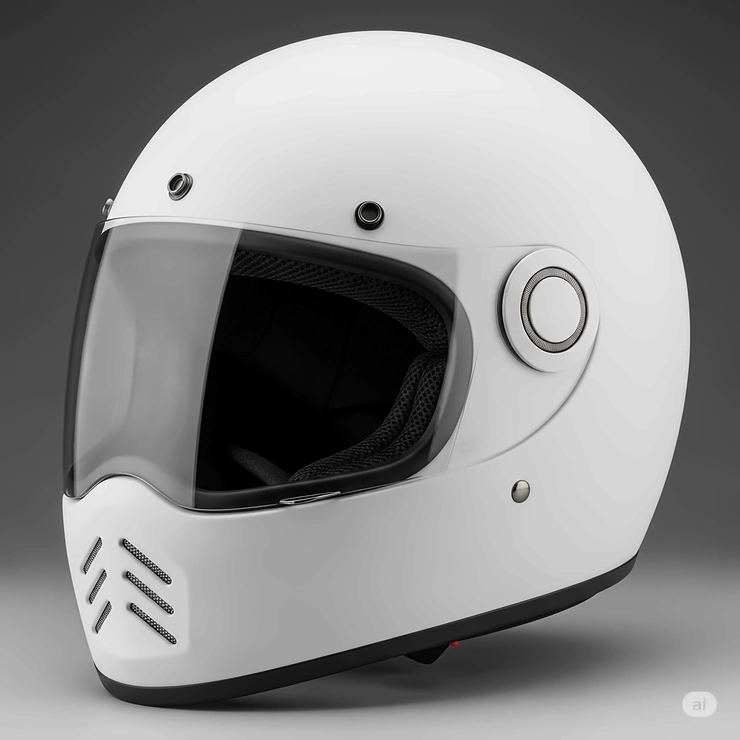
The table shows a wide spread, but the gap shrinks over time. A $650 helmet used daily for five years costs less per ride than a replacement-prone budget model bought twice. The Shoei RF-1400‘s five-year warranty supports that math, though I can’t verify real-world durability. Meanwhile, the ILM-313 and HJC i10 deliver certified protection at a fraction of the cost.
Maintenance basics. Wash the liner regularly, wipe the white shell with mild soap and a soft cloth, and avoid harsh solvents. Replace the visor when scratches hurt your view. And plan to replace the helmet after any significant impact, even if it looks fine.
White shells reveal dirt fast, but they also show damage clearly, which makes spotting cracks easier. That’s a quiet bonus.
Practical Usage Guide: Your First 30 Days
Day 1: Fit check. Put the helmet on and fasten the strap. Shake your head gently. The helmet shouldn’t slide independently of your skin. Wear it at home for 15 minutes to find pressure points.
Week 1: Break-in. Foam compresses slightly, so a snug fit loosens a little. If it’s loose on day one, go down a size rather than hoping it tightens.
Install anti-fog. The Shoei RF-1400 ships with a Pinlock insert. For the HJC i10, you’ll buy one separately. Seat it carefully along the visor edge so the seal holds.
Cleaning schedule. Wipe the shell after rides with a damp microfiber cloth. Wash the liner monthly. Keep bugs from baking on, since dried residue can be stubborn on white.
Common first-month mistakes:
- Using glass cleaner or solvents on the shell
- Hanging the helmet by its strap on a hot exhaust
- Applying stickers over the DOT label
On that last point, NHTSA has noted that missing DOT labels often result from someone removing them to paint the helmet. Don’t strip or cover the label. It’s your proof of compliance.
Real-World Scenarios: Which White Motorcycle Helmet Fits Your Riding?
The college commuter: 8 miles daily, tight budget. The ILM-313 keeps the spend minimal with two visors included. If you can stretch the budget, the Bell Qualifier DLX MIPS adds a rotational liner and a photochromic shield, which cuts down on visor swaps. Ride at dawn and dusk? The white finish earns its keep.
The weekend sport rider: twisty roads, Saturday mornings. The Scorpion EXO-R430 brings Snell certification and a refined shape for under $300. If the budget allows, the Shoei RF-1400 adds lighter weight and quieter aerodynamics for long days.
The glasses-wearing tourer: big miles, frequent stops. The HJC i100 modular lets you flip the chin bar up at gas stops and slide on eyewear easily. It’s heavier, but the convenience compounds over a 300-mile day.
Across all three, the common thread is fit first, features second, color last. A white motorcycle helmet that doesn’t fit is just an expensive hat.
Common Mistakes When Buying a White Motorcycle Helmet
Buying on looks alone. White is visible, but visibility doesn’t fix a poor fit.
Ignoring certification. Novelty helmets look fine but may fail every test. NHTSA’s rulemaking on novelty helmets documents how poorly they perform against FMVSS 218 requirements.
Assuming ECE equals DOT. An imported helmet like the AGV K3 may carry ECE but not DOT. Check before you buy.
Skipping the headlight. The BMJ study found daytime headlights matched or beat a white helmet for injury-risk reduction. Don’t rely on color alone.
Forgetting the extras budget. A HJC i10 without a Pinlock, or a Shoei RF-1400 with Bluetooth that needs padding changes, costs more than the sticker suggests.
Keeping a helmet too long. If it’s taken a hard hit, retire it, regardless of how clean the white shell looks.
Frequently Asked Questions About White Motorcycle Helmets
❓ Is a white motorcycle helmet really safer than a black one?
❓ Do white motorcycle helmets stay cooler in summer?
❓ How do I keep a white motorcycle helmet from yellowing or staining?
❓ What certification should a white motorcycle helmet have in the US?
❓ Is a modular white motorcycle helmet as safe as a full face?
Conclusion
A white motorcycle helmet won’t make you invincible, but it stacks the odds a little in your favor, and it costs nothing extra to choose it over black. The research behind it is real: a 24% lower injury risk compared with black helmets in one major study, with daytime headlights doing even more.
For most riders, the practical path looks like this:
- Buy the ILM-313 if you need certified protection on a tight budget.
- Pick the HJC i10 or Scorpion EXO-R430 if Snell certification matters to you.
- Choose the Bell Qualifier DLX MIPS for a rotational liner at a mid-range price.
- Go for the Shoei RF-1400 if you ride often and value a quieter, lighter lid.
- Consider the AGV K3 if you want light weight, but confirm DOT labeling first.
- Choose the HJC i100 if convenience and eyeglasses matter more than weight.
Whatever you choose, fit comes first, certification second, color third. Then run your headlight in daylight and wear something bright.
Recommended for You
- Pink Moto Helmet: 7 Best Picks for 2026
- Dual Sport Helmet: 7 Best Picks for 2026
- Women Motorcycle Helmet: 7 Best Picks for 2026
Disclaimer: This article contains affiliate links. As an Amazon Associate, I earn from qualifying purchases. If you purchase products through these links, we may earn a small commission at no additional cost to you.
✨ Found this helpful? Share it with your friends! 💬🤗
