
In This Article
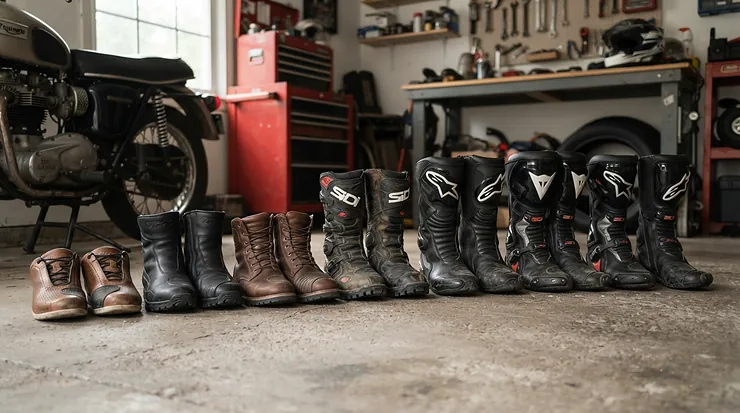
Here’s a truth nobody tells you at the gear shop: the boots that saved your buddy’s ankle on a gravel switchback in Colorado might be the exact boots that make your daily commute feel like wading through wet cement. That’s the whole tension behind adventure touring boots vs street touring boots, and it’s not a marketing gimmick — it’s physics. Taller, stiffer construction protects better in a slow-speed tip-over on loose rock. Shorter, more flexible construction lets your ankle actually bend when you’re working a gearshift in stop-and-go traffic for the eighth hour in a row.

So what is the adventure touring boots vs street touring boots question, really? Adventure touring boots are tall, heavily armored boots built with a reinforced sole shank for standing on the pegs off-road, while street touring boots are shorter, more flexible boots optimized for pavement comfort, walkability, and all-day wear. Neither is “better” in a vacuum — they’re built for different failure modes.
This guide isn’t a rewritten spec sheet. We dug into real product listings, aggregated owner feedback, and the actual safety data motorcyclists rely on to break down seven boots worth your money in 2026 — three ADV-focused, two hybrids, and two street-touring picks — plus the mechanics of flex ratings, protection zones, and which category actually fits how you ride. Grab a coffee. We’re going deep.
Quick Comparison: Adventure Touring Boots vs Street Touring Boots
Before we dive into individual products, here’s the 30,000-foot view. This is the cheat sheet you screenshot before walking into a gear store.
| Category | Shaft Height | Best For | Walkability | Typical Price Range |
|---|---|---|---|---|
| Adventure (ADV) | Shin-high, calf coverage | Gravel, standing on pegs, river crossings | Stiff, clunky off the bike | $180-$750 |
| Hybrid / Crossover | Mid-calf | Dual-sport, mixed commute + weekend trail | Moderate — walkable in short bursts | $330-$420 |
| Street Touring | Ankle to low-calf | Pavement, highway miles, daily commuting | Excellent — near-sneaker comfort | $190-$270 |
The table above tells a simple story: the taller and more armored the boot, the more you trade off-bike comfort for on-bike protection. A rider who spends 90% of their year on asphalt and occasionally hits a dirt fire road doesn’t need the same boot as someone crossing the Andes on a loaded GS. Where things get interesting is the middle ground — hybrid boots like the TCX Drifter Waterproof exist specifically because most “adventure” riders never actually ride that adventurously, and manufacturers know it.
💬 Which category matches your riding? Keep scrolling — we break down all seven boots below.
Top 7 Adventure & Street Touring Boots: Expert Analysis
We picked seven real, currently available boots spanning budget to premium, and both categories, so you can see the trade-offs side by side rather than guessing from a single review.
1. Sidi Adventure 2 Gore-Tex — the benchmark every ADV boot gets compared to
The Sidi Adventure 2 Gore-Tex earned its reputation the hard way: it’s been the boot other manufacturers quietly measure themselves against for years, and the 2026 refresh doesn’t mess with a winning formula. A full Gore-Tex liner handles the waterproofing, and Based on the spec comparison, that membrane matters more here than on a street boot — ADV riders hit standing water and river crossings, not just rain on the interstate. The sturdy ankle-flex system, borrowed directly from Sidi’s road-racing boots, pairs with dual motocross-inspired buckles and hinged plastic ankle supports for genuine crash protection, plus a polyurethane shin plate and shock-resistant heel cup.
Who should care: riders doing multi-week international ADV trips who need a boot that survives 10,000 miles of abuse and remains fully rebuildable — Sidi’s replaceable-parts philosophy means a worn sole or cracked buckle doesn’t retire the whole boot. Reviewers consistently note the boot runs true to size but recommend sizing up half a size for thick winter socks. A common complaint in aggregated feedback is that the shaft, while tall, could stand to be an inch taller for maximum shin coverage — a minor nitpick on an otherwise best-in-class boot.
Pros:
- ✅ Full Gore-Tex liner handles river crossings and downpours
- ✅ Replaceable buckles and parts extend the boot’s lifespan
- ✅ Racing-derived ankle-flex system balances support and mobility
Cons:
- ❌ Premium price puts it out of reach for casual riders
- ❌ Shaft height could be taller for max shin protection
Expect to pay in the $600-$700 range at the time of research. For a rider logging serious international ADV miles, the value math works out — this is a decade-boot, not a season-boot.
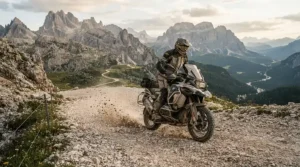
2. Forma Adventure — best value ADV boot for weekend explorers
Forma has done nothing but make motorcycle boots since 1999, and the Forma Adventure is proof that specialization pays off. Full oiled leather gives it a broken-in feel faster than synthetic alternatives, while a sewn-in Drytex waterproof membrane keeps the weather out without the premium price tag of Gore-Tex.
Key specs translate directly into real-world confidence: the anti-slip double-density rubber sole grips wet pavement and muddy trail alike, and injection-molded plastic reinforcement at the shin, heel, and ankle — backed by a steel shank in the sole — means standing on the pegs over rough terrain doesn’t fold the boot underfoot. What most buyers overlook about this model is the memory foam footbed; it’s a small touch that makes an eight-hour riding day noticeably less punishing on the balls of your feet. Three adjustable GH buckles plus a broad Velcro cuff let you dial fit precisely, and the boot carries a genuine EN 13634:2017 Level 2 certification, not just a marketing claim.
Reviewers consistently praise the break-in period as shorter than comparable leather boots, though aggregated feedback flags that the leather requires periodic conditioning to maintain waterproofing in year two and beyond.
Pros:
- ✅ Genuine EN 13634:2017 Level 2 certified protection
- ✅ Steel shank sole supports standing on pegs off-road
- ✅ Memory foam footbed improves all-day comfort
Cons:
- ❌ Leather needs regular conditioning to stay waterproof
- ❌ Heavier on foot than synthetic hybrid alternatives
Typically priced in the $260-$320 range, the Forma Adventure delivers Level 2 protection most riders will never actually need to test, at a price that doesn’t require selling a kidney.
3. Firstgear Kilimanjaro — best budget entry into adventure boots
Nothing flashy here, and that’s precisely the point. The Firstgear Kilimanjaro exists to answer one question honestly: what’s the cheapest boot that still does the job right? Thermoplastic rubber inserts add flex-zone comfort where full rigid plastic would just dig into your shin, while semi-rigid poly mesh panels keep weight down compared to all-leather competitors.
The 100% cowhide leather main construction is genuinely durable — cowhide’s tight grain resists abrasion better than the synthetic microfiber found on some budget competitors — and a Hipora waterproof-and-breathable liner (a lesser-known but legitimately effective alternative to Gore-Tex) keeps feet dry without the premium licensing cost. Here’s what to weigh: a rotary ratchet closure system gets you a genuinely precise, adjustable fit, which is unusual at this price point where cheaper boots often ship with a single strap-and-buckle setup that loosens over a season.
Aggregated review sentiment is consistently positive on value, with owners repeatedly noting the boots outlast their price tag by a wide margin; a recurring theme in feedback is that the toe box runs slightly narrow for wide-footed riders, so trying before buying (or sizing up) is worth the extra step.
Pros:
- ✅ Rotary ratchet closure gives a genuinely precise fit
- ✅ Cowhide leather resists abrasion better than budget synthetics
- ✅ Hipora liner keeps feet dry at a fraction of Gore-Tex cost
Cons:
- ❌ Toe box runs narrow for wide-footed riders
- ❌ Less shin coverage than premium ADV competitors
At around $180-$230, the Firstgear Kilimanjaro is the boot to recommend to a friend buying their first ADV bike who isn’t ready to commit $700 to footwear yet.
4. TCX Drifter Waterproof — the crossover that splits the difference
If you’ve been reading this article nodding at both the ADV and street sections, the TCX Drifter Waterproof is probably your answer. It’s built as a mid-cut hybrid, and Based on the spec comparison, that mid-height design is the whole thesis: enough armor to matter, short enough to actually walk in without waddling.
The updated buckle system and waterproof membrane bring genuine CE Level 2 protection, while flexible ankle articulation is the standout feature — the boot doesn’t lock your ankle rigid the way taller ADV boots do, which matters enormously if your riding is 80% commute and 20% forest road. What most buyers overlook is how well this boot handles the “walk into the gas station, walk into the diner” reality of actual touring, as opposed to the theoretical off-road capability most ADV boots are engineered around but riders rarely use.
Reviewers consistently note it strikes a rare balance: durable high-grip outsole and low-profile silhouette without sacrificing the impact armor that separates a real motorcycle boot from a hiking boot with a company logo slapped on.
Pros:
- ✅ Flexible ankle articulation without sacrificing CE Level 2 armor
- ✅ Low-profile design actually walks well off the bike
- ✅ High-grip outsole performs on wet pavement and light gravel
Cons:
- ❌ Less shin coverage than full-height ADV boots
- ❌ Buckle system takes a few rides to learn quick-adjustment
Priced around $380-$420, the TCX Drifter Waterproof earns its reputation as a genuine crossover — not a marketing label slapped on a street boot.
5. Fox Racing Defend ADV Boots — most convenient closure system in this lineup
Off-road brand pedigree shows up in unexpected ways, and for the Fox Racing Defend ADV Boots, it’s the closure system. A GORE-TEX waterproof upper is the expected baseline at this price tier, but what genuinely sets this boot apart is the micro-adjustable BOA Fit System — the same dial-and-cable tech used in snowboard boots and mountain bike shoes, repurposed for motorcycling.
Here’s what that means practically: instead of wrestling with buckles in freezing rain with numb fingers, you turn a dial. Testers who put over a thousand miles on this boot across mixed terrain reported quick approval of the closure specifically, since it lets you fine-tune tension mid-ride without stopping to unbuckle and rebuckle a strap. The boot’s low-profile mid-cut design and durable, high-grip outsole make it well-suited to long-distance touring days that include some light off-road, though it’s honest to say this isn’t a boot built for technical trail riding the way the taller Sidi is.
Aggregated feedback flags the BOA dial as a genuine convenience win, with a minority of owners noting the cable mechanism is one more thing that could theoretically fail far from a dealer — a fair trade-off consideration for remote touring.
Pros:
- ✅ BOA dial closure adjusts tension in seconds, even with gloves on
- ✅ GORE-TEX upper handles sustained rain reliably
- ✅ Low-profile mid-cut design stays comfortable off the bike
Cons:
- ❌ BOA cable is a mechanical part that could fail far from service
- ❌ Less shin/calf coverage than dedicated tall ADV boots
Around $330-$360 at the time of research, the Fox Racing Defend ADV Boots reward riders who value on-the-fly adjustability as much as raw protection.

6. Alpinestars RT-7 Drystar — lightest all-day comfort for road-heavy touring
Not every touring rider wants an ADV boot’s weight and bulk, and the Alpinestars RT-7 Drystar is built for exactly that reader. This is a street touring boot through and through — lighter, lower-profile, and engineered around the reality that most sport-touring and cruiser-touring riders spend their entire trip on pavement.
Alpinestars’ proven Drystar waterproof membrane technology, the same lineage used across the brand’s touring and adventure catalog, keeps rain out without adding the bulk of a full Gore-Tex ADV liner. Here’s what to weigh: because the shaft sits lower than an ADV boot, you sacrifice shin coverage, but you gain genuine flexibility at the ankle for smoother gearshifting on long interstate stretches — a trade riders who never leave asphalt will happily make. The boot’s construction prioritizes long-haul comfort over off-road armor, which the spec sheet won’t tell you directly, but the lighter overall weight and closer-to-street-shoe flex profile make it clear.
Reviewers consistently describe the RT-7 as boots you forget you’re wearing after the first hour — precisely the goal for a boot meant to disappear during a 400-mile day.
Pros:
- ✅ Noticeably lighter than any ADV boot in this lineup
- ✅ Drystar membrane provides reliable rain protection
- ✅ Ankle flex suits long highway days and frequent shifting
Cons:
- ❌ Minimal shin/calf coverage compared to ADV options
- ❌ Not designed for standing on pegs or off-road impacts
Typically listed in the $220-$270 range, the Alpinestars RT-7 Drystar is the pick for riders who tour hard but only ever tour on pavement.
7. Alpinestars Ridge V2 WP — best budget street touring boot
Rounding out the lineup, the Alpinestars Ridge V2 WP proves you don’t need adventure-boot pricing to get real touring protection on the street. It uses durable synthetic leather for the main upper — a deliberate choice that resists cracking better than budget genuine leather over time — paired with Alpinestars’ Drystar waterproof membrane for proven wet-weather reliability.
The mid-height design with a low-profile toe box is a small detail with an outsized real-world payoff: it slips cleanly under a gearshift lever without the bulky toe-box catch that plagues some cheaper boots, meaning fewer scuffed boots and smoother shifts. Inner and outer ankle protection plus a reinforced shin plate deliver a genuinely useful protection package for a boot at this price point, even though it’s honestly not intended for true off-road ADV riding — Firstgear’s Kilimanjaro or Forma’s Adventure would be the better call there.
A common theme in aggregated owner feedback is surprise at how much protection is packed into an entry-level price, with the main recurring critique being that the synthetic upper runs slightly warm in summer heat compared to perforated alternatives.
Pros:
- ✅ Low-profile toe box slides cleanly under the shift lever
- ✅ Reinforced shin plate and dual ankle protection at a budget price
- ✅ Synthetic upper resists cracking better than cheap genuine leather
Cons:
- ❌ Runs warm in summer heat with no ventilation
- ❌ Not built for genuine off-road ADV use
At around $190-$210, the Alpinestars Ridge V2 WP is the boot to hand a new rider who wants real protection without a real dent in their wallet.
Practical Usage Guide: Break-In, Setup & Maintenance
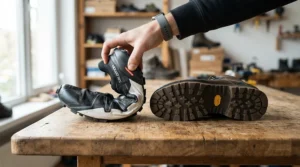
New touring boots don’t perform at their best straight out of the box, and treating them like they will is how riders end up with hotspots and cracked leather by month three. Start with fit: try boots on with the actual socks you’ll ride in — thick merino wool for winter, thin technical socks for summer — and walk around for at least ten minutes before deciding on sizing.
For the first 30 days, wear your new boots on short rides before committing them to an all-day tour. Leather boots like the Forma Adventure need genuine flex cycles to break in around the ankle joint; synthetic boots like the Alpinestars Ridge V2 WP soften faster but still benefit from a gradual introduction. Waterproof membranes, whether Gore-Tex, Drystar, or Hipora, work through microscopic pores that can clog with dirt and body oils over time — the membrane technology itself relies on pores roughly 20,000 times smaller than a water droplet to block liquid while letting vapor escape, so a boot that’s caked in mud isn’t breathing properly even if it’s still technically waterproof.
Maintenance schedule that actually matters: wipe down leather uppers monthly during riding season and apply a leather conditioner every two to three months to prevent cracking at flex points. Check buckle and ratchet mechanisms for grit buildup every few rides — this is the single most common failure point on both ADV and street boots. A mistake many first-year riders make is storing damp boots in a sealed bag after a rainy ride; this traps moisture and accelerates lining breakdown, so always air-dry boots fully, ideally with newspaper stuffed inside to wick moisture, before storing them.
Real-World Scenarios: Which Rider Needs Which Boot
Specs only tell half the story — here’s how these boots actually play out for different riders.
The weekend gravel explorer: Rides a mid-displacement dual-sport, commutes on pavement all week, and hits fire roads on Saturdays. Budget matters, but so does genuine protection for the occasional low-speed tip-over on loose gravel. This rider is the textbook case for the Forma Adventure or the Firstgear Kilimanjaro — enough armor and shank support for standing on pegs, without premium-tier pricing for capability they’ll only use twice a month.
The cross-country tourer: Logs 400+ mile days almost entirely on interstate and state highways, values all-day comfort over off-road capability, and wants to walk into a rest-stop diner without looking like they’re wearing ski boots. The Alpinestars RT-7 Drystar or Alpinestars Ridge V2 WP fit this profile precisely — lighter weight, better ankle flex for shifting, and a shaft height that doesn’t fight your riding jeans.
The dual-sport commuter with big trip ambitions: Commutes daily on pavement but is planning a multi-state or international ADV trip within the next year or two. This rider benefits most from a hybrid like the TCX Drifter Waterproof or the BOA-equipped Fox Racing Defend ADV Boots — protection that scales up for the big trip without punishing daily comfort in the meantime. If budget allows and the trips are frequent, stepping up to the Sidi Adventure 2 Gore-Tex pays for itself in longevity.
Problem → Solution: Fixing Common Touring Boot Complaints
Problem: Sweaty feet despite a “waterproof” boot. Waterproof membranes block liquid but still need airflow to manage vapor properly. Solution: choose a boot with a genuine breathable membrane like Gore-Tex or Drystar rather than a basic PVC liner, and swap to moisture-wicking socks — cotton traps sweat and defeats even the best membrane.
Problem: Ankle fatigue on long touring days. Overly rigid ADV boots can cause fatigue on riders who rarely leave pavement. Solution: if 90% of your riding is on-road, a flexible option like the Alpinestars RT-7 Drystar or the hybrid TCX Drifter Waterproof will reduce fatigue significantly compared to a full ADV boot.
Problem: Buckles seizing up after a muddy ride. Grit works into ratchet and buckle mechanisms and can jam adjustment. Solution: rinse buckles with clean water after off-road rides and apply a dry lubricant periodically — this is a five-minute habit that adds years to boots like the Firstgear Kilimanjaro and Forma Adventure.
Problem: Toe box too narrow for wide feet. Solution: check width-specific sizing charts before buying, and favor boots reviewers describe as roomy in the forefoot, like the Sidi Adventure 2 Gore-Tex, over narrower-cut options.
Problem: Boots too hot in summer. Solution: rotate to a lower-cut, less-insulated street touring boot like the Alpinestars Ridge V2 WP for peak-summer riding, and reserve full-height ADV boots for cooler shoulder-season trips.
Adventure Touring Boots vs Street Touring Boots: Key Differences
The core distinction comes down to four things: shaft height, sole rigidity, buckle count, and intended impact zones. Adventure touring boots extend well above the ankle to cover the shin and lower calf, because a fall or rock strike off-road is just as likely to hit your shin as your ankle. Street touring boots typically stop closer to the ankle bone, trading that shin coverage for a boot that bends naturally with a normal walking gait.
Sole construction differs too. ADV boots almost always include a steel or composite shank running through the sole, engineered specifically to support your body weight while standing on the pegs — something you simply don’t do on a street bike. Street touring boots use a more flexible sole because their entire use case assumes you’re seated, working foot pegs and a shifter with a smaller range of motion.
Buckle count is a quiet giveaway, too: ADV boots like the Sidi Adventure 2 Gore-Tex and Forma Adventure use three or more heavy-duty buckles to lock the boot rigid against twisting forces on rough terrain, while street boots like the Alpinestars RT-7 Drystar often use fewer, lighter closures since they’re not fighting the same lateral stress. None of this makes one category objectively superior — it makes them purpose-built tools, and picking the wrong tool means either being over-armored and exhausted on a highway slog, or under-protected on a trail you weren’t expecting to encounter.
Touring Boot Type Comparison: Matching Category to Your Bike
Here’s a practical, numbered way to think through touring boot type comparison when you’re standing in a shop overwhelmed by options:
- Identify your bike’s actual use case, not its marketing category. A “GS-style” adventure bike that never leaves pavement doesn’t need ADV boots just because the bike looks the part.
- Estimate your annual off-road mileage honestly. Under 10% off-road generally points toward a street or hybrid boot; above that, genuine ADV protection earns its keep.
- Factor in climate and season. Riders in consistently wet regions should prioritize a proven waterproof membrane regardless of category.
- Weigh walkability against your trip style. Long days that include museum visits, hikes, or city walking favor a lower, more flexible boot.
- Check your budget against the protection tier you actually need. A budget ADV boot like the Firstgear Kilimanjaro beats a premium street boot for anyone doing real off-road riding.
- Try before you commit whenever possible. Fit varies enough between brands that specs alone won’t guarantee comfort.
| Boot | Type | CE Level | Best For |
|---|---|---|---|
| Sidi Adventure 2 Gore-Tex | ADV | Level 2 | Serious multi-week ADV travel |
| Forma Adventure | ADV | Level 2 | Weekend gravel explorers |
| Firstgear Kilimanjaro | ADV | Level 1-2 | Budget-conscious ADV starters |
| TCX Drifter Waterproof | Hybrid | Level 2 | Dual-sport commuters |
| Fox Racing Defend ADV | Hybrid | Level 2 | Touring with light off-road |
| Alpinestars RT-7 Drystar | Street | Level 1-2 | Pavement-heavy long tours |
| Alpinestars Ridge V2 WP | Street | Level 1-2 | Budget street/commuter touring |
Reading across this table, the pattern is clear: CE certification level doesn’t track cleanly with price — even budget-tier boots can carry genuine Level 2 protection — so shaft height and sole construction matter more than sticker price when matching a boot to your riding style.
💬 Still not sure which row fits your riding? Scroll back up and compare specs on the pick that’s closest to your style.
Dual-Sport Riding: Boots for Mixed-Terrain Days
Dual-sport riding sits in its own awkward middle ground, and it’s exactly why hybrid boots exist. If your typical ride includes a highway stretch to reach a trailhead, a few hours of technical dirt, and then a return commute home, you’re asking one boot to do three different jobs in a single afternoon.
The TCX Drifter Waterproof and Fox Racing Defend ADV Boots are purpose-built for this exact rhythm. Both maintain genuine CE Level 2 protection for the off-road segment of your ride while keeping enough ankle articulation that the highway portion doesn’t leave your legs stiff and sore. What most buyers overlook about dual-sport riding specifically is tire and terrain unpredictability — you might plan for a groomed forest road and end up navigating a rutted, rocky detour, which is precisely the scenario a shank-reinforced sole and reinforced ankle protect against.
If your dual-sport days lean more aggressive — deep sand, river crossings, technical rock gardens — step up to a full ADV boot like the Forma Adventure rather than relying on a hybrid’s lighter armor. The rule of thumb: match your boot to your worst likely terrain on any given ride, not your average terrain, since that’s the moment protection actually matters.
On-Road vs Off-Road Protection: What Actually Changes
Specs on a page don’t always translate to intuition, so here’s what actually changes in real-world performance between on-road and off-road use. On pavement, the dominant crash risk is a slide — abrasion resistance and impact protection at the ankle and heel matter most, since a low-side typically means sliding, not standing weight on the boot at an odd angle.
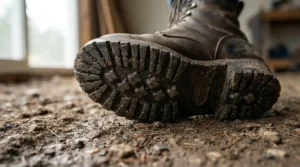
Off-road, the risk profile shifts substantially. Low-speed tip-overs on loose surfaces are common, and your foot often ends up trapped under the bike momentarily — this is where shin coverage and a rigid sole shank genuinely prevent fractures that a street boot’s flexible sole simply can’t. Reviewers who’ve ridden both categories extensively consistently note that the first time an ADV boot’s shin plate takes a rock strike that would have bruised bone through a street boot, the extra weight and stiffness stop feeling like a compromise and start feeling like the entire point.
The flip side matters equally: on-road riders who over-buy protection they don’t need often report ankle and calf fatigue from boots that were never designed to flex through thousands of shift-and-brake cycles on a daily commute. Matching protection to actual risk, not worst-case imagination, is the smarter play for most riders.
Boot Flex Rating Explained: Stiff vs Flexible
Boot flex rating isn’t a single standardized number the way CE levels are, but it’s a real, meaningful spec that manufacturers describe through terms like “ankle articulation system,” “pivot points,” or simply “flex zones.” Here’s what the spec sheet won’t tell you directly: flex rating is fundamentally a trade-off between crash protection and everyday comfort, and there’s no version of a boot that maximizes both simultaneously.
Stiffer boots — think the Sidi Adventure 2 Gore-Tex with its racing-derived hinge system — resist the twisting and hyperextension forces that cause serious ankle injuries in a fall. That same stiffness, though, means more effort with every gear shift and a noticeably different walking gait once you’re off the bike. Flexible boots, like the Alpinestars RT-7 Drystar, prioritize natural ankle movement, which reduces fatigue on long rides but offers less resistance if the ankle is forced past its normal range of motion in a crash.
Features that actually matter here: a genuine articulated pivot system (not just soft leather that happens to bend) and reinforced but hinged ankle cups. Features that don’t matter as much as marketing suggests: exaggerated buckle counts beyond three or four, which mostly add weight without meaningfully improving either flex control or protection.
Safety, Regulations & CE Certification Guide
Every serious touring boot on this list carries a CE certification under the EN 13634:2017 European standard for motorcycle footwear, which tests four specific zones: shaft height, abrasion resistance, transverse rigidity, and cut resistance, each rated Level 1 (basic pass) or Level 2 (superior pass). Reading a boot’s rating tells you more than any marketing copy — a boot rated 2/2/2/2 across all four zones, for instance, genuinely outperforms a 1/1/1/1 boot in independent testing, regardless of brand reputation or price.
This matters practically because protective gear demonstrably reduces injury severity. Feet and ankles are frequently the first point of contact in a motorcycle fall, and proper boots are considered essential protective equipment by safety researchers and regulators alike, which is part of why NHTSA has ongoing research initiatives specifically examining rider fit and usage of footwear and other protective gear. Level 2 certification generally means more weight and stiffness, so ADV boots built for serious off-road use almost always target Level 2, while some street touring boots reasonably use Level 1 in exchange for better flex and lighter weight — that’s not a corner-cutting compromise, it’s an intentional design decision matched to lower-impact-risk riding.
Long-Term Cost & Maintenance
Sticker price is only part of the real cost of ownership. A $200 boot that needs replacing every two seasons can end up costing more over five years than a $650 boot that lasts a decade with basic care. Break down the math: the Firstgear Kilimanjaro at roughly $200 replaced every two years runs about $500 over five years; the Sidi Adventure 2 Gore-Tex at $650 with proper leather conditioning and buckle maintenance can realistically last eight to ten years of regular riding, working out to a lower effective annual cost despite the higher upfront number.
Replaceable-parts boots hold their value longest. Sidi’s buckle and sole replacement program, for instance, means a worn outsole doesn’t retire an otherwise sound boot — a maintenance advantage that budget boots without spare-parts availability simply can’t match. Waterproof membranes also have a practical lifespan; expect noticeably reduced water resistance after roughly three to five seasons of hard use, regardless of brand, as the internal membrane accumulates micro-abrasions from repeated flexing. Budgeting for a mid-life reproofing treatment or accepting eventual membrane replacement is a realistic part of total ownership cost for any touring boot.
FAQ
❓ Can you wear adventure boots on a street bike?
❓ Are street touring boots safe for highway riding?
❓ How do I know my boot size for motorcycle boots?
❓ Do adventure touring boots work for walking around?
❓ What's the difference between CE Level 1 and Level 2 boots?
Conclusion
If there’s one honest takeaway buried in all these specs and comparisons, it’s this: adventure touring boots vs street touring boots isn’t a competition with a winner. It’s a matching exercise. The rider who buys the tallest, most armored ADV boot because it looks the most serious often ends up hobbling around a rest stop in pain, while the rider who cheaps out on a street boot before a genuinely mixed-terrain trip risks a fracture a proper shank sole would have prevented.
Match the boot to the ride you actually take, not the one you imagine taking. The Sidi Adventure 2 Gore-Tex and Forma Adventure reward riders logging real off-road miles. The Alpinestars RT-7 Drystar and Alpinestars Ridge V2 WP reward riders who tour hard but stay on pavement. And if you genuinely can’t decide because your riding really is that mixed, the TCX Drifter Waterproof and Fox Racing Defend ADV Boots exist precisely to split that difference honestly.
Recommended for You
- 7 Best Long Distance Motorcycle Boots For Wide Feet In 2026
- Affordable Touring Boots: 7 Budget Picks That Actually Last (2026)
- 7 Best Touring Boots For Long Distance Comfort In 2026
Disclaimer: This article contains affiliate links. As an Amazon Associate, I earn from qualifying purchases. If you purchase products through these links, we may earn a small commission at no additional cost to you.
✨ Found this helpful? Share it with your friends! 💬🤗
