
In This Article
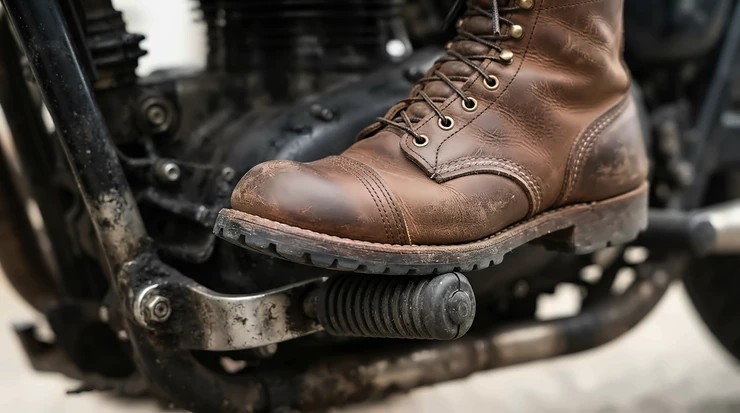
Most riders own one pair of boots that gets worn on Monday’s commute, Wednesday’s grocery run and Saturday’s coffee-shop loop. Black motorcycle boots for everyday riding are the footwear equivalent of a good pair of jeans, and they work for the same reason: black is forgiving, versatile and quietly cool.
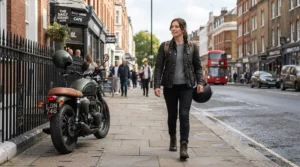
What are black motorcycle boots for everyday riding? They are ankle-height or short-shaft riding boots built for daily use. They usually have reinforced heels and toes, ankle protection, a stiff sole and a low-key look that passes in an office or restaurant. The best ones carry a CE rating under the EN 13634 standard, which is the closest thing to a universal benchmark for motorcycle boot protection.
Here’s the catch. Riders who reach for black riding boots versatility usually want three things at once: real protection, all-day walkability and a finish that doesn’t look wrecked after one month of peg scrapes. Those goals pull in different directions. A boot that’s tough as a tank tends to feel like a ski boot at the office. A boot that feels like a sneaker may have the crash protection of a sneaker.
This guide sorts through seven real, current options. Every pick comes with an honest read of what the specs mean in practice, what reviewers keep saying, and who should skip it. I haven’t worn any of these pairs. What follows is analysis built on published specs and aggregated review sentiment from retailer and publication pages, not a claim of hands-on testing.
Quick Comparison: Black Motorcycle Boots for Everyday Riding at a Glance
| Product | Style | Waterproof? | Best For |
|---|---|---|---|
| Alpinestars Faster-3 Rideknit | Low knit-and-microfiber shoe | No (a Drystar variant exists) | Hot-weather commuters |
| Dainese Metractive D-WP | Leather sneaker-boot | Yes | Office-to-ride all-weather use |
| Dainese Street Rocker D-WP | Short leather high-top | Yes | Vintage and café-racer looks |
| TCX Street Ace WP | Leather low boot | Yes | Mixed casual and riding use |
| REAX Fulton Air | Perforated nubuck/leather high-top | No | Warm-climate daily riders |
| Street & Steel Oakland | Cruiser-style leather boot | Yes | Budget cruiser riders |
| Alpinestars SMX-6 V3 | Sport-touring boot | No (vented variant) | Spirited and highway riding |
Look at the table and one pattern jumps out: protection and “looks like a normal shoe” trade off almost linearly. The SMX-6 V3 gives you the most structure but screams “motorcycle.” The Faster-3 Rideknit and REAX Fulton Air disappear into streetwear but give up some rigidity. The Dainese Metractive D-WP and TCX Street Ace WP sit in the sweet middle, waterproof and leather-clad, which is why they suit most people in mixed weather.
💬 Just one click — help others make better buying decisions too!😊
Top 7 Black Motorcycle Boots for Everyday Riding: Expert Analysis
Every entry below turns specs into real-world meaning. Prices are ranges only and change constantly, so check current price and availability before you buy.
1. Alpinestars Faster-3 Rideknit — lightest, coolest pair in the lineup
The Alpinestars Faster-3 Rideknit treats weight as a feature, and in July traffic it earns the point. Its upper blends microfiber, knitted mesh and thermo-welded panels, so air actually moves through it. It’s CE-certified to EN 13634:2017 with a Level 1 rating, and it adds TPU ankle protection plus a lateral hook-and-loop strap for a snug lockdown.
On paper, “Level 1” means solid protection for urban speeds, not track-day confidence. The asymmetric toe box covers the shifter zone, which matters because that’s where cheap sneakers shred first. Based on the spec comparison, this is the boot for someone who’d otherwise commute in canvas shoes.
Reviewers consistently describe it as comfortable out of the box, true to size or slightly wide, and excellent in heat. A common nitpick is overlong laces. One commuter review praises the ability to wear them all day at work without carrying a spare pair. A large US retailer listing shows roughly 4 out of 5 stars from about 75 reviews.
Pros:
- ✅ Breathable knit upper for hot-weather commuting
- ✅ CE EN 13634:2017 certified with TPU ankle protection
- ✅ Looks like a sneaker off the bike
Cons:
- ❌ Not waterproof in the standard version
- ❌ Knit panels won’t match leather abrasion toughness
Price: around the $170-$240 range depending on variant. Value verdict: strong if you ride mostly in dry, warm conditions.

2. Dainese Metractive D-WP — full-grain leather that dodges the “biker” look
The Dainese Metractive D-WP hides real motorcycle hardware behind a sneaker silhouette. Dainese pairs a full-grain cowhide upper with a waterproof D-WP liner, stiff ankle inserts padded in D-Foam, Ortholite insoles and a Groundtrax outsole. It carries a CE Level 1 PPE rating.
What does that mean for daily life? Full-grain leather ages instead of peeling, and the waterproof liner means a surprise downpour won’t ruin your afternoon meeting. The Ortholite insole is the quiet hero, because a boot you can walk a mile in is a boot you’ll actually wear. One honest caveat: this version isn’t a tall boot, so water can still run down your pant leg into the collar.
Reviewers tend to describe the Metractive as comfortable and easy to mistake for ordinary boots. A recurring complaint concerns fit, with at least one shopper finding it snug across the toes. I’d suggest trying a half size up if you’re between sizes or have broad feet.
Pros:
- ✅ Full-grain cowhide with waterproof D-WP liner
- ✅ Ortholite insole suits all-day walking
- ✅ CE Level 1 certified ankle protection
Cons:
- ❌ Reported tight toe box for wider feet
- ❌ Low cut leaves shins and calves exposed
Price: expect the low-to-mid $200s range; check current price. Value verdict: pricey but justified for all-weather office riders.
3. Dainese Street Rocker D-WP — vintage looks with a hidden waterproof liner
The Dainese Street Rocker D-WP is the café-racer cousin of the Metractive. It’s a short, high-top boot with a vintage-effect leather upper, reflective heel inserts and a D-WP waterproof liner that seals from roughly the third eyelet down. It’s CE-certified as a short boot, which is why there’s no shin armor. The sole carries a steel or rigid shank, and reviewers say it makes the shoe feel stiffer than a normal trainer.
Think of it as the boot for riders who care about the silhouette first. The flexibility lets you tuck the heel and get up off the pegs, but it also means this isn’t built for highway speeds in a crash. Here’s what the spec sheet won’t tell you but reviewers report: the sizing runs small.
Retail reviewers praise the build quality and say the boots feel like normal trainers apart from the rigid sole. One reviewer tested a short moderate rainfall ride and saw a little moisture creep in near the toe, so treat the waterproofing as “good, not diver-grade.”
Pros:
- ✅ Handsome vintage-effect leather upper
- ✅ Reflective heel inserts help low-light visibility
- ✅ Flexible enough for comfortable walking
Cons:
- ❌ Runs small, so size up
- ❌ Waterproofing can seep in heavy rain
Price: around the $170-$230 range. Value verdict: great if style matters as much as protection.
4. TCX Street Ace WP — the proven middle path
The TCX Street Ace WP upgrades TCX’s earlier biker sneaker with suede panels, integrated foot protection and a waterproof membrane. It’s full-grain leather, reinforced over the heel and toe, and TCX says it was shaped on a foot-mould last. The brand reportedly certifies its products to CE EN 13634:2017.
This one rewards riders who live between worlds. The stiff, heavy-duty sole gives you a real feel on the pegs, while the classic laces keep it looking like an ordinary casual boot. A Bennetts BikeSocial reviewer found the waterproof lining works well but noted water can run down the shin since the boot is short, and called it not truly all-season.
Owner feedback on retail pages is warm. Reviewers describe boots comfortable out of the box, usable in an office without feeling like protective gear, and good with jeans. The review pool is small, though, so treat the strong average rating as encouraging rather than definitive.
Pros:
- ✅ Waterproof liner with full-grain leather upper
- ✅ Reinforced toe, heel and ankle protection
- ✅ Sole grips pegs without feeling clunky
Cons:
- ❌ Short cut lets rain run in from above
- ❌ Smaller review pool than rivals
Price: roughly the mid-$100s to low-$200s range depending on retailer. Value verdict: one of the safest all-rounders here.
5. REAX Fulton Air — best sneaker-style high-top for warm weather
The REAX Fulton Air is a perforated high-top with a padded collar, an Achilles flex panel and a leather upper in nubuck or perforated leather. Protection includes ankle cups, a reinforced heel and toe box, and a composite midsole footbed. The listing cites an EN 13634:2017 rating of Level 1 for abrasion, cut and impact on the women’s variant. The rear reflective hit is a smart safety touch.
In practice, the perforation is the story. It keeps your feet from stewing in August, but it also means water gets in. Pair that with its sneaker-like flex panel and you have a pair meant for Southern California, not Seattle in November.
The review volume is large, with roughly 300 reviews averaging around 4.5 out of 5 at a major US retailer. The recurring caveat, repeated in the listing itself, is a narrow fit. Wide-footed riders should look elsewhere or size up carefully. An editorial roundup also named the Fulton Air a top seller that blends in so well few people recognize them as riding shoes.
Pros:
- ✅ Perforated panels keep feet cool
- ✅ Reflective heel patch aids night visibility
- ✅ Padded collar feels like a casual high-top
Cons:
- ❌ Reportedly narrow for wide feet
- ❌ Perforations let rain through
Price: around the $130-$160 range. Value verdict: terrific for warm-climate daily riding.
6. Street & Steel Oakland — budget cruiser boot with real riding features
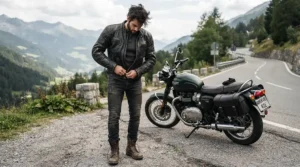
The Street & Steel Oakland is the old-school answer. It’s a full-leather cruiser boot with a cap-toe look, a heavy lugged sole, a composite midsole and a Hipora waterproof membrane. Internal toe reinforcement mirrors the cap-toe styling.
This is the boot for riders who want classic black leather to look right with a cruiser, jeans and a leather jacket. The composite midsole is an honest functional upgrade over a fashion boot, helping the sole resist crushing on pegs or floorboards. Retailer notes say the Oakland runs small and recommend going up a half to full size.
I couldn’t verify a robust star rating for this exact model, so treat sentiment here as unproven rather than assumed. A sister model from the same house brand earned a positive hands-on review that praised its overlays, reinforcement and sole, though that’s a different boot.
Pros:
- ✅ Full leather build with waterproof membrane
- ✅ Composite midsole helps with peg and floorboard use
- ✅ Classic cruiser styling at modest cost
Cons:
- ❌ Runs small per retailer guidance
- ❌ Heavier, less sneaker-like on foot
Price: around the $140 range. Value verdict: good budget pick for cruiser riders.
7. Alpinestars SMX-6 V3 — the most protection in a still-wearable shape
The Alpinestars SMX-6 V3 is a sport-touring boot, and including it in an everyday list is deliberate. It carries CE EN 13634:2017 certification, a TPU lateral ankle brace, a revised TPU shifter zone, a rear calf bridge and an internal shank for arch support. The women’s version was reported at Level 2 for height, abrasion and cut resistance but Level 1 for rigidity.
Why does that matter? Height and abrasion are the ratings that matter most when you slide down asphalt at 45 mph. This boot is the “one-boot wardrobe” option for riders who commute on highways and still want a boot they can walk in. A JP Cycles editorial describes it as the pick for a single-boot riding wardrobe.
Reviewers on a major US retailer’s site rate it around 4.5 out of 5 across more than 100 reviews. The tradeoff is looks: it reads unmistakably as a motorcycle boot, so you won’t blend in at the office.
Pros:
- ✅ Strongest protection in this lineup
- ✅ TPU ankle brace and shifter-zone protection
- ✅ Shank reinforcement supports long rides
Cons:
- ❌ Looks sporty, not casual
- ❌ Costs more than most picks here
Price: roughly the low-to-mid $300s range. Value verdict: worth it for highway commuters.
Top 7 Head-to-Head Summary
| Product | Protection Notes | Price Range | Review Sentiment | Best For |
|---|---|---|---|---|
| Alpinestars Faster-3 Rideknit | CE EN 13634:2017, Level 1 | $170-$240 | Comfortable, great in heat | Summer commuters |
| Dainese Metractive D-WP | CE Level 1, waterproof | Low-to-mid $200s | Comfortable, some snug-fit reports | All-weather office riders |
| Dainese Street Rocker D-WP | CE short boot, waterproof | $170-$230 | Comfortable, runs small | Vintage-style riders |
| TCX Street Ace WP | CE-rated, waterproof | Mid-$100s to low-$200s | Strong, small sample | Mixed use |
| REAX Fulton Air | EN 13634:2017, ankle cups | $130-$160 | Strong, narrow fit | Hot-climate daily use |
| Street & Steel Oakland | Composite midsole, waterproof | Around $140 | Not verified | Budget cruiser riders |
| Alpinestars SMX-6 V3 | CE, TPU ankle brace | Low-to-mid $300s | Strong, 100+ reviews | Highway riders |
The table shows a clear value ladder. If you’re choosing between the REAX Fulton Air and the Alpinestars Faster-3 Rideknit, the Fulton costs less but loses mesh breathability, while the Faster-3 costs more and gives you the lighter feel. The TCX Street Ace WP undercuts the Dainese Metractive D-WP while delivering a similar leather-plus-waterproof formula, so the Dainese premium really buys style and a refined liner.
✨ Don’t Miss These Exclusive Deals!
🔍 Take your riding wardrobe to the next level with these carefully selected boots. Click on any highlighted product name to check current pricing and availability. These picks will help you ride protected and walk away looking sharp!
How to Choose Black Motorcycle Boots for Everyday Riding
Picking the right pair comes down to six decisions, in this order:
- Check for a CE label and read the levels. Look for EN 13634:2017. Per standard summaries, more 2s on the label means more protection, so compare height, abrasion, cut and impact scores rather than just the badge.
- Match height to your speed. Ankle-high boots suit city riding. Highway or touring use justifies taller shafts with calf protection.
- Decide on waterproofing honestly. Rain-prone area? Choose a membrane. Hot climate? Perforation and mesh beat a sealed liner that cooks your feet.
- Test fit with riding socks and at the end of the day. Several of the boots above run small or narrow, so order with return flexibility.
- Inspect the sole. A stiff shank resists crushing under the peg, while a grippy tread keeps you steady at red lights.
- Lock in the finish early. Matte, glossy and nubuck each age differently, and the next sections explain why.
Black Riding Boots Versatility: One Pair, Seven Days a Week
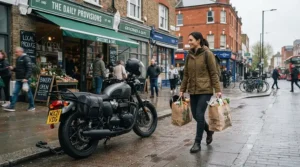
Black riding boots versatility is the reason this category exists. Black hides dirt, matches nearly every jacket and pants combination, and survives dress-code scrutiny better than tan or grey.
Consider a typical week. Monday: office in slacks. Wednesday: client lunch in dark jeans. Saturday: group ride in a leather jacket. The Dainese Metractive D-WP and TCX Street Ace WP handle all three, because they read as ordinary leather boots from a few feet away. The Alpinestars SMX-6 V3 would be a stretch with slacks.
Versatility also covers seasons. Waterproof liners extend black riding boots versatility into cold, wet months, while perforated models like the REAX Fulton Air stretch it into heat. No single boot does both, which is why some riders keep two pairs: a ventilated one for summer and a waterproof one for the rest of the year.
The honest takeaway is that versatility has limits. The more a boot looks like a sneaker, the more you trade shin and calf coverage. Decide where on that spectrum you’re comfortable, then buy accordingly.
Everyday Black Motorcycle Footwear vs. Regular Sneakers and Work Boots
Plenty of riders still commute in whatever’s by the door. Here’s how everyday black motorcycle footwear stacks up against the usual alternatives.
| Feature | Everyday Black Motorcycle Footwear | Regular Sneakers | Work Boots |
|---|---|---|---|
| Ankle protection | Built-in cups or braces | None | Minimal |
| Sole rigidity | Reinforced to resist crushing | Flexes easily | Often stiff but not tested |
| Shifter-zone protection | Often reinforced | None | Rarely |
| Walkability | Good | Excellent | Moderate to heavy |
| Best For | Daily riders | Short, low-risk trips | Job-site use |
The takeaway is that everyday black motorcycle footwear closes the biggest gaps without turning you into a robot. Sneakers fail where riders need them most: the ankle and the shift lever. Work boots feel safe but weren’t designed for crash dynamics or lever feel, and heavy soles can make precise shifting harder. If you’re curious how footwear fits into the broader safety picture, the National Highway Traffic Safety Administration maintains rider safety resources worth bookmarking.
Matte vs Glossy Leather: What Actually Shows Up After a Month
The matte vs glossy leather debate isn’t just cosmetic. It determines how your boots age and what flaws they broadcast.
Glossy black is typically corrected leather: the surface is buffed or sanded to remove imperfections, then coated for shine. Matte finishes can come from the same process with a flatter coating, or from oiled full-grain leather that never had a high-shine coat. Care guidance from a boot maker describes oiled, greasy-style matte leather as something you nourish with wax or oil rather than polish for shine, and notes scratches can often be buffed out.
Here’s my read on matte vs glossy leather in daily use. Glossy surfaces act like a mirror for damage, so a pale scuff on a high-shine black toe is hard to miss. Matte tends to scatter light, which camouflages minor marks. A caution, though: a coated matte finish that wears through can still reveal lighter material underneath, so matte doesn’t mean immune.
Nubuck is a third path. Sources describe it as a sanded, fuzzy texture that hides scuffs and holds up to repeated use. That’s the logic behind choosing something like the REAX Fulton Air if you want forgiving daily wear.
Scuff Resistance: What Holds Up and What Doesn’t
Scuff resistance is where black boots earn their keep, and also where they lie to you. Black hides dust and light abrasions, but it shows pale scratches and salt rings brutally.
A few principles govern scuff resistance. Full-grain leather has natural character, so small marks blend into the grain over time. Corrected-grain leather has a surface coating, and guides note scuffs can reveal the color underneath. Knit and mesh uppers resist nothing in the way of sharp abrasion but are cheap to replace.
On the bike, the scuff-prone zones are predictable: the left toe from the shifter, the inside of the heel from the peg, and the outer ankle from low-speed drops. The Alpinestars Faster-3 Rideknit and Alpinestars SMX-6 V3 add TPU shifter protection to those areas. Leather options like the Dainese Metractive D-WP rely on thick hide and reinforced toes instead.
For practical scuff resistance, rotate pairs, wipe off dust before it grinds in, and treat leather with a conditioner and protectant spray. For deeper marks, a polish matched to your finish usually restores color. If you’re shopping on scuff resistance alone, nubuck and oiled full-grain matte leather are the most forgiving.
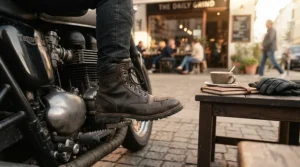
Gear Coordination: Matching Black Boots to Jacket, Pants and Helmet
Gear coordination sounds like vanity, but it’s partly a safety tool. State guidance, such as a Colorado State Patrol safety page, recommends full-fingered gloves, over-the-ankle boots, long pants and a durable jacket as a baseline.
Black boots make gear coordination easy because they anchor almost any palette. Black leather jacket and dark denim? The Street & Steel Oakland completes the cruiser look. Textile jacket in grey or olive? The TCX Street Ace WP keeps it understated. Bright hi-vis jacket? Black boots ground the outfit and let the visibility pieces pop.
Smart gear coordination also means matching protection levels. Pairing a CE-rated armored jacket with sneaker-style boots leaves a hole in your safety system. If your jacket and pants are CE-rated, the Alpinestars SMX-6 V3 or Dainese Metractive D-WP keeps your lower half on the same level.
Finally, think reflectivity. Research summaries from safety organizations note riders prefer retroreflective elements over loud colors, and a reflective heel detail like the one on the REAX Fulton Air adds visibility without wrecking an all-black look.
Safety Standards: What the CE Label Actually Tells You
Few shoppers read the label, and that’s a mistake. The first European standard for motorcycle footwear appeared in 2002 and was limited to professional riders such as couriers, according to a SATRA bulletin on the standard’s history. It has since been revised, and the current EN 13634:2017 covers on-road and off-road riders.
The label shows performance levels for categories like height, abrasion, cut and impact. Level 2 is the higher tier, per standard summaries. Quebec’s auto insurance board lists the 2017 version as the reference for boots, which shows how widely the standard is used as a benchmark outside Europe.
In the US there’s no boot standard I could verify as mandatory, so the CE label functions as a practical yardstick, not a legal requirement. Two caveats apply. First, the standard only covers the boot as tested, so a worn-out pair won’t perform like a new one. Second, boots are one part of a system, which means pairing them with a helmet, gloves and jacket matters more than any single rating.
Practical Usage Guide: Your First 30 Days With New Boots
Buying is step one. Here’s how to get the most out of the first month.
Week 1: Break in smartly. Wear them around the house and on short rides. Leather boots like the Dainese Street Rocker D-WP loosen at the flex points, so give them time before judging comfort.
Week 2: Tune the laces. Tuck excess lace behind the strap, as reviewers recommend for the Alpinestars Faster-3 Rideknit. Tie loose ends so nothing catches a peg or lever.
Week 3: Treat the leather. Apply a conditioner suited to your finish. For waterproof models like the TCX Street Ace WP, avoid heavy oils that could clog the membrane’s breathability.
Week 4: Inspect and adjust. Check stitching at the toe and heel, and test the sole’s grip on wet pavement.
Common first-month mistakes include sizing wrong, skipping socks that wick moisture and storing boots wet. Dry them at room temperature away from direct heat. Finally, ride with the right habits. The rider-safety guidance on NHTSA’s motorcycle safety pages reinforces that good gear works best alongside training and sober riding.
Real-World Scenarios: Three Riders, Three Pairs
The summer commuter. A rider covers 25 miles each way in 90-degree heat on a naked bike, with a casual office dress code. The Alpinestars Faster-3 Rideknit fits: light, ventilated and sneaker-friendly. Budget: roughly $200.
The year-round city rider. Someone rides daily in a mixed climate and needs boots that survive drizzle and then pass a client meeting. The Dainese Metractive D-WP or TCX Street Ace WP matches that profile with waterproof liners and leather uppers. Expect to spend $150-$250.
The weekend cruiser. A rider on a classic bike wants a traditional look that pairs with jeans and a leather vest. The Street & Steel Oakland is the budget fit at around $140, while the Dainese Street Rocker D-WP is the stylish step up.
In each case the logic is the same: pick the climate and use case first, then the style. Starting with looks alone is how riders end up with beautiful boots that fail in the first downpour.
FAQ: Black Motorcycle Boots for Everyday Riding
❓ Can I wear black riding boots at the office all day?
❓ Do I need CE-certified boots in the US?
❓ Are short black boots safe enough for highway commuting?
❓ How often should I condition black leather riding boots?
❓ Should I size up when buying motorcycle boots?
Conclusion
Black motorcycle boots for everyday riding come down to honest trade-offs. The Alpinestars Faster-3 Rideknit and REAX Fulton Air win on lightness and warm-weather comfort. The Dainese Metractive D-WP, Dainese Street Rocker D-WP and TCX Street Ace WP cover rain, office and weekend with leather that looks the part. The Street & Steel Oakland keeps classic cruiser style within a modest budget. The Alpinestars SMX-6 V3 gives you the most protection if your commute involves speed.
Pick based on your climate, your speed and your dress code, then care for the leather so it lasts. Matte, glossy or nubuck, black will forgive a lot, but it won’t forgive neglect.
Recommended for You
- Women’s Motorcycle Sneakers For Casual Riding: 7 Proven Picks 2026
- Women’s Leather Motorcycle Boots For Commuting: 7 Best Picks 2026
- Short Women’s Motorcycle Boots For Summer: 7 Coolest Picks 2026
Disclaimer: This article contains affiliate links. As an Amazon Associate, I earn from qualifying purchases. If you purchase products through these links, we may earn a small commission at no additional cost to you.
✨ Found this helpful? Share it with your friends! 💬🤗
