
In This Article
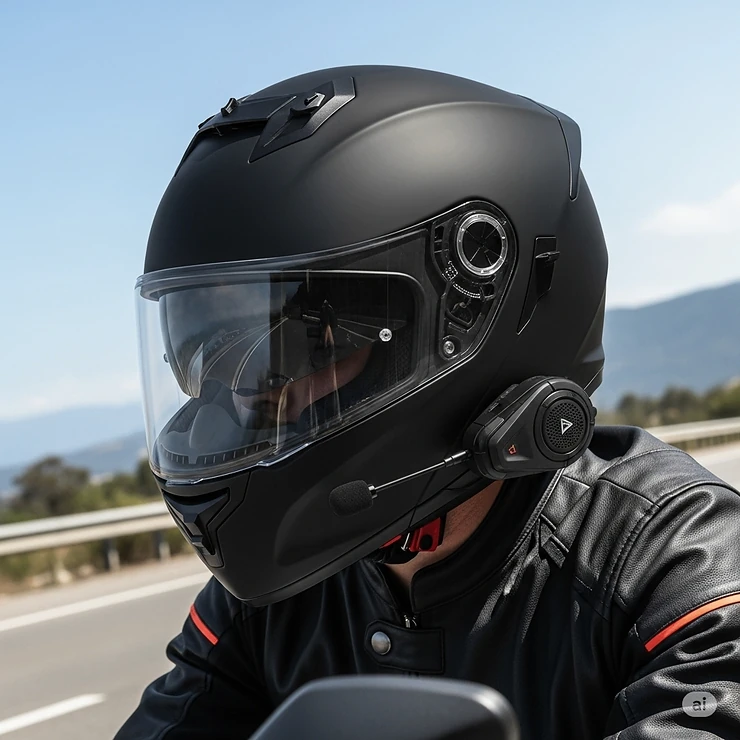
A bluetooth full face helmet is a motorcycle helmet that wraps the whole head, chin bar included, and carries a built-in communication system: speakers, a microphone, and a Bluetooth module. It lets you take calls, stream music, follow GPS directions, and talk to fellow riders without bolting anything onto the shell.
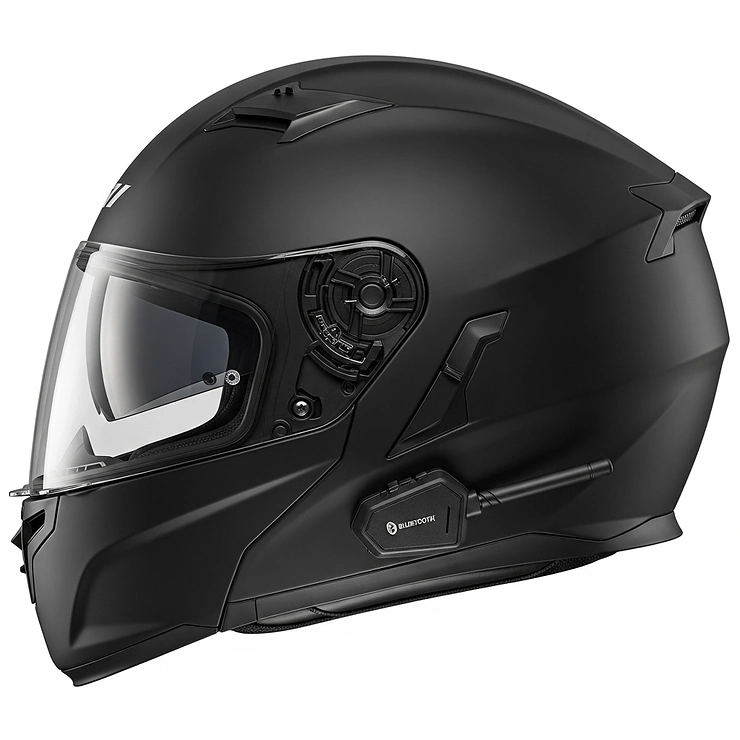
Here’s why that matters. Buying a bluetooth full face helmet solves the oldest annoyance in riding: the helmet-plus-gadget Frankenstein. No side-mounted pods catching the wind. No adhesive pads peeling off in August. No wires snaking under the liner. The electronics go in at the factory, so the weight sits where the engineers planned it and the whole package is certified as one unit.
The market has split into three camps. There are sub-$100 entry lids, $200-$300 workhorses, and premium Mesh-and-noise-cancelling flagships that cost about as much as a weekend away.
Full-face coverage isn’t just a style choice, either. Wikipedia’s overview of motorcycle helmets notes that studies found roughly 35% of crashes involve a major impact to the chin-bar area, the exact zone that open-face and half helmets leave bare.
This guide breaks down seven real full face bluetooth helmets, from budget to premium. It explains what each spec means on the road, summarizes the aggregated review themes I could verify, and gives you the framework to choose. Prices appear as ranges only, and where a data point couldn’t be verified, I say so instead of guessing. (Some links below are affiliate links, with full disclosure at the end.)
Bluetooth Full Face Helmet Quick Comparison: 7 Picks at a Glance
Skim this table first, then dive into the full breakdowns below. Think of it as the menu before the meal.
| Helmet | Standout Trait | Certification | Price Range | Best For |
|---|---|---|---|---|
| Sena Phantom ANC | Active noise cancellation | DOT + ECE 22.06 | Around $700 | High-mileage highway riders |
| Sena Phantom | Harman Kardon audio, flagship comms | DOT + ECE 22.06 | Mid-$500s | Premium comms without the ANC premium |
| Sena Stryker | Mesh 3.0, FM radio, lighter build | Confirm on the label | Check current price | Sport-touring groups |
| Sena Outforce | Entry ticket to Sena’s ecosystem | DOT | $250-$300 range | First-time smart helmet buyers |
| Torc T-15B | Spoiler plus drop-down sun visor | DOT + ECE 22.05 | $200-$250 range | Value-hunting commuters |
| VCAN Bluetooth Integrated Full Face | Dual visor, listed 300 m intercom | DOT | Check current price (mid-range tier) | Riders wanting a compact, no-frills setup |
| ILM X9 | Bluetooth 5.0 for under $100 | DOT | Under $100 | Beginners and casual riders |
Looking at the table above, the Sena Phantom ANC and Sena Phantom own the premium end because their certification and integration are the most thoroughly documented. The Torc T-15B and Sena Outforce are the sweet spot for riders who want real features without a four-figure feeling. At the bottom, the ILM X9 proves a bluetooth full face helmet can cost less than a nice dinner, though budget buyers should pay extra attention to fit and battery claims.
💬 Just one click — help others make better buying decisions too!😊
Top 7 Bluetooth Full Face Helmets: Expert Analysis
Before the picks, one safety-minded note. Injury research from the University of British Columbia’s biomechanics team, summarized in this helmet comparison from an injury biomechanics perspective, points out that the frontal area takes about half of all helmet impacts, and about 40% of those land on the chin bar. That is why every helmet below is a true full-face design rather than a “Bluetooth-ready” open-face compromise.
1. Sena Phantom ANC — noise cancellation built into the shell
Active noise cancellation sounded like a gimmick for motorcycle helmets until Sena designed a shell around it. The company claims up to 20 dB of ambient noise reduction, paired with AI noise suppression on the microphone and an ambient mode for when you want the world back.
The helmet carries both DOT and ECE 22.06 certification, a composite fiberglass shell, and a 1,700 mAh battery rated for roughly 35 hours of talk time. Weight is about 1,720 g in size medium. In practice, 35 hours means a charge can cover a full week of commuting, and the Pinlock-ready visor with a film in the box saves you a first-week accessory trip.
Based on the spec comparison, this is a highway-commuter and tourer’s helmet. The electronics live inside the shell instead of hanging off the side, so weight stays symmetrical and nothing acts like a tiny sail. Reviewers consistently praise the sound clarity, and one long-term review stresses that fit, meaning how the padding meets your head, matters more than any spec sheet number. Note too that one review describes the silence as most striking in undisturbed air, so don’t expect miracles in buffeting.
Pros:
- ✅ Active noise cancellation with a switchable ambient mode
- ✅ Fully integrated, with no external pods
- ✅ Dual DOT and ECE 22.06 certification
Cons:
- ❌ Premium price tier, around $700 at launch
- ❌ Fit-sensitive, so sizing and padding really matter
Price range: around $700 (check current price). Verdict: expensive, but the cost-per-ride math works for riders logging serious highway miles.
2. Sena Phantom — flagship comms without the ANC premium
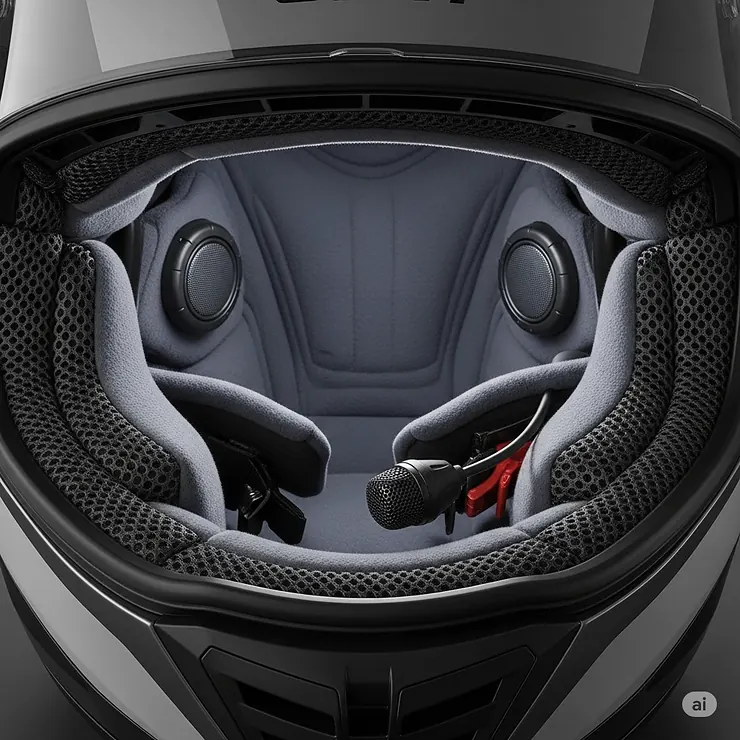
If the ANC version is the showpiece, the standard Phantom is the sensible flagship. It brings the core of Sena’s top-tier communication system into a purpose-built shell, minus the noise-cancelling module.
Specs worth translating: second-generation Harman Kardon speakers, dual internal antennas, a flush-mounted button interface, and a roughly 1,690 g weight in size medium. It carries DOT and ECE 22.06 certification plus red LED lights on the rear. One 2026 roundup lists Mesh 3.0 and Bluetooth 5.3. The dual antennas are about connection stability at the edges of range, and the flush buttons mean fewer places for wind noise to sneak in. A “Safe Power Mode” lets the helmet run on direct power, which Sena positions as a way to avoid overheating and extend battery life.
My read: this is the pick if you want premium audio and dependable group riding but don’t need a quieter cabin. It sits about $150 below its ANC sibling while sharing most of the plumbing. Verified independent review coverage is thinner for the non-ANC version, though roundups consistently place it at the top of 2026 lists.
Pros:
- ✅ Harman Kardon audio tuned for the helmet
- ✅ Dual DOT and ECE 22.06 certification
- ✅ Rear LED lights add visibility in traffic
Cons:
- ❌ Still a premium-priced purchase
- ❌ Mesh only links to other Sena Mesh units
Price range: mid-$500s at one retailer (prices vary). Verdict: the best value among the premium tier.
3. Sena Stryker — lightweight build with a feature buffet
The Sena Stryker is the Swiss Army knife of this list. Built for sport touring, it combines Mesh 3.0 and Bluetooth 5.0 intercom, a Harman Kardon speaker and microphone setup, built-in Wi-Fi with about a 10-meter working range, and a global FM radio with ten presets.
The 1,300 mAh battery is rated for about 18 hours of playback, which is shorter than the Phantom ANC but plenty for a long weekend. One roundup lists the weight at roughly 3.85 pounds and calls that impressive for a full-face. A lighter helmet means less neck fatigue by hour three, which is where weight really announces itself.
Here’s the honest analysis. The FM radio and Wi-Fi are nice to have, but the weight and Mesh 3.0 are the real story. Reviewers describe it as feature-packed and one outlet named it the best Bluetooth helmet of 2026. I couldn’t confirm a stable current price, and the certification marks should be checked on the label of the exact unit you buy.
Pros:
- ✅ Mesh 3.0 plus Bluetooth 5.0 intercom
- ✅ Lighter than many comparable full-face helmets
- ✅ FM radio and Harman Kardon audio included
Cons:
- ❌ Battery life trails the Phantom ANC
- ❌ Current pricing varies, so compare listings
Price range: check current price. Verdict: a strong all-rounder if Mesh and weight matter more than silence.
4. Sena Outforce — the budget door into Sena’s world
For riders who want Sena’s name without Phantom money, the Sena Outforce is the answer. It’s a DOT-rated full-face with Bluetooth 5.0, a four-way Bluetooth intercom, a retractable internal sun visor, and app compatibility, all ready out of the box with no installation.
The three-button control unit is easy to operate with gloves, and a micro-ratchet chin strap makes it quick to fasten. The “intermediate oval” fit means it suits heads that are neither narrow nor round, so try before you commit. One listing shows a list price around $269, and a 2026 roundup calls it the affordable integrated option.
Honest take: four-way Bluetooth intercom is fine for a couple of friends but isn’t Mesh. Bluetooth intercoms chain riders in a limited group, while Mesh handles larger, more fluid groups. If your rides involve three or four people, the Outforce is plenty. For a ten-bike club run, look up the product ladder. Reviewer themes center on the “no installation, no fuss” convenience.
Pros:
- ✅ Built-in Sena comms with no installation
- ✅ Retractable sun visor saves a sunglasses fumble
- ✅ Four-way intercom suits small riding groups
Cons:
- ❌ Bluetooth intercom rather than Mesh
- ❌ Intermediate oval fit won’t suit everyone
Price range: $250-$300 range (prices vary). Verdict: a smart middle-ground purchase.
5. Torc T-15B — spoiler and sun visor at a friendly price
The Torc T-15B is a long-running budget favorite with Blinc Bluetooth built in. It’s a polycarbonate full-face weighing about 3.5 pounds, with a built-in rear spoiler, a drop-down sun visor, a replaceable scratch-resistant and fog-free shield, and washable Cool Max padding.
The spoiler is meant to cut buffeting at speed, which matters because turbulence is what ruins helmet audio. The drop-down visor beats carrying a second set of shades. It carries DOT and ECE 22.05 certification, which is the older European series, since 22.06 has been in force since January 2022. That’s not a deal-breaker for U.S. riders, but it’s worth knowing. It’s sold in sizes XS through 2XL, with a long list of graphics.
On reviews, one retailer listing showed a high average across roughly 100 reviews, though that’s a single storefront’s data point. Some open-box listings also warn that Bluetooth on older units may not work due to age, which is a good reminder to buy new and check the manufacturing date.
Pros:
- ✅ Built-in spoiler and drop-down sun visor
- ✅ Washable padding keeps sweat under control
- ✅ Wide size range from XS to 2XL
Cons:
- ❌ ECE 22.05 rather than the current 22.06
- ❌ Blinc intercom is basic next to Sena Mesh
Price range: around $200-$250 range. Verdict: excellent value for commuters.
6. VCAN Bluetooth Integrated Full Face — compact, dual-visor simplicity
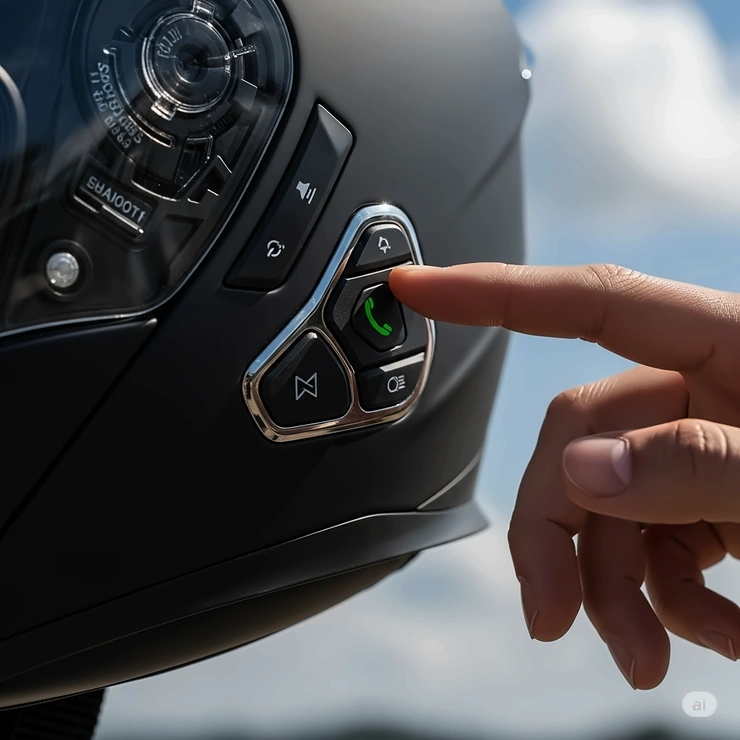
The VCAN Bluetooth Integrated Full Face is the no-frills workhorse of the list. It’s DOT-certified, with a dual-visor setup, multiple vents, and a listed intercom range of about 300 meters.
That range figure deserves translation. Numbers like 300 meters are open-air, line-of-sight claims, and real-world range through traffic, hills, and buildings is usually far shorter. Still, the dual visor is genuinely useful, because a flip-down sun shield makes tunnels and sunsets less dramatic.
A 2026 comparison page describes it as compact and “no-frills,” and positions it in the mid-range tier. I couldn’t verify a large independent review pool, so treat the praise as light evidence rather than a consensus. Buy from a seller with a clear return policy and check the DOT label on arrival.
Pros:
- ✅ Dual visor handles sun and shade easily
- ✅ Compact, integrated Bluetooth module
- ✅ DOT certification plus multiple vents
Cons:
- ❌ Limited independent review coverage
- ❌ Claimed range is optimistic outside open air
Price range: check current price (mid-range tier). Verdict: reasonable for budget-minded riders who accept the unknowns.
7. ILM X9 — the sub-$100 gateway helmet
The ILM X9 is the helmet for riders who want to try connected riding without committing. It’s a DOT-certified full-face with a flush-integrated Bluetooth 5.0 module, and one roundup calls it the best option under $100.
The standout claim is battery life of 24-36 hours talk time, which is manufacturer-reported and class-leading on paper. A claimed battery number tells you the module is efficient, not that the helmet is premium. At this price, expect modest speakers that won’t touch the Harman Kardon or HD systems above.
Honest analysis: the DOT label is the key safety fact, but DOT is a minimum standard, so fit becomes your main quality control. Roundups call it a gateway helmet for beginners and casual riders. Independent long-term durability data is thin, so I’d treat it as a low-risk way to learn whether you like helmet comms before upgrading.
Pros:
- ✅ Remarkably low entry price
- ✅ Bluetooth 5.0 module with long claimed battery life
- ✅ Full-face DOT protection
Cons:
- ❌ Modest speakers compared with premium systems
- ❌ Thin independent long-term review data
Price range: under $100 range. Verdict: great trial run, with caveats on durability.
✨ Don’t Miss These Carefully Selected Picks!
🔍 Take your riding to the next level with these carefully selected helmets. Click on any highlighted item to check current pricing and availability. These picks will help you create safer, more connected rides you’ll love!
Setting Up Your Bluetooth Full Face Helmet: The First 30 Days
The first month decides whether you’ll love or abandon your helmet comms. Here’s a practical schedule most listings never provide.
Day 1: charge and update. Charge fully before the first ride. The Sena Phantom ANC reportedly goes from empty to full in about 2.5 hours, so plan an evening. Install the manufacturer’s app and update firmware before you pair anything. Sena offers free periodic firmware updates through its software.
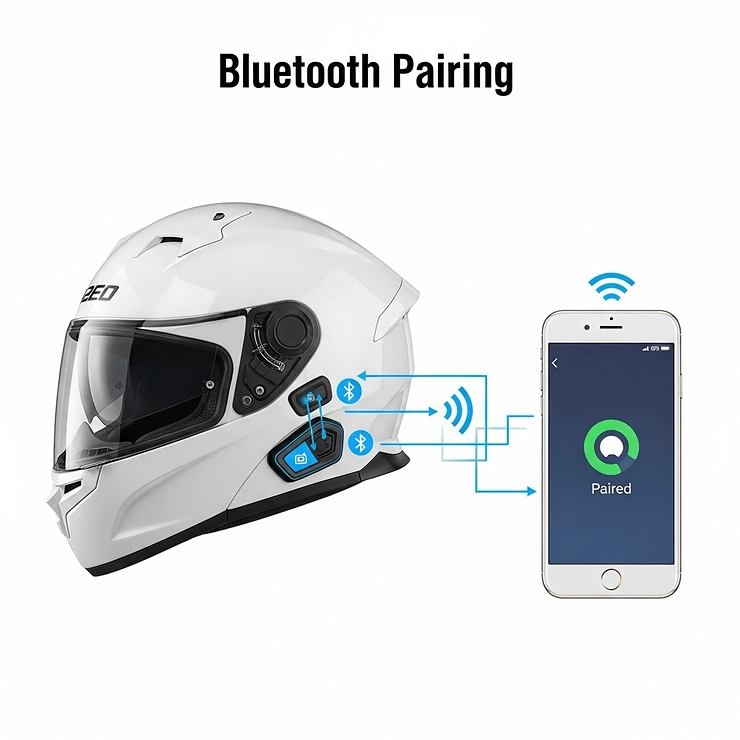
Days 2-7: pair and tune. Pair your phone first, then the intercom partner. Set volume at a standstill, then raise it slightly at 30 mph; wind noise changes everything. Learn the button layout without looking, because fumbling at a red light with gloves on is a rite of passage.
Weeks 2-3: check the fit. Check for pressure points around the cheeks and temples after rides over an hour. A helmet that’s slightly snug at first loosens as padding compresses. If it’s already painful, return it within the return window.
Week 4: build a maintenance habit. Wipe the visor with mild soap, not glass cleaner. Remove washable liners, such as the Torc T-15B‘s Cool Max padding, monthly. Store the helmet in its bag, away from heat and solvents. Never hang it on a mirror.
Common first-30-day mistakes: skipping firmware updates, over-tightening the strap, and cranking music so loud you can’t hear sirens. Keep volume low enough to hear the road.
Which Bluetooth Full Face Helmet Fits Your Riding Life? Three Real-World Scenarios
Specs are abstract. Let’s match helmets to riders, with budget, environment, and frequency of use.
Scenario 1: the college commuter. You ride 8 miles each way, five days a week, on a tight budget. You mostly need hands-free calls and navigation prompts. The ILM X9 or Torc T-15B fits here. The Torc T-15B‘s drop-down sun visor handles morning glare, and the ILM X9‘s entry price leaves room for gloves and a lock. The trade-off is simpler audio.
Scenario 2: the weekend group rider. You ride Saturday mornings with three or four friends, mixing city streets and canyon roads. A four-way intercom matters more than premium speakers. The Sena Outforce covers that group size, and the Sena Phantom is the upgrade if your friends also run Sena gear and you want Mesh.
Scenario 3: the long-distance tourer. You cover 400-mile days at highway speeds. Fatigue is your enemy: wind noise, neck strain, and constant buffeting. The Sena Phantom ANC addresses noise directly, while the Sena Stryker‘s lighter build helps your neck. Budget $500+ and plan for longer rides with a proper fit check.
The pattern is simple. Match the intercom type to your group size, then spend the rest of your budget on fit and noise control.
Common Bluetooth Full Face Helmet Problems and How to Fix Them
Even great helmets throw curveballs. Here are the usual suspects, with specific fixes.
Problem: wind noise drowns the audio. Fix: check the visor seal first, then add a neck warmer or wind skirt if one is compatible. Spoiler-equipped designs like the Torc T-15B reduce buffeting, and ANC on the Sena Phantom ANC attacks noise electronically.
Problem: connection drops mid-ride. Fix: update firmware, then delete and re-pair the device. Keep your phone in a front pocket rather than a bag, since bodies and metal block Bluetooth signals.
Problem: a fogged visor. Fix: use a Pinlock insert. The Sena Phantom ANC ships with a Pinlock film and a Pinlock-ready visor, and the Torc T-15B advertises a fog-free shield. Crack the visor open slightly at stops.
Problem: sweaty, smelly padding. Fix: wash removable liners monthly and let the helmet air-dry away from heat.
Problem: a sore ear from speakers. Fix: reposition speaker pockets or add thin foam. If it persists, the helmet may simply not fit your head shape.
How to Choose a Bluetooth Full Face Helmet
Choosing a bluetooth full face helmet comes down to seven steps, in this order.
- Confirm certification first. Look for the DOT label, and ideally ECE 22.06 as well. A comms system is worthless if the helmet fails at its main job.
- Prioritize full-face coverage. The chin bar absorbs a large share of frontal impacts, as the UBC biomechanics summary shows. Skip open-face options if protection is your priority.
- Match fit to your head shape. Intermediate oval, round oval, and long oval shapes are real. Try the helmet on for 15 minutes before deciding.
- Choose Mesh or Bluetooth intercom. Bluetooth suits two to four riders. Mesh scales better for large, fluid groups, though Sena Mesh only links to Sena Mesh units.
- Judge audio and noise control. Premium speakers and ANC help on long highway rides; budget speakers are fine for city commutes.
- Check battery life and charging. Aim for at least 15-20 hours of talk time, and confirm USB-C charging.
- Review warranty and updates. Firmware updates and multi-year warranties, such as the five years Sena offers on the Sena Phantom ANC helmet and electronics, protect your purchase.
Features That Actually Matter (And Those That Don’t)
Marketing sheets love long feature lists. Here’s the filter.
What matters: fit, certification, weight balance, button usability with gloves, battery life, and a visor that doesn’t fog. These determine whether you’ll wear the helmet daily.
What sometimes matters: noise cancellation (a big deal at highway speeds, less so for city riding) and Mesh intercom (essential for large groups, irrelevant for solo riders). The Sena Phantom ANC‘s noise reduction is genuinely different, but one standards explainer notes that ECE 22.06 helmets can’t dangerously impair hearing, which helps explain why ANC systems keep an ambient mode.
What rarely matters: built-in FM radio, Wi-Fi, and exotic color schemes. The Sena Stryker includes FM and Wi-Fi, which are pleasant extras, but you’ll choose that helmet for weight and Mesh. Don’t pay extra for features you’ll never touch, and never trade away fit for a longer spec list.
Bluetooth Full Face Helmet vs Add-On Intercom
You can also buy a regular full-face helmet and bolt on a communicator such as the Cardo Packtalk Edge. Which is smarter?
| Factor | Built-in Bluetooth Full Face Helmet | Add-On Cardo Packtalk Edge |
|---|---|---|
| Installation | Ready out of the box | Adhesive or clamp mount |
| Looks and wind noise | Clean, nothing protruding | External unit, magnetic mount |
| Portability | Tied to one helmet | Movable with a second helmet kit |
| Audio | Varies by model | 40 mm JBL speakers, Bluetooth 5.2, Mesh |
| Cost | $100 to around $700 | Around $400-$450 plus the helmet |
| Best for | Simplicity, one-helmet riders | Riders who own multiple helmets |
Looking at the comparison above, an integrated helmet wins on simplicity and clean aerodynamics, while the Cardo Packtalk Edge wins on flexibility. Reviewers praise its audio quality and note that the button mic suits full-face helmets. If you already own a helmet you love, an add-on makes sense. If you’re starting fresh, the Sena Outforce or Torc T-15B costs less than a helmet-plus-communicator combo.

Safety Guide: DOT, ECE 22.06, and Snell Explained
Safety labels are the least glamorous part of a bluetooth full face helmet, and the most important.
In the U.S., any street helmet must meet FMVSS No. 218, the federal standard administered by NHTSA. NHTSA’s rulemaking notice on motorcycle helmets explains that a properly certified helmet carries the DOT label, and that the agency’s enforcement targets sub-standard “novelty” helmets. ECE 22.06, in force since January 2022, adds more rigorous impact tests, including angled impacts and accessory testing. Snell is a voluntary, higher-energy standard.
| Standard | Who Sets It | Required in U.S.? | Best For |
|---|---|---|---|
| DOT (FMVSS 218) | U.S. federal government | Yes, for street use | Legal baseline |
| ECE 22.06 | UN/ECE framework | No, but widely respected | Broader, modern test coverage |
| Snell M2020 | Snell Memorial Foundation | No, voluntary | Higher-energy impact focus |
For street riders, a helmet that carries both DOT and ECE 22.06, like the Sena Phantom ANC and Sena Phantom, offers the most well-rounded testing. The Torc T-15B‘s ECE 22.05 is older, though still legitimate. Whatever you buy, verify the label on your actual unit.
Long-Term Cost, Maintenance and Value Analysis
Sticker price isn’t total cost. Think in cost-per-year. Many manufacturers suggest replacing a helmet around the five-year mark, so a roughly $700 helmet works out near $140 per year, about $12 per month. A sub-$100 helmet runs around $20 per year, but only if it lasts and fits well.
| Tier | Price Range | Helmets | Value Verdict |
|---|---|---|---|
| Entry | Under $100 to around $150 | ILM X9, VCAN Bluetooth Integrated Full Face | Low-risk trial, thin durability data |
| Mid | $200-$300 range | Torc T-15B, Sena Outforce | Best balance of features and cost |
| Premium | Mid-$500s to $700 | Sena Phantom, Sena Phantom ANC | Best audio, certification, and warranty |
The analysis is straightforward. The mid tier delivers the most features per dollar, while the premium tier pays off for high-mileage riders who value noise reduction and long warranties. Entry-level helmets work as a cheap experiment. Add-on route costs also stack up: a separate helmet plus a communicator in the $400-$450 range quickly reaches premium-helmet money.
Maintenance costs are small but real: replacement visors, Pinlock inserts, and fresh liners. Budget a modest annual amount, and charge batteries regularly to keep them healthy.
Common Mistakes When Buying a Bluetooth Full Face Helmet
Even smart shoppers trip over the same few mistakes.
Mistake 1: chasing spec sheets over fit. A helmet that pinches at the temples will end up in a closet, no matter the battery life. Fit beats features.
Mistake 2: trusting claimed range and battery numbers. Intercom ranges are open-air maximums, and talk-time figures come from manufacturers. Treat both as best-case.
Mistake 3: ignoring the DOT label. Novelty and counterfeit helmets exist. Federal rule 49 CFR 571.218 spells out the labeling requirements, including the “DOT” symbol and “FMVSS No. 218” wording. If it’s missing or looks printed on, walk away.
Mistake 4: buying a used helmet. You can’t see internal damage, and open-box listings sometimes warn that old Bluetooth modules may not work. Buy new from a reputable seller.
Mistake 5: ignoring ecosystem lock-in. Sena Mesh won’t connect to non-Sena units over Mesh, so check what your riding friends use before choosing.
What to Expect: Real-World Performance of a Bluetooth Full Face Helmet
Let’s turn specs into everyday experience. A good integrated helmet should disappear. After a short adjustment period, you should stop noticing the weight, the speakers, and the button placement.
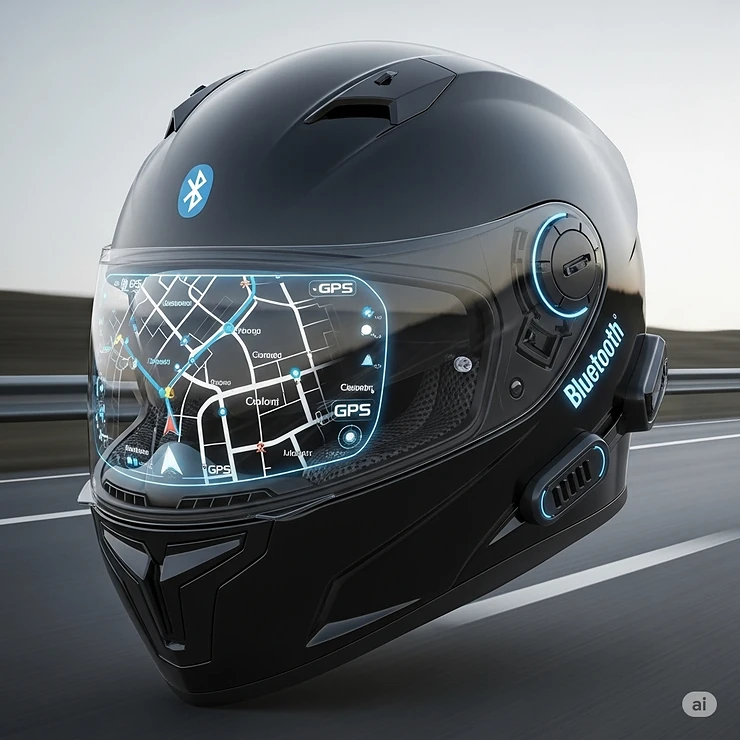
For calls and navigation, expect clear voice prompts at city speeds. At highway speeds, wind noise rises sharply, which is where ANC or a spoiler design matters. Reviewers of the Sena Phantom ANC report comfortable six-hour wear and standout sound clarity, though one review notes the quiet is most striking in smooth air. For music, premium speakers deliver richer bass; budget helmets suit podcasts and navigation better.
Battery life comes in two flavors: claimed and lived. A helmet claiming 35 hours of talk time will usually cover a week of commuting. Intercom range will be shorter than the headline number once hills and traffic intervene. Finally, expect a short learning curve with buttons and voice commands. Give yourself a couple of rides before judging the system.
FAQ
❓ How much does a bluetooth full face helmet cost?
❓ Can I use a bluetooth full face helmet with any intercom brand?
❓ Is a bluetooth full face helmet legal to ride with in the U.S.?
❓ How long does the battery in a full face bluetooth helmet last?
❓ Should I buy a bluetooth full face helmet or a separate intercom?
Conclusion
A bluetooth full face helmet is one of those upgrades that quietly reshapes every ride. Calls without pulling over, directions without glancing at a phone, a friend’s voice in your ear on a canyon road. It’s the connected-riding dream, minus the cable spaghetti.
So which one should you buy? If budget is tight and you’re curious, the ILM X9 is a low-risk starter. For the best balance of price and features, the Torc T-15B and Sena Outforce are the value pair. If you ride long highway miles and want the quietest, best-documented option, the Sena Phantom ANC is the flagship, with the Sena Phantom as a slightly cheaper sibling. The Sena Stryker suits riders who prize lighter weight and Mesh, while the VCAN Bluetooth Integrated Full Face fits those who want a compact, simple setup.
Whatever you choose, remember the order of priorities: certification, fit, then features. Try the helmet on, verify the DOT label, and treat claimed range and battery numbers as best-case. Ride safe, stay connected, and enjoy the conversation.
✨ Ready to find your perfect match? 🏍️ Click any highlighted helmet above to check current pricing and availability, and gear up for your next connected ride!
Recommended for You
- 7 Best Womens Full Face Motorcycle Helmets That Actually Fit Women in 2025
- 7 Best Pink Helmets for Motorbikes That Deliver Superior Safety in 2025
- 7 Best German Motorcycle Helmet Options for Ultimate Protection in 2025
Disclaimer: This article contains affiliate links. As an Amazon Associate, I earn from qualifying purchases. If you purchase products through these links, we may earn a small commission at no additional cost to you.
✨ Found this helpful? Share it with your friends! 💬🤗
