

In This Article
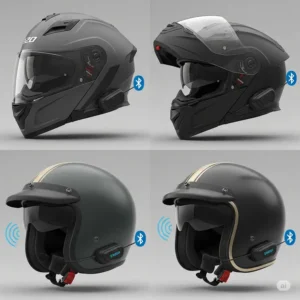
Picture the highway at 70 mph. The wind is roaring, your phone is buzzing in a pocket you can’t reach, and the GPS voice is lost somewhere behind your left ear. That daily absurdity is exactly what motorcycle helmets with bluetooth were built to fix. Speakers, a microphone, and a battery live inside the lid, so calls, maps, and music arrive without a dangling wire or a clamp-on gadget.
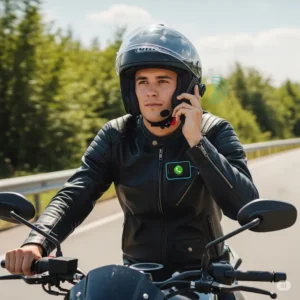
Here’s the catch. A motorcycle helmet is first a crash-protection system, with a foam liner that absorbs impact and a hard outer shell. A smart motorcycle helmet with bluetooth has to add electronics without weakening that job. In 2026 the market has split into pricey mesh-equipped flagships, solid mid-range modulars, and bargain options with older Bluetooth chips. The spec sheets don’t make the differences obvious.
So we did the homework. This guide compares seven real helmets across budget, mid-range, and premium tiers. We read published expert reviews and manufacturer specs, and we looked for aggregated owner sentiment. We have not personally worn these helmets, and you won’t find invented test stories here. What you will find is honest analysis, spec interpretation, and clear advice on which bluetooth helmet motorcycle riders should shortlist, and why.
Prices below are ranges, not quotes. They change constantly, so check current price before you buy.
Quick Comparison: Motorcycle Helmets With Bluetooth at a Glance
| Helmet | Style | Comms platform | Approx. weight | Price range | Best For |
|---|---|---|---|---|---|
| Sena Phantom ANC | Full face | Bluetooth 5.3, Mesh 3.0, noise cancelling | ~1.7 kg | $650-$700 | Quiet highway touring |
| Sena Stryker | Full face | Bluetooth 5.0, Mesh 2.0 | 1.75 kg | Varies, check current price | Group rides on a proven platform |
| Shoei Neotec 3 (with SRL3) | Modular | Bluetooth 5.0 + mesh via SRL3 | ~1.7-2.0 kg | $1,250-$1,350 combined | Premium daily modular |
| Schuberth C5 | Modular | Pre-wired for SC2 unit (sold separately) | ~1.64 kg | Premium, check current price | Noise-sensitive tourers |
| Sena Outrush R | Modular | Bluetooth 5.0/5.1, 4-way intercom | 1.73 kg | $320-$360 | Value-minded commuters |
| Scorpion EXO-GT930 (with EXO-COM) | Convertible modular | EXO-COM kit | Heavier side | $250-$450 | Flexible, budget-friendly riders |
| ILM 902BT | Modular | Bluetooth 3.0 | ~1.9 kg | $180-$220 | Entry-level buyers |
Looking at the table, the Sena Phantom ANC and Sena Stryker deliver the most modern group-ride tech, while the Sena Outrush R is the sweet spot for riders who mostly want phone, music, and a buddy or two. The ILM 902BT wins on sticker price, but its older Bluetooth 3.0 standard is the trade-off. Premium modulars like the Shoei Neotec 3 and Schuberth C5 cost more mainly for refinement and quietness, not extra features.
💬 Just one click — help others make better buying decisions too!😊
Top 7 Motorcycle Helmets With Bluetooth: Expert Analysis
1. Sena Phantom ANC — quietest cabin in a smart helmet
Active noise cancellation in a helmet sounds like marketing until you remember how loud 70 mph really is. The Sena Phantom ANC is the one that makes the idea real.
It pairs a fiberglass shell, rated DOT and ECE 22.06, with a comms system derived from Sena’s 60S. That means Bluetooth 5.3 for phone and GPS, Mesh Intercom 3.0 for groups of up to 24 riders, and AI-based noise reduction. On paper, that translates into fewer dropouts in a pack and a microphone that stays intelligible when the wind picks up. One quirk matters: the Phantom family supports rider-to-rider chat only through mesh, so a friend on a Bluetooth-only headset can’t join.
Based on the specs, this helmet suits riders who log highway miles and ride with friends who also run Sena mesh. Published reviews are enthusiastic about the acoustics. One reviewer reported wind noise staying essentially flat between 40 and 70 mph and called the audio clarity the best they’d heard in a helmet. Detailed owner-level review data was thin at the time of research, so treat that as expert opinion rather than consensus.
Pros:
- ✅ Noise cancellation tames highway wind roar
- ✅ Mesh 3.0 supports 24-rider private groups
- ✅ Brake-sensing rear light boosts visibility
Cons:
- ❌ No rider-to-rider chat with Bluetooth-only headsets
- ❌ Premium price tag
Expect roughly $650-$700 at the time of research. For heavy highway riders it’s a justified splurge. For casual riders it’s more helmet than they’ll use.
2. Sena Stryker — mesh and Bluetooth built in, taillight included
The Sena Stryker was one of the first helmets to bake Sena’s mesh technology directly into a full-face shell, and it still holds up as a “do-everything” pick. Its standout feature is flexibility: it offers both Mesh and traditional Bluetooth intercom.
Under the hood is a Harman Kardon-tuned speaker and mic setup running Bluetooth 5.0 and Mesh 2.0. The Bluetooth intercom links four riders at up to 1.2 miles, while Group Mesh handles up to 24 riders. Sena lists up to 18 hours of Bluetooth talk time and about 10 on mesh, which comfortably covers a full day of riding. A retractable sun visor, an LED taillight, and a magnetic pogo charging port round out the package. The shell is composite fiberglass, listed at about 1,750 g in a medium.
Here’s the analytical read. The Stryker runs on the older 50S-era platform, so it lacks the newer noise reduction and Mesh 3.0 of the Sena Phantom ANC. A comparison review notes that distinction, while praising the convenience of skipping an aftermarket unit entirely. If you ride with friends on older Sena gear, that backward compatibility is actually a feature.
Pros:
- ✅ Mesh plus four-way Bluetooth intercom in one helmet
- ✅ Long Bluetooth talk time suits all-day rides
- ✅ Taillight and sun visor built in
Cons:
- ❌ Older platform than the newest Sena helmets
- ❌ Certification labeling varies by region, so check yours
Pricing has moved around since launch, so check current price. Verdict: strong value if you want group comms without paying for the newest silicon.
3. Shoei Neotec 3 — premium modular with a dedicated comms bay
Shoei built the Shoei Neotec 3 with a purpose-made space for Sena’s SRL3 communicator, so the integration looks factory-clean. That tidy fit is the standout.
The helmet itself runs about $900-$1,000, with the SRL3 adding roughly the low-to-mid $300s. The SRL3 brings Bluetooth 5.0, mesh and Bluetooth intercoms, Harman Kardon sound, voice commands, and FM radio. Reviewers put the SRL3’s Bluetooth range at up to 1.2 miles and talk time at about eight hours. Shoei lists the helmet at around 4.15 lb, and one reviewer measured 4.35 lb with the SRL3 installed. In practical terms, that’s heavy enough to matter on long days.
Published opinions split on the weight. One reviewer found his neck sore after an hour, while another wore it on 350-mile days without complaint. Reviewers also love the liner and the quieter chin curtain. One practical gotcha: the removable ear pads must be discarded to fit the SRL3.
Pros:
- ✅ Factory-integrated comms bay looks clean
- ✅ Plush liner and quiet, aero-tuned shape
- ✅ Flip-up convenience for stops and conversations
Cons:
- ❌ Noticeably heavy once the SRL3 is installed
- ❌ Total cost exceeds most rivals
Expect roughly $1,250-$1,350 all-in. It’s a luxury purchase that rewards riders who value polish over spec-sheet bragging rights.
4. Schuberth C5 — engineered around wind noise
The Schuberth C5 is a modular touring helmet whose headline feature is quietness. Schuberth claims just 85 dB(A) at 100 km/h, a manufacturer figure that independent reviewers haven’t verified.
It’s the first modular to earn ECE 22.06 certification. The shell is fiberglass with a carbon layer, and listings put it around 1,640 g. HD speakers and three antennas for FM, Bluetooth, and mesh come pre-installed, so adding Schuberth’s SC2 comms unit (sold separately) is essentially plug-and-play. A dual chin air intake with a washable filter helps ventilation.
Our honest take: it’s a premium, comfort-first helmet, and the comms are the second act. If you hate helmet roar, the aeroacoustic focus is the point. If you want a ready-to-talk helmet out of the box, remember the SC2 unit is an extra purchase. We couldn’t verify a large pool of detailed owner reviews for the full Bluetooth setup, so check the certification label for your market and read recent buyer feedback.
Pros:
- ✅ Noise-focused design with claimed 85 dB(A)
- ✅ Antennas and speakers pre-installed
- ✅ Lighter than many modulars
Cons:
- ❌ Comms unit sold separately
- ❌ Premium pricing, especially in carbon
Expect a premium bracket; check current price. It’s best for noise-sensitive riders who’ll happily pay for calm.
5. Sena Outrush R — modular value with comms built in
The Sena Outrush R is the “sensible shoes” of Bluetooth lids: a modular with a retractable sun visor and a fully integrated system. Its standout is how little fuss it asks of you.
The polycarbonate shell weighs about 1,730 g in a medium and carries DOT certification. Sena’s four-way Bluetooth intercom is rated to roughly 900 meters, and the helmet pairs easily with a phone via the Sena app. Talk time is listed at up to 12 hours on most versions, with a Bluetooth 5.1 variant claiming up to 18, so verify the exact spec on the one you’re buying. Charging takes about 2.5 hours.
What does that mean in practice? For a commuter, it’s ample: one overnight charge covers a week of short rides. The trade-off is the lack of mesh. If your group is bigger than four, or spread out, you’ll feel the ceiling. Retailer ratings sit around four out of five stars on a decent number of reviews, a respectable if not glowing signal.
Pros:
- ✅ Integrated speakers and mic, no wiring
- ✅ Four-way intercom plus app support
- ✅ Retractable sun visor included
Cons:
- ❌ No mesh intercom
- ❌ Polycarbonate shell is a bit heavy
Expect roughly $320-$360. It’s a smart-value pick for commuters and casual tourers.
6. Scorpion EXO-GT930 — converts from full face to open face
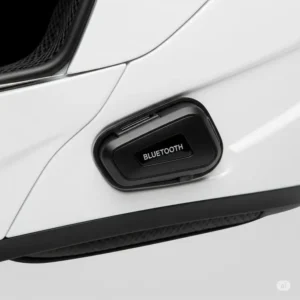
The Scorpion EXO-GT930 has a party trick: the chin bar comes off, converting it to an open-face helmet with a detachable peak. That versatility is its standout.
It’s dual-homologated (DOT and ECE P/J) with a polycarbonate shell. It’s built to take Scorpion’s EXO-COM Bluetooth kit, made by UClear, and the large speaker pockets also fit many other comms systems. At launch the helmet started around $250, the EXO-COM added about $190, and the matte-black bundle ran about $425. That bundle-only color restriction is a quirk to watch.
Here’s the reasoning. This is a flexible, budget-friendly helmet for riders who want one lid for summer and winter. Reviewers praise the comfort and accurate sizing for the price but note it’s a heavy helmet with and without the comms unit. The ability to swap in other brands’ intercoms is a genuine long-term advantage if you outgrow EXO-COM. Retailer ratings land around four out of five stars from roughly 90 reviews.
Pros:
- ✅ Removable chin bar for open-face riding
- ✅ Speaker pockets fit other comms units
- ✅ Strong value for a dual-homologated helmet
Cons:
- ❌ Heavier than many rivals
- ❌ Bluetooth kit is a separate add-on
Expect roughly $250-$450 depending on the kit. It’s a great-value pick for flexibility seekers.
7. ILM 902BT — entry-level Bluetooth at a bargain price
The ILM 902BT is the budget standard-bearer, with an integrated Bluetooth system, a dual-visor modular design, and an FM radio. Its standout is the sheer cost of entry.
Listings say it meets FMVSS 218 DOT standards. The Bluetooth system is the older 3.0 standard, so expect less efficient power use and shorter range than newer chips. Battery claims are 12 hours of phone talk, 8-9 hours of intercom, and over 100 hours of standby. Intercom range claims vary by listing, from 500 to 1,000 meters. The standard model links 2-3 riders, while the PRO supports 6-8. Weight is reported near 1.9 kg.
Be realistic about what this buys. Rider-to-rider chat works only between ILM helmets, so you can’t mix brands. Listings also warn the helmet runs one size small because of the Bluetooth module, and the battery can enter deep sleep until recharged for roughly half an hour. Review summaries on retailer pages generally say pairing works well.
Pros:
- ✅ Lowest cost of entry on this list
- ✅ Dual visor and FM radio included
- ✅ DOT-compliant per manufacturer listings
Cons:
- ❌ Older Bluetooth 3.0 standard
- ❌ Intercom works only with ILM helmets
Listings clustered around $180-$220 at the time of research. It’s good value for casual riders, but look elsewhere for group rides.
✨ Don’t Miss These Exclusive Deals!
🔍 Take your riding comms to the next level with these carefully selected helmets. Click on any highlighted product name to check current pricing and availability. Whether you’re after a quiet touring lid or a pocket-friendly commuter, there’s a connected helmet here that fits your ride!
What Is a Motorcycle Helmet With Bluetooth?
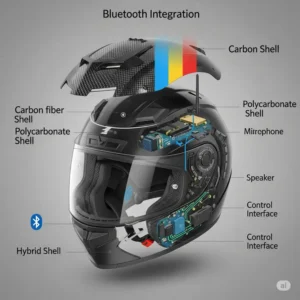
A motorcycle helmet with bluetooth is a certified protective helmet with built-in speakers, a microphone, and a rechargeable communication module. It connects wirelessly to your phone, GPS, or other riders’ helmets, so you can take calls, hear navigation prompts, stream music, and talk to a passenger without removing your hands from the controls.
The term covers two flavors. Fully integrated helmets, like the Sena Outrush R or ILM 902BT, ship with the system installed. “Comms-ready” helmets, like the Schuberth C5 or Scorpion EXO-GT930, include speakers, antennas, or pockets but need you to add the communicator. Both count as bluetooth helmets motorcycle shoppers consider, and the choice affects price and flexibility more than safety.

How to Choose Motorcycle Helmets With Bluetooth
- Check certification first. In the U.S., FMVSS 218 applies to all helmets designed for highway use, so look for the DOT label before anything else. Bluetooth cannot compensate for weak protection.
- Pick your helmet style. Full-face helmets offer the most coverage, and one common Wikipedia-cited figure says 35% of crashes show major impact at the chin bar. Modulars trade a little of that for convenience.
- Decide integrated or comms-ready. Integrated is simpler. Comms-ready lets you upgrade the electronics later.
- Match the comms to your group. Solo or with one buddy, Bluetooth intercom is plenty. Bigger groups want mesh.
- Check battery life against your ride length. Talk time claims range from about 8 to 18 hours, and mesh usually drains faster.
- Mind the weight. Extra grams on a neck add up. A 4.35 lb helmet felt too heavy to one reviewer after an hour.
- Try sizing carefully. Several listings say Bluetooth helmets run one size small, so measure and check the brand’s size chart.
Features That Actually Matter (And Those That Don’t)
Marketing loves big numbers, so let’s sort them. What matters: wind noise control, microphone quality at speed, intercom compatibility, and firmware updates. The Sena Phantom ANC supports over-the-air updates through the Sena Motorcycles app, which means the helmet can improve after you buy it.
What matters less: claimed range. A “1.2 mile” figure assumes open terrain with no hills or traffic, so real-world performance will be shorter. Likewise, huge standby claims, like the ILM 902BT‘s 100-plus hours, tell you little about daily use.
Mildly useful extras include FM radio, voice assistants, and integrated lighting. Voice commands are handy with gloves on, and the brake-reactive rear light on the Sena Phantom ANC is a genuine safety extra. But if you never listen to FM, don’t pay extra for it.
Spec check: Bluetooth version. Newer is better, but only to a point. Bluetooth 5.x chips in the Sena Stryker and Sena Outrush R are modern enough that the difference between 5.0 and 5.3 won’t change your commute. The jump from 3.0 to 5.x is the one that matters.
Integrated Helmets vs Add-On Headsets
| Factor | Built-in helmet | Clip-on headset |
|---|---|---|
| Installation | None, ready out of the box | Clamp or adhesive mount |
| Wind noise | Speakers sit in tuned pockets | Depends on helmet fit |
| Upgradability | Tied to the helmet | Swap the unit anytime |
| Cost | Bundled in the price | Added on top of helmet |
| Best For | Sena Outrush R, ILM 902BT buyers | Riders who love their current helmet |
Reading the table, an integrated motorcycle helmet with bluetooth wins on convenience and a clean look. An add-on headset wins when you already own a helmet you love or want the freedom to upgrade as technology changes. Comms-ready helmets like the Schuberth C5 and Scorpion EXO-GT930 split the difference, giving you factory-prepared pockets and antennas with an upgradeable module.
Setting Up Your Bluetooth Helmet: The First 30 Days
New gear has a learning curve, so here’s a practical playbook.
Week one: pair and tune. Charge fully before the first ride. Pair the helmet with your phone in the Bluetooth menu, then open the brand’s app (for Sena, the Sena Motorcycles app) to adjust settings. Check for firmware updates immediately.
Week two: test at low speed. Set volume at a standstill, then recheck at 30 mph, and again at highway speed. Wind noise will force you to raise volume, so find a level that doesn’t tempt your ears into trouble (see the hearing section below).
Week three: build habits. Charge after every long ride. With the ILM 902BT, remember the battery can sleep deeply if left unused, so give it half an hour on the charger to wake it.
Week four: clean and inspect. Many liners and cheek pads are removable and washable. Keep electronics dry, and be careful when removing the pads on helmets like the Shoei Neotec 3, where the ear pads must be discarded to fit the comms unit.
Common first-month mistakes: skipping firmware updates, over-tightening mic booms, and forgetting that sizing can run small.
Real-World Scenarios: Which Helmet Fits Which Rider
The 12-mile commuter. A rider with a modest budget, daily short trips, and mostly solo rides wants phone calls and navigation. The Sena Outrush R is a natural fit, with enough battery for a full week of commutes. If budget is tighter, the ILM 902BT works, provided you accept the older Bluetooth standard.
The weekend group of six. A crew of friends with mixed riding speeds needs reliable group chat across distance. Mesh is the answer. The Sena Stryker or Sena Phantom ANC supports Group Mesh for up to 24 riders, so everyone stays in the conversation even when the pack stretches. Make sure everyone’s on compatible Sena gear first.
The two-up long-distance tourer. Eight-hour days, a passenger, and constant wind noise call for comfort-first design. The Schuberth C5 is built around low noise, while the Shoei Neotec 3 offers a plush liner and a dedicated comms bay. Both cost real money, but fatigue is the enemy on long trips, and quieter helmets fight it.
The flexible seasonal rider. Someone who wants full-face in winter and open-face in summer should consider the Scorpion EXO-GT930, whose removable chin bar covers both seasons.
Common Bluetooth Helmet Problems and Their Solutions
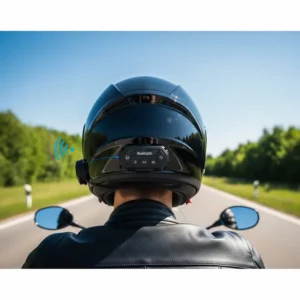
Problem: muffled or quiet audio at highway speed. Solution: choose a helmet with noise reduction, like the Sena Phantom ANC, or add well-fitted earplugs and reposition the speakers. Fit matters as much as the electronics.
Problem: the helmet feels too tight. Solution: several listings, including the ILM 902BT, say it runs one size small because of the module. Size up and try it on before committing.
Problem: your friends use different brands. Solution: standards differ. The ILM 902BT intercom works only with other ILM helmets, and Sena’s mesh pairs with Sena. Align on one ecosystem before buying.
Problem: battery dies mid-trip. Solution: pick a helmet whose talk time exceeds your longest day. The Sena Stryker lists up to 18 hours on Bluetooth, though mesh use shortens that. Charge nightly on tours.
Safety, Hearing, and Legal Guide
Start with the law. Helmet rules are set state by state, and the IIHS helmet law table shows what applies where you ride. IIHS data indicates that in 2023, 94% of motorcyclists observed in universal-law states wore helmets, versus 72% in states without such laws. Whatever your state requires, a DOT-labeled helmet is the baseline.
Next, hearing. The CDC’s NIOSH recommends keeping exposure below an 85 dBA equivalent over eight hours. Testing cited by riding publications found wind noise exceeding 100 decibels at highway speeds, which is enough to be damaging after just 15 minutes unprotected. A helmet with built-in speakers can make this worse if you crank the volume to compete with the wind. Choose helmets with strong noise control, keep volume moderate, and consider earplugs.
Finally, remember that comms hardware doesn’t change crash performance, but it adds weight. That’s why the weight figures on the Shoei Neotec 3 and the Schuberth C5 deserve attention beyond the marketing copy.
Long-Term Cost and Maintenance
| Tier | Example | Price range | What you gain | Best For |
|---|---|---|---|---|
| Budget | ILM 902BT | $180-$220 | Basic intercom, low risk | First-timers |
| Mid-range | Sena Outrush R, Scorpion EXO-GT930 | $250-$450 | Modern Bluetooth, flexibility | Commuters |
| Upper-mid | Sena Stryker, Sena Phantom ANC | Check current price; $650-$700 for Phantom ANC | Mesh, advanced audio | Group riders |
| Premium | Shoei Neotec 3, Schuberth C5 | $900+ | Refinement, quietness | Tourers |
The table shows a familiar pattern: price rises faster than function. A Sena Outrush R gets you most of the everyday benefit for a fraction of the premium cost. Where premium money pays off is comfort and noise reduction on long days. Consider total cost, too. The Shoei Neotec 3 plus its comms unit runs roughly $1,250-$1,350, and a Scorpion EXO-GT930 with its kit lands closer to $425. Warranty also matters, and Sena lists multi-year coverage on some Phantom models.
Maintenance is minimal: wash removable liners, keep the charging port clean, update firmware, and replace the helmet per the maker’s guidance, since the foam liner ages regardless of the electronics. One retailer also lists the BILT Techno 3.0 as discontinued, a reminder that comms electronics can outlive a model line.
Common Mistakes When Buying Motorcycle Helmets With Bluetooth
Buying on specs alone. Fit beats features. A helmet that pinches won’t get worn, and it won’t protect you if it shifts.
Ignoring ecosystem lock-in. An intercom that only works with one brand, as with the ILM 902BT, limits your riding friends’ options.
Overpaying for features you won’t use. If you ride solo, mesh for 24 riders is wasted money.
Skipping the weight check. Premium helmets can be heavy, and neck fatigue is real.
Forgetting regional certification. Some models ship with different ratings by region, as with the Sena Stryker, so confirm the label on the exact helmet you’re buying.
Assuming all review scores are equal. A four-star rating from 100 buyers tells you more than a perfect score from five. Read the complaints, not just the stars.
Frequently Asked Questions About Motorcycle Helmets With Bluetooth
❓ Can I use a bluetooth helmet motorcycle intercom with a friend's different brand?
❓ How long does the battery last on bluetooth helmets motorcycle riders buy?
❓ Do motorcycle helmets with bluetooth run small?
❓ What happens to my protection if the Bluetooth battery dies?
❓ Is a motorcycle helmet with bluetooth legal to ride in?
Conclusion: Which Motorcycle Helmet With Bluetooth Should You Buy?
The right pick depends on how you ride. If you chase quiet highway miles with a crew, the Sena Phantom ANC is the technology leader, while the Sena Stryker delivers much of the same group-ride capability for riders who don’t need the newest chip. If you value polish on long tours, the Shoei Neotec 3 and Schuberth C5 justify their premium prices with comfort, though neither is cheap or light.
For everyday riders, the Sena Outrush R is the smart middle path, and the Scorpion EXO-GT930 adds seasonal flexibility with room to change comms later. The ILM 902BT keeps the entry price low, as long as you accept Bluetooth 3.0 and a closed ecosystem.
Whichever you choose, put certification, fit, and hearing protection first and the gadgets second. Great audio is a bonus. A properly fitting, DOT-certified helmet is the whole point.
Disclaimer: This article contains affiliate links. As an Amazon Associate, I earn from qualifying purchases. If you purchase products through these links, we may earn a small commission at no additional cost to you.
✨ Found this helpful? Share it with your friends! 💬🤗
