

In This Article
There’s something magnetic about throwing a leg over a vintage cruiser with nothing but the wind in your face and a classic helmet perched on your head. The retro open-face protection movement isn’t just nostalgia — it’s a calculated blend of old-school aesthetics and cutting-edge safety technology that serious riders demand in 2026.
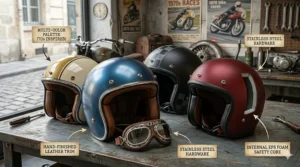
What most buyers overlook about modern retro helmets is this: they’re engineered with the same impact-resistant materials and DOT-certified shells as their full-face counterparts, just packaged in that iconic 1960s silhouette. The difference between a novelty helmet and genuine retro open-face protection comes down to multi-density EPS liners, proper ventilation systems, and certifications that actually matter when asphalt meets skull. The vintage motorcycle gear renaissance has pushed manufacturers to deliver authentic throwback designs without the throwback safety compromises — something impossible just a decade ago when retro styling meant sacrificing modern protection standards.
Here’s what the spec sheet won’t tell you: a properly fitted classic bowl helmet with DOT approval will outperform a loose full-face in real-world crash scenarios. Fit trumps coverage when retention systems fail, which is exactly why understanding which retro helmet styles match your head shape matters more than chasing the cheapest price tag on Amazon.
Quick Helmet Comparison: Find Your Perfect Match
| Helmet Model | Price Range | Weight | Key Feature | Best For |
|---|---|---|---|---|
| Bell Custom 500 | $200-$280 | 2.6 lbs | 5 shell sizes | Traditional riders seeking premium fit |
| Scorpion EXO-C110 | $110-$150 | 2.5 lbs | Drop-down sun visor | Budget-conscious commuters |
| Biltwell Bonanza | $130-$150 | 2.4 lbs | Ultra-low profile | Riders avoiding “mushroom head” look |
| LS2 Spitfire | $100-$140 | 2.5 lbs | Built-in sun shield | Value hunters wanting modern features |
| TORC T50 Route 66 | $80-$130 | 3.2 lbs | Ultra-suede liner | Weekend cruisers on tight budgets |
| Daytona Cruiser | $85-$120 | 2.4 lbs | Smallest DOT shell | Small or large head sizes |
| ILM Open Face 726X | $70-$100 | 2.8 lbs | Removable face mask | Entry-level classic riders |
Looking at this comparison, the Bell Custom 500 justifies its premium with those five shell sizes — most competitors force you into a one-size-fits-most approach that leaves intermediate oval heads squeezed or round heads swimming in excess padding. If budget is your priority, the Scorpion EXO-C110 delivers the drop-down sun visor that Bell charges extra for, though you’ll sacrifice some of that hand-stitched interior luxury. The Biltwell Bonanza sits in the sweet spot for riders who’ve tried other 3/4 helmets and ended up looking like a bobblehead — that low-profile shell actually works.
💬 Just one click — help others make better buying decisions too! 😊
Top 7 Retro Open-Face Protection Helmets: Expert Analysis
1. Bell Custom 500 — The Gold Standard Since 1954
The Bell Custom 500 isn’t just trading on heritage — it’s the blueprint every other retro helmet copies. Bell’s engineers pioneered modern helmet design starting in 1954, and they use five distinct shell and EPS liner sizes, meaning an XL rider gets an XL-proportioned shell instead of the same large shell with thicker pads crammed inside. This is why the Custom 500 doesn’t give you that oversized bobblehead silhouette that plagues budget alternatives.
What the product listing won’t mention: that low-profile carbon composite shell weighs 200 grams less than comparable fiberglass models, which translates to noticeably less neck fatigue on 3+ hour rides. The genuine leather interior with anti-bacterial treatment means this helmet won’t develop that sweaty gym-bag smell after a summer of daily commuting — something cheaper synthetic liners can’t match. Bell’s integrated 5-snap pattern accepts aftermarket bubble shields and visors without adapter kits, a detail that saves you $30-$50 down the road.
Customer feedback consistently praises the D-ring closure system with that leather pull strap — it’s old-school but significantly more secure than quick-release buckles that can pop open in a slide. The trade-off? You need both hands to fasten it, which annoys riders making frequent gas station stops. For riders prioritizing fit precision and long-term durability over convenience, the Custom 500 remains unbeatable.
Pros:
✅ Five shell sizes eliminate mushroom-head proportions
✅ Genuine leather interior resists odor buildup
✅ Universal snap pattern for aftermarket accessories
Cons:
❌ D-ring closure requires two-handed operation
❌ Premium price puts it $100+ above budget options
Price Range: Around $200-$280 depending on finish | Expert Verdict: Best investment for riders logging 5,000+ miles annually who value fit precision and material quality over initial cost savings.
2. Scorpion EXO-C110 — Budget-Friendly Modern Hybrid
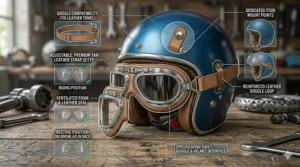
The Scorpion EXO-C110 bridges that gap between vintage aesthetics and contemporary convenience features most retro purists skip. That two-stage drop-down SpeedView sun visor deploys with a side switch, protecting your eyes from late-afternoon glare without fumbling with snap-on accessories. What sets this apart from cheaper integrated visors: Scorpion uses scratch-resistant coatings on both sides and includes interchangeable tint options — details that matter when you’re squinting into sunrise commutes six months from now.
In practical terms, the dual-density EPS liner extends down to protect the lower rear skull, an area where basic half-shells leave you vulnerable during backward falls. The advanced polycarbonate shell uses High-Pressure Thermoplastic Technology (HPTT), which sounds like marketing speak until you realize it distributes impact energy across a wider surface area than standard ABS. Scorpion squeezed these engineering upgrades into the $110-$150 price bracket by simplifying the retention system to a quick-release buckle and using KwikWick II synthetic liners instead of premium materials.
Real-world rider feedback splits on fit: the round shell shape works brilliantly for round heads but squeezes intermediate oval skulls uncomfortably around the temples. Scorpion’s sizing runs slightly small, so ordering up if you’re between measurements prevents that vise-grip pressure that builds into headaches after 30 minutes.
Pros:
✅ Two-position drop-down sun visor included
✅ Dual-density EPS for enhanced rear skull protection
✅ HPTT shell technology at budget price point
Cons:
❌ Round shell shape doesn’t suit all head types
❌ Sizing runs small — order up if borderline
Price Range: Around $110-$150 range | Expert Verdict: Ideal for urban commuters who need that sun visor functionality but won’t sacrifice modern safety features for pure vintage authenticity.
3. Biltwell Bonanza — Ultra-Low Profile Done Right
Where most retro helmets compromise between DOT certification and low-profile styling, the Biltwell Bonanza actually achieves both. Biltwell’s molded ABS shell uses a custom-shaped EPS safety liner that hugs closer to your skull than competitors’ one-size-fits-most foam padding. The result? You get legitimate DOT protection in a package that sits nearly an inch lower on your head than the Bell Custom 500 — crucial if you’ve been avoiding 3/4 helmets because they made you look like a Teletubby.
The hand-stitched removable liner features brushed fleece Lycra panels at every touch point, which solves the moisture management problem that cheaper helmets ignore. Instead of absorbing sweat and staying damp, these panels wick moisture away from your skin and allow it to evaporate through the open-cell foam padding. Translation: you don’t arrive at your destination with a soaking wet, cold helmet liner pressed against your forehead. Biltwell includes snap receivers for their bubble shield system, but here’s what Amazon reviews won’t tell you: those snaps sit slightly higher than industry standard, so third-party shields from other brands often don’t align properly.
Customer consensus reveals the Bonanza fits true to intermediate oval head shapes — not round, not long oval. If you measure yourself as in-between sizes, Biltwell’s size chart proves surprisingly accurate when you follow it precisely instead of ordering your “usual” helmet size.
Pros:
✅ Genuinely low-profile shell eliminates bobblehead look
✅ Moisture-wicking Lycra panels for sweat management
✅ Lightweight molded ABS keeps neck strain minimal
Cons:
❌ Snap placement incompatible with some third-party shields
❌ Intermediate oval fit doesn’t accommodate all head shapes
Price Range: $130-$150 range | Expert Verdict: Perfect for style-conscious cruiser riders who refuse to sacrifice aesthetics but demand DOT-certified protection and all-day comfort.
4. LS2 Spitfire — Maximum Features, Minimum Budget
The LS2 Spitfire proves you don’t need a $200+ price tag to access modern convenience features wrapped in vintage styling. LS2’s two-stage retractable sun shield operates independently from the included clear visor, giving you UV protection at the flip of a lever without removing your main shield. The system works seamlessly in practice — unlike cheaper implementations where the internal visor rattles or fogs up within weeks.
LS2 uses two shell sizes across their size range (XS-2XL), which means Large and XL wearers get an appropriately proportioned shell instead of the same Medium shell stuffed with extra padding. The High-Pressure Thermoplastic Technology shell delivers DOT and ECE certification, making this one of the few budget retro helmets legal for riding in both the United States and Europe. The 3D laser-cut interior padding creates a custom fit profile with zero pressure points — a feature typically reserved for $300+ premium helmets.
Where LS2 cuts costs becomes apparent in the finishing details: the comfort liner uses hypoallergenic breathable fabric that works well but lacks the premium feel of genuine leather or ultra-suede. Customer feedback consistently mentions wind noise at highway speeds exceeds what you’d experience in a Bell or Shoei, though this is inherent to open-face design rather than a LS2-specific flaw. The quick-release chin strap occasionally requires adjustment to prevent the helmet from lifting slightly at 65+ mph.
Pros:
✅ Built-in two-stage sun shield at budget price
✅ Dual shell sizing for proportionate fit
✅ DOT and ECE certified for international riding
Cons:
❌ Higher wind noise compared to premium alternatives
❌ Synthetic liner lacks premium material feel
Price Range: Around $100-$140 | Expert Verdict: Outstanding value for riders who prioritize functionality over premium finishes and need that sun shield feature without spending Bell Custom 500 money.
5. TORC T50 Route 66 — Classic Aesthetic, Accessible Price
The TORC T50 Route 66 leans hard into vintage vibes with retro paint schemes and custom graphics that capture 1960s cruiser culture. TORC’s super-slim open-face profile measures barely thicker than DOT minimums, giving you that authentic period-correct look without crossing into novelty helmet territory. The ultra-suede liner material feels remarkably close to genuine leather while wicking moisture better than the real thing — a practical upgrade that vintage purists appreciate once they experience it on summer rides.
What distinguishes the T50 from cheaper alternatives: TORC includes speaker pockets positioned precisely for Bluetooth communicator integration, with cutouts that don’t press your ears uncomfortably against the helmet shell. Many riders installing Cardo or Sena units discover their budget helmet lacks proper speaker accommodation, forcing them to compromise on audio quality or comfort. The T50 addresses this from the factory, though TORC doesn’t advertise it prominently.
The trade-off for that accessible $80-$130 price point shows up in shell construction — at 3.2 pounds, the T50 weighs noticeably more than fiberglass or carbon composite alternatives. On 30-minute city rides this doesn’t matter; on 6-hour highway tours, your neck muscles will remind you that 0.6 pounds difference compounds over time. Customer reviews also note inconsistent sizing, with some reporting the helmet runs small while others find it fits perfectly — measuring your head circumference and comparing to TORC’s size chart prevents this lottery.
Pros:
✅ Integrated speaker pockets for Bluetooth systems
✅ Ultra-suede liner mimics leather with better moisture wicking
✅ Authentic retro graphics at entry-level pricing
Cons:
❌ 3.2 lb weight causes fatigue on extended rides
❌ Inconsistent sizing requires careful measurement
Price Range: Around $80-$130 depending on graphics | Expert Verdict: Ideal for weekend warriors and urban riders who want retro style with modern audio capability but aren’t logging multi-hour highway miles.
6. Daytona Cruiser — Smallest DOT Shell on the Market
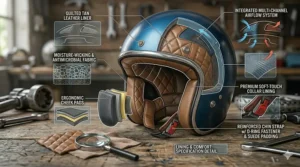
The Daytona Cruiser earns its reputation as the smallest DOT-certified 3/4 shell ever manufactured, which solves a specific problem for riders with petite or exceptionally large heads. Where most helmet brands offer XS and XXL as afterthoughts with poor proportions, Daytona engineers these extreme sizes as intentionally designed products. The result: riders previously forced into ill-fitting compromises finally get helmets that don’t shift during normal head movement or create painful pressure points.
Daytona’s slim-line design eliminates the “mushroom look” through careful shell contouring that hugs your head shape closely without sacrificing the impact-absorbing EPS liner thickness DOT requires. The moisture-wicking fabric liner performs admirably in warm weather, though it lacks the premium feel of leather or ultra-suede found in pricier competitors. That removable snap-on bubble visor uses quick-release locks for easy installation, but the gloss black finish shows scratches quickly — plan on replacing it every season if you ride frequently.
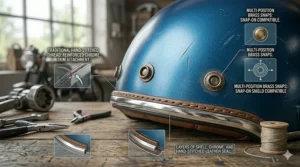
Real-world feedback reveals the nickel-plated tubular steel rivets are more than decorative — they actually reinforce stress points where other budget helmets develop cracks after 2-3 years of UV exposure. The Y-strap retention system with slider adjuster allows precise fit adjustment, though it requires occasional re-tightening as the nylon stretches with use. For riders who’ve struggled finding helmets that fit properly, the Daytona Cruiser’s extended size range justifies the basic feature set.
Pros:
✅ Smallest DOT shell accommodates difficult head sizes
✅ Reinforced rivets prevent common stress-point failures
✅ Adjustable Y-strap for precise fit customization
Cons:
❌ Basic liner lacks premium material feel
❌ Bubble visor scratches easily with regular use
Price Range: Around $85-$120 | Expert Verdict: The go-to choice for riders with very small or very large heads who’ve been underserved by mainstream helmet sizing.
7. ILM Open Face 726X — Entry Point to Retro Protection
The ILM Open Face 726X serves as the gateway retro helmet for new riders testing whether they actually enjoy the open-face experience before committing to premium models. ILM includes a removable face mask, adjustable sun shield, and retractable tinted sun visor — three accessories that competing brands charge $40-$60 extra to add. This comprehensive package lets you experiment with different configurations to discover your preferences without additional investment.
What the $70-$100 price point delivers: a DOT-certified ABS shell with multi-density EPS liner that meets federal safety minimums, integrated ventilation that actually moves air instead of being decorative, and speaker pockets designed around popular Bluetooth systems. Where ILM cuts costs becomes obvious in the finishing quality — seams aren’t as clean as Biltwell, the liner fabric feels cheaper than Scorpion, and the quick-release buckle requires more pressure to engage than premium alternatives.
The helmet’s designed to fit slightly snug for noise reduction, so ILM recommends ordering up if you prefer looser fitment. This creates confusion when riders accustomed to snug sport helmets order their normal size and find it uncomfortably tight. Customer feedback consistently praises the air vent functionality, noting the top vents actually reduce interior heat buildup rather than serving as purely cosmetic features. For urban riders averaging 30-50 mph, the ILM performs admirably; at sustained highway speeds, wind buffeting and noise exceed what you’d tolerate on long tours.
Pros:
✅ Comprehensive accessory package included
✅ Functional ventilation system reduces heat buildup
✅ Bluetooth speaker pockets accommodate popular systems
Cons:
❌ Snug sizing requires ordering up for comfort
❌ Finishing quality trails premium competitors
Price Range: Around $70-$100 | Expert Verdict: Perfect starter helmet for new riders exploring vintage aesthetics or budget-conscious riders who ride primarily in urban environments.
How to Choose Your First Retro Open-Face Protection
Selecting the right classic cruiser helmet starts with understanding what makes the style fundamentally different from full-face alternatives. The spec sheets tell you about shell materials and EPS liners, but here’s what actually matters when you’re riding: that open-face design creates wind resistance that tries to lift the helmet off your head above 45 mph, which means retention system quality trumps cosmetic details every single time.
Step 1: Measure Your Head Shape, Not Just Circumference
Wrap a soft measuring tape around your head one inch above your eyebrows and record the circumference in centimeters. Now look in a mirror from directly above your head — does your skull appear round like a basketball, or oval like a football? This head shape determines which brands will fit comfortably. Bell and LS2 favor intermediate oval shapes, Biltwell leans round, Scorpion designs for round heads. Ordering a helmet engineered for the wrong head shape guarantees pressure points that develop into migraines within 30 minutes, regardless of correct circumference sizing.
Step 2: Prioritize Retention Over Aesthetics
Test the chin strap by fastening the helmet, then grabbing the back and trying to roll it forward off your head. A properly fitted retro helmet should resist coming off, even with aggressive pulling. Quick-release buckles offer convenience but can pop open during slides — D-ring closures require two hands but won’t unexpectedly release. If you’re choosing a helmet primarily for short urban rides, quick-release makes sense; for highway touring or aggressive riding, D-rings provide security that justifies the minor inconvenience.
Step 3: Budget for the Protection You Actually Need
DOT certification establishes the minimum legal standard, but don’t confuse “legal minimum” with “optimal protection.” Helmets carrying both DOT and ECE certifications underwent more rigorous impact testing at multiple angles. The price difference between a $80 ILM and $200 Bell isn’t just brand markup — you’re paying for multi-density EPS liners that manage rotational impacts better, shell materials that distribute force more effectively, and quality control that ensures every helmet matches testing standards rather than relying on self-certification.
Step 4: Consider Your Actual Riding Scenarios
A $280 Bell Custom 500 makes perfect sense for riders logging 10,000 miles annually on weekend tours. That same helmet represents overkill for someone riding 3 miles to work at 25 mph speeds. Match your helmet investment to your riding reality: urban commuters prioritize sun visors and ventilation; touring riders need superior fit and minimal weight; weekend cruisers want style and basic protection. There’s no wrong choice, only mismatched priorities.
Step 5: Try Before You Buy (When Possible)
Amazon’s return policy makes trying retro helmets risk-free, but local motorcycle shops let you actually wear helmets before purchase. A helmet that feels great in the store can develop pressure points after 45 minutes of riding, while one that feels slightly snug initially may break in perfectly. If ordering online, try the helmet at home for 20-30 minutes while watching TV — this reveals fit issues before you’ve ridden in it, keeping your return options open.
Common Mistakes When Buying Retro Open-Face Protection
The biggest error riders make when shopping for vintage motorcycle gear is assuming all DOT-certified helmets provide equivalent protection. DOT establishes minimum standards, not optimal ones — it’s the floor, not the ceiling. A helmet that barely passes DOT testing performs fundamentally differently than one engineered to exceed requirements by 40%. The certification sticker tells you nothing about multi-density liners, rotational impact management, or whether the manufacturer actually tested that specific helmet versus self-certifying based on similar models.
Mistake: Prioritizing Price Over Fit Quality
Saving $100 by ordering a poorly fitting helmet costs you more through premature replacement when pressure points become unbearable. That intermediate oval head jammed into a round-shaped helmet will never break in comfortably — the foam compresses where it contacts your skull, but the shell shape doesn’t change. Riders rationalize discomfort during the first few rides, telling themselves it needs to “break in.” What actually happens: you develop tension headaches, stop wearing the helmet, and end up buying a properly fitted replacement anyway.
The solution isn’t buying the most expensive option — it’s identifying which brands engineer for your specific head shape and buying the best model from that subset. A $130 Biltwell that fits your intermediate oval head perfectly outperforms a $250 premium brand designed for round heads.
Mistake: Ignoring Retention System Differences
Quick-release buckles and D-ring closures aren’t interchangeable features — they represent fundamentally different approaches to keeping your helmet attached during impacts. Quick-release systems use a mechanical latch that pops open when you press a button, which works flawlessly 99.9% of the time. That 0.1% represents scenarios where road rash catches the buckle during a slide, or impact force triggers the release mechanism. D-rings require threading the strap through metal rings, creating a connection that won’t release unless you intentionally pull the strap back through.
For riders averaging 25 mph urban speeds, quick-release convenience outweighs the minimal additional risk. For highway touring at 70+ mph or aggressive canyon riding, D-rings provide security that justifies the two-handed operation. The mistake is choosing based on convenience alone without considering your actual risk profile.
Mistake: Overlooking Shell Size Variations
Budget helmet manufacturers frequently use 2-3 shell sizes across their entire size range, padding the interior more heavily for larger sizes. Premium brands like Bell employ 4-5 distinct shells, ensuring XL riders get XL-proportioned helmets instead of Large shells stuffed with extra foam. This manifests as the “mushroom head” phenomenon where your helmet looks disproportionately large compared to your body.
The visual aspect annoys riders, but the functional impact matters more: excessive padding compresses unevenly, creating pressure points around your temples and forehead. After 2-3 hours of riding, that discomfort transitions into genuine pain that makes you want to rip the helmet off. Always check how many shell sizes a manufacturer uses — more shells means better proportional fit across the size range.
Mistake: Confusing Vintage Aesthetics with Vintage Safety
Retro styling doesn’t mean retro protection, but some manufacturers blur this distinction deliberately. Novelty helmets replicate 1960s designs faithfully, including the woefully inadequate safety standards from that era. These helmets carry DOT stickers purchased from Amazon rather than earned through testing, putting riders at severe risk while appearing legitimate. The tell: novelty helmets weigh noticeably less (under 2 pounds typically) because they lack the multi-density EPS liner required for impact protection.
Legitimate retro helmets use modern materials — advanced polycarbonate, fiberglass composites, carbon fiber — engineered into vintage silhouettes. They weigh 2.4-3.2 pounds because proper impact protection requires substantial liner material. When a “retro helmet” sells for $35-$50, you’re buying a cosmetic shell, not protective equipment. Even budget DOT-certified options start around $70-$80 minimum.
Mistake: Assuming Open-Face Equals Unsafe
Full-face helmets provide superior protection, particularly for facial and jaw injuries — this is objective fact. What gets misrepresented: the implication that open-face helmets leave you fundamentally unprotected. Properly certified retro helmets protect your skull, temples, and crown effectively; they simply don’t cover your face. For riders who primarily face risks from head impacts during lowside slides or rear-ending collisions, open-face protection manages these scenarios adequately.
The decision should reflect your riding style: aggressive sport riding with high-side crash potential strongly favors full-face coverage; relaxed cruising at moderate speeds makes open-face perfectly reasonable. Pretending there’s no difference is foolish; pretending open-face offers zero protection is equally incorrect.
Retro Open-Face Protection vs Traditional Full-Face Helmets
The retro vs modern debate in vintage motorcycle gear circles frequently misframes the core question. It’s not whether retro open-face protection works — DOT certification proves it does — but rather which scenarios favor each approach and what trade-offs you’re accepting.
Full-face helmets excel at facial protection, wind noise reduction, and weather protection. The chin bar and face shield create a sealed environment that blocks wind, rain, and road debris while dramatically reducing the sound levels that cause hearing damage over time. For riders logging serious highway miles or riding in variable weather, these advantages compound significantly. The enclosed design also prevents insects from hitting your face at speed, which sounds trivial until a wasp strikes your cheek at 65 mph.
What full-face designs sacrifice: peripheral vision gets restricted by the helmet’s aperture, creating blind spots when you need to check your six during lane changes. The sealed environment that protects from weather also traps heat during summer riding, and that face shield fogs instantly when you stop at a red light after highway speeds cool your breath. The weight distribution of full-face helmets stresses your neck muscles differently than open-face designs — not necessarily worse, but riders switching styles notice the change.
Retro open-face helmets prioritize field of view, airflow, and that visceral connection to your riding environment. You’ll hear engine notes clearly, feel temperature changes immediately, and maintain unrestricted peripheral vision that helps you track traffic in adjacent lanes. For urban riding or leisurely cruises where you’re engaging with your surroundings rather than isolating from them, this openness enhances the experience fundamentally.
The compromises become apparent quickly: facial exposure means wind buffeting tires your neck faster, bugs hit your face shield or sunglasses regularly, and rain pelts your chin and cheeks. Wind noise at highway speeds exceeds what you’d experience in a full-face, potentially contributing to long-term hearing damage if you ride without earplugs. And yes, facial injury risk increases in certain crash scenarios — this is the unavoidable trade-off for that classic aesthetic.
The practical middle ground many experienced riders adopt: own both styles. Use your retro helmet for casual weekend rides, urban commuting, and social group cruises where you’re averaging 25-50 mph. Switch to full-face for highway tours, long-distance rides, or any situation where you’ll maintain 70+ mph for extended periods. This approach optimizes protection and comfort for each scenario rather than forcing one helmet to handle every situation adequately.
For riders insisting on a single helmet, ask yourself: do you ride primarily for transportation (favors full-face) or recreation (favors open-face)? Is most of your riding time urban streets (open-face works) or interstate highways (full-face recommended)? Do you prioritize safety maximization (full-face) or aesthetic authenticity (open-face)? There’s no universal right answer — only the choice that aligns with your specific riding patterns and priorities.
What to Expect: Real-World Performance of Classic Bowl Helmets
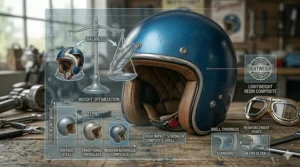
Understanding how retro open-face protection performs in daily use requires looking beyond spec sheets at the practical realities riders actually experience. That DOT certification proves the helmet meets minimum impact standards in controlled laboratory testing, but your helmet’s job description includes managing wind resistance, preventing neck fatigue, maintaining visibility, and staying comfortable for hours at a time.
Wind Management and Buffeting
Open-face designs create aerodynamic challenges that full-face helmets avoid entirely. Air flowing over and around the helmet generates turbulence that tries to lift it off your head above 45 mph, increasing exponentially as speed climbs. At 70+ mph, even properly fitted helmets produce noticeable upward pull that forces your neck muscles to work constantly against the pressure.
Modern retro helmets incorporate subtle aerodynamic refinements — slightly tapered shells, integrated peaks that redirect airflow — that reduce buffeting compared to pure vintage designs. The difference becomes obvious during highway riding: a well-designed classic cruiser helmet lets you maintain 65 mph comfortably for 30-40 minutes before neck fatigue sets in, while cheaper alternatives make you want to pull over after 15 minutes.
Noise Levels and Hearing Protection
Here’s what nobody mentions in product descriptions: sustained exposure to wind noise above 85 decibels causes permanent hearing damage, and open-face helmets regularly exceed 90 decibels at highway speeds. The wind rushing past your ears isn’t just annoying — it’s genuinely hazardous to your long-term hearing health.
Quality earplugs rated for 20-30 decibel reduction transform the open-face experience dramatically. You’ll still hear engine notes and traffic around you (essential for safe riding), but the damaging high-frequency wind roar gets filtered out. Riders who skip earplugs because “I need to hear everything” end up with tinnitus that prevents them from hearing anything clearly in their 50s.
Comfort During Extended Rides
The first 30 minutes wearing a new shorty helmet certified for safety reveals nothing about long-term comfort. Pressure points develop gradually as foam compresses unevenly, and poorly designed ventilation systems fail to manage heat buildup during stop-and-go traffic. Premium helmets like the Bell Custom 500 maintain comfort for 2-3 hour rides because they use multi-density foam that compresses uniformly and ventilation channels that actually move air.
Budget options might feel identical initially, but that single-density foam compresses more in high-pressure areas (forehead, temples) while barely compressing where contact is lighter. After an hour, you’ll develop a headache centered exactly where the foam compressed most. This is why trying a helmet for 5 minutes in a store tells you almost nothing about real-world wearability.
Weather Performance
Retro open-face protection excels in dry, warm conditions and struggles everywhere else. Light rain isn’t terrible — water beads off your face shield or sunglasses while the open design prevents fogging — but heavy downpours leave your face and neck soaked within minutes. Cold weather riding becomes genuinely miserable below 45°F without a full-face mask, as wind-chill on your exposed skin drops the perceived temperature significantly.
Summer heat is where open-face designs shine. That unrestricted airflow keeps your head noticeably cooler than sealed full-face helmets, and stopping at red lights doesn’t create the greenhouse effect that makes you want to rip your helmet off. For riders in southern climates averaging 80°F+ temperatures, this advantage alone justifies choosing retro styling.
Visibility and Field of View
The unobstructed peripheral vision that classic bowl helmets provide matters more than you’d expect for safe riding. You can track vehicles in adjacent lanes without exaggerated head turns, spot pedestrians stepping into crosswalks earlier, and maintain better situational awareness in dense urban traffic. This advantage is most noticeable when switching from full-face to open-face — suddenly you’re seeing traffic that was previously in your blind spots.
The trade-off comes from exposed eyes catching more dust, dirt, and insects. A quality face shield or bubble visor becomes mandatory equipment rather than optional, and you’ll need to clean it more frequently than full-face shields that stay protected behind the chin bar.
FAQ About Retro Open-Face Protection
❓ Are retro open-face helmets actually safe for highway riding?
❓ How do I stop my classic bowl helmet from lifting at high speeds?
❓ Can I use my retro helmet with Bluetooth communication systems?
❓ What's the real difference between a $80 helmet and a $250 helmet if both are DOT certified?
❓ Should I choose a retro helmet with a built-in sun visor or buy separate accessories?
Finding Your Perfect Classic Cruiser Helmet
The retro open-face protection market in 2026 delivers something impossible just a decade ago: legitimate vintage aesthetics with modern safety engineering that doesn’t compromise either priority. Whether you’re investing in a premium Bell Custom 500 for serious touring comfort or starting your journey with an entry-level ILM 726X to test the open-face experience, the fundamentals remain identical.
Proper fit trumps every other consideration — an expensive helmet that doesn’t match your head shape will disappoint, while a budget option engineered for your skull dimensions will serve you well for years. Measure carefully, order from retailers with flexible return policies, and don’t settle for “good enough” when it comes to something protecting your brain. The difference between a shorty helmet certified to DOT minimums and one engineered to exceed standards by 40% might save your life, or might simply give you confidence to ride more comfortably — either outcome justifies the modest price premium.
Classic bowl helmet culture isn’t about rejecting modern safety technology; it’s about refusing to sacrifice aesthetic authenticity while demanding protection that works. The helmets reviewed here prove you can have both, whether your budget allows $70 or $270. The wrong choice is compromising on fit, skipping DOT certification, or selecting style over substance. The right choice is the helmet that matches your head shape, riding style, and protection priorities — regardless of which specific model that turns out to be.
Recommended for You
- 7 Best DOT Certified Half Shell Helmets 2026
- 7 Best Bluetooth-Ready Modular Helmets That Actually Connect (2026)
- 7 Best Affordable Modular Protection Options That Actually Work (2026)
Disclaimer: This article contains affiliate links. As an Amazon Associate, I earn from qualifying purchases. If you purchase products through these links, we may earn a small commission at no additional cost to you.
✨ Found this helpful? Share it with your friends! 💬🤗
