
In This Article
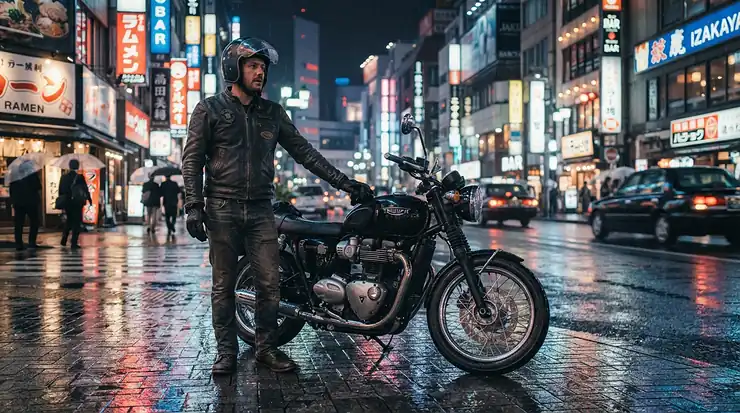
Nobody warns you about this part of riding in a city: the gear that keeps you alive on the highway can make you walk like a duck through the office lobby. Full touring boots are overkill for a six-minute scooter hop to the coffee shop, but bare sneakers leave your ankles and toes hanging out to dry the second a car door swings open in your lane. That gap — between “too much boot” and “not enough protection” — is exactly where urban riding shoes for city traffic live, and it’s a bigger category than most riders realize.
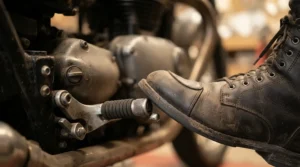
What is urban riding shoes for city traffic? They’re motorcycle- or scooter-specific footwear built to look like ordinary sneakers or casual trainers while hiding CE-rated ankle armor, reinforced toe boxes, and grippy, oil-resistant soles underneath — designed for riders who split their day between the saddle and the sidewalk. Feet and legs absorb roughly 30% of all non-fatal motorcycle injuries, according to CDC data cited by RideApart’s analysis of what body parts get hurt most in a crash, which is a sobering reason to stop treating footwear as an afterthought.
This guide breaks down seven real, currently available urban riding shoes across every price tier, explains what actually matters when you’re weaving through gridlock at 15 mph, and gives you a decision framework so you’re not guessing at checkout.
Quick Comparison Table
| Shoe | Best For | Price Range |
|---|---|---|
| TCX Street 3 WP | All-around commuting in mixed weather | $180-$200 |
| Sidi Lynx | Sneaker looks with serious protection | $170-$190 |
| REV’IT Arrow 2 Air | Lightweight city riding shoes for hot climates | $150-$220 |
| Alpinestars Sektor Vented | Budget-friendly warm-weather commuting | $140-$160 |
| Dainese Suburb D-WP | Scooter-friendly footwear for twist-and-go riders | $160-$180 |
| Danner Moto Wedge GTX | Premium, USA-made walk-heavy commutes | $475-$525 |
| Cortech Slayer Canvas | Tightest budget, skate-shoe styling | $110-$150 |
Looking at the spread above, the bulk of genuinely protective urban riding shoes for city traffic cluster in the $140-$200 range, with the Cortech Slayer Canvas undercutting that band and the Danner Moto Wedge GTX sitting in a league of its own on price and construction. Riders who commute daily should weight the mid-tier options more heavily, since they balance certified protection against long-term value better than either extreme.
Just one click — help others find the right gear for their commute too! 😊
Top 7 Urban Riding Shoes for City Traffic: Expert Analysis
1. TCX Street 3 WP — CE Level 2 protection disguised as a leather sneaker
The standout here is that the TCX Street 3 WP packs CE Level 2 armor into a high-top that reads as casual streetwear the moment you step off the pegs. It uses a full-grain leather upper built around a waterproof lining, which means the shell is thick enough to survive daily abrasion while still folding at the ankle for walking. Based on the spec comparison with cheaper vented shoes, the waterproofing is the real differentiator — it’s the shoe you grab regardless of the forecast, which matters more in a city commute than almost any other single feature.
Reviewers who’ve put serious mileage on the TCX Street 3 WP report it holds up well beyond city use; one GearJunkie reviewer wore the women’s version for a 1,100-mile Colorado tour through mountain passes and traffic jams alike, and noted the boot’s build quality has stayed consistent under Dainese’s ownership of TCX. The tradeoff, as the same review notes, is that the low-profile urban styling sacrifices the shin coverage and rigid hinge lockouts you’d want for off-road or track riding, and the waterproof liner can trap heat in slow summer traffic.
Pros:
- ✅ CE Level 2 certified protection in a sneaker-style shell
- ✅ Genuinely waterproof for year-round commuting
- ✅ Proven durability from long-term rider reports
Cons:
- ❌ Runs warm in slow-moving summer traffic
- ❌ Lacks shin coverage for aggressive or off-road riding
Expect to pay in the $180-$200 range for the TCX Street 3 WP, and given the CE-2 rating plus waterproofing, it’s one of the strongest value propositions in this entire lineup for a rider who commutes in all four seasons.
2. Sidi Lynx — most convincing sneaker disguise on the list
What most buyers overlook about the Sidi Lynx is that its “elongated design” isn’t just a style choice — the extended profile and lacing system are engineered to hold the shoe in place during high-friction slides, which is precisely the moment a normal sneaker would peel off your foot. Underneath the microfiber upper sits Sidi’s Fortex protection system with CE-certified impact protectors, so the safety hardware never advertises itself the way a bulky race boot does.
On the practical side, the Concreto compound sole is tuned for peg grip while riding and comfortable cushioning once you’re walking — a detail that matters enormously for anyone who parks and then walks four blocks to a meeting. Reviewers on RevZilla have rated the Lynx a perfect 5 out of 5 in early feedback, though the sample size is still small since this is a newer release for the line. Sizing runs in European numbering, so first-time buyers should expect to convert carefully rather than guessing.
Pros:
- ✅ CE-certified Fortex protection hidden inside a casual shell
- ✅ Elongated design resists foot slippage during slides
- ✅ Comfortable Concreto sole for on-bike and off-bike wear
Cons:
- ❌ European-only sizing complicates first-time fit
- ❌ Premium price for a shoe with a thin review history so far
The Sidi Lynx typically runs $170-$190, positioning it as a direct rival to the TCX Street 3 WP for riders who prioritize street style slightly more than outright weatherproofing.
3. REV’IT Arrow 2 Air — the lightest true option among lightweight city riding shoes
If lightweight city riding shoes are your priority, the REV’IT Arrow 2 Air is built specifically for that brief. Its breathable jacquard mesh upper and FLEXBLADE sole technology trade some structure for airflow and flex, and the shoe still carries SEESOFT ankle discs, a thermoformed heel cup and toe cap, and CE certification per EN 13634:2017. What the spec sheet won’t spell out clearly is how much that mesh construction changes the daily feel: this shoe breathes like a running shoe in stop-and-go traffic, which regular leather commuter shoes simply can’t match in July.
The gear shifter feel on the Arrow 2 Air deserves a specific callout, since a TPU gear shift pad protects the upper at the exact contact point where a shifter wears through fabric over months of daily use. Combine that with the side-mounted zipper plus laces, and you get a shoe that’s genuinely quick to put on before a short ride — a small thing that adds up over hundreds of commutes a year.
Pros:
- ✅ Among the lightest CE-certified urban riding shoes available
- ✅ Dedicated gear shift pad protects the upper from wear
- ✅ Side zipper speeds up daily on-off routine
Cons:
- ❌ Mesh construction isn’t waterproof or wind-resistant
- ❌ Less structure than leather alternatives for high-impact protection
Pricing has fluctuated between $150 and $220 depending on retailer and colorway, so it’s worth comparing a couple of listings before buying — but even at the top of that range, the weight savings justify the cost for hot-climate commuters.
4. Alpinestars Sektor Vented — the value pick for warm-weather commuting
The Alpinestars Sektor Vented earns its spot as the mid-tier value anchor of this list. Alpinestars built it from durable, lightweight microfiber to resist abrasion without adding bulk, and the shoe carries Cat 2 CE certification under the 89/686/ECC EU directive, which puts real regulatory weight behind a shoe that still looks like a sport trainer. Reviewers consistently note that the speed-lacing system paired with an ankle strap makes this one of the fastest shoes on this list to get in and out of, which matters on mornings when you’re already running late.
Here’s what the listing won’t tell you: multiple retailer reviews flag that the Sektor runs smaller and narrower than most shoes, so sizing up is the standard recommendation, and wide-footed riders should expect a tighter-than-usual fit. On the plus side, the design offers a strong balance of features against price compared to premium motorcycle shoe options, even if it lacks reflective detailing for nighttime visibility.
Pros:
- ✅ Cat 2 CE certification at a mid-tier price point
- ✅ Fast speed-lace system for quick daily wear
- ✅ Perforated microfiber keeps feet cool in traffic
Cons:
- ❌ Runs narrow and small — size up
- ❌ No reflective elements for low-light visibility
Expect $140-$160 for the vented version, making the Alpinestars Sektor Vented the strongest all-around value for a rider commuting mostly in warm-weather conditions.
5. Dainese Suburb D-WP — purpose-built scooter-friendly footwear
Few shoes on this list wear their intent as openly as the Dainese Suburb D-WP, which the brand itself describes as built especially for moped and scooter riders who want a certified, waterproof trainer with extra grip for twist-and-go riding. That grip claim isn’t marketing fluff — the Groundtrax outsole uses an asymmetric tread pattern that adjusts to which foot operates which lever, and the shoe carries CE EN 13634 Category 2 certification, putting it on par with far bulkier boots in terms of documented protection.
For scooter-friendly footwear specifically, low-speed maneuvering is where this shoe shines: scooters demand more frequent foot-down stops at lights and in traffic than geared motorcycles, and the Ortholite insole and Groundtrax sole are built for walking comfort and durability just as much as for time in the saddle. Reviewers on European retail sites report the waterproof membrane genuinely keeps feet dry, though — as one retailer honestly notes — breathability only works properly when paired with moisture-wicking socks rather than cotton.
Pros:
- ✅ CE EN 13634 Cat 2 certified, purpose-built for scooters
- ✅ Asymmetric Groundtrax sole aids low-speed foot control
- ✅ Genuinely waterproof membrane for year-round riding
Cons:
- ❌ Breathability drops sharply with cotton socks
- ❌ Ankle-high cut offers less coverage than a full boot
Price runs roughly $160-$180 depending on region and colorway, making the Dainese Suburb D-WP the clearest pick on this list for anyone riding a twist-and-go scooter rather than a geared bike.

6. Danner Moto Wedge GTX — the premium choice for walk-heavy days
At the top of the price ladder sits the Danner Moto Wedge GTX, a shoe built for riders whose days are, as one review put it, two-thirds walking and one-third riding. It leans into work-boot aesthetics rather than sneaker styling, but the analytical case for it is straightforward: its stiff shank platform paired with a flexible forefoot suits urban commuters who split time between footpegs and city sidewalks, and it’s assembled in the USA rather than mass-produced overseas.
What buyers should weigh here is total cost of ownership rather than sticker price alone. A $500 shoe sounds steep next to a $150 shoe, but if the Gore-Tex lining and integrated ankle armor outlast three pairs of cheaper commuter shoes over the same number of years, the cost-per-wear math evens out — especially for riders who log five-plus commutes a week, every week, regardless of weather.
Pros:
- ✅ US-made construction with premium materials
- ✅ Waterproof GTX lining plus integrated ankle armor
- ✅ Stiff shank supports long days of mixed walking and riding
Cons:
- ❌ Highest price point on this list by a wide margin
- ❌ Bulkier silhouette than the sneaker-style options here
Around $475-$525 is the going rate, and it’s a genuinely premium buy — best suited to riders who’ve already decided they want one excellent pair rather than several adequate ones.
7. Cortech Slayer Canvas — the budget entry with real skate-shoe styling
Closing out the list is the Cortech Slayer Canvas, which leans hard into a retro skate-shoe look while still packing functional protection. Molded heel and toe armor, dual-density ankle protectors, and a uni-directional anti-twist midsole sit underneath a canvas-and-suede upper, and each shoe weighs only about 1.3 pounds, which is genuinely light for a shoe with this much hidden armor.
Independent reviewers rate the value proposition highly — one detailed breakdown scored it 100 out of 100 on value for money — but the honest tradeoffs are worth stating plainly: the same review notes it lacks CE safety certification and offers no toe reinforcement panel specifically for shifter contact, and the anti-slip sole reportedly struggles on wet or dusty pavement. This is the shoe for a rider prioritizing budget and looks over documented crash-test certification.
Pros:
- ✅ Lightweight canvas build with real armor underneath
- ✅ Lowest price point among protective options on this list
- ✅ Comfortable out of the box with no break-in period
Cons:
- ❌ No CE certification unlike most shoes on this list
- ❌ Sole traction drops noticeably on wet surfaces
Pricing typically lands between $110 and $150, making the Cortech Slayer Canvas the entry point for riders who want protected-adjacent footwear without a premium price tag.
Practical Usage Guide: Breaking In and Maintaining Your Riding Shoes
Getting the most out of urban riding shoes for city traffic starts before you ever swing a leg over the bike. On the first wear, lace them snugly rather than loosely — a loose fit is the number one reason ankle protectors shift out of position exactly when you need them most. Give leather models like the TCX Street 3 WP or Sidi Lynx a week of shorter rides before committing to an all-day trip; the microfiber and leather uppers need time to mold to your foot shape, and rushing that process is how blisters happen.
Maintenance is where most commuters cut corners, and it shows within a season. Wipe road grime off the sole and gear-shift panel after wet rides, since dried mud accelerates wear exactly where the shifter makes contact. For waterproof models such as the Dainese Suburb D-WP, avoid machine-washing — it degrades the membrane — and instead spot-clean with a damp cloth. A common first-30-days mistake is neglecting the insole: pull it out every couple of weeks to air dry, especially with vented shoes like the Alpinestars Sektor Vented, or bacteria buildup will outpace the shoe’s breathability. Rotate between two pairs if you commute daily; letting foam midsoles fully decompress between wears roughly doubles their working lifespan.

Real-World Scenarios: Which Rider Are You?
The scooter commuter. She rides a 150cc scooter four miles each way through downtown traffic, stopping and foot-dropping at a dozen lights per trip. For her, the Dainese Suburb D-WP is the clear fit — its asymmetric sole and CE Cat 2 rating are built exactly for twist-and-go, low-speed maneuvering.
The budget-conscious student. He’s riding a used 300cc bike to campus and back on a tight budget, prioritizing looking normal in class over spending big on gear. The Cortech Slayer Canvas matches that brief: real armor, skate-shoe looks, and a price under $150.
The year-round motorcycle commuter. She rides a mid-size bike through rain, shine, and everything between, five days a week, for a 20-minute highway-adjacent commute. The TCX Street 3 WP or the premium Danner Moto Wedge GTX make more sense here — waterproofing and durability pay for themselves over hundreds of commutes a year.
✨ Don’t Miss These Exclusive Deals!
🔍 Take your commute to the next level with these carefully selected picks — click through to check current pricing and availability before your next ride.
How to Choose Urban Riding Shoes for City Traffic
Picking the right pair comes down to matching a handful of criteria to your actual riding pattern rather than chasing the most-hyped model. Follow these steps in order:
- Confirm CE certification first. Look for EN 13634 labeling — it’s the baseline signal that a shoe was tested for abrasion and impact resistance, not just styled to look protective.
- Match the shoe to your bike type. Scooter and twist-and-go riders benefit from soles built for constant foot-down stops; geared-bike riders should prioritize a reinforced shift panel instead.
- Weigh weather against weight. Waterproof membranes add warmth and bulk; vented mesh sacrifices rain protection for airflow. Pick based on your actual climate, not the shoe that photographs best.
- Check sizing notes before buying. Several brands on this list, including Alpinestars, run narrow or small — read fit notes rather than assuming your usual size.
- Test the walkability. Since these are dual-purpose shoes, walk around the store or your living room in them; a stiff sole that’s great on pegs but painful on pavement defeats the entire point of this category.
- Compare cost-per-wear, not sticker price. A $500 pair worn daily for five years often beats a $130 pair replaced three times.
- Read aggregated review sentiment, not just marketing copy. Real owner feedback on sizing, durability, and heat retention tells you more than any spec sheet.
Lightweight City Riding Shoes: Why Weight Matters in Stop-and-Go Traffic
It’s easy to dismiss shoe weight as a minor spec, but in genuine stop-and-go traffic it compounds fast. Every foot-down at a light, every quick dab to stabilize a scooter through a pothole, and every walk from parking to your desk adds up across a workday — and heavier boots turn each of those micro-movements into a small tax on your legs. This is exactly the gap lightweight city riding shoes are built to close: enough armor to matter in a slide, without the mass of a full touring boot.
The REV’IT Arrow 2 Air is the clearest example on this list, using mesh construction and a flexible sole unit to shave weight while keeping SEESOFT ankle protection intact. The Cortech Slayer Canvas takes a similar approach from the budget side, at roughly 1.3 pounds per shoe. Riders who log long days on their feet — delivery riders, messengers, anyone parking-and-walking repeatedly — will feel the difference in fatigue by the end of a shift far more than riders doing a single short commute.
Scooter-Friendly Footwear: What Changes for Twist-and-Go Riders
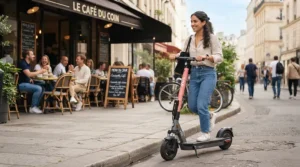
Scooter riders face a different physical reality than motorcyclists on a geared bike, and scooter-friendly footwear reflects that. There’s no clutch lever or gear shifter to protect against repetitive wear, but there’s dramatically more foot-down contact with pavement at intersections, in parking lots, and while maneuvering in tight urban spaces. That’s why the sole pattern matters more here than almost anywhere else in this buying decision.
The Dainese Suburb D-WP is the standout for this use case specifically because its Groundtrax sole was engineered around which foot does what on a scooter versus a geared motorcycle. Reviewers consistently note that shoes without this consideration can feel slightly unstable during frequent stop-start city riding, particularly on painted crosswalk lines or wet manhole covers — both common scooter hazards that a properly gripped sole handles far better than a flat sneaker tread.
Gear Shifter Feel and Low-Speed Maneuvering: Features That Actually Matter
Marketing copy loves to talk about “sleek styling,” but two features actually determine whether a shoe performs well day to day: gear shifter feel and low-speed maneuvering grip. Gear shifter feel comes down to two things — how much padding sits between your foot and the shift lever, and whether a dedicated shift panel protects the upper material from abrasion. The REV’IT Arrow 2 Air‘s TPU gear pad and the Cortech Slayer Canvas‘s toe cup both address this directly, though reviewers note the Cortech’s protection there is less specialized than a dedicated shift panel.
Low-speed maneuvering, meanwhile, is mostly a sole-and-ankle-mobility story. A shoe with a rigid sole and locked-down ankle might feel reassuring standing still, but it can actually work against you when you’re duck-walking a bike backward out of a tight spot or dabbing a foot at an awkward angle in traffic. The Sidi Lynx and Dainese Suburb D-WP both balance this well, keeping enough flex in the forefoot for natural foot placement while still locking down the ankle against lateral impact. What most buyers overlook is that these two qualities — shifter feel and maneuvering grip — matter more for daily comfort than headline features like waterproofing, simply because you use them dozens of times per ride.
Urban Riding Shoes vs. Regular Sneakers
| Category | Urban Riding Shoes | Regular Sneakers |
|---|---|---|
| Ankle protection | CE-rated impact protectors | None |
| Abrasion resistance | Reinforced leather/microfiber panels | Standard fabric, tears easily |
| Shifter durability | Dedicated shift pad on most models | Wears through within weeks |
| Sole grip for riding | Oil- and heat-resistant compounds | Not designed for footpeg or lever contact |
| Best For | Any rider commuting regularly by motorcycle or scooter | Casual walking only |
The gap in this table isn’t subtle. Regular sneakers offer zero structured protection against the abrasion and impact forces a slide generates, and their soles aren’t formulated to resist the heat and oil exposure that comes from constant footpeg or lever contact. For a once-a-year weekend ride, the risk might feel acceptable to some — but for daily urban commuting, the reinforced construction and CE ratings in shoes like the TCX Street 3 WP or Alpinestars Sektor Vented represent a meaningfully different risk profile every single time you ride.
Common Mistakes When Buying Urban Commuter Motorcycle Footwear
The most frequent error shoppers make with urban commuter motorcycle footwear is buying based on looks alone and only discovering the absence of CE certification after the fact — as is the case with some budget skate-style options. A second common mistake is ignoring sizing guidance; several brands here, notably Alpinestars, run narrower and smaller than typical sneaker sizing, and skipping that research leads to returns and wasted shipping fees. A third mistake is buying a heavily vented, uninsulated shoe for a climate with real winters, then discovering mid-January that “breathable” also means “cold.” Finally, many riders underestimate walkability — testing a shoe only on the showroom floor rather than walking a few laps, which is the only real way to catch a sole that’s stiffer than your daily routine can tolerate.
Long-Term Cost & Maintenance
Total cost of ownership rarely tracks sticker price in a straight line. A $130 pair of shoes replaced annually due to sole wear or a blown-out shift panel costs more over five years than a single $500 pair that’s still functional at year four — assuming the premium pair actually holds up, which reviewer feedback on the Danner Moto Wedge GTX and TCX Street 3 WP suggests is a fair bet. Maintenance costs matter too: waterproof membranes like the one in the Dainese Suburb D-WP need gentle spot-cleaning rather than machine washing, and neglecting that shortens the membrane’s working life. Riders logging fewer than two rides a week can reasonably lean toward the budget tier, since lower mileage means slower wear regardless of build quality; daily commuters should weight the mid-to-premium tier more heavily, since the cost-per-wear math favors durability at that usage level.
Safety and Regulations: Understanding CE Certification
Protective motorcycle footwear sold in Europe — and used as a benchmark by many US brands — is measured against EN 13634, a standard that specifies requirements for protection, ergonomic characteristics, mechanical properties, and appropriate test methods for riders on and off road. The standard defines two protection levels: Level 1 is the baseline for general road use, while Level 2 adds higher-performance requirements for riders who consider their accident risk elevated, though that added protection typically comes with more weight and less comfort. You can review the full scope of the EN 13634 protective footwear standard for the technical detail behind the rating.
This isn’t a bureaucratic footnote — foot and leg injuries are disproportionately common in motorcycle crashes, and the Insurance Institute for Highway Safety’s analysis found motorcyclists are roughly nine times more likely to be injured in a crash than passenger vehicle occupants, per figures compiled by the American Academy of Orthopaedic Surgeons. Choosing a certified shoe over an uncertified one is a genuinely consequential decision, not a marketing checkbox.
Buyer’s Decision Framework
If you ride a scooter or twist-and-go bike through dense stop-and-go traffic, choose a shoe with an asymmetric, low-speed-focused sole like the Dainese Suburb D-WP, because foot-down stability matters more to you than shifter durability. If you commute year-round on a geared motorcycle through real weather, choose a waterproof, CE-2 rated option like the TCX Street 3 WP, because all-season reliability will save you more money and discomfort than any style consideration. If your budget is the primary constraint, choose the Cortech Slayer Canvas, because it delivers real armor at the lowest entry price on this list. And if you’re walking as much as you’re riding each day, choose a walk-first design like the Danner Moto Wedge GTX, because comfort off the bike compounds just as much as protection on it.
FAQ
❓ Are urban riding shoes for city traffic actually safer than regular sneakers?
❓ Can I wear urban riding shoes for city traffic all day at the office?
❓ Do scooter-friendly footwear options work for geared motorcycles too?
❓ How much should lightweight city riding shoes weigh?
❓ Do I need waterproof urban commuter motorcycle footwear if I rarely ride in rain?
Conclusion
Urban riding shoes for city traffic aren’t a niche accessory — they’re the piece of gear most likely to matter on an average commute, where low-speed traffic and constant foot contact create exactly the conditions this category is built for. Whether you land on the certified all-weather confidence of the TCX Street 3 WP, the scooter-tuned grip of the Dainese Suburb D-WP, or the budget-friendly armor of the Cortech Slayer Canvas, the underlying principle stays the same: match the shoe to how you actually ride, not to how it looks on a shelf. Check current pricing before you buy, since availability and promotions shift often, and remember that the “best” shoe on this list is simply the one that fits your specific commute, climate, and budget.
Recommended for You
- Budget Waterproof Touring Boots: 7 Picks That Won’t Sink You (2026)
- Adventure Touring Boots vs Street Touring Boots: 7 Best Picks (2026)
- 7 Best Long Distance Motorcycle Boots For Wide Feet In 2026
Disclaimer: This article contains affiliate links. As an Amazon Associate, I earn from qualifying purchases. If you purchase products through these links, we may earn a small commission at no additional cost to you.
✨ Found this helpful? Share it with your friends! 💬🤗
