
In This Article
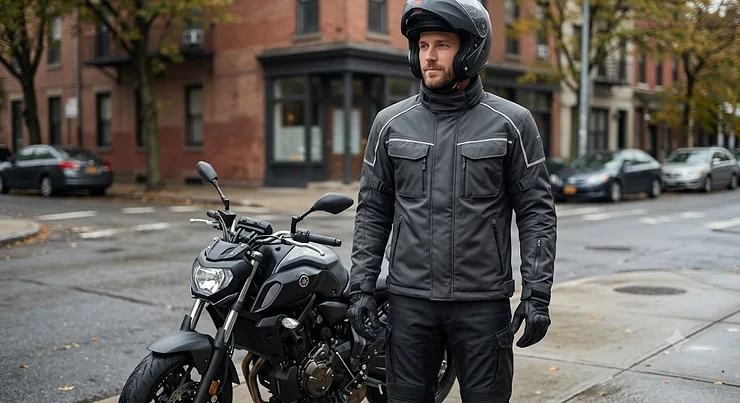
Nobody warns you about the two-minute negotiation that happens every single morning before you swing a leg over the seat: helmet, gloves, and then that pause where you look at your jacket hanging by the door and wonder if it’s going to embarrass you in the elevator later. That’s the real test of a commuter motorcycle jacket. It isn’t whether it survives a track day — it’s whether it survives your calendar. A good one shields you from a distracted driver at 7:45 AM, shrugs off a surprise drizzle at lunch, and still looks like something a normal human being would wear into a client meeting.
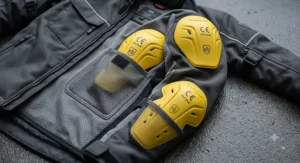
So what is a commuter motorcycle jacket? It’s a riding jacket engineered specifically for short-to-medium daily trips through city traffic — built around CE-rated armor, weather flexibility, and styling low-key enough to wear straight into an office, rather than the bulkier, more technical cuts made for long-haul touring or track riding.
We spent weeks digging through owner reviews, brand spec sheets, and independent gear-tester write-ups to land on seven real jackets that actually deliver on that promise. Along the way, we’ll talk armor certifications, price ranges (never exact prices — those shift too fast to trust), and the unglamorous stuff, like how often you should be re-checking your foam padding. According to the National Highway Traffic Safety Administration, motorcyclists remain dramatically overrepresented in fatal crashes relative to their share of registered vehicles — which is exactly why the gear you throw on for a five-mile commute deserves the same scrutiny as the gear a weekend canyon carver buys.
Quick Comparison Table
| Jacket | Style | Best For | Price Range |
|---|---|---|---|
| Aether Mulholland | Stealth urban textile | Office commuters who want zero “biker” look | $600-$700 |
| REV’IT! Boson | Stealth city jacket | Airbag-ready daily riders | $400-$475 |
| Icon Airform MIPS | Budget street jacket | New riders, tight budgets | $200-$260 |
| REAX Alta 2 Mesh | Mesh urban jacket | Hot-climate daily riders | $150-$200 |
| Scorpion Yosemite | Reflective all-weather | Low-light, high-visibility commuting | $260-$320 |
| Knox Urbane Pro | Convertible base layer | Layering under regular clothes | $200-$260 |
| Sedici Marco 2 | Budget waterproof textile | All-weather commuting on a budget | $170-$230 |
The spread here matters more than it looks: you’ve got a $600 jacket sitting next to a $170 one, and that’s on purpose. Commuting needs vary wildly depending on climate, commute length, and how strict your office dress code is, so a single “best” jacket doesn’t really exist. What you’ll notice is that the priciest options aren’t necessarily the most protective — Icon Airform MIPS and Sedici Marco 2 both carry legitimate CE armor at a fraction of the cost of Aether Mulholland, which is really selling you tailoring and stealth styling as much as raw protection. If your commute is short and mild, that changes the math on what’s worth paying for.
💬 Just one click — help others make better buying decisions too!😊
Top 7 Commuter Motorcycle Jackets: Expert Analysis
1. Aether Mulholland — looks like streetwear, rides like armor
The standout here is simple: step off the bike and nobody clocks you as a motorcyclist. Aether Mulholland uses a canvas-like Japanese nylon shell that reads as a premium workwear jacket rather than riding gear, which is precisely the point for commuters walking into glass-walled offices.
Underneath that low-key exterior sits removable CE-rated armor at the shoulders and elbows that pulls out through interior sleeve pockets in seconds — useful if you’re storing the jacket at a desk and don’t want lumps of foam printing through the fabric. The nylon shell resists light rain and wind without needing a bulky liner, and the cut is slim enough to layer a blazer over without looking stuffed.
Based on the spec comparison against other stealth-style jackets in this price bracket, Aether Mulholland earns its premium through fit and materials rather than any single flashy feature — it’s the kind of jacket that rewards riders who’ve already been burned by gear that looks “technical” everywhere except where it counts. Reviewers consistently note that the fit runs true to size and that the jacket holds its shape well after repeated wear, though a handful mention the price tag is steep for what is, on paper, a single-layer nylon shell.
Pros:
- ✅ Passes as streetwear off the bike
- ✅ Removable armor slides out easily
- ✅ Durable canvas-style Japanese nylon
Cons:
- ❌ No dedicated waterproof liner included
- ❌ Premium price for a single-layer shell
Expect to pay in the $600-$700 range. If your commute doubles as your work wardrobe and you hate the idea of changing at the office, Aether Mulholland is worth the splurge; budget-conscious riders will get 80% of the value elsewhere on this list for less.
2. REV’IT! Boson — airbag-ready and impossible to clock as gear
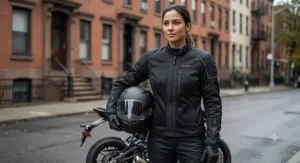
REV’IT! Boson wins on a feature almost nobody else on this list offers at this price: a dedicated back pocket sized for a CE Level 2 armor pad, plus compatibility with REV’IT!’s own airbag vest for riders who want to layer up their protection as their commute gets riskier.
The outer shell uses a Hydratex membrane that handles wind and light drizzle without claiming to be fully waterproof — a distinction worth understanding, because a “water resistant” jacket and a “waterproof” jacket behave very differently once you’re twenty minutes into a downpour. CE Level 1 protectors ship standard at the shoulders and elbows, which is adequate for low-speed urban tumbles but worth upgrading if your commute includes highway stretches.
What most buyers overlook about the Boson is that its silhouette was deliberately built to disappear into a normal wardrobe — RevZilla’s own testers note you genuinely can’t tell it’s a motorcycle jacket by looking at it. Aggregated owner sentiment across gear forums consistently praises the fit and the airbag compatibility, while a recurring complaint centers on the jacket running slightly warm in humid climates because the wind-barrier membrane limits airflow.
Pros:
- ✅ Compatible with REV’IT! airbag vest
- ✅ Genuinely disappears into streetwear
- ✅ Rear pocket accepts Level 2 armor upgrade
Cons:
- ❌ Limited airflow in humid weather
- ❌ Not fully waterproof, only wind/drizzle resistant
Priced around $400-$475, the Boson sits in a sweet spot for riders who want stealth styling without Aether-level pricing, especially if airbag compatibility is on your future upgrade list.
3. Icon Airform MIPS — the budget pick that doesn’t cut safety corners
Here’s the standout: Icon Airform MIPS delivers CE-rated protection and a genuinely comfortable fit at a price point usually reserved for jackets with foam-only padding and no real certification.
The armor package covers shoulders and elbows with CE Level 1 protectors, and the shell fabric strikes a reasonable balance between abrasion resistance and breathability for daily use. Ventilation on this jacket outperforms expectations for its price tier — a meaningful detail if your commute includes stop-and-go traffic where airflow at speed can’t bail you out of overheating at a red light.
If you’re a newer rider or working with a tight gear budget, this is where your money should go first. Bikenrider’s independent test team called it the most compelling value proposition of 2026 after wearing it across thousands of commuting miles, and that kind of endorsement from testers who also handled $900 touring jackets in the same review cycle says something. One consistent note across owner reviews: the fit runs slightly large, so sizing down is generally the right call.
Pros:
- ✅ Real CE Level 1 armor at a budget price
- ✅ Ventilation better than expected for the cost
- ✅ Comfortable for new riders breaking in gear
Cons:
- ❌ Fit runs large, requires sizing down
- ❌ No premium weatherproof liner
At roughly $200-$260, this is the jacket we’d point a first-time commuter toward without hesitation — it proves you don’t need to spend Aether money to ride protected every day.
4. REAX Alta 2 Mesh Jacket — built for riders who sweat through their commute
The standout feature on the REAX Alta 2 Mesh Jacket is its hybrid shell: a 600D ripstop textile combined with 750D hard mesh and 300D stretch mesh inserts, which sounds like spec-sheet noise until you realize it means serious airflow without sacrificing abrasion resistance where it matters most.
CE Level 2 limb armor comes standard, which is a genuine step up from the Level 1 protectors found in most jackets at this price — Level 2 protectors absorb more impact energy before transmitting force to your body, a meaningful difference in a low-speed urban spill. Small commuter-specific touches round it out: a left arm pocket sized for an ID or EZ-Pass, a microfiber glasses pocket, and auto-locking YKK zippers that won’t creep open mid-ride.
This is the jacket for riders whose daily grind involves more traffic-light idling than open-road cruising, where a solid textile jacket would leave you drenched by the time you clock in. Based on the spec comparison, the mesh construction trades some cold-weather versatility for warm-weather comfort, so treat this as a three-season piece rather than a year-round solution unless your climate stays mild.
Pros:
- ✅ CE Level 2 armor, a step above entry-level
- ✅ Excellent mesh airflow for hot commutes
- ✅ Commuter-specific pockets (ID, glasses)
Cons:
- ❌ Limited insulation for cold-weather riding
- ❌ Mesh construction less wind-resistant on highways
Priced around $150-$200, this is arguably the best value-per-dollar jacket on this list if you live somewhere warm and hate arriving at work in a sweat-soaked base layer.
5. Scorpion Yosemite — the reflective jacket that takes visibility seriously
The Scorpion Yosemite‘s standout is its NightViz reflective material, generously applied across the front, back, arms, and elbows — a deliberate design choice for riders who commute during the dawn and dusk windows where conspicuity research shows crash risk climbs.
Beyond the reflective panels, this jacket packs genuine all-weather versatility: a removable zip-out waterproof liner, a thermal EverHeat liner for cold mornings, and fold-down vent panels with full-length arm vents for when the afternoon ride home turns warm. The shell itself uses 500 denier nylon reinforced with 1680 denier nylon in high-wear zones, and Sas-Tec armor at the shoulders and elbows is adjustable to fit properly rather than shifting around during the ride.
What the spec sheet won’t tell you, but reviewers note, is how much of a difference the reflective coverage makes specifically at intersections — the highest-risk zone for commuters, according to the Wikipedia entry on high-visibility clothing, which cites peer-reviewed research linking retroreflective materials to meaningfully lower crash involvement at night. Owner reviews consistently praise the jacket’s versatility across seasons, while some note the design leans more utilitarian than stylish, which matters if your workplace dress code is strict.
Pros:
- ✅ Extensive NightViz reflective coverage
- ✅ Removable waterproof and thermal liners
- ✅ Reinforced 1680D nylon in high-wear areas
Cons:
- ❌ Less office-friendly styling than stealth options
- ❌ Heavier than mesh or single-layer alternatives
At around $260-$320, the Scorpion Yosemite earns its keep for anyone riding before sunrise or after sunset on a regular basis — the reflective coverage alone can be the difference between being seen and being missed.
6. Knox Urbane Pro — the convertible layer that hides under a hoodie
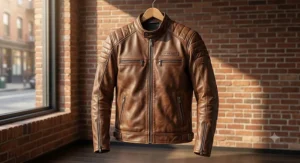
The clever trick here: Knox Urbane Pro is designed as an armored base layer you can wear under everyday clothing — a hoodie, a flannel, whatever fits your commute — rather than a standalone outer shell, which makes it the most genuinely convertible option on this list.
CE AA-rated protection covers the key impact zones while large mesh areas keep the whole thing breathable enough to wear as a mesh jacket on its own during warmer months. Because it’s engineered to sit underneath casual layers, you get full protective coverage without ever looking like you’re wearing motorcycle gear — arrive at the office, pull off your outer layer, and there’s nothing underneath screaming “biker” at your coworkers.
Here’s what to weigh: this only works if you’re willing to build a two-piece system rather than grabbing one jacket and going. For commuters who already own a favorite hoodie or jacket they’d rather wear anyway, that’s a feature, not a drawback — you get real armor without changing your personal style at all. Aggregated reviewer sentiment leans positive on comfort and breathability, with a recurring caveat that the base-layer concept takes some adjustment if you’re used to a traditional standalone riding jacket.
Pros:
- ✅ Wears invisibly under regular clothing
- ✅ CE AA-rated protection at key impact zones
- ✅ Doubles as standalone mesh jacket in summer
Cons:
- ❌ Requires pairing with an outer layer for full effect
- ❌ Less wind/rain protection than a dedicated shell
Expect to pay around $200-$260. If “looking like a normal commuter” is your top priority above all else, Knox Urbane Pro solves that problem more completely than any jacket-shaped jacket ever could.
7. Sedici Marco 2 — waterproof protection without the premium price tag
Sedici Marco 2‘s standout is straightforward value: a waterproof textile construction with CE-rated armor for well under $300, from a brand purpose-built to bring European-inspired safety standards to budget-conscious riders.
The waterproof shell means you’re not gambling on weather during your commute — a real advantage over mesh-heavy alternatives when your route doesn’t allow for waiting out a storm. CE armor ships as standard rather than an upsell, which matters because plenty of budget jackets in this price bracket still rely on unrated foam padding instead.
Based on the spec comparison, Sedici occupies a specific niche: riders who want certified protection and weatherproofing without paying for the brand pedigree of Alpinestars or REV’IT!. The trade-off, according to aggregated owner and reviewer sentiment, is long-term durability — stitching and zippers on budget-tier jackets tend to show wear sooner than premium alternatives, so this is a jacket built to be replaced every few seasons rather than passed down.
Pros:
- ✅ Waterproof construction at a budget price
- ✅ CE-rated armor included standard
- ✅ Clean, European-inspired styling
Cons:
- ❌ Durability lags premium competitors over years
- ❌ Bulkier fit than higher-end textile jackets
At roughly $170-$230, Sedici Marco 2 is the jacket to buy if you’re commuting through unpredictable weather on a strict budget and don’t mind replacing gear a bit more often than a Klim owner would.
Practical Usage Guide: Your First 30 Days
Getting a new commuter motorcycle jacket dialed in takes more than pulling it out of the box. Start by wearing it around the house for an hour before your first real ride — you’re checking that the armor sits directly over your shoulder and elbow joints, not an inch off, since misaligned armor barely helps in a fall. Adjust every strap and snap you can find; most jackets, including Aether Mulholland and REV’IT! Boson, have waist and cuff adjusters that get skipped entirely by first-time buyers.
In the first week, pay attention to zipper snags and any chafing points, especially around the collar and cuffs — these usually resolve as the fabric breaks in, but persistent irritation after two weeks means the size is wrong, not that you need to “get used to it.” If your jacket has a removable liner, like Scorpion Yosemite‘s thermal and waterproof layers, practice swapping them out at home before you need to do it curbside in the rain.
By day 30, you should know your jacket’s true breathing point — the temperature and speed combination where it starts running hot or cold — so you can plan layering accordingly. A common first-month mistake is over-tightening the waist adjusters for a “snug” look, which restricts the torso rotation you need for shoulder checks. Loosen it until you can twist comfortably in the saddle.
Real-World Scenario: Which Jacket Fits Your Commute
Meet three commuters, each with a different problem to solve. First, a downtown junior associate commuting three miles on a scooter-adjacent bike, walking straight into client meetings twice a week — for this rider, Aether Mulholland or REV’IT! Boson solves the “does this look like gear” problem without forcing a wardrobe change at the office.
Second, a warehouse supervisor riding twelve miles each way through a hot, humid metro area with heavy stop-and-go traffic — REAX Alta 2 Mesh or Icon Airform MIPS handles the heat and sweat problem, prioritizing airflow and comfortable armor over waterproofing they’ll rarely need in a dry climate.
Third, a nurse working rotating shifts that put her on the road before sunrise and well after dark, riding through unpredictable weather on a fixed budget — Scorpion Yosemite solves the visibility problem directly with reflective coverage, while Sedici Marco 2 offers a cheaper waterproof alternative if reflectivity is a secondary concern to weatherproofing.
How to Choose a Commuter Motorcycle Jacket
- Start with your commute length and climate, not the jacket that looks coolest online — a five-mile summer commute and a twenty-mile winter one need fundamentally different jackets.
- Confirm CE armor certification, ideally Level 2 at the shoulders and elbows, rather than trusting foam padding marketed as “protective” without a rating.
- Decide how stealthy you actually need to be — if your workplace has zero dress code, a visibility-first jacket like Scorpion Yosemite may beat a stealth pick.
- Check for a removable or zip-out liner so one jacket can flex across three seasons instead of forcing you to own two.
- Try the jacket in your actual riding position, not just standing in a mirror — sleeves and hems behave differently once you’re leaned over handlebars.
- Weigh convertibility, especially if you already dislike carrying a change of clothes; options like Knox Urbane Pro solve this directly.
- Match the budget to your mileage — high-mileage daily commuters get more lifetime value from a $600 jacket than someone riding twice a week.
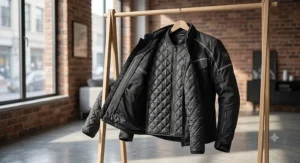
Commuter Motorcycle Jacket vs Standard Casual Jacket
The gap between a certified riding jacket and a normal casual jacket comes down to what happens in the two seconds after a fall. A standard denim or cotton jacket offers essentially no abrasion resistance — pavement will shred through it within feet of a slide — and zero impact armor at the shoulders or elbows where riders most commonly get hurt. A commuter motorcycle jacket like Icon Airform MIPS or Sedici Marco 2 is built from abrasion-resistant textiles specifically tested under the EN 17092 CE certification standard, which evaluates seam strength, tear resistance, and impact absorption under conditions that approximate a real low-speed get-off.
The trade-off is that certified riding jackets have historically looked the part — bulky, panel-heavy, clearly “motorcycle gear.” That’s exactly the gap stealth-focused jackets like Aether Mulholland and REV’IT! Boson were built to close, proving you don’t have to choose between looking like a normal commuter and actually being protected if something goes wrong. For anyone riding more than a couple of times a week, the math strongly favors a certified jacket: the marginal cost over a casual jacket is small compared to the marginal protection gained.
Long-Term Cost & Maintenance
A $600 jacket that lasts eight years of daily commuting works out cheaper per wear than a $200 jacket you replace every eighteen months — which is the honest ROI case for premium picks like Aether Mulholland. That said, armor foam degrades over time regardless of price point; most manufacturers recommend inspecting or replacing CE armor inserts every five years of regular use, since repeated compression from wear and washing gradually reduces impact absorption.
Maintenance costs stay low across this whole list — textile jackets generally need nothing beyond occasional spot cleaning and, for waterproof shells like Scorpion Yosemite or Sedici Marco 2, a periodic DWR (durable water repellent) reapplication once the fabric stops beading water. Budget-tier jackets tend to show zipper and stitching wear sooner, so factor a replacement cycle of roughly three to five years into your cost math rather than assuming any jacket is a lifetime purchase.
Safety, Regulations & Compliance Guide
In the United States there’s no federal mandate requiring specific motorcycle jacket certifications the way there is for DOT-compliant helmets, but that doesn’t mean armor ratings are meaningless. The CE-based EN 17092 standard, developed originally for the European market, has become the de facto benchmark that most reputable brands — REV’IT!, Alpinestars, Dainese, Icon, Sedici — voluntarily test against, rating garments from Class C up through Class AAA based on abrasion resistance and impact protection.
For daily commuting, Level 1 or Level 2 CE armor at the shoulders, elbows, and ideally a back protector covers the realistic risk profile of low-speed urban incidents — intersections, lane splits gone wrong, sudden stops. According to NHTSA’s research on rider conspicuity strategies, brightly colored or reflective gear measurably reduces crash involvement risk, which is the entire case for a jacket like Scorpion Yosemite if your commute overlaps dawn or dusk hours. Whatever jacket you land on, verify the armor label directly rather than trusting marketing copy — a jacket that merely “includes padding” is not the same as one carrying an actual CE rating.
Common Mistakes When Buying a Commuter Motorcycle Jacket
The most common mistake we see is buying for the ride you wish you took instead of the one you actually take. Riders shopping for a five-mile city commute frequently end up with a heavyweight adventure-touring jacket loaded with ten vents and a removable thermal system they’ll never use, when something like REAX Alta 2 Mesh or Icon Airform MIPS would have served them better and cost less. Match the jacket to your actual mileage and climate, not an aspirational weekend trip you take twice a year.
A second recurring pitfall is skipping the armor check entirely. Plenty of jackets marketed as “motorcycle style” online — particularly on general fashion sites — include no CE-rated protection at all, just foam shoulder pads borrowed from a completely different category of clothing. Always confirm the specific CE class (A, AA, or AAA under EN 17092) rather than trusting a listing that simply says “armored.”
Sizing is the third trap, and it’s sneaky because it interacts with layering. A jacket that fits perfectly over a t-shirt in a warm showroom can feel drastically different over a sweater in December. Reviewers across nearly every jacket on this list — from Sedici Marco 2 to Scorpion Yosemite — mention sizing quirks, so check owner feedback specifically for fit notes before committing, and size up slightly if you plan on layering heavily in colder months.
Finally, don’t underestimate how much off-bike styling matters to whether you’ll actually wear the jacket daily. A technically superior jacket that sits in your closet because it looks wrong in the office parking lot protects nobody. This is exactly why stealth-focused picks like Aether Mulholland and REV’IT! Boson exist, and why Knox Urbane Pro‘s convertible base-layer approach solves the problem from a completely different angle.
Features That Actually Matter (And Those That Don’t)
Marketing copy on motorcycle gear pages tends to bury the features that genuinely affect your daily ride under a pile of buzzwords that sound impressive but rarely change your real-world experience. CE-rated armor at the shoulders, elbows, and back matters enormously — this is the one line item worth prioritizing above almost everything else, since it’s the actual difference-maker in a fall. Weatherproofing, whether through a laminated shell or a removable liner, matters just as much if your climate is unpredictable, because a jacket you can’t wear in the rain is a jacket you’ll eventually leave at home on the wrong morning.
Ventilation matters more than most first-time buyers expect, particularly for anyone riding through stop-and-go traffic where speed-generated airflow disappears entirely. REAX Alta 2 Mesh earns its spot on this list largely because it takes ventilation seriously rather than treating it as an afterthought.
On the other side of the ledger, features like elaborate multi-pocket systems, flashy branding, and “race-inspired” aesthetic panels rarely translate into meaningful commuting benefits. A jacket with fourteen pockets sounds useful until you realize you’re using three of them, and the rest just add weight and bulk. Similarly, aggressive sportbike-style pre-curved sleeves are excellent for a forward-leaning riding position but can feel awkward and restrictive on an upright commuter bike or scooter, so match the cut to your actual riding posture rather than assuming more technical automatically means better.
Frequently Asked Questions
❓ What's the difference between a commuter and a touring motorcycle jacket?
❓ Can I wear a commuter motorcycle jacket into the office?
❓ Is mesh or textile better for a daily commute?
❓ How much should I spend on a commuter motorcycle jacket?
❓ Do commuter jackets need to be waterproof?
Conclusion
The best commuter motorcycle jacket isn’t the one with the longest spec sheet — it’s the one you’ll actually put on every single morning without hesitating. If your workplace runs formal, lean toward the stealth builds in Aether Mulholland or REV’IT! Boson. If your budget is tight but your safety standards aren’t negotiable, Icon Airform MIPS and Sedici Marco 2 prove you don’t need to compromise. Riders battling heat should look at REAX Alta 2 Mesh, low-light commuters owe it to themselves to consider Scorpion Yosemite‘s reflective coverage, and anyone who wants to keep their personal style intact should try Knox Urbane Pro‘s convertible layering approach.
Whichever you choose, the underlying logic stays the same: real CE armor, weather flexibility matched to your climate, and styling you won’t fight every morning. Get those three right, and the jacket disappears into your routine — which, for a piece of safety gear, is the highest compliment there is.
✨ Don’t Miss These Exclusive Deals!
🔍 Take your commuter motorcycle jacket search to the next level with these carefully selected picks. Click on any highlighted item to check current pricing and availability. The right jacket will keep your daily rides comfortable, protected, and office-ready.
Recommended for You
- Touring motorcycle jacket textile: 7 Best Picks for 2026 Riders
- Adventure Motorcycle Jacket 2026: 7 Battle-Tested Picks That Won’t Fail You
- Waterproof Motorcycle Jacket: 7 Top Picks Riders Trust in 2026
Disclaimer: This article contains affiliate links. As an Amazon Associate, I earn from qualifying purchases. If you purchase products through these links, we may earn a small commission at no additional cost to you.
✨ Found this helpful? Share it with your friends! 💬🤗
