
In This Article
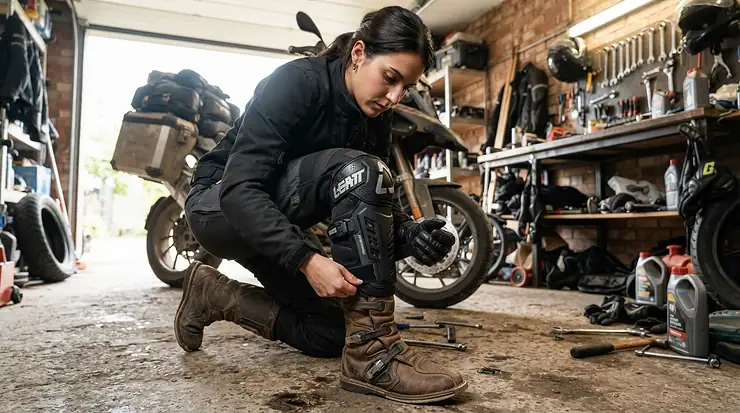
Enduro boots for beginner off-road riders are knee-high, CE-rated protective boots with a lugged sole, reinforced ankle, shin plating and toe armor, priced for people still deciding whether this hobby is a phase or a personality. They protect your lower legs, grip the pegs, and still let you walk out of a ditch.
Here’s the uncomfortable truth about your first season. You will drop the bike. Probably on a tame trail, at walking speed, in front of someone you wanted to impress. Your ankles are the part of you most likely to pay for it. Studies summarized on Wikipedia’s overview of motorcycle boots point to lower-limb injuries, with the shin bone a frequent casualty, as the most common injuries among motorcycle riders.
The good news? You don’t need a $700 race boot. The best beginner enduro boot recommendations in 2026 cluster between roughly $250 and $500, and the gap between the cheap end and the expensive end is smaller than the marketing suggests. What you’re really paying for is sole design, closure convenience, fit refinement and how many parts you can replace later.
This guide covers seven real boots, spec by spec, with review sentiment pulled from retailer and magazine sources. It also covers the practical stuff the listings skip: enduro school gear requirements, boot break-in tips, shin guard integration with knee braces, and the mistakes that cost first-timers money. If you’re hunting entry level off-road boots that won’t embarrass you or your insurance deductible, you’re in the right place.
Quick Comparison: Enduro Boots for Beginner Off-Road Riders at a Glance
Prices below are ranges gathered during research. They shift constantly, so check current price before buying.
| Boot | Price Range | Sole & Closure | Waterproof? | Best For |
|---|---|---|---|---|
| Alpinestars Tech 3 Enduro | Around $300 | Replaceable lugged sole; triple buckles plus hook-and-loop flap | No (waterproof version exists) | First-timers wanting maximum protection per dollar |
| Fox Comp X | Low $300s | Lugged PosiTac sole; four buckles | No claim | Weekend trail riders who want a step-in fit |
| O’Neal RMX Enduro | Mid-$200s to low $300s (varies by retailer) | Deep-cut mud sole; four metal buckles | No claim | Tight budgets and muddy terrain |
| Leatt 4.5 Enduro | Around $400 | Enduro sole; SlideLock top closure plus buckles | No (HydraDri version exists) | Wider feet and long trail days |
| Gaerne Fastback Endurance Enduro | Around $400 | Resoleable welted sole; alloy buckles | No claim | Riders using knee braces or larger calves |
| Sidi X-Power Enduro | Mid-$400s (waterproof model slightly higher) | Lugged enduro sole; four micrometric buckles | No (waterproof version exists) | Buy-once riders with narrower feet |
| Alpinestars Tech 7 Enduro | Around $500 | Replaceable enduro sole; quick-release buckles | Water-resistant upper; Drystar version is waterproof | Riders who expect to progress fast |
Look at the table as a ladder. The Alpinestars Tech 3 Enduro and Fox Comp X deliver the most protection for the least money, while the Leatt 4.5 Enduro and Gaerne Fastback Endurance Enduro buy you fit refinement and, in the Gaerne’s case, room for knee braces. The Alpinestars Tech 7 Enduro and Sidi X-Power Enduro cost more because they’re built to outlive your first bike.
💬 Just one click — help others make better buying decisions too!😊
Top 7 Enduro Boots for Beginner Off-Road Riders: Expert Analysis
1. Alpinestars Tech 3 Enduro — most protection per dollar
Think of the Alpinestars Tech 3 Enduro as the boot that grew up in a pro paddock, then took a pay cut. It’s the usual starting point in any list of beginner enduro boot recommendations, and the specs explain why.
The microfiber upper has flexible bellows at the front and rear. A contoured TPU shin plate, medial and lateral ankle guards and a heel counter handle the armor. A triple-buckle strap system over a hook-and-loop flap handles the fit. In practice, you get real shin and ankle coverage, but the boot still bends enough to walk back to your truck when a hill wins the argument. The lugged, replaceable sole is the “enduro” part, biting on roots and rock where a flat motocross tread skates.
Based on the spec comparison, replaceable soles and buckles are the quiet selling point: one crash won’t total the boot.
Reviewers on a major U.S. retailer’s listing rate it around 4.5 out of 5. A UK owner called it stiff and secure but noted it isn’t very waterproof for heavier trail days. If puddles are routine, the Alpinestars Tech 3 Enduro Waterproof exists for a modest premium.
Pros:
- ✅ Full TPU shin, ankle and heel coverage
- ✅ Replaceable sole and buckles
- ✅ Bellows give useful ankle flex
Cons:
- ❌ Standard version isn’t waterproof
- ❌ Plainer materials than the Tech 7 and up
Price: around $300, check current price. Strong value for a first pair.
2. Fox Comp X — lugged grip, no-fuss fit
The Fox Comp X is the Comp boot with a trail-ready outsole, and Fox aims it squarely at beginners and weekend riders. That honesty is refreshing.
The upper is microfiber synthetic leather over an air mesh lining. TPU plates cover the shin, ankle, toe and heel, with burn and calf guards added. Four adjustable buckles lock the fit, and an internal composite insole board stabilizes the foot front to back and side to side on the pegs. That last detail matters more than it sounds. A stiff, supportive footbed lets you stand on the pegs for an hour without your arches filing a complaint.
The sole uses Fox’s PosiTac rubber with an open tread, and it’s resoleable. Retailers describe the fit as comfortable straight out of the box with little break-in, though I couldn’t find a deep pool of independent reviews, so treat that claim as marketing until your feet confirm it.
For riders choosing entry level off-road boots on a budget, this is a sensible contender with a fit that suits most foot shapes.
Pros:
- ✅ Composite insole board adds peg stability
- ✅ Open-tread sole grips on trail terrain
- ✅ Resoleable outsole extends boot life
Cons:
- ❌ Thin pool of independent reviews
- ❌ No waterproof claim
Price: low $300s, check current price. Good value if the fit works for you.
3. O’Neal RMX Enduro — budget pick with mud-ready cutouts
The O’Neal RMX Enduro is the cheapest route to a properly armored enduro boot, and it doesn’t feel like a compromise on paper.
The sole carries larger, deeper cutouts for mud traction, which matters when clay turns your trail into a skating rink. Inside, you get molded ankle padding, an anatomically shaped heel cup and protection around the shift zone. The microfiber upper has internal reinforcement. Four metal buckles with micrometric adjustment are replaceable, which is unusual at this price. A nylon-fiberglass insole with a steel shank keeps the boot from folding under load.
Here’s what the spec sheet won’t tell you: budget boots tend to skimp on the little things, such as buckle quality and padding, and the RMX Enduro’s listed features suggest O’Neal didn’t. Verified reviews are scarce. One UK buyer described it as sturdy, comfortable and true to size, but that’s a sample of one, so confirm the return policy before ordering.
This boot suits riders who want real armor without the Alpinestars or Fox premium, and who accept that long-term durability data is thin.
Pros:
- ✅ Deep-cut sole for mud traction
- ✅ Replaceable metal buckles at a low price
- ✅ Molded ankle padding and padded heel cup
Cons:
- ❌ Very few verified reviews
- ❌ Pricing varies widely between retailers
Price: mid-$200s to low $300s depending on retailer, check current price. A solid budget play.
4. Leatt 4.5 Enduro — SlideLock closure, friendly to wide feet
The Leatt 4.5 Enduro brings top-shelf ideas down to the $400 neighborhood. Leatt built it on the same platform as its flagship 5.5 FlexLock, with an upper tuned for more flex.
Its signature is the SlideLock system, an auto-locking one-way sliding closure that seals the top of the boot against dirt and debris. Add composite buckles over stainless bases, a low-profile toe box for easier shifting, a heel-grip ankle design and an extended footpeg zone for riders who stand on the balls of their feet. A steel shank, DualZone sole hardness and a lugged enduro pattern round it out. Leatt markets the fit as roomy, even for wide feet, a claim worth testing in person.
Dirt Bike Magazine’s product review praised the sole grip and out-of-the-box maneuverability, and noted the 4.5 uses plastic where the 5.5 uses aluminum. That’s a genuine trade-off: cheaper hardware, similar concept.
For beginners with wider feet or longer rides, this is the comfort-first pick.
Pros:
- ✅ SlideLock seals the boot top against debris
- ✅ Low toe box makes shifting easier
- ✅ Roomier fit for wider feet
Cons:
- ❌ Plastic buckles, unlike the 5.5’s aluminum
- ❌ Standard version lacks a waterproof membrane
Price: around $400, check current price. Fair value for the comfort gain.
5. Gaerne Fastback Endurance Enduro — the knee-brace-friendly leather boot
The Gaerne Fastback Endurance Enduro is the old-school option in a market full of microfiber. Gaerne builds it in Italy from full-grain leather on a Goodyear-welted sole, which means a cobbler can resole it when the tread finally gives up.
The wrap-around ankle pivot gives fore-and-aft flex while holding the ankle firmly. Steel toe caps, alloy buckles, a heavy-duty shank and an inner thermal shield complete the hardware. Here’s the standout for beginners: the boot top opens wide, adjusting up to roughly a 20-inch calf circumference, so it accommodates knee braces and bigger calves without a fight. If you plan to add braces, this boot’s design is a head start.
On a major U.S. retailer’s listing, an open-box unit shows a 4.5 out of 5 rating across a few dozen reviews. One European buyer suggested sizing up. Leather also means a longer break-in than synthetic rivals, so budget patience.
Pros:
- ✅ Wide-opening top fits knee braces
- ✅ Resoleable welted construction
- ✅ Steel toe caps and thermal shield
Cons:
- ❌ Leather needs a longer break-in
- ❌ Heavier-feeling than microfiber rivals
Price: around $400, check current price. Great value if you’ll wear braces.
6. Sidi X-Power Enduro — Italian precision for the buy-once rider
The Sidi X-Power Enduro earns its spot because it’s built like boots that cost more, yet sits in the mid-$400s. Rider Gear’s 2026 Sidi guide describes it as aimed at beginners or occasional riders who want Sidi build quality without the pricier tech.
The upper uses laminated Technomicro microfiber, with padded thermoformed tongue and rear panels for comfort. Four replaceable micrometric buckles remember your adjustment setting. A flex system at the ankle limits movement through an internal hinge, and an aggressively lugged enduro sole bites where flat tread slips. The nylon insole skips the steel shank entirely.
A UK reviewer of the standard X-Power reported Level 2 on all four EN 13634:2017 categories on the label and called it exceptionally comfortable, but found it not waterproof and not great for walking. Check the label on whichever enduro version you buy. A waterproof Sidi X-Power Enduro WP is available for a premium.
Sidi’s narrow last is a recurring theme in listings, which suggests wide-footed riders should try before buying.
Pros:
- ✅ Replaceable buckles remember your setting
- ✅ Premium Italian build quality
- ✅ Ankle flex system limits unsafe movement
Cons:
- ❌ Narrow fit; listings suggest sizing up
- ❌ Standard version isn’t waterproof
Price: mid-$400s, check current price. Pays off if you ride for years.
7. Alpinestars Tech 7 Enduro — the premium step-up
The Alpinestars Tech 7 Enduro is where “beginner” meets “I’m clearly going to keep doing this.” It costs more than double the O’Neal RMX Enduro, and the upgrades are visible.
The PU-reinforced microfiber upper resists abrasion and water, and the enduro-specific dual-compound sole has a replaceable design. A quick-release locking buckle system aligns itself for easy closure, and the calf adjustment range is wider than on lesser Alpinestars boots. The calf protector uses a Blade Flex system, and the boot carries CE certification to EN 13634:2017.
On the retailer listing I reviewed, it holds around 4.5 out of 5 across nearly a hundred reviews. The loudest critique, from one trail reviewer, is moisture: a boot sold as “enduro” should shrug off creek crossings, and this version is only water-resistant. The Alpinestars Tech 7 Enduro Drystar adds a waterproof membrane, in a similar price range.
This is the buy-once pick for riders who expect their skills, and their trails, to get harder.
Pros:
- ✅ Quick-release self-aligning buckle system
- ✅ Wide calf adjustment range
- ✅ Replaceable enduro sole
Cons:
- ❌ Highest price on this list
- ❌ Standard version only water-resistant
Price: around $500, check current price. Worth it only if you’ll ride often.
✨ Don’t Miss These Beginner-Friendly Picks!
🔍 Take your first season to the next level with these carefully selected boots. Click any highlighted product name to check current pricing and availability, then match the fit and budget to your riding. These boots will help you ride more confidently and walk away from your first spill. 🏍️
How to Choose Enduro Boots for Beginner Off-Road Riders in 5 Steps
A good boot is a boring boot. It fits, it protects, and you forget it’s there. Use these steps in order.
- Confirm CE certification to EN 13634. This standard covers motorcycle protective footwear for on-road and off-road use, including protection, ergonomics and mechanical properties, per the scope summary at the Estonian Centre for Standardisation. An uncertified boot can look identical and fail where it counts.
- Pick the sole for your terrain. Lugged enduro soles give traction when you push, kick and scramble. Flat motocross soles feel better on the pegs but skate on slick rock.
- Decide on waterproofing early. Most boots here come in waterproof variants for a premium. Wet-climate riders should buy that version once instead of fighting damp socks all season.
- Match the closure to your patience. Buckles are secure and replaceable. SlideLock-style closures are quicker. Pick what you’ll actually fasten correctly at 6 a.m.
- Try before you commit. Sidi runs narrow, Leatt runs roomy, Gaerne’s leather needs time. Wear them with the socks you’ll ride in.
Between two similar boots, always take the better fit. A perfect-fit mid-range boot beats a poor-fit premium one every time.
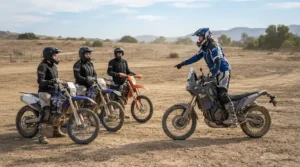
Price Range & Value Analysis: What Your Budget Actually Buys
| Boot | Tier | Price Range | Long-Life Features | Value Verdict |
|---|---|---|---|---|
| O’Neal RMX Enduro | Budget | Mid-$200s to low $300s | Replaceable metal buckles | Best entry price; thin review data |
| Alpinestars Tech 3 Enduro | Budget | Around $300 | Replaceable sole and buckles | Best protection per dollar |
| Fox Comp X | Budget/Mid | Low $300s | Resoleable outsole | Strong all-rounder |
| Leatt 4.5 Enduro | Mid | Around $400 | Composite buckles; steel shank | Comfort-first value |
| Gaerne Fastback Endurance Enduro | Mid | Around $400 | Resoleable welted sole | Best for braces |
| Sidi X-Power Enduro | Mid/Premium | Mid-$400s | Replaceable buckles and protectors | Buy-once quality |
| Alpinestars Tech 7 Enduro | Premium | Around $500 | Replaceable sole and buckles | Worth it if you’ll progress |
The jump from budget to mid-range typically buys comfort, finer buckles and better fit, not dramatically more safety. Stepping from the Alpinestars Tech 3 Enduro to the Alpinestars Tech 7 Enduro adds roughly $200 for refinement and longevity. If you ride a few weekends a year, that money is better spent on a good helmet.
Enduro School Gear Requirements: What Instructors Actually Check
If you’re signing up for a class, enduro school gear requirements are the first thing to read, because showing up in the wrong boots can end your day before the bike starts.
Requirements vary by school, so always check your provider’s list. As a baseline for comparison, Schoolcraft College’s riding gear requirements for a street-oriented course ask for boots that cover the ankle, with a hard sole and minimal heel and flex. Off-road schools tend to be stricter, since you’re standing on pegs, dabbing a foot and muscling a bike over obstacles.
Rider forum reports describe a BMW off-road school checking boots closely, preferring tall boots over ankle-height ones, and offering rentals at modest cost. They also describe instructors looking for a sole welt overhang they teach students to use for shifting while standing. Treat these as anecdotes, not rules. Still, they hint at what to expect.
Here’s a practical checklist for your first enduro school: a knee-high, CE-rated boot, a sole with some tread, a toe box low enough to slide under the shift lever, and a fit you’ve already tested at home. Pair that with a helmet, gloves, goggles and knee protection per the school’s list.
The Alpinestars Tech 3 Enduro and Fox Comp X are safe bets because they’re widely recognized as beginner-appropriate. If a school offers loaner boots, they can be a smart way to test a style before buying.
Shin Guard Integration: Making Boots and Leg Protection Work Together
Shin guard integration is where beginners get surprised. Boots and leg protectors both claim real estate on your lower leg, and they don’t always share it nicely.
Retailer guidance on leg protectors points out that motocross boots already cover much of the shin bone, so protectors shouldn’t collide with the boot shaft. Knee braces add another wrinkle: braces and knee/shin guards are worn together with the boots, and a frame that sits too low can bunch up inside the boot top. One forum rider reported that low-hanging shin protectors made a tall Sidi boot fit poorly because his calf became too wide for the shaft.
Here’s how to avoid that:
- Test the boot with your protectors on. Not your bare calf. Bring the braces to the fitting.
- Check calf adjustment range. The Gaerne Fastback Endurance Enduro opens to roughly a 20-inch calf circumference, while the Alpinestars Tech 7 Enduro advertises an expanded calf adjustment range.
- Wear compression sleeves under protectors. Retailer advice suggests this reduces rubbing.
- Look for pinch protection. A calf pinch guard (a small skin shield between brace and boot top) prevents skin pinching.
One UK Alpinestars Tech 3 Enduro buyer paired the boots with Leatt Z-Frame braces and reported a secure, locked-in feel. That’s one rider’s experience, not a guarantee, but it shows the combination can work.
Boot Break-In Tips: Your First 30 Days
New enduro boots feel like ski boots at first: stiff, awkward, and mildly insulting. These boot break-in tips come from retailer and rider guidance, and they all share one theme: patience.
Start at home. Wear them around the house for short sessions before the first ride. Add time gradually. Synthetic uppers like the Fox Comp X‘s microfiber soften faster than the full-grain leather on the Gaerne Fastback Endurance Enduro, which asks for more patience.
Pick the right socks. Tall, moisture-wicking riding socks cushion pressure points and prevent rub on your shin. Thick cotton traps sweat.
Flex them by hand. Bend the ankle area off the bike, then buckle up and walk. Retailer guidance suggests this loosens stiffness without a ride.
Solve the shifting problem. If you can’t feel the lever, slide your toe under it and lift the whole boot rather than just your foot, a trick riders share for new, stiff boots.
Skip the shortcuts. Oven heating and water soaking get mentioned online, but they can damage glue, membranes and padding. Gentle wear is safer. Let boots dry naturally after sweaty sessions, away from heat.
Manage hot spots. If rubbing starts, stop, apply moleskin or a blister patch, and resume.
You’ll know they’re broken in when you stop thinking about them. For most beginners that takes a few rides, longer with leather.
Real-World Scenarios: Matching Boots to Three Beginner Profiles
The weekend trail rider on a $300 budget. Riding twice a month, mostly dry singletrack, no braces yet. The Alpinestars Tech 3 Enduro or Fox Comp X fits the money and the use. Spend the savings on a quality helmet.
The rainy-climate commuter-turned-trail-rider. Wet creek crossings, cold mornings, boots that stay damp for days. Look at the waterproof versions: the Alpinestars Tech 7 Enduro Drystar or the Sidi X-Power Enduro WP. A damp foot is a miserable foot, and misery shortens your rides.
The taller rider planning knee braces. Larger calves, a cautious attitude after an old ligament injury. The Gaerne Fastback Endurance Enduro‘s wide-opening top is the logical match, with a resoleable construction that justifies the leather break-in.
A fourth archetype deserves a nod: the wide-footed rider. The Leatt 4.5 Enduro‘s roomier fit is the better starting point than narrower Italian lasts.
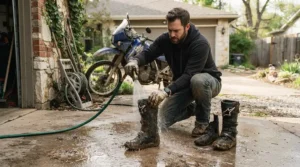
Enduro Boots vs MX Boots vs Other Footwear: What Changes on the Trail
| Boot Type | Sole | Walking Comfort | Protection | Best For |
|---|---|---|---|---|
| Enduro boots | Lugged, grippy | Better than MX | CE-rated shin, ankle, toe | Trails: Alpinestars Tech 3 Enduro, Leatt 4.5 Enduro |
| MX boots | Flatter, smoother | Poor off the bike | CE-rated | Tracks: Fox Comp X (with an enduro-style lugged sole variant for trails) |
| Adventure/touring boots | Moderate tread | Best | Varies by model | Road-heavy mixed riding |
| Work/hiking boots | Varies | Excellent | Low for riding impacts | Not recommended for dirt bikes |
The main difference between enduro and plain MX boots is the sole: enduro boots add deeper lugs so you can scramble over obstacles and push a stuck bike, while MX soles prioritize peg feel and slide-free shifting on a track. Ordinary hiking or work boots lack shin and ankle armor, so they’re a gamble when the bike lands on your leg.
If your riding is mostly trails, pick a lugged boot. If you split time between track and trail, a boot like the Fox Comp X or an Alpinestars Tech 7 Enduro sits comfortably in the middle.
Common Mistakes When Buying Enduro Boots
First-time buyers repeat the same errors, which is helpful, because they’re easy to dodge.
Buying for looks. Graphics fade. Fit doesn’t. A mismatched foot shape causes blisters and bad shifting.
Ignoring the sole. A flat MX tread on a rocky trail is a slip hazard when you dismount to push.
Buying too small. Sidi listings advise sizing up, and a European Gaerne buyer suggested the same. Always check the maker’s size chart.
Skipping CE. Uncertified boots may look the part but skip the testing that backs the label.
Forgetting the knee gear. Try the boots with braces on, or you may discover a clash on the trail.
Overspending early. A $500 boot isn’t wrong, but if you’re not sure you’ll keep riding, the O’Neal RMX Enduro or Alpinestars Tech 3 Enduro gets you protected for far less.
Assuming waterproof. Several boots here are water-resistant at best. Read the label.
Features That Actually Matter (And Those That Don’t)
Marketing loves buzzwords. Here’s the filter.
Matters: CE certification, a lugged sole, a stiff-but-flexible ankle, replaceable parts, and fit. These decide whether the boot protects you and survives.
Matters sometimes: waterproofing (essential in wet climates, pointless in desert), closure type (convenience), and a steel shank (stiffness versus walkability). The Sidi X-Power Enduro skips a steel shank, while the Fox Comp X and Leatt 4.5 Enduro use one.
Doesn’t matter much: color schemes, brand collabs and ultra-light weight claims. A few grams won’t save you from a bad crash.
When two boots tie on protection, let the fit and the price break the tie.
Long-Term Cost & Maintenance
The sticker price is half the story. Replaceable soles, buckles and protectors turn a boot from a disposable into a rebuildable tool.
Several boots here are built around that idea. The Alpinestars Tech 3 Enduro and Alpinestars Tech 7 Enduro feature replaceable soles and buckles. The Fox Comp X is resoleable. The Gaerne Fastback Endurance Enduro uses a welted construction that allows resoling. The Sidi X-Power Enduro lists replaceable buckles and protective parts.
Maintenance is simple: rinse mud off after rides, let boots dry naturally, check buckles and straps for wear, and inspect the sole for the wear indicator or worn lugs. Leather boots like the Gaerne Fastback Endurance Enduro appreciate conditioner. Over three seasons, a $300 boot you can rebuild may cost less per ride than a $200 boot you replace. Total cost of ownership favors replaceable parts.
Safety Standards Guide: Reading the CE Label
Don’t just trust “CE certified” on a product page. Learn the label.
According to Wikipedia’s summary, the EN 13634 label includes a motorcycle icon followed by a series of four numbers showing height, abrasion resistance, impact cut resistance and transverse rigidity. Each is rated 1 (lower protection) or 2 (higher protection). More 2s means more protection.
Optional tests add extra letters: IPA or IPS for ankle or shin impact protection, WR for water resistance, FO for fuel and oil resistance, SRA/SRB/SRC for slip resistance, and B for breathability.
For beginners, the practical takeaway is simple. Look for the EN 13634:2017 mark and, if you can, higher levels. Ask the seller to show the label for the exact model and size. Certification claims on listings sometimes refer to different edition years, so read closely.

FAQ
❓ What size should I order for enduro boots?
❓ How much should I spend on my first pair of enduro boots?
❓ Can I wear hiking or work boots to an enduro school?
❓ Are waterproof enduro boots worth the extra money?
❓ Do enduro boots need to be resoled?
Conclusion: Pick the Boot You’ll Actually Wear
The best enduro boots for beginner off-road riders aren’t the most expensive ones. They’re the ones that fit, carry a proper CE label, grip on your terrain and stay on your feet when the trail goes sideways.
If budget rules, the Alpinestars Tech 3 Enduro, Fox Comp X and O’Neal RMX Enduro deliver real armor for the least money. If comfort and fit lead, the Leatt 4.5 Enduro is the roomy choice. If you plan to add knee braces, the Gaerne Fastback Endurance Enduro was built with wide-opening tops in mind. And if you’ll ride for years, the Sidi X-Power Enduro and Alpinestars Tech 7 Enduro reward the extra spend.
Before you buy, remember the practical lessons. Check your school’s gear list. Try boots on with braces. Plan a gradual break-in. Read the CE label.
Your first boots won’t be your last, but they’ll be the ones that teach you what a good fit feels like. Pick wisely, ride carefully, and enjoy the trail. 🏍️
Recommended for You
- Affordable Adventure Riding Boots: 7 Smart Buys That Last (2026)
- Adventure Boots For Street And Dirt: 7 Ultimate Picks (2026)
- Budget Dual Sport Motorcycle Boots: 7 Proven Picks For 2026
Disclaimer: This article contains affiliate links. As an Amazon Associate, I earn from qualifying purchases. If you purchase products through these links, we may earn a small commission at no additional cost to you.
✨ Found this helpful? Share it with your friends! 💬🤗
