
In This Article
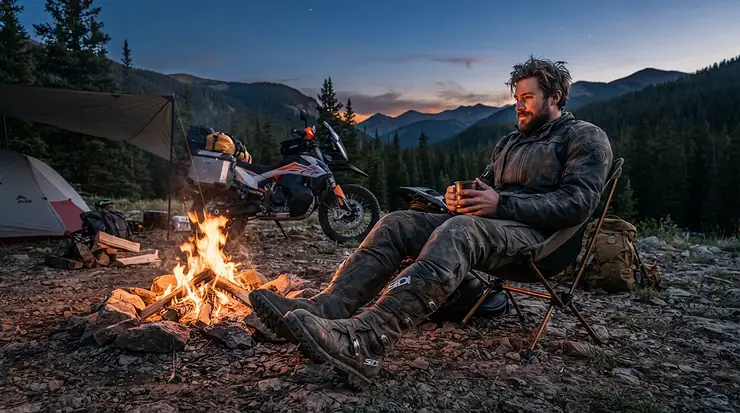
Your feet reach the ground first. Every time. Footpeg, rock, hot exhaust, wet asphalt: whatever a dual sport bike decides to do, your ankles stand in the blast zone. Choosing budget dual sport motorcycle boots well matters more than most of the shiny add-ons in your cart, and it costs far less than a flagship pair.
Here’s the awkward part. A dual sport motorcycle lives a double life, street-legal on Monday and dirt-bound on Saturday. Most boots are built for only one of those lives. Road boots flex like slippers but fold on a rock. Motocross boots shrug off impacts but turn a coffee-stop stroll into a robot impression. The sweet spot sits in the middle, and it’s wider than you’d think once you know what to look for.
What Are Budget Dual Sport Motorcycle Boots?
Budget dual sport motorcycle boots are protective, mid-to-tall riding boots that cost roughly $150-$300 and handle both pavement and dirt. They combine ankle and shin armor, a stiffened sole, and a tread you can actually walk in, while skipping the premium materials and race-level stiffness that push full motocross or flagship adventure boots toward $500 and beyond.
This guide skips the brochure language. You’ll get seven real boots, analyzed from spec sheets and aggregated reviewer sentiment, plus plain-English sections on on/off-road flex rating, waterproofing tradeoffs and replaceable sole treads. Whether you’re hunting affordable dual sport riding boots for a first bike or rounding out entry level dual sport gear on a tight budget, think of this as a friend who already read all the spec sheets. Prices are ranges captured at the time of research (October 2026), so check current price before you buy.
Quick Comparison: Budget Dual Sport Motorcycle Boots at a Glance
Seven boots, three price tiers, one table. Use it to narrow the field, then scroll down for the full analysis of each pair.
| Boot | Price Range | Waterproof? | Tier | Best For |
|---|---|---|---|---|
| O’Neal Element | Around $140-$160 | No | Budget | First-time trail riders on a tight budget |
| Fly Racing Maverik LT Enduro | Roughly $150-$200 | Water repellent only | Budget | Dry-climate riders who want aggressive tread |
| Tourmaster Highlander ADV WP | Roughly $180-$250 | Yes (Aqua-barrier) | Budget | Commuters who hit gravel on weekends |
| Forma Adventure | Roughly $250-$300 | Yes (Drytex) | Mid-range | All-weather riders who walk a lot off the bike |
| Alpinestars Corozal Adventure Drystar | Roughly $250-$320 | Yes (Drystar) | Mid-range | Riders wanting more ankle control without MX bulk |
| TCX Infinity 3 GTX | $400-$450 range | Yes (Gore-Tex) | Stretch | Touring-leaning riders with light dirt-road plans |
| Alpinestars Tech 7 Enduro Drystar | $480-$530 range | Yes (Drystar) | Premium | Riders who want rebuildable boots for real trails |
Look at the pattern. The three budget picks trade away either waterproofing or refinement, while the two mid-range boots add a membrane and sturdier ankle engineering. The waterproofing tradeoffs get expensive in the last two rows, where TCX Infinity 3 GTX and Alpinestars Tech 7 Enduro Drystar cost roughly double the entry options. If you want affordable dual sport riding boots that still keep your feet dry, Tourmaster Highlander ADV WP is the one that squeezes a membrane into the budget bracket.
💬 Just one click — help others make better buying decisions too!😊
Top 7 Budget Dual Sport Motorcycle Boots: Expert Analysis
Every boot below is a real, currently marketed model. Nobody here claims personal lab time or ownership. The analysis comes from reading spec sheets and mining aggregated reviewer sentiment, which is the honest way to do it.
1. O’Neal Element — cheapest real protection on this list
The O’Neal Element is the cheapest ticket to genuine boot-grade armor on a bike that sees dirt. It pairs injection-molded plastic plates with a four-buckle snap-lock closure and a metal shank, which means hard shells over your shin and ankle, plus a sole that resists folding under footpeg load. The stitched Goodyear welt sole offers only moderate grip. That’s fine on packed trails and gravel, less charming when you scramble over wet rock on foot.
Here’s the honest read. This is a motocross-style boot sold at entry-level pricing, so it suits riders who spend most of their time on fire roads and want maximum armor per dollar. It’s a weaker fit for a rainy commute because there’s no waterproof liner to lean on. Reviewers consistently describe it as a big step up from hiking or work boots, and retailer listings sit around 4.5 out of 5. A common complaint is that the boots aren’t waterproof: one forum rider said theirs filled with water on a rainy ride, and another called the buckles cheap but easy to replace.
Pros:
- ✅ Four-buckle closure with replaceable straps and buckles
- ✅ Metal shank and molded plates at a tiny price
- ✅ Little to no break-in period reported
Cons:
- ❌ Not waterproof; riders report water getting in
- ❌ Moderate-grip sole is clumsy for walking
Price range: under $200, around $140-$160 at the time of research; check current price. Verdict: strong value if dry-weather dirt roads dominate your riding.

2. Fly Racing Maverik LT Enduro — aggressive enduro tread for entry money
The Fly Racing Maverik LT Enduro puts the grip where budget boots usually skimp: the sole. It wears a heavy-duty, aggressively lugged enduro outsole built for slippery roots and rocks, plus a pre-shaped 3D shin guard and a textured shift panel. Those lugs matter because a flat motocross sole skates on wet logs the moment you hop off to inspect a creek crossing. The articulated rear ankle adds a little flex for shifting and braking, but the retailer lists the standard Maverik LT at nine out of ten for stiffness. So the on/off-road flex rating here leans hard toward off-road.
My analytical take: this is a dirt-first boot that happens to be affordable, so it suits riders whose dual sport bike lives on trails, not in traffic. Sizing is a catch, because the boots run about a half size large and are narrow at the heel. As for review sentiment, I can’t summarize a real consensus yet. The retailer pages I found show only a couple of reviews. Wet-weather riders should also note that one major listing describes the boot as only water repellent.
Pros:
- ✅ Lugged enduro sole grips slick roots and rocks
- ✅ Open-design buckles resist mud clogging
- ✅ Gaiter top keeps dirt and debris out
Cons:
- ❌ Water repellent at best, not waterproof
- ❌ Public review pool is very thin so far
Price range: roughly $150-$200 at the time of research; check current price. Verdict: good value for dry-weather trail riders, shaky for anyone who needs a long track record.
3. Tourmaster Highlander ADV WP — most waterproofing per dollar
The Tourmaster Highlander ADV WP is the boot that makes waterproofing tradeoffs feel less painful at this price. It carries CE certification to EN 13634:2017, a three-layer Aqua-barrier membrane, billowed flex panels, and adjustable MX-style buckles. The flex panels give your ankle room to move on the road, while the buckles let you cinch things tight for the dirt section. A spare buckle is included, and the brand attaches a four-year workmanship warranty, which is rare comfort at this price.
On paper, the reactive-foam comfort sole suggests a platform tuned for walking and long days, not rock crawling. That’s an inference, but it fits the “commute plus gravel” rider perfectly. One reviewer felt the boots punch well above their price, with features that rival boots costing twice as much. A retailer listing shows a 4.5 out of 5 average from 15 reviews, which is encouraging but a small sample. Treat it as promising, not proven.
Pros:
- ✅ CE-certified with a three-layer waterproof membrane
- ✅ Spare buckle and four-year warranty included
- ✅ Adjustable MX-style buckles and wide calf closure
Cons:
- ❌ Comfort-first sole suggests limits on technical terrain
- ❌ Public review pool is still small
Price range: roughly $180-$250 at the time of research; check current price. Verdict: the best budget pick for riders who face real rain.
4. Forma Adventure — the all-weather walker
The Forma Adventure earns its reputation by being a boot you forget you’re wearing. It combines a Drytex waterproof liner, TPU shin and ankle protection, a double-density rubber sole, and a rigid nylon midsole with a steel shank. The sole grips pegs and pavement alike, and the nylon plate keeps your arch from collapsing when you stand. That’s the recipe for a walkable boot with real structure.
Mind the fine print. The waterproofing only reaches the second buckle, the fabric gaiter panel isn’t waterproof, and the outsoles aren’t replaceable, so deep puddles will find a way in. One guide also frames it as a three-season boot. Another reviewer says it lacks serious lateral protection, which makes it a gravel-road boot, not a rock-garden boot. Retailer sentiment is warm: riders praise its comfort, protection, versatility, true-to-size fit and adjustable buckles, though one owner said ankle support wasn’t great for someone with existing ankle issues.
Pros:
- ✅ Waterproof liner with comfortable, walkable flex
- ✅ Double-density sole grips pegs and pavement
- ✅ Replaceable footbed with steel-shank midsole
Cons:
- ❌ Outsole is not replaceable
- ❌ Soft ankle and toe zones limit hard off-road use
Price range: roughly $250-$300 at the time of research; check current price. Verdict: great value for mixed commuting and gravel, not for aggressive trails.
5. Alpinestars Corozal Adventure Drystar — more ankle control without MX bulk
The Alpinestars Corozal Adventure Drystar is what happens when an adventure boot borrows motocross manners. It uses a biomechanical lateral flexi-blade that allows forward and back movement while resisting sideways bending. In practice, your ankle bends where the controls need it to and refuses to fold where crashes want it to. A steel-reinforced insole and a flat, non-flexing arch zone keep standing on the pegs comfortable.
The tradeoffs are bulk and break-in. One reviewer found it stiffer than the Forma Adventure in both sole and ankle, and not ideal for new riders. Another listed stiffness out of the box and a large toe box that might require gear lever adjustments as drawbacks. On the weather front, a UK tester rode through two river crossings that submerged the boots, and no water reached the socks, although the hinge squeaks when you walk. The soles aren’t replaceable, but they’re thick enough to last.
Pros:
- ✅ Hinged ankle limits sideways bending
- ✅ Drystar liner kept water out in river crossings
- ✅ Thick vulcanized sole built for long peg days
Cons:
- ❌ Stiff and bulky, especially in early rides
- ❌ Sole is not replaceable; hinge may squeak
Price range: roughly $250-$320 at the time of research; check current price. Verdict: excellent mid-range value for riders who want real ankle protection.
6. TCX Infinity 3 GTX — road-boot comfort with Gore-Tex
The TCX Infinity 3 GTX is the comfort pick. It meets CE EN 13634:2017 Category II requirements and passed the optional water resistance tests. The Groundtrax sole is rigid enough for long stints on the pegs without turning into a wooden block, so walking feels natural. A rotary dial gives fine fit adjustment, which beats fiddling with buckles when your gloves are wet.
Now the honest limits. Reviewers note it is not as protective in torsional rigidity as true adventure boots, and better suited to light or moderate off-road use. Another reviewer said the boots feel stiff until broken in and offer limited feel because of the thick sole. On the plus side, the Gore-Tex membrane kept feet dry without turning the boot into a sauna. A small UK retailer sample averages around 4.6 out of 5, but the sample is tiny.
Pros:
- ✅ Gore-Tex waterproofing with decent breathability
- ✅ Dial closure for fast, precise adjustment
- ✅ Slim profile fits under touring pants
Cons:
- ❌ Less torsional protection for aggressive trail riding
- ❌ Highest price among the mid-tier options
Price range: roughly $400-$450 at the time of research; check current price. Verdict: pricey for a budget list, but strong if pavement and dirt roads split your week.
7. Alpinestars Tech 7 Enduro Drystar — rebuildable boots for real trails
The Alpinestars Tech 7 Enduro Drystar is the stretch pick. It costs more up front, but it’s the only boot here with a verified rebuild path. Alpinestars lists the sole and footpeg insert as replaceable, and all buckles are easily replaceable. A red wear indicator tells you when the new vulcanized enduro sole needs replacing. That makes replaceable sole treads a real feature here, not marketing garnish.
The price is steep for this list, and so is the weight. One reviewer measured about four pounds six ounces per boot in a size 47, roughly a pound heavier than most adventure boots. They’re also louder: expect noise when hiking in them. Sentiment is strong, with a 4.5 out of 5 average across 66 retailer reviews. One article commenter claimed the Drystar membrane leaks, but that’s a single voice, so verify before you assume either way.
Pros:
- ✅ Replaceable sole, footpeg insert and buckles
- ✅ Strong ankle pivot with enduro-grade protection
- ✅ Drystar waterproofing in a trail-capable boot
Cons:
- ❌ Heavy and bulky for road walking
- ❌ Priced well above the budget tier
Price range: roughly $480-$530 at the time of research; check current price. Verdict: the long-haul value play if you ride dirt often.
How the Seven Compare on Flex, Waterproofing and Soles
| Boot | On/Off-Road Flex Rating (my read) | Waterproofing | Sole and Replaceable Parts | Review Signal |
|---|---|---|---|---|
| O’Neal Element | Stiff, MX-style | None | Straps and buckles replaceable | About 4.5/5 at retailers |
| Fly Racing Maverik LT Enduro | Stiff, off-road leaning | Water repellent only | Replaceable sole not advertised | Too few reviews to judge |
| Tourmaster Highlander ADV WP | Moderate, billowed panels | Three-layer membrane | Spare buckle included | About 4.5/5, small pool |
| Forma Adventure | Flexible ankle and sole | Drytex, up to second buckle | Footbed replaceable; sole is not | About 4.5/5 at retailers |
| Alpinestars Corozal Adventure Drystar | Stiffer, hinged ankle | Drystar | Sole not replaceable | Positive expert reviews |
| TCX Infinity 3 GTX | Flexible, road-boot feel | Gore-Tex | Replaceability not verified | Positive expert reviews |
| Alpinestars Tech 7 Enduro Drystar | Stiff, pivoting ankle | Drystar | Sole, footpeg insert, buckles replaceable | About 4.5-4.6/5 |
Read down the flex column and you’ll see why no single boot wins. The softest boots, Forma Adventure and TCX Infinity 3 GTX, walk best but give up lateral stiffness. The stiffest, O’Neal Element, Fly Racing Maverik LT Enduro and Alpinestars Tech 7 Enduro Drystar, protect more but punish your commute. If you want one boot that straddles both worlds without bankrupting you, Alpinestars Corozal Adventure Drystar and Tourmaster Highlander ADV WP are the most balanced rows.
✨ Want a Closer Look at These Boots?
🔍 Click on any highlighted boot name above to check current pricing and availability. Match your pick to your terrain, your weather and your budget, and you’ll gear up with confidence instead of guesswork.
Your First 30 Days: A Practical Setup, Break-In and Care Guide
Buying the right boot is half the job. The other half happens in your garage over the first month.
Week one: fit and fiddle. Wear the boots indoors with your actual riding socks for an hour or two a day. Adjust buckles one notch at a time, because over-tightening the shin buckle is the classic way to ruin a day. If your boot has a large toe box, you may need to adjust your gear lever position. Check the shifter pad contact before you hit the road.
Weeks two and three: mixed-use rides. Start with short pavement loops, then add a gravel road. Stiff boots usually loosen as the flex zones wear in. If the hinges squeak, a tester suspected a little lubricant would quiet the Corozal’s flexi-blade, but check the maker’s guidance first.
Care routine. Clean with a soft brush and mild cleaner, then dry naturally away from direct heat. For membrane boots, avoid heavy oils that can clog breathability. Skip the pressure washer, too, since Forma doesn’t recommend power washing its Adventure Low boots, and similar caution makes sense across the category. If you own the Alpinestars Tech 7 Enduro Drystar, watch the red wear indicator so you can swap soles before the tread disappears.
Real-World Scenarios: Which Pair Fits Which Rider?
Specs are abstract. Riders are not. Here are three imagined profiles (illustrative, not real people) matched to boots with the reasoning shown.
Scenario 1: the weekday commuter with a gravel Saturday. Picture a rider covering 20 miles each way, facing two rainy months and one dusty fire road on weekends, with about $250 to spend. The Tourmaster Highlander ADV WP gives a membrane and CE certification at a budget price, while the Forma Adventure adds more walking comfort if the commute includes lots of foot-down moments.
Scenario 2: the dry-climate weekend explorer. Imagine a rider in a desert state, three trail rides a month, and roughly $150 to spend. This is entry level dual sport gear territory. The O’Neal Element and Fly Racing Maverik LT Enduro deliver armor and grip, and the lack of waterproofing barely matters when rain is rare.
Scenario 3: the long-haul adventurer. Consider a rider logging thousands of miles a year across mixed weather and a few rocky stretches. The TCX Infinity 3 GTX suits pavement-heavy routes, the Alpinestars Corozal Adventure Drystar adds ankle control, and the Alpinestars Tech 7 Enduro Drystar wins if replaceable sole treads and real trail stiffness matter more than weight.
Problem → Solution: Fixing Common Dual Sport Boot Headaches
Every boot has quirks. Here’s how to handle the usual suspects.
Problem 1: wet feet from the top. Water doesn’t only come through the membrane. Water entering over the top of the shaft bypasses the membrane entirely. Solution: wear riding pants that overlap the boot, and remember that the Forma Adventure is only waterproof up to the second buckle.
Problem 2: squeaky hinges. The Alpinestars Corozal Adventure Drystar and Alpinestars Tech 7 Enduro Drystar both draw squeak complaints. Solution: clean the hinge area regularly and ask the manufacturer about lubricant.
Problem 3: hot feet in summer. Waterproof boots inevitably reduce airflow compared with vented boots. Solution: moisture-wicking socks, or keep a vented pair like the O’Neal Element for dry-weather rides.
Problem 4: worn tread or a failed buckle. Solution: replace straps on the O’Neal Element, use the spare buckle that ships with the Tourmaster Highlander ADV WP, or rebuild soles on the Alpinestars Tech 7 Enduro Drystar.
How to Choose Budget Dual Sport Motorcycle Boots
Short answer: choose certified protection first, then match flex, waterproofing and sole to your actual terrain. Here are the steps.
- Verify certification. Look for EN 13634, the European standard titled for protective footwear for motorcycle riders. Check the four-digit code on the label instead of trusting a bare CE tag.
- Match flex to terrain. Mostly pavement and gravel? Choose a flexible ankle. Mostly trail? Choose stiffer, hinged protection. We’ll unpack on/off-road flex rating below.
- Decide on waterproofing honestly. Rain-heavy region or commute? Pick a membrane. Hot, dry climate? Vented may be better.
- Inspect the sole. Tread depth, lug shape and replaceable sole treads all affect long-term value.
- Check replaceable parts. Buckles, footbeds and spare hardware determine whether a boot survives year three.
- Verify fit. The Fly Racing Maverik LT Enduro runs half a size large, and the Forma Adventure reportedly offers no narrow sizes.
- Budget the whole kit. Boots are one piece of entry level dual sport gear, not the whole story.
On/Off-Road Flex Rating: How Stiff Should Budget Boots Really Be?
Here’s the dirty secret: there’s no official on/off-road flex rating printed on the box. As far as its published test list goes, EN 13634 covers upper height, impact abrasion, impact cut and transverse (crush) rigidity, not how far your ankle bends forward. So “flex” is something you have to decode from materials and reviews.
Think of a simple three-bucket scale (my framework, not an industry standard):
- Road-leaning flex: soft ankles and a walkable sole. Forma Adventure and TCX Infinity 3 GTX live here.
- Balanced: hinged or paneled ankles with a supportive sole. Alpinestars Corozal Adventure Drystar and Tourmaster Highlander ADV WP fit.
- Off-road-leaning stiff: heavy plates and rigid soles. O’Neal Element, Fly Racing Maverik LT Enduro and Alpinestars Tech 7 Enduro Drystar belong here.
Why does it matter? The Corozal’s flat arch zone doesn’t flex, which keeps peg standing comfortable, while bellows allow upward ankle movement. Too soft, and your foot tires on the pegs. Too stiff, and shifting and walking suffer. For new riders, one reviewer felt the Corozal’s bulk wasn’t ideal while learning the controls.
Waterproofing Tradeoffs: Dry Feet vs. Cool Feet
Waterproofing sounds like a free upgrade. It isn’t. The waterproofing tradeoffs come down to heat, cost and where water sneaks in.
First, how it works: the membrane has pores small enough to block droplets yet large enough for sweat vapor to escape. Second, the compromise: waterproof membranes reduce airflow compared with vented boots, and boots with advanced membranes typically cost more. Third, the heat trap: even highly breathable membranes struggle once temperatures climb very high.
Then there are the leaks no membrane can fix. Every needle hole in a seam is a potential entry point, and water over the top defeats everything. That’s why the Forma Adventure‘s second-buckle limit matters.
My rule of thumb: rainy region or year-round commuting, pay for a membrane, such as the Tourmaster Highlander ADV WP or Alpinestars Corozal Adventure Drystar. Hot, dry region with occasional showers, the O’Neal Element or Fly Racing Maverik LT Enduro keep your wallet and your feet happier. Treat waterproofing as a tool, not a trophy.
Replaceable Sole Treads and Long-Term Cost: What Your Boots Really Cost Per Year
Cheap boots can become expensive boots if you replace them every season. Let’s do the math with honest caveats.
Only one boot here has a verified sole rebuild path. The Alpinestars Tech 7 Enduro Drystar lists the sole and footpeg insert as replaceable. One retailer sells Tech 7 replacement soles in the neighborhood of $60, while another guide says having Alpinestars replace the center of the outsole costs around $130 and requires sending the boots in. The other boots don’t offer the same sole path, so replaceable sole treads are mostly a premium-tier perk. For budget boots, replaceable buckles and footbeds are the realistic equivalent: replacement straps and buckles are sold for the O’Neal Element.
Illustrative math (my assumptions): a roughly $500 boot lasting five years with one sole swap costs about $110-$125 per year. A roughly $150 boot replaced every two years costs about $75 per year, but with less protection and no waterproofing. The cheaper boot wins on yearly cost; the premium one wins if you’d otherwise replace boots more often.
Affordable Dual Sport Riding Boots vs. Motocross Boots, Hiking Boots and Riding Shoes
Why not just wear what you own? Because the alternatives each fail in a specific way.
| Option | Protection | Walkability | Waterproof Options | Typical Cost | Best For |
|---|---|---|---|---|---|
| Affordable dual sport riding boots (like Forma Adventure) | Good ankle and shin armor | Good | Common | $150-$450 | Mixed street and dirt |
| Entry motocross boots (like O’Neal Element) | High on dirt | Poor | Rare | $140-$200 | Dry trails |
| Hiking or work boots | Minimal | Excellent | Common | $100-$250 | Not recommended for riding |
| Riding shoes | Low | Excellent | Some | $100-$250 | Short urban trips |
This table shows why affordable dual sport riding boots keep winning for mixed riders. They sacrifice some of the stiffness of motocross boots to buy walkability, and they give up the street polish of riding shoes to gain real shin and ankle protection. Evidence supports bothering: a peer-reviewed study in Traffic Injury Prevention associated knee-high or ankle boots with a lower risk of ankle or foot fracture.
Entry Level Dual Sport Gear: Where the Rest of Your Budget Should Go
Boots are one slice of entry level dual sport gear. A smart budget covers head, hands, torso and legs before anyone buys luggage racks.
Start with a certified helmet, because nothing else matters more. Add gloves and an armored jacket and pants. Then boots, where money buys real protection. Official research reinforces this: Victoria’s Transport Accident Commission found that riders in inappropriate footwear were far more likely to suffer open lower-leg wounds. In that study, 47 percent of riders in shoes or sandals had open wounds, compared with 25 percent of riders in boots.
A practical split for a first kit: spend on a decent helmet first, put roughly $150-$300 into boots (the range covered by most budget dual sport motorcycle boots here), and fill the rest with armored textile gear. If you must save, save on accessories, not boots.
Common Mistakes When Buying Budget Dual Sport Motorcycle Boots
Cheap mistakes get expensive fast. Here are the five to dodge.
Mistake 1: buying pure MX boots for commuting. They’re stiff, loud on pavement and rarely waterproof. Fly Racing Maverik LT Enduro shines on trails, not in traffic.
Mistake 2: assuming “waterproof” means “submersion-proof.” Water over the top bypasses the membrane, so tall pants and gaiters matter.
Mistake 3: trusting “moto-inspired” shoes. Work boots and fashion boots without EN 13634 certification offer no independently tested abrasion resistance or ankle protection.
Mistake 4: ignoring replaceable sole treads and parts. If you’ll ride hard for years, ask what can be rebuilt. If not, buy a durable boot like the Alpinestars Corozal Adventure Drystar.
Mistake 5: skipping the fit check. Sizing quirks are real: half-size-large runs, narrow heels, big toe boxes. Try them with your riding socks.
FAQ
❓ Are budget dual sport motorcycle boots good enough for off-road riding?
❓ How much should I spend on affordable dual sport riding boots?
❓ Do waterproof dual sport boots make my feet sweat?
❓ What on/off-road flex rating should a beginner look for?
❓ Can I replace the soles on cheap dual sport boots?
Conclusion
Budget dual sport motorcycle boots don’t have to mean budget protection. The three cheapest picks here do very different jobs: O’Neal Element delivers armor on a shoestring, Fly Racing Maverik LT Enduro brings aggressive tread to dry-weather trails, and Tourmaster Highlander ADV WP slips a waterproof membrane into the budget bracket. Step up to Forma Adventure or Alpinestars Corozal Adventure Drystar and you gain walkability or ankle control. Stretch further for TCX Infinity 3 GTX or Alpinestars Tech 7 Enduro Drystar, and you’re buying comfort or rebuildability.
The real decision comes down to three questions. How stiff does your terrain demand? That’s your on/off-road flex rating. How wet is your climate? That’s your waterproofing tradeoffs. And will you keep these boots long enough to care about replaceable sole treads? Answer those honestly and the shortlist shrinks fast.
Remember that boots are one piece of entry level dual sport gear. Spend on certified protection first, and let the rest follow. Whichever pair you pick, you’ll be shopping smarter than most riders who buy affordable dual sport riding boots on looks alone.
✨ Ready to Gear Up Without Overspending?
🔍 Take your next dual sport ride to the next level with these carefully selected boots. Click on any highlighted boot name to check current pricing and availability. The right pair will help you ride farther, walk easier and stay protected on every road and trail you chase!
Recommended for You
- Off-Road Motorcycle Boots For Trail Riding: 7 Proven Picks (2026)
- Casual Riding Shoes For Scooter Commuters: 7 Best Picks 2026
- Motorcycle Sneakers That Look Like Normal Shoes: 7 Best (2026)
Disclaimer: This article contains affiliate links. As an Amazon Associate, I earn from qualifying purchases. If you purchase products through these links, we may earn a small commission at no additional cost to you.
✨ Found this helpful? Share it with your friends! 💬🤗
