
In This Article
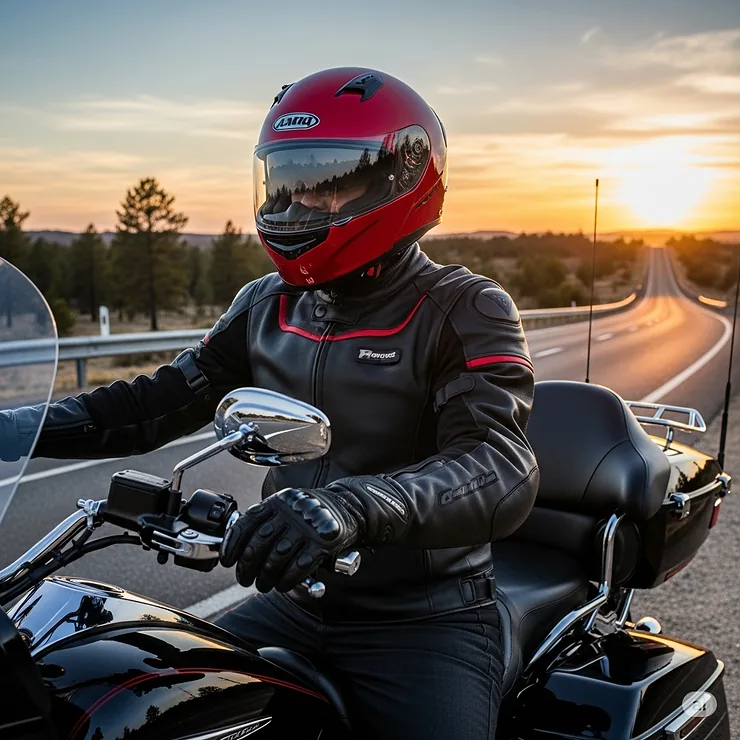
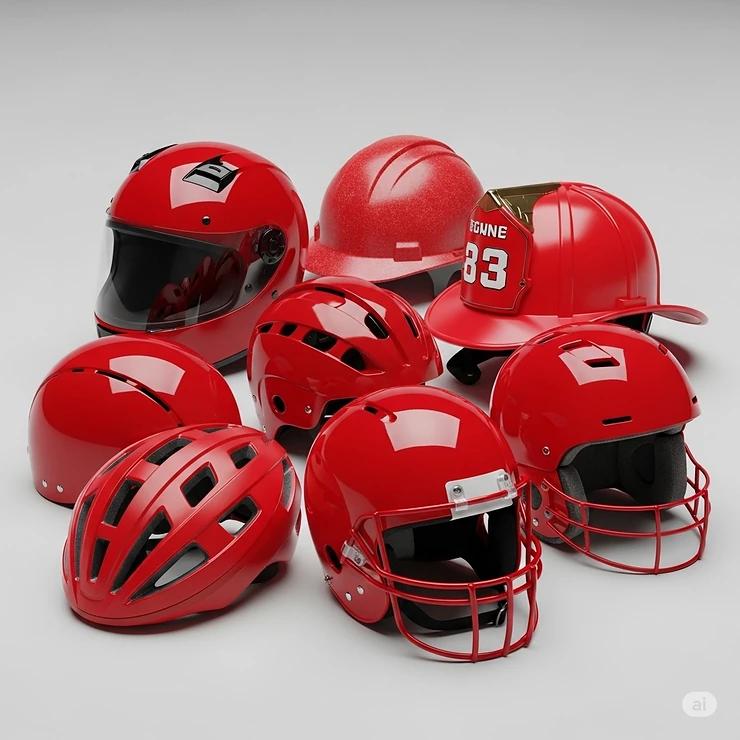
Red motorcycle helmets are protective headgear in full-face, retro or adventure styles, finished in shades from candy and crimson to metallic cherry. They are built to meet standards such as DOT FMVSS 218, ECE 22.06 or Snell M2020. The color is cosmetic. The certification label, the fit and the shell design decide how well the helmet protects you.

Red has a reputation. It’s the color of Italian superbikes, vintage racing posters and the one rider in the parking lot who clearly wanted to be noticed. But a red shell is also a shopping trap. Gorgeous paint on a badly fitted or non-compliant lid is just an expensive hat. Before you fall for a finish, learn how to spot an unsafe or non-compliant helmet from NHTSA, because novelty helmets with copied DOT stickers are still out there.
This guide ranks seven real, currently sold options across budget, mid-range, premium, retro and adventure categories. Everything here rests on spec sheets, certification labels and the aggregated themes in retailer and publication reviews. None of it claims hands-on testing. Prices are ranges as of November 2026, so check current price before you buy. Red colorways also rotate by season, so confirm the red version you want is actually in stock.
Quick Comparison: 7 Red Motorcycle Helmets at a Glance
Here is the whole field on one screen. Skim it first, then read the deep dives.
| Helmet | Style | Safety Labels | Approx. Weight | Price Range | Best For |
|---|---|---|---|---|---|
| HJC i10 | Full-face sport | DOT; Snell reported (verify label) | ~3.8 lb | $150-$190 | HJC i10 suits budget commuters |
| Scorpion EXO-R420 | Full-face street | DOT + Snell | ~4 lb | $160-$220 | Scorpion EXO-R420 suits first-time buyers |
| Bell Qualifier DLX MIPS | Full-face street | DOT + ECE, MIPS | ~3.3-3.6 lb | $250-$330 | Bell Qualifier DLX MIPS suits all-weather commuters |
| AGV K1 S | Sport full-face | ECE 22.06 (confirm DOT sticker in US) | ~3.3-3.8 lb | $260-$290 | AGV K1 S suits sport-bike riders |
| Shoei RF-1400 | Premium full-face | DOT + Snell M2020D | ~3.6-3.8 lb | $500-$800 | Shoei RF-1400 suits high-mileage riders |
| Bell Bullitt | Retro full-face | DOT + ECE | ~2.8-3.3 lb | $400-$500 | Bell Bullitt suits café-racer and urban riders |
| Bell MX-9 Adventure MIPS | Adventure | DOT + ECE, MIPS | ~3.7 lb | $240-$290 | Bell MX-9 Adventure MIPS suits dual-sport riders |
Looking at the table, the Scorpion EXO-R420 and HJC i10 deliver the most certification per dollar, while the Shoei RF-1400 charges a premium for refinement and quietness rather than for a different safety tier on paper. The Bell Qualifier DLX MIPS and Bell MX-9 Adventure MIPS are the two ways to get a rotational-impact layer without a premium price. Weights are approximate and vary by size and source, so treat them as a guide.
💬 Just one click — help others make better buying decisions too!😊
Top 7 Red Motorcycle Helmets: Expert Analysis
1. HJC i10 — best budget entry with Snell-level credentials
The HJC i10 earns its spot by packing a polycarbonate composite shell, a plush liner and Bluetooth-ready cutouts into a helmet a new rider can afford. Red shows up in graphics like Pitfall, Fear and Strix, so colorways change by season.
At roughly 3.8 lb in a medium, it’s light enough that your neck won’t complain on a 45-minute commute. Three closable intake vents plus rear exhaust move air without turning your head into a wind tunnel. Temple grooves let glasses slide in without pressure points. The catch: the clear shield is Pinlock-compatible, but the insert isn’t in the box, and there’s no built-in sun visor.
Based on the spec comparison, this is the lid for someone who wants a quiet, comfortable street helmet and expects to upgrade in a few years. Reviewers consistently describe the fit as snug, and one publication found it tighter than other HJC models, so don’t assume your usual size.
Aggregated retailer reviews hover around 4.5 out of 5. Praise centers on ventilation and value, while the recurring complaints are an unpadded chin strap and the missing Pinlock insert.
Pros:
- ✅ Strong ventilation for the money
- ✅ Quiet, plush interior
- ✅ Bluetooth-ready for HJC systems
Cons:
- ❌ No built-in sun visor
- ❌ Pinlock insert sold separately
Expect roughly $150-$190, which makes it excellent value for a first helmet.
2. Scorpion EXO-R420 — most certifications per dollar
The Scorpion EXO-R420 is the budget helmet that shows up with both DOT and Snell stickers, which is rare at this price. Its red/white Techno graphic is a popular pick for riders who want visibility without going neon.
The advanced polycarbonate shell comes in two shell sizes, and Scorpion backs it with a five-year warranty. That matters because a warranty tells you how the maker expects the paint and hardware to age. The weight is roughly 4 lb, so it’s not a featherweight. Every unit ships with a clear visor, even though marketing photos often show a dark one, so budget for a tinted shield if you ride into sunsets.
Here’s what the spec sheet won’t tell you, but reviewers note: noise opinions swing wildly, from quietest helmet ever to noisier than average, and a few owners say sizing runs off, so order carefully. It’s DOT and Snell rated but not ECE approved, so it isn’t a European-market lid.
Aggregated reviews lean positive, with owners calling it a strong first helmet for the money. The common critiques are mixed noise levels and an average field of view.
Pros:
- ✅ DOT and Snell at a budget price
- ✅ Five-year manufacturer warranty
- ✅ Removable, washable liner
Cons:
- ❌ Noise levels vary by owner
- ❌ No ECE approval
Plan on roughly $160-$220. It’s a smart buy for beginners who want maximum certification per dollar.
3. Bell Qualifier DLX MIPS — rotational protection plus photochromic shield
The Bell Qualifier DLX MIPS brings a MIPS slip-plane layer and a photochromic ProTint shield to the mid-range, and it comes in red-forward colorways like Tarmac Red/White and red-on-navy.
MIPS is designed to reduce rotational forces in an angled impact, and the shield darkens in bright light so you can skip the sunglasses scramble at tunnel exits. The polycarbonate shell weighs about 3.3-3.6 lb depending on the source, and three shell sizes help the fit across XS to 3XL. Integrated audio compartments make communicator installs tidy, though some units need a separate mounting plate.
On paper this makes the Bell Qualifier DLX MIPS a one-helmet solution for mixed-light commuting. A caveat on the lab side: the UK SHARP program rated the non-MIPS UK-spec model at 3 of 5 stars, and UK-spec helmets aren’t guaranteed identical to US ones.
Retailer ratings sit near 4.5 out of 5 across several hundred reviews. Users like the comfort and the MIPS inclusion. Their biggest complaint is that it’s noisier than expected.
Pros:
- ✅ MIPS layer included at mid-range price
- ✅ ProTint shield adapts to light
- ✅ Comfortable, communicator-friendly interior
Cons:
- ❌ Noisier than many expect
- ❌ Some comm units need extra mount
Expect roughly $250-$330, which is solid value for commuters who face changing light.
4. AGV K1 S — race-bred shape at an entry price
The AGV K1 S is AGV’s most accessible way into a MotoGP-derived design, and its red/black graphics (Lion, Blipper, Lap and Lyzard) read as sporty rather than loud.
The shell shape and spoiler come from AGV’s wind-tunnel work on its race helmets, and the layout is five intakes with two exhaust ports. The listed weight ranges from roughly 3.3 to 3.8 lb depending on size and source. It’s sold with an intermediate-oval fit and a Pinlock-prepared shield. The ECE 22.06 approval is a strong credential, but in the US check for the DOT sticker on the back of your specific unit, because legal use here depends on it.
What most buyers overlook is that this helmet feels at home on a forward-leaning bike where the weight settles naturally. Owners report a snug, sporty profile and note wind noise rising on the highway.
Aggregated reviews are strong, around 4.5 out of 5, praising value, aerodynamics and comfort. The common critique is a loud motorway ride, with ventilation described as adequate.
Pros:
- ✅ Race-derived aerodynamic shape
- ✅ ECE 22.06 construction
- ✅ Washable Dry-Comfort lining
Cons:
- ❌ Loud at highway speeds
- ❌ Snug fit for rounder heads
Budget roughly $260-$290. It’s strong value for sport riders.
5. Shoei RF-1400 — premium refinement that earns its price
The Shoei RF-1400 is the helmet other helmets get compared to, and it’s the one on this list that justifies its price with refinement, not features.
It carries Snell M2020D and DOT certification, and reviewers describe it as Shoei’s lightest Snell-rated full-face. At roughly 3.6-3.8 lb, it comes with four shell sizes, six adjustable intakes and a Pinlock insert in the box. The shell was shaped in a wind tunnel, with Shoei claiming a 4% drag cut and 6% lift cut versus the RF-1200. Fit leans intermediate oval, with slightly more front-to-back room than the older RF-1200.
Here’s the honest trade-off. If you ride daily and can spread the cost over five years, the quietness and plush liner make the premium defensible. If you ride monthly, the Shoei RF-1400 is hard to justify against cheaper certified options.
Retailer ratings sit near 4.5 out of 5 across several hundred reviews. Reviewers consistently praise quietness and ventilation. Complaints include heavy-rain visor leaks, a Shoei-specific mount for Bluetooth, and no hi-viz or reflective options.
Pros:
- ✅ Quiet, aerodynamic, well ventilated
- ✅ Pinlock insert included
- ✅ Snell M2020D plus DOT
Cons:
- ❌ Premium price tag
- ❌ Visor may leak in heavy rain
Expect roughly $500-$800 depending on colorway. Red appears in solids and graphics in some seasons. It’s worth it for high-mileage riders.
6. Bell Bullitt — retro style with modern certification
The Bell Bullitt is the helmet equivalent of a leather jacket: all attitude, minimal chin bar. Candy Red is the colorway that pairs best with café racers and retro standards.
The fiberglass shell and wide eyeport give it a near-open-face feel while still earning DOT and ECE labels. Weight varies by version, from about 2.8 to 3.3 lb on older versions to roughly 3 lb on the newer Bullitt GT, which adds ECE 22.06. The roomy jaw space, lockable chin vent and speaker pockets make it comfortable for city riding.
The spec sheet won’t tell you this, but publications flag it as unusually noisy, and one reviewer was happier wearing earplugs on the freeway. Sizing is a common flag too: Bell’s own buyers say it runs small, and one suggests ordering a size up.
Aggregated impressions are strongly positive on style, fit and field of view. Noise and weight after an hour or two are the recurring knocks.
Pros:
- ✅ Iconic, authentic retro design
- ✅ Wide, panoramic eyeport
- ✅ Fiberglass shell with DOT and ECE
Cons:
- ❌ Noticeably noisy on freeways
- ❌ Sizing runs small
Expect roughly $400-$500. It’s worth it if style matters as much as protection.
7. Bell MX-9 Adventure MIPS — go-anywhere value with MIPS
The Bell MX-9 Adventure MIPS is the dirt-and-street hybrid for riders whose route includes gravel. Look for the black/red Dash colorway.
You get an adjustable peak, an integrated anti-fog shield and a MIPS layer, in a package that’s DOT and ECE approved but not Snell rated. At about 3.7 lb, it’s light for an ADV lid. The peak helps with sun glare, but it also catches wind and adds to highway noise.
Here’s the practical meaning: pair it with sunglasses or goggles and it handles trails and commutes alike. If you’re mostly on interstates, the always-open vents and peak can mean more wind noise.
Aggregated retailer ratings land near 4 out of 5. Riders like the value, comfort and MIPS inclusion. The common complaints are noise at speed and a weight that long-term owners notice.
Pros:
- ✅ MIPS layer at a modest price
- ✅ Detachable peak and goggle-friendly
- ✅ Speaker cutouts for comms
Cons:
- ❌ Wind noise at highway speeds
- ❌ No built-in sun shade
Expect roughly $240-$290. It’s great value for new and budget-minded ADV riders.
How to Choose Red Motorcycle Helmets: 7 Steps
To choose among red motorcycle helmets, check the safety label first, match the shell to your head shape, then pick a style and shield setup that suits your riding. Paint color comes last.
- Verify certification. In the US a helmet must carry the DOT sticker. ECE 22.06 and Snell are bonuses, not substitutes.
- Match head shape. Most helmets are intermediate oval. Fit that’s wrong for your head causes pressure points no amount of padding fixes.
- Measure, then try. Use your head circumference in centimeters against the size chart (for example, 57-58 cm is typically a medium).
- Pick the style by riding. Full-face for sport and commuting, retro for short urban rides, adventure for mixed terrain.
- Check the shield. Look for Pinlock readiness and, if you ride into changing light, a photochromic option.
- Judge the red. Gloss, matte and metallic finishes age differently, and glossy paint shows scratches sooner.
- Budget the extras. Pinlock inserts, tinted shields and comms mounts can add up, and helmets need replacing every few years.
Do Red Motorcycle Helmets Make You More Visible? What the Research Says
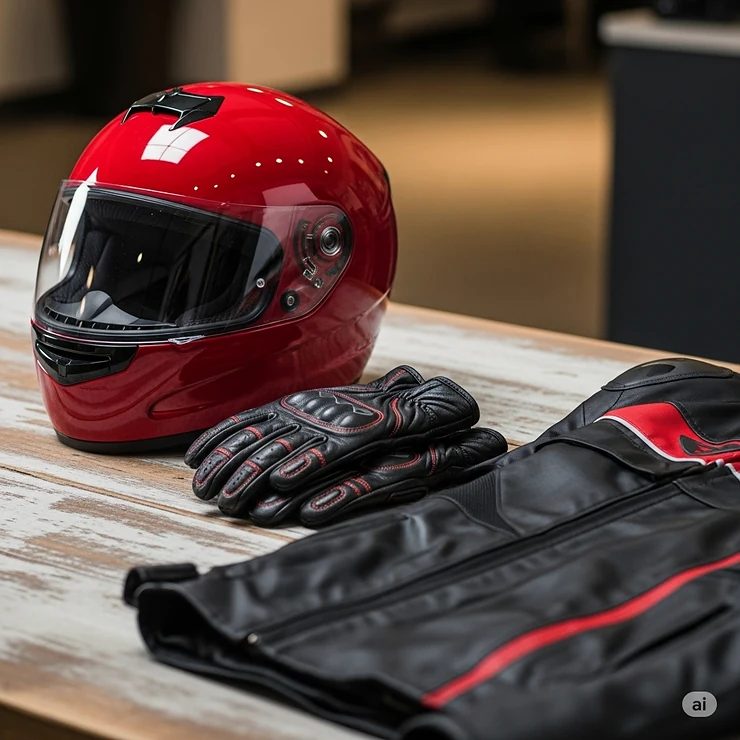
Visibility is the sales pitch for any bright helmet, so it deserves a fair look. Contrast with the environment is the key factor, and the evidence ranks red below some alternatives.
An Iowa State University study looked at conspicuity in a driving simulator with 36 participants. Leading motorcycles with riders in bright yellow clothing and helmets were detected at the greatest distance, ahead of blue denim and black. Red wasn’t one of the tested colors, so the study can’t speak to it directly. A widely cited 2004 New Zealand case-control study published in the BMJ associated white helmets with a lower crash risk than black ones, and it found no significant effect for frontal clothing color.
So what does that mean for red motorcycle helmets? Honestly, red should beat black for being noticed, and the helmet sits high on your body where it can show above car rooflines. But it isn’t proven to match fluorescent yellow or white, and red can blend into brake lights, brick and autumn foliage. If visibility is your top priority, choose a bright red, add reflective trim and consider a modulating headlight, which that same research found helped oncoming detection.
Red Motorcycle Helmets vs Black, White and Hi-Viz Alternatives
| Helmet Color | Visibility Edge | Style Payoff | Best For |
|---|---|---|---|
| Red | Good contrast in many settings; can blend into reds and autumn tones | Bold, classic, matches red bikes | Riders who want style plus some contrast |
| Black | Lowest of the group in the research above | Stealthy, hides little visually | Riders prioritizing looks over conspicuity |
| White | Associated with lower crash risk vs black in the BMJ study | Clean, minimalist | Commuters in traffic |
| Fluorescent yellow-green | Detected from the farthest in the simulator study | Polarizing | Riders prioritizing being seen |
Red sits in a comfortable middle: more conspicuous than black, more expressive than white, less proven than fluorescent yellow. If you’re choosing among red motorcycle helmets for a heavy-traffic commute, favor brighter true reds over dark burgundies. The helmet color matters less than headlight use, reflective trim and defensive positioning.
Features That Actually Matter (And Those That Don’t)
What matters. Fit tops the list, since a helmet that moves on your head can’t protect it. After that come certification, shield quality (anti-fog and scratch resistance) and noise level. Noise is more than comfort: sustained wind noise causes fatigue, and the reviews flag it for the Bell Bullitt, AGV K1 S and Bell MX-9 Adventure MIPS. Weight matters over long rides too, because every ounce is leverage on your neck.
What matters less. A graphic’s name, a sticker’s size or a seasonal paint code won’t change how a helmet performs in a crash. A built-in drop-down sun visor is convenient, and the Shoei RF-1400 and HJC i10 don’t have one, but sunglasses or a tinted shield solve the same problem for less money. Bluetooth-ready is nice, but you can add a communicator later to most helmets here.
The sneaky one is ventilation. Marketing counts vents, but what counts is whether the airflow reaches your forehead and whether it’s quiet. Reviewers praise the Shoei RF-1400 and HJC i10 on this front.
Safety Standards Guide: DOT, ECE 22.06 and Snell
DOT
DOT FMVSS 218 is the US legal baseline, and manufacturers certify their own helmets. NHTSA’s own research found that wearing a compliant helmet lowers the risk of dying in a crash by 37 percent. The standard tests impact attenuation, retention and penetration. A helmet with a DOT sticker but without the complete certification label, which names the manufacturer, model, DOT and FMVSS No. 218 CERTIFIED, deserves suspicion.
ECE 22.06
ECE 22.06 is the newer European standard. It expands the test matrix and includes rotational impact testing. An ECE-only helmet isn’t automatically legal in the US, which is why you should confirm the DOT sticker on an import-style model such as the AGV K1 S.
Snell
Snell is voluntary. According to the Snell Foundation, DOT and ECE are government minimums that rely mostly on manufacturer self-policing, and Snell describes itself as the most stringent standard. Take the self-description with a grain of salt, since critics argue softer shells may do better in some real-world impacts. The practical takeaway is that dual certification is a useful signal: the Scorpion EXO-R420 and Shoei RF-1400 have DOT plus Snell, while the Bell Qualifier DLX MIPS and Bell MX-9 Adventure MIPS pair DOT with ECE and MIPS.
Real-World Scenarios: Matching Red Motorcycle Helmets to Real Riders
The college commuter. Eight miles each way on a 250cc, daily, on a tight budget, with a bike locked outside. The HJC i10 or Scorpion EXO-R420 fits: both are certified, both cost well under the mid-range, and you won’t cry if a locker-room mishap scratches one. Add a Pinlock insert for cold mornings. Daily use, short distance and low speeds mean noise matters less than fit.
The weekend café-racer owner. A vintage-style bike, a few hundred miles a month, mostly city and canyon roads. The Bell Bullitt matches the bike and the riding. Plan on earplugs for freeway stretches and measure carefully, because sizing runs small.
The long-distance adventure rider. Mixed pavement and gravel, long days and changing light. The Bell MX-9 Adventure MIPS gives you a peak, MIPS and comms cutouts at a fair price. If you spend more time on the highway than the dirt, the Shoei RF-1400 is the better all-day choice thanks to its quietness, though you’ll pay more.
The sport-bike rider. A forward-leaning posture and spirited riding suit the AGV K1 S, whose race-derived shape settles into that position. Commuters who face tunnel and sunset light changes may prefer the Bell Qualifier DLX MIPS for its photochromic shield.
✨ Ready to Find Your Perfect Red Lid?
🔍 Take your riding gear to the next level with these carefully selected helmets. Click any highlighted product name to check current pricing and availability. A properly fitted, certified helmet is the best-looking accessory you’ll ever own, and it’ll keep you safe on every ride!
Setup Guide: Fit, Break-In and Your First 30 Days
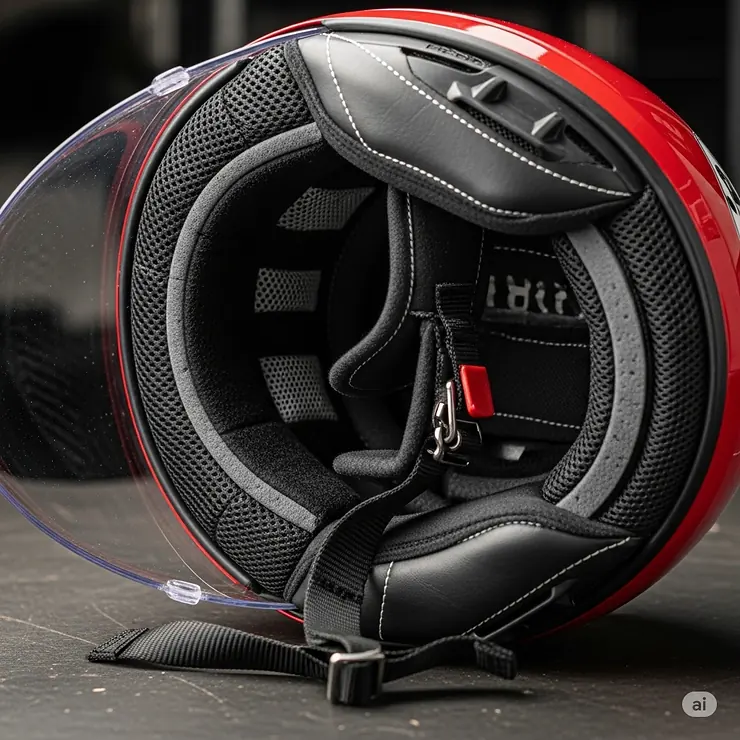
Measure first. Wrap a soft tape around your head about an inch above your eyebrows, take the largest reading in centimeters and compare it to the brand’s chart. Sizes differ between makers, so XS is typically 53-54 cm, and one brand’s medium isn’t another’s.
Run the at-home test. Wear the helmet indoors for 30 to 60 minutes. If you get a headache or red pressure spots, it’s too small. The helmet shouldn’t rotate independently of your skin when you shake your head, and the cheek pads should be snug against your face.
Fasten properly. Double-D rings are standard on helmets such as the HJC i10 and AGV K1 S. Test that the strap is tight enough that you can fit only a finger beneath it.
Plan accessories early. The Bell Qualifier DLX MIPS may need a separate communicator mounting plate, and the Shoei RF-1400 needs a Shoei-specific mount. If you’ll add a Bluetooth unit, check compatibility before buying.
Expect break-in. Cheek pads compress slightly in the first weeks, so a very snug fit at first may ease. A fit that hurts doesn’t break in.
Common first-month mistakes. Buying by usual hat size, skipping earplugs, cleaning with solvent-based cleaners and riding with a scratched shield. A scratched shield is a night-riding hazard.
Common Problems With Red Motorcycle Helmets and How to Fix Them
Fogging. Cold, damp weather turns visors opaque. A Pinlock insert fixes it, and the Shoei RF-1400 includes one while the HJC i10 and AGV K1 S are ready for one you buy separately.
Wind noise. It’s the most common complaint on this list. Earplugs designed for riding are the cheapest fix, and a snug neck roll helps too. If noise is your top issue, the reviews point to the Shoei RF-1400 as the quieter pick.
Pressure points. Don’t tolerate them. Try a different cheek-pad thickness or a different size, and remember the HJC i10 reportedly fits tighter than other HJC models.
Glare. Light-sensitive riders can choose the Bell Qualifier DLX MIPS with its photochromic shield, or add sunglasses under a clear visor.
Drivers don’t see me. Be careful here. Red helps, but it isn’t a guarantee. NHTSA’s work on high-visibility gear notes that fluorescent and retroreflective gear can increase your conspicuity to other motorists. Add reflective strips to your jacket and a modulating headlight to your bike.
Long-Term Cost and Maintenance: Keeping Red Looking Red
Helmet cost is best judged per year of use. Sources commonly cite a five-year replacement guideline from purchase, or seven years from manufacture, whichever comes first. The Snell Foundation notes that unused helmets stored in good condition don’t automatically expire, and the five-year figure is a judgment call. Replace sooner after any crash or drop.
| Helmet | Price Range | Est. Cost per Year (5 yrs) | Value Verdict |
|---|---|---|---|
| HJC i10 | $150-$190 | ~$34 | Best entry value |
| Scorpion EXO-R420 | $160-$220 | ~$38 | Best certification per dollar |
| Bell Qualifier DLX MIPS | $250-$330 | ~$58 | Strong mid-range |
| AGV K1 S | $260-$290 | ~$55 | Great for sport riders |
| Shoei RF-1400 | $500-$800 | ~$130 | Premium, pays off with heavy use |
| Bell Bullitt | $400-$500 | ~$90 | Style-first pick |
| Bell MX-9 Adventure MIPS | $240-$290 | ~$53 | Best ADV value |
Estimates use range midpoints. Even the Shoei RF-1400 costs about the same per year as a daily coffee habit, which reframes the premium. Light riders will see less value in the top end, while commuters get more.
To keep red paint bright, wash with mild soap and water. Petroleum-based cleaners and solvents can degrade helmet materials. Store the helmet away from direct sun, since prolonged UV exposure dulls glossy finishes and degrades shells.
Common Mistakes When Buying Red Motorcycle Helmets
Choosing color before certification. The best-looking red helmet in the world is useless without the right label. Check the back of the shell for the complete DOT sticker.
Trusting a sticker alone. NHTSA warns that some novelty helmet sellers provide DOT stickers separately, which makes them invalid. Buy from reputable sellers and brands.
Ordering by hat size. Helmet sizing varies by manufacturer and shape. Measure your head and read the brand chart.
Ignoring noise. A helmet that’s loud at 70 mph tires you out, and multiple reviews flag noise as the top issue for several models here.
Assuming ECE-only is road-legal in the US. It isn’t automatically. Confirm DOT.
Buying used. You can’t see internal damage or know the helmet’s drop history. Buy new.
FAQ
❓ What are the best red motorcycle helmets for beginners?
❓ How much do good red motorcycle helmets cost?
❓ Are cheap red motorcycle helmets from Amazon safe?
❓ Which red motorcycle helmets work with Bluetooth communicators?
❓ Do red motorcycle helmets fade in the sun?
Conclusion
Red motorcycle helmets give you something most gear can’t: a way to look great while riding smart. Whether you’re sold on the budget value of the HJC i10, the Snell-plus-DOT combination in the Scorpion EXO-R420, the rotational protection in the Bell Qualifier DLX MIPS, the race pedigree of the AGV K1 S, the refinement of the Shoei RF-1400, the retro swagger of the Bell Bullitt or the go-anywhere versatility of the Bell MX-9 Adventure MIPS, the decision should start with certification and fit and end with the color.
Remember the visibility reality too. Red is a better bet than black, but it isn’t proven to match fluorescent yellow or white, so back it up with reflective trim and good lighting. Match the helmet to how you actually ride, budget for a Pinlock insert and earplugs, and plan on replacing the helmet every few years.
✨ Ready to Gear Up in Red?
🔍 Click any highlighted helmet above to check current pricing and availability. Pick the one that fits your head, your bike and your budget, and ride safe out there!
Recommended for You
- Red and Black Motorcycle Helmet: 7 Proven Top Picks for 2026
- Baseball Motorcycle Helmet: 7 Best Picks & Risks to Avoid 2026
- Novelty Motorcycle Helmets: 7 Best DOT-Approved Picks 2026
Disclaimer: This article contains affiliate links. As an Amazon Associate, I earn from qualifying purchases. If you purchase products through these links, we may earn a small commission at no additional cost to you.
✨ Found this helpful? Share it with your friends! 💬🤗
