
In This Article
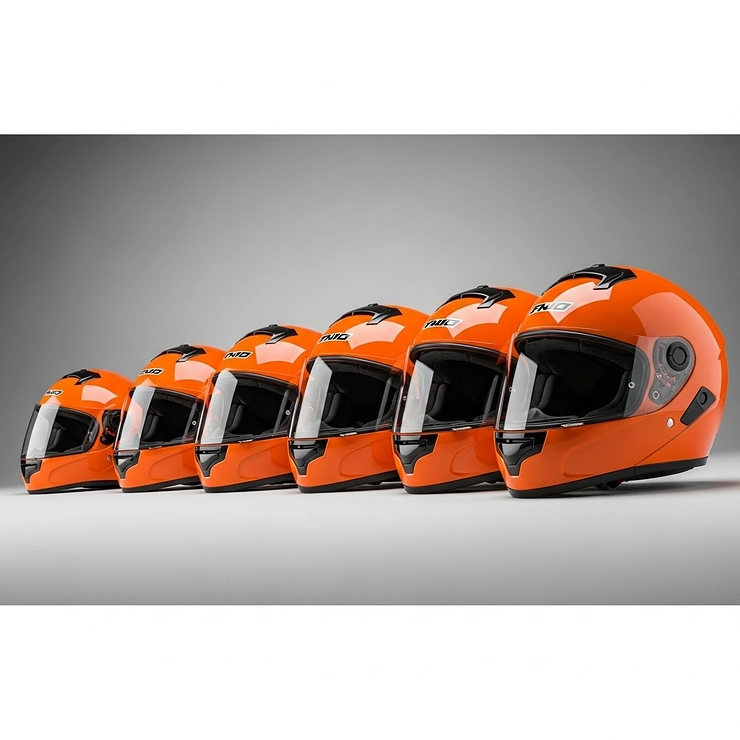
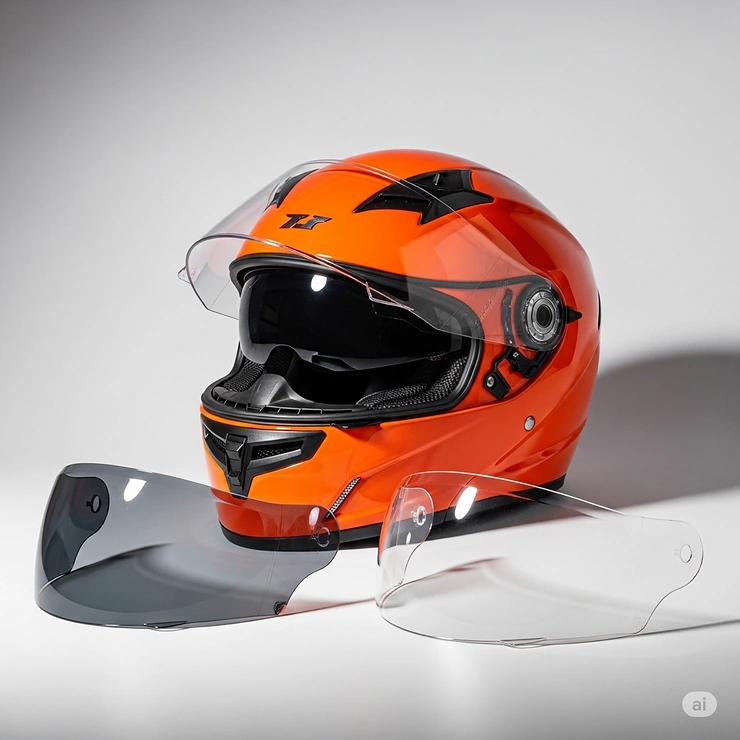
An orange motorcycle helmet is a protective helmet, ideally certified to the DOT standard for U.S. roads, finished in bright orange paint or orange-heavy graphics. It protects your head like any compliant lid, but the color adds a second job: helping drivers notice you before they merge into your lane.
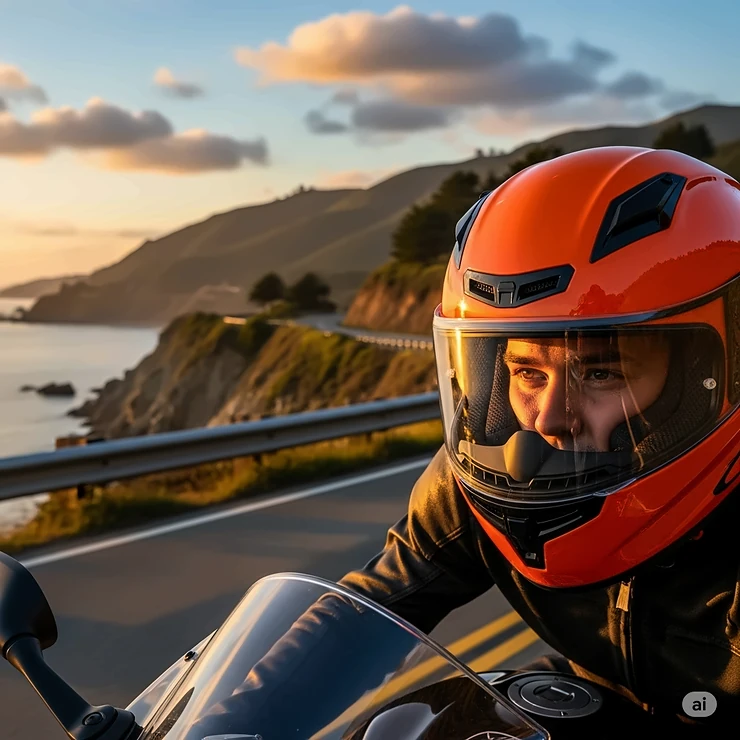
Every motorcycle helmet exists to do one thing: protect the rider’s head when physics gets rude. Vents, visors and graphics are the supporting cast. But safety isn’t only about surviving a crash. It’s also about not being in one, and that starts with being seen. Orange sits in a sweet spot. It’s loud enough to cut through a gray commute, yet warm enough to look intentional rather than construction-site.
This guide covers seven real helmets that come in orange or orange-accented colorways. They include street full-face, flip-up and dirt-ready designs, from budget to premium. A quick honesty note: I haven’t worn any of these, so you won’t find invented test rides here. You’ll get spec-sheet analysis, patterns from published reviews and retailer feedback, and plain-English reasoning about who each helmet suits. Prices appear as ranges because they shift constantly, so check the current price on each listing. Orange colorways also rotate in and out of stock, so confirm the exact color before you buy.
Affiliate disclosure: this post contains affiliate links. Details are in the disclaimer at the bottom.
Orange Motorcycle Helmet Quick Comparison
Here’s the snapshot before we dig in. Use it to narrow the field, then read the full breakdowns.
| Helmet | Style | Safety Ratings | Approx. Price | Best For |
|---|---|---|---|---|
| HJC i10 | Full-face | DOT, Snell M2020 | $150–$250 | Budget riders who want a Snell label |
| Scorpion EXO-R320 | Full-face | DOT | $100–$170 | Commuters on a tight budget |
| Bell Qualifier | Full-face | DOT (some listings add ECE) | $130–$230 | Lightweight daily riding |
| AGV K1 S | Full-face | ECE 22.06, DOT | $220–$350 | Sport riders who want modern ECE testing |
| Bell SRT Modular | Flip-up | DOT (ECE on some versions) | $350–$500 | Touring and eyeglass wearers |
| AFX FX-17 | Dirt / dual-sport | DOT, ECE 22.05 | $90–$130 | Trail riders using goggles |
| Bell Star DLX MIPS | Full-face | DOT, ECE, Snell | $450–$600 | Premium do-it-all riders |
Looking at the comparison above, the HJC i10 delivers the strongest certification-per-dollar ratio, while the Scorpion EXO-R320 is the cheapest way into a full-face lid. If you wear glasses or want a built-in sun shield, the Bell SRT Modular justifies its higher price. Budget shoppers should note that the AFX FX-17 is built for off-road use, so it isn’t a like-for-like street substitute.
💬 Just one click — help others make better buying decisions too!😊
Top 7 Orange Motorcycle Helmets: Expert Analysis
Each helmet below gets the same treatment: what stands out, what the specs mean in practice, what reviewers keep saying, and who should skip it. Pros and cons come from real specs and real review themes.
1. HJC i10 — Snell-rated protection at a budget price
The HJC i10 earns the opening slot because it brings a certification résumé you rarely see near this price: DOT plus Snell M2020 (size 3XL is DOT only). Snell testing is voluntary and generally tougher than the DOT baseline, so that extra sticker is real added value. At roughly 3.7 pounds it isn’t featherlight, but the vent layout earns consistent praise. It’s also ready for HJC’s SMART 10B/20B Bluetooth units, with speaker pockets, so you can add comms later without hacking the liner. The shield accepts a Pinlock insert, though the insert costs extra, and there’s no internal sun visor. Plan on sunglasses or a tinted shield.
Based on the spec comparison, this suits a rider who wants a sport-leaning fit and a credible safety label without a premium bill. Fit runs intermediate oval, and several reviewers say it feels snug out of the box, so size carefully and give it a few rides before judging. The orange-and-black Robust graphic is the attention-grabber in the lineup.
Reviewers consistently highlight airflow and value. A recurring complaint is more wind noise at highway speeds than pricier lids produce.
Pros:
- ✅ Snell M2020 plus DOT certification
- ✅ Strong airflow for summer commutes
- ✅ Bluetooth-ready with speaker pockets
Cons:
- ❌ Louder than premium helmets at highway speeds
- ❌ No sun visor; Pinlock insert sold separately
Expect roughly $150–$250 depending on graphic and retailer (check current price). For the certifications, it’s the value benchmark of this list.
2. Scorpion EXO-R320 — cheapest ticket to full-face orange
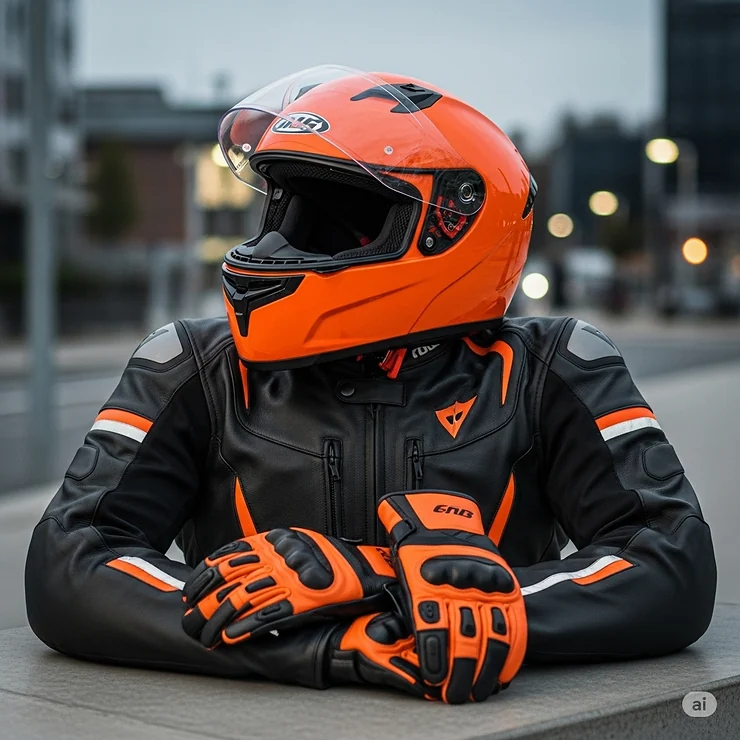
The Scorpion EXO-R320 is the budget play: a full-face street helmet that typically sits in the $100–$170 range, with the Hudson graphic offering an orange, black and white scheme. It carries DOT certification only, with no ECE or Snell stamp, which is the honest trade-off at this tier. You still get a lightweight polycarbonate shell and a removable, washable KwikWick II liner, which helps with sweat in August. Cheek pads are cut to accommodate eyeglasses, and the Pinlock-ready shield has a lever that locks it slightly open. Speaker pockets are included, and Pinlock inserts are sold separately.
What most buyers overlook is that DOT-only is legal for U.S. street riding, but some track organizations won’t accept it. Treat this as a commuter and casual-weekend helmet, not a track-day lid. Retailers list a five-year warranty, which is generous at this price.
Buyer reviews on retail listings commonly mention a comfortable fit and strong value for the money. One reviewer wished for a thicker chin windscreen to cut wind noise, which is consistent with a budget-tier seal.
Pros:
- ✅ Very low entry price for a full-face
- ✅ Washable liner and glasses-friendly cheek pads
- ✅ Speaker pockets and Pinlock-ready shield
Cons:
- ❌ DOT only; not accepted at some tracks
- ❌ Chin-area wind noise noted by some buyers
At roughly $100–$170, it’s a smart first helmet, as long as you size it carefully.
3. Bell Qualifier — featherweight shell, tool-free shield swaps
The Bell Qualifier pairs a lightweight polycarbonate shell with Bell’s ClickRelease system, so changing between clear and tinted shields takes seconds and no tools. Listings put it around 1,500 grams (about 3.3 pounds), with three shell sizes so smaller heads don’t get a bobblehead-sized shell. It includes a padded wind collar to tame noise, speaker pockets, and a five-year warranty. The Vibe orange-and-blue graphic is the orange option to hunt for. Certification varies by listing: most show DOT, and some add ECE, so read the label on the exact helmet you receive.
Here’s what to weigh: this is the “set it and forget it” daily lid. Intermediate-oval fit suits the most common head shapes, and the quick-swap shield matters if you ride from bright afternoons into dusky tunnels. It won’t match the Snell or ECE 22.06 credentials of the HJC i10 or AGV K1 S, so it’s best for casual and commuting miles.
Retail listings show roughly 4.5 out of 5 stars across several hundred reviews. Common praise centers on fit, finish and value.
Pros:
- ✅ Light polycarbonate shell reduces neck fatigue
- ✅ ClickRelease shield swaps without tools
- ✅ Five-year warranty and wind collar
Cons:
- ❌ Basic DOT credentials on many listings
- ❌ Orange graphics are limited and stock rotates
Plan on about $130–$230 depending on graphic. It’s excellent value if you prioritize comfort and convenience.
4. AGV K1 S — MotoGP styling with modern ECE 22.06 testing
The AGV K1 S brings racing heritage into reach: ECE 22.06 plus DOT certification, a thermoplastic shell in two shell sizes, and a wide-angle shield with about 190° of horizontal view. Retailers list about 1.5 kg (roughly 3.3 pounds). The visor swaps without tools via AGV’s quick-release system, it’s Pinlock-ready, and it’s prepared for communication systems. The Izan-style graphics are the orange-forward colorway to look for.
On paper, ECE 22.06 means testing beyond the DOT baseline, including more impact scenarios. That makes this the strongest “modern standard” helmet in the middle of this list, and the panoramic visor helps with lane-change shoulder checks. It fits intermediate-oval heads comfortably, according to retailer sizing notes.
Owner feedback skews positive on style, ventilation and value, with recurring notes about wind noise at speed and fogging without the Pinlock insert in cold weather.
Pros:
- ✅ ECE 22.06 plus DOT certification
- ✅ Wide 190° field of view
- ✅ Tool-free visor changes
Cons:
- ❌ Some wind noise at higher speeds
- ❌ Pinlock insert needed for cold-weather fogging
Count on roughly $220–$350. It’s the best fit for sport and street riders who want current-generation testing.
5. Bell SRT Modular — flip-up chin bar with a built-in sun shield
The Bell SRT Modular solves two annoyances at once: the chin bar flips up for conversations and fuel stops, and an internal drop-down sun visor means you don’t carry a second shield. Bell lists about 1,750 grams (size M) for DOT versions and about 1,715 grams for ECE, so it’s the heaviest pick here. You also get a PanoVision shield with Class 1 optics, recessed speaker pockets, and a five-year warranty. Bell lists DOT for U.S. models and ECE for European ones, so confirm the sticker on your exact version.
An analytical take: the extra weight comes with the modular hardware, and reviewers consistently note that flip-ups are noisier than full-face lids at highway speed. In exchange, glasses wearers can slip frames on easily, and the orange-and-black Velo-style graphic pairs well with ADV and touring bikes.
Reviewers praise comfort, ventilation and clear vision. The main caveats are noise and weight.
Pros:
- ✅ Flip-up chin bar and integrated sun visor
- ✅ Class 1 optics shield and speaker pockets
- ✅ Easy on and off for glasses wearers
Cons:
- ❌ Heavier than full-face rivals
- ❌ Noisier at highway speeds
Budget for roughly $350–$500. It’s a strong touring and commuting choice when convenience beats minimum weight.
6. AFX FX-17 — dirt-and-trail orange without the premium price
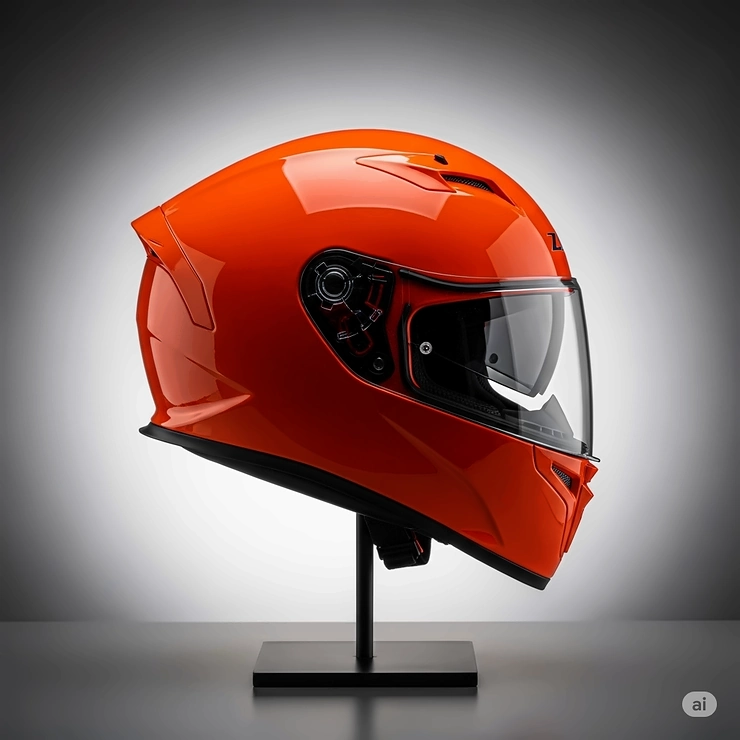
The AFX FX-17 is the odd one out on purpose: a motocross-style helmet with a peak, built for goggles. It’s constructed of lightweight poly-alloy, weighs about 3.4 pounds in size large, and carries DOT and ECE 22.05 certification (sizes 3XL and 4XL are DOT only). It adds multiple vents, goggle strap grabbers, and a limited lifetime warranty, and it’s available in an orange colorway.
Here’s what to weigh: off-road helmets prioritize airflow and goggle fit over wind protection, so highway noise and sun glare from the open face are real trade-offs. Because it has no face shield, check your state’s eye-protection rules before using it on pavement. RevZilla lists this model as discontinued, so availability and sizing depend on stock at other retailers.
Customer ratings on retail pages have been strong, and reviewers frequently mention value and a comfortable, light feel for trail riding.
Pros:
- ✅ Very affordable dirt-ready construction
- ✅ DOT and ECE 22.05 certification (most sizes)
- ✅ Goggle strap grabbers and good ventilation
Cons:
- ❌ No face shield; goggles required
- ❌ Some retailers list it as discontinued
Expect roughly $90–$130. It’s a bargain for trails and dual-sport use, not a highway commuter.
7. Bell Star DLX MIPS — flagship safety tech with a Tantrum orange option
The Bell Star DLX MIPS is the premium end of this list, with DOT, ECE and Snell certification plus a MIPS rotational-impact layer. Bell lists about 1,690 grams for DOT/Snell versions (size M) and about 1,510 grams for ECE. It comes with a PanoVision ProTint photochromic shield that darkens in sunlight and clears in low light, plus integrated speaker pockets. The Tantrum black, white and orange graphic is the one to look for.
On paper, the combination of SHARP 5-star performance (per one published review), MIPS and the photochromic shield is why it commands the highest price here. Fit runs snug with an intermediate-oval shape, and the chin curtain can feel tight at first.
A published review reported that noise damping stayed impressive through the first 1,000 km. Older Star generations drew more noise complaints, so check recent reviews for the current version.
Pros:
- ✅ DOT, ECE and Snell certified
- ✅ MIPS layer and photochromic shield
- ✅ Quiet, refined feel in published reviews
Cons:
- ❌ Highest price on this list
- ❌ Snug fit and chin curtain need break-in
Plan on roughly $450–$600. If you want one orange helmet to do everything, this is it.
Here’s the full spec picture side by side.
| Helmet | Shell / Weight (approx.) | Standout Feature | Review Sentiment | Best For |
|---|---|---|---|---|
| HJC i10 | Polycarbonate, ~3.7 lb | Snell M2020 + DOT | Praised for airflow and value | Budget Snell seekers |
| Scorpion EXO-R320 | Polycarbonate, light (listings vary) | KwikWick II liner | Praised for fit and value | First helmet |
| Bell Qualifier | Polycarbonate, ~3.3 lb | ClickRelease shield | ~4.5/5 on retailer listings | Daily commuting |
| AGV K1 S | Thermoplastic, ~3.3 lb | ECE 22.06 + 190° view | Positive; some wind noise | Sport/street |
| Bell SRT Modular | Fiberglass composite, ~3.9 lb | Flip-up + sun visor | Comfortable; noisier | Touring, glasses |
| AFX FX-17 | Poly-alloy, ~3.4 lb | Goggle-ready peak | Strong value ratings | Trail riding |
| Bell Star DLX MIPS | Composite, ~3.3–3.7 lb | MIPS + ProTint shield | Quiet, tight initial fit | Premium all-rounder |
Looking at the numbers, weight differences between full-face models are small, so fit and noise will matter more than grams. The AGV K1 S and Bell Star DLX MIPS are the best pick when you want the newest testing standards. The Bell Qualifier and Scorpion EXO-R320 win on price, and the Bell SRT Modular wins on convenience.
✨ Ready to Light Up the Road?
🔍 Compare the picks above and click any highlighted helmet name to check current pricing and availability. A helmet that fits well, carries real certifications and stands out in traffic is the kind of gear you’ll actually wear every ride! 🏍️
Practical Usage Guide: Fit, Break-In and Your First 30 Days
Buying the right helmet is half the job. Using it well is the other half, and Amazon listings rarely cover it.
Measure first, then size. RevZilla’s guidance is to wrap a soft tape measure around your head just above your eyebrows and ears, snug but comfortable, and use the largest reading. Match it to the maker’s chart, not to your usual hat size.
Expect a snug start. New helmets like the HJC i10 and Bell Star DLX MIPS are often reported to feel tight initially, because the cheek pads are compressed and need break-in. A proper fit shouldn’t move when you shake your head, but it also shouldn’t leave a painful pressure spot after 30 minutes.
Break-in schedule. Wear it at home for 20–30 minutes a day for a few days. This reveals hotspots before you’re 40 miles from a store.
Set up the shield. If you chose a Pinlock-ready model such as the Scorpion EXO-R320 or AGV K1 S, install the insert before the first cold ride. Test the vents and the lever that locks the shield slightly open.
Common first-month mistakes: leaving the chin strap too loose, riding with a scratched shield at dusk, storing the helmet on a mirror, and skipping the glasses test. Try your sunglasses or prescription frames on before committing, especially with a flip-up like the Bell SRT Modular.

Real-World Scenarios: Matching an Orange Motorcycle Helmet to Your Ride
Specs are abstract. Here are three rider profiles with a recommended helmet and the reasoning.
Scenario 1: the 15-mile city commuter on a $1,000 helmet-and-gear budget. Stop-and-go traffic means you’re surrounded by drivers who may not see you. The Bell Qualifier gives you a light shell and quick shield swaps for sunny-to-shady transitions, and an orange colorway improves visibility in gray weather. If you can stretch the budget, the HJC i10 adds Snell certification.
Scenario 2: the weekend sport rider doing 60-mile canyon loops. You’ll ride faster, so certification matters more. The AGV K1 S gives you ECE 22.06 testing and a wide visor for apex scanning. If you want to spend more, the Bell Star DLX MIPS adds MIPS and a photochromic shield for variable light.
Scenario 3: the adventure and trail rider who also commutes. Choose between the AFX FX-17 for dirt and the Bell SRT Modular for pavement days. If you only want one helmet and mostly ride roads, the Bell SRT Modular‘s built-in sun visor and flip-up chin bar are the more versatile choice.
Problem → Solution Guide: Fixing the Common Orange Motorcycle Helmet Complaints
Most complaints fall into five buckets. Each has a practical fix.
Fogging. Cold breath plus a cold shield means condensation. Use a Pinlock insert, crack the shield open with its lever at stoplights, and keep the breath deflector in place. The Scorpion EXO-R320 and HJC i10 are both Pinlock-ready, with inserts sold separately.
Wind noise. Reviewers flag it on budget and flip-up models. Try earplugs (also good for long-term hearing), adjust the neck roll, and check that the chin curtain is installed. If noise is your top priority, the Bell Star DLX MIPS has the best reputation here.
Tight fit. Give it the break-in schedule above. If pressure points persist after a week, the size is probably wrong, so exchange it.
Sun glare. The Bell SRT Modular has a built-in visor, and the Bell Star DLX MIPS has a photochromic shield. For others, use a tinted shield or sunglasses under the helmet.
Scuffs and faded graphics. Park out of direct sun when you can, keep the helmet off hot car dashboards, and clean with mild soap and water. Always check the manufacturer’s care guidance first, since harsh solvents can damage shells and liners.
How to Choose an Orange Motorcycle Helmet
- Verify the DOT label first. U.S. helmets must carry a rear label showing the maker, model, DOT, FMVSS No. 218 and CERTIFIED, as NHTSA explains. Be wary of loose DOT stickers sold separately.
- Pick the style for your riding. Full-face for maximum coverage, modular for convenience, dirt-style only for off-road with goggles.
- Match your head shape. Most picks here fit intermediate oval, so try on or read fit notes before buying.
- Size with a tape measure. Use the largest reading above your eyebrows and ears, then follow the size chart.
- Look for extra certifications. ECE 22.06, Snell M2020 and SHARP ratings add independent confidence beyond DOT.
- Check the shield system. Pinlock-ready, tool-free swaps and photochromic options reduce hassle.
- Choose your orange wisely. Gloss versus matte and the amount of orange (full shell versus accents) change how visible and how scratch-prone the helmet looks.
Features That Actually Matter (And Those That Don’t)
What matters: fit comes first, because a helmet that moves in a crash can’t do its job. Certification is second, because it’s your proof of tested protection. Third is noise: long-term wind noise exposure is tiring and can damage hearing. Ventilation and shield quality follow.
What matters less: race-replica graphics don’t make a helmet safer, and “included extras” like a drawstring bag are nice but trivial. Bluetooth-ready speaker pockets matter only if you’ll actually use comms. Lightweight claims also deserve skepticism. Weight differences of a few ounces between full-face helmets are far smaller than the difference a good fit makes.
Orange Motorcycle Helmet vs Black and White: Does Color Really Change Visibility?
Here’s the evidence. A well-known New Zealand case-control study in the BMJ looked at 463 injured riders and 1,233 controls. It found that white helmets were associated with a 24% lower crash-injury risk than black ones, and light-colored helmets with a 19% lower risk than dark ones. The study didn’t isolate orange as its own category, so I won’t claim a number for it. It’s reasonable, though, to treat orange as part of the bright end of the spectrum.
| Factor | Orange | Black | White |
|---|---|---|---|
| Daytime contrast | High against gray roads | Low | High |
| Low-light visibility | Moderate; add reflective trim | Poor | Good |
| Style flexibility | Bold, pairs with black or gray | Universal | Clean, shows dirt |
| Best For | Riders who want visibility plus personality | Riders who prioritize stealth style | Riders prioritizing maximum conspicuity |
Looking at the comparison, orange gives you most of white’s visibility benefit with far more character, and it hides road grime better. Bright color won’t replace good riding habits, though: the same study found daytime headlights and reflective or fluorescent clothing were also protective. Think of color as one layer, not a force field.
Orange Full-Face vs Modular vs Dual-Sport Helmets
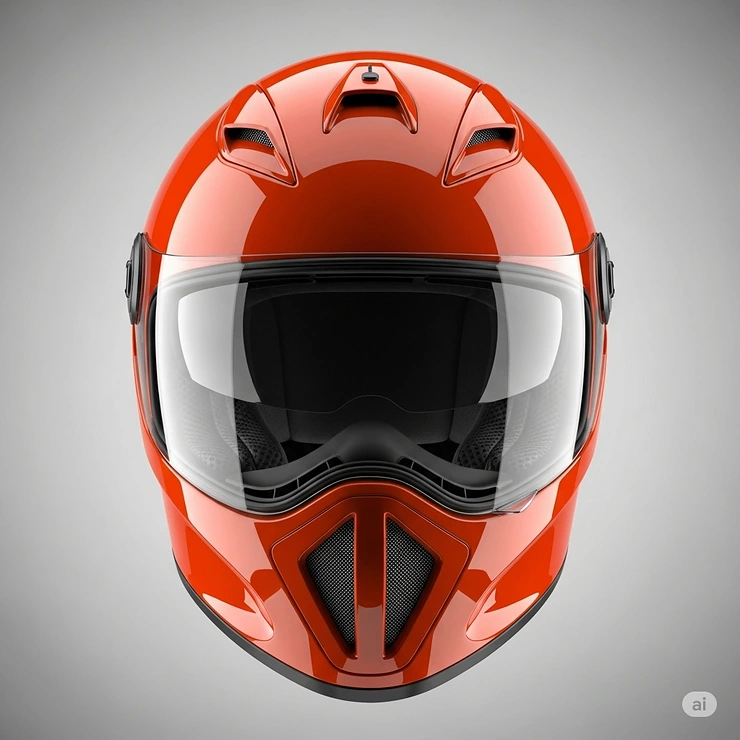
Full-face helmets (HJC i10, Scorpion EXO-R320, Bell Qualifier, AGV K1 S, Bell Star DLX MIPS) cover your chin, which is a common impact point. They’re typically lighter and quieter than modulars and are the default for street riding.
Modular helmets like the Bell SRT Modular trade some weight and noise for convenience. The flip-up chin bar is great for glasses wearers, quick conversations and fuel stops. The rule is to ride with the chin bar closed.
Dual-sport and dirt-style helmets like the AFX FX-17 prioritize airflow and goggle compatibility. They’re excellent off-road but add wind buffeting and sun exposure on highways.
My recommendation: choose full-face for most riders, modular if you value convenience and wear glasses, and dirt-style only when your riding is mostly off-road.
Price Range & Value Analysis (Including Long-Term Cost)
| Tier | Helmet | Approx. Range | What You Gain | Best For |
|---|---|---|---|---|
| Budget | AFX FX-17, Scorpion EXO-R320 | $90–$170 | Basic DOT protection, low cost | First-time and casual riders |
| Mid | Bell Qualifier, HJC i10 | $130–$250 | Better fit, features, Snell on HJC | Daily commuters |
| Upper-mid | AGV K1 S, Bell SRT Modular | $220–$500 | ECE 22.06 or modular convenience | Sport and touring |
| Premium | Bell Star DLX MIPS | $450–$600 | MIPS, Snell, ProTint shield | Serious all-round riders |
Spread over a typical five-year replacement horizon, even the premium helmet costs only a few dollars a month. Several of these ship with five-year warranties, which is a handy yardstick for planning replacement. Replace any helmet after a significant impact, and budget a little for extra shields, a Pinlock insert and a wind-noise solution.
Safety, Regulations and Certifications Explained
DOT, shorthand for FMVSS No. 218, is the U.S. legal baseline. One detail surprises many riders: NHTSA doesn’t pre-approve helmets, so manufacturers certify their own products and NHTSA tests samples afterward. That is why independent marks like Snell, ECE 22.06 and SHARP add confidence. NHTSA’s research estimates that a compliant helmet reduces a rider’s risk of dying in a crash by 37%.
Laws also differ by state. According to IIHS research, in 2023 about 94% of observed riders wore helmets in states with universal helmet laws, compared with 72% in states without them. Check the IIHS state table for your state’s rules, including eye-protection requirements that matter if you choose a dirt-style helmet.
Common Mistakes When Buying an Orange Motorcycle Helmet
- Buying on color alone. A loud shell with a poor fit is worse than a quiet shell that fits.
- Trusting loose DOT stickers. NHTSA warns that stickers sold separately are invalid.
- Ordering by hat size. Use the tape-measure method and the maker’s size chart.
- Ignoring shield fogging. A Pinlock-ready shield without the insert will fog in cold weather.
- Skipping the glasses test. Frames and intercom speakers change how a helmet fits.
- Keeping an old helmet too long. Replace after impact or when the liner and straps wear out.
FAQ
❓ Where can I buy a DOT-approved orange motorcycle helmet?
❓ What size orange full face motorcycle helmet should I order online?
❓ Does an orange helmet fade in the sun?
❓ Is an orange and black motorcycle helmet visible at night?
❓ How much should I spend on an orange motorcycle helmet?
Conclusion
An orange motorcycle helmet is one of the few pieces of gear that does safety and style in the same breath. The best choice depends on your riding: the HJC i10 is the value standout with Snell certification, and the Scorpion EXO-R320 is the budget entry. The Bell Qualifier suits light daily riding, the AGV K1 S brings ECE 22.06 testing, and the Bell SRT Modular adds flip-up convenience. The AFX FX-17 is for trails, and the Bell Star DLX MIPS is the premium choice when you want certification depth, MIPS and a photochromic shield.
Whichever you choose, put fit and certification ahead of color, verify the DOT label, and add reflective touches for night riding. The evidence on bright helmets is encouraging but modest, so treat visibility as one layer of safety alongside lights, bright gear and defensive riding.
✨ Gear Up and Stand Out!
🔍 Click any highlighted helmet name above to check current pricing, colors and availability. Pick the one that fits your head and your ride, and make every mile a little safer and a lot more colorful! 🏍️🧡
Recommended for You
- Blue Motorcycle Helmets: 7 Best Picks for 2026
- Green Motorcycle Helmet: 7 Best Picks for 2026
- Purple Motorcycle Helmet: 7 Best Picks for 2026 (Ranked & Compared)
Disclaimer: This article contains affiliate links. As an Amazon Associate, I earn from qualifying purchases. If you purchase products through these links, we may earn a small commission at no additional cost to you.
✨ Found this helpful? Share it with your friends! 💬🤗
