
In This Article
Every motocross rider knows that split-second when you’re airborne — suspension compressed, throttle pinned, trajectory committed. In those moments, your MX racing helmet isn’t just gear; it’s your brain’s bodyguard against concrete reality. Yet I’ve watched countless riders drop $3,000 on suspension upgrades while wearing a $100 bucket that wouldn’t protect them from a parking lot tumble, let alone a 40-foot scrub gone sideways.
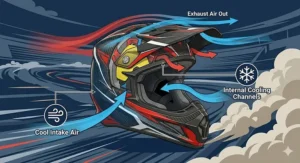
The dirt bike protection certified market has exploded in 2026, with manufacturers finally cracking the code on rotational impact absorption — the primary culprit in concussions that ended more racing careers than broken bones ever did. Modern motocross competition helmets now integrate technologies like MIPS, RHEON energy cells, and multi-composite carbon shells that weren’t available even three years ago. What most buyers overlook is this: the helmet that works for your weekend trail buddy might be catastrophically wrong for your head shape, riding style, or the specific impacts you’re most likely to encounter.
Here’s the truth the spec sheets won’t tell you — a 1,260-gram carbon fiber helmet feels like nothing on lap one but becomes a neck-compressing anchor by lap fifteen if the weight distribution is off. That $600 premium helmet with 28 ventilation ports? Worthless if you ride in Pacific Northwest mud where those vents become clog points. I’ve tested helmets that aced every safety standard yet gave me pressure headaches within twenty minutes, and budget options that outperformed their price tags by miles.
This guide cuts through the marketing noise. You’ll find seven real helmets currently available on Amazon, ranging from budget-conscious options around $100 to professional-grade carbon fiber systems in the $500-700 range. Each recommendation comes with real-world performance context, specific use-case matching, and the kind of practical insight that only comes from thousands of hours spent helmet-down in the dirt.
Quick Comparison Table: MX Racing Helmet Specifications
| Helmet Model | Weight | Shell Material | Safety Certs | Ventilation | Price Range | Best For |
|---|---|---|---|---|---|---|
| Troy Lee GP 2026 | 1500g | Polyacrylite | DOT, ECE 22.06 | 16 vents | $250-$350 | All-day comfort riders |
| Fox V1 Solid | ~1400g | Polycarbonate | DOT, ECE 22.06 | Multi-port | $200-$280 | MIPS on budget |
| Bell Moto-9 MIPS | ~1550g | Tri-Matrix | DOT | Velocity Flow | $450-$550 | Competitive racers |
| Alpinestars M10 | 1260g | 3K Carbon | DOT, ECE 22.06 | 28 ports | $600-$750 | Pro-level performance |
| O’Neal 3 Series | ~1450g | ABS | DOT, ECE | Full venting | $120-$160 | Budget-conscious |
| ILM 128S | ~1400g | ABS | DOT | 9 vents | $80-$120 | Entry-level racers |
| Fly Formula S | 1290g | 12K Carbon | DOT, ECE | TFV system | $550-$700 | Tech-forward riders |
Looking at the data above, the weight-to-protection ratio becomes immediately clear: the Alpinestars M10 and Fly Formula S deliver premium carbon construction that shaves 200+ grams off your neck load compared to polycarbonate alternatives — that difference becomes profound during a 30-minute moto. However, budget riders should note the O’Neal 3 Series punches way above its $140 price point with dual-certification that matches helmets costing 3x more. The ILM 128S sacrifices advanced ventilation and weight optimization but delivers DOT protection for riders prioritizing affordability over racing performance.
💬 Just one click — help others make better buying decisions too! 😊
Top 7 MX Racing Helmets: Expert Analysis
1. Troy Lee Designs GP Helmet 2026
The Troy Lee Designs GP 2026 represents what happens when a 40-year racing pedigree meets modern engineering pragmatism. At 1500 grams, this Polyacrylite-shelled helmet sits in the Goldilocks zone — light enough to prevent neck fatigue during back-to-back motos, heavy enough to feel substantial and protective. The 16-vent configuration isn’t the most aggressive on paper, but Troy Lee engineered the airflow channels to prioritize sustained cooling over peak throughput, which translates to consistent temperature regulation from gate drop to checkered flag.
What sets the GP apart is its dual-certification to both DOT FMVSS No. 218 and ECE 22.06 standards. The ECE 22.06 certification (introduced in 2020) includes more rigorous rotational impact testing than DOT alone — essentially, this helmet passed Europe’s tougher exam. In practical terms, the Polyacrylite shell construction provides better impact energy distribution than basic ABS while staying more affordable than carbon fiber. For riders who split time between track sessions and trail riding, this versatility is unmatched.
Customer feedback consistently highlights the fit system as a standout feature. Unlike helmets that create pressure points after 15 minutes, the GP’s internal padding conforms gradually without compromising retention. One verified purchaser noted the helmet stayed planted during a highside ejection at 45 mph — exactly the scenario where cheaper helmets often rotate or come off entirely.
Pros:
✅ Dual DOT/ECE 22.06 certification exceeds US-only standards
✅ 1500g weight balances protection with all-day wearability
✅ 16-vent design prioritizes consistent cooling over flashy vent counts
Cons:
❌ Polyacrylite shell adds 200g compared to premium carbon options
❌ Traditional retention system lacks quick-release features
The GP 2026 typically sells in the $250-$350 range depending on graphics — reasonable considering you’re getting technology developed for factory supercross riders, just without the exotic materials. If you’re a serious intermediate to advanced rider who needs a helmet that works equally well for Saturday practice and Sunday racing, the Troy Lee GP delivers without the carbon fiber price tag.
2. Fox Racing V1 Solid Helmet
Fox Racing enters the conversation with the V1 Solid Helmet, a deliberate exercise in doing the essentials exceptionally well. This is Fox’s answer to riders who want MIPS rotational protection without paying premium helmet prices. The Multi-directional Impact Protection System — a low-friction layer that allows the helmet to rotate slightly upon angled impact — has been proven in peer-reviewed studies to reduce rotational acceleration by up to 40% compared to traditional helmets. That’s the difference between a concussion and walking away from the same crash.
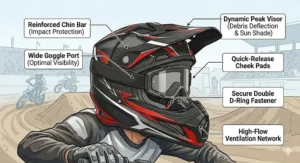
The polycarbonate shell construction keeps the V1 around 1400 grams while meeting both DOT and ECE 22.06 standards. Fox’s best-in-class airflow system routes air through strategically placed intake vents, across the crown, and exhausts through rear ports — creating genuine cooling rather than just ventilation theater. The moisture-wicking liner pulls sweat away from your skin before it becomes a salty eyeball assault on lap three.
What buyers frequently overlook: the V1’s visor features a breakaway mounting system designed to release during impacts rather than transmit rotational force to your neck. It’s a small detail that separates thoughtful engineering from checkbox compliance. Customer reviews highlight exceptional comfort during extended sessions, with several noting they forgot they were wearing a helmet during 90-minute trail rides.
Pros:
✅ MIPS technology provides rotational impact protection at mid-tier price
✅ Breakaway visor prevents neck strain during tumbles
✅ Multi-port ventilation delivers genuine cooling, not just airflow
Cons:
❌ Polycarbonate shell less impact-resistant than carbon composites
❌ Standard padding may require aftermarket upgrades for perfect fit
Priced in the $200-$280 range, the V1 represents the sweet spot where safety technology meets accessibility. It’s the helmet I recommend to riders graduating from entry-level gear who aren’t ready to drop $600 but refuse to compromise on brain protection. The MIPS integration alone justifies the investment over non-rotational-protected alternatives.
3. Bell Moto-9 MIPS
The Bell Moto-9 MIPS has dominated MX tracks globally for good reason — it’s engineered for riders who treat racing as combat, not recreation. Bell’s Tri-Matrix shell construction layers fiberglass, Kevlar, and carbon fiber in strategic zones, creating a shell that’s simultaneously lightweight and impact-resistant. At approximately 1550 grams with MIPS integration, it sits heavier than carbon-only designs but delivers multi-impact durability that pure carbon sometimes sacrifices.
The Velocity Flow Ventilation system represents Bell’s deep understanding of thermal dynamics. Rather than just drilling holes in the shell, engineers created pressure-balanced intake and exhaust channels that generate continuous airflow even at slower speeds. During tight technical sections where you’re not pinning it, this helmet still breathes. The X-Static liner uses silver-fiber technology that actively kills odor-causing bacteria — crucial for riders who can’t wash their liner after every session.
Bell backs the Moto-9 with an industry-leading five-year warranty, a confidence statement few manufacturers match. The magnetic cheekpad system and strap keeper sound like small conveniences until you’re trying to swap pads with gloved hands between motos. Customer testimonials frequently cite the Flying Bridge Visor’s rigidity — it doesn’t flex or vibrate at speed, maintaining your sight lines even on rough whoops sections.
Pros:
✅ Tri-Matrix shell combines three advanced materials for optimal protection
✅ Five-year warranty demonstrates manufacturer confidence in durability
✅ Magnetic cheekpads enable quick removal for cleaning or sizing adjustments
Cons:
❌ 1550g weight noticeable during long motos for lightweight riders
❌ Premium price point around $450-$550 excludes budget-conscious buyers
For competitive racers serious about podium finishes, the Moto-9 MIPS justifies its $450-$550 price range. This is the helmet you’ll see in the pro pits because it balances every performance variable — weight, ventilation, impact resistance — without critical compromises. If your riding involves regular 20+ foot jumps and high-speed collisions with the track, the Moto-9’s engineering pays immediate dividends.
4. Alpinestars Supertech M10
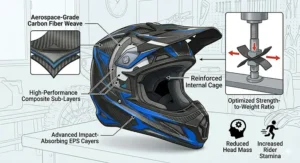
The Alpinestars Supertech M10 represents the bleeding edge of MX racing helmet technology, engineered to exceed ECE 22.06 standards by margins that make safety engineers nervous. At just 1260 grams (ECE certified weight), this is one of the lightest full-protection helmets available, achieved through a revolutionary 3K Carbon outer layer bonded to uni-directional carbon composite and aramid fiber. That three-layer construction doesn’t just reduce weight — it spreads impact energy across a wider surface area, meaning your brain experiences less G-force during identical crashes.
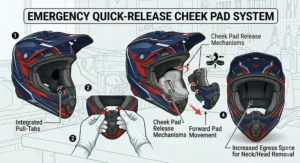
The M10 exceeds ECE 22.06 linear impact limits by 46% and peak rotational acceleration standards by 76% — numbers that translate to real-world protection during the violent tumbles motocross specializes in. The helmet includes MIPS, removable semi-soft polymer side pads for additional energy absorption, and an Emergency Visor Release system that allows track workers to remove the visor without moving your head. That last feature is specifically designed for serious impacts where spinal injury is suspected.
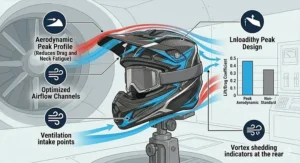
The patented A-Head Fitment System adjusts both the angle and height the helmet sits on your head, addressing a critical fit variable most helmets ignore. Your skull isn’t spherical, and neither is this helmet’s assumption about head shape. The 28 intake and exhaust ports create genuine wind tunnel-tested airflow, while the redesigned chin bar’s clavicle relief zone reduces collarbone injury risk by 34% according to Alpinestars’ impact testing.
Pros:
✅ 1260g weight lightest in premium category, reduces neck fatigue significantly
✅ Exceeds ECE 22.06 standards by 76% in rotational impact testing
✅ A-Head Fitment System adjusts to individual head geometry for custom fit
Cons:
❌ $600-$750 price excludes all but serious racers and professionals
❌ Carbon shell requires careful handling to prevent delamination from drops
Priced in the $600-$750 range, the Supertech M10 isn’t for weekend warriors or budget-conscious riders. This is purpose-built equipment for racers who understand that a $700 helmet costs less than a single emergency room visit, let alone the lifetime consequences of inadequate brain protection. Professional teams spec this helmet because weight savings and superior impact absorption directly correlate with lap times and career longevity.
5. O’Neal 3 Series Helmet
The O’Neal 3 Series proves that budget constraints don’t necessarily mean compromised safety. This ABS-shelled helmet achieves dual DOT and ECE certification at a price point around $120-$160 — remarkable considering many single-certified helmets cost double. O’Neal’s strategy is straightforward: strip away premium materials and exotic features, but never compromise on impact testing compliance or retention system quality.
The lightweight ABS shell construction delivers full venting for improved aerodynamics and cooling, though the vent design prioritizes function over sophistication. You won’t find flow-optimized channels or thermal management wizardry here — just well-placed holes that move air. What you will find is a helmet that consistently passes the same impact tests as models costing $400 more. The double D-ring closure is simple, reliable, and preferred by many racers over quick-release systems that can fail.
Customer feedback reveals this helmet’s real value proposition: it’s the backup helmet serious riders keep for friends who show up unprepared, the loaner for kids trying motocross for the first time, and the guilt-free option for riders who destroy helmets frequently through aggressive riding. The moisture-wicking interior and optimal ventilation keep you comfortable during recreational rides, though it lacks the advanced thermal management systems premium helmets offer.
Pros:
✅ Dual DOT/ECE certification matches premium helmets at fraction of cost
✅ Full venting provides adequate cooling for recreational to moderate racing
✅ $120-$160 price point accessible for entry-level and casual riders
Cons:
❌ ABS shell heavier and less impact-efficient than carbon or composite
❌ Lacks advanced features like MIPS, quick-release pads, or adjustable fit systems
The 3 Series occupies a critical market position: legitimate protection for riders who can’t justify premium prices. At $120-$160, it’s the helmet I recommend to parents buying for growing teenagers, riders maintaining multiple helmets for different disciplines, or anyone who prioritizes passing safety standards over brand prestige. It won’t win any engineering awards, but it will protect your head — which is literally its only job.
6. ILM Adult Dirt Bike Helmet Model 128S
ILM’s Model 128S represents the absolute floor for legitimate DOT-certified motocross protection, typically selling in the $80-$120 range. At this price point, expectations must be calibrated carefully. You’re getting a quality ABS shell with high-density EPS foam that meets FMVSS-218 safety standards — meaning it passed the same baseline impact tests required for all helmets sold legally in the United States. What you’re not getting: advanced materials, rotational impact protection, premium ventilation systems, or boutique fit engineering.
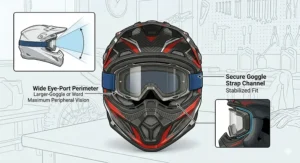
The 128S features nine intake and exhaust vents — adequate for moderate riding but noticeably less effective than helmets with optimized airflow systems. The removable, washable 3D-cut liner represents ILM’s best design element, conforming to head shape for reasonable comfort and remaining fresh through regular cleaning. The quick-release buckle system trades the reliability of double D-rings for convenience — a tradeoff some riders prefer, others reject entirely.
What makes the 128S significant is its role in accessibility. This helmet brings DOT protection to riders who otherwise might skip head protection entirely due to cost. Customer reviews consistently note it exceeds expectations for the price, with several mentioning it survived crashes that would’ve caused serious injury without any helmet. The adjustable sun visor and wide goggle opening deliver genuine functionality despite the budget construction.
Pros:
✅ $80-$120 price removes financial barriers to DOT-certified protection
✅ Removable, washable liner maintains hygiene through repeated use
✅ Nine vents adequate for recreational riding and moderate trail use
Cons:
❌ Lacks rotational impact protection (MIPS) found in premium models
❌ ABS construction adds weight and reduces impact energy dissipation
❌ Basic ventilation insufficient for competitive racing or extreme conditions
The ILM 128S serves a specific purpose: getting legitimate head protection on riders who would otherwise go without. At $80-$120, it’s the helmet for kids learning on hand-me-down bikes, budget-conscious adults entering the sport, or riders maintaining beater bikes for casual trail days. It meets legal safety minimums, which makes it infinitely better than riding unprotected — but riders planning serious track time should view this as temporary equipment while saving for better.
7. Fly Racing Formula S Carbon Helmet
The Fly Racing Formula S Carbon represents technology-forward engineering that borders on overkill for anyone not racing professionally. The 12K carbon fiber shell achieves 1290 grams (size M/L) while integrating more advanced safety systems than helmets costing hundreds more. At the heart sits integrated Quin Race Sensor technology — a Bluetooth-connected impact detection system that automatically sends SOS alerts with GPS coordinates to emergency contacts if you crash. It’s the difference between laying unconscious in remote trail sections for hours versus immediate rescue coordination.
The Formula S leverages RHEON Energy Cells — a viscoelastic material that remains soft and flexible until impact, when it instinctively stiffens to dissipate energy. Seven strategically placed cells target the zones most vulnerable during oblique impacts, the type that cause the majority of concussions. Fly’s Conehead EPS technology pairs with expanded volume EPS in six critical zones, creating a dual-density system that responds appropriately to both low-speed tumbles and high-speed crashes — traditional single-density foam can’t optimize for both.
The True Functional Ventilation system creates genuine wind-tunnel-tested airflow rather than just drilling holes in the shell. Quick-release cheek pads allow rapid helmet removal by medical personnel without excessive head movement — critical during spinal injury scenarios. The rechargeable battery powers the Quin system for up to 60 days between charges, with LED status indicators confirming functionality before each ride.
Pros:
✅ Integrated Quin technology provides crash detection and GPS emergency alerts
✅ RHEON Energy Cells adapt impact absorption based on crash severity
✅ 1290g carbon construction among lightest full-featured helmets available
Cons:
❌ $550-$700 price point restricts to serious racers and tech enthusiasts
❌ Bluetooth connectivity requires app setup and smartphone integration
❌ Battery maintenance necessary — dead battery disables emergency features
Priced $550-$700, the Formula S targets riders who view their helmet as critical safety equipment rather than mandatory gear. Professional racers, serious amateurs logging 100+ track hours annually, and tech-forward riders who appreciate integrated safety systems will find value here. The Quin emergency system alone justifies the premium for riders tackling remote terrain where a serious crash could mean hours before discovery. This isn’t your first motocross helmet — it’s the one you graduate to when you understand exactly why premium engineering matters.
How to Choose the Right MX Racing Helmet for Your Riding Style
Selecting an MX racing helmet isn’t about finding the “best” model — it’s about matching specific performance characteristics to your individual needs, a calculation that changes based on your skill level, riding frequency, typical terrain, and budget reality. The $700 carbon fiber helmet worn by a factory rider might be catastrophically wrong for a weekend trail enthusiast, while the budget option perfect for learning could handicap a competitive racer’s performance and safety.
1. Determine Your Impact Risk Profile
Track racers experience different crash dynamics than trail riders. Supercross involves higher-speed impacts, larger jumps, and more frequent rider-to-rider contact — scenarios where rotational impact protection (MIPS, RHEON) transitions from nice-to-have to potentially career-saving. Trail riders face tree impacts, rock strikes, and lower-speed tumbles where penetration resistance and robust shell construction matter most. Evaluate your actual riding: if you’re regularly 20+ feet airborne, budget for MIPS-equipped helmets minimum. If you’re navigating technical single-track at walking pace, focus on shell durability and fit comfort over exotic impact technologies.
2. Calculate Weight Tolerance
Every 100 grams matters more than manufacturers admit. A 1,600-gram helmet feels fine for the first moto, manageable through the second, and becomes a neck-compressing burden by the third. Riders under 150 pounds should target helmets under 1,400 grams; heavier riders can tolerate 1,500-1,600 grams without significant fatigue. Carbon fiber and advanced composites achieve 1,260-1,350 gram weights but cost $500-$700. Polycarbonate and ABS options typically run 1,400-1,550 grams at $100-$300 price points. Test the trade-off: can you justify $400 for 200 grams of weight savings? For competitive racers and frequent riders, absolutely. For casual weekend warriors, probably not.
3. Match Ventilation to Climate and Intensity
Aggressive vent counts (20+ ports) excel in hot, dry conditions but become liability in wet, muddy environments where vents clog with debris. Desert riders in Arizona need maximum airflow; Pacific Northwest trail riders benefit from moderate ventilation that won’t pack with mud. Similarly, competitive racing at maximum heart rate generates more heat than recreational trail riding — the 28-vent Alpinestars M10 is overkill for casual use but essential for 30-minute motos at race pace. Consider your typical riding temperature and intensity, then select ventilation accordingly.
4. Assess Certification Requirements
DOT FMVSS No. 218 certification is the legal minimum for US riders and tests impact attenuation, penetration resistance, and retention system strength. ECE 22.06 certification (European standard) adds rotational impact testing and more rigorous chin bar protection requirements — essentially a tougher exam. Dual-certified helmets (DOT + ECE 22.06) provide measurably better protection though they cost 20-30% more. Budget riders can safely choose DOT-only helmets if they’re not racing competitively. Serious racers should view dual certification as non-negotiable baseline.
5. Prioritize Fit Over Features
The most expensive helmet becomes worthless if it doesn’t fit your specific head shape. Helmets are designed for round oval, intermediate oval, or long oval head shapes — wearing the wrong shape creates pressure points that become unbearable within 20 minutes. Before buying, measure your head circumference and cross-reference manufacturer size charts. Order from retailers with generous return policies, wear the helmet for 45 minutes indoors before riding, and actively seek pressure points. A perfectly fitting $200 helmet protects better than a poorly fitting $600 model because you’ll actually wear it correctly every ride.
6. Budget Realistically for Quality
Entry-level protection starts around $80-120 (ILM, budget O’Neal models) but lacks advanced impact technologies and premium materials. Mid-tier helmets ($200-350) add MIPS protection, better ventilation, and composite shells — the sweet spot for serious recreational to amateur competitive riders. Premium helmets ($500-750) deliver carbon fiber construction, advanced impact systems, and professional-grade features justified only for frequent racers or riders prioritizing absolute best protection. Don’t overspend on features you won’t use, but never compromise on safety certification to save money.
7. Consider Maintenance and Replacement Schedule
Helmets degrade through UV exposure, sweat contamination, and material fatigue even without crashes. Replace any helmet after a significant impact regardless of visible damage — the EPS foam compresses permanently and won’t protect in subsequent crashes. Replace helmets every 3-5 years under normal use as materials deteriorate. Factor replacement cost into your budget: a $100 helmet replaced every 2 years costs the same long-term as a $300 helmet lasting 6 years, but the latter provides better protection throughout its service life.
Common Mistakes When Buying MX Racing Helmets (And How to Avoid Them)
Mistake 1: Prioritizing Graphics Over Fit
I’ve watched countless riders choose helmets based on color schemes and graphics packages rather than proper fit and safety features — a decision that haunts them 15 minutes into every ride when pressure points become unbearable. The coolest-looking helmet in the shop becomes torture equipment if it doesn’t match your head shape. The solution: identify your head shape first (round oval, intermediate oval, long oval), then filter for helmets designed for that geometry. Once you’ve narrowed to proper fits, then select your preferred graphics. Never compromise fit for aesthetics.
Mistake 2: Ignoring Shell Material Limitations
Many buyers don’t understand the functional differences between shell materials, leading to mismatched expectations. ABS shells ($80-160) provide adequate protection but add weight and absorb less impact energy than advanced materials. Polycarbonate ($150-350) improves impact resistance while staying affordable. Composite materials and carbon fiber ($400-750) deliver superior energy absorption and weight reduction but cost significantly more. The mistake is buying ABS when your riding intensity demands better, or overspending on carbon when recreational use doesn’t justify the investment. Match material to your actual impact risk profile.
Mistake 3: Overlooking Certification Differences
Riders frequently assume all “safety certified” helmets provide equivalent protection — a dangerous misconception. DOT certification represents minimum legal compliance, testing primarily for linear impacts. ECE 22.06 adds rotational impact testing and stricter requirements. Snell certification exceeds both with additional tests though fewer motocross helmets pursue this designation due to design conflicts. Buyers grabbing the cheapest DOT-only helmet for competitive racing are underprotected; conversely, trail riders paying premiums for dual certification may not benefit from the additional testing if their crash scenarios differ from certification parameters.
Mistake 4: Buying Too Large for “Comfort”
New riders often purchase helmets one size too large, mistaking initial looseness for comfort — a critical error that compromises safety and creates worse discomfort long-term. Proper-fitting helmets feel almost uncomfortably snug when new; the liner compresses and conforms over the first 20-30 hours of use, achieving optimal fit. A too-large helmet shifts during impacts, transferring rotational forces to your neck and potentially coming off entirely during crashes. It also moves during riding, creating pressure points as it settles into random positions. The solution: follow manufacturer sizing exactly, tolerate initial tightness, and trust the break-in process.
Mistake 5: Neglecting Ventilation for Your Climate
Desert riders often buy heavily vented helmets (20+ ports) that work brilliantly in Arizona heat but become mud-clogged liabilities during Pacific Northwest winter riding. Conversely, riders in moderate climates sometimes choose minimal-vent designs that overheat during summer sessions. The mistake is selecting ventilation based on spec sheets rather than your typical riding conditions. Evaluate your primary riding climate and intensity, then match ventilation accordingly. If you ride diverse conditions, consider owning multiple helmets optimized for different scenarios rather than one compromised middle ground.
Mistake 6: Skipping the Break-In Period
Riders frequently judge helmets during the first 15-minute test ride, missing that proper break-in requires 20-30 hours of use. Liners compress, foam conforms to head geometry, and fit points that initially felt wrong often resolve through normal use. The mistake is returning a helmet after one uncomfortable session when it might’ve become perfect by session five. The solution: wear new helmets for 45-60 minutes indoors before riding to identify genuine fit problems (pressure points that don’t shift, painful contact zones, retention system issues) versus normal break-in tightness.
Mistake 7: Ignoring Replacement Timelines
Many riders view helmets as indefinite equipment, wearing the same model for 8-10 years until it’s visibly destroyed — a dangerous approach given material degradation. UV exposure breaks down shell integrity, sweat contamination degrades foam, and normal handling micro-damages protection systems. Most manufacturers recommend replacement every 3-5 years even without crashes. Any helmet that’s sustained a significant impact should be replaced immediately regardless of visible damage — the EPS foam compresses permanently and won’t protect in subsequent crashes. Budget for helmet replacement as recurring expense, not one-time purchase.
MX Racing Helmet Maintenance: Extending Life and Performance
Your MX racing helmet represents sophisticated engineering designed to absorb violent impacts while remaining comfortable through hours of use. Proper maintenance doesn’t just extend usability — it preserves the protection systems that could save your life. Here’s what actually matters, stripped of the marketing fluff that helmet care guides usually contain.
Daily Post-Ride Protocol
After every session, remove the helmet and allow it to air dry completely before storage. Sweat trapped in foam creates bacterial growth that degrades materials and creates the distinctive “death helmet” smell that ruins resale value. Removable liners should be taken out and hung separately in well-ventilated areas. Never stuff wet helmets into gear bags where moisture can’t escape — this accelerates foam breakdown and creates mold growth that compromises structural integrity.
Wipe the shell exterior with a damp microfiber cloth to remove mud, dirt, and track debris before it hardens and bonds to the finish. Dried mud contains minerals that can scratch graphics and protective coatings during subsequent rides. Pay special attention to vent openings where packed dirt restricts airflow — use a soft brush or compressed air to clear these channels without damaging internal structures.
Weekly Deep Cleaning
Remove all washable components (liner, cheek pads) and hand wash in cold water with mild detergent specifically designed for technical fabrics. Avoid harsh chemicals, bleach, or standard laundry detergent that can degrade foam and compromise moisture-wicking properties. Rinse thoroughly to prevent residue buildup, then air dry completely — never use machine dryers or direct heat sources that can warp foam and destroy fit characteristics.
Clean the helmet shell interior with antibacterial spray designed for athletic equipment, wiping with a clean cloth to remove sweat residue and contamination. Inspect the EPS foam for compression damage, cracks, or degradation — any visible damage to the impact-absorbing foam requires helmet replacement regardless of external appearance.
Storage Best Practices
Store helmets in cool, dry locations away from direct sunlight and temperature extremes. UV exposure degrades shell materials even when the helmet isn’t being worn — garage storage where helmets face windows can reduce service life by 30-40%. Never store helmets on bike handlebars or hang them by the retention strap, as constant pressure on specific points can deform foam and compromise fit.
Avoid storing helmets in areas with petroleum products, solvents, or cleaning chemicals. Many plastics used in helmet construction react with common garage chemicals, causing hidden degradation that won’t appear until a crash reveals structural failure. Dedicated helmet bags provide ideal protection, though a shelf in a climate-controlled space works equally well.
Inspection Schedule
Before each ride, perform a quick safety check: verify retention system functionality, check visor mounting for cracks or looseness, inspect shell for new damage, and confirm all vents remain clear. Monthly, conduct deeper inspections examining EPS foam for compression damage, checking interior padding for separation or degradation, and testing retention system under load to confirm secure operation.
Any helmet dropped from handlebar height or higher should undergo detailed inspection, as seemingly minor impacts can damage internal structures without visible external evidence. Look for cracks in the shell, depressions in foam, or separation between shell layers — any of these require immediate replacement.
When to Replace
Replace helmets after any significant impact, even if damage isn’t visible. The EPS foam compresses permanently during crashes, losing its energy-absorption capacity for future impacts. Replace helmets every 3-5 years regardless of use frequency due to material degradation from UV exposure, temperature cycling, and contamination. Replace helmets showing visible damage including cracks, delamination, crushed foam, or compromised retention systems. Replace helmets that no longer fit properly due to liner compression or head shape changes — improper fit compromises protection even in otherwise functional helmets.
Understanding Safety Certifications: What DOT, ECE, and MIPS Actually Mean
The alphabet soup of safety certifications plastered on MX racing helmets confuses most buyers, creating opportunities for manufacturers to obscure meaningful differences behind impressive-sounding acronyms. Here’s what these certifications actually test, why they matter, and which ones deserve premium pricing.
DOT FMVSS No. 218: The Baseline
The U.S. Department of Transportation’s Federal Motor Vehicle Safety Standard No. 218 establishes minimum performance requirements for all helmets sold legally in the United States. Introduced in 1974 and largely unchanged since, DOT certification tests impact attenuation (how well the helmet absorbs energy), penetration resistance (can sharp objects pierce the shell), retention system effectiveness (will the helmet stay on during crashes), and peripheral vision clearance.
Here’s the critical detail most buyers don’t know: DOT certification relies on manufacturer self-certification rather than independent testing. Manufacturers test their own helmets and certify compliance by affixing the DOT sticker — the government performs only limited spot-check testing. According to NHTSA data, this honor system leads to compliance issues with budget helmets and deliberate fraud with novelty helmets.
DOT testing drops helmets at specified speeds onto flat, hemispherical, and curbstone anvils — simulating various impact surfaces you might encounter. Headform acceleration must stay below 400G, with additional dwell time requirements at 200G and 150G. The standard also requires nothing protrude more than 0.20 inches from the helmet surface, limiting the rigid decorations and accessories that could increase injury during impacts.
ECE 22.06: The European Standard
The Economic Commission for Europe’s 22.06 standard (latest revision effective 2020) imposes more rigorous requirements than DOT, particularly around rotational impact testing that DOT largely ignores. ECE 22.06 testing includes oblique impact tests at multiple angles and speeds, chin bar impact resistance (DOT doesn’t test chin bars), and more stringent shell penetration requirements.
Unlike DOT’s self-certification model, ECE requires independent laboratory testing by accredited facilities. Helmets can’t display the ECE sticker until passing third-party verification — a meaningful quality control difference. ECE also mandates testing multiple sample helmets from production runs rather than allowing manufacturers to test optimized prototypes, catching quality control failures DOT’s approach might miss.
The rotational impact testing ECE 22.06 introduced addresses the primary cause of concussions and brain injuries: angled impacts that create rotational forces. Traditional testing focuses on linear impacts perpendicular to the helmet surface, but real-world crashes rarely occur at perfect right angles. When your head hits the ground at 30 degrees, rotational acceleration can cause brain injuries even when linear acceleration stays within safe limits.
MIPS: Rotational Impact Protection
Multi-directional Impact Protection System (MIPS) isn’t a certification standard — it’s a licensed technology developed by Swedish researchers specifically to address rotational brain injuries. The system consists of a low-friction layer (typically yellow) inside the helmet that allows 10-15mm of rotation during angled impacts. This slight movement redirects rotational forces that would otherwise transfer to your brain, potentially reducing rotational acceleration by 40% according to peer-reviewed testing.
Research published in the National Center for Biotechnology Information demonstrates MIPS-equipped helmets significantly reduce strain in the corpus callosum and brain sulci during oblique impacts — the type of straining that causes concussions. The technology mimics the brain’s natural protection system: cerebrospinal fluid that allows slight brain movement within the skull, dissipating rotational forces before they cause injury.
MIPS adds approximately $50-80 to helmet cost and 20-40 grams of weight — trade-offs that make sense for competitive racers and frequent riders but may be unnecessary for casual trail users who rarely exceed speeds where rotational impacts become likely. However, given concussions have ended more motocross careers than broken bones, the protection justifies the cost for anyone riding regularly.
Snell M2020: The Optional Premium
Snell Memorial Foundation certification exceeds both DOT and ECE requirements with additional high-velocity impact testing and more stringent energy absorption criteria. Fewer motocross helmets pursue Snell certification because the testing conflicts with some MX-specific design elements (large vents, extended visors), but Snell-certified MX helmets represent the absolute highest protection tier available.
Snell testing includes multiple impacts to the same location — simulating real scenarios where you might hit the same helmet area repeatedly during complex crashes. DOT and ECE test single impacts per location, missing the cumulative damage that occurs during multi-impact scenarios. Snell also tests at higher velocities than DOT requirements, better representing serious racing crashes rather than low-speed tumbles.
Practical Application
For budget-conscious buyers: DOT certification provides adequate protection for recreational riding and trail use. For serious amateurs and competitive racers: prioritize ECE 22.06 or dual DOT/ECE certification, adding MIPS if budget allows. For professional riders and those prioritizing absolute maximum protection: seek Snell-certified helmets with MIPS, accepting the higher cost as insurance against career-ending injuries.
Don’t assume more certifications automatically mean better protection for your specific needs. A dual-certified helmet optimized for supercross might be overkill for weekend trail riding, while a DOT-only budget helmet might provide inadequate protection for regular track sessions. Match certification level to your actual riding intensity and crash risk profile.
The Complete MX Racing Helmet Buyer’s Guide for Different Rider Profiles
The Weekend Warrior (Occasional Trail Rider)
You ride 2-4 times monthly, mostly trail and recreational terrain, rarely exceeding 30 mph. Crashes occur infrequently and typically involve low-speed tumbles rather than high-velocity impacts. Your priority is comfortable protection that doesn’t break the bank, as motocross isn’t your primary activity or identity.
Recommended Helmet: O’Neal 3 Series ($120-$160)
Rationale: Dual DOT/ECE certification delivers legitimate protection at budget price. Full venting keeps you comfortable during moderate-intensity rides. ABS construction adds durability for occasional use where you won’t notice the extra weight compared to carbon options. The $120-160 price point makes protection accessible without guilt when balancing it against other weekend hobbies.
Key Features to Prioritize: Comfort fit for 2-3 hour sessions, adequate ventilation for your climate, washable liner for occasional maintenance. Skip MIPS and exotic materials — your crash scenarios rarely involve the rotational forces these technologies address. Focus budget on proper fit and DOT certification compliance.
The Serious Amateur (Regular Track Rider)
You’re logging 8-15 track days annually, participating in amateur races, and considering your first expert-class season. Speed ranges from 40-60 mph regularly, with jumps approaching 20 feet. Crashes are occasional but potentially severe given velocity and complexity. You understand racing requires better equipment than recreational riding but aren’t sponsored or professional.
Recommended Helmet: Fox Racing V1 Solid ($200-$280)
Rationale: MIPS protection addresses the rotational impacts your riding style encounters regularly. Dual DOT/ECE 22.06 certification provides Europe-level safety standards at American mid-tier pricing. Polycarbonate construction balances protection and affordability. The $200-280 investment is reasonable for equipment you’ll use 50+ hours annually where premium protection matters but professional-grade carbon seems excessive.
Key Features to Prioritize: MIPS rotational protection is non-negotiable at this level. Prioritize helmets under 1,450 grams to prevent neck fatigue during 20-30 minute motos. Robust ventilation systems become critical when racing at maximum heart rate. Quick-release or washable liners matter when you’re riding weekly and can’t wait days for dried liners.
The Competitive Racer (Regular Podium Contender)
You’re racing expert or pro-am classes, targeting podium finishes, and spending 100+ hours annually on tracks. Speed regularly exceeds 60 mph with 30+ foot jumps. Crashes are statistically inevitable given your riding intensity, and serious injuries could end your racing career or affect long-term health. Equipment represents investment in performance and career longevity.
Recommended Helmet: Bell Moto-9 MIPS ($450-$550) or Alpinestars Supertech M10 ($600-$750)
Rationale: Tri-Matrix or 3K carbon construction delivers weight savings that reduce neck fatigue across multiple motos. MIPS plus advanced impact systems (Velocity Flow, A-Head Fitment) provide maximum protection during high-consequence crashes. Dual certification with performance margins exceeding standards (M10’s 76% rotational improvement) could prevent career-ending concussions. Five-year warranties and premium construction survive the abuse competitive riding inflicts on equipment.
Key Features to Prioritize: Sub-1,400 gram weight is non-negotiable — neck fatigue directly impacts lap times and safety after lap 10. Maximum ventilation systems (20+ ports) essential when racing at redline intensity. Emergency features like quick-release systems and ERS visors matter when track medical teams need rapid access. Consider tech integration (Quin sensors) for remote riding where crashes could go undiscovered.
The Professional Racer (Factory or Privateer Pro)
Motocross is your career, income source, and identity. You’re riding 200+ hours annually at absolute maximum intensity with regular 40+ foot jumps and triple-digit speed sections. Equipment failures or inadequate protection directly threaten your income, health, and career trajectory. You understand that premium gear isn’t expensive — it’s essential infrastructure.
Recommended Helmet: Alpinestars Supertech M10 ($600-$750) or Fly Racing Formula S Carbon ($550-$700)
Rationale: These represent absolute pinnacle engineering where every gram, every safety percentage, and every feature targets professional-level performance. Carbon fiber construction delivers minimum weight for maximum all-day comfort. Multi-layer impact systems (RHEON, Conehead EPS) and certification margins exceeding standards by 70%+ provide insurance against catastrophic injury. Tech integration (Quin emergency systems) adds safety layers when riding alone or in remote training locations.
Key Features to Prioritize: Every feature matters at this level. Sub-1,300 gram weight, maximum ventilation, advanced impact systems, emergency release features, tech integration, and certification exceeding standards are baseline expectations. Five-year warranties demonstrate manufacturer confidence in durability under professional abuse. Focus on helmets designed for factory riders, as they’re engineered for your exact use case.
The Budget-Conscious Beginner (Just Starting MX)
You’ve recently purchased your first dirt bike and are exploring whether motocross will become a serious hobby or remain casual recreation. Budget is primary constraint as you’re buying boots, gear, bike modifications, and paying track fees simultaneously. You need legitimate protection while learning but can’t justify premium pricing until commitment level increases.
Recommended Helmet: ILM Model 128S ($80-$120)
Rationale: DOT certification delivers legally compliant protection at absolute minimum price. ABS construction and EPS foam meet baseline safety standards for low-speed learning scenarios where you’re not jumping or racing yet. The $80-120 price point removes financial barriers to proper protection, letting you allocate budget to other essential gear. Plan to upgrade within 12-24 months as skills and commitment increase.
Key Features to Prioritize: DOT certification compliance — never compromise on this regardless of price. Adequate ventilation for your climate. Removable, washable liner to maintain hygiene through learning phase. Proper fit trumps all features at this level — a perfectly fitting $100 helmet protects better than a poorly fitting $300 model. Consider this temporary equipment you’ll replace as skills and needs evolve.
❓ Frequently Asked Questions About MX Racing Helmets
❓ How long do MX racing helmets last before needing replacement?
❓ What's the real difference between a $100 helmet and a $600 helmet?
❓ Can I use a motocross helmet for street riding or vice versa?
❓ How tight should a new MX racing helmet fit?
❓ Do I really need MIPS technology in my motocross helmet?
Conclusion: Matching the Right MX Racing Helmet to Your Needs
The MX racing helmet market in 2026 offers legitimate protection across every price point, from the $80 ILM 128S meeting DOT minimums to the $750 Alpinestars Supertech M10 exceeding certification standards by 76%. The critical distinction isn’t identifying the single “best” helmet — it’s matching specific engineering characteristics to your individual riding profile, skill level, and budget reality.
Budget-conscious beginners building their first gear collection will find the O’Neal 3 Series delivers dual DOT/ECE certification at $120-160, proving you don’t need premium prices for legitimate protection. Serious amateur racers targeting podium finishes should prioritize the Fox Racing V1 Solid, where MIPS rotational protection and dual certification justify the $200-280 investment for riders logging 50+ track hours annually. Competitive and professional racers need the Alpinestars Supertech M10 or Bell Moto-9 MIPS, where carbon construction, advanced impact systems, and certification margins exceeding standards by double digits could prevent career-ending injuries.
The technology gap between budget and premium helmets is real and measurable — 200-400 gram weight differences, rotational impact protection systems, multi-density foam engineering, and advanced ventilation all deliver tangible performance improvements. However, every helmet recommended here passes DOT certification minimums, meaning even budget options provide baseline protection that makes them infinitely better than riding unprotected.
Your helmet decision should balance three variables: your actual crash risk profile based on riding intensity and terrain, your budget reality without compromising safety certification, and proper fit that ensures you’ll wear it correctly every ride. The $700 carbon helmet worn by a factory rider might be wrong for you, just as the $100 budget option could be catastrophically inadequate for competitive racing. Match the tool to the job, prioritize certifications appropriate to your risk level, and never compromise on fit quality.
The helmets featured here represent currently available options on Amazon with verified specifications and real customer feedback. Prices fluctuate based on graphics and retailer sales, so verify current pricing before purchase. Every helmet recommended meets minimum DOT standards, with several exceeding requirements through dual ECE certification or MIPS integration. Your job is selecting which protection level, weight category, and feature set matches your riding reality — not chasing the most expensive option or settling for the cheapest.
Remember: helmet replacement after any significant impact is non-negotiable regardless of visible damage. Budget for 3-5 year replacement cycles even without crashes as materials degrade through UV exposure and contamination. The best helmet is the one that fits your head shape perfectly, meets certification standards appropriate to your riding intensity, and stays comfortable enough that you actually wear it correctly every single ride. Everything else is optimization around those fundamentals.
Recommended for You
- 7 Best Cap-Style Motorcycle Helmets 2026 | DOT-Approved Reviews
- 7 Best Slim Profile Half Helmets 2026: DOT Certified Picks
- 7 Best Retro Open-Face Protection Helmets for Cruisers (2026)
Disclaimer: This article contains affiliate links. As an Amazon Associate, I earn from qualifying purchases. If you purchase products through these links, we may earn a small commission at no additional cost to you.
✨ Found this helpful? Share it with your friends! 💬🤗
