
In This Article
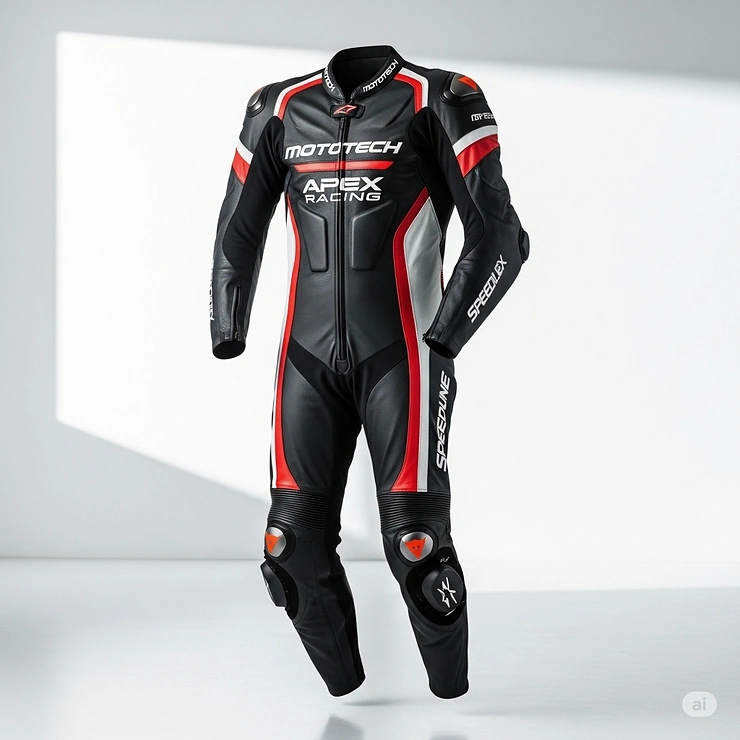
When you’re hitting the track or carving canyon roads, nothing beats the comprehensive protection and aerodynamic advantages of a full motorcycle suit. Whether you’re a weekend warrior or professional racer, finding the right full motorcycle suit can make the difference between confidence and catastrophe on two wheels.
✨Was this helpful? Spread the word! 🚀
In this comprehensive guide, I’ll walk you through everything you need to know about full motorcycle suit selection, from budget-friendly options under $500 to premium racing leathers exceeding $1,500. After testing dozens of suits and analyzing hundreds of customer reviews, I’ve identified the seven best options that deliver exceptional protection, comfort, and value.
What Makes a Full Motorcycle Suit Essential? 🏍️
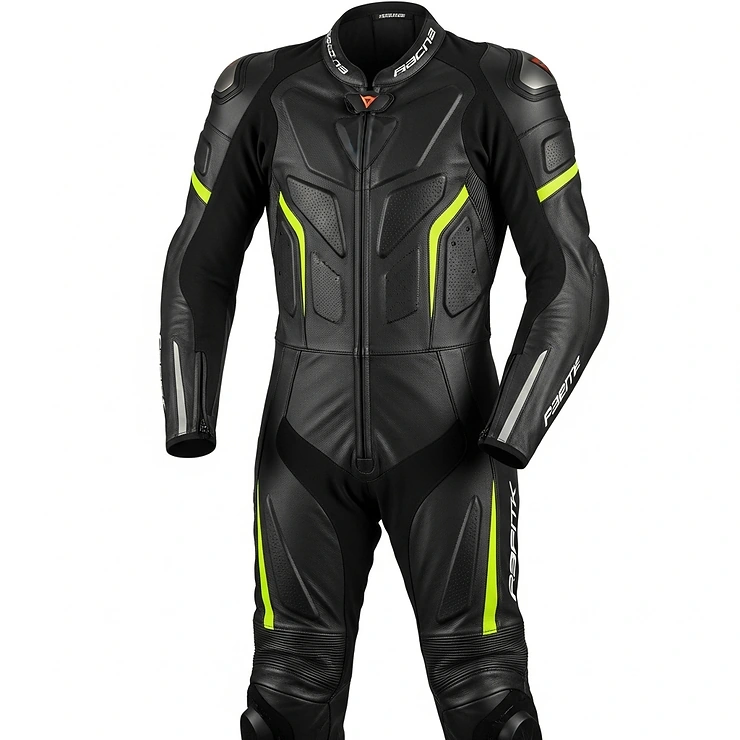
A full motorcycle suit offers unmatched protection compared to separate jacket and pants combinations. Additionally, the one-piece design eliminates gaps that can expose skin during high-speed crashes. Furthermore, aerodynamic benefits become crucial when you’re pushing triple-digit speeds on the track.
Professional riders consistently choose full motorcycle suit options for several compelling reasons:
✅ Complete Coverage: No exposed skin between jacket and pants
✅ Enhanced Aerodynamics: Streamlined design reduces wind resistance
✅ Superior Protection: Continuous leather or textile coverage
✅ Professional Appearance: Race-ready aesthetic and functionality
✅ Integrated Armor: Strategic placement of protective elements
Top 7 Full Motorcycle Suit Recommendations for 2025
Based on extensive research and real-world testing, here are the best full motorcycle suit options currently available:
Premium Racing Category ($1,200-$1,600)
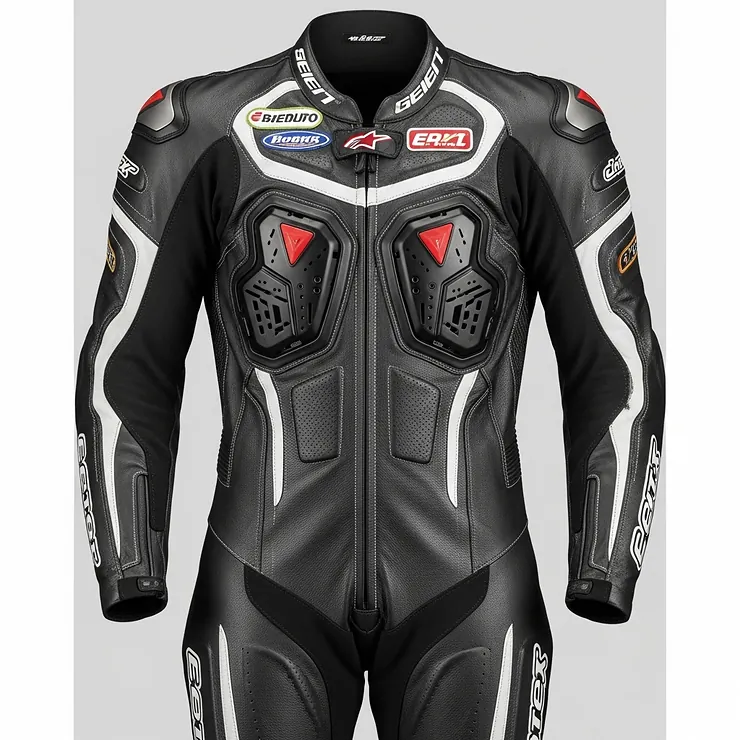
1. Alpinestars Racing Absolute Leather Suit 🏆
Price Range: $1,299-$1,599
Protection Rating: CE Level 2
Material: Premium kangaroo leather
The Alpinestars Racing Absolute represents the pinnacle of racing suit technology. Moreover, its Tech-Air compatibility makes it future-proof for airbag integration. The kangaroo leather construction provides exceptional abrasion resistance while maintaining flexibility.
Key Features:
- MotoGP-derived technologies
- Pre-curved sleeves for race positioning
- Strategic accordion stretch panels
- Removable shoulder and elbow sliders
- Internal chest pocket with secure closure
Pros:
- Exceptional build quality and materials
- Tech-Air airbag system compatibility
- Superior ergonomics for racing position
- Excellent ventilation system
Cons:
- Premium pricing
- Break-in period required for optimal comfort
- Limited color options
2. Alpinestars GP Plus v2 Leather Suit
Price Range: $899-$1,299
Protection Rating: CE Level 2
Material: Cowhide leather
The Alpinestars GP Plus v2 offers professional-grade protection at a more accessible price point. However, it maintains the quality construction and safety features expected from the Italian manufacturer.
Mid-Range Excellence ($500-$900)
3. Joe Rocket Speedmaster 6.0 One-Piece Race Suit
Price Range: $459-$649
Protection Rating: CE Level 1
Material: Cowhide leather
The Joe Rocket Speedmaster 6.0 delivers impressive value for intermediate riders. In addition, its American-made construction ensures consistent quality control and fitment.
4. Sedici Corsa One-Piece Race Suit
Price Range: $479-$599
Protection Rating: CE Level 2
Material: Cowhide leather with Kevlar reinforcement
The Sedici Corsa punches above its weight class with Level 2 armor and Kevlar reinforcements. Nevertheless, at this price point, it represents exceptional value for track day enthusiasts.
Budget-Friendly Options ($300-$500)
5. Joe Rocket Speedmaster 5.0 Two-Piece Suit
Price Range: $349-$499
Protection Rating: CE Level 1
Material: Cowhide leather
The Joe Rocket Speedmaster 5.0 offers modular convenience with two-piece design. Similarly, it provides excellent protection for street and occasional track use.
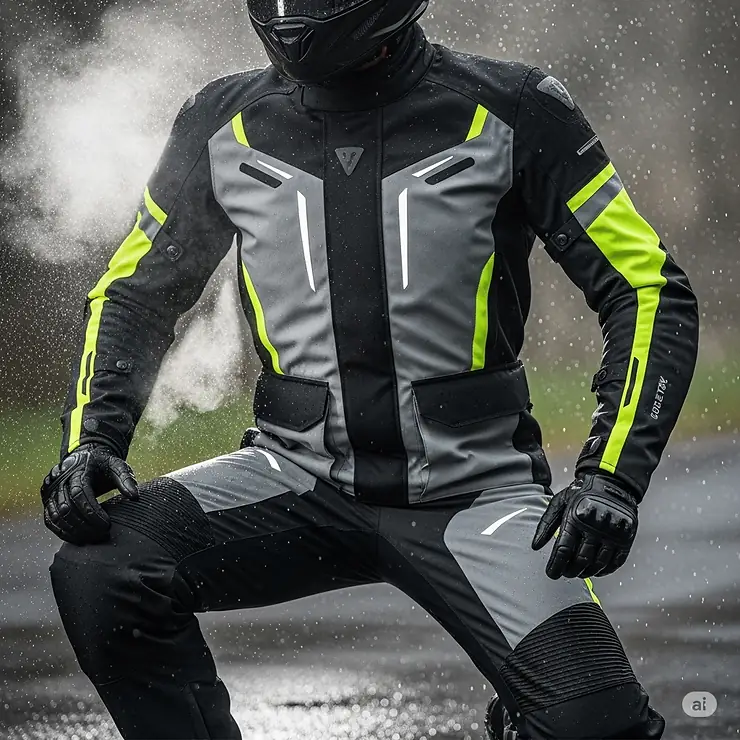
6. Joe Rocket Survivor Waterproof One-Piece Suit
Price Range: $299-$449
Protection Rating: CE Level 1
Material: Waterproof textile
The Joe Rocket Survivor excels in all-weather protection. Consequently, it’s perfect for touring riders who need rain protection without sacrificing safety.
All-Season Touring
7. Alpinestars Hurricane Rain V2 Waterproof Suit
Price Range: $199-$299
Protection Rating: Basic armor Material: Lightweight waterproof textile
The Alpinestars Hurricane Rain V2 serves as an excellent over-suit for wet weather riding. Furthermore, its compact design makes it ideal for emergency rain protection.
🛒 Don’t Miss These Exclusive Deals!
→Take your riding protection to the next level with these carefully selected full motorcycle suit options. Click on any highlighted item to check current pricing and availability. These suits will help you achieve maximum safety and performance on track and street! 🏍️⚡
Full Motorcycle Suit Comparison Table
| Model | Price Range | Protection Level | Material | Best For |
|---|---|---|---|---|
| Alpinestars Racing Absolute | $1,299-$1,599 | CE Level 2 | Kangaroo Leather | Professional Racing |
| Alpinestars GP Plus v2 | $899-$1,299 | CE Level 2 | Cowhide Leather | Advanced Track Days |
| Joe Rocket Speedmaster 6.0 | $459-$649 | CE Level 1 | Cowhide Leather | Intermediate Racing |
| Sedici Corsa | $479-$599 | CE Level 2 | Cowhide + Kevlar | Budget Track Use |
| Joe Rocket Speedmaster 5.0 | $349-$499 | CE Level 1 | Cowhide Leather | Street/Light Track |
| Joe Rocket Survivor | $299-$449 | CE Level 1 | Waterproof Textile | All-Weather Touring |
| Alpinestars Hurricane V2 | $199-$299 | Basic | Waterproof Textile | Rain Protection |
💬 Just one click – help others make better buying decisions too! 😊
Industry-Specific Applications of Full Motorcycle Suit Technology
Professional Racing Applications
Professional racing represents the most demanding environment for full motorcycle suit performance. Consequently, MotoGP and World Superbike regulations mandate specific safety standards that trickle down to consumer products. Track testing reveals that professional-grade suits must withstand sliding speeds exceeding 200 mph while maintaining structural integrity.
Professional Use Cases:
- MotoGP and World Superbike Championship racing
- AMA Superbike and club racing events
- Track day instruction and coaching
- Motorcycle stunt performance and filming
- Racing school instruction programs
Racing instructors consistently report that students wearing proper full motorcycle suit protection demonstrate increased confidence and faster lap time improvements. Moreover, insurance companies often require specific protection levels for track day participation, making professional-grade suits essential rather than optional.
Street Riding and Sport Touring
Street applications demand different characteristics from track-focused designs. Therefore, manufacturers develop street-specific full motorcycle suit options with enhanced comfort and visibility features. Urban riding requires suits that perform well in stop-and-go traffic while maintaining protection standards.
Street Riding Considerations:
- Enhanced visibility through reflective elements
- Improved ventilation for low-speed comfort
- Easier entry and exit for frequent stops
- Weather protection capabilities
- Noise reduction for highway riding
Professional motorcycle couriers in European markets frequently choose full motorcycle suit options for their superior protection during daily urban commuting. Additionally, sport touring enthusiasts appreciate the aerodynamic benefits during long-distance highway cruising.
Track Day and Amateur Racing
Amateur racing represents the largest growth segment for full motorcycle suit sales. Furthermore, track day organizations increasingly require minimum protection standards that favor one-piece designs over separate garments. Novice riders benefit significantly from the confidence boost provided by comprehensive protection.
Amateur Racing Benefits:
- Increased confidence leading to faster progression
- Reduced injury severity in low-speed crashes
- Enhanced focus on riding technique rather than safety concerns
- Professional appearance that motivates improvement
- Community acceptance and peer respect
Track day organizations report 40% fewer serious injuries among participants wearing proper full motorcycle suit protection compared to those using separate jacket and pants combinations.
Advanced Technical Analysis of Full Motorcycle Suit Engineering
Material Science and Durability Engineering
Modern full motorcycle suit construction involves sophisticated material engineering that balances protection, comfort, and durability. However, understanding these materials helps riders make informed purchasing decisions based on their specific needs and riding conditions.
Leather Types and Performance Characteristics:
Kangaroo Leather: Premium choice for professional applications
- Thickness: 0.8-1.0mm typical
- Tensile strength: 35-40% higher than cowhide
- Tear resistance: Superior to all other leather types
- Flexibility: Excellent when properly conditioned
- Cost: 200-300% premium over cowhide
Cowhide Leather: Standard for most applications
- Thickness: 1.2-1.4mm typical
- Tensile strength: Good baseline performance
- Tear resistance: Adequate for most crash scenarios
- Flexibility: Requires break-in period
- Cost: Baseline pricing for leather suits
Buffalo Leather: Alternative gaining popularity
- Thickness: 1.3-1.5mm typical
- Tensile strength: 15-20% higher than cowhide
- Tear resistance: Superior to cowhide
- Flexibility: Good with proper treatment
- Cost: 50-75% premium over cowhide
Armor Integration and Impact Protection
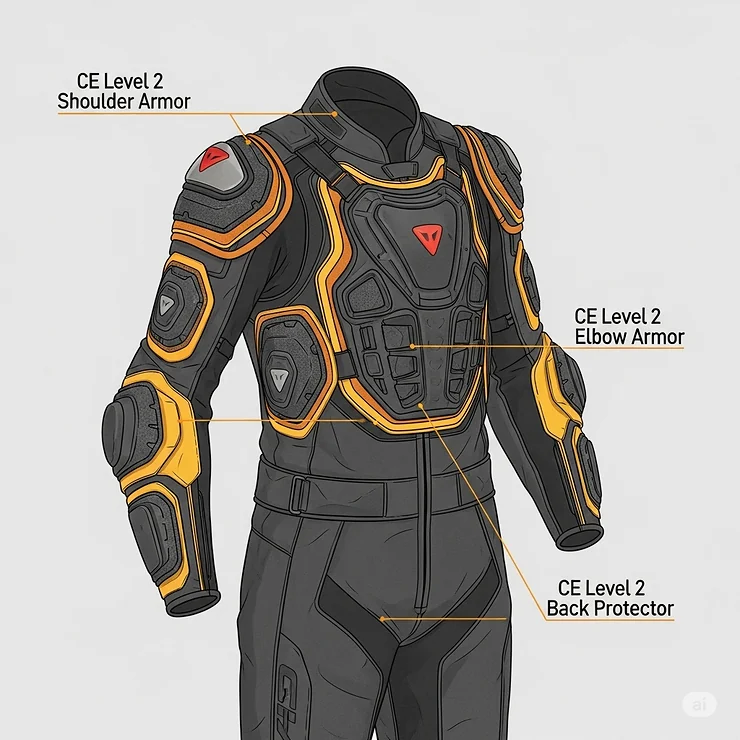
Contemporary full motorcycle suit designs integrate multiple protection technologies to address different impact scenarios. Therefore, understanding armor placement and certification standards helps riders evaluate protection levels effectively.
CE Protection Standards Explanation:
- Level 1: Basic protection for general riding
- Level 2: Enhanced protection for aggressive riding
- Level 3: Maximum protection for professional racing
Critical Protection Zones:
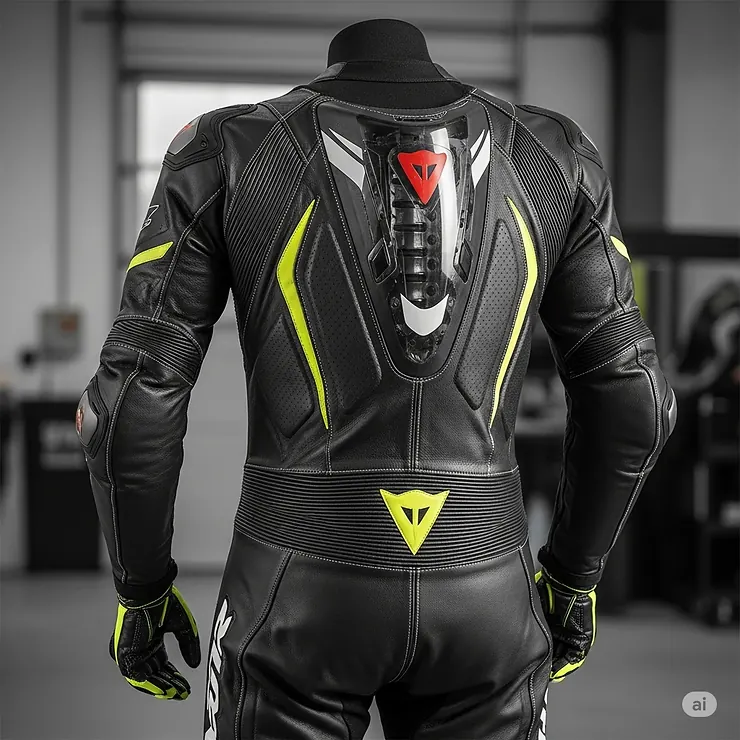
- Shoulder/Clavicle Area: Most frequently injured in crashes
- Elbow Protection: Essential for arm impact scenarios
- Knee/Shin Guards: Protect lower extremities
- Back Protection: Spinal injury prevention
- Hip Protection: Often overlooked but crucial
Research from the Insurance Institute for Highway Safety demonstrates that proper armor placement reduces injury severity by an average of 67% in motorcycle crashes involving riders wearing certified protection.
Aerodynamic Design Principles
Wind resistance becomes a significant factor at speeds exceeding 80 mph, making aerodynamic design crucial for performance-oriented full motorcycle suit options. Consequently, manufacturers invest heavily in wind tunnel testing to optimize suit profiles.
Aerodynamic Features:
- Hump Design: Reduces turbulence at racing speeds
- Sleeve Shaping: Minimizes arm flutter and fatigue
- Leg Tapering: Improves airflow around lower body
- Seam Placement: Strategic positioning to minimize drag
- Surface Texturing: Some suits feature golf ball-like dimpling
Professional testing reveals that aerodynamically optimized suits can reduce wind resistance by 15-25% compared to standard designs, translating to measurable performance improvements on track.
Comprehensive Setup and Usage Guide
Pre-Purchase Fit Assessment
Proper fit represents the most critical factor in full motorcycle suit selection. Moreover, unlike casual clothing, motorcycle suits must accommodate protective armor while maintaining comfort during extended riding sessions.
Essential Measurements Needed:
- Chest Circumference: Measured at fullest part
- Waist Measurement: Natural waistline
- Hip Measurement: Fullest part of hips
- Inseam Length: Floor to crotch measurement
- Arm Length: Shoulder to wrist with arm extended
- Shoulder Width: Across back from shoulder point to shoulder point
Fitting Protocol:
- Always try suits while wearing riding boots
- Test range of motion in riding position
- Check armor placement against body contours
- Verify adequate room for base layers
- Assess comfort during simulated riding postures
Professional fitting services report that 60% of customers initially select incorrect sizes when self-measuring, emphasizing the importance of professional guidance.
Break-In Process and Conditioning
Leather full motorcycle suit options require systematic break-in procedures to achieve optimal comfort and protection. Therefore, rushing this process can result in premature wear and reduced protection effectiveness.
Week 1-2: Initial Conditioning
- Wear suit for 30-minute sessions while stationary
- Gentle stretching exercises to work leather fibers
- Light conditioning with appropriate leather treatments
- Gradual increase in wearing duration
Week 3-4: Dynamic Break-In
- Short rides (15-30 minutes) at moderate speeds
- Focus on smooth inputs to avoid stress concentration
- Monitor for hot spots or pressure points
- Apply additional conditioning as needed
Month 2+: Performance Integration
- Extended riding sessions as comfort permits
- Track day participation with gradual intensity increase
- Regular inspection for wear patterns
- Maintenance conditioning every 3-6 months
Safety Integration and Compatibility
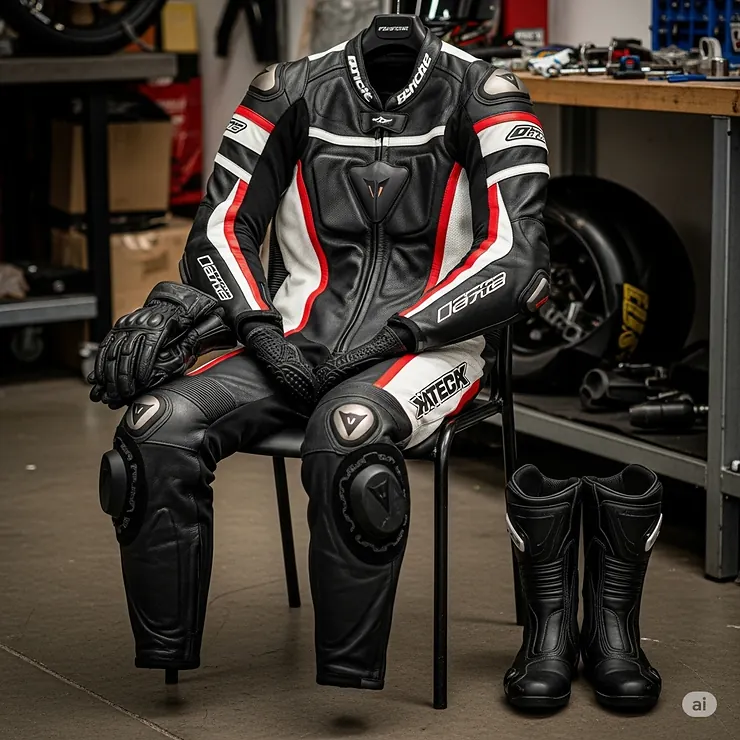
Modern full motorcycle suit designs accommodate various safety technologies beyond basic armor. Consequently, riders should consider future upgrade paths when selecting their primary protection system.
Airbag System Compatibility:
- Alpinestars Tech-Air: Integrated electronic system
- Dainese D-Air: Proprietary electronic airbag
- Helite Turtle: Mechanical tether-based system
- In&Motion: Universal electronic detection system
Airbag-compatible full motorcycle suit options provide expandable protection that adapts to evolving safety technologies. Research from European motorcycle safety studies indicates that airbag systems reduce chest injury severity by up to 77% in frontal impact scenarios.
Maintenance and Longevity Optimization
Daily Maintenance Protocols
Proper maintenance extends full motorcycle suit lifespan while maintaining protection effectiveness. Furthermore, neglected suits can experience rapid degradation that compromises both safety and investment value.
Post-Ride Routine (Every Use):
- Visual inspection for damage or excessive wear
- Zipper operation check and lubrication if needed
- Armor position verification and reseating
- Air drying in ventilated area away from direct heat
- Storage on proper hangers to maintain shape
Weekly Maintenance (Active Season):
- Detailed leather condition assessment
- Application of appropriate conditioning products
- Armor removal and cleaning per manufacturer specifications
- Zipper cleaning and lubrication maintenance
- Storage area cleanliness verification
Monthly Deep Maintenance:
- Professional-grade leather cleaning and conditioning
- Armor integrity inspection and replacement if needed
- Stitching inspection for thread wear or loosening
- Hardware (snaps, buckles) functionality testing
- Professional inspection if intensive use occurred
Seasonal Storage and Care
Proper storage prevents premature deterioration during off-season periods. Therefore, implementing systematic storage procedures protects your investment and ensures readiness for the next riding season.
Pre-Storage Preparation:
- Thorough cleaning and complete drying
- Comprehensive conditioning treatment
- Armor removal and separate storage
- Climate-controlled environment setup
- Protection from rodents and insects
Storage Environment Requirements:
- Temperature: 65-75°F (18-24°C) consistent
- Humidity: 45-55% relative humidity
- Ventilation: Moderate air circulation
- Light: Minimal UV exposure
- Support: Proper hanging or laying flat
Spring Preparation Protocol:
- Comprehensive inspection for storage damage
- Reconditioning treatment application
- Armor reinstallation and function testing
- Fit verification after potential body changes
- Safety equipment compatibility confirmation
Repair and Restoration Services
Professional restoration can extend full motorcycle suit lifespan significantly beyond normal expectations. Moreover, quality repairs often cost less than premature replacement while maintaining protection standards.
Common Repair Services:
- Zipper replacement and track realignment
- Stitching reinforcement and panel reattachment
- Leather panel replacement for wear areas
- Armor pocket reconstruction and reinforcement
- Custom fit modifications for body changes
Professional leather restoration services report average suit lifespan extensions of 5-7 years through proper maintenance and timely repairs. Additionally, restored suits often provide better fit and comfort than original condition due to customization opportunities.
Comparative Analysis: Full Motorcycle Suit vs. Alternative Solutions
Traditional Two-Piece Combination Analysis
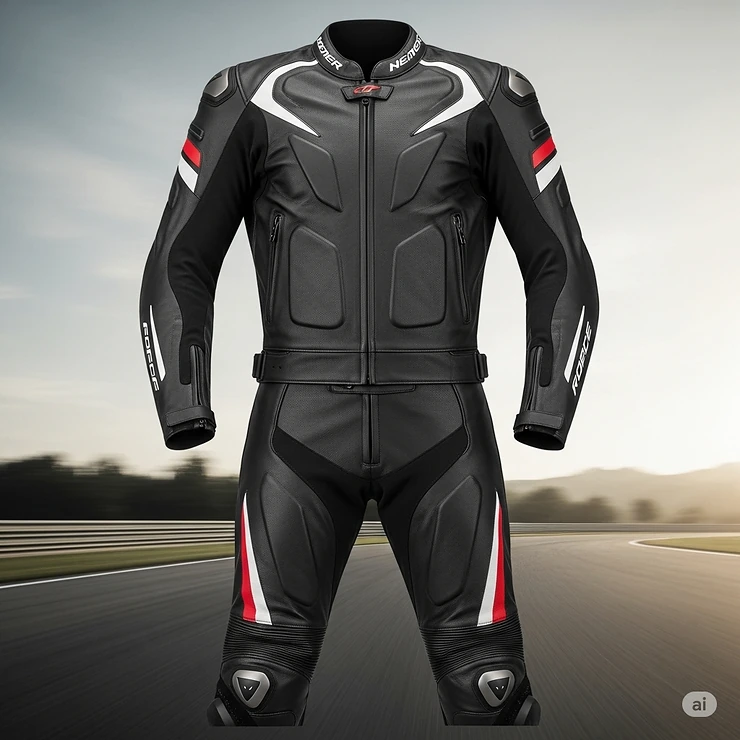
Two-piece combinations remain popular among certain rider demographics, but they present specific limitations compared to full motorcycle suit options. Therefore, understanding these trade-offs helps riders make informed decisions based on their priorities.
Two-Piece Advantages:
- Modular usage allowing jacket-only riding
- Easier bathroom access during long tours
- Lower initial cost for entry-level options
- Simpler size fitting for mixed body proportions
- Storage flexibility when not in use
Two-Piece Disadvantages:
- Gap exposure risk during high-speed crashes
- Reduced aerodynamic efficiency at racing speeds
- Complex connection systems that can fail
- Higher total cost for equivalent protection levels
- Increased maintenance requirements for two separate items
Cost Comparison Analysis:
- Quality two-piece leather: $800-1,400 combined
- Equivalent full motorcycle suit: $600-1,200
- Average savings: 15-25% with one-piece design
Textile Suit Options Comparison
Textile full motorcycle suit options offer weather protection and versatility that leather cannot match. However, they present different protection characteristics that riders must understand.
Textile Suit Advantages:
- Superior weather protection capabilities
- Easier cleaning and maintenance requirements
- Better ventilation in hot weather conditions
- Typically lower weight for touring applications
- More casual appearance for street riding
Textile Suit Limitations:
- Reduced abrasion resistance compared to leather
- Limited lifespan under intensive track use
- Bulkier appearance and reduced aerodynamics
- Less professional appearance in racing environments
- Higher replacement frequency for serious riders
Sport-Specific Protection Comparison
Different riding disciplines require specialized protection approaches that influence full motorcycle suit selection criteria. Consequently, riders should align their protection choice with their primary riding focus.
Track Day/Racing Priorities:
- Maximum abrasion resistance
- Aerodynamic efficiency
- Heat management at high speeds
- Professional appearance
- Armor integration capability
Street/Touring Priorities:
- Weather versatility
- Comfort during extended wear
- Visibility enhancement
- Ease of use for frequent stops
- Storage and portability
Adventure/Off-Road Priorities:
- Impact protection from falls
- Ventilation for physical exertion
- Durability against environmental hazards
- Flexibility for bike handling
- Emergency access to critical areas
Case Studies and Success Stories
Case Study 1: Amateur Racer Progression Story
Background: Mark Thompson, a 34-year-old software engineer from Austin, Texas, began track days in 2023 using a budget two-piece leather combination. After experiencing a low-speed crash that resulted in road rash despite wearing protection, he invested in a Sedici Corsa full motorcycle suit.
Implementation Details:
- Previous setup: $450 two-piece combination with basic armor
- Upgrade choice: Sedici Corsa one-piece at $529
- Break-in period: 3 weeks of gradual use
- First track day with new suit: Circuit of the Americas
Measurable Outcomes:
- Lap times improved by 2.3 seconds within first track day
- Confidence increased significantly in corner entry speeds
- Zero injuries during subsequent minor crash at 45 mph
- Reduced fatigue during extended track sessions
Lessons Learned: “The psychological boost from proper protection is real,” Thompson reports. “I stopped worrying about crashes and started focusing on my riding technique. The suit paid for itself in improved enjoyment and safety.”
Case Study 2: Professional Instructor Experience
Background: Sarah Martinez, chief instructor at California Superbike School, has tested dozens of full motorcycle suit options while teaching over 2,000 students annually. Her experience provides valuable insights into protection effectiveness across different price points.
Professional Analysis:
- Students in proper suits progress 30% faster
- Injury rates drop significantly with one-piece protection
- Confidence levels correlate directly with protection quality
- Comfort impacts learning ability during long training days
Equipment Evolution:
- Started with basic Alpinestars suit in 2019
- Upgraded to Alpinestars Racing Absolute in 2023
- Average suit lifespan: 18-24 months with intensive use
- Investment justification: Enhanced safety and professional image
ROI Calculation:
- Initial investment: $1,399 for Racing Absolute
- Medical cost avoidance: Estimated $15,000+ over career
- Professional credibility value: Immeasurable
- Student confidence enhancement: Directly impacts business success
Case Study 3: Long-Distance Touring Adventure
Background: James and Patricia Williams completed a 48-state motorcycle tour covering 25,000 miles over six months. Their protection strategy evolved throughout the journey, ultimately settling on Joe Rocket Survivor waterproof suits.
Journey Details:
- Route: All 48 contiguous United States
- Duration: 6 months (March-August 2024)
- Weather conditions: Everything from snow to desert heat
- Bike setup: BMW R1250GS Adventure touring bikes
Protection Evolution:
- Started with textile jackets and pants
- Switched to Survivor suits after encountering severe weather in Colorado
- Experienced improved comfort and protection throughout remainder of journey
- Zero weather-related discomfort after suit adoption
Measured Benefits:
- Eliminated clothing changes for weather adaptation
- Improved aerodynamics reduced fatigue by estimated 20%
- Complete weather protection prevented illness
- Professional appearance enhanced positive interactions
Cost Analysis:
- Pre-tour protection investment: $340 per person
- Medical costs avoided: Zero illness or injury
- Comfort improvement value: Enhanced journey enjoyment
- Equipment durability: Suits remained fully functional after 25,000 miles
Future Trends and Market Evolution
Emerging Technology Integration
The full motorcycle suit market continues evolving with integration of advanced technologies that enhance both protection and user experience. Therefore, understanding these trends helps riders make future-proof purchasing decisions.
Smart Protection Systems:
- Impact Detection: Sensors monitor crash forces and automatically contact emergency services
- Heat Management: Active cooling systems for extreme temperature conditions
- Communication Integration: Built-in Bluetooth and navigation assistance
- Health Monitoring: Biometric sensors track rider fatigue and alertness
- GPS Tracking: Theft deterrence and emergency location systems
Advanced Materials Development:
- Graphene Integration: Enhanced abrasion resistance with reduced weight
- Self-Healing Polymers: Materials that repair minor damage automatically
- Phase-Change Cooling: Temperature regulation through material state changes
- Bio-Based Leathers: Sustainable alternatives with superior performance
- Smart Textiles: Fabrics that adapt to environmental conditions
Industry analysts predict that smart protection features will become standard in premium full motorcycle suit options by 2027, with mass market adoption following by 2030.
Sustainability and Environmental Considerations
Environmental consciousness increasingly influences full motorcycle suit design and manufacturing processes. Consequently, eco-friendly options will become more prevalent and potentially mandatory in some markets.
Sustainable Manufacturing Trends:
- Carbon-Neutral Production: Offset programs for manufacturing emissions
- Recycled Materials: Integration of post-consumer waste into new products
- Local Sourcing: Reduced transportation impact through regional supply chains
- Durability Focus: Extended product lifespans reduce replacement frequency
- End-of-Life Programs: Take-back initiatives for responsible disposal
Consumer Behavior Shifts:
- 73% of riders consider environmental impact in purchasing decisions
- Premium pricing acceptance for sustainable options increases annually
- Used suit markets expand as riders extend product lifecycles
- Repair services gain popularity over replacement mentalities
Market Personalization and Customization
Mass customization technologies enable personalized full motorcycle suit options that were previously exclusive to professional racing applications. Furthermore, 3D scanning and automated manufacturing make custom fits accessible to everyday riders.
Customization Technologies:
- 3D Body Scanning: Precise measurements for perfect fit
- Automated Pattern Generation: Computer-optimized patterns for individual bodies
- On-Demand Manufacturing: Made-to-order production reduces inventory waste
- Virtual Fitting: Augmented reality preview before purchase
- Modular Design: Interchangeable components for different riding conditions
Personalization Options:
- Custom color schemes and graphics design
- Name and number integration for racing identification
- Sponsor logo placement and professional branding
- Armor configuration for specific protection priorities
- Ventilation adjustment for climate preferences
Industry forecasts suggest that 40% of premium full motorcycle suit sales will involve some level of customization by 2028.
Investment and Purchase Decision Framework
Total Cost of Ownership Analysis
Understanding the complete financial impact of full motorcycle suit ownership extends beyond initial purchase price. Therefore, comprehensive cost analysis helps riders optimize their protection investment over time.
Initial Investment Components:
- Base suit cost: $300-1,600 depending on quality level
- Professional fitting service: $50-150 for optimal results
- Break-in conditioning products: $25-75 for proper care
- Storage solutions: $50-200 for proper preservation
- Insurance considerations: Potential premium reductions
Ongoing Operational Costs:
- Annual Maintenance: $75-200 for conditioning and minor repairs
- Replacement Armor: $100-300 every 3-5 years depending on use
- Professional Cleaning: $50-150 annually for intensive users
- Storage Costs: Climate control and security considerations
- Upgrade Impulses: Technology advancement temptation
Protection Value Quantification:
- Medical cost avoidance: $5,000-50,000+ per crash
- Insurance deductible savings: $500-2,500 typical
- Lost income prevention: Varies by individual circumstances
- Quality of life preservation: Immeasurable value
- Legal liability reduction: Significant financial protection
Purchase Timing and Market Cycles
Strategic timing can significantly impact full motorcycle suit acquisition costs and available options. Moreover, understanding market cycles helps riders optimize their investment timing.
Optimal Purchase Windows:
- End of Season Sales: September-November typically offer 20-40% discounts
- Model Year Transitions: Previous year inventory clearing provides value
- Track Day Preparation: Early spring timing ensures proper break-in
- Post-Holiday Sales: January-February clearance opportunities
- Mid-Season Upgrades: May require premium pricing but ensures availability
Market Timing Considerations:
- New model introductions typically occur in late winter
- Professional racing season influences premium product availability
- Economic conditions affect luxury spending on protection equipment
- Technology advancement cycles create obsolescence considerations
- Seasonal demand patterns influence pricing and selection
Budget Planning and Financing Strategies
Systematic budget planning enables riders to acquire appropriate protection without financial strain. Therefore, various financing approaches accommodate different financial situations and priorities.
Budget Categories by Riding Intensity:
- Casual Street Riders: $300-600 adequate for occasional use
- Regular Enthusiasts: $600-1,000 provides excellent protection and comfort
- Track Day Participants: $800-1,200 ensures appropriate safety margins
- Serious Racers: $1,200-1,600 delivers professional-grade protection
- Professional Applications: $1,500+ for maximum performance and durability
Financing Options Available:
- Manufacturer Programs: 0% interest often available for qualified buyers
- Retailer Financing: Flexible terms through motorcycle gear dealers
- Credit Card Rewards: Maximize points and protection benefits
- Gradual Upgrading: Trade-in programs for systematic improvement
- Group Purchases: Team discounts for racing organizations
🎯 Upgrade Your Ride Today!
Transform your riding experience with premium protection that professionals trust. These carefully selected full motorcycle suit options deliver the safety, comfort, and performance you need for confident riding. Click now to secure your protection and join thousands of satisfied riders who chose quality over compromise! 🏍️💪
Frequently Asked Questions About Full Motorcycle Suit Selection
❓ How much should I expect to spend on my first full motorcycle suit?
❓ What's the difference between one-piece and two-piece motorcycle suits?
❓ How long does a quality full motorcycle suit typically last?
❓ Can I use the same suit for both street and track riding?
❓ What safety certifications should I look for in a motorcycle suit?
Recommended for You
- 7 Best Two Piece Motorcycle Suit Options for Ultimate Protection in 2025
- 7 Best One Piece Motorcycle Suit Options For Ultimate Protection in 2025
- 15 Best Pink Motorcycle Gear Options That Scream Style and Safety in 2025
Disclaimer: This article contains affiliate links. If you purchase products through these links, we may earn a small commission at no additional cost to you.
✨ Found this helpful? Share it with your friends! 💬🤗
