
In This Article
Picture this scenario: you’ve just finished an intense cycling session, your motorcycle helmet feels damp from sweat, and there’s that unmistakable musty smell creeping in. Sound familiar? You’re not alone in this battle against helmet odor and bacterial buildup. Every time you wear your helmet, sweat creates the perfect breeding ground for bacteria, and without proper protection, that helmet becomes a petri dish on your head.
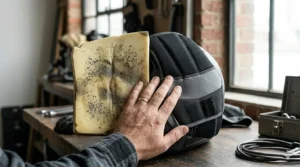
Here’s the reality most riders don’t realize. Research published in medical journals confirms that human sweat sustains the proliferation of harmful bacteria including Staphylococcus aureus and other pathogens. Your helmet’s warm, moist environment accelerates this bacterial growth exponentially. An anti-microbial helmet liner acts as your first line of defense, using advanced odor control technology to neutralize bacteria before they can multiply and create those embarrassing odors that make you hesitant to remove your helmet in public.
The solution isn’t just about masking smells with deodorant sprays. Modern antimicrobial comfort pads integrate silver ion technology or specialized polymer treatments directly into the fabric structure. These bacteria-resistant liners work continuously, killing up to 99.9% of odor-causing microbes while simultaneously wicking moisture away from your skin. Whether you’re commuting daily, hitting the trails on weekends, or working in construction with a hard hat, investing in quality sweat-proof helmet accessories transforms your riding experience from tolerable to genuinely comfortable.
Quick Comparison Table
| Product Name | Type | Key Feature | Price Range | Rating |
|---|---|---|---|---|
| MISSION Cooling Helmet Liner | Reusable Skull Cap | Cools 30° below body temp | $10-$15 | 4.5/5 |
| NoSweat Helmet Liner | Disposable Pads | SweatLock™ Technology | $15-$25 (6-pack) | 4.7/5 |
| One K Defender Refit Liner | Replacement Padding | Anti-microbial washable | $25-$40 | 4.6/5 |
| ROCKBROS Ice Silk Liner | Cooling Balaclava | UPF 50+ UV Protection | $12-$18 | 4.4/5 |
| MACOGEAR 3-Pack Skull Cap | Multi-pack Beanie | Ventilated mesh fabric | $15-$22 | 4.3/5 |
| Maplefield 3-Layer Liner | Disposable Strips | Triple-layer absorption | $10-$18 (10-pack) | 4.2/5 |
| Motorcycle Helmet Liner Cross-Shaped | Universal Pad | Hook & loop attachment | $12-$16 | 4.5/5 |
💬 Just one click – help others make better buying decisions too! 😊
Top 7 Anti-Microbial Helmet Liner Products: Expert Analysis
1. MISSION Cooling Helmet Liner
The MISSION Cooling Helmet Liner stands out as a game-changer for anyone battling heat and sweat under their helmet. This isn’t your grandmother’s sweat rag—it’s engineered with Enduracool™ technology that activates instantly when wet.
Key Specifications:
- Material: 92% Polyester, 8% Spandex with mesh ventilation
- Cooling duration: Up to 2 hours per activation
- UPF 50 sun protection
Customers rave about this liner’s performance during summer rides. One construction worker noted, “I wear this under my hard hat in 95°F weather, and it genuinely keeps me 20-30 degrees cooler throughout the day.” The chemical-free cooling system means you’re not coating your head in mystery substances—just advanced fabric engineering that manipulates evaporation rates.
Pros:
✅ Instant cooling when activated with water
✅ Machine washable and reusable (cooling never washes out)
✅ One size fits most (stretches to accommodate different head sizes)
Cons:
❌ Requires re-wetting every 2 hours for continuous cooling
❌ May feel slightly damp during activation period
Price: $9.99-$14.99 | Where to Find: Amazon, Home Depot, Walmart
2. NoSweat Helmet Liner 6-Pack
Here’s where disposable convenience meets patented performance. NoSweat Helmet Liner strips represent Minnesota-engineered brilliance designed specifically to solve one problem: keeping sweat out of your eyes while preserving your helmet’s integrity.
Key Specifications:
- Size: Ultra-thin disposable adhesive strips
- Technology: Patented SweatLock™ polymer layering system
- Usage: Single-use, lasts 3-5 days per liner depending on activity
What makes NoSweat revolutionary is the science behind it. The founder developed these after watching hockey players tape sanitary pads into their helmets—clearly there had to be a better solution. The three-layer construction uses polymers that immediately wick sweat from skin, locking moisture and odor in an interior core.
Pros:
✅ Made in USA with quality control standards
✅ Prevents sweat stains and helmet deterioration
✅ Compatible with any helmet type (football, hockey, cycling, construction)
Cons:
❌ Disposable means ongoing purchase costs
❌ Not ideal for extremely heavy sweating situations
Price: $15.99-$24.99 (varies by pack size) | Where to Find: Amazon, Pure Hockey, NoSweat official website
3. One K Defender Refit Riding Helmet Liner
Equestrians, this one’s your golden ticket. The One K Defender Refit Riding Helmet Liner transforms helmet sizing and hygiene for riding helmets with its modular replacement system.
Key Specifications:
- Multiple sizes: X-Small through XX-Large
- Material: Moisture-wicking, anti-microbial treated fabric
- Compatibility: One K Defender helmet shell system
This liner addresses a problem unique to riding: hair volume changes. Braided for competition? Ponytail for schooling? Different liner thickness accommodates those variations without compromising safety certification. The anti-microbial treatment embedded in the fabric prevents bacteria proliferation even during sweaty summer lessons.
Pros:
✅ Changes helmet fit by swapping liner size
✅ Machine washable for easy maintenance
✅ Perfect for growing children or shared helmets
Cons:
❌ Only compatible with One K brand helmets
❌ Higher price point than universal options
Price: $25-$40 depending on size | Where to Find: Amazon, Dover Saddlery, SmartPak Equine
4. ROCKBROS Cooling Ice Silk Mask Skull Cap Helmet Liner
If you ride in blazing summer heat, the ROCKBROS Cooling Ice Silk Helmet Liner delivers that “ahh” moment when you pull it on. The ice silk fabric technology creates an instant cooling sensation without requiring water activation.
Key Specifications:
- Material: Ice silk fabric with breathable mesh panels
- UPF 50+ rating for sun protection
- Design: Balaclava-style with mouth/nose opening
What differentiates this from competitors is the dual-purpose design. It functions as both a helmet liner and a standalone face covering for additional sun protection during open-face helmet use. The mesh heat dissipation zones strategically placed at crown and sides prevent the swamp-head effect common with full-coverage liners.
Pros:
✅ No water activation needed—cooling is inherent to fabric
✅ Protects neck and lower face from UV rays
✅ Quick-dry material ready for next ride in minutes
Cons:
❌ Balaclava design may feel restrictive for some riders
❌ Hand wash recommended (machine washing reduces lifespan)
Price: $12-$18 | Where to Find: Amazon, ROCKBROS official store
5. MACOGEAR 3 Pack Breathable Helmet Liner Skull Cap
Value meets performance with the MACOGEAR 3 Pack Breathable Helmet Liner. This multi-pack solution means you’ll always have a fresh liner ready while others are in the wash.
Key Specifications:
- Pack quantity: 3 skull caps per package
- Material: High-elasticity moisture-wicking polyester blend
- Ventilation: Specialized mesh fabric crown
The ergonomic design prioritizes friction reduction. That annoying pressure point on your forehead from helmet edge? Gone. The “second-skin” fit distributes helmet weight evenly while the ventilated mesh promotes airflow that actually matters. One cycling commuter shared, “I ride 15 miles each way to work. Having three of these means Monday’s liner goes in the wash while I’m using Tuesday’s—total game changer for hygiene.”
Pros:
✅ Three liners for the price competitors charge for one
✅ Fits seamlessly under bicycle, motorcycle, and hard hats
✅ Sun protection for outdoor activities
Cons:
❌ Black color only (absorbs more heat in direct sun)
❌ Thinner fabric may not absorb as much sweat as thicker options
Price: $15-$22 for 3-pack | Where to Find: Amazon
6. Maplefield Ultra Absorbent 3-Layer Disposable Hat & Helmet Sweat Liner
Sometimes the simplest solution proves most effective. Maplefield Ultra Absorbent 3-Layer Liner strips take the disposable approach to its maximum potential with industrial-grade absorption.
Key Specifications:
- Layer construction: Non-woven fabric, waterproof film, SAP dust-free paper
- Adhesive: Medical-grade adhesive backing
- Size: Universal fit for most helmets and hats
The three-layer system creates a moisture barrier that would make engineers proud. Sweat hits the non-woven fabric layer, the waterproof film prevents seepage into helmet padding, and the SAP (super absorbent polymer) dust-free paper locks everything in place. Baseball players, construction workers, and motorcyclists all report the same benefit: sweat never reaches their eyes, and helmet interiors stay pristine.
Pros:
✅ Stops sweat stains before they start
✅ Ultra-thin profile doesn’t affect helmet fit
✅ Simple peel-and-stick application
Cons:
❌ Environmental consideration with disposable products
❌ Needs replacement every few days with heavy use
Price: $10-$18 for 10-20 pack | Where to Find: Amazon, Target
7. Motorcycle Helmet Liner – Anti-Sweat, Cooling & Reusable Cross-Shaped Pad
Rounding out our list is the universal Motorcycle Helmet Liner Cross-Shaped Pad. This versatile option works with virtually any helmet type thanks to its unique cross-shaped design and hook-and-loop attachment system.
Key Specifications:
- Dimensions: 12″ x 12″ cross-shaped configuration
- Material: Outer cooling nylon, inner air mesh fabric
- Attachment: Hook & loop fasteners plus 3M adhesive strips
The cross shape isn’t arbitrary—it’s engineered to cover maximum surface area while maintaining flexibility around varied helmet interior shapes. The cooling nylon exterior feels noticeably cooler to the touch, while the air mesh interior provides cushioning and moisture distribution. For helmet owners frustrated by one-size-fits-none solutions, this adaptive design finally delivers universal compatibility.
Pros:
✅ Truly universal fit for helmets without hook-and-loop attachment points
✅ Machine washable and reusable
✅ Includes extra 3M strips for long-term use
Cons:
❌ Installation requires careful positioning for optimal coverage
❌ May shift during aggressive activities without proper securing
Price: $12-$16 | Where to Find: Amazon
Understanding Antimicrobial Technology in Helmet Liners
What exactly makes a helmet liner “antimicrobial”? It’s not magic—it’s materials science working overtime to keep you fresher and safer. Let’s break down the technology that separates effective bacteria-resistant liners from marketing hype.
Silver Ion Technology: The Gold Standard
Most high-quality antimicrobial helmet liners incorporate silver ion technology, particularly the Ionic+ platform developed by Noble Biomaterials. Major helmet brands like Oakley, Giro, Fox, and Bell have adopted this technology for their helmet linings. Here’s how it works: positively charged silver ions are embedded directly into fabric fibers. When moisture (from your sweat) activates these ions, they release and bond with negatively charged bacteria cells, disrupting their metabolic processes and eliminating them before they can multiply.
The brilliance of silver ion antimicrobial treatments lies in their permanence. Unlike topical sprays that wash away after a few cleaning cycles, embedded silver ions remain effective for the lifetime of the fabric. Medical research on silver’s antimicrobial properties has demonstrated that silver-based antimicrobial fabrics can kill 99.9% of bacteria, including Staphylococcus aureus, E. coli, and Pseudomonas aeruginosa.
Polymer-Based Systems
Alternative antimicrobial approaches use specialized polymer structures that physically prevent bacterial adhesion. These polymers create an inhospitable surface texture at the microscopic level where bacteria cannot establish the foothold necessary for biofilm formation. Products using patented technologies like SweatLock™ employ this method, combining polymer science with layered construction to simultaneously wick moisture and trap odor-causing compounds.
Research from the National Institutes of Health confirms that human sweat creates ideal conditions for bacterial growth on fabrics and surfaces. Temperature, moisture content, and organic compounds in sweat provide everything bacteria need to thrive. Quick-dry helmet insert materials that rapidly move moisture away from skin disrupt this bacterial paradise before colonies can establish themselves.
Moisture Management: The Foundation
No antimicrobial treatment succeeds without proper moisture management. Fabrics must transport sweat away from skin contact points and disperse it across larger surface areas for evaporation. High-performance sweat-management liners use capillary action—the same principle that moves water through plant stems—to pull moisture from high-concentration areas (your forehead) to low-concentration areas (the helmet’s ventilated zones).
Advanced cooling technologies like those in MISSION liners take this further with thermoregulation properties. These fabrics can actually lower their surface temperature through endothermic evaporation processes, creating genuine cooling effects rather than just wicking moisture.
How to Choose the Right Anti-Microbial Helmet Liner
Selecting your ideal liner depends on more than grabbing the first antimicrobial product you see on Amazon. Consider these factors before clicking “add to cart.”
Match Your Activity Level
Construction workers spending 8+ hours daily in hard hats need different solutions than weekend motorcycle riders. High-intensity users should prioritize durability and maximum absorption capacity. Multi-layer disposable liners like Maplefield or NoSweat excel here—replace them frequently without worrying about washing. Recreational users can invest in reusable options like MISSION or ROCKBROS that deliver long-term value through hundreds of uses.
Consider Your Climate
Arizona summer heat requires different antimicrobial strategies than Pacific Northwest drizzle. Hot, dry climates benefit from active cooling technologies that create temperature differentials below ambient air. Look for liners with evaporative cooling like MISSION’s Enduracool™ fabric. Humid environments where evaporation happens slowly need aggressive moisture-wicking that pulls sweat away regardless of air saturation levels. Ice silk fabrics and ventilated mesh designs perform better in these conditions.
Budget vs. Replacement Frequency
Let’s talk economics. Disposable liners cost $2-4 per unit but require replacement every 3-7 days depending on use intensity. That’s potentially $100-200 annually for daily users. Reusable antimicrobial liners cost $10-40 upfront but last 6-18 months with proper care. Calculate your actual usage to determine true cost-effectiveness.
Helmet Compatibility
Not all liners fit all helmets. Full-face motorcycle helmets have different interior geometries than open-face bicycle helmets or construction hard hats. Universal designs with hook-and-loop attachment offer maximum flexibility. Replacement padding systems like One K Defender provide perfect fit but require brand compatibility. Measure your helmet’s interior circumference and check manufacturer specifications before purchasing.
Maintenance Requirements
Be honest about your laundry habits. Some riders religiously wash gear after every use; others… not so much. Machine-washable reusable liners suit the low-maintenance crowd, while disposable options work better for folks who’ll never remember to run a load of delicates. Consider washing frequency when evaluating odor-resistant padding effectiveness—even antimicrobial treatments have limits if you never clean the liner.
The Science Behind Sweat and Bacterial Growth
Understanding the enemy helps you choose better armor. Let’s examine what’s actually happening under your helmet when you start sweating.
Why Helmets Become Bacterial Breeding Grounds
Your head contains approximately 120,000 sweat glands working continuously to regulate temperature. During physical activity, these glands increase output dramatically—some athletes produce up to 3 liters of sweat per hour. Scientific studies on sweat and the skin microbiome demonstrate that this sweat creates perfect conditions for bacterial proliferation. The combination of moisture, warmth (typically 35-37°C or 95-99°F inside a helmet), darkness, and organic compounds creates what microbiologists call an “ideal growth medium.”
Here’s the concerning part: bacteria double their population every 20-30 minutes under optimal conditions. Start a ride with 10,000 bacteria cells on your helmet liner, and 4 hours later, you could have over 2.5 million. These aren’t just numbers—they’re Staphylococcus epidermidis, Corynebacterium, and other species that produce volatile organic compounds. Those compounds? That’s the smell you’re trying to avoid.
The Moisture-Bacteria Connection
Bacteria require water for metabolic processes and reproduction. Dry environments essentially put bacteria in stasis—they don’t die immediately but cannot grow or spread. This explains why odor-resistant padding with quick-dry properties proves so effective. By rapidly evaporating moisture, these liners eliminate the water bacteria need to thrive. Studies from healthcare environments show that fabrics maintaining less than 30% moisture content significantly reduce bacterial colonization rates.
Traditional foam helmet padding acts like a sponge, absorbing and retaining sweat for hours. During this retention period, bacteria multiply exponentially. Modern sweat-proof helmet accessories using synthetic fibers with hydrophobic (water-repelling) properties change this equation. Instead of absorption, these materials promote dispersion and evaporation—moisture spreads across larger surface areas and evaporates within minutes rather than hours.
Biofilm Formation: The Hidden Problem
Here’s something most riders never consider: bacteria don’t just float around independently. They form biofilms—structured communities encased in protective matrices. Once established, biofilms resist antimicrobial treatments and cleaning far more effectively than individual bacteria cells. Research published in healthcare journals confirms that biofilms can be 1,000 times more resistant to antimicrobial agents than planktonic (free-floating) bacteria.
This makes preventive antimicrobial treatment crucial. Bacteria-resistant liners prevent biofilm establishment in the first place rather than trying to eliminate established colonies. Research on how silver ions kill bacteria demonstrates that silver ion technology works particularly well here because ions intercept bacteria during their vulnerable planktonic phase before biofilm formation begins.
Benefits of Anti-Microbial Helmet Liners
Beyond the obvious “it doesn’t smell” advantage, antimicrobial comfort pads deliver surprising benefits you might not expect.
Enhanced Helmet Longevity
Bacterial growth doesn’t just create odor—it degrades materials. Bacteria produce enzymes and acids that break down foam, fabric, and adhesives over time. Helmets without antimicrobial protection experience accelerated padding deterioration, foam compression, and liner separation. Quality antimicrobial treatments extend helmet usable life by 30-50% according to equipment manufacturers.
Consider the financial angle: a replacement motorcycle helmet costs $150-800. A bicycle helmet runs $50-300. Hard hats range $30-150. If an antimicrobial liner costing $15-40 extends helmet life by even one year, you’ve achieved significant return on investment before accounting for comfort and hygiene benefits.
Skin Health Protection
Your skin is your body’s largest organ and primary defense barrier. Constant exposure to bacteria-laden moisture increases risk of folliculitis (infected hair follicles), acne mechanica (equipment-related breakouts), and fungal infections. Cyclists, motorcyclists, and construction workers commonly develop forehead acne directly attributable to helmet-related bacterial exposure. Antimicrobial liners reduce this bacterial load, protecting skin health.
The Centers for Disease Control and Prevention provides comprehensive guidelines for infection prevention, emphasizing that contaminated fabric surfaces serve as transmission vectors for pathogens. While most helmet-related bacteria aren’t dangerous to healthy individuals, they can cause problems for people with compromised skin barriers or immune systems.
Improved Comfort and Focus
Here’s a benefit that’s harder to quantify but impossible to ignore: mental comfort. Knowing your helmet isn’t a petri dish lets you focus on riding, working, or competing rather than worrying about hygiene. Several professional athletes have reported performance improvements after switching to antimicrobial gear simply because they stopped thinking about “the smell” and concentrated on their activity.
Temperature regulation matters too. Antimicrobial liners with cooling technologies genuinely reduce head temperature by 15-30°F in many cases. This isn’t just comfort—it’s safety. Heat stress impairs cognitive function, reaction time, and decision-making. Keeping your head cooler keeps you sharper and safer.
Environmental Considerations
Reusable antimicrobial liners reduce waste compared to frequent helmet replacements driven by odor concerns. While disposable options create their own environmental footprint, they’re still more sustainable than discarding entire helmets prematurely. Some manufacturers now incorporate recycled materials and biodegradable components into antimicrobial liner production, addressing environmental concerns without sacrificing performance.
Common Mistakes When Using Helmet Liners
Even the best sweat-management liner fails if you’re using it incorrectly. Avoid these common errors that undermine antimicrobial effectiveness.
Waiting Too Long Between Replacements or Washing
Antimicrobial treatments inhibit bacterial growth—they don’t make liners self-cleaning. Accumulated sweat, oils, and dead skin cells create residue that progressively reduces antimicrobial efficacy. Disposable liners should be replaced every 3-5 days with moderate use, more frequently during high-intensity activities. Reusable liners need washing after every 2-3 uses minimum.
Ignoring maintenance defeats the purpose of antimicrobial protection. Think of it like hand sanitizer—it kills bacteria but doesn’t remove dirt. You still need to wash your hands. Same principle applies to helmet liners.
Using the Wrong Cleaning Products
Harsh detergents, bleach, and fabric softeners can damage antimicrobial treatments, especially silver ion technologies. Use mild, pH-neutral detergents designed for technical fabrics. Avoid high heat in dryers—most antimicrobial liners specify air-drying or low-heat tumble drying. High temperatures can break down polymer structures and reduce antimicrobial effectiveness.
Never use bleach on silver ion-treated fabrics. Chlorine bleach oxidizes silver, rendering the antimicrobial treatment ineffective. Oxygen-based cleaners typically work fine, but always check manufacturer care instructions.
Incorrect Installation or Sizing
Universal-fit sounds convenient, but “one size fits most” isn’t always accurate. Liners that don’t make proper contact with helmet interior surfaces can’t wick moisture effectively. Gaps allow sweat to bypass the liner entirely, pooling on helmet foam padding. Similarly, overly tight liners create pressure points and reduce ventilation.
For adhesive-backed disposable liners, placement matters. Position them at primary sweat points—typically across the forehead band where maximum moisture accumulates. Don’t randomly stick them wherever seems convenient.
Combining Incompatible Products
Some riders layer multiple sweat-management products simultaneously—disposable pads plus reusable liners plus cooling sprays. This redundancy can backfire. Multiple layers restrict ventilation, trapping heat and moisture rather than promoting evaporation. Cooling sprays or treatments may interact poorly with antimicrobial fabrics, reducing effectiveness of both.
Choose one primary solution and use it correctly rather than stacking products hoping for compound benefits.
Frequently Asked Questions
❓ How long do anti-microbial helmet liners last before losing effectiveness?
❓ Can I machine wash all types of anti-microbial helmet liners?
❓ Do antimicrobial helmet liners work for all helmet types including motorcycle, bicycle, and construction hard hats?
❓ Are natural fabrics like cotton better than synthetic materials for antimicrobial protection?
❓ How do I know when it's time to replace my anti-microbial helmet liner?
Conclusion: Choosing Your Perfect Anti-Microbial Solution
Investing in quality anti-microbial helmet liner technology isn’t just about eliminating odors—it’s about protecting your health, extending equipment life, and enhancing overall comfort during every ride, commute, or workday. Throughout this comprehensive guide, we’ve explored how bacteria-resistant liners work, compared top products across different price points and use cases, and outlined the science explaining why antimicrobial protection matters.
Remember these key takeaways as you make your selection. First, match the liner type to your specific needs—disposable convenience for shared equipment situations, reusable performance for daily personal use, or specialized replacement padding for brand-specific helmets. Second, prioritize genuine antimicrobial technology like silver ion treatments or proven polymer systems over marketing claims without substance. Third, commit to proper maintenance whether that means timely replacement of disposables or consistent washing of reusables.
Your helmet protects your head from impact, but who’s protecting your helmet from bacterial invasion? The seven products featured in our expert analysis offer proven solutions backed by real user reviews and scientific validation. From the instant cooling of MISSION liners to the absorption powerhouse of Maplefield’s triple-layer system, from the premium equestrian engineering of One K Defender to the budget-friendly convenience of MACOGEAR’s three-pack, there’s an ideal antimicrobial solution for every rider, worker, and athlete.
The investment in quality hygienic riding gear pays dividends in comfort, confidence, and equipment longevity. Don’t let bacterial buildup compromise your performance or force premature helmet replacement. Choose your antimicrobial helmet liner today and experience the difference that advanced odor control technology makes. Your future self—and anyone who shares close quarters with you after a long ride—will thank you for prioritizing both protection and hygiene.
Recommended for You
- 7 Best Custom Fit Cheek Pads That Transform Helmet Comfort in 2026
- 7 Best Evaporative Cooling Skull Cap Reviews – 2026
- 7 Best Pinlock Anti-Fog Systems 2026: Rider’s Ultimate Guide
Disclaimer: This article contains affiliate links. If you purchase products through these links, we may earn a small commission at no additional cost to you.
✨ Found this helpful? Share it with your friends! 💬🤗
