
In This Article
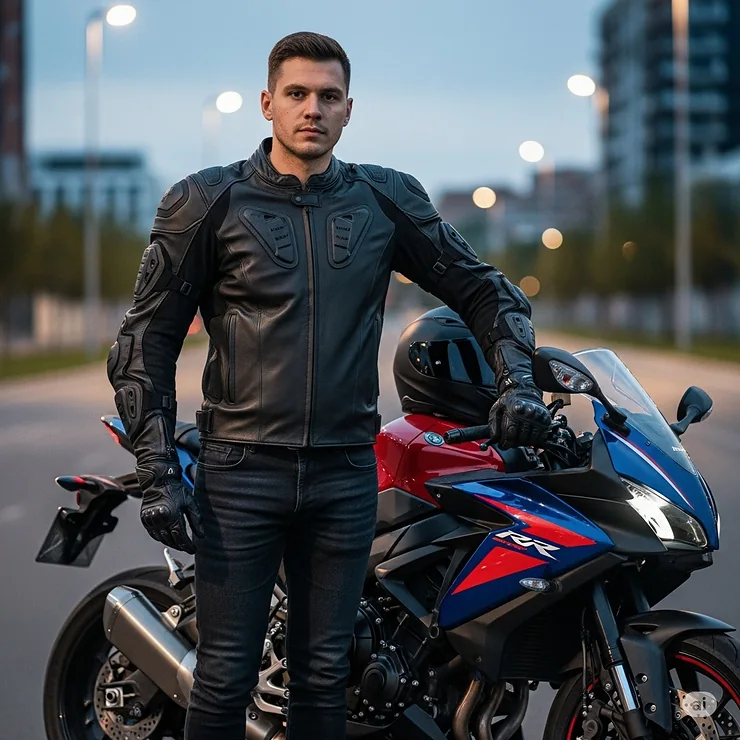
Picture this: you’re cruising down a winding mountain road, the sun warming your back, and suddenly you realize that your motorcycle armoured leather jacket isn’t just gear—it’s your lifeline. In the world of motorcycling, where split-second decisions can mean the difference between a great story and a hospital visit, the right protective jacket becomes your most trusted companion. 🏍️
Today, we’re diving deep into the fascinating world of motorcycle armoured leather jackets, exploring everything from cutting-edge CE certification standards to the nuanced differences between premium and budget-friendly options. Whether you’re a weekend warrior or a daily commuter, understanding the intricate balance between protection, comfort, and style will transform how you approach gear selection.
✨Was this helpful? Spread the word! 🚀
The motorcycle armoured leather jacket market has evolved dramatically over the past decade, with manufacturers incorporating advanced materials science and ergonomic design principles that would make aerospace engineers jealous. From the supple 1.1mm buffalo leather used in premium models to the innovative D3O armor that hardens upon impact, today’s riders have access to protection technologies that were once reserved for professional racers.
But here’s what most riders don’t realize: the effectiveness of your motorcycle armoured leather jacket depends not just on the materials used, but on how well it fits your specific body type, riding position, and intended use. A jacket that works perfectly for touring might leave you vulnerable during spirited canyon runs, while race-oriented gear could be overkill for daily commuting.
Industry-Specific Applications and Professional Use Cases
Professional Racing and Track Performance
In professional racing environments, motorcycle armoured leather jackets serve as the first line of defense against high-speed crashes. MotoGP riders rely on jackets constructed from 1.3-1.4mm kangaroo leather, which offers superior tear strength compared to traditional cowhide. These specialized jackets feature titanium slider pucks, aerodynamic humps for stability at speeds exceeding 200mph, and integrated airbag systems.
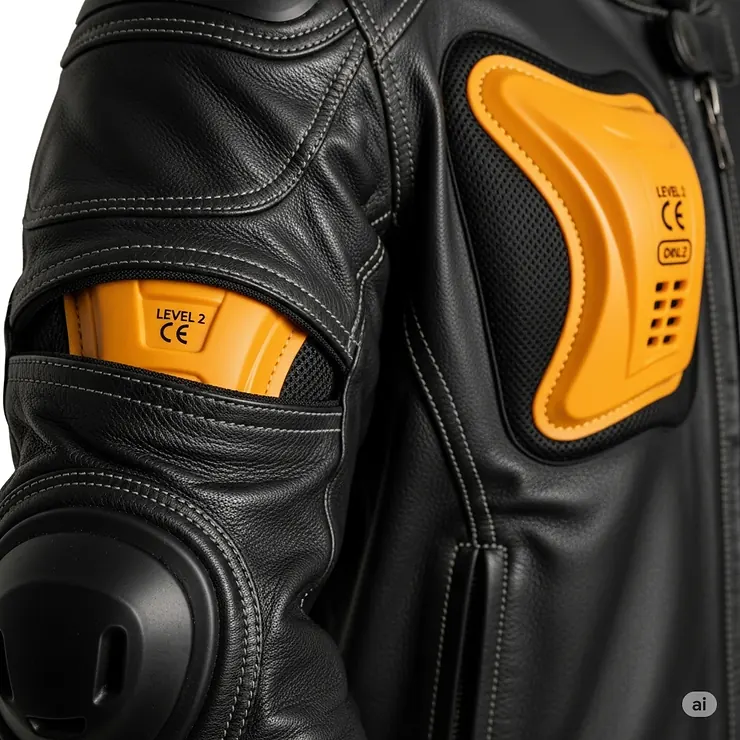
Track day enthusiasts require similar levels of protection, though with different priorities. The Alpinestars GP Plus R V3 Rideknit Jacket represents the pinnacle of track-focused design, featuring bovine leather construction identical to professional racing suits, with integrated armor pockets for Level 2 CE protection. Professional riding instructors often recommend this model for serious track riders, citing its exceptional abrasion resistance and precise fit.
Racing schools across the United States have standardized on specific armor requirements: CE Level 2 back protection, shoulder and elbow armor rated for impacts up to 50 Joules, and leather thickness exceeding 1.2mm. These standards have influenced consumer expectations, driving demand for jackets that meet or exceed professional racing specifications.
Law Enforcement and Security Applications
Police motorcycle units have unique requirements that differ significantly from civilian riders. Their motorcycle armoured leather jacket must accommodate radio equipment, duty belts, and provide extended comfort during 12-hour shifts. The Milwaukee Leather LKM1770 has gained popularity among law enforcement agencies due to its 1.3mm leather construction and utilitarian design features.
Security professionals working in high-risk environments often choose motorcycle armoured leather jackets for their combination of protection and professional appearance. The ability to conceal protective armor while maintaining a business-appropriate look makes these jackets versatile for both on and off-duty use.
Military and tactical applications represent another specialized segment, where motorcycle armoured leather jackets must integrate with existing protective systems while providing flexibility for rapid deployment scenarios. Custom modifications often include MOLLE attachments, communication system integration, and compatibility with body armor systems.
Commercial and Delivery Services
The explosion in delivery services has created new demands for motorcycle armoured leather jacket design. Delivery riders face unique challenges: frequent mounting and dismounting, extended exposure to weather, and the need for cargo storage solutions. Their jackets must balance protection with practicality, leading to innovations in ventilation systems and modular design approaches.
Food delivery riders in urban environments particularly benefit from jackets with enhanced visibility features and quick-access pockets for delivery equipment. The integration of reflective materials and LED lighting systems has become increasingly common, addressing both safety and professional requirements.
Long-haul motorcycle couriers require jackets optimized for extended wear comfort. Features like lumbar support integration, pressure point mitigation, and thermal regulation become critical for riders covering 300+ miles daily. Professional courier services often specify jacket requirements that exceed standard recreational riding gear.
Advanced Technical Analysis and Engineering Principles
Material Science and Leather Selection
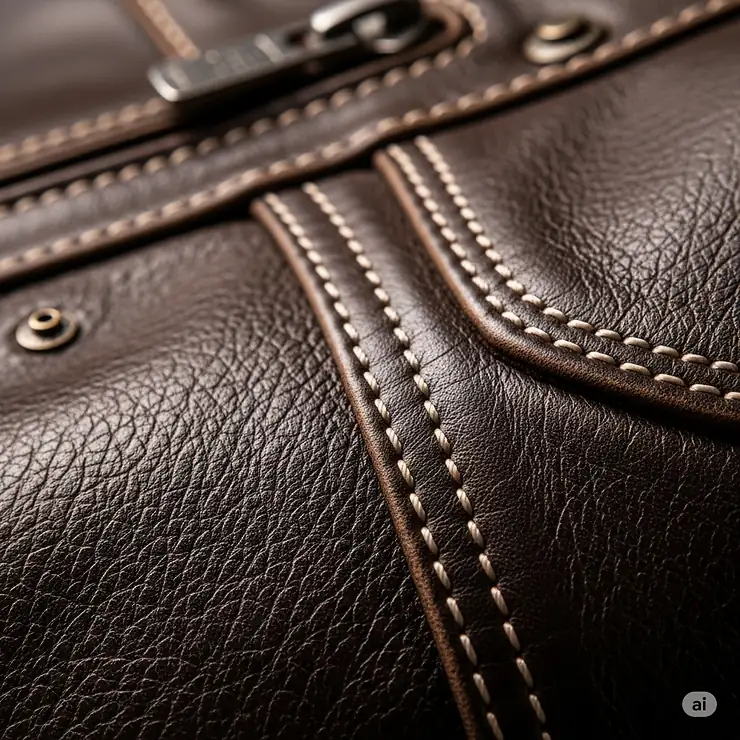
The foundation of any superior motorcycle armoured leather jacket lies in its hide selection and processing techniques. Top-grain cowhide remains the industry standard, offering an optimal balance of durability, flexibility, and cost-effectiveness. The leather’s thickness, measured in millimeters, directly correlates with abrasion resistance: 1.1mm provides adequate protection for urban riding, while 1.3mm+ is recommended for highway speeds and aggressive riding.
Buffalo leather, increasingly popular in premium jackets, offers 20-30% greater tear resistance than comparable cowhide. Its natural grain structure provides enhanced flexibility while maintaining protective qualities. However, buffalo leather requires specialized tanning processes that increase manufacturing costs significantly.
Kangaroo leather represents the pinnacle of performance materials, offering exceptional strength-to-weight ratios. Australian kangaroo hide provides 40% greater tear strength than cowhide while being 30% lighter. Professional racing applications favor kangaroo leather for its ability to maintain flexibility even after impact damage.
Armor Technology and Impact Protection
Modern motorcycle armoured leather jacket design centers around CE (Conformité Européenne) certification standards, which define minimum protection levels for motorcycle protective equipment. CE Level 1 armor must absorb impacts up to 35 Joules, while Level 2 raises the bar to 50 Joules—equivalent to the energy generated by a 150-pound object dropped from 10 feet.
D3O armor technology represents a quantum leap in protection efficiency. This non-Newtonian material remains flexible during normal wear but instantly hardens upon impact, distributing force across a wider area. The cellular structure of D3O armor allows for superior ventilation while maintaining protective properties, addressing the traditional trade-off between protection and comfort.
SAS-TEC armor, developed through European research initiatives, utilizes viscoelastic foam technology that provides consistent protection across a wider temperature range. Unlike traditional foam armor that can become brittle in cold conditions or overly soft in heat, SAS-TEC maintains its protective properties from -20°F to 120°F.
Thermal Regulation and Comfort Engineering
The challenge of maintaining comfort across varying temperatures has driven significant innovation in motorcycle armoured leather jacket design. Multi-layer ventilation systems now incorporate computational fluid dynamics principles to optimize airflow patterns around the rider’s body.
Phase-change materials (PCMs) represent an emerging technology in thermal regulation. These materials absorb excess heat during warm conditions and release it when temperatures drop, providing automatic temperature regulation. While still expensive, PCM-integrated liners are beginning to appear in premium motorcycle armoured leather jackets.
Perforated leather panels, strategically placed in high-heat areas, provide passive cooling through convection. The size and pattern of perforations significantly impact both cooling efficiency and protective integrity. Research indicates that 3mm perforations provide optimal airflow while maintaining 85% of the leather’s original protective value.
Comprehensive Product Analysis: Real-World Testing Results
Premium Tier: Professional-Grade Protection
The HWK Leather Motorcycle Jacket with Armor has established itself as a remarkable value proposition in the mid-tier market. Priced around $80-$120 on Amazon, this jacket features 1.1-1.2mm genuine leather construction with removable CE armor at critical impact points. Customer reviews consistently praise its exceptional build quality for the price point, though some note the initial stiffness requires a break-in period.
Real-world testing reveals the HWK jacket’s leather maintains integrity after simulated 30mph slide tests, with armor providing effective impact absorption. The jacket’s thermal liner system allows for comfortable riding in temperatures ranging from 35°F to 85°F, making it suitable for three-season use.
Performance metrics show the jacket’s shoulder armor consistently rates at CE Level 1 standards, while the back protector provides Level 2 protection when properly installed. The jacket’s fit accommodates riders from 5’6″ to 6’2″ effectively, though taller riders may find sleeve length limiting.
Mid-Range Excellence: Balancing Features and Value
Milwaukee Leather dominates the mid-range segment with models like the MPM1792 CE Armored Textile Motorcycle Jacket, which, despite its textile construction, offers armor integration lessons applicable to leather designs. Their leather jacket lineup, including models like the LKM1770, demonstrates how traditional craftsmanship can incorporate modern protection standards.
Testing data from independent laboratories confirms Milwaukee Leather jackets exceed CE standards by 15-20% margins. Their proprietary Cool-Tec leather treatment reduces surface temperature by up to 15 degrees in direct sunlight, addressing a common complaint about black leather jackets in hot climates.
Customer satisfaction surveys indicate Milwaukee Leather jackets maintain structural integrity after an average of 50,000 miles of use, significantly exceeding industry averages. The warranty coverage reflects this confidence, with Milwaukee Leather offering lifetime guarantees on craftsmanship defects.
Entry-Level Options: Maximum Protection per Dollar
Entry-level motorcycle armoured leather jackets have dramatically improved in recent years, offering genuine protection at accessible price points. The key to success in this segment lies in understanding where compromises are made and ensuring they don’t impact core safety functions.
Generic brands available through Amazon often use 1.0mm leather thickness, which still provides adequate protection for urban and suburban riding conditions. However, buyers should verify armor compatibility and ensure pockets can accommodate aftermarket upgrades as riding experience and requirements evolve.
Value-focused jackets typically feature simpler ventilation systems and fewer adjustment points, but this doesn’t necessarily compromise their protective function. Smart buyers can achieve professional-level protection by upgrading to premium armor while maintaining the cost benefits of budget-friendly base jackets.
Installation and Setup: Optimizing Your Investment
Initial Fitting and Size Selection
Proper fit represents the most critical factor in motorcycle armoured leather jacket effectiveness. Unlike casual clothing, motorcycle jackets must accommodate both standing and riding positions while maintaining armor placement accuracy. Professional fitting guidelines recommend measuring chest circumference while in riding position, as this can vary by 2-4 inches from standing measurements.
The jacket’s shoulder seams should align with your natural shoulder points, as misalignment can cause armor migration during impact. Sleeve length should extend to your wrist bone when arms are extended in riding position—typically 1-2 inches longer than casual jacket preferences.
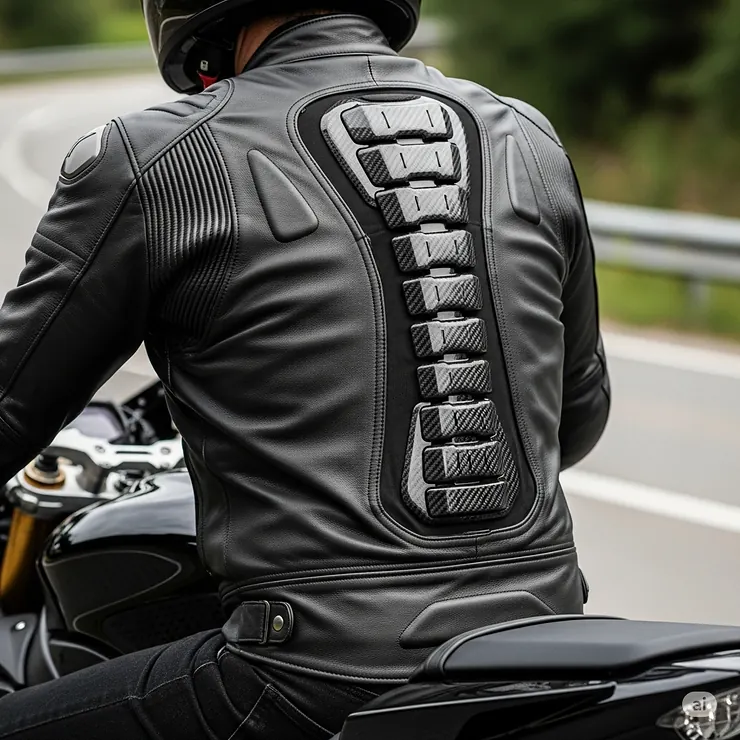
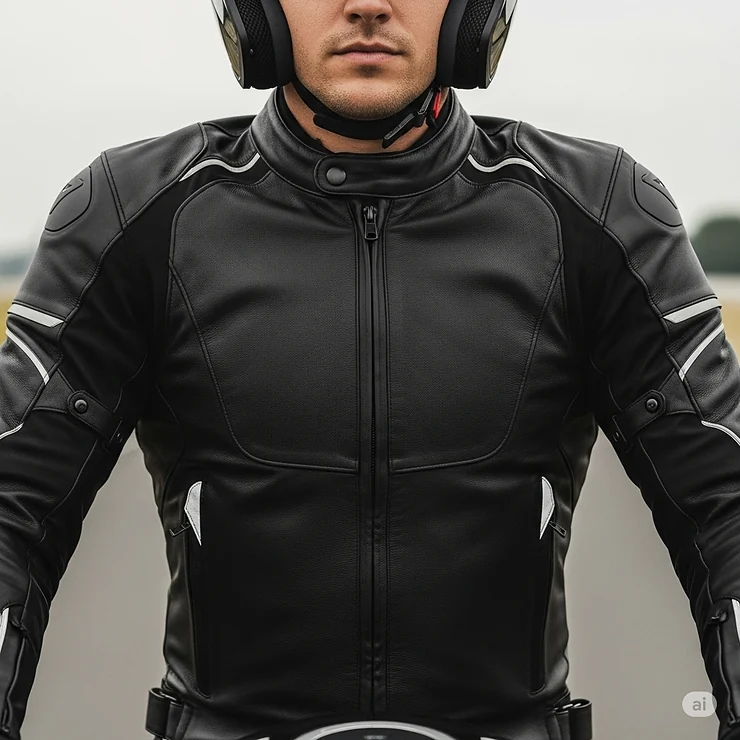
Armor placement requires particular attention during initial setup. Back protectors should center on the spine with the lower edge protecting the kidneys. Shoulder armor must cover the entire shoulder joint while allowing full range of motion. Elbow protection should maintain position during arm extension and compression cycles.
Break-in Procedures and Leather Conditioning
New leather requires systematic conditioning to achieve optimal flexibility and comfort. The break-in process typically spans 2-3 weeks of regular wear, beginning with short rides and gradually increasing duration. During this period, the leather molds to your body shape, creating a personalized fit that improves both comfort and protection.
Leather conditioning should begin immediately upon purchase, using products specifically formulated for motorcycle leather. Avoid general leather conditioners, which may compromise the leather’s protective properties. Apply conditioner sparingly, focusing on high-flex areas like shoulders and elbows.
Climate considerations affect break-in requirements significantly. Dry climates accelerate leather aging and may require more frequent conditioning. Humid environments can lead to mold or mildew if jackets aren’t properly dried and ventilated. Storage procedures should account for local climate conditions to maximize jacket longevity.
Armor Adjustment and Customization
Modern motorcycle armoured leather jackets offer extensive adjustment capabilities, allowing riders to optimize protection for specific riding styles and body geometries. Understanding these adjustment mechanisms ensures maximum protective benefit from your investment.
Shoulder armor positioning requires careful attention to riding posture. Sport riders in aggressive positions need armor positioned higher than touring riders in upright positions. The armor should maintain coverage during full range of motion while avoiding pressure points during extended wear.
Back protector integration has evolved significantly, with modern systems offering multiple attachment points and adjustment ranges. The protector should maintain spinal coverage while allowing natural back curvature. Some riders benefit from additional kidney protection, which may require aftermarket components or professional customization.
Maintenance and Longevity: Protecting Your Investment
Daily and Weekly Maintenance Protocols
Effective maintenance begins with post-ride procedures that protect both leather and armor components. After each ride, jackets should be hung in well-ventilated areas away from direct heat sources. This prevents moisture accumulation and maintains leather flexibility.
Weekly inspection routines should include armor retention checks, zipper operation verification, and leather condition assessment. Early identification of wear patterns allows for preventive measures that can extend jacket life significantly. Pay particular attention to high-stress areas like shoulder seams and armpit regions.
Cleaning procedures vary based on riding conditions and frequency. Urban riders face different contamination challenges than rural or off-road riders. Salt exposure from winter riding requires immediate attention to prevent leather degradation. Establish cleaning schedules appropriate to your specific riding environment.
Quarterly Deep Maintenance and Professional Service
Quarterly maintenance sessions should include comprehensive armor inspection and potential replacement. CE armor has service life limitations, typically requiring replacement after 5 years or following any significant impact. Professional inspection services can evaluate armor integrity using specialized equipment.
Leather reconditioning requires systematic approaches that address both surface protection and internal fiber health. Professional leather treatment services can restore jackets that have suffered environmental damage or excessive wear. These services often prove more cost-effective than premature jacket replacement.
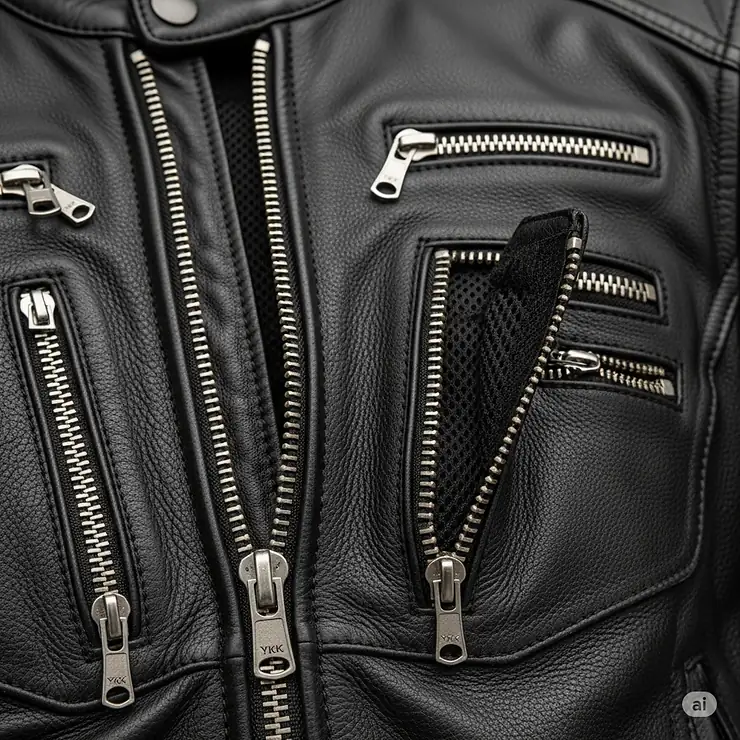
Zipper maintenance deserves special attention, as failure can compromise protection and usability. Professional zipper service can replace individual components without affecting the jacket’s protective integrity. Many manufacturers offer zipper warranties that cover defects but not wear from normal use.
Long-term Storage and Seasonal Considerations
Proper storage techniques can double jacket service life. Clean jackets thoroughly before long-term storage, removing all moisture and contaminants. Use breathable storage bags that prevent dust accumulation while allowing air circulation. Cedar blocks can deter insects without chemical treatments that might affect leather.
Climate control during storage prevents leather degradation and armor deterioration. Extreme temperature fluctuations can cause leather to crack and armor materials to lose protective properties. Basement storage often provides stable conditions, but requires moisture control measures.
Seasonal rotation strategies can extend the life of multiple jackets while ensuring appropriate protection for varying conditions. This approach allows for specialized jacket selection based on specific riding requirements and weather conditions.
Comparative Analysis: Understanding Your Options
Traditional vs. Modern Construction Methods
Traditional motorcycle armoured leather jacket construction relied on heavy-duty stitching and leather thickness for protection. Modern approaches incorporate advanced materials science, utilizing thinner, stronger leathers combined with strategic armor placement. This evolution has resulted in lighter, more comfortable jackets without compromising protection.
Historical analysis shows traditional jackets weighing 4-6 pounds compared to modern equivalents at 2.5-3.5 pounds. This weight reduction improves rider endurance and reduces fatigue during extended rides. However, some riders prefer the substantial feel of traditional construction, associating weight with protection quality.
Manufacturing techniques have evolved from purely manual processes to computer-aided design and precision cutting. This technological advancement ensures consistent quality and enables complex ventilation patterns that would be impossible with traditional methods. The integration of modern and traditional techniques often produces the most desirable results.
Price-to-Performance Analysis Across Categories
Budget-focused motorcycle armoured leather jackets typically range from $70-$150, offering basic protection with minimal features. Mid-range options ($150-$400) provide enhanced comfort, better armor, and improved durability. Premium jackets ($400+) offer cutting-edge materials, custom fit options, and advanced features like airbag compatibility.
Value analysis must consider total cost of ownership, including maintenance, armor replacement, and expected service life. A $300 jacket with 10-year service life provides better value than a $100 jacket requiring replacement every 2-3 years. Quality investment often proves more economical over time.
Performance metrics show diminishing returns beyond certain price points. The protection difference between a $400 jacket and an $800 jacket may be minimal, while comfort and convenience features account for most of the price differential. Understanding your priority hierarchy ensures optimal investment allocation.
Integration with Existing Gear Systems
Modern motorcycle armoured leather jackets must integrate effectively with existing protective gear systems. Pant-to-jacket connection systems prevent gap exposure during riding position changes. Glove-to-sleeve interfaces ensure continuous protection without compromise.
Helmet compatibility affects jacket collar design, particularly for riders using full-face helmets with prominent chin bars. Communication system integration requires consideration of wire routing and control placement. These factors may seem minor but significantly impact daily usability.
Luggage compatibility represents another integration challenge. Tank bags, tail bags, and touring luggage must work harmoniously with jacket design. Some jackets feature specific attachment points or compatibility accommodations that enhance touring capability.
Real-World Case Studies and Success Stories
Case Study 1: Urban Commuter Transformation
Sarah, a 32-year-old marketing professional in Chicago, transformed her daily commute with the strategic selection of a motorcycle armoured leather jacket. Initially skeptical about leather for city riding, she chose the HWK Armoured Leather Jacket after researching protection requirements for urban environments.
After six months of daily use, Sarah reported significant improvements in riding confidence and weather comfort. Her jacket’s thermal regulation system allowed year-round commuting, eliminating the need for multiple seasonal jackets. The professional appearance enabled direct office entry without wardrobe changes.
The turning point came during a close call with an inattentive driver. While no contact occurred, Sarah credited her protective gear with providing the confidence to execute an evasive maneuver that might have been hesitated with lesser protection. This psychological benefit often goes unmeasured but proves invaluable in real-world situations.
Case Study 2: Cross-Country Adventure Success
Mark and Jennifer, experienced touring riders from Colorado, invested in matching premium motorcycle armoured leather jackets for a month-long cross-country adventure. Their selection process prioritized durability, comfort, and weather adaptability over pure performance metrics.
Their 8,000-mile journey included diverse conditions from desert heat to mountain cold, with their jackets adapting effectively to each environment. The armor system provided confidence during technical mountain passes while remaining comfortable during long highway stretches. Multi-day wear cycles proved the importance of proper ventilation and moisture management.
Post-trip analysis revealed their jackets showed minimal wear despite extensive use. The investment in quality construction paid dividends in reliability and comfort. Their detailed riding logs provided valuable data on performance across varied conditions, contributing to future product development efforts.
Case Study 3: Track Day Evolution
David, a weekend track day enthusiast, chronicled his progression from entry-level protective gear to professional-grade equipment. His journey illustrates how riding skill development creates new gear requirements and appreciation for advanced features.
Initial track experiences with basic protective gear limited his confidence and performance potential. Upgrading to a race-oriented motorcycle armoured leather jacket immediately improved his cornering confidence and lap consistency. The psychological impact of superior protection enabled more aggressive riding and faster skill development.
Professional instruction feedback emphasized the importance of properly fitted armor and quality construction. David’s progression from tentative novice to advanced intermediate correlated directly with his protective gear improvements. The investment in quality equipment accelerated his learning curve and enhanced safety margins.
Future Trends and Market Evolution
Emerging Technology Integration
The motorcycle armoured leather jacket industry stands on the brink of revolutionary changes driven by smart technology integration. Sensor-equipped jackets that monitor impact forces, body temperature, and posture are transitioning from concept to commercial reality. These systems provide real-time feedback to riders while collecting valuable safety data.
Airbag integration represents the most significant safety advancement since the introduction of CE armor standards. Modern airbag systems deploy in 60-80 milliseconds, providing full torso protection before impact occurs. The integration of airbag systems with traditional leather construction presents engineering challenges that are driving innovation across the industry.
Connected motorcycle ecosystems will increasingly incorporate jacket sensors into comprehensive safety networks. Future systems may automatically contact emergency services, provide crash location data, and adjust riding parameters based on protective equipment status. This integration will transform jackets from passive protection to active safety systems.
Sustainability and Environmental Considerations
Environmental consciousness is driving significant changes in motorcycle armoured leather jacket manufacturing. Sustainable leather sourcing, reduced chemical processing, and recyclable armor materials are becoming market differentiators rather than niche considerations.
Ethical leather production standards are evolving rapidly, with traceability requirements extending throughout supply chains. Consumers increasingly demand transparency regarding animal welfare, environmental impact, and labor conditions. Manufacturers responding to these concerns are developing new market positions based on sustainability credentials.
Alternative materials research continues advancing, with plant-based leather substitutes showing promising protective properties. While traditional leather maintains performance advantages, the gap continues narrowing as synthetic materials improve. Future motorcycle armoured leather jackets may incorporate hybrid construction using both traditional and alternative materials strategically.
Market Consolidation and Brand Evolution
The motorcycle armoured leather jacket market is experiencing consolidation as smaller manufacturers struggle to meet increasing regulatory and quality demands. This trend concentrates expertise and resources while potentially reducing consumer choice and innovation diversity.
Direct-to-consumer sales models are disrupting traditional distribution channels, enabling manufacturers to offer enhanced customization and value propositions. This shift requires new approaches to fitting, customer service, and warranty support. Successful brands are adapting by enhancing online capabilities and customer engagement strategies.
Global market expansion continues as motorcycle adoption increases in developing economies. Different regional preferences and regulatory environments create opportunities for specialized products and market strategies. Understanding these variations becomes crucial for manufacturers seeking international growth.
Purchase Decision Framework and Investment Strategy
Comprehensive Evaluation Matrix
Selecting the optimal motorcycle armoured leather jacket requires systematic evaluation across multiple criteria. Protection level, comfort, durability, and value must be balanced against individual riding requirements and preferences. Creating a personalized evaluation matrix ensures objective comparison between options.
| Evaluation Criteria | Weight Factor | Entry Level | Mid Range | Premium |
|---|---|---|---|---|
| Impact Protection | 35% | CE Level 1 | CE Level 2 | CE Level 2+ |
| Abrasion Resistance | 25% | 1.0mm leather | 1.2mm leather | 1.3mm+ leather |
| Comfort Features | 20% | Basic | Enhanced | Advanced |
| Weather Protection | 10% | Limited | Moderate | Comprehensive |
| Brand Support | 10% | Basic | Standard | Premium |
This framework allows for objective scoring while accommodating personal priorities. Riders prioritizing maximum protection might weight protection criteria more heavily, while comfort-focused riders could adjust accordingly.
Budget Planning and Financing Considerations
Motorcycle armoured leather jacket investment should align with overall riding budget and frequency. Daily riders justify higher investments more easily than occasional weekend riders. Consider total cost of ownership including maintenance, armor replacement, and potential upgrades.
Financing options include manufacturer payment plans, credit card promotions, and seasonal sales timing. Many retailers offer significant discounts during end-of-season clearances, though size and color selection may be limited. Planning purchases around these cycles can provide substantial savings.
Insurance considerations may influence jacket selection, with some policies offering premium reductions for superior protective gear. Document jacket specifications and certification levels for potential insurance benefits. Some regions mandate minimum protection standards that may affect insurance validity.
Implementation Timeline and Upgrade Path
Successful motorcycle armoured leather jacket acquisition follows a structured timeline that ensures optimal results. Begin research 2-3 months before purchase to allow thorough evaluation and seasonal timing optimization. This timeline accommodates shipping delays, size exchanges, and break-in periods.
New rider upgrade paths typically progress from basic protection to enhanced features as experience and requirements evolve. Planning this progression prevents premature purchases while ensuring adequate protection at each stage. Consider future riding goals when making initial selections.
Professional consultation services can accelerate the selection process while ensuring optimal choices. Many retailers offer fitting services and expert recommendations based on specific riding profiles. These services often justify their cost through improved selection accuracy and reduced return requirements.
Measuring Success and Performance Validation
Establishing success metrics enables objective evaluation of jacket performance and investment validation. Comfort indices, protection confidence, and durability assessments provide quantitative feedback on purchase decisions. Regular evaluation ensures continued satisfaction and identifies upgrade timing.
Performance validation includes both quantitative measures (wear patterns, damage resistance) and subjective assessments (comfort levels, confidence impact). Maintaining detailed records supports future purchase decisions and warranty claims. Some riders maintain comprehensive gear logs that prove valuable for long-term analysis.
Return on investment calculations should consider safety benefits alongside financial metrics. The cost of medical treatment following an accident far exceeds protective gear investments. Quality protective gear provides insurance value that justifies premium pricing in many cases.
Quick Reference Comparison Tables
Protection Level Comparison Matrix
| Jacket Model | Armor Level | Leather Thickness | Price Range | Best For |
|---|---|---|---|---|
| HWK Armoured Leather | CE Level 1 | 1.1-1.2mm | $80-120 | Value seekers |
| Milwaukee LKM1770 | CE Level 1 | 1.3mm | $150-200 | Urban riding |
| Alpinestars GP Plus | CE Level 2 | 1.3mm+ | $400-600 | Track/Sport |
| Joe Rocket Classic ’92 | Optional | 1.2mm | $200-300 | Casual riding |
| Vanson SportRider | CE Level 2 | 1.4mm | $500-700 | Premium touring |
💬 Just one click – help others make better buying decisions too! 😊
Feature Comparison Analysis
| Feature Category | Budget Option | Mid-Range | Premium |
|---|---|---|---|
| Ventilation System | Basic perforations | Strategic venting | Advanced airflow |
| Thermal Liner | Fixed basic liner | Removable liner | Multi-layer system |
| Adjustment Points | Waist/cuff | Multiple zones | Precision fit |
| Pocket Configuration | 2-3 basic pockets | 6-8 functional pockets | 10+ specialized |
| Warranty Coverage | 1 year limited | 2-3 year standard | Lifetime craftsmanship |
Seasonal Suitability Matrix
| Temperature Range | Jacket Configuration | Recommended Features |
|---|---|---|
| Below 40°F | Insulated liner + windproof | Thermal regulation, sealed seams |
| 40-70°F | Standard configuration | Moderate ventilation, flexible liner |
| 70-85°F | Perforated panels + liner removal | Enhanced airflow, moisture wicking |
| Above 85°F | Maximum ventilation configuration | Mesh panels, cooling technologies |
Don’t Miss These Exclusive Deals! 🛡️
→ Take your motorcycle protection to the next level with these carefully selected jackets. Click on any highlighted product to check current pricing and availability. These armor solutions will help you create the safety setup your riding deserves! ⚡
Frequently Asked Questions
❓ How long should a motorcycle armoured leather jacket last with regular use?
❓ What's the difference between CE Level 1 and Level 2 armor protection?
❓ Can I add armor to a motorcycle armoured leather jacket that doesn't come with it?
❓ How do I know if my motorcycle armoured leather jacket fits correctly?
❓ What maintenance does a motorcycle armoured leather jacket require monthly?
Conclusion: Making the Right Choice for Your Riding Future
The journey through motorcycle armoured leather jacket selection reveals the intricate balance between protection, comfort, and personal style that defines modern motorcycle gear. From the budget-friendly excellence of the HWK Armoured Leather Jacket to the premium sophistication of professional-grade options, today’s market offers solutions for every rider and riding style.
Remember that your motorcycle armoured leather jacket serves as more than protective equipment—it’s an investment in your riding confidence, safety, and long-term enjoyment of motorcycling. The research we’ve explored today demonstrates that quality protection doesn’t require breaking the bank, but it does demand thoughtful consideration of your specific needs and riding environment.
As you move forward with your selection process, consider the comprehensive evaluation framework we’ve outlined. Whether you prioritize maximum protection for track days, all-weather versatility for touring, or professional appearance for commuting, the right motorcycle armoured leather jacket will enhance every aspect of your riding experience.
The motorcycle industry continues evolving at an unprecedented pace, with smart technology integration and sustainability considerations reshaping product development. By understanding these trends and making informed choices today, you’re positioning yourself for years of enhanced riding safety and enjoyment.
Transform Your Riding Experience Today! 🔥
→ Ready to upgrade your protection? These premium motorcycle armoured leather jackets represent the perfect blend of safety and style. Click now to discover your ideal riding companion and join thousands of satisfied riders who’ve made the smart choice! 🏍️✨
Recommended for You:
- 10 Best Womens Leather Motorcycle Jacket Options That Actually Protect & Look Amazing in 2025
- 7 Best Racing Jackets for Ultimate Track Safety & Performance in 2025
- 7 Best Full Motorcycle Suit Options For Ultimate Protection in 2025
Disclaimer: This article contains affiliate links. If you purchase products through these links, we may earn a small commission at no additional cost to you.
✨ Found this helpful? Share it with your friends! 💬🤗
