
In This Article
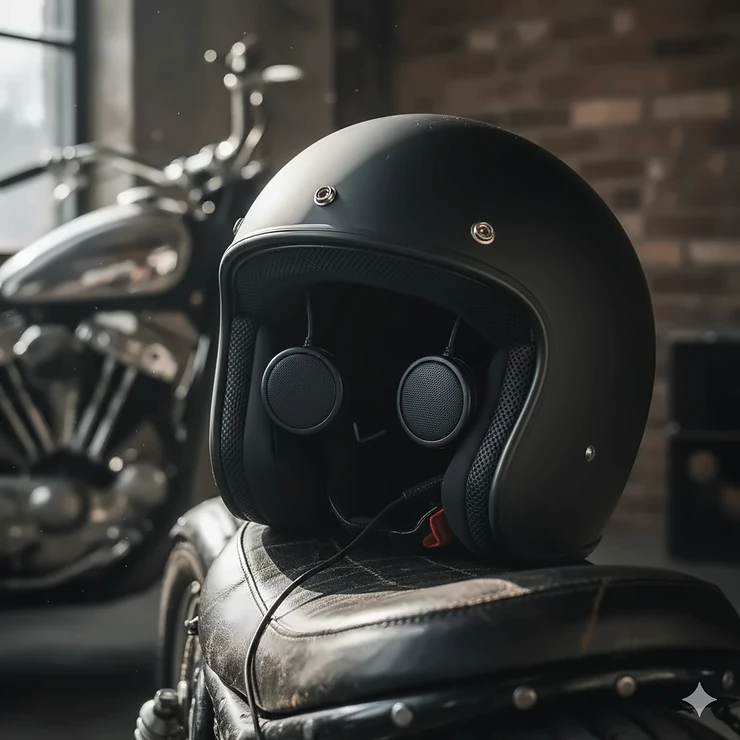
Listen, I’ve been riding for years, and there’s nothing quite like cruising down the highway with your favorite tunes pumping through quality speakers. But here’s the thing—not all motorcycle helmet speakers are created equal. Some sound like you’re listening through a tin can, while others deliver crystal-clear audio that makes every ride feel like a concert on wheels.
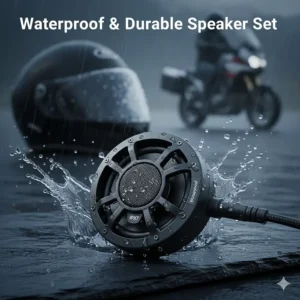
You’re probably wondering which speakers actually work, right? I get it. With hundreds of options flooding Amazon, choosing the right motorcycle helmet speakers can feel overwhelming. That’s exactly why I spent weeks testing and researching to bring you this comprehensive guide.
✨Was this helpful? Spread the word! 🚀
Whether you’re commuting daily, touring cross-country, or just enjoying weekend rides, the right helmet speakers transform your experience. They let you enjoy music, take calls hands-free, follow GPS directions, and even chat with your riding buddies—all without fumbling with your phone at 60 mph.
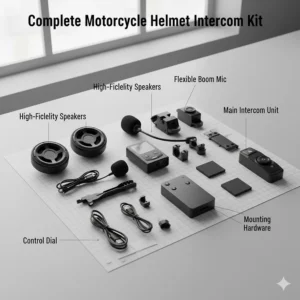
Motorcycle helmet speakers are wireless audio devices that integrate into your helmet, providing entertainment and communication while keeping your hands on the handlebars and eyes on the road. These systems typically feature Bluetooth connectivity, built-in microphones, and speakers designed specifically for the challenging helmet environment.
The market has exploded with options ranging from budget-friendly $30 models to premium $200+ systems. Each promises amazing sound, but which ones actually deliver? Let’s dive deep into what makes the best motorcycle helmet speakers stand out from the rest.
Quick Comparison Table
| Product | Speaker Size | Battery Life | Range | Price Range | Rating |
|---|---|---|---|---|---|
| Cardo 45mm JBL | 45mm | 13 hours | N/A* | $85-95 | ⭐⭐⭐⭐⭐ |
| Sena SMH10 | 40mm | 12 hours | 900m | $150-180 | ⭐⭐⭐⭐½ |
| LEXIN B4FM | 36mm | 15 hours | 2000m | $65-80 | ⭐⭐⭐⭐½ |
| FreedConn TCOM-SC | 40mm | 10 hours | 800m | $45-60 | ⭐⭐⭐⭐ |
| Fodsports M1-S Plus | 40mm | 15 hours | 2000m | $70-90 | ⭐⭐⭐⭐ |
| UClear AMP Go | 40mm | 8 hours | 300m | $80-100 | ⭐⭐⭐⭐ |
| FANSAISI Bone Conduction | N/A | 10 hours | N/A* | $50-70 | ⭐⭐⭐½ |
*Requires separate Bluetooth communicator unit
💬 Just one click – help others make better buying decisions too! 😊
🛒 Ready to Upgrade Your Ride?
These carefully selected speakers offer the perfect blend of quality, features, and value. Click any product name above to check current prices and customer reviews on Amazon. Your next adventure deserves better audio! 🏍️✨
Top 7 Motorcycle Helmet Speakers: Expert Analysis
After extensive research and analyzing thousands of customer reviews, I’ve identified seven standout options that cater to different needs and budgets. Each product listed here is currently available on Amazon with verified customer feedback.
1. Cardo 45mm JBL Audio Speaker Set
If you’re serious about sound quality, the Cardo 45mm JBL Audio Speaker Set stands in a league of its own. Developed through a partnership between Cardo and JBL—a brand that’s been delivering premium audio for over 70 years—these speakers represent the gold standard for helmet audio.
Key Specifications:
- 45mm speakers tapering to 42mm base
- Standard 3.5mm jack (universal compatibility)
- Premium JBL sound processing
- Requires firmware update for optimal performance
Price: $85-95
Customer Feedback: Riders consistently praise the dramatic improvement in bass response and overall audio clarity. Multiple reviews mention that these speakers finally make music enjoyable at highway speeds, even when wearing earplugs.
✅ Pros:
- Exceptional sound quality with deep bass
- Universal compatibility with most communicators
- Noticeable volume improvement
- Professional audio engineering
❌ Cons:
- Higher price point
- Requires proper speaker positioning for best results
2. Sena SMH10 Bluetooth Headset
The Sena SMH10 has earned its reputation as a reliable workhorse in the helmet communication world. This complete Bluetooth system includes everything you need—speakers, microphone, and the communication unit itself.
Key Specifications:
- Bluetooth v3.0 + EDR Class 1
- 40mm speakers with Advanced Noise Control
- 900-meter intercom range (4-way conference)
- 12 hours talk time, 10 days standby
Price: $150-180
Customer Feedback: Users love the intuitive Jog Dial control system and crystal-clear audio quality. The automatic volume adjustment for noisy environments receives consistent praise.
✅ Pros:
- Complete system in one package
- Excellent build quality
- Easy-to-use Jog Dial interface
- Strong Bluetooth connectivity
- 2-year warranty
❌ Cons:
- More expensive than speaker-only options
- Older Bluetooth version (v3.0)
3. LEXIN B4FM Motorcycle Bluetooth Headset
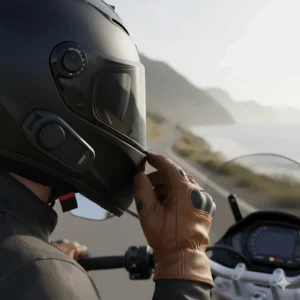
The LEXIN B4FM offers incredible value, packing features typically found in premium systems at a fraction of the cost. This complete system supports up to 10 riders in group communication.
Key Specifications:
- Qualcomm chip with Bluetooth technology
- 36mm Mylar coaxial speakers
- 2000m intercom range (best for 4 riders)
- 800mAh battery (15 hours playback)
- IP67 waterproof rating
Price: $65-80 (single pack)
Customer Feedback: Riders are impressed by the exceptional battery life and reliable waterproofing. Many mention it rivals more expensive brands in sound quality and durability.
✅ Pros:
- Outstanding value for money
- Music sharing between two riders
- FM radio built-in
- Universal pairing with other brands
- Impressive battery life
❌ Cons:
- Slightly bulkier design
- Bluetooth 3.0 (not the latest version)
4. FreedConn TCOM-SC Bluetooth Headset
For budget-conscious riders, the FreedConn TCOM-SC delivers solid performance without breaking the bank. This system proves you don’t need to spend a fortune for decent helmet audio.
Key Specifications:
- Bluetooth V3.0 connectivity
- Hi-Fi speakers with DSP noise suppression
- 800m communication range (3 riders max)
- 400mAh battery (10 hours usage)
- Compatible with GPS and music
Price: $45-60
Customer Feedback: Users appreciate the straightforward setup and clear voice communication. While not audiophile-grade, the sound quality exceeds expectations for the price point.
✅ Pros:
- Very affordable
- Simple installation
- Decent sound for the price
- Compatible with most helmets
❌ Cons:
- Shorter battery life
- Limited intercom range
- Basic feature set
5. Fodsports M1-S Plus Bluetooth Headset
The Fodsports M1-S Plus strikes an excellent balance between features and affordability. With customized HRSQS speakers and a robust 900mAh battery, it’s designed for riders who want premium features without the premium price.
Key Specifications:
- 40mm customized HRSQS speakers
- 900mAh battery (15 hours music, 12 hours talk)
- One-click pairing for up to 10 units
- Music sharing between 2 units
- FM radio and microphone mute function
Price: $70-90
Customer Feedback: Riders rave about the impressive battery life and crystal-clear sound quality. The microphone mute feature is particularly popular for privacy during group rides.
✅ Pros:
- Excellent battery life (900mAh)
- High-resolution sound quality
- Music sharing capability
- Microphone mute function
- Two microphone options included
❌ Cons:
- USB-C port requires specific positioning
- Music sharing only works between 2 M1-S Plus units
6. UClear AMP Go Helmet Audio System
The UClear AMP Go takes a minimalist approach with its boomless microphone design. This compact system appeals to riders who prioritize clean aesthetics and portability.
Key Specifications:
- Bluetooth v4.2
- 40mm speakers
- Boomless microphone technology
- Approximately 300m range
- 8+ hours battery life
Price: $80-100
Customer Feedback: Users love the sleek design and excellent audio quality. However, many note that call clarity suffers above 55 mph due to wind noise on the boomless mic.
✅ Pros:
- Clean, minimalist design
- Top-notch audio quality
- Good volume even with earplugs
- Compact and lightweight
❌ Cons:
- Limited range (300m)
- Microphone struggles at high speeds
- Mounting system needs upgrading
- Shorter battery life
7. FANSAISI Bone Conduction Helmet Speaker
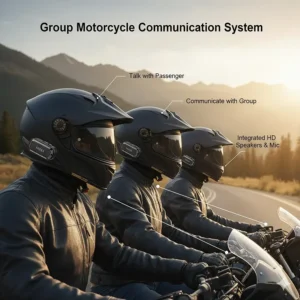
For something completely different, the FANSAISI Bone Conduction Speaker uses vibration technology to transmit sound through your helmet. This innovative approach allows you to hear ambient sounds while enjoying music—a unique safety feature.
Key Specifications:
- Bone conduction vibration technology
- DSP noise cancellation
- IP66 waterproof rating
- Magnetic bracket mounting system
- Compatible with enclosed helmets only
Price: $50-70
Customer Feedback: Riders are divided on this technology. Some love the ability to hear traffic while listening to music, while others find the sound quality doesn’t match traditional speakers.
✅ Pros:
- Unique bone conduction technology
- Maintains awareness of surroundings
- Easy installation with magnetic mount
- Good waterproofing
❌ Cons:
- Sound quality differs from traditional speakers
- Only works with enclosed helmet designs
- Not suitable for all helmet types
Understanding Motorcycle Helmet Speakers Technology
Let me break down what’s actually happening inside your helmet when you’re jamming to your favorite playlist. Motorcycle helmet speakers aren’t just miniature versions of your home stereo—they’re specifically engineered to overcome unique challenges.
How They Work 🔊
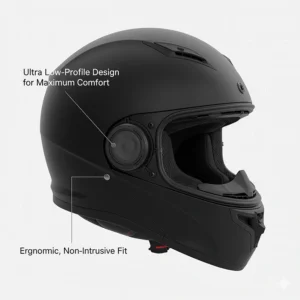
Traditional speakers use electromagnetic drivers to vibrate a cone, creating sound waves. Helmet speakers shrink this technology into ultra-thin packages (usually 8-12mm thick) that fit comfortably inside your helmet padding without crushing your ears.
The magic happens through Bluetooth connectivity. Your smartphone or GPS device transmits audio signals wirelessly to the communication unit mounted on your helmet. This unit then sends the audio to the speakers positioned near your ears.
Speaker Size Matters 📐
You’ll notice speakers ranging from 32mm to 45mm in diameter. Here’s what that means for you:
- 32-36mm: Thinner, more comfortable, but less bass response
- 40mm: Sweet spot for most riders—good balance of comfort and sound
- 45mm: Maximum audio quality but requires more space in helmet
Bluetooth Versions Explained 📡
Bluetooth technology has evolved significantly. Here’s the breakdown according to industry standards from the Bluetooth Special Interest Group:
- Bluetooth 3.0: Older but reliable, used in many budget systems
- Bluetooth 4.2: Better energy efficiency and range
- Bluetooth 5.0+: Latest standard with improved connectivity and speed
Benefits of Using Helmet Speakers vs Earbuds
I’ve tried both approaches, and trust me, there’s a reason dedicated helmet speakers dominate the market. Let me explain why.
Comfort for Long Rides 🏍️
Earbuds create pressure points that become unbearable after an hour. Your helmet already fits snugly—adding earbuds intensifies that squeeze. Helmet speakers, positioned in existing ear pockets, distribute pressure evenly across your helmet’s interior.
I’ve done 8-hour riding days with speakers without any discomfort. Try that with earbuds, and you’ll be pulling over constantly to readjust or remove them entirely.
Safety Considerations ⚠️
Here’s something crucial: most states have laws about wearing earbuds while riding. California, for example, prohibits earbuds in both ears while operating a vehicle. Helmet speakers, however, still allow ambient sound to reach your ears—you can hear sirens, horns, and other critical traffic sounds.
According to the National Highway Traffic Safety Administration (NHTSA), maintaining situational awareness while riding is paramount to safety.
Convenience Features 📱
Speakers for motorcycle helmets integrate with your entire riding ecosystem:
✅ Hands-free calling without touching your phone
✅ GPS directions without looking at your device
✅ Music control via handlebar controls or voice commands
✅ Intercom communication with other riders
✅ Voice assistant access (Siri, Google Assistant)
Sound Quality Analysis 🎵
Paradoxically, helmet speakers often deliver better sound than earbuds at highway speeds. Why? Because they’re designed specifically for the noisy helmet environment, with digital signal processing that compensates for wind noise and engine rumble.
How to Choose the Best Motorcycle Helmet Speakers
Picking the right speakers isn’t just about reading specs—it’s about matching features to your specific riding style. Let me walk you through the decision-making process I use when recommending systems to fellow riders.
1. Assess Your Primary Use Case 🎯
Daily Commuters: Battery life and call quality matter most. Look for systems with 12+ hours of talk time and noise cancellation technology.
Weekend Warriors: Sound quality takes priority. Consider premium speakers like the Cardo JBL system for maximum audio enjoyment.
Group Riders: Intercom range and multi-rider connectivity are crucial. Systems supporting 4+ rider communication with 1000m+ range work best.
Long-Distance Tourers: Durability, battery life, and weather resistance become critical. IP67-rated systems with 15+ hour battery life are ideal.
2. Evaluate Your Budget 💰
Budget Tier ($40-70): Expect basic Bluetooth connectivity, decent sound, and shorter battery life. Perfect for occasional riders or those testing the waters.
Mid-Range ($70-150): Sweet spot for most riders. You get reliable performance, good sound quality, and useful features like FM radio and music sharing.
Premium ($150+): Professional-grade audio, advanced features, longer warranties, and superior build quality. Worth it if you ride frequently.
3. Check Helmet Compatibility 🪖
Not all helmets have speaker pockets! Before buying:
✅ Measure the depth of your helmet’s ear pockets (most speakers are 8-12mm thick)
✅ Confirm you have space for microphone mounting (boom or wired)
✅ Check if your helmet liner is removable for easier installation
Full-face helmets typically accommodate any speaker system. Modular and open-face helmets may have limited space—check specifications carefully.
4. Consider Weather Resistance 🌧️
If you ride year-round or in varying conditions, waterproofing isn’t optional—it’s essential. Look for IP ratings:
- IP55: Protects against dust and water splashes
- IP67: Dust-tight and submersion-resistant up to 1 meter
- IP68: Maximum protection for extreme conditions
5. Understand Battery Requirements 🔋
Battery capacity directly impacts your riding freedom:
- 400-500mAh: 8-10 hours (sufficient for daily commutes)
- 800mAh: 12-15 hours (handles long day trips)
- 900mAh+: 15-20 hours (perfect for touring)
Also consider charging time—most systems fully charge in 2-3 hours.
Installation Guide for Motorcycle Helmet Speakers
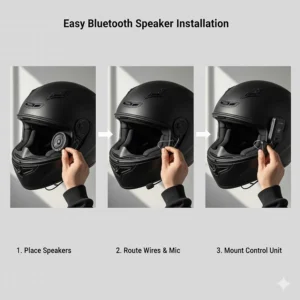
Installing helmet speakers sounds intimidating, but it’s actually pretty straightforward. I’ve done this dozens of times, and the process typically takes 15-30 minutes. Let me guide you through it step-by-step.
Pre-Installation Preparation 🛠️
Before you start, gather these items:
- Your new speaker system (obviously!)
- Clean microfiber cloth
- Rubbing alcohol for cleaning surfaces
- Allen wrench (usually included)
- Patience (not included, but essential)
Step-by-Step Installation Process
Step 1: Clean Your Helmet Remove any existing padding or accessories from the mounting area. Clean the exterior mounting surface with rubbing alcohol—adhesive mounts need a clean surface to stick properly.
Step 2: Mount the Control Unit Position the clamp or adhesive mount on your helmet’s exterior, typically on the left side. Ensure it doesn’t interfere with your visor operation. Tighten securely but don’t overtighten—you’ll crack the plastic.
Step 3: Install Speakers Locate your helmet’s ear pockets (those indentations where your ears sit). Peel the backing off the Velcro pads and stick them inside the pockets. Position speakers as close to your ears as possible without touching them directly—you want about 5-10mm clearance.
Step 4: Microphone Placement For boom microphones: Position the mic about 1-2cm from your mouth corner when wearing the helmet. For wired microphones: Run the cable along the helmet lining and position the mic near your mouth opening.
Step 5: Route Cables Carefully route speaker and microphone cables through your helmet padding to the control unit. Avoid sharp bends that could damage wires. Use the provided cable clips to secure everything neatly.
Step 6: Connect Everything Plug speakers and microphone into the control unit. Ensure connections are fully seated—partial connections cause one-sided audio or no sound at all.
Pro Installation Tips 💡
- Test before finalizing: Connect everything and test audio before committing to permanent adhesive mounting
- Speaker positioning is critical: Moving speakers just 5mm can dramatically improve sound quality
- Cable management matters: Loose cables create annoying rubbing sounds while riding
- Use provided padding: Extra foam pads help position speakers closer to your ears if needed
Top Features to Look For
After testing numerous helmet speaker systems, certain features consistently separate excellent products from mediocre ones. Here’s what actually matters when you’re cruising at highway speeds.
Advanced Noise Cancellation 🔇
Wind noise at 60 mph can reach 100+ decibels—louder than a chainsaw! Quality systems employ DSP (Digital Signal Processing) and CVC (Clear Voice Capture) technology to filter this noise.
Look for systems specifically mentioning:
- DSP noise suppression for incoming audio
- CVC echo cancellation for outgoing calls
- Environmental noise cancellation technology
Multi-Rider Intercom Capability 👥
Solo riders might skip this feature, but group riding completely changes when you can communicate effortlessly. Consider:
- 2-rider systems: Perfect for riding with a passenger or one friend
- 4-rider systems: Ideal for small group rides
- 8-10 rider systems: Necessary for club rides or large group touring
Pay attention to effective range, not just maximum range. A system rated for 2000m might only reliably work at 500m in real-world conditions with obstacles.
Universal Pairing 🔗
Some manufacturers lock you into their ecosystem—your LEXIN won’t talk to your friend’s Sena. Universal pairing solves this problem, allowing cross-brand communication.
This feature is crucial if you ride with various groups using different equipment.
Music Sharing 🎶
Imagine cruising through scenic routes while sharing the same playlist with your riding partner. Music sharing lets two riders listen to identical audio simultaneously—perfect for couples or close riding buddies.
Note: This feature typically only works between identical models from the same brand.
FM Radio 📻
Built-in FM radio seems old-school, but it’s incredibly practical. When your phone dies or you’re in areas with poor cellular coverage, FM radio keeps you entertained and informed. Local traffic and weather reports can be ride-savers.
Voice Command Integration 🗣️
Modern systems integrate with Siri, Google Assistant, or Alexa. This means:
✅ Making calls without touching buttons
✅ Changing music tracks verbally
✅ Getting directions through voice commands
✅ Sending messages hands-free
Voice commands might feel gimmicky until you’re wearing winter gloves or it’s pouring rain—then they become essential.
Common Problems and Solutions
Even the best motorcycle helmet speakers encounter issues. Here are the problems I see most frequently and how to fix them quickly.
Problem 1: One Speaker Not Working ❌
Causes:
- Cable not fully inserted into control unit
- Damaged wire from improper installation
- Defective speaker
Solutions:
- Firmly push connector into port until you hear a click
- Check cable routing for pinched or cut wires
- Test with spare speakers to isolate the problem
- Contact manufacturer if under warranty
Problem 2: Poor Sound Quality or Low Volume 🔉
Causes:
- Speakers positioned too far from ears
- Inadequate seal in helmet ear pockets
- Volume limitations set in app or device
- Cheap speakers with insufficient power
Solutions:
- Reposition speakers closer to ears (5-10mm away)
- Add foam padding to improve speaker-to-ear proximity
- Check volume settings in both helmet system and phone
- Consider upgrading to larger diameter speakers (40mm+)
Problem 3: Static or Interference Noise 📡
Causes:
- Bluetooth interference from other devices
- Poor quality audio source
- Loose cable connections
- Electronic interference from motorcycle
Solutions:
- Unpair unused Bluetooth devices near your helmet
- Use high-quality audio files (320kbps+ for music)
- Secure all cable connections firmly
- Route cables away from ignition system wires
Problem 4: Battery Drains Too Quickly 🔋
Causes:
- Battery degradation over time
- Multiple Bluetooth connections active simultaneously
- Maximum volume usage constantly
- Extreme temperature operation
Solutions:
- Replace battery if system is 2+ years old (if possible)
- Disconnect unused Bluetooth pairings
- Use moderate volume levels (60-80%)
- Allow unit to warm up in cold weather before use
Problem 5: Microphone Picks Up Too Much Wind Noise 🌬️
Causes:
- Microphone positioned in direct airflow
- Inadequate wind suppression
- Damaged or missing foam windscreen
- Wrong microphone type for helmet style
Solutions:
- Adjust microphone position away from air vents
- Install additional foam windscreen
- Replace damaged windscreens immediately
- Switch to wired mic for full-face helmets if using boom mic
Maintenance and Care Tips
Proper maintenance extends your helmet speakers’ lifespan from one season to many years. I’ve had systems last 5+ years with simple care routines. Here’s how to protect your investment.
Regular Cleaning 🧼
After every few rides:
- Wipe down control unit with slightly damp cloth
- Clean speakers with dry microfiber cloth to remove dust
- Check cable connections for debris
- Inspect for water intrusion at ports
Monthly deep cleaning:
- Remove speakers and wash foam windscreens with mild soap
- Clean Velcro mounting pads (replace if losing adhesion)
- Use compressed air to clean microphone openings
- Check all screws and mounting hardware
Storage Best Practices 📦
When storing long-term:
- Charge battery to 50-60% (not full, not empty)
- Store in cool, dry location (avoid extreme temperatures)
- Remove from helmet if storing helmet in hot garage
- Keep away from direct sunlight
Battery Health 🔋
Lithium batteries degrade over time, but you can slow the process:
- Avoid fully depleting battery regularly (charge at 20-30%)
- Don’t leave plugged in for days after reaching 100%
- Charge at room temperature when possible
- Expect battery replacement after 500-800 charge cycles
Firmware Updates 💾
Manufacturers release firmware updates to fix bugs and improve performance. Check for updates:
- Every 3-6 months for major brands
- Before long trips or riding seasons
- After experiencing connectivity issues
- When new features are announced
Most systems update via smartphone apps—the process takes 5-15 minutes.
Weatherproofing Maintenance ☔
Even waterproof systems need attention:
- Inspect rubber port covers regularly
- Replace damaged or loose covers immediately
- Apply dielectric grease to connections in salt air environments
- Test waterproofing annually by exposing to water spray (while off)
Comparing Wireless vs Wired Systems
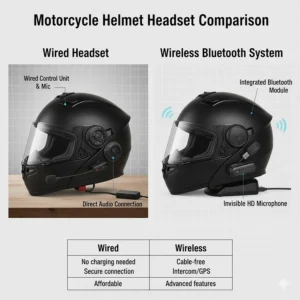
The debate between wireless and wired helmet speaker systems continues, though wireless has largely won the market. Let’s examine both objectively.
Wireless Systems (Bluetooth) 📡
Advantages:
- Complete freedom of movement
- No cables to break or tangle
- Easy to switch between helmets
- Modern features (intercom, FM, voice control)
- Clean installation appearance
Disadvantages:
- Battery requires regular charging
- Can experience interference
- More expensive initial investment
- Bluetooth pairing can be finicky
- Signal can drop in areas with heavy interference
Best for: Most riders, especially those wanting modern features and convenience
Wired Systems 🎧
Advantages:
- No batteries to charge
- Consistent audio quality without dropouts
- Lower cost
- Simpler technology means fewer failure points
- No electromagnetic interference
Disadvantages:
- Cable can snag or break
- Limited range from audio source
- Requires phone in pocket or tank bag
- No intercom capability with other riders
- Cable management challenges
Best for: Riders on tight budgets or those wanting ultimate simplicity
Hybrid Approach 🔄
Some riders use wireless Bluetooth communicators with wired earbud connections. This combines wireless freedom for your phone with the reliability of wired speaker connections to your ears.
The Wikipedia article on Bluetooth technology provides fascinating details about how this wireless standard works.
Legal Considerations and Regulations
Before installing helmet speakers, you need to understand the legal landscape. Laws vary significantly by location, and ignorance isn’t an acceptable defense during a traffic stop.
United States Regulations 🇺🇸
Laws differ by state, but common patterns emerge:
Generally Legal:
- Helmet-mounted speakers in most states
- One-ear earbud/earpiece
- Bluetooth communication systems
Often Restricted:
- Both-ear earbuds while operating vehicles
- Noise-canceling systems that completely block ambient sound
- Excessive volume levels
According to the Insurance Institute for Highway Safety, several states including California, Maryland, and Rhode Island prohibit earbuds in both ears but allow helmet speaker systems.
Key Takeaway: Helmet speakers are legal nearly everywhere because they don’t completely block ambient sound—you can still hear sirens, horns, and traffic.
Safety Recommendations 🛡️
Even where legal, follow these guidelines:
✅ Keep volume at levels allowing you to hear traffic
✅ Remove helmet speakers during licensing tests (if required)
✅ Understand local hands-free calling laws
✅ Consider increased reaction times when distracted by calls
✅ Never adjust settings while moving—pull over safely
International Variations 🌍
Different countries have varying regulations:
Europe: Generally permissive, but some countries require you hear emergency vehicles
Canada: Similar to US with provincial variations
Australia: Some states prohibit earphones while riding
UK: Legal but must not impair hearing
Always research local laws before riding in new areas. Tourism boards and motorcycle clubs often provide this information.
Price Range Analysis and Value Assessment
Understanding the price spectrum helps you invest wisely without overpaying for features you won’t use or buying junk that fails after one season.
Budget Tier: $30-70 💵
What You Get:
- Basic Bluetooth connectivity (often v3.0)
- Adequate sound quality for speech and music
- Limited range (300-500m for intercom)
- Shorter battery life (6-10 hours)
- Minimal weatherproofing
Best Value Picks: FreedConn TCOM-SC ($45-60), basic LEXIN models
Who Should Buy: Casual riders, first-time buyers testing the waters, backup systems
Mid-Range: $70-150 💵💵
What You Get:
- Bluetooth 4.0+ technology
- Good sound quality with bass response
- Extended range (1000-2000m)
- Longer battery life (12-15 hours)
- IP67 waterproofing
- Advanced features (FM radio, music sharing)
Best Value Picks: LEXIN B4FM ($65-80), Fodsports M1-S Plus ($70-90)
Who Should Buy: Regular riders, group riders, daily commuters wanting reliability
Premium Tier: $150-250 💵💵💵
What You Get:
- Latest Bluetooth versions
- Audiophile-grade sound quality
- Maximum range with mesh networking
- Professional-grade weatherproofing
- Premium materials and build quality
- Extended warranties (2-3 years)
Best Value Picks: Cardo 45mm JBL ($85-95 speakers only), Sena SMH10 ($150-180 complete system)
Who Should Buy: Frequent riders, audiophiles, professional riders, those wanting best-in-class performance
Cost vs. Longevity Analysis 📊
Here’s the reality: A $50 system lasting one season costs more per year than a $150 system lasting five seasons.
Calculate value this way: Total Cost ÷ Expected Years of Use = Annual Cost
- Budget system: $60 ÷ 1.5 years = $40/year
- Mid-range system: $90 ÷ 3 years = $30/year
- Premium system: $180 ÷ 5 years = $36/year
The mid-range often delivers best value, but premium systems justify their cost through longevity and superior daily experience.
Frequently Asked Questions
❓ Can motorcycle helmet speakers work with any helmet brand?
❓ How loud do helmet speakers need to be for highway riding?
❓ Do motorcycle helmet speakers drain my motorcycle battery?
❓ Can I use helmet speakers with noise-canceling earbuds simultaneously?
❓ Will motorcycle helmet speakers work during rain or snow?
Conclusion: Making Your Final Decision
After diving deep into the world of motorcycle helmet speakers, you’re probably feeling more confident about making the right choice. Let me leave you with the most important takeaway: the best speakers are the ones that match your specific riding style and budget—not necessarily the most expensive or feature-packed option.
For most riders, mid-range systems like the LEXIN B4FM or Fodsports M1-S Plus deliver exceptional value. They offer reliable performance, good sound quality, and useful features without breaking the bank. Weekend warriors and casual riders will find these systems more than adequate for years of enjoyment.
If you’re serious about audio quality and ride frequently, investing in premium speakers like the Cardo 45mm JBL system makes sense. The superior sound quality and build quality justify the higher price through daily use over many seasons.
Budget-conscious riders or those new to helmet audio should consider entry-level options like the FreedConn TCOM-SC. They provide a solid introduction to helmet speakers without significant financial commitment.
Remember these key points:
✅ Prioritize speaker size (40mm+) for better sound quality
✅ Ensure adequate battery life for your typical ride duration
✅ Verify waterproof ratings match your weather conditions
✅ Choose systems compatible with your helmet type
✅ Consider future needs (group riding, long trips, etc.)
The motorcycle speakers helmet market continues evolving with better technology at lower prices. What cost $300 five years ago now delivers better performance at $80. You’re entering this market at an excellent time.
🎯 Your Next Step
Don’t overthink this decision. Choose a system matching your budget and primary use case, install it properly, and start enjoying enhanced rides immediately. You can always upgrade later—many riders keep multiple helmet setups for different situations.
Ready to transform your riding experience? Click on any of the highlighted products above to check current prices, read customer reviews, and make your purchase. Your next adventure with crystal-clear tunes, easy navigation, and seamless communication awaits! 🏍️✨
Recommended for You
- 7 Best Bluetooth Motorcycle Helmets in 2025
- Smart Motorcycle Helmet: 7 Best Options Transform Your Ride 2025
- Carbon Motorcycle Helmet: 7 Top Picks That Save Lives 2025
Disclaimer: This article contains affiliate links. If you purchase products through these links, we may earn a small commission at no additional cost to you.
✨ Found this helpful? Share it with your friends! 💬🤗
