
In This Article
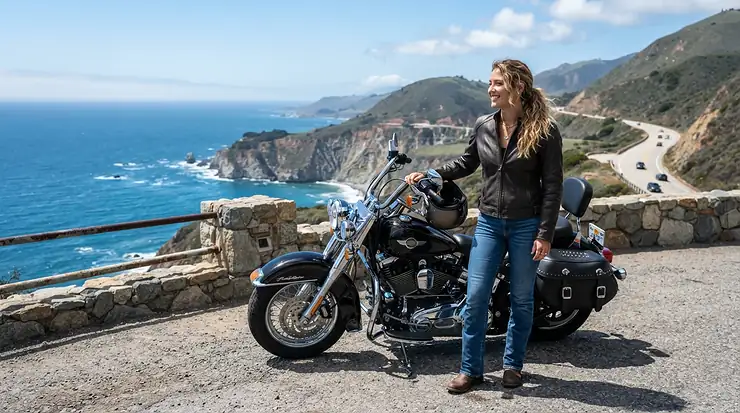
White motorcycle boots for summer riding are vented, CE-certified riding boots finished in white or white-dominant colorways. They pair perforated uppers and breathable linings with armor at the ankle, shin, heel, and toe. You get airflow, real crash protection, and a bright, clean look that holds up in hot sun.
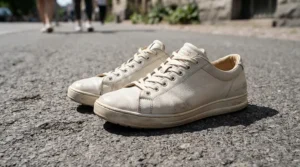
Let’s be honest about the trade. Black boots are the default for good reason: they forgive road tar, chain lube, and last Tuesday’s puddle. White boots forgive nothing. Every scuff is a headline. So why would anyone choose them? Because a crisp pair of vented white boots looks sharp against a mesh jacket and stays visually cooler in July. They also turn a utilitarian piece of kit into the thing people ask about at the gas station.
There’s a heat angle too, and it deserves a straight answer. White clothing doesn’t work like a tiny air conditioner. The science of light colored clothing in hot weather is messier than the folk wisdom suggests. We’ll sort fact from fiction in the heat reflection in clothing color section below. Short version: ventilation does most of the cooling, and color is the supporting actor.
Here’s what you’ll get: seven real boots with white colorways, honest breakdowns of what each spec means on the bike, and a practical playbook for keeping light colored summer riding boots bright. One note on method. This article is built from published specs, retailer listings, and aggregated reviewer reports, not from personal ownership of every pair. Colorways and sizes on Amazon shift by seller, so confirm the white option on the listing before you buy.
Quick Comparison: White Motorcycle Boots for Summer Riding at a Glance
Here’s the lineup in one scannable view. Prices are ranges only and change often, so check current price before you buy.
| Boot | Style | Ventilation | White Level | Price Range | Best For |
|---|---|---|---|---|---|
| Alpinestars Supertech R Vented Boots | Race boot | Perforated microfiber | White-dominant | Mid-$600s | Track-day and sport riders |
| Alpinestars SMX-6 V2 Vented Boots | Sport-touring boot | Perforated panels, rear vents | Black/white mix | Around $300 | Daily riders wanting comfort |
| Sidi Vertigo 2 | Road/race boot | Air Teflon mesh lining | White/black | Low-$300s | Riders who want easy wipe-down |
| TCX RT-Race Pro Air | Race boot | Perforated upper, mesh shin intakes | Varies by market | $500-$580 list | Fast riders wanting race feel |
| Alpinestars SMX Plus V2 Vented Boots | Sport boot | Perforations plus TPU vents | Panels and trim | Mid-$500s | Riders wanting maximum ankle support |
| Alpinestars SMX-1 R V2 Vented Boots | Low-cut sport boot | Extensive perforations | Panels and trim | Low-$200s | Commuters and street riders |
| Cortech Revo RR Air | Sport boot | Perforated microfiber, mesh lining | White/black | $150-$175 | Budget-minded summer riders |
Looking at the comparison above, the Cortech Revo RR Air is the cheapest way into a white/black colorway. The Alpinestars SMX-1 R V2 Vented Boots cost a little more but come with a far larger review base. If track-grade protection is your priority, the Alpinestars Supertech R Vented Boots justify their premium with the most complete armor package here. The Sidi Vertigo 2 is the pick when easy cleanup matters most. Colorways of the TCX RT-Race Pro Air differ by market, so verify the white version before ordering.
💬 Just one click — help others make better buying decisions too!😊
Top 7 White Motorcycle Boots for Summer Riding: Expert Analysis
Every boot below pairs venting with real armor. I’ve ordered them by who benefits most, not by price alone.
1. Alpinestars Supertech R Vented Boots — maximum airflow in a white-dominant race shell
The headline is the venting itself. Perforations run across the front and rear accordion panels, so air moves through the boot instead of skimming past it. Under the skin, a lightweight microfiber shell wraps a separate internal ankle brace, external TPU shin protection, and a replaceable TPU-and-aluminum toe slider. On paper, that means race-grade defense against ankle twisting and shin impacts without the weight and heat of a thick leather wall.
Based on the spec comparison, this is a track-first design. Riders who log weekend canyon miles or track days, and live somewhere July feels like a hair dryer, get the most from it. Boots this rigid are typically less pleasant for all-day walking, so commuters who park and stroll should look lower on this list.
Reviewers and retail listings consistently treat it as the benchmark race boot, and RevZilla’s 2026 roundup calls it the gold standard for the category. What I couldn’t verify is how the white panels age after a full season of shifter contact, so plan on regular wipe-downs.
Pros:
- ✅ Extensive perforations for strong airflow at speed
- ✅ Separate internal ankle brace plus external TPU shin guard
- ✅ Replaceable toe sliders extend the boot’s lifespan
Cons:
- ❌ Race stiffness makes walking less comfortable
- ❌ Highest price in this lineup
Expect to spend in the mid-$600s; check current price. That’s serious money, but spread over several seasons of weekend riding the cost per ride falls quickly. It’s a fair value for committed sport riders.
2. Alpinestars SMX-6 V2 Vented Boots — fastest break-in of the group
The standout is how quickly it settles. A webBikeWorld tester who wore the vented version through a full summer reported it felt extraordinarily comfortable after an hour or two. Feet stayed comfortable above 86°F, with airflow noticeable at highway speed. Air exits through the sides, upper, and rear accordion panel, while TPU armor covers the shin, calf, heel, and ankle, certified to CE EN 13634 Level 2.
What the spec sheet won’t tell you is that the standard SMX-6 V2 and the Vented version are not the same experience. One retailer reviewer of the non-vented model called it comfortable but very hot, so confirm “Vented” in the listing title. The first fit is also tight; that same tester needed a shoehorn on day one, and it relaxed to a snug fit after roughly an hour of wear.
Here’s what to weigh: this suits sport-touring riders who want track-capable protection without a track-day lifestyle. Retail reviewers broadly praise the comfort and fit. White appears as panels and accents on the black/white colorway rather than a full white shell, so study the photos.
Pros:
- ✅ Comfortable after a short break-in period
- ✅ Airflow stays noticeable at highway speed
- ✅ Level 2 TPU armor at ankle, shin, and heel
Cons:
- ❌ Not waterproof, so rain means damp feet
- ❌ White appears mostly as panels, not a full shell
Pricing sits around the $300 range for the SMX-6 V2 family, though the vented variant can differ, so check current price. For this much comfort plus protection, it’s among the better values here.
3. Sidi Vertigo 2 — Technomicro upper that wipes clean
The Technomicro upper is the headline for anyone nervous about white. RevZilla’s product notes describe it as water and tear resistant and easy to clean and maintain, exactly what a pale boot needs. Inside, an Air Teflon mesh lining handles ventilation, a Tecno-3 iron mechanism secures the calf, and replaceable toe sliders and a shock-absorbing heel cup complete the package.
In practice, the adjustable calf closure is the feature riders praise most, because it fits around summer-weight pants or leathers. I couldn’t find a verified perforation map for this model, so compare its ventilation claims against the heavily perforated Alpinestars shells before committing. It’s best matched to riders who value low-effort upkeep over maximum airflow.
Aggregated reviews are positive on quality, durability, and ventilation. Several buyers mention a break-in period and suggest sizing up, since Sidi generally runs narrow. A Visordown reviewer noted these boots aren’t about pure comfort at first impression. One more caution: some retailers list the White/Black version as discontinued, so availability may be limited.
Pros:
- ✅ Technomicro upper is easy to wipe clean
- ✅ Adjustable calf closure fits varied riding gear
- ✅ Replaceable sliders and shock-absorbing heel cup
Cons:
- ❌ Narrow fit and a noticeable break-in period
- ❌ White/Black stock may be limited at some retailers
Retail listings put it in the low-$300s; check current price. For riders who hate scrubbing boots, the easy-clean shell earns that money back in time saved.
4. TCX RT-Race Pro Air — Michelin sole with mesh-vented shin plate
The Michelin dual-compound sole sets it apart, with specific grip zones for the peg, shifter, and rear brake. Ventilation comes from a perforated microfiber upper plus iron-mesh air intakes on the polyurethane shin plate. A flexible front panel makes step-in easier than most race boots manage. Closure is buckles plus a zipper, and the inner area is abrasion and heat resistant microfiber.
Those shin intakes feed air along the lower leg, where most boots can’t vent at all. That makes the TCX a different kind of cool than the Alpinestars shells. It suits fast riders who want real race feel, but note the caveats: one reviewer found the top gaiter rough on skin after hours when pants go over the boot, and another flagged a slippery heel.
Aggregated owner reviews skew positive. RevZilla’s listing averages around 4.5 out of 5 across about two dozen reviews, and UK buyers mention feeling a breeze on the feet and comfort after break-in, though some advise sizing up. Colorways differ by market: some list White/Blue and White/Yellow Fluro, others Black/Grey/White. One US retailer lists it as a closeout, so verify the exact white version and stock.
Pros:
- ✅ Michelin sole grips pegs, shifter, and brake
- ✅ Mesh intakes on shin plate add airflow
- ✅ Flexible front panel eases entry and exit
Cons:
- ❌ Gaiter can rub skin under pants
- ❌ Reviewers mention a slippery heel off the bike
List pricing runs roughly $500-$580 with retailer variation; check current price. That’s premium territory, justified mainly if you’ll use the race-bred sole feel.
5. Alpinestars SMX Plus V2 Vented Boots — Multi-Link ankle control for sport riders
The Multi-Link Control external brace is the draw. It limits how far the ankle can bend in a slide while leaving normal shifting motion free. Perforations run throughout the microfiber upper, with strategic vents in the TPU, and the high shin plate guards against peg strikes. A speed-lacing internal bootie plus zipper locks the fit, the toe and heel sliders are replaceable, and the boot is CE-certified to EN 13634:2017.
That’s a lot of engineering, and in practice it means excellent ankle support and effective airflow at speed at the cost of some fuss. Roundup reviewers flag stiffness, a more involved on/off routine, and a zipper that can rub thicker calf gear. This is for sportbike riders who value control over convenience.
Aggregated retailer sentiment is solid: RevZilla’s listing averages roughly 4.5 out of 5 across several dozen reviews, while Alpinestars’ own page has too few reviews to draw conclusions. White shows up as panels and trim on the Black/White colorways rather than an all-white shell.
Pros:
- ✅ Multi-Link brace for strong slide protection
- ✅ Perforations plus TPU vents move air effectively
- ✅ Replaceable toe and heel sliders
Cons:
- ❌ Stiff and fussier to put on
- ❌ Premium price puts it out of reach for many
Retail pricing hovers in the mid-$500s; check current price. It’s easy to overspend here, so buy it only if you’ll use the ankle support.
6. Alpinestars SMX-1 R V2 Vented Boots — low-cut comfort that still walks well
This is the low-cut member of the family, so the headline is comfort off the bike. A reverse zip makes entry quick, and a heel counter with strap closure keeps the foot planted. The microfiber upper is extensively perforated with a textile front bellow for extra breathability. Protection includes double-density ankle protectors, a TPU heel counter, a replaceable forefoot slider, and a transversal protection frame in the sole.
Here’s what that means in practice: real ankle and toe defense without the bulk, which is why commuters like this format. The trade-off is coverage. It stops at the ankle, so shin protection is up to your pants. Retail descriptions position it for street riders who want shoe-like wear.
Aggregated sentiment is strong. RevZilla’s listing averages about 4.5 out of 5 across more than 160 reviews, the largest review pool in this lineup. As with other Alpinestars picks, the white often arrives as panels and accents on the Black/White colorway, and the boot isn’t waterproof.
Pros:
- ✅ Extensive perforations keep feet cooler on commutes
- ✅ Walks comfortably and slips on quickly
- ✅ Large review base with consistently strong ratings
Cons:
- ❌ Ankle-height coverage leaves the shin unprotected
- ❌ Not waterproof, so rain gets in
Expect the low-$200s; check current price. For a commuter wanting real ankle protection plus easy cleanup, it’s arguably the best value in this guide.
7. Cortech Revo RR Air — budget white/black boot with a four-year warranty
The draw is how much the spec sheet delivers for the money: a perforated TopGrade microfiber upper, a breathable polyester mesh lining, and a 4-year warranty. Add a YKK side zip with heavy-duty hook-and-loop closure, an Armanox reactive foam insole, TPU armor, and replaceable toe sliders, all CE certified to EN 13634:2017.
The honest take: you’re trading refinement for price. The ankle bracing won’t match the Alpinestars systems, but for summer commuting and casual weekend rides it’s more than competent. Retail copy describes a low-profile look that works off the bike, which matters if you like to walk into the diner.
Review sentiment is positive but thinner. RevZilla’s listing averages roughly 4 out of 5 across about a dozen reviews, with another retailer showing a similar average from even fewer. A small sample means you should read recent reviews before buying. White/Black is listed as a color option.
Pros:
- ✅ Strong price-to-protection ratio for a CE-certified boot
- ✅ Perforated upper and mesh lining for summer airflow
- ✅ Four-year warranty adds long-term peace of mind
Cons:
- ❌ Small review pool means less proven durability
- ❌ Less sophisticated ankle bracing than premium picks
Roughly $150-$175; check current price. It’s hard to beat for first-time buyers who want white without a premium bill.
✨ Don’t Miss These Exclusive Deals!
🔍 Take your summer riding kit to the next level with these carefully selected boots. Click any highlighted boot name to check current pricing and availability. These picks will help you build a cooler, cleaner, sharper setup you’ll actually be proud to ride in!
Heat Reflection in Clothing Color: Does White Actually Keep Your Feet Cooler?
Let’s separate physics from folklore. The idea behind heat reflection in clothing color is simple: pale surfaces bounce more sunlight, while dark ones soak it up and turn it into warmth. That part holds up. In a National Weather Service shirt experiment, black and maroon shirts warmed more than a white T-shirt and a white jersey in afternoon sun. The agency’s takeaway was to favor light, loose-fitting clothing.
Where the story gets complicated
Surface temperature isn’t the same as how hot you feel. The HowStuffWorks piece mentioned earlier cites a 1980 study of Bedouin robes that found little difference in felt heat between white and black, because the extra heat in black fabric barely reached the skin. Airflow mattered far more. It also notes the idea that white clothing might reflect your own body heat back at you has been tested in birds, not humans.
What it means for boots
Here’s my read, grounded in those findings. Your boots spend the ride partly shaded by the bike and your pant leg, so the sun-struck area is mostly the toe box and instep. A white shell likely keeps that exposed surface cooler to the touch after you park. But the heat reaching your foot depends far more on perforation, mesh lining, and moving air. That’s why every pick above leads with venting. Treat white as a bonus layer, and treat light colored summer riding boots with poor ventilation as a false economy.

How to Choose Light Colored Summer Riding Boots
Here’s the direct answer: prioritize certified protection, then ventilation, then fit, and only then color. This is the order I’d use.
- Check the certification. Look for CE approval under the EN 13634 standard, which tests abrasion resistance, impact cut resistance, and sole rigidity at Level 1 or Level 2. Level 2 indicates higher protection.
- Pick your venting style. Perforated microfiber or leather gives solid abrasion resistance with direct airflow, while mesh panels move more air but resist abrasion less. Crash-minded riders usually favor perforation.
- Decide on material. Synthetic microfiber wipes clean faster because grime sits on the surface. Leather molds to your foot better but needs conditioning.
- Match the height to your riding. Taller boots protect the shin and ankle in more crash types, while low-cut shoes win on comfort and walking.
- Test fit and closure. A zip with a hook-and-loop flap or a lacing bootie should stay secure. Plan for a break-in period, and consider sizing up in narrow-cut brands.
- Verify the white. A name like Black/White can mean accents only. Check photos for how much white surrounds the toe and heel.
Common Mistakes When Buying White Motorcycle Boots for Summer Riding
Even careful shoppers trip over the same pitfalls. These are the ones worth dodging.
- Choosing waterproof membranes for heat. Roundup reviewers point out that boots with breathable membranes still aren’t ideal for summer. Vented boots and waterproof boots solve opposite problems.
- Assuming white means cooler. As the heat section showed, venting beats color. Don’t pay a premium for a pale shell with a closed-up upper.
- Judging by thumbnail. A pair listed as Black/White may be mostly black, so check photos before ordering.
- Skipping break-in. The Alpinestars SMX-6 V2 Vented Boots needed a shoehorn on day one, and the Sidi Vertigo 2 has reviewers suggesting sizing up. Budget a few short rides to settle the fit.
- Reaching for bleach. Harsh chemicals such as bleach can cause yellowing. Mild soap and a soft brush are safer.
- Forgetting rain. Vented boots let water in as easily as air, so keep waterproof boot covers in your tank bag.
White vs Dark Boots: Real Trade-Offs
Choosing white is a lifestyle decision as much as a gear decision. Here’s how the two approaches stack up in daily use.
| Factor | White Boots | Dark Boots |
|---|---|---|
| Exterior heat in direct sun | Generally cooler to the touch | Absorb more sunlight and run hotter |
| Dirt and scuff visibility | Shows grime quickly | Hides grime well |
| Upkeep effort | Frequent wipe-downs | Occasional wipe-downs |
| Look with summer kit | Bright and eye-catching | Neutral and understated |
| Best For | Riders who enjoy gear care and style | Riders prioritizing low-maintenance daily use |
Looking at the comparison above, white wins on looks and surface temperature but costs you maintenance time, while dark boots win on convenience. If you ride daily through grit, a shell like the Sidi Vertigo 2 with its wipe-clean Technomicro upper narrows the gap. Weekend riders who enjoy gear care will find white boots such as the Alpinestars Supertech R Vented Boots worth the effort.
White Leather Boot Maintenance: A Practical Guide
Before the routine, a reality check. Most vented white boots in this guide use microfiber, which doesn’t need conditioning. If yours includes real leather, white leather boot maintenance adds one extra step.
Weekly: the two-minute wipe
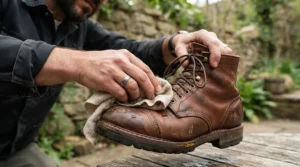
After rides, especially wet ones, wipe the boots with a damp cloth to remove grit before marks set. It’s boring and it works.
Monthly: the deep clean
Use mild soap with a soft-bristle brush or a specialized boot cleaning kit, and skip the bleach. RideApart’s step-by-step cleaning walkthrough covers brushing off dirt, cleaning with leather cleaner, and air drying, with no heaters or blow dryers. That guide is written for oiled leather, though. For white leather I’d swap the mink-oil step for a neutral conditioner, because oils can darken pale surfaces.
Every two to three months: condition (leather only)
A neutral leather conditioner keeps cowhide supple and helps prevent cracking. Do it more often after heavy rain or extreme heat.
First 30 days: avoid these slips
- Never dry boots with direct heat.
- Don’t scrub perforations aggressively.
- Fit a shifter pad or sock early, before marks form.
- Store boots indoors and out of baking sun to prevent yellowing.
Boot Cleaning for Light Colors: Problem → Solution Guide
Even the best routine meets real-world mess. Here’s how to handle the five most common problems.
Problem 1: Black scuffs on plastic armor. A magic eraser can lift marks from TPU heel cups, shin plates, and sliders. Keep it off real leather and delicate stitching, where it can wear away protective coatings.
Problem 2: Shifter marks on leather. Apply a dedicated leather cleaner directly to the mark. Prevent repeats with a shift pad or a neoprene shifter sock.
Problem 3: Yellowing. Avoid bleach and store boots out of direct sun. Prevention beats rescue here.
Problem 4: Grit trapped in perforations. Use a soft brush or old toothbrush, mild soap, and water, then air dry. Skip pressure washers and harsh chemicals. This matters most on heavily perforated boots like the Cortech Revo RR Air and the Alpinestars SMX-1 R V2 Vented Boots.
Problem 5: Bug splatter and road film. Wipe soon after the ride, since dried residue is harder to lift. The Sidi Vertigo 2‘s Technomicro shell is described as easy to clean, which makes this the simplest fix of the five.
Done consistently, boot cleaning for light colors takes minutes, not hours.
Summer Gear Styling: Pairing White Boots With Your Kit
White boots are a statement piece, so build around them instead of fighting them. Good summer gear styling starts with repetition. Echo one or two colors from the boot, such as grey or black trim, in your gloves or jacket panels. That makes the boots look planned, not random.
Keep the rest of the kit cool and neutral
A charcoal or grey mesh jacket makes white boots pop without competing. Neutral pants such as grey, khaki, or mid-wash riding jeans keep the palette calm. Be cautious with very dark raw denim, which may transfer dye onto pale boots over time.
Match the boot to the vibe
A bold colorway like the White/Yellow Fluro TCX RT-Race Pro Air, where available, suits sportbike gear with matching accents. The Alpinestars SMX-1 R V2 Vented Boots read more casual, so they pair easily with street-style jackets. Cleaner minimalist builds work best around the Cortech Revo RR Air in white/black.
Function still leads
Summer gear styling should never outrank protection. Pair boots with a vented jacket and gloves, since your jacket and gloves affect how cool your feet feel too. Style is the bonus; safety is the point.
Real-World Scenarios: Which Pair Fits Which Rider
Specs get abstract fast, so here are three rider profiles to make the choice concrete.
The weekend canyon rider
Two or three rides a week, mostly twisty roads, with a budget north of $500. The Alpinestars Supertech R Vented Boots offer the most complete protection and venting. If you prefer stronger ankle control and a lacing bootie, the Alpinestars SMX Plus V2 Vented Boots are the alternative. Both need regular wipe-downs to keep the white sharp.
The daily commuter
Twelve miles each way, plenty of walking at both ends, and about $250 to spend. The Alpinestars SMX-1 R V2 Vented Boots are the natural fit for their quick entry and comfortable walking. If you want taller protection for a few extra dollars, the Alpinestars SMX-6 V2 Vented Boots add shin and calf armor. Keep waterproof covers handy for sudden rain.
The first-time buyer on a budget
Occasional rides, limited cash, and a love of white. The Cortech Revo RR Air gets you certified protection, venting, and a four-year warranty for roughly $150-$175. If you’d rather avoid scrubbing, the Sidi Vertigo 2 is the step-up pick, assuming you can find the white/black version in stock.
Long-Term Cost & Maintenance: What White Boots Really Cost per Season
Sticker price tells only part of the story. A boot that lasts three summers costs roughly a third of its price per season, which puts the mid-$600s Alpinestars Supertech R Vented Boots at just over $200 per summer and the Cortech Revo RR Air at roughly $50-$60. Add small recurring costs for cleaner, brushes, and conditioner. White leather boot maintenance adds a conditioner every two to three months for leather pairs, while microfiber boots skip that line item.
| Boot | Price Range | Maintenance Load | Value Verdict | Best For |
|---|---|---|---|---|
| Alpinestars Supertech R Vented Boots | Mid-$600s | Regular wipe-downs | Premium, long-term value | Track and sport riders |
| TCX RT-Race Pro Air | $500-$580 list | Regular wipe-downs | Strong for race feel | Fast riders |
| Alpinestars SMX Plus V2 Vented Boots | Mid-$500s | Moderate | Pay for ankle support | Sportbike riders |
| Sidi Vertigo 2 | Low-$300s | Low | Good for easy cleaning | Low-maintenance riders |
| Alpinestars SMX-6 V2 Vented Boots | Around $300 | Moderate | Strong all-rounder | Daily sport-touring |
| Alpinestars SMX-1 R V2 Vented Boots | Low-$200s | Moderate | Best street value | Commuters |
| Cortech Revo RR Air | $150-$175 | Moderate | Best entry price | First-time buyers |
Looking at the table above, the Alpinestars SMX-1 R V2 Vented Boots and Cortech Revo RR Air keep total ownership costs lowest, while the Sidi Vertigo 2 saves you time instead of money. The premium trio makes sense only if you’ll ride hard enough to use what you paid for. Replaceable sliders on most of these boots also stretch their lifespan, so factor that in before assuming a worn toe means a full replacement.
FAQ
❓ Are white motorcycle boots worth it for hot weather riding?
❓ How often should I clean light colored riding boots?
❓ Can I wear vented white boots in the rain?
❓ What's the best budget pair of white motorcycle boots?
❓ Do white motorcycle boots turn yellow in the sun?
Conclusion
White motorcycle boots for summer riding are a smart blend of protection, airflow, and personality, as long as you buy for ventilation first and color second. The science of heat reflection in clothing color says pale surfaces stay cooler to the touch, but your feet care far more about perforations and moving air. That’s why the best picks here pair venting with certified armor.
If you want the premium benchmark, the Alpinestars Supertech R Vented Boots lead the pack. For comfort-first sport-touring, the Alpinestars SMX-6 V2 Vented Boots are the safe bet, and the Sidi Vertigo 2 is the answer for riders who hate scrubbing. The TCX RT-Race Pro Air and Alpinestars SMX Plus V2 Vented Boots reward serious sport riders, while the Alpinestars SMX-1 R V2 Vented Boots and Cortech Revo RR Air cover commuters and budgets.
Remember that a good cleaning routine, whether boot cleaning for light colors or full leather care, keeps white looking intentional instead of neglected. Pair that with smart summer gear styling and a set of vented gloves and jacket, and you’ve built a summer setup that’s cool in every sense.
Recommended for You
- Engineer Boots Vs Motorcycle Touring Boots: 7 Proven Picks (2026)
- Affordable Steel Toe Riding Boots: 7 Best Picks For 2026
- Wide Calf Motorcycle Boots For Larger Riders: 7 Proven Picks 2026
Disclaimer: This article contains affiliate links. As an Amazon Associate, I earn from qualifying purchases. If you purchase products through these links, we may earn a small commission at no additional cost to you.
✨ Found this helpful? Share it with your friends! 💬🤗
