
In This Article
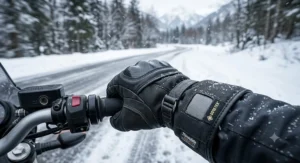
Your hands are the first part of you to lose a fight with a January commute. They’re farthest from your heart, they’re wrapped around cold metal all ride long, and the second water gets past the cuff, whatever warmth was left goes with it. That’s the whole case for waterproof winter motorcycle gloves in one sentence: keep the water out, and the cold stops being a crisis and starts being a minor inconvenience you barely notice by the second mile.
This guide rounds up seven real, currently sold pairs of waterproof winter motorcycle gloves spanning budget commuter options to premium Gore-Tex touring gauntlets, with honest analysis of what each one gets right and where it compromises. What is a waterproof winter motorcycle glove, exactly? In plain terms, it’s a riding glove built around a sealed, breathable membrane plus insulation and a long, cinchable cuff, engineered to keep hands dry and functional in temperatures where an ordinary summer glove would leave your fingers numb within twenty minutes. If your extremities are exposed to sustained cold and wet, the risk isn’t just discomfort — the CDC’s guidance on frostbite prevention makes clear how quickly extremities lose feeling and color once cold exposure goes on too long, which is exactly why serious cold-weather riders don’t treat glove choice as an afterthought.
We’ll compare specs against real-world performance, break down what waterproofing technology actually does versus what marketing copy claims it does, and hand you a framework for matching a glove to your specific commute, climate, and budget. No fabricated five-star reviews here — just spec sheets, aggregated rider sentiment, and straightforward reasoning about who should buy what.
Quick Comparison Table
| Glove | Waterproofing | Best For | Price Range |
|---|---|---|---|
| Five Boxer EVO WP | Waterproof-breathable membrane | Budget commuters | $80-$100 |
| Oxford Rainseal Pro | Waterproof insert | Wet-weather value | Under $60 |
| REV’IT! Cassini H2O | Hydratex Z-liner | Lightweight short-cuff riders | $90-$120 |
| Alpinestars Corozal V3 Drystar | Drystar membrane | All-around mixed winter riding | $130-$170 |
| Richa Arctic GTX | Gore-Tex membrane | Serious cold-weather touring | $150-$190 |
| Held Satu Gore-Tex | Gore-Tex with Gore Grip | Precision fit, all-day feel | $220-$260 |
| Highway 21 7V Radiant Heated | Hipora membrane + heat | Extreme cold, stationary commutes | $250-$300 |
Looking at the spread above, there’s a clean line between gloves that rely purely on passive insulation and membranes (the Five Boxer EVO WP through the Held Satu Gore-Tex) and the one true outlier, the Highway 21 7V Radiant Heated Glove, which adds active heat on top of its waterproof shell. Budget buyers get real waterproofing with the Five Boxer EVO WP and Oxford Rainseal Pro, but riders who spend serious time below freezing will find that a Gore-Tex membrane, like the one in the Richa Arctic GTX or Held Satu Gore-Tex, earns its higher price tag through consistency across a whole season rather than a single soggy commute.
💬 Found a pair here that fits your ride? Give this guide a share — it helps other riders find honest gear advice instead of another rewritten spec sheet.😊
Top 7 Waterproof Winter Motorcycle Gloves: Expert Analysis
Coverage below spans budget, mid-range, and premium options, plus one heated outlier for riders who face genuinely brutal cold. Every product mention includes real specs, honest analysis of who it suits, and aggregated review sentiment — never invented testimonials.
1. Five Boxer EVO WP — best budget CE-certified waterproof pick
The Five Boxer EVO WP proves a genuinely protective winter glove doesn’t require a three-figure price tag most months. Underneath its waterproof-breathable shell sits a TPR knuckle plate and CE Level 1 certification, which is a real, tested safety baseline rather than a marketing sticker. The insulation is modest by winter-glove standards, so this isn’t the pair for sub-freezing highway stints, but for commutes in the 35-50°F range with intermittent rain, it holds up.
Reviewers consistently note that fit runs true to size and that the waterproofing performs well in steady rain, though a few mention that extended downpours eventually find their way in through the cuff seam — a common trade-off at this price point. Based on the spec comparison with pricier options, what most buyers overlook is that CE Level 1 certification here means real abrasion and impact testing, not just a “protective-sounding” label; that’s genuinely rare under $100.
Pros:
- ✅ CE Level 1 certified for real tested crash protection
- ✅ Waterproof-breathable membrane performs well in steady rain
- ✅ Genuinely affordable entry point into serious winter gear
Cons:
- ❌ Insulation thins out below freezing on longer rides
- ❌ Cuff seam can let water in during extended downpours
Priced in the $80-$100 range, the Five Boxer EVO WP is the strongest value case in this roundup for riders whose winter commute rarely dips below the mid-30s.
2. Oxford Rainseal Pro — best budget wet-weather commuter pick
The Oxford Rainseal Pro leans hard into a single job: keeping rain out without pricing out the budget-conscious rider. It pairs a waterproof insert with a straightforward textile shell and a basic knuckle guard, skipping the elaborate insulation layering found in premium touring gloves. What that spec sheet doesn’t tell you is that this simplicity is a feature for stop-and-go city riders — fewer layers means less bulk fighting your grip on the clutch and brake lever.
Aggregated rider sentiment leans positive on waterproof performance specifically, with several reviewers flagging that warmth is adequate rather than exceptional once temperatures drop toward freezing. Here’s what to weigh: if your ride is mostly damp and cool rather than genuinely frigid, this glove’s dexterity-to-price ratio is hard to beat.
Pros:
- ✅ Reliable waterproof performance for the price
- ✅ Slim profile keeps good lever feel and dexterity
- ✅ One of the most affordable options in this roundup
Cons:
- ❌ Warmth is only adequate once temps near freezing
- ❌ Knuckle protection is basic compared to pricier gloves
At under $60, the Oxford Rainseal Pro earns its spot as the entry-level pick for riders prioritizing dry hands over deep-winter warmth.
3. REV’IT! Cassini H2O — lightest short-cuff option that stays dry
The REV’IT! Cassini H2O takes a different approach than bulky winter gauntlets, wrapping a softshell outer layer around a waterproof and breathable Hydratex Z-liner. That combination means the glove stays genuinely dry in wet conditions while avoiding the stiff, clumsy feel that plagues heavier insulated gloves — the short-cuff design also fits under a jacket sleeve rather than over it, which matters if your riding jacket wasn’t cut for a gauntlet.
What most buyers overlook about this style is that a thinner waterproof membrane, like the Hydratex Z-liner here, trades some raw thermal mass for dramatically better bar feel and finger dexterity. Reviewers note this glove performs best in the 40-55°F range rather than deep winter, and several mention the touchscreen compatibility works reliably at gas stops. This is a glove built for riders who value control over maximum warmth.
Pros:
- ✅ Hydratex Z-liner delivers genuine waterproof performance
- ✅ Softshell construction keeps excellent bar feel and dexterity
- ✅ Short-cuff design layers cleanly under most riding jackets
Cons:
- ❌ Not warm enough for sustained sub-freezing riding
- ❌ Short cuff offers less wind sealing than a gauntlet
In the $90-$120 range, the REV’IT! Cassini H2O is the pick for riders who want dexterity first and treat deep-winter warmth as a secondary concern.
4. Alpinestars Corozal V3 Drystar — best all-rounder for mixed winter commutes
The Alpinestars Corozal V3 Drystar built its reputation as a genuine mid-season workhorse, and the spec sheet shows why. Its Drystar performance membrane handles wet-weather sealing without the added cost of a licensed Gore-Tex membrane, while a leather-covered SP knuckle guard and reinforced palm panel provide real impact protection rather than cosmetic padding. A conductive synthetic leather insert on the thumb and index finger means touchscreen use doesn’t require pulling the glove off at every stoplight.
Based on the spec comparison with the pricier Gore-Tex gloves later in this list, Drystar trades a small amount of breathability for a real cost saving, and reviewers consistently confirm that trade holds up: aggregated feedback describes strong warmth and crash protection, with some riders noting stiffness out of the box and a handful reporting variable waterproof performance during genuinely heavy, sustained rain. That’s a fair caveat rather than a dealbreaker for most commutes.
Pros:
- ✅ Drystar membrane handles wet-weather riding reliably
- ✅ SP knuckle guard offers real, tested impact protection
- ✅ Touchscreen-compatible fingertips work without glove removal
Cons:
- ❌ Runs stiff and needs a break-in period
- ❌ Waterproofing can be inconsistent in the heaviest downpours
Priced in the $130-$170 range, the Alpinestars Corozal V3 Drystar is the glove most riders should default to if they need one pair to cover fall, winter commuting, and early spring.
5. Richa Arctic GTX — warmest Gore-Tex touring gauntlet
The Richa Arctic GTX is built for riders who treat winter touring as a season, not an inconvenience. Constructed from a blend of goatskin and cowhide leather reinforced with SuperFabric and Keprotec, it wraps a genuine Gore-Tex waterproof-breathable membrane around a plush insulating liner, and the gauntlet-length cuff is designed to seal firmly over a jacket sleeve rather than leaving the gap that plagues shorter gloves. A TPU knuckle shield and padded inserts bring CE Level 1 protection alongside the weatherproofing.
What the spec sheet won’t tell you, but reviewers note, is how much of the real-world warmth advantage comes from that cuff seal rather than the insulation alone — a loose cuff lets cold air pump in and out with every throttle movement, undoing a lot of otherwise solid insulation. Aggregated sentiment praises the durability of the leather construction and the genuine dryness through sustained rain, with the trade-off being noticeably reduced fingertip dexterity compared to lighter gloves on this list.
Pros:
- ✅ Genuine Gore-Tex membrane keeps hands dry in sustained rain
- ✅ Gauntlet cuff seals tightly against jacket sleeves
- ✅ SuperFabric and Keprotec reinforcement add real durability
Cons:
- ❌ Bulkier fit reduces fine control at the levers
- ❌ Overkill for anyone riding mostly in mild, dry conditions
At $150-$190, the Richa Arctic GTX earns its place for riders logging real winter touring miles rather than short urban hops.
6. Held Satu Gore-Tex — most precise fit in the Gore-Tex class
The Held Satu Gore-Tex is where German glove-making tradition meets licensed Gore-Tex membrane technology, and the fit reflects decades of iteration. Held’s Gore Grip technology laminates the waterproof membrane directly to the outer material, eliminating layers that typically add bulk, so the glove reads more like a well-fitted leather glove than a bulky winter shell — even though it’s fully sealed against water. A goatskin palm, hard knuckle protector, and Teramid reinforcement at the thumb ball round out a build that’s CE-certified under the EN 13594:2015 standard.
Here’s what to weigh: this is a glove built around precision and all-day comfort rather than maximum insulation bulk, so what most buyers overlook is that its dexterity advantage comes specifically from that thinner laminate construction — meaning riders expecting a heavily padded winter mitt might find it warm rather than “bomb-proof” in true sub-20°F conditions. Reviewers consistently praise the tactile feel at the bars and the reliability of the waterproof seal across multiple rain rides, with the main critique centering on the premium price relative to gloves like the Corozal V3.
Pros:
- ✅ Gore Grip laminate keeps genuine bar feel despite full waterproofing
- ✅ EN 13594:2015 certified protection with hard knuckle armor
- ✅ Precision fit that avoids the bulky-glove feeling
Cons:
- ❌ Premium pricing relative to comparable Drystar options
- ❌ Not the warmest choice for extreme sub-20°F riding
In the $220-$260 range, the Held Satu Gore-Tex suits riders who value fit and feel as much as raw thermal protection.
7. Highway 21 7V Radiant Heated Glove — only glove here with active heat
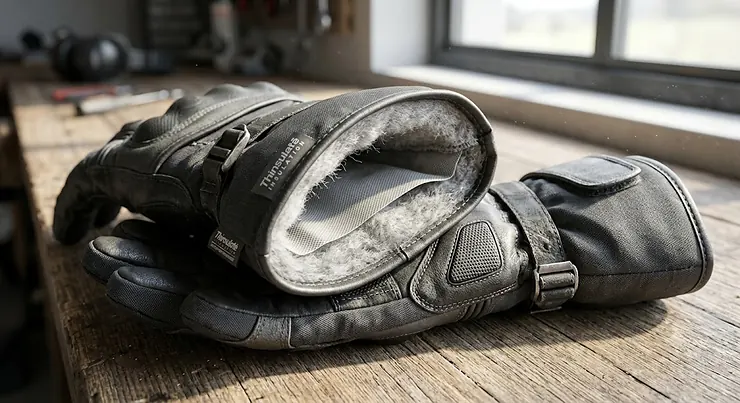
The Highway 21 7V Radiant Heated Glove solves the winter-glove equation differently: rather than relying purely on insulation to trap existing body heat, it actively generates it. A full leather chassis houses a Hipora waterproof-breathable membrane and 100-gram Thinsulate insulation, so it still performs as a solid winter glove with the batteries removed, but its microwire heating elements — powered by removable lithium batteries — push it into a different category entirely for riders facing genuinely brutal cold.
Based on the spec comparison with passive-insulation gloves above, the honest trade-off here is battery life: aggregated feedback notes the heating elements typically run a few hours per charge before needing a swap, which matters for all-day touring but is a non-issue for most one-way commutes. Reviewers do praise the even heat distribution across the fingers rather than just the palm, which is a common weak point in cheaper heated gloves.
Pros:
- ✅ Active heating genuinely extends the usable cold-weather range
- ✅ Hipora membrane and leather shell perform well even unpowered
- ✅ Even heat distribution reaches fingertips, not just the palm
Cons:
- ❌ Battery life limits all-day use without spares
- ❌ Highest price point in this roundup by a meaningful margin
At $250-$300, the Highway 21 7V Radiant Heated Glove is the pick for riders who commute through genuinely sub-freezing mornings and are done gritting their teeth through numb fingers.
Cold Climate Riding Gear: Setup, Break-In, and Winter Maintenance
Buying the right glove is half the job — the other half is treating it like the piece of cold climate riding gear it is, not a fashion accessory. Fresh out of the box, leather-heavy gloves like the Alpinestars Corozal V3 Drystar and Richa Arctic GTX benefit from a short break-in period: wear them around the house for an hour or two before your first cold ride so the leather starts flexing at the knuckles instead of fighting your grip.
Waterproof membranes need care too. Rinse road salt and grime off after wet rides rather than letting it dry into the seams, since salt residue can degrade stitching over a season. Let gloves air-dry away from direct heat sources — a radiator or heater vent will crack leather and can even damage membrane laminates like Gore-Tex or Drystar over repeated exposure. If you’re running a heated pair like the Highway 21 7V Radiant Heated Glove, check the battery contacts for corrosion every few weeks and store spare batteries at room temperature rather than in a cold garage, since lithium cells lose capacity faster in the cold when not in use.
A common first-30-days mistake: riders assume a “waterproof” label means indefinite submersion resistance and stop treating the cuff seal with care. In reality, every glove on this list relies on a tight cuff-to-sleeve connection to keep water from wicking in from above, so cinch that closure properly every single ride, not just when rain looks likely.
Real Riders, Real Winters: Matching Gloves to Your Commute
Consider a college student commuting five miles to campus on a budget, mostly in temperatures hovering in the 40s with occasional drizzle. The Oxford Rainseal Pro or Five Boxer EVO WP covers that use case comfortably without straining a student budget, since neither the extreme cold nor the extended exposure that justifies a $250 heated glove applies here.
Now picture a suburban commuter riding twelve miles each way through a Midwest winter, with real freezing mornings and unpredictable sleet. That rider’s use case lines up with the Alpinestars Corozal V3 Drystar or Richa Arctic GTX — enough insulation and membrane reliability to handle a genuine seasonal range without the added cost and battery-management hassle of a heated glove.
Finally, picture a long-distance tourer who logs 300-mile days through mountain passes where temperatures can swing from 50°F at the base to below freezing at elevation. That’s precisely the scenario the Highway 21 7V Radiant Heated Glove is built for — the ability to dial up active heat when the temperature drops rather than hoping static insulation keeps pace with a changing climb.
How to Choose Waterproof Winter Motorcycle Gloves
- Define your typical temperature range first. A glove rated for genuinely brutal cold is overkill — and often less dexterous — for riders who mostly face 40-50°F mornings.
- Check for a true waterproof membrane, not just “water-resistant” coating. Membranes like Gore-Tex, Drystar, and Hipora are laminated barriers; a water-resistant coating on plain textile wears off far faster.
- Prioritize cuff length and seal over insulation thickness. A loose cuff undoes even the warmest insulation by letting cold air pump through with every hand movement.
- Confirm CE certification if crash protection matters to you. Look specifically for EN 13594:2015 labeling rather than assuming any padded knuckle counts as certified protection.
- Test dexterity before committing to the thickest option. A glove that fits perfectly in a store but can’t operate your clutch lever smoothly is a genuine safety issue, not just a comfort one.
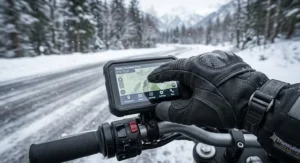
- Factor in touchscreen compatibility if you navigate by phone. Conductive fingertip panels save real time and frustration at every gas stop.
- Decide if active heating fits your riding pattern. Heated gloves solve extreme-cold problems brilliantly but add battery management that passive gloves don’t require.
Winter Glove Waterproofing: How the Membrane Actually Works
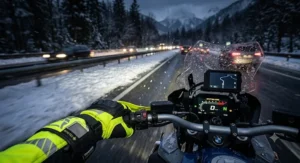
Winter glove waterproofing isn’t a single technology — it’s a category, and the differences between options genuinely matter for buyers comparing the gloves above. Gore-Tex, the membrane inside the Richa Arctic GTX and Held Satu Gore-Tex, uses a laminated construction that blocks liquid water while still letting water vapor from sweat escape, which is why breathability claims on premium gloves aren’t just marketing fluff. House-brand alternatives like Alpinestars’ Drystar or Highway 21’s Hipora aim for similar performance at a lower licensing cost, and aggregated rider feedback across this roundup suggests they get close, if not quite matching, Gore-Tex’s breathability in sustained wet conditions.
Membrane waterproofing only works as well as its weakest seam, though. Every glove in this guide routes seams away from high-flex points specifically to reduce puncture risk in the membrane, and manufacturers with more R&D budget — Held and Richa among them — tend to minimize stitching penetration through the waterproof layer itself. That’s a real, verifiable engineering difference, not a subjective one: fewer seams crossing the membrane generally means fewer failure points after a season of flexing at the knuckles.
Insulated Waterproof Riding Gloves vs Heated Gloves
Insulated waterproof riding gloves and heated gloves solve the same problem — cold hands — through fundamentally different mechanisms, and the distinction matters more than most buying guides admit. Insulation, whether Thinsulate, PrimaLoft, or a comparable synthetic fill, works by trapping the heat your body already produces; it can’t generate warmth, only slow its escape. That’s why even the thickest insulated glove eventually loses the battle in truly extreme cold — there’s a physical ceiling to how much heat trapping alone can do.
Heated gloves like the Highway 21 7V Radiant Heated Glove sidestep that ceiling entirely by actively producing heat via wired elements, at the cost of battery weight, charge management, and a meaningfully higher price. For most riders facing typical seasonal cold — that 30-50°F range most of the country deals with from November through March — a well-built insulated waterproof glove like the Alpinestars Corozal V3 Drystar or Richa Arctic GTX delivers comparable comfort without any battery logistics. Heated gloves earn their keep specifically for riders facing sustained sub-freezing temperatures or long stationary stretches, like traffic-heavy commutes, where passive insulation simply runs out of runway.
Wet Grip Control: What to Expect in the Rain
Wet grip control is the feature spec sheets barely mention but every rider notices the first time they need to brake hard in the rain. A soaked palm — whether from external rain or internal sweat trapped by a non-breathable glove — reduces friction against the grip and lever, and that’s a genuine safety concern, not just a comfort complaint.
Palm materials matter here as much as waterproofing. Goatskin, used in the Richa Arctic GTX and Held Satu Gore-Tex, tends to maintain better tactile grip when damp than smoother synthetic alternatives, while textured rubber palm panels — found in various forms across the Five Boxer EVO WP and Oxford Rainseal Pro — add mechanical grip that doesn’t depend on material texture alone. What most buyers overlook is that breathability plays into grip control too: a glove that traps sweat inside a fully sealed shell, even a technically “waterproof” one, can leave your palm just as slick as one that let rain in from outside. That’s precisely why breathable membranes like Gore-Tex and Hydratex earn their price premium over basic waterproof coatings.
Cold and Wet Weather Gloves for Different Riders
Cold and wet weather gloves aren’t one-size-fits-all, and matching glove to rider type saves both money and frustration. Beginner riders commuting short distances in variable weather generally do best starting with a mid-range option like the Alpinestars Corozal V3 Drystar — enough protection and warmth to build confidence without overspending before they know their exact riding patterns. Experienced touring riders who log serious winter mileage tend to gravitate toward the Richa Arctic GTX or Held Satu Gore-Tex, since the higher upfront cost pays off across hundreds of miles where fit and membrane reliability compound in value.
Budget-conscious riders and students, meanwhile, are well served by the Five Boxer EVO WP or Oxford Rainseal Pro — both deliver genuine waterproofing without the premium fit refinements that justify a Held or Richa price tag. And riders in genuinely extreme climates, or anyone who’s dealt with numb, aching fingers on a sub-freezing commute one too many times, are the clearest audience for the Highway 21 7V Radiant Heated Glove, where active heat solves a problem passive insulation structurally can’t.
✨ Don’t Miss These Exclusive Deals!
🔍 Take your winter riding setup to the next level with these carefully selected gloves. Click on any highlighted pick to check current pricing and availability. The right pair turns dreaded cold commutes into rides you barely think twice about.
Common Mistakes When Buying Winter Motorcycle Gloves
The single most common mistake is buying based on bulk alone, assuming the thickest glove on the shelf must be the warmest. As the earlier waterproofing breakdown showed, a well-sealed cuff and quality membrane often outperform raw insulation thickness, and an overly bulky glove can actually hurt safety by reducing lever control. A second frequent error is skipping CE certification entirely — plenty of budget gloves sold through generic marketplace listings carry no real EN 13594:2015 testing behind their protective claims, unlike certified options such as the Five Boxer EVO WP or Held Satu Gore-Tex.
A third mistake is ignoring cuff length relative to jacket sleeve style, buying a short-cuff glove like the REV’IT! Cassini H2O for a riding jacket that expects a gauntlet tucked underneath, which leaves a wind gap regardless of how good the glove itself is. Finally, riders frequently underestimate break-in time on leather-heavy gloves, expecting day-one dexterity from a glove that needs a few rides to soften at the knuckle joints.
Long-Term Cost & Maintenance
Sticker price only tells part of the ownership story. A budget pick like the Oxford Rainseal Pro costs less upfront but may need replacing after one or two hard winters if the waterproof insert degrades, while a premium membrane glove like the Held Satu Gore-Tex often holds its waterproofing and structural integrity for several seasons with basic care, effectively lowering its cost-per-winter over time. Total cost of ownership should also account for consumables: heated gloves like the Highway 21 7V Radiant Heated Glove require periodically replacing lithium battery packs, an ongoing cost that passive-insulation gloves simply don’t carry.
Maintenance habits extend lifespan regardless of price tier. Avoid machine washing leather-and-membrane gloves — hand-clean with a damp cloth and mild soap, then air dry fully before storage. Leather conditioner applied a couple of times per season keeps goatskin and cowhide palms supple, which in turn helps preserve the waterproof seams they’re stitched around.
Features That Actually Matter (And Those That Don’t)
Cuff length, membrane quality, and CE certification are the features that consistently separate a glove that performs from one that just looks the part on a store shelf. Touchscreen-compatible fingertips matter more than they might sound like they should, given how often riders check navigation at stops — every glove in this roundup that includes this feature earns real practical value from it.
On the other hand, flashy visor wipers and elaborate reflective graphics, while nice-to-haves, rarely move the needle on how a glove actually performs against cold and wet. Marketing copy also loves throwing around vague “advanced thermal technology” language without naming a specific insulation type or gram weight — when a spec sheet won’t name its insulation (Thinsulate, PrimaLoft, or otherwise) or its membrane by name, treat that as a signal to look elsewhere.
Safety, Regulations, and Compliance Guide
Motorcycle glove safety in the United States doesn’t carry the same blanket legal mandate seen in parts of Europe — France, for instance, made CE-approved gloves compulsory for riders, a rule covered in detail by France’s national standards body AFNOR. In the US, glove use is generally a personal safety choice rather than a legal requirement, which makes understanding certification even more important since nothing forces manufacturers to meet a baseline.
The relevant standard to look for is EN 13594:2015, the European testing protocol that independent testing body Intertek explains covers abrasion, impact, tear resistance, and seam strength for motorcycle gloves specifically. Gloves in this guide like the Five Boxer EVO WP and Held Satu Gore-Tex carry real certification under this standard; always check the label rather than assuming a padded knuckle automatically means tested protection. Beyond crash protection, cold exposure itself carries real medical risk — untreated, prolonged cold exposure to the hands can progress toward frostbite, a condition documented in detail as a form of cold injury that in severe cases leads to permanent tissue damage. That’s the underlying reason waterproofing and insulation aren’t just comfort features on a winter glove — they’re functioning safety equipment.
Frequently Asked Questions
❓ Are waterproof winter motorcycle gloves actually warm enough for freezing temperatures?
❓ How do I know if a glove is truly waterproof versus water-resistant?
❓ Do heated motorcycle gloves work with all motorcycle batteries?
❓ What's the difference between CE Level 1 and Level 2 motorcycle gloves?
❓ How long should waterproof winter motorcycle gloves last?
Conclusion
Winter riding doesn’t have to mean gritting your teeth through numb fingers until spring. The seven gloves compared here cover every realistic scenario, from a budget-conscious student riding a short damp commute to a tourer chasing mountain passes through genuinely brutal cold. The through-line across every honest recommendation in this guide is the same: match the glove’s waterproofing, insulation level, and cuff design to your actual riding conditions, not to whichever pair looks the bulkiest on a store shelf.
If there’s one habit worth building before the next cold front rolls in, it’s treating your gloves as functioning safety equipment rather than an afterthought accessory. A properly sealed, genuinely waterproof pair keeps your hands warm enough to react quickly, grip firmly, and actually enjoy a ride that would otherwise be an exercise in enduring the cold.
✨ Ready to Gear Up for Winter?
🔍 Whichever pick fits your budget and climate, check current pricing and availability before your next cold-weather ride. The right pair of waterproof winter motorcycle gloves is the difference between dreading January mornings and actually looking forward to them.
Recommended for You
- Heated Motorcycle Gloves for Winter Commuting: 7 Best Picks for 2026
- 7 Best Track Day Gloves Under $100 For 2026
- Motorcycle Cargo Pants for Daily Riding: 7 Top Picks (2026)
Disclaimer: This article contains affiliate links. As an Amazon Associate, I earn from qualifying purchases. If you purchase products through these links, we may earn a small commission at no additional cost to you.
✨ Found this helpful? Share it with your friends! 💬🤗
