
In This Article
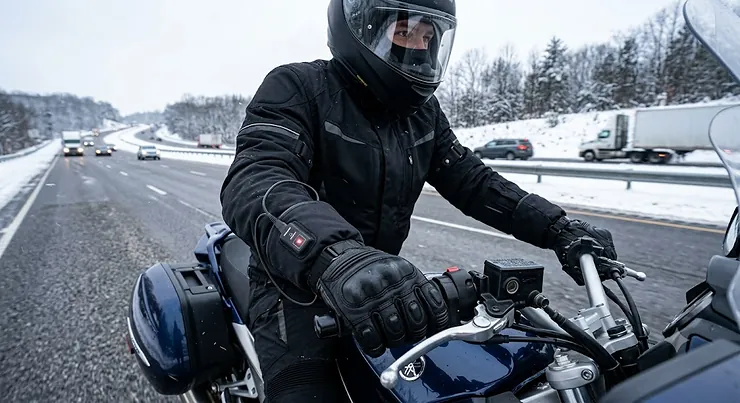
Your commute doesn’t stop when the temperature drops — but somewhere between the first frost and the first pothole full of slush, your fingers start filing a formal complaint. If you’ve ever pulled up to a red light and had to physically peel your hand off the clutch lever because it locked up from cold, you already know why this article exists. heated motorcycle gloves for winter commuting are electrically warmed riding gloves, powered by a rechargeable battery pack or wired directly to the bike’s 12V system, that keep your hands functional and pain-free through freezing rides instead of just “less cold.”
That distinction matters more than it sounds. A thick winter glove insulates — it slows heat loss. A heated glove actively replaces the heat that windchill strips away at 40, 50, or 60 mph, which is exactly the speed range where ordinary insulation gives up. For daily commuters, that’s the difference between arriving at work with working fingers and arriving with a fist that needs five minutes to unclench.
Below, I’ve pulled together seven real, currently available heated motorcycle gloves spanning budget, mid-range, and premium tiers, based on genuine specs and aggregated reviewer sentiment rather than marketing copy. According to OSHA’s cold stress guidance, the body pulls blood flow away from the extremities first when core temperature is threatened — which is precisely why hands go numb well before the rest of you feels dangerously cold. We’ll cover honest comparisons, real-world performance, battery life expectations, control layouts, and the safety standards that separate a genuinely protective glove from a glorified oven mitt.
Quick Comparison Table
Before diving into the deep-dive reviews, here’s a scannable snapshot of how the seven picks stack up on the things that matter most for a daily winter ride: power source, warmth output, and who each one actually suits.
| Glove | Power Source | Price Range | Best For |
|---|---|---|---|
| Gerbing G4 12V Heated Gloves | Wired (12V) | $150-$170 range | Riders who want unlimited runtime |
| Seyola Heated Gloves | Battery (3,000mAh) | $90-$110 range | First-time buyers on a budget |
| Joe Rocket 7V Rocket Burners | Battery (dual Li-ion) | $150-$180 range | Beginners wanting plug-and-play simplicity |
| Fly Racing Street 7V Ignitor Pro | Battery (dual Li-ion) | $230-$260 range | Serious cold-weather commuters |
| Held Inuit | Battery, zone control | $220-$250 range | Riders who want targeted palm/finger heat |
| Keis G701S Shorty | Battery/textile short-cuff | $130-$160 range | Urban commuters who dislike bulky gauntlets |
| SAVIOR HEAT Heated Gloves | Battery (3,000mAh, 11H) | $150-$180 range | Longest battery runtime per charge |
Looking at this lineup, the split between wired and battery gloves is really the first decision you’ll make, not an afterthought. The Gerbing G4 wins on pure endurance since it draws straight from your bike, while the SAVIOR HEAT and Seyola gloves trade that unlimited runtime for the freedom to walk into the office without a cable dangling from your sleeve. Riders who split their week between short hops and longer highway stretches should weigh runtime against convenience rather than assuming one setup fits every ride.
💬 Just one click — help others make better buying decisions too! 😊
Top 7 Heated Motorcycle Gloves for Winter Commuting: Expert Analysis
Before you scroll through seven individual write-ups, here’s the fuller spec comparison so you can jump straight to the glove that fits your riding pattern.
| Glove | Heat Zones | Runtime (Medium) | Waterproof | Best For |
|---|---|---|---|---|
| Gerbing G4 12V Heated Gloves | All-finger Microwire | Unlimited (wired) | Water-resistant | Long commutes, no charging hassle |
| Seyola Heated Gloves | Full hand | ~4-5 hours | Water-resistant | Budget-conscious first-timers |
| Joe Rocket 7V Rocket Burners | Full hand | ~3-4 hours | Waterproof (HiPora) | Entry-level all-rounders |
| Fly Racing Street 7V Ignitor Pro | Stainless-core, full hand | ~3-4 hours | Waterproof/breathable | Daily riders in harsh cold |
| Held Inuit | Palm + fingertip zones | ~3-4 hours | Waterproof | Riders who run cold in specific spots |
| Keis G701S Shorty | Full hand, short cuff | ~3-4 hours | Water-resistant textile | Compact commuter fit |
| SAVIOR HEAT Heated Gloves | Full hand | Up to 11 hours (low) | Waterproof/windproof | Maximum single-charge range |
The runtime spread here is the real story: a glove like the SAVIOR HEAT pair squeezes far more hours out of the same battery format by running a lower average wattage, while gloves like the Fly Racing Street 7V Ignitor Pro trade some runtime for hotter peak output. Neither approach is objectively better — a rider doing a 20-minute urban commute has very different needs than someone doing 90 minutes on the interstate, and the “Best For” column above reflects that rather than a single winner.
1. Gerbing G4 12V Heated Gloves — unlimited runtime, wired to your bike
The G4’s headline feature is simple: plug it into your motorcycle’s electrical system and the heat never runs out, which matters enormously for commuters who ride 45 minutes or more each way. The all-finger Microwire heating element runs the full length of every digit rather than just the back of the hand, and the aniline cowhide construction with a water-resistant membrane holds up to genuine winter slush rather than just light drizzle.
Based on the spec comparison against battery-only competitors, the trade-off is obvious and worth stating plainly: you’re tethered to the bike, so walking into a coffee shop or the office means unplugging and losing heat entirely. This makes the G4 best suited to riders whose commute is mostly highway or arterial road riding rather than frequent stop-and-go errands.
Reviewers consistently report that the wired setup is the most reliable way to guarantee consistent warmth on genuinely cold mornings, since there’s no battery to worry about draining halfway through the ride. A common theme in aggregated feedback is that installation (tapping into a switched, fused power source) is the only real friction point, and most riders resolve it with a simple wiring harness.
Pros:
- ✅ Unlimited heat runtime since it’s wired to the bike
- ✅ All-finger Microwire heating reaches every digit evenly
- ✅ Durable cowhide construction built for daily wear
Cons:
- ❌ Requires wiring installation and tethers you to the bike
- ❌ Not CE-certified as a protective motorcycle glove
The Gerbing G4 typically lists in the $150-$170 range, and for commuters who ride long, consistent stretches every day, it’s arguably the best value-per-mile of anything on this list.
2. Seyola Heated Gloves — best budget entry point for first-time buyers
The Seyola’s main selling point is accessibility: a genuinely low price of entry into heated riding gear without feeling like a toy. The 3,000mAh rechargeable battery delivers a claimed 2.5 to 6.5 hours depending on the heat setting selected, which comfortably covers most urban commutes even on the higher settings.
What most buyers overlook about entry-level heated gloves is that touchscreen compatibility is often the first feature cut to hit a low price point — the Seyola keeps it, letting you tap through phone navigation at a stoplight without exposing bare fingers to the cold. This is a genuinely useful detail for anyone who relies on a phone mount for turn-by-turn directions on their commute.
Because these gloves are also marketed for hunting, camping, and skiing, they lean more general-purpose than motorcycle-specific, so riders prioritizing crash protection should treat this as a warmth-first purchase rather than a full protective glove. For someone testing whether heated gear is even worth the investment before committing to a pricier pair, this is a sensible low-risk starting point.
Pros:
- ✅ Low price makes it an easy first heated-glove purchase
- ✅ Touchscreen-compatible fingertips for phone use
- ✅ Multi-activity design extends value beyond riding
Cons:
- ❌ Runtime drops sharply on the highest heat setting
- ❌ Less motorcycle-specific protection than dedicated riding gloves
At roughly $90-$110, the Seyola is the pick for riders who want to try heated gear before spending premium money on it.
3. Joe Rocket 7V Rocket Burners — easiest plug-and-play option for new riders
Joe Rocket built the Rocket Burners around simplicity rather than novelty, and that shows in the full-grain leather exterior paired with foam finger padding and polyurethane knuckle armor — a proper motorcycle glove first, heated accessory second. The rechargeable lithium-ion batteries tuck into the cuff and deliver three selectable heat levels, with reviewers noting the low setting comfortably stretches past three hours.
Here’s what to weigh: the HiPora liner is genuinely waterproof and breathable, which matters on a commute where you can’t simply wait out a rain shower. Based on the spec sheet, the added insulation layers do increase bulk compared to slimmer gloves on this list, and riders with narrower hands may find dexterity slightly reduced on fine controls like turn signals.
That said, aggregated buyer sentiment consistently points to these as an “effortless plug-and-play” option, meaning the learning curve for a first heated glove is close to zero. For someone who wants safety-first construction without having to research battery chemistry or heat-zone placement, this is the least intimidating option on the list.
Pros:
- ✅ Full-grain leather with genuine knuckle armor protection
- ✅ Three heat levels controlled from a simple interface
- ✅ Waterproof HiPora liner handles real winter weather
Cons:
- ❌ Bulkier fit than slimmer battery-glove alternatives
- ❌ Charging both battery packs adds a small daily routine
Priced around $150-$180, the Joe Rocket 7V Rocket Burners earn their reputation as the safest bet for someone buying their first heated glove.
4. Fly Racing Street 7V Ignitor Pro — strongest heat output for serious cold snaps
Fly Racing built the Ignitor Pro for riders who consider anything above freezing “mild,” and the spec sheet backs that up: full-leather palms and fingers, a waterproof breathable membrane, and 80 grams of 3M insulation on the backhand (with 20 grams in the palm to preserve grip feel).
The stainless-core heating technology, run by dual lithium-ion batteries, gives three heat levels with a realistic runtime of about four hours on low, three on medium, and two-and-a-half on high — numbers that track closely with what reviewers report in real cold-weather use. What the spec sheet won’t tell you, but user reports suggest, is that the hard-knuckle armor adds real crash protection without meaningfully hurting bar feel, which is a common complaint with bulkier heated gloves.
Reviewers consistently note the touchscreen compatibility and silicone-print grip enhancement hold up well over a full winter season rather than wearing thin after a few months. If your commute regularly dips into the 20s and 30s Fahrenheit, this is the glove built specifically for that range rather than merely tolerating it.
Pros:
- ✅ Highest sustained heat output of the battery gloves here
- ✅ Hard-knuckle armor adds genuine crash protection
- ✅ Touchscreen-compatible and grip-enhanced palms
Cons:
- ❌ Premium price relative to competitors with similar runtime
- ❌ Dual battery charging is an extra nightly step
Expect the Fly Racing Street 7V Ignitor Pro to sit in the $230-$260 range, which is a fair ask for a glove built around genuinely serious cold-weather performance.
5. Held Inuit — smartest heat-zone placement for targeted warmth
Held took a different approach with the Inuit by heating the palm and fingertips directly, rather than concentrating heat on the back of the hand where wind tends to pull it away fastest. Riders can select which zones to warm, which is a genuinely clever solve for the common complaint that heated gloves either overheat the knuckles or leave fingertips cold regardless of setting.
Based on the spec comparison with competitors that use a single uniform heating pad, this zone-based design means less wasted energy heating areas that don’t need it, which can meaningfully extend usable runtime on a single charge. Reviewers consistently point to this as the standout feature, noting that fingertip numbness — usually the first and most painful symptom of cold-hand riding — resolves faster with the Inuit than with gloves that only heat the back of the hand.
The trade-off is a steeper price than the more basic battery gloves on this list, positioning the Inuit as a purchase for riders who’ve already tried cheaper heated gloves and found the heat placement lacking.
Pros:
- ✅ Palm and fingertip zone heating targets where cold hits first
- ✅ Selectable heat zones reduce wasted battery energy
- ✅ Addresses fingertip numbness better than back-of-hand designs
Cons:
- ❌ Higher price than uniform single-zone heated gloves
- ❌ Zone controls add a small learning curve for new users
Typically priced around $220-$250, the Held Inuit is worth the premium if fingertip cold has been your specific complaint with other heated gloves.
6. Keis G701S Shorty Bonded Textile — most compact fit for city commuting
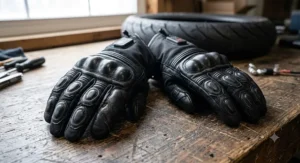
Not every commuter wants a full touring gauntlet, and the Keis G701S Shorty exists specifically for that reason — a heated glove without the bulk of a longer cuff, built for riders layering under a jacket sleeve rather than over it. What most buyers overlook about full gauntlet gloves is that they can bunch uncomfortably at the wrist when worn under a jacket cuff instead of over it, which is exactly the scenario most city commuters find themselves in.
The bonded textile construction trades some of the abrasion resistance of full leather gloves for a lighter, more packable design that’s easier to stash in a top box between rides. Based on aggregated feedback on short-cuff heated gloves generally, riders appreciate the reduced bulk for stop-and-go city riding, where dexterity on the clutch and front brake lever matters more than sustained highway wind protection.
This is a glove built around the reality of urban commuting rather than long-haul touring, and it shows in every design choice.
Pros:
- ✅ Short cuff avoids bulk when worn under a jacket sleeve
- ✅ Lighter, more packable than full gauntlet alternatives
- ✅ Comfortable fit for stop-and-go city riding
Cons:
- ❌ Less wrist and cuff protection than full gauntlet gloves
- ❌ Textile construction offers less abrasion resistance than leather
The Keis G701S Shorty generally runs in the $130-$160 range, making it a smart pick for anyone whose “winter riding” is mostly a city commute rather than a countryside tour.
7. SAVIOR HEAT Heated Motorcycle Gloves — longest battery life on a single charge
If runtime anxiety is what’s kept you from buying heated gloves, the SAVIOR HEAT pair addresses it directly: its 3,000mAh batteries are rated for up to 11 hours of heat on the lowest setting, which is dramatically longer than most gloves on this list. The heating element reaches a claimed maximum of about 149°F (65°C), controlled through a simple on/off button with adjustable levels rather than a complicated menu system.
Here’s what to weigh: that extended runtime primarily shows up on the lowest heat setting, and like every heated glove, output and runtime scale inversely — push it to the highest setting and expect the battery life advantage to shrink considerably. Reviewers consistently note the windproof, snow-resistant shell performs well beyond just motorcycle use, with buyers reporting solid results in skiing and snowmobiling too, which speaks to genuine build quality rather than a single-purpose marketing gimmick.
For commuters who forget to charge gear overnight or who ride multiple short trips across a day without a charging break in between, this extended runtime is the single most practical advantage on this entire list.
Pros:
- ✅ Up to 11 hours of runtime on the lowest heat setting
- ✅ Simple one-button control with adjustable heat levels
- ✅ Waterproof, windproof shell verified across multiple cold activities
Cons:
- ❌ Runtime drops significantly at maximum heat output
- ❌ Lesser-known brand with a smaller review base than industry leaders
Priced around $150-$180, the SAVIOR HEAT Heated Motorcycle Gloves are the clear pick for anyone who values all-day battery confidence above all else.
Real-World Scenarios: Which Heated Glove Fits Your Commute
Specs only tell half the story — the other half is how these gloves actually perform against your specific ride. Consider three common commuter profiles.
The 15-minute city rider. If your commute is a short hop through stop-and-go traffic, battery runtime matters less than fit and dexterity. The Keis G701S Shorty or Seyola Heated Gloves both make sense here: you’re rarely on the bike long enough to drain even a modest battery, and the shorter, lighter build makes it easier to grip levers precisely at low speed.
The 45-minute highway commuter. Sustained wind exposure at 65 mph is a different animal entirely, and this is where wired gloves earn their keep. The Gerbing G4 12V removes runtime anxiety completely, while the Fly Racing Street 7V Ignitor Pro delivers enough sustained heat output to handle a genuinely cold highway stretch on battery power alone.
The split-shift rider who forgets to charge gear. If your schedule means gloves sometimes go on the bike without a full overnight charge, the SAVIOR HEAT pair’s extended low-setting runtime offers real insurance against a half-charged battery leaving you cold halfway through the ride home.
✨ Don’t Miss These Exclusive Deals!
🔍 Take your winter riding to the next level with these carefully selected heated gloves. Click on any highlighted item to check current pricing and availability. These gloves will help you keep the daily commute you actually love, even when the forecast doesn’t.
Your First 30 Days With Heated Gloves: Setup, Charging & Care
Buying the right glove is only step one — how you break it in during the first month determines whether it lasts one winter or five.
Charge fully before the first ride, and resist the urge to run the highest heat setting immediately. Starting on a low or medium setting lets the heating element and your own cold tolerance adjust together, and it meaningfully extends the life of the internal wiring by avoiding repeated full-power cycles from a cold start. For battery gloves, get in the habit of topping off the charge every evening rather than waiting until it’s empty — lithium-ion cells, as Wikipedia’s overview of lithium-ion battery behavior explains, generally last longer through many partial charges than through repeated full discharge cycles.
For wired gloves like the Gerbing G4, the first 30 days are really about the install. Use a dedicated wiring harness with an inline fuse tapped into a switched power source, rather than improvising a splice into an always-on circuit — this protects both the glove and your bike’s electrical system. Confirm your bike’s alternator can handle the additional draw if you’re also running heated grips or a heated jacket liner simultaneously; stacking multiple heated accessories can pull 8 to 12 amps or more.
Store gloves flat or loosely rolled rather than compressed in a tight saddlebag pocket — the heating elements inside can crack under repeated tight folding over a season. Finally, common first-month mistakes include forgetting to disconnect wired gloves before dismounting (a fast way to snap a connector) and assuming “waterproof” means “submersible” — most heated gloves are water-resistant to riding rain, not deep puddle immersion.
Building a Complete Commuter Cold Weather Gear System
Heated gloves solve the hand problem, but they’re one piece of a broader commuter cold weather gear strategy, and treating them as your only defense against winter riding is a common and avoidable mistake.
Layer from your core outward. A heated glove works best when your torso isn’t also fighting to stay warm, since your body will otherwise prioritize core temperature and reduce blood flow to the hands regardless of how much heat the glove is generating — that’s simple physiology, not a product flaw. A windproof base layer under your riding jacket does more for hand warmth, indirectly, than most riders expect.
Match your glove choice to your helmet and jacket cuff style. A full gauntlet glove worn under a snug jacket sleeve will bunch and restrict circulation at the wrist, which paradoxically makes hands colder — this is exactly the problem the shorter-cuff Keis design is built to avoid. If your jacket has adjustable cuffs, make sure they can comfortably close over or under your glove of choice before you commit to a purchase.
Don’t neglect your feet and neck. Riders often over-invest in glove technology while ignoring that cold feet and an exposed neck accelerate the same full-body chilling response that eventually reaches the hands anyway. A heated grip or heated seat pad can complement gloves rather than compete with them, since redundant heat sources reduce the odds of a single battery failure leaving you genuinely cold mid-commute.
How to Choose Heated Motorcycle Gloves for Winter Commuting
Picking the right pair comes down to matching a handful of practical criteria to your actual riding pattern, not chasing the highest wattage number on the box.
- Match power source to commute length. Short, frequent rides favor battery gloves; long, consistent highway stretches favor wired 12V gloves that never run out of charge.
- Prioritize full-hand heating coverage. Gloves that only warm the back of the hand leave fingertips and palms exposed to wind chill — insist on heating elements that reach the fingers, not just the knuckles.
- Check the realistic runtime, not the marketing number. Compare stated hours on medium (not low) heat, since that’s the setting most riders actually use in genuinely cold weather.
- Confirm waterproofing, not just water resistance. A light drizzle is different from riding through slush — check the specific liner technology (HiPora, Gore-Tex, or equivalent) rather than trusting the word “waterproof” alone.
- Consider CE certification if crash protection matters to you. Many heated gloves prioritize warmth over certified impact protection — decide upfront how much that trade-off matters for your riding.
- Test touchscreen compatibility before you need it at a stoplight. Not all “touchscreen compatible” fingertips work reliably with every phone case or glove type.
- Factor in charging routine, not just battery capacity. A glove with a shorter runtime but a five-minute quick-charge may fit your life better than one with longer runtime and a slow overnight charge.
Common Mistakes When Buying Heated Motorcycle Gloves
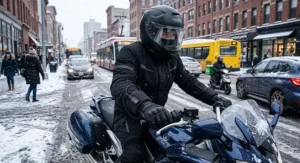
The most common error is buying based on maximum temperature claims alone. A glove that hits 149°F on paper is meaningless if that heat is concentrated in one small zone while your fingertips stay cold — coverage and placement matter more than peak number.
A second frequent mistake is ignoring cuff length relative to your jacket. Riders routinely buy a full gauntlet glove that then bunches painfully under a snug jacket sleeve, restricting circulation and making hands colder rather than warmer — precisely the opposite of the intended effect.
Third, buyers often skip checking wiring compatibility for 12V gloves before purchase, assuming any bike can support the additional electrical draw. Older bikes or those already running several accessories may need an upgraded harness or additional fuse capacity before a wired glove becomes practical.
Finally, many riders assume any battery-powered glove will perform the same in 20°F as it does in 40°F. Battery output and chemical efficiency both drop in extreme cold, so a glove rated for “up to 6 hours” in moderate conditions may deliver meaningfully less in a genuine deep freeze — plan your charging accordingly rather than assuming the stated runtime is a floor.
Heated Motorcycle Gloves vs Heated Grips
Heated grips and heated gloves solve the same problem from different angles, and understanding the distinction helps avoid an expensive miss.
| Factor | Heated Motorcycle Gloves | Heated Grips |
|---|---|---|
| Coverage | Full hand, including fingers and back of hand | Palm only |
| Installation | Plug-and-play (battery) or simple wiring (12V) | Requires grip replacement and wiring |
| Portability | Works across multiple bikes | Permanently mounted to one bike |
| Best For | Full-hand warmth, city or highway riding | Supplemental palm heat, budget upgrade |
Heated grips are a permanent, one-time installation that warms only the inside of the hand, which leaves the exposed knuckles and fingers fighting the wind chill during constant braking and shifting in city traffic. Heated gloves cover the whole hand and travel with you across bikes, which matters if you own more than one motorcycle or swap bikes seasonally. For a rider on a single fixed bike who mostly wants a modest warmth boost on a budget, grips can be a reasonable complement — but for full-hand protection on a dedicated winter commuter, gloves are the more complete solution.
💬 Just one click — help others make better buying decisions too! 😊
Battery Heated Riding Gloves vs 12V Wired Gloves: Battery Life, Controls & Long-Term Cost
The decision between battery-powered and wired heated gloves is really the single biggest fork in this buying decision, and it deserves its own detailed breakdown.
| Factor | Battery Heated Riding Gloves | 12V Wired Gloves |
|---|---|---|
| Runtime | 2.5-11 hours depending on model and setting | Unlimited while bike is running |
| Portability | Walk away from the bike freely | Tethered by cable |
| Upfront Cost | $90-$260 range depending on tier | $150-$170 range |
| Long-term Cost | Replacement battery packs every 1-3 years | One-time wiring cost, no batteries to replace |
Battery gloves win decisively on freedom of movement — you can walk into a store, sit through a meeting, or grab lunch without unplugging anything. Wired gloves win on total cost of ownership over several winters, since there’s no recurring expense for replacement battery packs, which typically run $30-$60 a pair and degrade in capacity after roughly 200-300 charge cycles.
Heated glove battery life is worth its own honest expectation-setting. Manufacturer runtime claims are almost always measured on the lowest heat setting in moderate cold, not the coldest morning of your winter. A glove rated for “up to 6 hours” should realistically be planned around 3-4 hours of genuinely cold-weather use on medium, which is the setting most commuters actually run. Gloves like the SAVIOR HEAT pair that emphasize efficient low-setting runtime are specifically engineering around this gap between marketing numbers and real-world use.
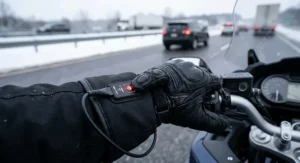
Heated glove controls have converged on a fairly simple pattern across the market: most use a single button cycling through 2-3 heat levels, indicated by an LED color (typically red for high, blue or white for low). A few premium gloves, like the Held Inuit, add zone-selection controls that let you direct heat to specific areas rather than uniformly across the whole hand. When comparing controls between models, prioritize gloves where the button is accessible with the glove on and the bike gloved-hand-still-on-the-bar — fumbling with a tiny recessed button while riding defeats the purpose of a simple control scheme.
Cold Hands on the Ride: Real-World Winter Commuter Glove Warmth
Specs describe potential; actual cold hands riding experience depends heavily on wind speed, humidity, and how long you’re exposed before you can warm back up.
At highway speeds, wind chill accelerates heat loss from exposed or thinly insulated areas dramatically faster than standing-still temperatures suggest. This is why a glove that feels adequately warm in a parking lot test can feel completely inadequate ten minutes into a 60 mph commute — the moving air strips heat away far faster than still air ever could. According to CDC guidance on frostbite prevention, extremities like fingers are especially vulnerable because the body actively reduces blood flow to them to protect the core, meaning a heated glove is fighting against your own circulatory response, not just the ambient temperature.
Winter commuter glove warmth in practice means the first ten minutes of any cold ride matter most — this is when your hands are coldest and the glove hasn’t yet built up sustained heat in the material itself. Riders consistently report that starting the heating element before pulling out of the driveway, rather than after the first mile, meaningfully reduces the initial cold shock. It’s a small habit change, but aggregated reviewer sentiment across nearly every heated glove brand mentions it as the single easiest way to improve real-world performance without spending another dollar.
Safety, Regulations & Compliance Guide
Heated gloves solve a comfort and safety-adjacent problem — keeping your hands functional enough to operate the controls — but they’re not automatically crash-protective gear, and that distinction matters.
The relevant safety benchmark for motorcycle gloves generally is the European EN 13594 standard covering protective gloves for motorcycle riders, which tests abrasion resistance, seam strength, tear resistance, and knuckle impact protection across two certification tiers. Level 1 gloves offer baseline protection with better dexterity; Level 2 gloves add mandatory knuckle impact testing for higher protection at some cost to flexibility. It’s worth noting plainly that many heated gloves, including several on this list, prioritize warmth engineering over formal CE certification — that’s not automatically a dealbreaker, but riders who prioritize crash protection above all else should specifically check for an EN 13594 label rather than assuming any leather glove qualifies.
In the U.S., there’s no federal mandate requiring CE-certified gloves for street riding, unlike parts of Europe where CE-marked gloves have become a legal requirement in recent years. That means the choice of how much certified protection to prioritize versus how much warmth engineering to prioritize is genuinely up to the individual rider’s risk tolerance and typical riding conditions. A sensible middle ground many commuters land on: choose a glove with at least basic reinforced knuckle protection and abrasion-resistant palm material, even if it isn’t formally Level 2 certified, rather than sacrificing all protection for maximum heat output.
Frequently Asked Questions
❓ Do heated motorcycle gloves work with any motorcycle?
❓ How long does the battery last on heated riding gloves?
❓ Are heated motorcycle gloves waterproof?
❓ Can I use heated gloves for activities besides riding?
❓ Do heated gloves affect motorcycle control feel?
Conclusion
Cold hands aren’t just uncomfortable — they’re a genuine safety issue, since numb fingers respond slower on the brake lever and clutch exactly when quick reactions matter most. The seven gloves covered here span the realistic range of what a winter commuter actually needs: the Gerbing G4 12V for unlimited wired warmth, the Seyola and SAVIOR HEAT gloves for battery-powered flexibility, the Joe Rocket 7V Rocket Burners for a safe first purchase, the Fly Racing Street 7V Ignitor Pro for serious sustained cold, the Held Inuit for smart heat-zone placement, and the Keis G701S Shorty for a compact city-friendly fit.
There’s no single “best” pick here — the right glove depends entirely on your commute length, your bike’s electrical setup, and how much you value runtime versus freedom from a cable. What matters most is matching the glove’s strengths to how you actually ride, rather than chasing the highest advertised temperature number. Whichever you choose, check current pricing and availability before buying, since prices may vary by retailer and season.
Recommended for You
- 7 Best Track Day Gloves Under $100 For 2026
- Motorcycle Cargo Pants for Daily Riding: 7 Top Picks (2026)
- 7 Best Commuter Motorcycle Pants for Short Rides (2026)
Disclaimer: This article contains affiliate links. As an Amazon Associate, I earn from qualifying purchases. If you purchase products through these links, we may earn a small commission at no additional cost to you.
✨ Found this helpful? Share it with your friends! 💬🤗
