
In This Article
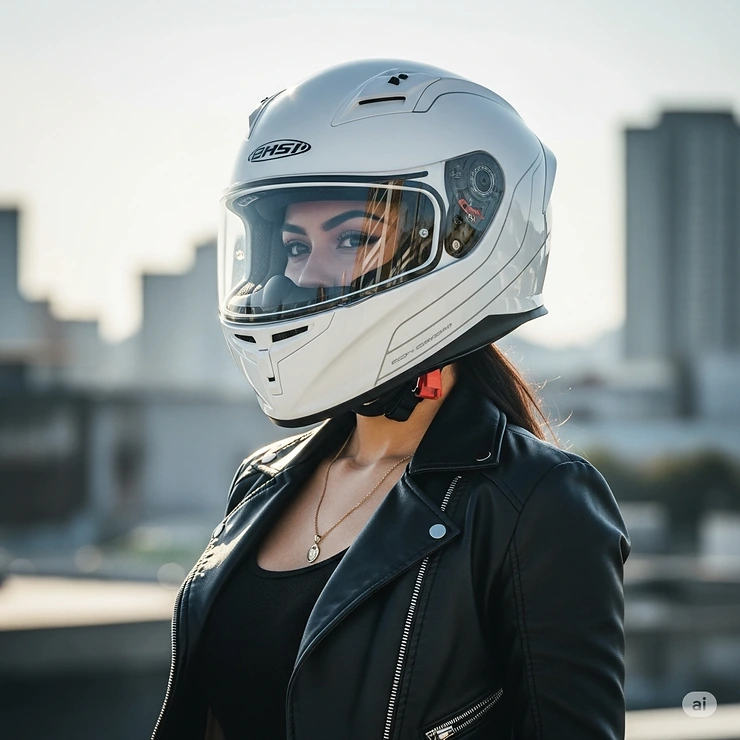
Womens full face motorcycle helmets wrap the whole head, from skull and ears to chin, in a rigid shell with an integrated chin bar and a face shield. Most are sized and padded for smaller, narrower heads. Among motorcycle helmet styles, this is the most protective one for street riding.
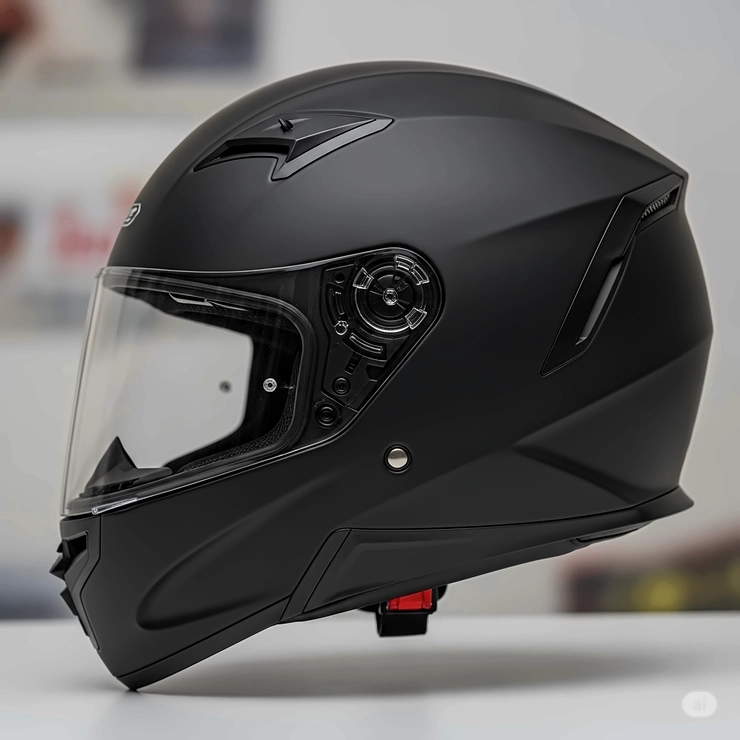
Here’s the part nobody puts on the box: your skull doesn’t care about the color. A helmet either fits your head or it doesn’t. Many womens full face motorcycle helmets are simply unisex shells in smaller sizes with a pink graphic stuck on. That isn’t a crime. Some of them are excellent. But it means the “women’s” label tells you far less than a tape measure and a few minutes in front of a mirror.
So this guide takes a different route. We looked at real products from budget to premium, pulled real specs, and read the pattern of what reviewers say. Where a detail couldn’t be verified, we say so. You’ll also get the stuff a product listing never tells you: how to size a helmet, how to break it in, what the certification stickers mean, and where cheap helmets quietly cost you more.
Everything here is analysis and aggregated review sentiment. Nobody is claiming to have crash-tested a helmet in a garage. Prices appear as ranges only, because they move constantly. Check current pricing before you buy.
Quick Comparison: 7 Best Womens Full Face Motorcycle Helmets at a Glance
| Helmet | Tier | Approx. Price Range | Standout Trait | Best For |
|---|---|---|---|---|
| Bell Qualifier | Budget | $130–$180 | Proven value, speaker pockets | First-time commuters |
| HAX Obsidian | Budget | Under $150 | Dual visor, Pinlock-ready | Style-first shoppers on a tight budget |
| HJC i10 | Budget+ | $150–$200 | Well-known brand at a low price | Riders wanting brand backing cheaply |
| Scorpion EXO-T520 | Entry-level | Under $300 | Drop-down sun visor | Daily riders in changing light |
| Scorpion EXO-R1 Air | Mid-range | $250–$350 | Sport shape, long-standing reputation | Sport and canyon riders |
| Shoei RF-SR | Mid-range | $450–$550 | Shoei refinement at the lowest Shoei price | Touring and long commutes |
| Shoei RF-1400 | Premium | $600–$750 | Light weight, wide field of view | Riders who want the best fit and finish |
Look at the table by what you value rather than by the cheapest sticker. The Bell Qualifier is the safest “start here” pick for a new rider with a modest budget. The jump to the Shoei RF-SR costs real money, but it buys noise control, finish quality and a more refined fit. Riders who chase the lightest weight and widest view tend to end up at the Shoei RF-1400, while the HAX Obsidian is for shoppers who want a lot of visor tech for very little cash.
💬 Just one click — help others make better buying decisions too!😊
Top 7 Womens Full Face Motorcycle Helmets: Expert Analysis
1. Bell Qualifier — best proven value for first-time riders
The Bell Qualifier earns its slot by doing the basics well at a price that doesn’t sting. It uses a polycarbonate/ABS shell, and a medium weighs roughly 1,527 g, about 3.4 lb. That is perfectly manageable for a daily commute, because neck fatigue builds slowly over an hour in the saddle, not in the first ten minutes.
Spec by spec, the practical wins add up. The NutraFog II anti-fog shield pops off without tools, so cleaning it takes seconds instead of a frustrated afternoon. The padded wind collar cuts the whooshing that makes highway riding tiring. Integrated speaker pockets mean you can add a Bluetooth headset later without gluing foam into the liner.
Reviewers consistently describe it as a no-frills helmet that does what you need. Older Amazon rating snapshots I found showed it around 4.5 stars with a couple hundred ratings, though those figures are dated, so check the live page. Retailer listings describe it as DOT-certified, and some also note ECE for the EU. Certification can vary by variant, so read the label on the exact one you buy.
Pros:
- ✅ Strong value for a name-brand helmet
- ✅ Tool-free shield swaps and a washable liner
- ✅ Wind collar and speaker pockets cut noise and add options
Cons:
- ❌ Basic feature set next to premium lids
- ❌ Certification differs by variant, so verify it
Expect roughly the $130–$180 range. Verdict: the best beginner pick here for anyone who wants brand backing without a big outlay.
2. HAX Obsidian — most visor tech per dollar
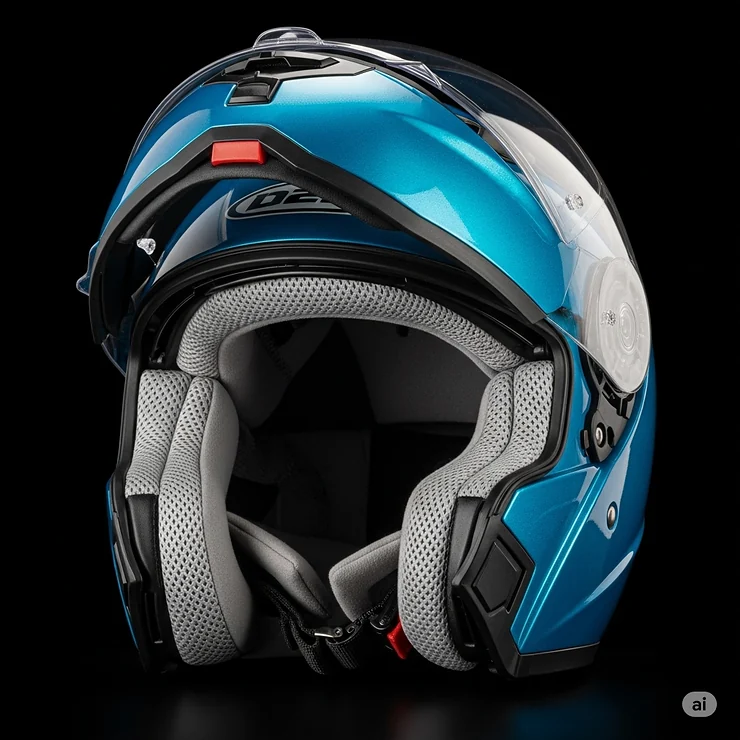
If your budget is tight but you still want dual visors, the HAX Obsidian is the one that keeps showing up in roundups. It combines a clear outer shield with an internal sun visor, and listings describe it as Pinlock-ready, meaning you can add an insert that fights fog far better than a coating can. Some reviewers also mention Bluetooth compatibility.
Why does that matter? Fogged visors are a bigger safety issue than most beginners realize. At a red light on a cold morning, your breath has nowhere to go, and a Pinlock insert is the thing that keeps your visibility intact. A helmet at this price that is ready for one is making a smart compromise.
Here’s the honest caveat. Budget imports like this tend to come with a thinner paper trail of independent testing than the big established brands. The listing claims DOT approval, so look for the DOT mark on the helmet itself and don’t rely on the product page. Fit options are also narrower. Reviews of similar low-cost helmets often mention padding that needs a little adjusting, so try it on early and return it fast if the fit is off.
Pros:
- ✅ Dual visor setup at a bargain price
- ✅ Pinlock-ready for serious anti-fog help
- ✅ Wide range of color and graphic choices
Cons:
- ❌ Less independent testing data than major brands
- ❌ Fit and padding feel can vary by size
Expect under $150. Verdict: good value for style-minded riders, as long as you inspect the DOT label.
3. HJC i10 — big-brand backing on a small-brand budget
The HJC i10 sits in the sweet spot between truly cheap and properly refined. HJC has a long track record of building helmets that punch above their price, and roundups regularly describe the i10 as a budget-friendly full-face with solid fit and a clean, modern shell. One roundup notes that versions of it are often Snell-rated, though ratings differ by version, so confirm yours.
What the spec sheet won’t tell you is that a recognized manufacturer matters for more than pride. Replacement shields, pads and parts are easier to find years later. A cheap import that disappears from the market leaves you with a helmet you can’t maintain. The i10’s mainstream support network makes it the kind of purchase that still makes sense in year three.
On the street, the shape suits riders with a slightly rounder or oval head, but that isn’t universal. Reviewers generally describe it as comfortable out of the box, and that’s the main reason it earns a spot. If you commute daily and don’t want to think about your helmet, this is a very safe middle path.
Pros:
- ✅ Established brand with easy parts availability
- ✅ Clean, modern styling that suits many riders
- ✅ Often cited as a comfortable all-day fit
Cons:
- ❌ Certifications and features vary by version
- ❌ Fewer premium comfort touches than pricier helmets
Expect roughly $150–$200. Verdict: the smart compromise for riders who want a trusted name at a fair price.
4. Scorpion EXO-T520 — drop-down sun visor under $300
The Scorpion EXO-T520 has one feature that changes daily life: an internal drop-down sun visor. Roundups also point to an anti-fog, anti-scratch hard-coated shield with 98% UV protection and an emergency cheek pad release system. That last item is easy to ignore until the day a paramedic needs to get a helmet off without moving your neck.
Think about where the sun visor pays off. You leave work at dusk, ride into a low sun, then end up in a shaded tunnel of trees. Swapping to a tinted shield mid-ride isn’t an option, but flicking a lever for an internal visor is. For commuters and touring riders, that flexibility is worth more than another color option.
Reviewers of entry-level Scorpions generally praise the value and the features-for-dollar ratio. The trade-off is that you’re paying for conveniences rather than premium materials, so noise and finish won’t match the Shoei price tier. For a rider who wants practical features and a sensible spend, it lands right.
Pros:
- ✅ Internal sun visor for changing light
- ✅ UV-protective, anti-fog, anti-scratch shield
- ✅ Emergency cheek pad release system
Cons:
- ❌ Sun visor adds another part to keep clean
- ❌ Noise control trails premium helmets
Expect under $300, commonly in the $200s. Verdict: a feature-rich pick for commuters who ride in all kinds of light.
5. Scorpion EXO-R1 Air — the sport-leaning classic
The Scorpion EXO-R1 Air is the helmet people mention when they want a sport look without paying Shoei or Arai money. One 2026 roundup calls it an absolute classic that has earned its place on best-helmet lists, and that endorsement tracks with years of rider conversation.
What does a sport shape mean in practice? Its aerodynamic profile is built for a forward, tucked posture. If you ride a sportbike or a naked bike with a lean-in stance, the shell cuts wind pressure on your neck. On an upright cruiser it can feel less natural, and you’ll notice wind more. Match the helmet to how you actually sit on your bike.
Scorpion is also known for fit adjustments in this line, such as cheek pad options. Check the spec sheet for what your specific variant includes. Reviewers often cite it as a gateway to proper sport-style gear and note that sizing matters a lot, so measure before you order. I’d call this the best “buy once, ride for years” option under the premium tier.
Pros:
- ✅ Sport shape reduces wind drag at speed
- ✅ Long-standing reputation among riders
- ✅ Strong bridge between budget and premium
Cons:
- ❌ Less comfortable on upright cruisers
- ❌ Fit tends toward a specific head shape
Expect roughly $250–$350. Verdict: a great sport pick that rewards a correct fit.
6. Shoei RF-SR — the entry ticket to Shoei refinement
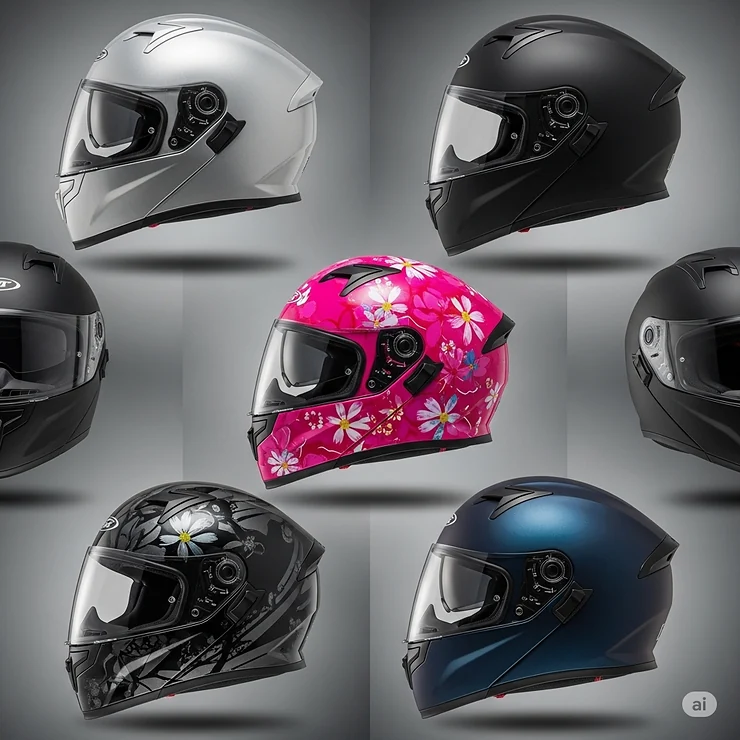
The Shoei RF-SR is brand new to Shoei’s lineup, according to a 2026 review, and it is the least expensive full-face in Shoei’s stable. Shoei markets it for both street performance and long-distance touring comfort, and reviewers agree that it carries a lot of the brand’s DNA from flagships like the X-Fourteen and X-12.
Why pay more? Because small details add up over thousands of miles. Premium helmets typically manage wind noise better, hold their liners longer, and use more consistent shell construction. When you wear a helmet for two hours at a time, a quieter ride isn’t a luxury. It reduces fatigue. This is a helmet for riders who log serious saddle time.
For women, the real draw is Shoei’s reputation for dependable small sizes and fit options. Premium brands often offer more cheek pad thicknesses, which can turn an almost-right fit into a dialed one. Even so, the price puts it a long way above the budget options, so make sure you ride enough to justify it.
Pros:
- ✅ Shoei engineering at Shoei’s lowest price
- ✅ Suited to both street spirit and touring comfort
- ✅ Finish quality shows over the long term
Cons:
- ❌ Costs several times what budget helmets do
- ❌ Features vary by graphic and variant
Expect roughly $450–$550. Verdict: worth it for high-mileage riders who value comfort.
7. Shoei RF-1400 — lightest feel and widest view
The Shoei RF-1400 is the benchmark many reviewers measure everything else against. One roundup notes that a size small weighs about 3.5 lb, which is light for a premium helmet with structural integrity intact, and highlights its wide field of view and sporty, MotoGP-inspired design.
Weight deserves a closer look. A fraction of a pound sounds trivial until you’re doing a 150-mile day. Neck muscles tire from sustained load, and wind buffeting makes the helmet feel heavier at speed. A light shell with a smooth aerodynamic profile keeps that fatigue down, which is the real reason people overspend on this class.
Review volume for individual graphics on retailer sites is small, so I wouldn’t read much into a perfect star rating from only a handful of buyers. What matters more is the consistent theme in expert roundups: excellent fit, finish and view. It’s also described as an everyday helmet with Snell rating in at least one standards roundup, though confirm on the exact variant.
Pros:
- ✅ Light feel and wide field of view
- ✅ Premium fit, finish and liner quality
- ✅ Extensive graphic and size options
Cons:
- ❌ Highest price on this list
- ❌ Sporty styling doesn’t suit every taste
Expect roughly $600–$750. Verdict: the best choice here when budget is secondary to fit and finish.
How to Choose Womens Full Face Motorcycle Helmets: 7 Steps
Want the short version? Work through these steps in order.
- Check the certification first. In the US, look for the DOT mark. For an upgrade, look for ECE 22.06 or Snell M2025. NHTSA’s helmet standard covers all helmets designed for highway use, so a missing label is a hard no.
- Measure your head. Wrap a soft tape about an inch above your eyebrows and around the widest part of the back of your skull. Compare to the maker’s chart, not a generic one.
- Know your head shape. Most heads are round, intermediate oval or long oval. A helmet that squeezes your forehead will give you a headache within 20 minutes, whatever the size label says.
- Check the position. The eye port should sit just above your eyebrows, and the helmet should sit squarely on your head. If it tilts back, it’s too big.
- Do the shake test. Fasten the strap, shake your head, and feel whether your cheeks move with the helmet. Cheeks and helmet should move together.
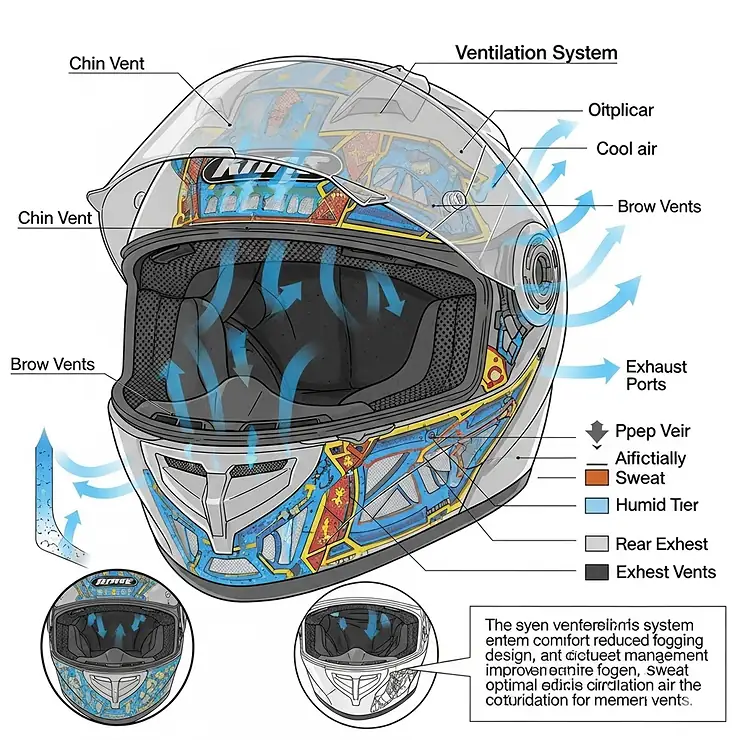
- Think about your riding. Highway miles reward quiet, aerodynamic shells. City riding rewards ventilation and a sun visor.
- Budget for fit, not just the helmet. Set aside money for replacement pads or a visor insert. A properly fitted mid-priced helmet beats a loose expensive one.
Features That Actually Matter (And Those That Don’t)
Marketing copy loves buzzwords. Here is how to filter them.
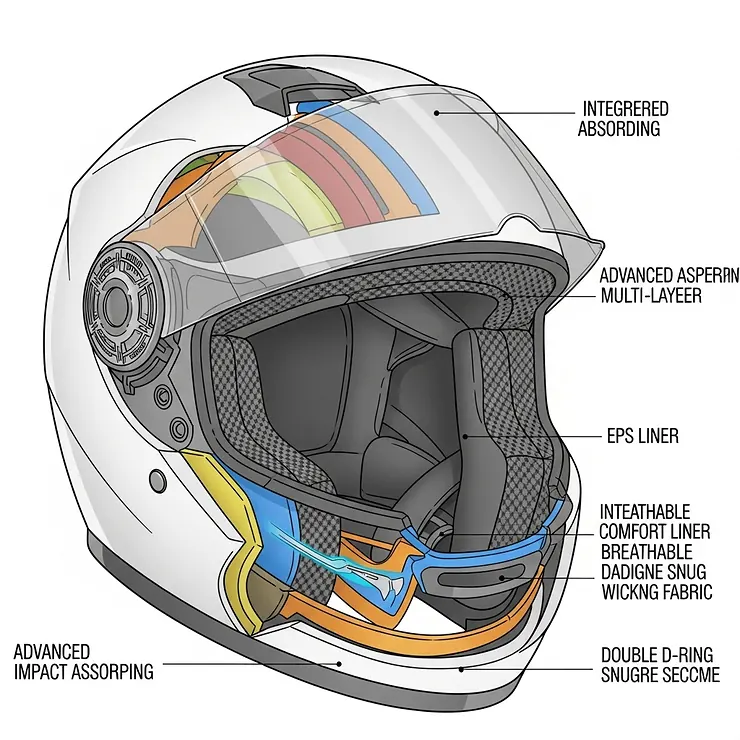
What matters: fit adjustability, a certification label, a shield that seals and swaps easily, anti-fog capability, and a chin strap that is easy to fasten with gloves on. A removable, washable liner matters more than most people expect, because sweat odor is the number one reason riders stop wearing a helmet comfortably.
What matters sometimes: a drop-down sun visor, as on the Scorpion EXO-T520, is wonderful if you ride dawn to dusk. Speaker pockets, like those on the Bell Qualifier, are useful only if you plan to add a headset.
What rarely matters: graphics, extra vent flaps nobody opens, and “racing-inspired” labels on commuter helmets. Bold graphics can help visibility, but they shouldn’t override fit.
One spec deserves special mention: weight. When comparing, look at grams for your actual size, not the manufacturer’s headline number. Small sizes weigh less, and women often wear smaller sizes, which is an easy way to get a lighter helmet without paying for exotic materials.
Helmet Safety Standards Guide: DOT, ECE 22.06 and Snell Explained
Stickers are cryptic until someone translates them. Here is the plain version.
DOT (FMVSS 218) is the legal minimum in the US. It covers energy attenuation, penetration resistance, chin strap strength and labeling. Since a 2011 rule, certified helmets carry a label with the manufacturer’s name, model, and the words “DOT FMVSS No. 218 Certified.” NHTSA research from 2004 found that wearing a certified helmet cuts the risk of dying in a crash by about 37 percent. DOT compliance is self-certified by manufacturers and checked afterward through compliance testing, which is why counterfeit “novelty” helmets exist.
ECE 22.06 is the latest European standard and the baseline for road helmets in most of the world. It added rotational-impact testing and a wider range of impact speeds, including a high-speed test and a slower one that simulates secondary hits. It replaced 22.05 for new approvals, and older ECE 22.05 helmets are still legal.
Snell M2025 is voluntary and historically stricter on peak impact energy. The 2025 update added oblique, or rotational, impact testing for the first time, narrowing the gap with ECE.
One industry analysis at Ultimate Motorcycling argues that DOT permits the highest peak impact energy of the major standards. In practical terms, a helmet carrying ECE 22.06, or multiple marks, gives extra reassurance, though a correctly fitted DOT helmet is still far better than none.
Full Face vs Modular vs Open Face Helmets for Women
| Feature | Full Face | Modular | Open Face |
|---|---|---|---|
| Chin and face coverage | Complete, fixed chin bar | Complete when closed | Face exposed |
| Noise at speed | Typically quietest | Moderate, hinge adds noise | Loudest |
| Convenience | Basic | Chin bar flips up | Easy on and off |
| Weight | Lightest of the enclosed types | Heavier due to hinge | Light |
| Best For | Commuters, sport and highway riders | Tourers who stop often | Short, slow cruiser rides |
The analysis is simple. A fixed chin bar is structurally stronger than a hinge, and the chin area is a common impact zone in real crashes. Full-face designs also give you the most consistent airflow and noise control. Modular helmets are worth a look if you talk at every stop or wear glasses and want an easy swap, but you’re paying in weight and complexity.
Open face helmets feel freer, but they leave your jaw, teeth and face unprotected. For anyone choosing womens full face motorcycle helmets, the reason is already in the name: it’s the style that protects the most of you.
Price Range & Value Analysis: What Your Money Actually Buys
| Tier | Typical Range | What You Gain | Best For |
|---|---|---|---|
| Budget | Under $200 | Certified protection, basic comfort, e.g. Bell Qualifier, HJC i10, HAX Obsidian | New riders, short commutes |
| Mid-range | $250–$550 | Better features, quieter shells, e.g. Scorpion EXO-R1 Air, Shoei RF-SR | Regular riders |
| Premium | $600+ | Fit options, weight, finish, e.g. Shoei RF-1400 | Daily and long-distance riders |
Notice how the jumps aren’t linear. Going from budget to mid-range buys noticeable noise and comfort gains. Going from mid-range to premium buys smaller refinements, and whether they matter depends on how many miles you ride. A rider who logs 3,000 miles a year might never feel the gap, while someone doing 12,000 will.
Cost per use helps. A premium helmet used daily for five years costs pennies per ride, while a cheap helmet that sits unused because it’s uncomfortable costs more than it saves. That’s the value test that matters.
Practical Usage Guide: Fitting, Breaking In and Caring for Your Helmet
Buying the helmet is the easy half. Here’s how to make it work.
Day one: Wear it around the house for 20–30 minutes before riding. Hot spots show up fast, and you can still return the helmet if it’s unworn outside. Don’t remove tags until you’re sure.
First 30 days: Foam compresses slightly as it breaks in, so a snug helmet is normal. Expect the fit to relax a bit. A helmet that feels loose on day one will only get looser, so aim for firm cheeks without pain points.
Hair and braids: Ponytails at the nape push the helmet forward and can create a pressure point. Try a low braid or a flat style. A thin balaclava or moisture-wicking skull cap helps with hair and sweat.
Cleaning: Remove the liner and hand-wash it with mild soap every few weeks in hot weather. Clean the shield with water and a soft cloth, because harsh cleaners can damage anti-fog coatings.
Storage: Keep it in a cool, dry place, away from direct sun and solvents. Never hang it from a mirror, where weight stresses the liner.
Replacement: The common rule of thumb is every five years, or immediately after any significant impact, even if it looks fine.
Real-World Scenarios: Which Helmet Fits Which Rider?
The college commuter. She rides eight miles each way on a modest scooter and has $200 to spend. The Bell Qualifier or HJC i10 gives her certified protection, and a washable liner helps in humid months. Spending the remainder on a Pinlock insert for winter mornings is the smarter use of money than a fancier shell.
The weekend canyon rider. She rides a sport-oriented bike in a tucked posture on twisty roads. The Scorpion EXO-R1 Air suits that stance, and the aerodynamic shape reduces neck fatigue. A correct fit matters more than graphics here, so measure first.
The long-haul tourer. She does 200-mile days with a passenger-free bike and a full tank of ambition. The Shoei RF-SR or Shoei RF-1400 is what mile-eaters reach for, because noise reduction and low fatigue compound over hours. This is the one scenario where premium genuinely pays off.
The budget-and-style shopper. She cares about looks and has less than $150. The HAX Obsidian offers dual visors and a lot of color choice. Her checklist: confirm the DOT label on arrival, test the fit immediately, and be ready to return it.
Problem → Solution Guide: Fixing Common Helmet Frustrations
Problem: the visor fogs. Add a Pinlock insert if the shield is compatible, crack the visor a notch at stops, and keep the shield clean. Helmets like the HAX Obsidian are Pinlock-ready, so this is cheap to fix.
Problem: wind noise hurts your ears. Check the neck roll and fit first. A loose helmet is noisier than a tight one. Earplugs rated for riding are the cheapest upgrade, and a padded wind collar like the Bell Qualifier‘s helps too.
Problem: pressure on your forehead. That’s usually a shape mismatch, not a size issue. Try a different brand or ask about thinner pads.
Problem: sweaty, smelly liner. Wash it regularly and let it air dry completely. A moisture-wicking cap helps.
Problem: hair tangles when removing it. Use a smooth satin-style cap, and take the helmet off slowly with the strap loosened fully.
Womens Full Face Motorcycle Helmets for Petite and Beginner Riders
Smaller heads are where “unisex” gets awkward. Many brands stock extra small and small sizes in only a few graphics, so the helmet you love may not come in your size. Check size availability before falling for a color scheme.
Roundups on women’s helmets point out that narrower head shapes and smaller facial structures create fit challenges. The fix is to prioritize a brand with thicker and thinner pad options, which is a strong point of Shoei, and to try different shapes rather than assuming one brand fits all.
Beginners should keep it simple. Start with a certified, well-fitted mid-tier or budget helmet, skip fancy gadgets, and add a visor insert and earplugs. The best first helmet is the one comfortable enough that you actually wear it every ride. Among womens full face motorcycle helmets for newer riders, the Bell Qualifier and HJC i10 are practical starting points, and either leaves money for gloves and a jacket.
Common Mistakes When Buying Womens Full Face Motorcycle Helmets
Buying by graphics alone. A great design on a poor fit is a hazard.
Ordering without measuring. Sizes aren’t standardized between brands, so measure and use each maker’s chart.
Trusting a vague “DOT approved” claim. Look for the label on the helmet. NHTSA has rulemaking on novelty helmets that failed nearly every safety requirement when tested, a reminder that fake or non-compliant helmets exist.
Buying used. You can’t know if it’s been dropped or hit, and hidden damage doesn’t show.
Ignoring comfort over time. A helmet that’s tolerable for ten minutes can be miserable at an hour.
Skipping the return policy. Fit problems appear after real wear, so buy where returns are straightforward.
✨ Ready to Find Your Perfect Fit?
🔍 Take your ride to the next level with these carefully selected womens full face motorcycle helmets. Click on any highlighted product name to check current pricing and availability. The right helmet makes every mile safer and more comfortable!
Long-Term Cost & Maintenance: The Real Price of a Helmet
The purchase price is only the beginning. Over a five-year life, you’ll likely spend on replacement pads, shields, visor inserts, and possibly a Bluetooth headset. Budget helmets with common parts, like the HJC i10 or Bell Qualifier, usually keep those costs low because replacement shields are widely sold.
Premium helmets like the Shoei RF-1400 often cost more to maintain per part but last longer and hold their value in feel. Divide the price by the number of years you’ll use it. A helmet in the $600 range used for five years costs about $120 a year, while a budget helmet replaced twice in that span may not be as cheap as it looks.
Add up the small costs too: cleaning supplies, a helmet bag, and eventual replacement. Treat the five-year replacement guideline as a budget line. The best financial move is a certified helmet you’ll wear every ride, because the cheapest helmet is the one that never gets used.
FAQ: Womens Full Face Motorcycle Helmets
❓ Are womens full face motorcycle helmets different from men's?
❓ What size full face helmet should a woman buy?
❓ Is a full face helmet safer than modular?
❓ How often should I replace a motorcycle helmet?
❓ Which is better for beginners: DOT or ECE 22.06?
Conclusion
Choosing among womens full face motorcycle helmets isn’t about chasing the prettiest color or the biggest price tag. It’s about three things: a certified shell, a fit that matches your actual head shape, and features that suit how you ride.
If you’re starting out, the Bell Qualifier and HJC i10 deliver certified protection without a fortune. The HAX Obsidian adds dual visors for shoppers on the tightest budgets, just verify the label. The Scorpion EXO-T520 earns its place for commuters who need a sun visor, and the Scorpion EXO-R1 Air suits sport riders. Long-distance riders will appreciate the refinement of the Shoei RF-SR, while the Shoei RF-1400 is the choice when light weight and a wide view matter most.
Whatever you pick, measure first, check the certification, and give the fit a proper trial. A helmet that you love wearing is the one that protects you on every ride.
✨ Your next ride deserves the right helmet! 🔍 Compare current pricing and availability on the helmets above, pick the one that fits your head and your riding, and gear up with confidence. 🏍️
Recommended for You
- 7 Best Pink Helmets for Motorbikes That Deliver Superior Safety in 2025
- 7 Best German Motorcycle Helmet Options for Ultimate Protection in 2025
- 10 Best White Motorcycle Helmet Options For Ultimate Safety in 2025
Disclaimer: This article contains affiliate links. As an Amazon Associate, I earn from qualifying purchases. If you purchase products through these links, we may earn a small commission at no additional cost to you.
✨ Found this helpful? Share it with your friends! 💬🤗
