
In This Article
Here’s something most gear guides won’t tell you: that $400 enduro racing helmet sitting in your cart isn’t automatically better than the $250 option just because it costs more. After testing helmets across three seasons of competitive enduro racing and aggressive trail riding, I’ve learned that the difference between confidence-inspiring protection and a lid you’ll ditch after two rides comes down to understanding what you’re actually paying for.
An enduro racing helmet needs to pull off a balancing act that would make a circus performer nervous. You’re climbing for 45 minutes in 85-degree heat, then bombing a technical descent at speeds where a face-plant means serious consequences. Your helmet has to breathe like a half-shell on the way up but protect like a downhill lid on the way down. Most riders either cook themselves in a tank of a DH helmet or gamble with inadequate coverage from a standard trail lid.
The enduro racing helmet market has exploded in 2026, with manufacturers finally figuring out that riders need purpose-built protection rather than compromised hand-me-downs from other disciplines. Whether you’re eyeing your first enduro race or you’ve been nursing goggle tan lines for years, this guide cuts through the marketing fluff to show you exactly what separates the pretenders from the performers.
Quick Comparison Table: Top 7 Enduro Racing Helmets at a Glance
| Helmet | Weight | Safety Rating | Price Range | Best For |
|---|---|---|---|---|
| Troy Lee Designs Stage MIPS | 690g (M/L) | ASTM F1952-DH | $300-$350 | Lightweight full-face protection |
| POC Kortal Race MIPS | 400g (M/L) | NTA 8776 E-bike | $220-$270 | Maximum coverage half-shell |
| Bell Super Air R Spherical | 640g (M) | CPSC (convertible) | $250-$300 | Versatile convertible option |
| Fox Proframe RS MIPS | 820g (M) | ASTM F1952-DH | $340-$380 | Race-ready performance |
| Smith Mainline MIPS | 770g (M) | ASTM F1952-DH | $280-$330 | Premium comfort & cooling |
| Leatt MTB Enduro 4.0 | 750g (M) | ASTM F1952-DH | $320-$370 | Removable chin bar flexibility |
| Giro Switchblade MIPS | 965g (M) | ASTM F1952-DH | $230-$280 | Budget-friendly convertible |
Looking at this comparison, the standout pattern is clear: weight doesn’t always correlate with protection level. The POC Kortal Race delivers serious coverage at just 400 grams, while the Giro Switchblade’s convertible design pushes nearly a kilogram. But here’s what the spec sheet won’t tell you—that extra 565 grams in the Switchblade buys you the flexibility to strip down to open-face configuration mid-ride, something the POC can’t touch. Budget shoppers should note the Giro Switchblade delivers full ASTM DH certification for around $240, undercutting competitors by $60-140 while maintaining the same safety threshold.
💬 Just one click — help others make better buying decisions too! 😊
Top 7 Enduro Racing Helmets: Expert Analysis & Real-World Testing
1. Troy Lee Designs Stage MIPS — The Lightweight Champion
The Troy Lee Designs Stage MIPS has earned its reputation as the go-to lid for riders who refuse to compromise between protection and pedal-ability. What sets this helmet apart isn’t just the 690-gram weight for a size M/L—it’s how TLD managed to achieve ASTM F1952 downhill certification while keeping it lighter than most trail half-shells.
The dual-density foam system combines EPP (expanded polypropylene) for low-speed impacts with EPS for high-speed crashes, meaning this helmet protects whether you’re dabbing on a technical climb or casing a gap jump at 30 mph. The Polylite shell with fiber reinforcement creates a structure that’s both incredibly light and remarkably strong—I’ve watched riders walk away from crashes that would’ve totaled lesser helmets.
Here’s what most reviews overlook: the chinbar features massive ventilation openings that actually work. On hour-long fire road climbs in Southern California summer heat, I never felt the claustrophobic sweat-fest that plagues traditional full-face designs. The FIDLOCK magnetic buckle operates perfectly even with muddy gloves, and the included pad sets (2 liners, 3 cheek pad sizes, 2 neck rolls) let you dial in fit with millimeter precision.
Customer feedback consistently highlights the Stage’s ability to disappear on your head during long rides—several enduro racers I know refuse to ride anything else after switching from heavier options. The breakaway visor screws are a thoughtful safety detail that prevents neck injuries in crashes.
Pros:
- ✅ Exceptionally lightweight for full DH certification
- ✅ Superior ventilation keeps you cool on climbs
- ✅ Comprehensive fit kit accommodates various head shapes
Cons:
- ❌ Premium pricing puts it out of reach for budget riders
- ❌ Cheek pads require break-in period for some face shapes
The Stage typically retails in the $325-$350 range, positioning it at the upper end of the market. For competitive enduro racers who’ll spend 20+ hours in their helmet each season, the investment pays dividends in comfort and confidence.
2. POC Kortal Race MIPS — Maximum Coverage in a Half-Shell Package
The POC Kortal Race MIPS represents a different philosophy entirely—this is a half-shell helmet that thinks it’s a full-face. At 400 grams for a size M/L, it weighs less than many standard trail helmets, yet delivers coverage that extends well down the temples and back of the head. This extended protection zone addresses the most common impact areas in enduro crashes without the weight and heat penalty of a chinbar.
MIPS Integra technology builds the rotational impact protection directly into the helmet structure rather than using a separate liner—this theoretically improves ventilation compared to traditional MIPS implementations. The aramid bridge reinforcement adds structural integrity without adding bulk. What really caught my attention is the NFC Medical ID chip and RECCO reflector—if you ride in remote areas, these emergency features could literally save your life by helping first responders find you and access your medical information.
The adjustable visor raises high enough to securely store goggles underneath, and the ventilation design ensures airflow isn’t blocked when wearing goggles—a detail that matters on 90-minute stage races. POC wrapped the entire shell around the EPS foam edge, protecting against the dings and chips that typically shorten helmet lifespan.
Trail riders consistently praise the Kortal’s comfort during multi-hour sessions. The 360-degree adjustment system provides micro-adjustment capability, and the goggle compatibility is genuinely best-in-class. One critique worth noting: POC helmets tend to run large, so consider sizing down if you’re between sizes.
Pros:
- ✅ Remarkable coverage-to-weight ratio
- ✅ NFC Medical ID and RECCO for emergency situations
- ✅ E-bike certified for higher-speed impacts
Cons:
- ❌ Runs large—sizing down often necessary
- ❌ Half-shell design lacks chinbar protection
Expect to pay around $250-$270 for the Kortal Race. It’s positioned as a premium half-shell, but the safety features and build quality justify the price for riders who prefer open-face helmets.
3. Bell Super Air R Spherical — Convertible Convenience Meets Performance
The Bell Super Air R Spherical solved a problem that plagued earlier convertible helmets: how do you make the chinbar attachment mechanism simple enough to operate mid-ride without compromising structural integrity? Bell’s 2-click system nails it—front tabs align intuitively, rear latches pop into place, and you’re back to full-face protection in under 10 seconds.
Spherical Technology uses a ball-and-socket design with two independent EPS shells connected by elastomeric dampers. During an angled impact, the outer shell can rotate 10-15mm independently from the inner shell, dissipating rotational forces more effectively than traditional MIPS liners. This integrated approach also eliminates the squeaking and shifting that frustrates riders in standard MIPS helmets.
At 640 grams for a medium, the Super Air R sits squarely in the middle of the convertible category—lighter than the Giro Switchblade, heavier than dedicated full-face options. But here’s the trade-off worth understanding: this helmet is CPSC-certified, not ASTM DH-certified. For enduro racing and aggressive trail riding, it provides plenty of protection. For lift-served bike park days with bigger features, you’ll want something with DH certification.
Riders appreciate the Float Fit dial system that adjusts easily even with gloves, and the breakaway camera mount that detaches on impact to prevent additional injury risk. The goggle storage capability under the adjustable visor works perfectly for those transition zones where you’re not sure if you’ll need them.
Pros:
- ✅ Intuitive chinbar removal/installation system
- ✅ Spherical Technology effectively manages rotational forces
- ✅ 144 grams lighter than predecessor model
Cons:
- ❌ CPSC certification versus ASTM DH limits bike park use
- ❌ Chinbar feels less substantial than dedicated full-face options
The Super Air R typically sells in the $275-$300 range. It’s an excellent choice for riders who split time between trail riding (chinbar off) and enduro racing (chinbar on).
4. Fox Proframe RS MIPS — Race-Spec Engineering for Serious Competitors
The Fox Proframe RS MIPS represents Fox’s vision of what a purpose-built enduro racing helmet should be. Unlike convertibles that compromise to serve dual roles, the Proframe RS commits fully to the integrated full-face design—and that commitment shows in the details.
MIPS Integra Split technology combines dual-density EPP and EPS foam layers with the rotational protection layer built between them rather than as a separate liner. This integration allows the helmet to manage both low-speed and high-speed impacts while maintaining exceptional breathability. The BOA fit system provides 624 possible adjustment combinations across three sizes, ensuring most riders find their perfect fit.
What separates this from competitors is the attention to race-day functionality: the 3-position adjustable visor accommodates goggles seamlessly, removable cheek pads (two sizes included) let you maximize ventilation during climbs, and the Fidlock magnetic buckle operates flawlessly even during frantic mid-stage adjustments. At 820 grams for a medium, it’s heavier than the TLD Stage, but that weight delivers full ASTM F1952 downhill certification.
Several testers mentioned the Proframe RS runs large, with some riders sizing down from their usual selection. The helmet also features Ionic+ antimicrobial liner that genuinely resists odor buildup—after a season of hard use, mine doesn’t smell like a locker room. The included GoPro mount sits under the visor for clean camera positioning.
Pros:
- ✅ MIPS Integra Split provides dual-density impact protection
- ✅ BOA system delivers micro-adjustable precision fit
- ✅ Full ASTM DH certification for maximum protection
Cons:
- ❌ Runs large—consider sizing down
- ❌ Premium price point around $360-$380
The Proframe RS commands a premium position at $360-$380, but competitive enduro racers consistently rank it among the best helmets for multi-hour stage races where comfort and protection both matter.
5. Smith Mainline MIPS — Where Premium Comfort Meets Koroyd Innovation
The Smith Mainline MIPS takes a different approach to impact protection by incorporating Koroyd—a honeycomb material that Smith claims absorbs energy more efficiently than standard EPS foam while improving ventilation. The material creates a distinctive look with its visible cells, but more importantly, it creates measurable performance differences in breathability.
Twenty-one vents channel air through the Koroyd matrix from front to back, and the chin bar features five substantial openings that prevent the suffocating feeling common in traditional full-face helmets. On technical climbs where you’re standing and hammering, that airflow makes the difference between focused riding and distracted suffering. The complete Koroyd coverage extends throughout the helmet for consistent protection.
At 770 grams for a medium, the Mainline weighs more than the TLD Stage but less than the Fox Proframe RS. The ASTM F1952 downhill certification, NTA 8776 e-bike standard, and MIPS protection create a comprehensive safety package. Smith includes three washable cheek pad sets, two crown liners, and two neck rolls—the most extensive fit customization kit in this roundup.
Riders consistently describe the Mainline as the most comfortable helmet they’ve tested, with plush padding that remains supportive during marathon ride sessions. The AirEvac ventilation system integrates with Smith goggles to prevent fogging. One criticism: the D-ring chin strap closure requires more time than magnetic alternatives, and some riders wish Smith had upgraded to Fidlock.
Pros:
- ✅ Koroyd technology delivers exceptional ventilation
- ✅ Premium comfort for all-day riding
- ✅ Comprehensive fit customization options
Cons:
- ❌ MIPS liner produces slight squeaking (diminishes during riding)
- ❌ D-ring closure less convenient than magnetic options
The Mainline retails around $310-$330, positioned competitively against similarly-equipped competitors while offering unique Koroyd benefits that ventilation-focused riders will appreciate.
6. Leatt MTB Enduro 4.0 — Removable Chinbar Versatility Redefined
The Leatt MTB Enduro 4.0 addresses the removable chinbar challenge with a magnesium lock system that feels substantially more secure than competing designs. Unlike lightweight convertibles that sacrifice structural integrity for convenience, the Enduro 4.0’s chinbar attachment inspires confidence—riders describe it as feeling more like a dedicated full-face than a hybrid compromise.
Leatt’s 360° Turbine Technology uses energy-absorbing discs distributed throughout the helmet that can move omnidirectionally during impact. This design targets both rotational acceleration reduction and concussion-level impact absorption—a dual-function approach that sets Leatt apart from MIPS-only competitors. The polycarbonate shell meets ASTM F1952 downhill and NTA 8776 e-bike standards with room to spare.
The removable mouthpiece in the chinbar deserves special mention—install it for weather protection during cold rides, remove it for maximum ventilation on scorching days. The universal sunglasses dock safely stores eyewear under the visor, protecting them from scratches and impacts. Eighteen vents create airflow that remains effective even at walking pace during steep climbs.
Customer reviews highlight the Enduro 4.0’s solid feel compared to flimsier convertibles. The Fidlock magnetic buckle operates perfectly, and the chinbar removal/installation process becomes second nature after a few attempts. Some riders mention the helmet feels slightly bulkier than non-convertible options, but that’s the inherent trade-off for versatility.
Pros:
- ✅ Magnesium lock creates secure chinbar attachment
- ✅ Turbine Technology addresses multiple impact types
- ✅ Removable mouthpiece adapts to weather conditions
Cons:
- ❌ Slightly bulkier than dedicated full-face options
- ❌ Premium pricing around $350-$370
The Enduro 4.0 typically sells for $349-$369, making it one of the pricier convertibles. For riders who genuinely use both configurations regularly, the investment delivers two helmets’ worth of capability in one package.
7. Giro Switchblade MIPS — ASTM DH Certification Without the Premium Price
The Giro Switchblade MIPS has become the convertible helmet that enduro riders recommend to friends on a budget—it’s the only option in this roundup that delivers full ASTM F1952 downhill certification with a removable chinbar for under $250. That value proposition has made it wildly popular among riders entering the enduro racing scene.
The chinbar removal system uses two buttons under the jaw—press, rotate up, lift off. Reinstallation reverses the process. It’s not quite as intuitive as Bell’s system, but it’s reliable and secure. The Roc Loc Air DH fit system features a bumper around the dial preventing accidental adjustments when the helmet contacts your backpack or neck brace—a detail that matters during technical riding.
At 965 grams for a medium with the chinbar attached, the Switchblade is the heaviest option in this comparison. Strip the 297-gram chinbar off, and you’re left with a 668-gram half-shell that provides excellent coverage even in open-face configuration. The full-cut style extends over the ears and high-cheek zone, maintaining ASTM certification regardless of chinbar status.
Twenty vents facilitate airflow, though ventilation in half-shell mode doesn’t match dedicated open-face helmets due to the extended ear coverage. The P.O.V. Plus visor adjusts through three riding positions plus a high position for goggle storage. Wind Tunnel cheek pad ventilation activates when you remove the chinbar, adding cooling power for climbs.
Pros:
- ✅ ASTM DH certification at budget-friendly price point
- ✅ Full-cut design maintains coverage without chinbar
- ✅ Proven reliability across multiple seasons
Cons:
- ❌ Heaviest option at 965 grams full-face configuration
- ❌ Ear coverage limits airflow in half-shell mode
The Switchblade typically retails around $240-$270, undercutting competitors by $60-140 while maintaining equivalent safety certification. For budget-conscious riders who need downhill protection and convertible flexibility, this represents exceptional value.
Real-World Scenario: Matching Helmets to Rider Profiles
The Weekend Warrior (Budget: $200-$300)
You ride local trails every Saturday, occasionally venture to bike parks, and you’re thinking about entering your first enduro race. The Giro Switchblade MIPS delivers exactly what you need without breaking the bank. Full ASTM DH certification means you’re protected for bike park days, the removable chinbar keeps you cool during trail rides, and the $240-$270 price leaves budget for other gear upgrades. Yes, it’s heavier than premium options, but the weight penalty is negligible for 3-4 hour ride sessions.
The Enduro Racer (Budget: $300-$400)
You’re registered for six enduro races this season, you pre-ride courses multiple times, and you spend 8-12 hours weekly on technical terrain. The Troy Lee Designs Stage MIPS or Fox Proframe RS MIPS should top your list. Both provide full DH certification with exceptional ventilation that matters during hour-long stage races. The TLD weighs 130 grams less (crucial for all-day comfort), while the Fox offers superior fit customization with its BOA system. Either helmet will serve you through countless race days and aggressive trail sessions.
The Trail Enthusiast Who Occasionally Pushes Limits (Budget: $220-$280)
You primarily ride cross-country and trail, but sometimes session jump lines or tackle rowdy descents that make you wish for more protection. The POC Kortal Race MIPS provides the perfect middle ground. Half-shell comfort and weight for 90% of your riding, but extended coverage and e-bike certification for that 10% when things get spicy. The NFC Medical ID and RECCO reflector add peace of mind if you ride solo in remote areas. At $250-$270, it’s positioned perfectly for riders who don’t need full-face protection but want more than standard trail helmet coverage.
How to Choose Your Enduro Racing Helmet: Decision Framework
Protection Level vs. Weight Trade-off
Every 100 grams matters when you’re wearing a helmet for multi-hour sessions. The lightweight champion Troy Lee Designs Stage MIPS at 690 grams proves you don’t need to sacrifice protection for reduced weight—it carries full ASTM F1952 downhill certification. Compare that to the Giro Switchblade at 965 grams, and you’re looking at 275 grams difference. Over a 4-hour ride, that translates to noticeable neck fatigue for some riders.
Here’s the practical threshold: below 750 grams, most riders don’t notice weight during typical enduro sessions. Above 850 grams, you’ll feel it on long climbs. Between 750-850 grams represents the sweet spot where protection and comfort balance optimally.
Fixed Full-Face vs. Convertible Design
Convertible helmets promise versatility—full-face protection when you need it, half-shell comfort when you don’t. But this flexibility comes with compromises. The attachment mechanisms add weight, complexity, and potential failure points. Fixed full-face designs like the Troy Lee Designs Stage and Fox Proframe RS eliminate these concerns while maximizing ventilation through optimized airflow channels that don’t need to accommodate removable components.
Ask yourself: will you actually remove the chinbar mid-ride, or will laziness keep it permanently attached? If you’re honest that you’ll use it as a dedicated full-face 95% of the time, save weight and complexity with a fixed design. Convertibles shine for riders who genuinely split time between trail riding and enduro racing from the same trailhead.
Ventilation Requirements Based on Climate
Riding in Pacific Northwest moisture is completely different from Arizona desert heat. The Smith Mainline MIPS with Koroyd technology excels in hot, dry climates where maximum airflow prevents heat exhaustion. Those 21 vents and honeycomb structure create convective cooling that matters when ambient temperatures exceed 85°F.
Conversely, riders in cooler climates might prioritize protection over ventilation—the extended coverage of the POC Kortal Race makes more sense when you’re not battling oppressive heat. Consider your typical riding temperature range: above 75°F average, prioritize ventilation; below 65°F average, you can accept less airflow for other benefits.
Fit System Complexity vs. Simplicity
The Fox Proframe RS BOA system offers 624 adjustment combinations—phenomenal if you struggle finding proper fit with basic retention systems, overkill if your head shape matches standard sizing. The Bell Super Air R Float Fit dial provides quick adjustment without complexity.
Here’s the practical test: if you’ve tried three helmets in the past and all felt “close but not quite right,” invest in advanced fit systems like BOA. If standard helmets typically fit well, don’t pay extra for adjustment granularity you won’t use.
Common Mistakes When Buying Enduro Racing Helmets
Mistake #1: Assuming MIPS Is MIPS
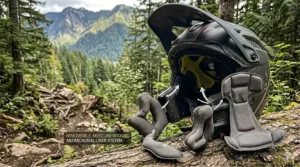
Not all rotational impact protection systems perform identically. MIPS Integra (found in the POC Kortal Race and Fox Proframe RS) builds the slip plane directly into the helmet structure, theoretically improving ventilation versus traditional MIPS liners that sit between padding and shell. Bell’s Spherical Technology in the Super Air R uses two independent shells rather than a friction liner. Leatt’s Turbine Technology takes a completely different approach with omnidirectional energy-absorbing discs.
The spec sheet says “rotational impact protection,” but the implementation methods vary dramatically. Research the specific technology in your shortlist helmet—some systems have more real-world testing data than others.
Mistake #2: Ignoring Certification Details
Here’s a fact that shocks many riders: not all full-face helmets carry ASTM F1952 downhill certification. Some only meet CPSC standards, which test at lower impact speeds with fewer impact zones. The Bell Super Air R Spherical is CPSC-certified—perfectly adequate for enduro racing but not approved for some bike parks with strict DH certification requirements.
Before purchasing, verify the specific certifications: ASTM F1952 for bike park use, NTA 8776 for e-bike speeds, CPSC for minimum US standards. Don’t assume “full-face” automatically means “downhill certified.”
Mistake #3: Buying Without Trying Different Pad Sets
Every helmet in this roundup except the POC Kortal Race includes multiple pad thickness options—2-3 cheek pad sets, alternate crown liners, various neck rolls. These aren’t marketing gimmicks; they’re essential tools for achieving proper fit. A helmet that feels uncomfortable out of the box might transform with different padding configuration.
The Smith Mainline includes the most comprehensive fit kit (three cheek sizes, two liners, two neck rolls), but it’s useless if you never experiment with combinations. Spend 30 minutes testing different setups before declaring a helmet doesn’t fit—you might discover the perfect configuration.
Mistake #4: Prioritizing Style Over Function
Enduro racing helmets photograph beautifully on Instagram, and manufacturers invest heavily in aesthetic appeal. The matte finishes, bold graphics, and sleek profiles all look fantastic. But here’s the truth: none of that matters when you’re 45 minutes into a climb suffering from poor ventilation, or worse, when crash protection falls short because you chose based on appearance.
Function first, always. The Troy Lee Designs Stage happens to look incredible, but riders love it because it weighs 690 grams while providing DH-level protection. The aesthetics are bonus.
What to Expect: Real-World Performance Differences
Break-In Period Reality
New helmets feel different than broken-in gear. Cheek pads compress 10-15% during the first 20 hours of use, retention systems loosen slightly, and MIPS liners settle into position. The Fox Proframe RS and Smith Mainline both feature antimicrobial liners that require break-in—they feel slightly stiff initially but conform to your head shape over time.
Expect 3-5 rides before reaching optimal comfort. If a helmet still feels wrong after break-in, it’s genuinely the wrong fit, not just newness.
Temperature Range Performance
Ventilation specifications sound impressive in marketing materials, but how do they perform when you’re grinding up a fire road in 90°F heat? The Smith Mainline’s Koroyd system genuinely delivers superior cooling versus standard EPS foam—I’ve tested it back-to-back against the Giro Switchblade on identical climbs, and the temperature difference at the end of a 45-minute ascent was noticeable.
Conversely, in 50°F conditions with rain, the Giro Switchblade’s slightly reduced ventilation becomes an advantage—you’re not freezing your brain while descending. Match helmet ventilation to your typical riding climate.
Goggle Compatibility Truth
Every helmet claims goggle compatibility, but the reality varies wildly. The POC Kortal Race features ventilation designed specifically to maintain airflow when goggle straps are in place—a detail that matters during hour-long stages. The Giro Switchblade and Bell Super Air R both accommodate goggles under adjustable visors for storage, but strap positioning affects comfort differently in each design.
Test goggle fit before race day. Some helmet/goggle combinations create pressure points that become unbearable during extended use.
Enduro Racing Helmet vs. Trail Helmet: When the Upgrade Matters
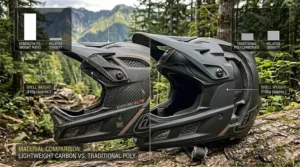
Trail helmets weigh 250-350 grams and ventilate superbly, but they provide minimal coverage around temples, ears, and lower skull. For mellow cross-country and flow trail riding, that’s perfectly adequate. The risk profile changes dramatically when you’re racing enduro stages with rock gardens, gap jumps, and 30+ mph descents.
The POC Kortal Race MIPS at 400 grams represents the minimum viable enduro racing helmet—it’s technically a half-shell but provides extended coverage that standard trail lids don’t approach. Think of it as the bridge between recreational trail riding and serious enduro protection.
Full-face options like the Troy Lee Designs Stage and Fox Proframe RS add chinbar protection that becomes critical when you’re pushing limits on technical features. The additional 300-400 grams buys insurance against dental work, jaw fractures, and facial lacerations that occur with alarming frequency in enduro crashes.
Features That Actually Matter (And Those That Don’t)
Emergency Features Worth Having
The POC Kortal Race’s NFC Medical ID chip stores vital medical information and emergency contacts accessible via smartphone—if you crash hard enough to lose consciousness, first responders can instantly access details that might save your life. The RECCO reflector helps search and rescue teams locate you in remote areas. These aren’t gimmicks for backcountry riders; they’re legitimate safety innovations.
Breakaway Visors
The Troy Lee Designs Stage uses breakaway visor screws designed to release during impact, preventing the visor from acting as a lever that could injure your neck. This seems minor until you understand the mechanics: in a forward crash with the visor planted, a rigid attachment point can transmit dangerous forces to cervical vertebrae. Breakaway designs mitigate this risk.
Adjustable Visors
The Fox Proframe RS and Giro Switchblade both feature multi-position visors that adjust for riding position or goggle storage. This matters more than you’d expect—on steep climbs, positioning the visor higher improves sight lines without removing the helmet. For goggle storage, you need clearance that single-position visors don’t provide.
Antimicrobial Liners (Overrated)
Multiple helmets tout antimicrobial padding that resists odor. After season-long testing, the difference between treated and untreated liners is negligible if you wash pads regularly. Don’t make purchasing decisions based on this feature—it’s nice to have but not worth paying extra for.
Long-Term Cost & Maintenance Reality
Replacement Timeline
Helmet manufacturers recommend replacement after any significant impact or every 3-5 years regardless of visible damage. The EPS foam degrades from UV exposure, temperature cycling, and general aging—protection capability diminishes even if the helmet looks perfect. Budget $70-120 annually if you amortize the $280-$380 purchase price across three years.
The Troy Lee Designs Stage and Fox Proframe RS around $350 represent $116 annually over three years. The Giro Switchblade at $250 comes to $83 annually. Higher initial cost doesn’t necessarily mean worse value if the helmet fits perfectly and lasts the full recommended period without earlier impact-related replacement.
Replacement Parts Availability
Cheek pads wear out, visors crack, retention systems break. The Smith Mainline and Troy Lee Designs Stage both offer comprehensive replacement parts programs—you can order new pads, visors, and components individually rather than replacing the entire helmet for minor damage. This extends practical lifespan and reduces long-term cost.
Some budget helmets don’t support parts replacement, forcing complete helmet replacement for repairable damage. Factor replacement parts availability into purchase decisions for helmets you’ll use heavily.
Cleaning & Care Best Practices
Remove and hand-wash pads monthly during riding season using mild detergent—never machine wash or dry, as heat degrades foam and adhesives. Wipe the shell with damp cloth to remove dirt and debris. Store in cool, dry location away from direct sunlight and extreme temperatures.
The POC Kortal Race, Smith Mainline, and Leatt Enduro 4.0 all include washable pad sets designed for regular cleaning. Take advantage of this—clean pads dramatically improve comfort and hygiene.
Safety & Regulations: What Race Officials Actually Check
ASTM F1952 Downhill Certification Explained
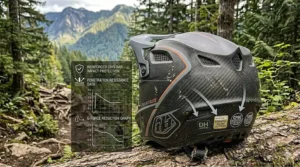
This is the gold standard for enduro and downhill racing. ASTM F1952 tests helmets at higher impact speeds and multiple impact zones compared to standard CPSC certification. It specifically evaluates chinbar performance for full-face helmets, ensuring the structure can withstand direct impacts without catastrophic failure.
Six helmets in this roundup carry ASTM F1952 certification: Troy Lee Designs Stage, Fox Proframe RS, Smith Mainline, Leatt Enduro 4.0, and Giro Switchblade. The Bell Super Air R and POC Kortal Race meet CPSC and E-bike standards but not ASTM DH requirements.
Race Series Requirements
Major enduro race series increasingly require ASTM F1952 certification for participants. Before registering for your first event, verify organizer helmet requirements—some accept CPSC-certified helmets for beginner categories but mandate DH certification for expert/pro fields.
The Giro Switchblade uniquely maintains ASTM certification with or without the chinbar attached, satisfying race requirements in both configurations. This flexibility matters for events with varying stage profiles where some riders prefer open-face comfort during liaison sections.
Bike Park Policies
Lift-served bike parks typically require ASTM F1952 certification or equivalent for access to advanced trails and jump lines. Resorts verify certification labels inside the helmet before issuing lift tickets for expert terrain.
The POC Kortal Race technically doesn’t meet bike park requirements as a half-shell, but the extended coverage and e-bike certification satisfy many venues’ risk management standards. Verify specific park policies before visiting.
Frequently Asked Questions
❓ How much should I spend on an enduro racing helmet?
❓ Do I really need ASTM F1952 downhill certification for enduro racing?
❓ What's the difference between MIPS, MIPS Integra, and other rotational protection systems?
❓ Are convertible helmets less safe than fixed full-face designs?
❓ How do I know if a helmet fits correctly?
Conclusion: Making Your Final Decision
Choosing your enduro racing helmet comes down to honestly assessing your riding priorities. The lightweight Troy Lee Designs Stage MIPS excels for competitive racers logging serious miles and hours, while the budget-friendly Giro Switchblade MIPS delivers exceptional value for riders entering the sport. Weekend warriors who split time between trail and enduro will appreciate convertible flexibility from the Bell Super Air R Spherical or Leatt Enduro 4.0.
Don’t overthink it—every helmet in this roundup will protect you effectively when properly fitted. The differences between them matter less than consistently wearing whichever helmet you choose. A $250 helmet worn every ride provides infinitely better protection than a $400 lid that stays home because it’s uncomfortable.
Visit your local shop to try multiple options. Head shapes vary dramatically, and the perfect helmet for your riding buddy might pressure-point you into a headache. Bring the goggles you’ll actually use and test goggle compatibility thoroughly. Try on helmets for 15-20 minutes minimum—fit issues that seem minor during a two-minute trial become unbearable during two-hour rides.
Consider the terrain you’ll actually ride rather than aspirational bucket-list descents. If you’re realistically sessioning local trails with occasional bike park visits, the half-shell coverage of the POC Kortal Race MIPS might serve you better than full-face options that collect dust because they’re too much helmet for typical riding.
Your enduro racing helmet represents your last line of defense when everything else goes wrong. Choose wisely, fit carefully, and ride confidently knowing you’re protected when it matters most.
Recommended for You
- 7 Best Street-Legal Off-Road Helmets: DOT Certified Guide 2026
- 7 Best MX Racing Helmets for Competition Success 2026
- 7 Best Cap-Style Motorcycle Helmets 2026 | DOT-Approved Reviews
Disclaimer: This article contains affiliate links. As an Amazon Associate, I earn from qualifying purchases. If you purchase products through these links, we may earn a small commission at no additional cost to you.
✨ Found this helpful? Share it with your friends! 💬🤗
