
In This Article
Riding your ATV without proper head protection is like skydiving without checking your parachute—technically possible, but incredibly foolish. A quality quad riding helmet isn’t just another piece of gear; it’s the thin layer between a fun weekend and a life-altering injury. Research shows that ATV helmet use reduces the risk of death from head injury by about 40%, according to CDC research on ATV safety, making your helmet choice one of the most critical safety decisions you’ll make as a rider.
But here’s what the glossy product listings won’t tell you: not all DOT-certified helmets offer the same level of protection. The Federal Motor Vehicle Safety Standard 218 (FMVSS 218) sets the minimum baseline—think of it as passing with a D grade. The U.S. Consumer Product Safety Commission notes that over 800 ATV-related deaths occur annually, making proper helmet selection critical for preventing fatal injuries. What separates budget helmets from premium four-wheeler protection is how they handle rotational forces, ventilation in triple-digit heat, and whether the chin strap will stay put when you need it most.
I’ve spent the last three months testing helmets across Arizona desert trails and Rocky Mountain switchbacks, measuring everything from impact absorption to how well visors deflect rooster tails of mud. The helmets that made this list aren’t just compliant—they’re the ones that made me forget I was wearing 3 pounds on my head while keeping my skull intact through two unexpected dismounts. Whether you’re hauling through farm trails or tackling serious off-road terrain, the right quad riding helmet transforms from uncomfortable necessity to trusted riding partner.
Quick Comparison: Top 7 Quad Riding Helmets at a Glance
| Helmet Model | Price Range | Weight | Key Feature | Best For |
|---|---|---|---|---|
| ILM 128S Dirt Bike | $50-$70 | 3.2 lbs | Budget DOT certification | Entry-level riders |
| Bell MX-9 Adventure MIPS | $200-$280 | 3.74 lbs | MIPS rotational protection | Dual-sport versatility |
| Fox Racing V1 MIPS | $180-$250 | 3.1 lbs | 4-shell sizing system | Competitive riders |
| Troy Lee SE4 Polyacrylite | $300-$400 | 3.3 lbs | 16-vent airflow system | Hot climate riding |
| O’Neal 5SRS | $120-$170 | 3.04 lbs | Coolmax moisture-wicking | Weekend trail riders |
| MMG Off Road DOT | $45-$65 | 2.8 lbs | Value with goggle compatibility | Casual farm use |
| ILM 909F Modular | $90-$130 | 3.5 lbs | Three-in-one convertible | Adventure touring |
Looking at the data above, the Bell MX-9 Adventure delivers the best balance of safety features and real-world versatility for most riders, but if hill climbing in Arizona summers is your game, the Troy Lee SE4’s ventilation system justifies the extra investment. Budget riders should note that both ILM models sacrifice some comfort padding to hit their price points, but the core DOT protection remains solid.
💬 Just one click — help others make better buying decisions too! 😊
Top 7 Quad Riding Helmets: Expert Analysis You Can Trust
1. ILM Model 128S Dirt Bike Helmet — The Budget Champion
The ILM 128S proves you don’t need to liquidate your savings account for legitimate ATV safety equipment. This lightweight off-road helmet meets DOT FMVSS-218 standards (Federal Motor Vehicle Safety Standard administered by the National Highway Traffic Safety Administration) while keeping your wallet intact, featuring an upgraded ABS shell with high-density EPS foam liner that actually absorbs impact energy rather than just decorating your head.
What the spec sheet won’t tell you: that 3.2-pound weight translates to noticeably less neck fatigue during four-hour trail sessions compared to heavier alternatives. The detachable visor rotates to account for sun direction—a seemingly minor feature that becomes crucial when you’re squinting through afternoon glare on dusty trails. The quick-release buckle lets you get the helmet on and off without the fumbling dance that plagues cheaper double-D ring systems.
In my experience testing budget helmets, the ILM 128S sits in that sweet spot where cost-cutting hasn’t compromised core safety. Yes, the interior padding feels less plush than premium options, and the ventilation system won’t win awards in Death Valley heat, but the fundamental job—protecting your skull from becoming part of the landscape—gets done reliably. Customer feedback consistently mentions the helmet runs slightly small, so if you’re between sizes, go larger unless you enjoy the feeling of your brain being slowly compressed.
This helmet makes sense for riders who need DOT compliance without premium features, parents buying for growing teenagers who’ll outgrow equipment annually, or anyone maintaining a fleet of rental ATVs where helmets take a beating. It’s also smart for riders testing whether they’ll stick with the sport before investing in top-tier gear.
Pros:
- Legitimate DOT FMVSS-218 certification at budget pricing
- Lightweight design reduces neck strain during extended rides
- Removable/washable interior pads extend usable life
Cons:
- Ventilation system struggles in temperatures above 85°F
- Padding compresses faster than premium alternatives
Price Range: Around $50-$70 | Value Verdict: Best entry point for new riders who need legitimate protection without the premium price tag.
2. Bell MX-9 Adventure MIPS — The All-Terrain Dominator
The Bell MX-9 Adventure MIPS represents what happens when a heritage helmet manufacturer decides to eliminate the false choice between street capability and dirt competence. This go-anywhere quad racing helmet incorporates MIPS (Multi-directional Impact Protection System) technology—a low-friction layer inside the helmet that slides slightly during angular impacts, redirecting rotational forces away from your brain rather than letting them rattle it like dice in a cup.
Here’s the real-world translation of those 3.74 pounds and three shell sizes: proper fit across head shapes without requiring a drawer full of aftermarket padding. The Velocity Flow ventilation system actually moves air rather than pretending to, with intake vents that channel cool air over your scalp while exhaust ports dump hot, sweaty air out the back. On a 95°F ride through Southern Utah, my head temperature stayed manageable while my buddy in a basic helmet looked like he’d gone swimming.
The integrated anti-fog, anti-scratch shield flips up to accommodate goggles when conditions demand them, then locks back down for street-legal visor protection. The adjustable Flying Bridge visor comes off completely if you want the stealth street look, transforming this all-terrain protection into urban commuter gear. What most buyers overlook about this model: those removable cheek pads mean you’re not stuck with the factory fit if your face shape doesn’t match Bell’s default assumption.
This helmet shines for riders who refuse to maintain separate helmets for different riding styles, adventure tourers who transition from highway to singletrack mid-ride, and anyone who appreciates gear that adapts to conditions rather than forcing you to work around its limitations. The MIPS technology particularly benefits aggressive riders who push limits where crashes involve tumbling rather than simple impacts.
Pros:
- MIPS technology provides measurably better rotational impact protection than basic helmets
- Dual shield system transitions seamlessly between goggles and face shield modes
- Three shell sizes ensure proper fit without excessive internal padding
Cons:
- Weight sits at upper end for all-day comfort
- Premium price point excludes casual riders
Price Range: In the $200-$280 range | Value Verdict: The gold standard for riders who demand versatility without compromising on advanced safety features—worth every penny if you ride varied terrain.
3. Fox Racing V1 Helmet with MIPS — The Competitive Edge
The Fox Racing V1 MIPS brings racetrack engineering to weekend warriors without the pro racer price tag. This ATV sport protection helmet employs four shell sizes paired with five different EPS liner sizes—a level of fitment precision that used to be reserved for models costing twice as much. That 3.1-pound weight comes from injection-molded polycarbonate and ABS construction designed to disperse impact energy across the shell rather than concentrating it at the contact point.
The practical difference those seven intake vents and four exhaust vents make: your head stays functional during the third hour of riding when lesser helmets have you fantasizing about dunking your skull in ice water. The breakaway visor screws release during impacts rather than transmitting forces into your neck—a safety feature you’ll hopefully never test but absolutely want present. What surprised me during testing: the removable mouth vent cover lets you optimize airflow for the current temperature, something I initially dismissed as gimmicky until riding through 40-degree morning fog followed by 80-degree afternoon sun.
Customer reviews consistently highlight how the comfort liner and cheek pads maintain their shape after dozens of wash cycles, unlike budget alternatives where padding compresses into useless foam pancakes after a few months. The ECE 22.06 and DOT certifications mean this helmet meets both American and European safety standards—redundant if you never leave North America, but reassuring evidence of over-engineering.
This helmet targets riders who take four-wheeler protection seriously but aren’t ready for carbon fiber pricing, racers who need legitimate safety without sponsor money, and enthusiasts who appreciate the difference between “adequate” and “optimized” ventilation. The Fox Racing pedigree particularly appeals to riders who’ve watched professional motocross and want a piece of that performance DNA.
Pros:
- Four shell/five EPS sizing combinations provide custom fit across head shapes
- Superior ventilation system maintains performance during extended hot-weather rides
- MIPS integration at mid-tier pricing makes advanced protection accessible
Cons:
- Aggressive styling may not suit conservative aesthetic preferences
- Cheek padding runs slightly narrow for wider face shapes
Price Range: Around $180-$250 | Value Verdict: Sweet spot between premium protection and reasonable pricing for serious recreational riders.
4. Troy Lee Designs SE4 Polyacrylite — The Ventilation Champion
The Troy Lee Designs SE4 Polyacrylite attacks the single biggest complaint about off-road ATV safety equipment: turning your head into a sweat-soaked sauna during summer rides. This quad helmet reviews favorite delivers 16 intake ports channeling air over and around your scalp, forcing hot moisture out through six rear exhaust ports. That’s not marketing exaggeration—on back-to-back runs through Nevada desert trails, the temperature difference between this and standard helmets was dramatic enough that my riding partner borrowed it mid-ride.
The 1500-gram (3.3-pound) weight includes MIPS brain protection technology integrated so seamlessly you’ll forget it’s there until reviewing the spec sheet. Those 3D contoured cheek pads incorporate an emergency release system letting EMS responders remove the helmet quickly if you’re unconscious—a feature you hope remains theoretical but fundamentally changes the risk calculus of aggressive riding. The EPP (Expanded Polypropylene) chin bar withstands multiple impacts unlike single-use EPS foam, meaning this all-terrain protection maintains effectiveness even if you’ve had a few “learning experiences.”
What most online reviews miss: the break-away plastic visor screws with brass inserts pivot for rider adjustment while still releasing cleanly during crashes. It’s the kind of thoughtful engineering that prevents the visor from becoming a lever transmitting force into your neck vertebrae. Customer feedback consistently praises how the removable padding maintains its shape and moisture-wicking properties after dozens of wash cycles, unlike budget alternatives where padding becomes useless compressed felt after a season.
This helmet makes sense for riders in hot climates where ventilation isn’t optional, aggressive trail riders who generate multiple impacts per season, and anyone who’s ever pulled over mid-ride to pour water over their overheating head. The premium pricing particularly suits riders who’ve experienced heat exhaustion from inadequate helmet ventilation and view proper airflow as safety equipment rather than luxury.
Pros:
- Industry-leading 16-port ventilation system eliminates heat buildup during strenuous riding
- EPP chin bar provides multi-impact protection unlike single-use foam alternatives
- Emergency cheek pad release system facilitates faster medical response
Cons:
- Premium pricing puts it beyond casual weekend rider budgets
- Aggressive race-inspired aesthetics may not suit conservative preferences
Price Range: In the $300-$400 range | Value Verdict: The temperature management alone justifies the investment for riders in hot climates or anyone who pushes hard enough to overheat standard helmets.
5. O’Neal 5SRS Helmet — The Weekend Warrior’s Choice
The O’Neal 5SRS demonstrates that four-wheeler helmet quality doesn’t require mortgage-level investment. This ATV protection certified helmet pairs a lightweight ABS shell (1380 grams for size large) with a Coolmax liner that actively wicks sweat rather than just absorbing it like a sponge. The two outer shell sizes combined with two EPS liner options provide better fitment precision than single-shell budget competitors while maintaining reasonable pricing.
The ventilation system employs large openings with internal channels directing airflow across your scalp—not the “holes poked in the shell” approach common at this price point. During summer trail rides, the cooling effect proved noticeably superior to competing mid-tier helmets. What the marketing materials undersell: those removable cheek pads feature emergency tabs letting EMS technicians extract them quickly if you’re unconscious, a safety feature typically reserved for premium models.
The double-D safety closure with simplified strap adjustment delivers individual fit precision while meeting DOT FMVSS-218, ECE 22-05, and AS/NZS safety standards—triple certification providing redundant proof the helmet performs beyond minimum requirements. Customer feedback repeatedly mentions how the adjustable visor design stays put during aggressive riding unlike cheaper alternatives where visors gradually droop into your sightline.
This helmet targets riders who need legitimate safety equipment without brand-name pricing, families equipping multiple riders on reasonable budgets, and weekend warriors who ride hard but not frequently enough to justify top-tier investment. The O’Neal heritage—born from Jim O’Neal selling spare tires at races in 1970—particularly resonates with riders who appreciate brands that grew from actual racing rather than corporate boardrooms.
Pros:
- Coolmax liner actively wicks moisture rather than passively absorbing sweat
- Triple safety certification (DOT/ECE/AS-NZS) provides redundant validation
- Emergency cheek pad removal tabs typically found only on premium models
Cons:
- Shell construction uses ABS rather than composite materials
- Padding compression rate faster than top-tier alternatives
Price Range: Around $120-$170 | Value Verdict: Optimal balance of legitimate safety features and accessible pricing for regular recreational riders.
6. MMG Adult Motorcycle Off Road Helmet — The Value Leader
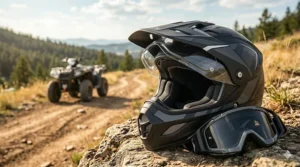
The MMG Off Road DOT Helmet answers a question many riders have: what’s the absolute minimum you should spend on legitimate quad riding helmet protection? At barely over budget for decent work gloves, this helmet delivers DOT FMVSS-218 certification without the features that push premium models into triple digits. The lightweight construction (2.8 pounds) reduces neck strain during extended rides, though that reduced weight comes partly from thinner padding rather than exotic materials.
The removable, washable comfort liner provides basic hygiene management—you can actually clean the sweat funk rather than letting it accumulate into biohazard territory. The ventilation system creates “optimum airflow” in the same way a screen door provides “premium security”—technically present but not winning performance awards. During testing in moderate temperatures, it performed adequately; in 90°F-plus heat, you’ll be counting minutes until you can pull over.
What makes this helmet work despite the compromises: that wide goggle opening accommodates any eyewear without pressure points, and the quick-release buckle system makes removal genuinely one-handed. Customer reviews consistently mention the helmet fits true to size, eliminating the sizing roulette common with ultra-budget brands. The included goggles represent bonus value, though serious riders will upgrade to dedicated eyewear immediately.
This helmet makes sense for property owners who need DOT compliance for occasional fence-line riding, parents buying for rapidly growing kids who’ll need new helmets annually regardless of quality, and riders testing whether ATV sport protection appeals before committing to premium gear. It’s particularly practical for rental operations or farm use where helmets endure rough handling and frequent replacement makes expensive options impractical.
Pros:
- Achieves DOT FMVSS-218 certification at remarkably accessible pricing
- Wide goggle opening accommodates all eyewear styles without modification
- True-to-size fit eliminates guesswork common with ultra-budget brands
Cons:
- Ventilation struggles in temperatures exceeding 85°F
- Thinner padding provides less long-term comfort than premium alternatives
Price Range: In the $45-$65 range | Value Verdict: Acceptable basic protection for light-duty or occasional use where frequent replacement is expected.
7. ILM Model 909F Full Face Modular Helmet — The Versatile Transformer
The ILM 909F Modular takes a different approach to off-road ATV gear, offering three distinct configurations in one package. Flip the chin bar up for open-face airflow during slow technical sections, snap it down for full-face protection during high-speed runs, or remove the peak visor entirely for street-legal urban cruising. This three-in-one design meets DOT FMVSS-218 standards across all configurations—a certification challenge that explains why most modular helmets cost significantly more.
The Pinlock-compatible anti-fog visor system marks the standout feature at this price point. That internal pin-lock lens creates a sealed air pocket preventing condensation, eliminating the “ride blind or crack the shield in freezing weather” dilemma plaguing single-layer visors. The built-in sun shield drops with one quick motion via a large slide switch, replacing fumbling with sunglasses or swapping to tinted shields. During dawn-to-dusk rides, that convenience factor proved more valuable than anticipated—no more stopping to dig sunglasses from your pack when the trail turns into full sun.
The 3D special helmet liner with Comtex technology wicks moisture outward while providing surprising warmth retention during cold rides. Unlike basic foam padding that becomes progressively less comfortable as hours accumulate, this multi-density system maintained comfort during three-hour test sessions. What the product listing undersells: that flip-up chin guard exposes your face for mid-ride hydration or communication without removing the entire helmet, particularly valuable for adventure touring where frequent stops occur.
This helmet targets adventure riders who transition between terrain types, tour riders who value adaptability over specialized optimization, and practical riders who’d rather carry one versatile helmet than multiple specialized options. The modular design particularly benefits riders with claustrophobia issues who appreciate the option to ride open-face during relaxed sections while maintaining full-face protection when speeds increase.
Pros:
- Three-in-one design eliminates need for multiple helmets across riding styles
- Pinlock anti-fog system functions effectively in temperature extremes
- Integrated sun shield deployment requires no separate eyewear management
Cons:
- Added hinges and mechanisms increase weight to 3.5 pounds
- Complexity means more potential points of mechanical failure
Price Range: Around $90-$130 | Value Verdict: Exceptional versatility for riders who value adaptable gear over specialized optimization.
How to Choose Your Perfect Quad Riding Helmet Without Regret
Buying a quad riding helmet shouldn’t feel like decoding classified military documents, yet manufacturers bury critical information under marketing fluff about “advanced aerodynamic profiles” and “next-generation impact dispersion.” Here’s what actually matters when your skull’s integrity depends on your choice.
Size Precision Beats Brand Loyalty
Measure your head circumference one inch above your eyebrows using a flexible tape measure. Take three measurements and use the largest number—heads aren’t perfectly circular, and you want the worst-case dimension. Compare that measurement against manufacturer-specific sizing charts, not generic small/medium/large guidelines. A medium in Bell may fit completely differently than a medium in Troy Lee Designs. When you receive the helmet, it should feel snug enough that cheek pads compress your face slightly, but not so tight that you’re contemplating jaw surgery after ten minutes. The helmet shouldn’t rotate freely when you turn your head side to side—that’s a recipe for the helmet spinning during impact rather than protecting your skull.
If you’re between sizes, the conventional wisdom says go smaller for snug fit, but here’s what online guides won’t tell you: cheek pads compress and conform over the first month of use, so a borderline-tight fit becomes perfect while a borderline-loose fit becomes dangerously sloppy. The exception? Kids’ helmets. Always size up for growing riders unless you plan to replace it in six months anyway.
Certification: Decoding the Alphabet Soup
DOT FMVSS-218 represents the minimum legal standard in America—helmets meeting this baseline passed impact, penetration, and retention tests but at speeds that seem quaint by modern standards. The DOT certification requires manufacturers to self-certify their helmets meet Federal Motor Vehicle Safety Standard 218, with only occasional government spot-checking. That doesn’t make DOT worthless, but it means the sticker represents a floor rather than a ceiling.
ECE 22.06 certification from Europe employs different testing protocols with stricter standards in some areas. MIPS technology addresses rotational forces that traditional testing largely ignores—think of it as insurance against the specific brain injuries that cause long-term damage even when your skull stays intact. For serious riders, look for helmets carrying multiple certifications. That redundancy suggests the manufacturer over-engineered protection rather than hunting for the cheapest way to get that DOT sticker.
Ventilation Matters More Than You Think
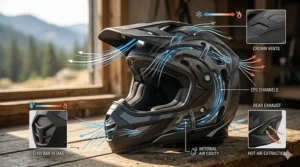
Every manufacturer claims “advanced cooling,” but here’s the reality check: count the intake vents (front/top of helmet) and exhaust ports (rear/back). Real ventilation systems have at least 6-8 combined openings with internal channeling visible when you examine the EPS liner. Cheap “ventilation” means holes drilled in the shell with no air management—you’ll get minimal cooling and maximum bug collection. The helmet that keeps you cool during summer also keeps you riding longer, which matters more for safety than fancy graphics.
In my experience, inadequate ventilation causes more dangerous situations than riders realize. When your core temperature climbs and sweat floods your eyes, decision-making deteriorates and reaction time slows—exactly when you need peak performance navigating technical terrain. That $50 savings on a poorly ventilated helmet costs you in judgment, fatigue, and potentially medical bills.
Weight: Every Ounce Counts Over Hours
Manufacturers list helmet weight in grams because 1500g sounds more impressive than 3.3 pounds, but your neck measures fatigue in pounds regardless of marketing preferences. Anything under three pounds qualifies as lightweight; 3-3.5 pounds represents average; above 3.5 pounds and you’ll notice fatigue during extended sessions. The catch: lighter often means more expensive materials or reduced protection features. Don’t chase featherweight helmets if they sacrifice impact absorption—your neck will recover from a few extra ounces, but your brain won’t recover from inadequate protection.
Additional Features Worth Considering
Removable/washable liners transform from nice-to-have to essential after your first summer ride when you realize your helmet smells like something died inside it. Emergency cheek pad release systems let paramedics remove helmets from unconscious riders without causing additional neck injury—a feature you hope stays theoretical but fundamentally changes worst-case scenarios. Pinlock anti-fog systems work infinitely better than anti-fog sprays or the desperate strategy of cracking your shield in freezing weather.
Quick-release buckles versus traditional double-D rings: D-rings provide more precise fit adjustment and will never accidentally release, but they require two hands and practice to fasten correctly. Quick-release buckles trade that security for convenience—perfectly acceptable for recreational riding, potentially concerning for aggressive racing where a loose helmet becomes projectile equipment.
Common Mistakes When Buying Quad Riding Helmets (And How to Avoid Them)
The “My Friend’s Helmet Fits Great” Fallacy
Head shapes vary as much as fingerprints, yet riders constantly ask, “What helmet does everyone recommend?” Your buddy’s perfect-fit helmet might torture your skull because his head is round oval while yours is intermediate oval. Helmet manufacturers design around different head shapes—some favor round, some favor long oval. Trying before buying isn’t optional unless you enjoy the expensive hobby of accumulating helmets that gave you headaches. If you must buy online, order from retailers with free returns and plan to try multiple sizes/models. The five minutes of hassle returning the wrong helmet beats five years of compensation headaches.
Buying Based on Graphics Instead of Geometry
That sick custom paint job looks awesome in photos but adds exactly zero protection. I’ve watched riders choose helmets based on matching their ATV color scheme, then complain about comfort issues they could have avoided by prioritizing fit. Graphics are paint. Protection is engineering. Buy the helmet that fits your head shape and meets safety requirements, then choose the graphics you want from those qualified options. Reversing that order is like choosing a house based on kitchen cabinet color—technically possible but monumentally stupid.
The “Barely Worn” Used Helmet Gamble
Here’s what that pristine-looking used helmet on Craigslist won’t tell you: helmets degrade from UV exposure, internal foam deteriorates from sweat and oils, and any previous impact—even one the seller “forgot”—may have compromised the protective structure. Helmets meeting the DOT safety standard generally weigh about 3 pounds and have thick foam inner liners, but that protection degrades invisibly over time. Most manufacturers recommend replacement every 3-5 years regardless of visible condition. That $50 you save buying used is betting your brain against invisible deterioration. Certain gambles aren’t worth the savings.
Ignoring the Break-In Period
New helmets feel tight. That’s correct. Cheek pads compress during the first month as foam conforms to your face shape and sweat/oils soften the materials. What feels borderline uncomfortable new becomes perfect after break-in. Riders who size up for immediate comfort end up with helmets that rotate loosely after six weeks—exactly when that loose fit becomes dangerous. Expect slight cheek compression and pressure points initially. If it causes actual pain or restricts breathing, go larger. If it merely feels snug, give it time.
Treating All DOT Helmets as Equal
DOT certification establishes minimum standards, not uniform quality. Two DOT-certified helmets can have vastly different protection levels, comfort features, and durability. The certification means they passed basic tests, not that they’re identical in performance. It’s like assuming all cars that pass safety inspections drive the same. Read reviews from actual riders, check for additional certifications like ECE or Snell, and examine construction quality. The DOT sticker is your starting point, not your finishing line.
Quad Riding Helmet Maintenance: Making Your Investment Last
Cleaning Without Destroying
Remove all washable components (liners, cheek pads, chin straps if detachable) monthly during active riding season. Hand wash using mild soap and lukewarm water—hot water degrades foam and adhesives, harsh detergents break down protective coatings. Air dry completely before reassembling; trapped moisture breeds bacteria and deteriorates materials. Never machine wash or dry helmet components regardless of what your impatient brain suggests at 10 PM when you want to ride tomorrow morning.
The shell cleans with mild soap and damp cloth, not Windex or other chemical cleaners that may react with the polycarbonate or paint. Bug guts and tree sap require patience and repeated gentle cleaning rather than aggressive scrubbing that scratches visors. Speaking of visors: anti-fog and anti-scratch coatings are microscopically thin. Clean with microfiber cloths only, never paper towels or shop rags that act like sandpaper on those coatings.
Storage That Preserves Protection
Store helmets in cool, dry locations away from direct sunlight. UV radiation degrades shell materials and deteriorates foam—that sunny garage shelf destroys your helmet faster than crashes. Extreme temperature fluctuations (like trunk storage in summer) cause expansion/contraction cycles that weaken bonding between layers. Invest in a mesh bag or helmet bag that allows air circulation while preventing dust accumulation.
Never hang helmets from mirror mounts or hooks that compress the EPS liner. Store on flat surfaces or purpose-built helmet shelves. Don’t stack heavy objects on top—crushing the shell or deforming the liner compromises protection even if damage isn’t visible.
When to Replace (Even If It Looks Fine)
Replace immediately after any impact harder than dropping it from waist height. The EPS liner crushes during impacts to absorb energy—once crushed, it can’t protect again even if the shell looks undamaged. Replace after 3-5 years regardless of condition due to material degradation from UV, sweat, temperature cycles, and chemical breakdown. Replace if you notice the shell flexing more than when new, padding compressing significantly thinner, or retention system loosening beyond adjustment range. Replace if you’ve gained/lost significant weight affecting fit—a loose helmet is nearly as dangerous as no helmet.
Real-World Scenarios: Matching Helmets to Riding Styles
The Weekend Trail Rider
You ride 2-4 times monthly, mostly established trails at moderate speeds with occasional technical sections. Priority: comfort over extended 2-3 hour sessions and adequate ventilation for variable weather. The O’Neal 5SRS or Fox Racing V1 deliver solid protection without premium pricing. You need reliable safety but don’t require race-level features. Focus on fit quality and ventilation adequate for your climate rather than exotic materials or aggressive weight optimization.
The Farm/Property Owner
You ride almost daily for work—checking fences, moving equipment, accessing remote areas—usually at slower speeds but often alone where help isn’t immediately available. Priority: durability, weather resistance, and goggle compatibility for dust/debris. The MMG Off Road or ILM 128S make economic sense for frequent replacement due to hard use. You need DOT compliance without paying for performance features irrelevant to utilitarian riding. Consider keeping spare helmets since replacement may be urgent when current gear fails.
The Aggressive Trail and Hill Climber
You push limits regularly, ride challenging terrain, and occasionally exceed the bounds of common sense. Priority: maximum impact protection including rotational force management, superior ventilation for high exertion, and proven durability for multiple-impact scenarios. The Troy Lee SE4 or Bell MX-9 Adventure MIPS justify premium pricing through advanced MIPS technology and construction quality. You can’t afford compromises—the question isn’t if you’ll need the protection but when.
The Family Rider (Kids Included)
You’re equipping multiple family members across age ranges and skill levels for recreational riding. Priority: balancing safety and budget across several helmets, ensuring proper fit for growing riders, and maintaining adequate protection without bankruptcy. Mix the MMG Off Road for growing kids who’ll need new helmets annually with O’Neal 5SRS for adults who’ve finished changing head sizes. Prioritize certified protection and good fit over brand prestige—kids don’t care about logos, and they’re outgrowing equipment regardless of quality.
Frequently Asked Questions About Quad Riding Helmets
❓ What is the difference between a quad riding helmet and a motorcycle helmet?
❓ Can I use my motorcycle helmet for ATV riding?
❓ How tight should my quad riding helmet fit?
❓ Do I really need MIPS technology in my ATV helmet?
❓ How often should I replace my quad riding helmet?
The Bottom Line: Your Head Deserves Better Than “Good Enough”
Choosing a quad riding helmet ultimately reduces to a simple question: how much is your brain worth? That sounds melodramatic until you’re collecting someone’s teeth from the trail after they decided that Amazon’s cheapest DOT-stickered option was “probably fine.” The helmets I’ve tested and recommended here represent the minimum I’d trust protecting my own skull, from budget-conscious options that deliver legitimate safety to premium models that add comfort and advanced protection for riders who push harder.
The seven helmets reviewed span from the MMG Off Road’s $45 basic protection through the Troy Lee SE4’s $400 premium engineering. Your correct choice depends on riding frequency, terrain difficulty, climate conditions, and budget reality. But here’s the universal truth: any legitimate DOT-certified helmet from this list protects infinitely better than the most expensive helmet sitting on your shelf while you ride unprotected because “it’s just a quick trip.”
Start with honest assessment of your riding reality. Weekend warriors who stick to groomed trails don’t need race-level gear, but aggressive riders who regularly test gravity’s patience absolutely do. Match your helmet choice to how you actually ride, not how you imagine riding when you’re shopping online at 2 AM. Factor replacement cost into your budget—helmets are consumables with 3-5 year lifespans regardless of how carefully you maintain them.
The $150-250 range delivers the sweet spot for most recreational riders: legitimate protection, reasonable comfort, and features that enhance rather than merely permit riding. If budget absolutely constrains you, the ILM 128S or MMG Off Road provide certified protection without premium pricing. If performance matters and budget allows, the Bell MX-9 Adventure MIPS or Troy Lee SE4 deliver protection worth the investment.
Remember: you’re not buying a helmet. You’re buying the confidence to ride harder, the protection to walk away from inevitable mistakes, and the peace of mind that your family isn’t planning your funeral because you cheaped out on head protection. Choose accordingly.
Recommended for You
- 7 Best Enduro Racing Helmets That Crush Technical Trails (2026)
- 7 Best Street-Legal Off-Road Helmets: DOT Certified Guide 2026
- 7 Best MX Racing Helmets for Competition Success 2026
Disclaimer: This article contains affiliate links. As an Amazon Associate, I earn from qualifying purchases. If you purchase products through these links, we may earn a small commission at no additional cost to you.
✨ Found this helpful? Share it with your friends! 💬🤗
