
In This Article
Here’s an uncomfortable truth nobody tells you when you buy your first jacket: the leather or textile shell is basically a costume. The stuff that actually keeps your collarbone in one piece when the bike goes sideways is a few ounces of foam and plastic tucked into a pocket you’ve probably never even unzipped. That’s motorcycle shoulder armor, and it’s doing more heavy lifting than almost any other piece of gear you own — quietly, unglamorously, until the one day it matters more than anything else on your body.
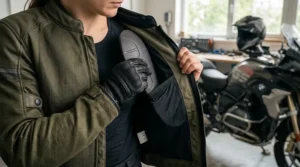
What is motorcycle shoulder armor? It’s a certified impact-absorbing insert — typically foam, gel, or a hinged hard shell — worn over the shoulder joint inside a jacket to spread and reduce the force transmitted to bone and soft tissue during a fall or slide. The good ones carry a CE rating under EN 1621-1, the European standard that actually measures how much force gets through to your body.
I’ve spent the past few weeks pulling apart the current crop of shoulder and elbow protectors — from $40 aftermarket foam sets to premium hinged systems that cost more than some people’s boots — comparing real specs, real CE ratings, and genuine aggregated review sentiment instead of just reading spec sheets and calling it a day. Whether you’re upgrading factory pads that came in your jacket like an afterthought, or building a full shoulder elbow pads motorcycle setup from scratch, this guide walks through seven real products, what actually separates them, and where your money is genuinely well spent versus where you’re just paying for a logo.
Quick Comparison Table: motorcycle shoulder armor at a Glance
| Product | CE Level | Type | Price Range | Best For |
|---|---|---|---|---|
| BORLENI CE Level 2 Elbow & Shoulder Set | Level 2 (limb) / Level 1 (back) | Soft foam, 5-piece set | Under $60 | First-time upgraders on a budget |
| ILM CE Armor 5-PC Pads | Level 1 | Soft foam, 5-piece set | Under $50 | Casual riders wanting basic coverage |
| REV’IT! SEESMART RV31 | Level 1 | Pre-formed pliable foam | $50-$70 range | Riders who hate feeling “armored up” |
| Alpinestars Nucleon Flex Plus | Level 1 | Adaptive cell-structure foam | $60-$90 range | Touring riders who want airflow |
| SAS-TEC Phantom Tripleflex | Level 2 | Ultra-thin viscoelastic foam | $50-$80 range | Riders retrofitting older jackets |
| Knox Micro-Lock Compact | Level 2 | Smart-lock honeycomb foam | $90-$130 range | Serious commuters, year-round riders |
| Forcefield Isolator 2 / EX-K | Level 2 | Molded Nitrex Evo shell foam | $100-$150 range | Sport, touring, and ADV riders wanting max protection |
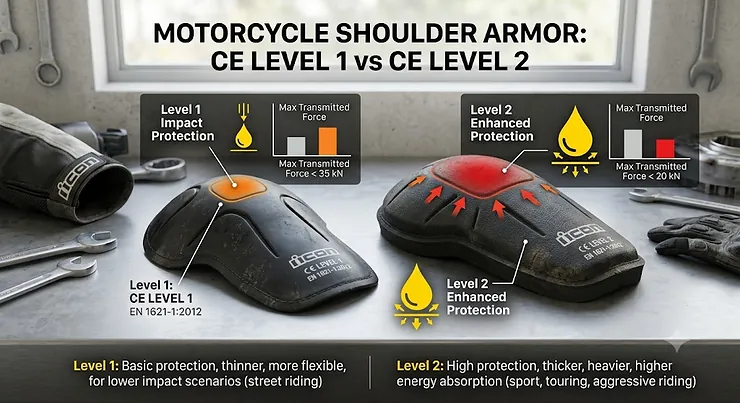
Looking at the spread above, the gap between a Level 1 and Level 2 rating matters more than the brand name stitched on the pad — Level 2 protectors are tested to transmit roughly half the force of Level 1 under the same impact. Budget sets like the BORLENI and ILM are the right call if you just need something certified in the pocket right now, but if you commute daily or ride hard, the Knox Micro-Lock Compact and Forcefield Isolator 2 justify their higher price with meaningfully lower transmitted force. Riders retrofitting a jacket that never came with real armor should look hardest at the SAS-TEC Phantom Tripleflex, since it’s cut thin enough to fit pockets designed for cheaper factory foam.
💬 Just one click — help others make better buying decisions too!😊
Top 7 motorcycle shoulder armor Picks: Expert Analysis
1. BORLENI CE Level 2 Elbow & Shoulder Set — best budget 5-piece armor set
The standout here is simple: a full CE Level 2 elbow and shoulder set, plus a Level 1 back pad, all in one box for less than a single premium shoulder pad from a bigger brand. That’s a lot of certified coverage for one purchase. The pads are molded PU memory foam, rated by the manufacturer for use down to -20°C (-4°F), and built with perforated channels for airflow — details that matter more than they sound, because foam that goes stiff in cold weather is foam that stops protecting you properly. Based on the spec comparison against similarly priced sets, the Level 2 rating on the limb pads specifically is the real differentiator; a lot of budget competitors only certify to Level 1.
This set makes the most sense for riders replacing thin factory pads in a budget jacket, or for anyone building out a secondhand jacket that arrived with no armor pockets filled at all. Reviewers consistently report that the pads are noticeably softer and more flexible than expected at this price, though several note the sizing runs generously and may need trimming to seat properly in narrower pockets. What most buyers overlook is that a 5-piece set solves shoulder, elbow, and back protection in a single order — useful if you’re outfitting more than one garment.
Pros:
- ✅ Full CE Level 2 limb protection at a budget price
- ✅ Rated for cold-weather flexibility down to -4°F
- ✅ Covers shoulder, elbow, and back in one set
Cons:
- ❌ Generic sizing may need trimming for snug pockets
- ❌ Foam is bulkier than premium hinged alternatives
Priced under $60 for the full set, the BORLENI kit is arguably the best entry point into certified armor inserts shoulder elbow jacket upgrades if you’re not ready to spend triple-digits.
2. ILM CE Armor 5-PC Pads — most accessible starter set
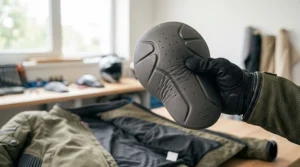
The ILM set’s standout feature is availability and simplicity: five pre-shaped pads (back, elbow, shoulder) that drop straight into most generic jacket pockets without any real fitting drama. Specs-wise, it’s certified to CE Level 1 across the set — the entry rating, not the higher-performance Level 2 tier — built from a lighter foam that prioritizes comfort over maximum impact absorption. Here’s what to weigh: Level 1 still means independently certified impact protection, it’s just tested to a higher force-transmission ceiling than Level 2, so treat this as a genuine floor, not a compromise.
This is the set for someone who just bought their first jacket and discovered, to their horror, that the “armor pockets” were empty foam-shaped voids. Aggregated review sentiment points to praise for how unnoticeable the pads feel under a jacket, alongside a recurring complaint that the shoulder pads shift slightly during long rides without an internal strap. If you’re a new rider prioritizing “something certified” over “the absolute best,” this closes that gap fast and cheaply.
Pros:
- ✅ Simple drop-in fit for most generic jackets
- ✅ Lightweight foam that disappears under clothing
- ✅ Genuinely affordable entry into certified armor
Cons:
- ❌ Level 1 only — no Level 2 option in this set
- ❌ Some reviewers note minor shifting on long rides
At under $50, the ILM set earns its spot as the no-frills option for elbow guards motorcycle riding upgrades on a tight budget.
3. REV’IT! SEESMART RV31 — best for riders who hate feeling armored
The SEESMART’s calling card is how little it feels like armor at all. REV’IT! built it specifically to pass CE Level 1 (EN1621-1:2012) testing even in hot conditions while staying flexible enough that riders forget it’s there — a genuinely different design philosophy from foam that goes rigid the moment it’s out of a temperature-controlled shop. The pre-formed shape follows the shoulder’s natural curve rather than sitting as a flat slab, which on paper means less bunching where the pad meets the seam of your sleeve.
Who should care: touring and commuting riders who’ve previously ditched armor because it felt like wearing a shoulder pad from an ’80s football uniform. Reviewers consistently note the pliability as the standout trait, with the main gripe being that Level 1 buyers wanting maximum protection will need to step up to REV’IT!’s pricier options or a different brand entirely. What most buyers overlook is that this pad is designed as a direct-fit replacement specifically for REV’IT! garments, so double-check pocket compatibility before ordering for a non-REV’IT! jacket.
Pros:
- ✅ Passes CE testing even in hot conditions
- ✅ Pre-formed shape reduces bunching at the shoulder
- ✅ Genuinely comfortable for all-day wear
Cons:
- ❌ Level 1 only, no Level 2 tier available
- ❌ Best fit is REV’IT!-brand jackets specifically
In the $50-$70 range, the REV’IT! SEESMART RV31 is the pick for comfort-first riders who’ll actually keep the pad in versus stuffing it in a drawer.
4. Alpinestars Nucleon Flex Plus — best all-around ventilated shoulder pad
Alpinestars’ Nucleon Flex Plus line stands out for its cell-structure design: individual foam cells bridged together so the pad flexes and adapts to your shoulder’s shape rather than acting as one rigid block. That adaptive bridging is the real story here — on paper, it means the protector conforms while riding instead of forcing your body to conform to it, and the open-cell structure ventilates far better than solid foam blocks. It’s CE certified to EN 1621-1:2012 Level 1, sized for a genuinely slim, low-profile fit under a jacket.
Based on the spec comparison, this pad suits touring and adventure riders who log serious mileage and need something that won’t turn into a sweaty brick on a summer highway stretch. Reviewers consistently report the slim profile as a major selling point — it genuinely disappears under a jacket rather than creating a visible shoulder bump — with the recurring trade-off being that Level 1 buyers chasing maximum stopping power should look toward Alpinestars’ higher Nucleon Flex Pro tier or a competing Level 2 pad.
Pros:
- ✅ Adaptive cell structure molds to shoulder shape
- ✅ Excellent ventilation versus solid foam pads
- ✅ Slim, discreet profile under a jacket
Cons:
- ❌ Level 1 rating, not Level 2
- ❌ Premium pricing for a Level 1 pad
Around $60-$90 for a pair, the Alpinestars Nucleon Flex Plus is the value pick for anyone treating shoulder elbow pads motorcycle upgrades as long-term touring gear rather than a one-time fix.
5. SAS-TEC Phantom Tripleflex — lightest CE Level 2 armor for retrofits
The Phantom Tripleflex’s standout trait is thinness: at roughly 10mm thick, this is CE Level 2 protection nearly indistinguishable from bulkier Level 1 pads once it’s inside a jacket. That’s a genuinely different value proposition — most Level 2 pads sacrifice slimness for protection, and SAS-TEC’s viscoelastic foam formula manages both simultaneously, remaining flexible in cold and wet conditions rather than stiffening up. It’s also a universal design: the same pads swap between shoulder, elbow, hip, and knee pockets depending on which size fits where.
What most buyers overlook about this model is that its universal-fit design makes it the best option for retrofitting an older jacket whose armor pockets were built for thin factory pads — a Level 2 upgrade that won’t suddenly refuse to fit. The spec sheet won’t tell you this, but user reports suggest the ventilated version runs noticeably cooler than the standard Tripleflex on hot rides, at the cost of being about a millimeter thicker. It’s a lesser-known name next to Alpinestars or Knox, but SAS-TEC is the OEM foam supplier behind armor in plenty of premium-branded jackets.
Pros:
- ✅ CE Level 2 protection at Level 1 thinness
- ✅ Universal fit across shoulder, elbow, hip, knee
- ✅ Stays flexible in cold and wet conditions
Cons:
- ❌ Less brand recognition than Alpinestars or Knox
- ❌ Ventilated version is slightly thicker than standard
In the $50-$80 range, the SAS-TEC Phantom Tripleflex may be the smartest hard shell elbow protector motorcycle alternative for riders who assumed Level 2 always meant bulky.
6. Knox Micro-Lock Compact — best “smart” impact-locking armor
Knox’s Micro-Lock line is built around a genuinely clever material trick: it stays soft and pliable to the touch during normal riding, then locks rigid the instant it takes an impact, increasing the amount of energy the pad absorbs before it reaches your body. The Compact version is up to 60% thinner than earlier Knox Level 2 pads while keeping the same CE EN 1621-2:2012 Level 2 T+ and T- certification — meaning it’s tested at both hot and cold temperature extremes, not just room temperature.
Here’s what to weigh: this is armor built for riders who want the highest protection tier without a bulky silhouette, which makes it a strong match for daily commuters and year-round riders who can’t afford gear that only performs well in mild weather. Aggregated review sentiment (drawn from Knox’s own customer feedback and third-party retailer reviews) consistently praises the noticeably thinner, more flexible feel compared to older Micro-Lock generations, while the main friction point reported is the premium price relative to foam-only competitors.
Pros:
- ✅ Locks rigid on impact for higher energy absorption
- ✅ CE Level 2 tested at hot and cold extremes
- ✅ Up to 60% thinner than prior Knox Level 2 pads
Cons:
- ❌ Among the pricier options in this roundup
- ❌ Overkill for casual, low-mileage riders
At $90-$130 for the shoulder and elbow set, the Knox Micro-Lock Compact is built for riders treating impact armor shoulder motorcycle protection as non-negotiable daily-wear gear.
7. Forcefield Isolator 2 / EX-K — highest-rated CE Level 2 protection in this lineup
The Isolator 2 and EX-K lines from Forcefield share one headline number: they’re independently reported to pass CE Level 2 testing at around 10.6kN of transmitted force, well under the 20kN ceiling the standard allows — making it, on paper, one of the strongest-performing limb protectors commercially available. The EX-K shoulder and elbow pads use molded Nitrex Evo armor that heat-activates to body shape over the first few wears, plus “Repeat Performance Technology” designed to maintain protection after multiple impacts rather than degrading after one hit.
Based on the spec comparison, this is the pick for sport riders, track-day regulars, and long-distance ADV riders who consider armor the last thing they’ll compromise on. Reviewers consistently cite the heat-molding fit and consistent post-impact performance as the standout traits, with the main drawback being limited built-in ventilation — a fair trade for riders who prioritize raw protection over airflow on a hot commute. What most buyers overlook is that the EX-K shoulder and elbow pads are modular and can combine with a compatible harness to extend into a full arm-and-shoulder protection system.
Pros:
- ✅ Among the highest-tested CE Level 2 performance available
- ✅ Heat-molds to body shape for a custom fit
- ✅ Maintains protection across repeated impacts
Cons:
- ❌ Limited ventilation compared to mesh-style pads
- ❌ Highest price point in this comparison
At $100-$150 for a shoulder and elbow set, the Forcefield Isolator 2 / EX-K is the choice for riders who want the best-tested CE elbow protector motorcycle armor money can buy right now.
Top 7 Products: Full Spec Comparison
| Product | CE Rating | Thickness Profile | Ventilation | Best Use Case |
|---|---|---|---|---|
| BORLENI CE Level 2 Set | Level 2 (limb) | Standard foam | Moderate | Budget full-set upgrade |
| ILM CE Armor 5-PC | Level 1 | Standard foam | Moderate | First-time armor buyers |
| REV’IT! SEESMART RV31 | Level 1 | Pre-formed, slim | Moderate | Comfort-first touring |
| Alpinestars Nucleon Flex Plus | Level 1 | Slim, cell structure | High | Long-distance touring |
| SAS-TEC Phantom Tripleflex | Level 2 | Ultra-thin (10mm) | Moderate-High (vented version) | Retrofitting older jackets |
| Knox Micro-Lock Compact | Level 2 (T+/T-) | Thin, honeycomb | Moderate | Daily/year-round commuting |
| Forcefield Isolator 2 / EX-K | Level 2 | Molded, thicker | Low-Moderate | Sport, track, and ADV riding |
The table above makes the trade-off pattern obvious once you line every pad up: thinness and ventilation tend to trade off against raw impact numbers, with the SAS-TEC Phantom Tripleflex as the rare exception that manages both a Level 2 rating and near-Level-1 thinness. If you ride mostly in hot climates and prioritize comfort, the Alpinestars Nucleon Flex Plus or REV’IT! SEESMART make more sense than chasing the highest kN numbers. Riders who genuinely crash-test their gear on track days, meanwhile, should weight the Forcefield Isolator 2 / EX-K‘s tested performance numbers over any comfort trade-off.
Motorcycle Shoulder Armor vs. Traditional Padded Jackets
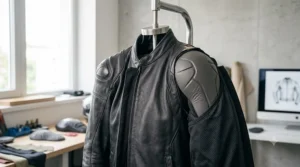
A lot of riders assume any jacket marketed with “padded shoulders” offers real protection, and that assumption is exactly where things go wrong. Traditional padded jackets — the kind with sewn-in foam shapes and no CE marking anywhere on the tag — are built primarily for shape and mild cushioning, not tested impact attenuation. There’s no standardized force-transmission number behind them, no independent lab result, and often no way to even confirm what the foam is made of.
Certified motorcycle shoulder armor, by contrast, has to pass EN 1621-1 lab testing before it can legally carry a CE mark in the EU, with results published in kN of transmitted force. That difference isn’t cosmetic. Reviewers and safety researchers alike consistently draw the same distinction: uncertified foam might reduce some impact, but certified armor is engineered and independently verified to do it within a measurable ceiling. If a jacket’s description doesn’t specify a CE level for its shoulder and elbow inserts, assume the factory pads are placeholder foam and budget for one of the seven sets above as a swap.
Shoulder Armor Placement in Your Jacket: Getting the Fit Right
Getting a shoulder pad installed correctly is where most of the actual protective value gets won or lost — a great pad sitting an inch off-center does you almost no good in a real fall. Here’s the process that actually works:
- Locate the pocket seam first. Most jackets have a fabric pocket sewn specifically for the shoulder pad — feel for it before assuming the factory pad (if any) is already centered correctly.
- Try the jacket on before sealing anything. Raise your arm overhead and rotate your shoulder; the pad should stay centered over the joint, not slide toward your collarbone or upper arm.
- Check for a hook-and-loop retention strap. Premium pads like the Knox Micro-Lock Compact and Forcefield EX-K often include internal straps specifically to stop shoulder drift during a slide.
- Confirm elbow-to-shoulder alignment. A shoulder pad that’s perfectly placed but paired with a misaligned elbow pad still leaves a protection gap at the upper arm — check both together, arm bent at 90 degrees.
- Re-check fit after washing removable liners. Fabric shrinkage can shift pocket position slightly; recheck placement any time you deep-clean a jacket.
- Replace pads that no longer sit flush. Pockets stretch out over years of use — if a pad rattles around loosely, it’s no longer providing full, centered coverage.
- When in doubt, size up the pad rather than down. A slightly larger pad that’s trimmed to fit generally holds position better than an undersized one that shifts.
Skipping this step is one of the most common — and most avoidable — mistakes riders make after buying genuinely good armor.
✨ Don’t Miss These Exclusive Deals!
🔍 Take your riding gear to the next level with these carefully selected CE-certified armor picks. Click on any highlighted product to check current pricing and availability — proper protection shouldn’t be an afterthought!

How to Choose Motorcycle Shoulder Armor: 7 Criteria That Matter
- CE level first, brand second. A Level 2 pad from a lesser-known name like SAS-TEC outperforms a Level 1 pad from a famous brand on raw transmitted-force numbers — check the rating before the logo.
- Match thickness to your jacket’s pocket. Bulky Level 2 pads like the Forcefield EX-K may not fit slim factory pockets designed for thin foam; measure before buying.
- Consider your climate. Riders in hot regions benefit more from ventilated, cell-structure designs like the Alpinestars Nucleon Flex Plus than from dense, low-airflow foam.
- Check for hot/cold-rated CE testing. Pads certified as T+ and T- (like the Knox Micro-Lock) maintain performance across temperature extremes — standard-only certification may not.
- Decide if you need a universal or brand-specific fit. Universal pads like the SAS-TEC Phantom Tripleflex fit more jacket brands; pads like the REV’IT! SEESMART are optimized for their own garments.
- Weigh multi-impact performance for daily riders. If you commute year-round, Repeat Performance Technology (like Forcefield’s) matters more than it does for occasional weekend riders.
- Buy the full set if you’re starting from zero. Budget 5-piece sets like BORLENI or ILM solve shoulder, elbow, and back coverage in one order rather than piecing it together part by part.
Common Mistakes When Buying Motorcycle Elbow Armor
Even careful shoppers trip over the same handful of errors, so it’s worth naming them plainly. First, riders frequently buy based on price alone and end up with uncertified foam masquerading as “armor” — always confirm an actual EN 1621-1 level is listed, not just the word “protective.” Second, plenty of buyers order elbow pads without checking that they’ll pair correctly with the jacket’s existing shoulder pad size, creating an awkward gap at the upper arm. Third, riders in hot climates sometimes prioritize the highest CE level available without checking ventilation, ending up with excellent protection they stop wearing because it’s unbearable in July traffic.
A fourth, quieter mistake: assuming universal pads fit every pocket shape. Sets like the SAS-TEC Phantom Tripleflex are genuinely universal, but many budget sets are molded for a specific generic pocket shape and need trimming for a snug, centered fit. Finally, some riders skip checking whether a pad is sold as a pair or a single unit — several listings in this category, including some budget sets, sell shoulder and elbow pads individually, and ordering one when you needed two is an easy, costly slip.
Real-World Scenarios: Which Armor Fits Which Rider
The daily commuter, 12 miles each way, all seasons: This rider needs armor that performs consistently whether it’s 95°F in July or 35°F in January. The Knox Micro-Lock Compact, tested to CE Level 2 at both hot and cold extremes, is built precisely for this use case — thin enough for daily wear under a work-commute jacket, rated for temperature swings a fair-weather-only pad isn’t tested against.
The weekend sport-touring rider covering 200+ miles at a stretch: Comfort over a long day matters as much as raw protection. The Alpinestars Nucleon Flex Plus‘s ventilated cell structure and slim profile suit a rider who’s more likely to face heat fatigue on a six-hour ride than a low-speed parking-lot tip-over.
The budget-conscious new rider outfitting a secondhand jacket: Whoever previously owned that jacket probably didn’t leave behind premium armor — if any at all. The BORLENI CE Level 2 Set solves shoulder, elbow, and back coverage in a single affordable order, which matters more to a new rider than chasing the absolute best kN numbers on a first bike.
EN 1621-1 Standard Explained: What Limb Protector Ratings Actually Mean
The EN 1621-1 standard is the actual technical backbone behind every “CE Level 1” or “CE Level 2” label you’ll see on a shoulder or elbow pad. According to SATRA’s technical breakdown of the standard, the test assesses how much force a limb protector transmits during an impact, with two performance tiers: Level 1 requires a mean transmitted force under 35kN, while Level 2 — the higher tier — requires a lower ceiling, making it the better-performing rating in practical terms. Some pads, including several featured above, go further and are optionally tested at both hot and cold temperature extremes, marked T+ and T- on the certification.
What most buyers overlook is that CE Level 2 doesn’t just mean “twice as good” in a vague marketing sense — it reflects an actual, independently tested lower force-transmission ceiling. That distinction matters because NHTSA’s motorcycle safety data consistently shows motorcyclists face dramatically higher injury and fatality rates per mile traveled than car occupants, which is exactly the gap certified armor is designed to narrow. If a shoulder or elbow pad’s listing doesn’t specify which level it’s certified to, that’s a red flag worth pausing on before you buy.
Long-Term Cost & Maintenance of Motorcycle Armor
Certified armor isn’t a one-time purchase you forget about — foam degrades, straps stretch, and pockets loosen with wear. Budget sets like the ILM 5-PC pads run under $50 but may need replacing within a couple of riding seasons if the foam compresses or the pocket fit loosens. Premium pads like the Forcefield Isolator 2 or Knox Micro-Lock cost two to three times as much upfront but are built with Repeat Performance Technology and denser materials designed to hold their protective properties across years of regular impacts and temperature swings — a real cost-per-year advantage for daily riders, even if the sticker price stings more at checkout.
A simple rule of thumb: if you ride under 2,000 miles a year recreationally, a mid-range set like the REV’IT! SEESMART or Alpinestars Nucleon Flex Plus likely outlasts your riding habits before it degrades. If you commute daily through all four seasons, the higher upfront cost of Knox or Forcefield armor tends to pay for itself in avoided replacement cycles over a two-to-three-year span.
Features That Actually Matter (And Those That Don’t)
CE level and thickness-to-protection ratio matter enormously — they’re the two specs that actually predict real-world outcome. Ventilation matters a lot if you ride somewhere hot, and much less if you mostly ride in cooler climates or short commutes. Brand heritage, on the other hand, matters far less than marketing suggests; a well-tested SAS-TEC or BORLENI pad can outperform a famous name’s Level 1 offering on paper. Color options and cosmetic branding on the pad itself matter essentially not at all, since none of it is visible once the pad is inside your jacket.
Frequently Asked Questions
❓ Is CE Level 2 armor always better than Level 1?
❓ Can I put shoulder armor into a jacket that didn't come with any?
❓ How often should I replace motorcycle elbow armor?
❓ Do cheaper CE-certified armor sets actually work?
❓ What's the difference between shoulder armor and a back protector?
Conclusion
Shoulder and elbow armor is one of those purchases that rewards a little research far more than most riding gear, because the difference between certified and uncertified foam is the difference between measurable protection and a guess. Whether you land on the budget-friendly BORLENI set for a first upgrade, the ventilated comfort of the Alpinestars Nucleon Flex Plus for long touring days, or the tested performance ceiling of the Forcefield Isolator 2 / EX-K for serious mileage, the real win is simply making sure whatever sits over your shoulder actually carries a CE rating that means something. Check current prices before you commit, confirm the pocket fit against your specific jacket, and treat placement — not just purchase — as part of the job.
Recommended for You
- Motorcycle Back Protector: 7 Best CE Level 2 Picks for 2026
- Motorcycle Chest Protector Guide 2026: 7 Best CE Level 2 Picks
- Sport Mesh Motorcycle Jacket: 7 Picks That Won’t Cook You (2026)
Disclaimer: This article contains affiliate links. As an Amazon Associate, I earn from qualifying purchases. If you purchase products through these links, we may earn a small commission at no additional cost to you.
✨ Found this helpful? Share it with your friends! 💬🤗
