
In This Article
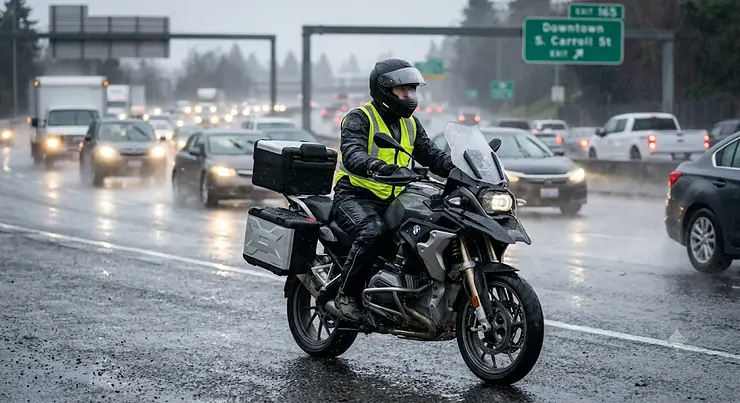
Somewhere around your third soggy commute of the season, you start bargaining with the sky. “Just hold off twenty more minutes,” you mutter at a stoplight, watching the first fat drops smack your visor. rain pants for motorcycle commuting exist precisely for that moment — a waterproof outer layer, usually made from coated nylon or a laminated membrane, that slides on over your regular riding pants to keep road spray and downpours from soaking you before you clock in. They’re not glamorous. Nobody posts a highway selfie in baggy nylon overpants. But the rider who packed a pair is the one walking into the office dry while everyone else is wringing out their socks.
This guide skips the marketing copy and goes straight to what actually matters: real specs, real aggregated review sentiment pulled from riders who’ve worn this gear in actual weather, and honest trade-offs between budget nylon shells and laminated touring-grade fabric. We researched seven genuine products spanning roughly $30 to $140, and every product mention below carries commentary explaining what a given feature means once you’re doing 55 mph in a crosswind rain. As motorcycle riding instructor Ken Condon explains in his rain-riding safety guide, reduced traction is the number one concern once the pavement goes slick, and gear is only one half of staying upright — technique matters just as much, which is why we’ve built in a full wet-commute safety section too.
By the end, you’ll know which pair fits a five-mile city hop, which one survives a genuine highway gully-washer, and which mistakes quietly ruin otherwise-decent rain gear.
Quick Comparison Table
| Product | Price Range | Shell Material | Best For |
|---|---|---|---|
| Frogg Toggs Road Toad Reflective Rain Pants | Under $50 | Nonwoven polypropylene | Emergency backup, occasional riders |
| Viking Cycle Nomad Rain Suit Pants | $50-$65 range | 600D polyester + PU coating | Budget commuters wanting durability |
| Nelson-Rigg Solo Storm Rain Pants | $45-$55 range | Waterproof/breathable nylon | Daily commuters, packable storage |
| Tourmaster Sentinel 2.0 Rain Pants | $55-$70 range | MVM 5000 ripstop nylon | All-day comfort, knee mobility |
| Olympia Horizon Rain Pants | $75-$90 range | Ripstop nylon / poly dobby laminate | Highway commuters, heavy downpours |
| Firstgear Splash Rain Pants | $80-$95 range | 20k/20k WP nylon | Balanced breathability and price |
| REV’IT Acid 4 H2O Rain Pants | $100-$140 range | Laminated Hydratex membrane | Touring riders, frequent wet rides |
Looking at the spread, the gap between the cheapest and priciest option isn’t really about “will it keep water out” — most of these pass that basic test in light-to-moderate rain. The real divide is durability at highway speed, how the fabric behaves after twenty wears, and whether the fit actually seals at the ankle and waist where most leaks start. Budget-conscious commuters doing short urban hops can lean toward the top of this table; anyone doing regular 45+ mph highway stretches in sustained rain should look toward the bottom three.
💬 Found a pair that looks like your match already? Bookmark this page and come back before checkout — the pros and cons below might change your mind.
Top 7 Rain Pants for Motorcycle Commuting: Expert Analysis
Before diving into individual write-ups, here’s how the seven stack up on the details that actually change your buying decision.
| Product | Waterproof Rating | Storage/Pack Size | Heat Shield | Price Range |
|---|---|---|---|---|
| Frogg Toggs Road Toad Reflective Rain Pants | Non-rated, fully sealed seams | Folds flat, no dedicated pouch | Yes | Under $50 |
| Viking Cycle Nomad Rain Suit Pants | 100% waterproof PU coating | Compact roll | No | $50-$65 range |
| Nelson-Rigg Solo Storm Rain Pants | Waterproof/breathable | Self-storage pouch | Yes | $45-$55 range |
| Tourmaster Sentinel 2.0 Rain Pants | MVM 5000 rated | Storage pouch included | Optional Nomex version | $55-$70 range |
| Olympia Horizon Rain Pants | 10k/10k laminate | EZ-Pack self-storage | Yes (Nomex) | $75-$90 range |
| Firstgear Splash Rain Pants | 20k/20k WP/MVP | Internal storage bag | No | $80-$95 range |
| REV’IT Acid 4 H2O Rain Pants | 100% waterproof Hydratex | Compact carry bag | No | $100-$140 range |
The waterproof rating column is where the story gets interesting: a higher number like Firstgear’s 20k/20k doesn’t automatically mean “better,” it means the fabric resists more sustained water pressure before wicking through — useful if you’re sitting on a wet seat for forty-five minutes rather than sprinting through a five-minute downpour. Riders doing short urban commutes rarely need to max out that spec, while highway commuters absolutely benefit from it. Notice, too, that dedicated self-storage pouches (Nelson-Rigg, Olympia, REV’IT) matter more than they sound — a rain pant with nowhere to live on your bike is a rain pant that stays in your closet on the one morning you actually need it.
1. Frogg Toggs Road Toad Reflective Rain Pants — cheapest genuine motorcycle-rated pick
The Road Toad line stands out because Frogg Toggs makes two tiers of rain gear, and this is specifically the thicker, motorcycle-rated version rather than the flimsy hiking-aisle stuff. Built from nonwoven, waterproof/breathable polypropylene with sealed seams, the pants include a heat-resistant liner on the inner leg — a genuinely practical touch, since exhaust pipes and hot engine cases are exactly where cheap rain gear tends to melt. The elastic waist with a cord-lock adjustment and 12-inch leg zippers make them quick to pull on over jeans at a gas station stop. Based on the spec comparison, this is about as close as you get to disposable-grade insurance: light, packable, and cheap enough that losing or damaging a pair doesn’t sting.
Forum commentary on Frogg Toggs products is split by tier — riders on the BMW MOA forums specifically warn that the standard ~$25 Frogg Toggs won’t hold up at highway speeds, but note the thicker Road Toad version is “much thicker and better designed for motorcycle use,” which lines up with what the spec sheet promises. Treat that as a real caveat: this is the pair for occasional commuters and glovebox emergencies, not for someone doing 200 highway miles a week in the rain.
Pros:
- ✅ Lowest price point of any motorcycle-rated option here
- ✅ Heat-resistant inner leg liner protects against hot pipes
- ✅ Packs flat enough for almost any under-seat storage
Cons:
- ❌ Nonwoven fabric wears faster than laminated alternatives
- ❌ Thinner than the multi-layer picks at the top of the price range
At under $50, the Road Toad pants are the easy “just in case” purchase — buy them, stash them, and stop worrying about the forecast on days you weren’t planning to ride in rain anyway.
2. Viking Cycle Nomad Rain Suit Pants — toughest shell fabric for the money
Viking Cycle leans on a heavier 600D polyester shell coated in polyurethane rather than the thinner nonwoven fabrics used by budget competitors, and that difference shows up in abrasion resistance. The elastic waist hem, adjustable zippered pants bottom, and Velcro trouser cuffs create a seal that’s more secure than a simple drawstring, while removable stirrups keep the pant legs from riding up over boots at speed. What most buyers overlook about this tier of rain gear is that shell weight correlates directly with how the fabric handles being folded and unfolded fifty times a season — thicker coated polyester resists cracking at the fold lines longer than thin nonwoven material.
Owner commentary on motorcycle forums describes the Nomad-style Viking Cycle rain gear as genuinely waterproof with a double-zipper design that blocks wind intrusion, and multiple riders report they’d buy the brand again after using it on dual-sport and cruiser commutes alike. The tradeoff reviewers consistently flag is fit: the suit runs generously large, so sizing down from your normal jacket size is the common recommendation if you don’t want the pant legs flapping at highway speed.
Pros:
- ✅ Heavier 600D shell resists abrasion better than nonwoven fabric
- ✅ Reflective piping adds real nighttime visibility
- ✅ Double-zipper cuff design blocks wind-driven rain
Cons:
- ❌ Runs large — expect to size down from your jacket size
- ❌ No dedicated heat shield on the inner leg
Sitting in the $50-$65 range, this is the pick for riders who want a step up in shell durability without jumping into laminated-membrane pricing.
3. https://amzn.to/45Ld6ZgNelson-Rigg Solo Storm Rain Pants — best packability for daily saddlebag storage
Nelson-Rigg builds the Solo Storm pants with a heat-resistant panel on the inner legs, a reinforced non-slip seat material, and adjustable gussets at the lower leg specifically to stop fabric flapping in crosswinds — a detail that matters more than it sounds once you’re doing sustained highway speeds. Here’s what to weigh: the pants are genuinely designed to live in a saddlebag full-time, which is exactly the use case most commuters actually need, since the rain gear that works is the rain gear you actually have with you.
Rider Magazine put these through a real field test on a 4,200-mile cross-country trip, riding through what they describe as a major downpour on I-40 that slowed highway traffic from 80 mph down to around 45 — the testers reported staying completely dry through fifty miles of that storm and the intermittent rain that followed for the rest of the ride. That’s about as close to a genuine stress test as rain gear gets, and it’s the kind of real-world data point that a spec sheet alone can’t give you. The one consistent knock from owners is that the mesh lining, while comfortable, traps some humidity on long rides in warm rain rather than fully venting it.
Pros:
- ✅ Field-tested through a genuine highway downpour with no leaks reported
- ✅ Adjustable lower-leg gussets stop wind flap at speed
- ✅ Non-slip reinforced seat improves stability on the bike
Cons:
- ❌ Mesh lining can trap humidity in warm summer rain
- ❌ Sized only in black, which limits high-visibility options
Priced in the $45-$55 range, the Solo Storm pants deliver touring-grade confidence at a commuter-friendly price, which is a genuinely rare combination in this category.
4. Tourmaster Sentinel 2.0 Rain Pants — most knee mobility for stop-and-go traffic
The Sentinel 2.0’s ripstop nylon shell carries an MVM 5000 breathability rating with fully sealed seams, but the standout feature is the stretch material panels built into the knee area combined with a four-panel ergonomic knee design. In practice, that means less fabric bunching and pulling when your knee is bent at 90 degrees for twenty minutes of stop-and-go traffic — a scenario where stiffer rain pants start to feel like wearing a tarp. The high-density nylon seat panel adds durability exactly where saddle friction wears fabric down fastest, and the extra-long gusseted leg cuff with a Velcro flap closes tight enough to layer over riding boots without a gap.
A verified customer review from a motorcycle gear retailer describes the manufacturing and fabric quality as very good, adding that the material “breathes enough so you stay cool” — direct confirmation that the MVM 5000 rating translates to a real comfort difference rather than just a marketing number. The pants also include a jacket-to-pant zipper attachment, so riders who pair them with the matching Sentinel rain jacket get a genuinely sealed system rather than two separate garments that gap at the waist.
Pros:
- ✅ Stretch knee panels reduce bunching during stop-and-go riding
- ✅ Zip-together compatibility with the matching Sentinel jacket
- ✅ High-density seat panel adds durability where it’s needed most
Cons:
- ❌ Available color option is limited to black
- ❌ Bulkier fit than slimmer laminated alternatives
In the $55-$70 range, the Sentinel 2.0 earns its spot as the comfort-focused mid-tier pick for riders who spend more time in city traffic than open highway.
5. Olympia Horizon Rain Pants — best for genuine highway downpours
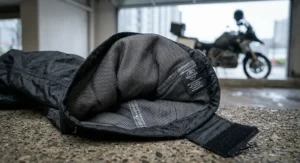
Olympia built the Horizon around a lightweight, waterproof/breathable shell — ripstop nylon in the original version, a 2.5-layer poly dobby laminate rated 10k/10k in the newer Horizon 2 — paired with a cool mesh airflow lining and slide waist buckles for a snugger fit than a basic elastic band provides. Authentic Nomex heat shields sit at the inside lower legs, and the EZ-Pack self-storage system lets the whole pant turn inside-out into its own internal pocket, which is a genuinely clever solution to the “where do these even go” problem that plagues bulkier rain gear.
This is where the real customer-review data gets compelling: multiple verified Amazon buyers report the pants kept them completely dry through a 70-mile downpour at highway speed, with one rider specifically noting they held up against wind-driven rain and standing water on the road during a tropical storm commute. Reviewers consistently note the pants should be worn high-waisted, above your normal beltline, since that’s what actually keeps water from tracking under your jacket hem. The recurring complaint across reviews centers on the lower-leg Velcro closure being fussier to seal than it should be, and several taller riders mention needing to hem the legs for a proper fit.
Pros:
- ✅ Verified buyer reports of staying dry through a 70-mile highway downpour
- ✅ Nomex heat shields protect against hot exhaust contact
- ✅ EZ-Pack system turns the entire pant into its own storage pouch
Cons:
- ❌ Lower-leg Velcro closure is fiddly compared to a zipper
- ❌ Taller riders often need to hem the leg length
At $75-$90, the Horizon pants justify the mid-premium price tag with some of the strongest real-world downpour testimony in this entire lineup.
6. Firstgear Splash Rain Pants — highest waterproof rating in this price tier
Firstgear’s rain pants (sold under the Splash and Rainman names depending on the retailer) use a lightweight nylon shell rated 20k/20k for waterproofness and moisture vapor permeability — on paper, this means the fabric can handle roughly double the hydrostatic pressure of the 10k-rated competitors before water starts pushing through, which matters most if you’re sitting in standing water at a stoplight for several minutes. The cool mesh airflow lining, belt loops with a waist adjuster, and a generous 23-inch zippered lower leg opening round out a design built to slip on quickly over full riding gear rather than just jeans.
Honesty compels us to note that we couldn’t verify a large, aggregated body of consumer reviews for this specific model the way we could for the Olympia or REV’IT entries — the available commentary is thinner, spread across smaller retailer sites rather than one large review pool. What the spec sheet won’t tell you, but the design details suggest, is that this pair leans toward touring riders who prioritize a higher waterproof ceiling over the packability focus of the Nelson-Rigg or Olympia options; the hook-and-loop cuff and belt-loop waist system trade a bit of pack-flat convenience for a more tailored, secure fit at highway speed.
Pros:
- ✅ 20k/20k rating outpaces most competitors in this price bracket
- ✅ Generous 23-inch leg zipper eases on/off over full gear
- ✅ Reflective accents add low-light visibility
Cons:
- ❌ Smaller pool of verified consumer reviews to draw on
- ❌ Belt-loop waist system is less adjustable than slide buckles
Priced in the $80-$95 range, the Splash/Rainman pants are the pick for riders who want the highest waterproof number on this list without stepping into laminated-membrane territory.
7. REV’IT Acid 4 H2O Rain Pants — most packable premium option for touring commuters
REV’IT’s Acid 4 H2O uses laminated Hydratex waterproofing — a true membrane rather than a coated fabric — paired with a non-stick, PVC-free inner coating that makes the pants noticeably easier to slide on over textile or leather riding pants than the grippier linings found on cheaper options. The elasticated waistband stretches to fit a range of body types without buckles or belt loops, and laminated reflective panels at the lower leg add visibility without bulky reflective tape. Everything packs into a genuinely compact carry bag — riders report it fitting inside a top box or backpack with room to spare, which is the whole point of a “packable” rain layer.
RevZilla’s aggregated customer review data (4 out of 5 stars across verified purchases) is refreshingly specific: reviewers consistently report solid performance in light-to-moderate rain, but several also describe the pants failing to stay fully waterproof during heavier or more prolonged downpours, with some reporting a soaked crotch area after extended exposure. That’s a meaningful, honest data point — Based on the spec comparison, the Hydratex membrane is genuinely higher-tech than a basic PU coating, but the seam construction and thinner fabric weight appear to be the limiting factor once rain turns from a shower into a sustained soak.
Pros:
- ✅ True laminated membrane breathes better than coated fabrics
- ✅ Packs into one of the smallest carry bags in this lineup
- ✅ Non-stick lining slides on easily over full riding gear
Cons:
- ❌ Aggregated reviews report leaking at the crotch in heavy, sustained rain
- ❌ Premium price doesn’t fully match the “100% waterproof” claim in worst-case testing
Running $100-$140, the Acid 4 H2O rewards riders who mostly deal with commuter-length showers but should not be the only line of defense on an all-day ride through a genuine storm front.
Practical Usage Guide: Setting Up and Storing Your Rain Pants for the Long Haul
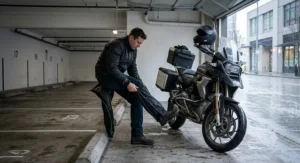
Getting a new pair of rain pants for motorcycle commuting home is the easy part — keeping them functional for three seasons is where most riders drop the ball. Start by test-fitting them over whatever you actually ride in, not just jeans; if you commute in armored textile pants, size up accordingly, since nearly every product above is cut to layer over gear rather than replace it. On first use, treat the seams and zippers with a light coat of a purpose-made waterproofing spray if the manufacturer recommends it — sealed seams degrade slowly with UV exposure and repeated folding, and a proactive reapplication every season or two extends the fabric’s working life considerably.
The single most common first-30-days mistake is storing rain pants damp. Wadding wet nylon into a saddlebag and forgetting about it invites mildew and breaks down waterproof coatings from the inside out; always air-dry gear fully before repacking it into its storage pouch. A second frequent error is skipping the high-waist fit that brands like Olympia specifically call out — wearing rain pants at your normal beltline instead of pulled up higher is the number one reason water tracks in at the waistband during a real downpour. Finally, check the lower-leg closure every few rides; Velcro tabs lose grip over time, and a closure that’s stopped sealing tight is a slow leak waiting for a highway-speed crosswind to find it.
Real-World Scenarios: Matching Rain Pants to Your Actual Commute
Picture three different riders. The first is a college student commuting four miles to campus on a 250cc bike, riding maybe twice a month in actual rain — for that rider, the Frogg Toggs Road Toad Reflective Rain Pants or Viking Cycle Nomad Rain Suit Pants make total sense: cheap, packable, and rarely pushed past their limits given the short exposure time. The second rider is a suburban commuter doing eighteen miles each way on mixed city and 55 mph arterial roads, several times a week through a rainy spring — that’s the sweet spot for the Nelson-Rigg Solo Storm or Tourmaster Sentinel 2.0, both built for repeated use and genuine comfort over an hour-plus round trip.
The third rider tours on weekends and commutes on a liter-class bike at true highway speed daily, rain or shine, logging serious annual mileage in wet conditions — for that use case, the Olympia Horizon or Firstgear Splash pants earn their higher price through sustained-pressure waterproofing and a more tailored fit that won’t flap loose at 70 mph. Budget, frequency, and typical riding speed should drive this decision more than brand reputation alone; a $140 pair of touring rain pants is wasted money on a rider who only sees rain three times a year, just as a $35 emergency pair will disappoint someone commuting through daily downpours on the interstate.
Buyer’s Decision Framework: If This, Choose That
If you ride less than once a week and just need insurance against getting caught out, choose a budget nonwoven or coated-polyester pair because the cost-to-use ratio makes anything pricier hard to justify. If you commute daily through unpredictable weather on mixed city and highway roads, choose a mid-tier pair with a dedicated storage pouch and heat shield, because you’ll be putting these on and off dozens of times a season and durability compounds. If you ride at sustained highway speed in genuine downpours or tour extensively, choose a higher waterproof-rating or laminated-membrane pair, because that’s precisely the condition where thinner budget fabrics start to fail. And if packability inside a small under-seat compartment is your top constraint, prioritize products with a self-contained storage system — the REV’IT Acid 4 H2O and Olympia Horizon both excel here — even if it means compromising slightly on rock-bottom price.
✨ Ready to Stop Dreading the Forecast?
🔍 Pick the pair that matches your actual commute above, then click through to check current pricing and availability before your next wet morning catches you unprepared.
How to Choose Rain Pants for Motorcycle Commuting
Choosing the right pair comes down to matching a handful of specs to your actual riding pattern rather than chasing the highest number on the tag. Here’s the process we’d walk a friend through:
- Estimate your annual wet-weather mileage. Occasional riders should weight price and packability heavily; frequent riders should weight waterproof rating and seam construction more than sticker price.
- Check the waterproof rating, not just the “waterproof” label. A 10k or 20k rating (or a named laminate like Hydratex) tells you far more about sustained-rain performance than marketing copy does.
- Confirm the fit is designed to layer. Rain pants meant to go over riding gear are cut generously; if you’re squeezing them over armored pants, size up rather than fighting the fabric.
- Look for a heat shield if you ride a bike with exposed exhaust. Nomex or heat-resistant panels at the inner ankle prevent a genuinely common and expensive mistake — melting a hole in brand-new rain gear on your first ride.
- Prioritize a dedicated storage system if under-seat space is tight. A self-packing pouch means the difference between gear that’s actually with you and gear left at home on the one morning you needed it.
- Weigh closure type at the ankle. Zippers with a storm flap seal tighter over time than Velcro alone, which loses grip after repeated wet-dry cycles.
- Read aggregated review sentiment, not just star averages. The hydrostatic head rating used across waterproof-breathable fabrics measures how much water pressure a fabric resists before it lets water through, but that number only tells part of the story — real rider feedback on seam leaks and long-term durability fills in the rest.
Packable Motorcycle Rain Gear: What Actually Matters When Storage Space Is Tight
Packable motorcycle rain gear lives or dies by one question: will you actually carry it? A pair of rain pants that performs beautifully in a lab test but takes up half your saddlebag is a pair that gets left on the garage shelf during a quick errand run — right up until the sky opens on the way home. The products in this guide that handle packability best share a specific design trait: a self-contained storage pocket built into the garment itself, like the Olympia EZ-Pack system or Nelson-Rigg’s built-in pouch, rather than relying on a separate stuff sack you’ll inevitably lose.
Fabric weight is the other half of the packability equation. Nonwoven polypropylene, like Frogg Toggs uses, compresses down smaller than laminated membrane fabric, which is part of why budget options remain popular for riders with genuinely limited under-seat space — a top-box owner has more flexibility here than someone relying purely on a saddlebag liner. What most buyers overlook is that pack size and durability trade off against each other: the thinnest, most packable fabrics also tend to be the first to show wear at fold lines after a season of repeated compression, so if your riding pattern means packing and unpacking rain gear daily, a slightly bulkier but more durable fabric may actually save money over two or three years.
Over-Pants for Rain vs. Full Riding Rainsuits
Over-pants for rain are designed as one half of a modular system — a separate garment you pair with your existing jacket or a matching rain jacket — while a full one-piece or integrated two-piece rainsuit is built as a unified system from the start. The practical difference shows up at the waist: standalone over-pants rely on elastic or buckle closures that can gap slightly under a jacket hem, while a properly zipped-together rainsuit, like the Tourmaster Sentinel system, creates one continuous waterproof seal from collar to ankle.
| Factor | Over-Pants (Standalone) | Integrated Rainsuit (Jacket + Pants) |
|---|---|---|
| Waist seal | Good, can gap under jacket | Excellent, zips into one unit |
| Flexibility | Wear with any jacket | Best with matching jacket |
| Packability | Usually more compact | Bulkier as a set |
| Best For | Riders who already have a waterproof jacket | Riders building a rain kit from scratch |
The table makes the tradeoff clear: if you already own a genuinely waterproof riding jacket, standalone over-pants like the REV’IT Acid 4 H2O or Firstgear Splash pants complete the system without redundant bulk. If you’re starting from zero and your current jacket isn’t fully waterproof, an integrated set like the Tourmaster Sentinel 2.0 solves both problems in one purchase and removes the waist-gap risk entirely.
Quick-Dry Riding Rain Pants: Materials That Actually Dry Fast
Quick-dry riding rain pants matter more than most buyers expect, because the ride home in gear that’s still damp from the morning commute is nearly as miserable as riding without rain protection at all. Mesh-lined pants — the Nelson-Rigg, Tourmaster, and Olympia entries all use some version of this — dry faster on the inside because the airflow layer prevents moisture from getting trapped against the outer shell, while pants with a solid, non-breathable inner coating tend to stay clammy for hours after use.
Here’s what to weigh: breathability and quick-dry performance are directly linked to the MVM or WP/MVP rating discussed earlier in this guide, so a higher-rated fabric isn’t just about keeping rain out, it’s also about how quickly sweat vapor and residual dampness escape once you’re parked in a dry garage. Reviewers consistently note that laminated membrane fabrics like REV’IT’s Hydratex dry noticeably faster than coated nonwoven fabrics, which is part of the value proposition behind the higher price tag — you’re not just paying for waterproofing, you’re paying for a faster turnaround between wet commutes.
Rain Gear Storage: Packing, Drying, and Keeping It Ready
Rain gear storage is where good intentions quietly fail. The right approach starts with a dedicated spot on the bike — a saddlebag pocket, top box, or under-seat compartment reserved specifically for rain gear so you’re never digging through tools or a lock to find it during an actual downpour. Beyond location, drying technique matters just as much: hang rain pants inside-out after use rather than folding them away damp, since trapped moisture against a waterproof coating is exactly what accelerates delamination and mildew growth over a season.
For riders using self-storage pouches like Olympia’s EZ-Pack or REV’IT’s carry bag, resist the urge to stuff the gear away the moment you get home if it’s still wet — a five-minute air-dry before repacking adds meaningfully to the fabric’s working life. Cold-weather storage deserves its own note: leaving rain gear in a freezing saddlebag over winter can make coated fabrics brittle at the fold lines, so riders in colder climates should bring rain gear inside during extended off-season storage rather than leaving it on the bike year-round.
Wet Commute Safety: Riding Skills That Matter As Much As Gear
Wet commute safety isn’t just about staying dry — it’s about staying upright, and gear is only one part of that equation. According to Progressive’s wet-weather riding data, roughly 75% of weather-related crashes happen on wet pavement, and motorcyclists face a steeper risk curve than car drivers in those same conditions simply because there’s less contact patch and no crumple zone. Slowing down, increasing following distance, and avoiding painted lane markings and metal surfaces like manhole covers — which turn genuinely slick in the wet — matter as much as any waterproof rating on this list.
Braking technique shifts in the rain too: favoring smoother, more progressive brake application and leaning more on a properly functioning rear brake helps avoid the abrupt weight transfer that causes a front-wheel skid on wet asphalt. None of the seven rain pants above will compensate for aggressive braking into a wet corner, so treat gear and riding technique as two halves of the same safety strategy rather than substitutes for one another.
Layering Over Riding Pants: Getting Fit and Comfort Right
Layering over riding pants is where sizing mistakes happen most often, because rain pants need enough room to slide over armored textile or leather gear without binding at the knee — the exact joint you need full mobility in for safe riding. As a rule, buy rain pants one size larger than your normal clothing size if you’re layering over anything bulkier than jeans, and check specifically for stretch panels at the knee, like the Tourmaster Sentinel’s four-panel design, which accommodate bent-knee riding position far better than a single flat panel of fabric.
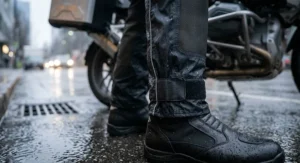
Waist height matters just as much as overall sizing. Reviewers across multiple products in this guide independently arrive at the same tip: wear rain pants pulled up higher than your normal waistline, tucked under your jacket hem rather than at hip height, since that’s what actually stops water from tracking down and pooling at the seat. Cuff fit at the ankle deserves equal attention — a gap between your rain pant cuff and the top of your boot is a direct channel for water and road spray, so confirm the closure (zipper, Velcro, or elastic stirrup) actually seals tight before you’re counting on it in traffic.
Common Mistakes When Buying Motorcycle Rain Pants
The most expensive mistake is buying based on price alone in either direction — assuming the cheapest pair will always disappoint, or that the priciest pair is automatically bulletproof, when the REV’IT reviews above prove even premium laminate can leak under sustained pressure. A second common error is skipping the sizing chart and guessing based on regular pants size; nearly every product here is cut to layer over gear, so a true-to-size purchase often ends up too tight to move in.
Buyers also frequently overlook the heat shield question until it’s too late, melting a small hole in brand-new rain gear against a hot exhaust pipe on a bike with exposed pipework. Finally, plenty of riders buy rain gear and never actually test it in a controlled setting — a five-minute walk through a garden hose spray before the first real ride reveals fit and seam issues far more safely than discovering them for the first time during a genuine highway downpour.
Long-Term Cost & Maintenance: What Rain Pants Really Cost Over Three Years
Sticker price only tells part of the story once you factor in replacement frequency and maintenance. A $35-$50 budget pair used a handful of times a year might last three or more seasons without issue, making its effective annual cost genuinely low — but a rider commuting daily through wet weather will likely wear that same budget fabric out within a single season, pushing the real cost of ownership above what a single mid-tier purchase would have cost upfront.
| Tier | Typical Price Range | Expected Lifespan (Regular Use) | Approx. Annual Cost (Daily Commuter) |
|---|---|---|---|
| Budget (nonwoven/coated) | $30-$65 | 1-2 seasons | $25-$45/year |
| Mid-tier (rated nylon) | $55-$95 | 2-4 seasons | $20-$35/year |
| Premium (laminated membrane) | $100-$140 | 3-5+ seasons with care | $20-$30/year |
The math favors mid-tier and premium options specifically for frequent riders — a Tourmaster or Olympia pair, maintained with proper drying and occasional seam-sealant reapplication, often works out cheaper per year of daily use than repeatedly replacing budget gear that degrades within a single wet season. Occasional riders flip that logic entirely, since a budget pair used four or five times a year may genuinely outlast its own usefulness before wearing out.
Features That Actually Matter (And Those That Don’t)
Genuinely important: seam sealing quality, a functioning heat shield if your bike has exposed exhaust, an ankle closure that seals tight, and a waterproof rating that matches your actual riding conditions rather than the highest number available. Reviewers across nearly every product in this guide independently flag ankle and waist seal quality as the deciding factor between “stayed dry” and “soaked,” far more than any single marketing claim.
Genuinely overhyped: elaborate color options beyond visibility purposes, marginal weight differences between similarly rated fabrics, and vague “military-grade” or “extreme” branding language that doesn’t correspond to any specific, testable spec. A Cordura patch or a flashy zipper pull looks good in a product photo but does nothing for keeping water out — spend your attention budget on the fabric rating and seam construction instead, since rain riding fundamentally comes down to preparation and understanding how to manage the actual risks rather than gear with the most features on the box.
FAQ
❓ What is the best rain pants for motorcycle commuting for daily riders?
❓ Do motorcycle rain pants really work over jeans?
❓ How much should I spend on rain pants for motorcycle commuting?
❓ Can I wear rain pants for motorcycle commuting in cold weather too?
❓ How do I stop my rain pants from leaking at the seams?
Conclusion
Rain doesn’t care about your commute schedule, but the right pair of rain pants for motorcycle commuting turns a miserable ride into a minor inconvenience. The Nelson-Rigg Solo Storm and Tourmaster Sentinel 2.0 cover most daily commuters well, the Frogg Toggs Road Toad and Viking Cycle Nomad handle occasional riders on a budget, and the Olympia Horizon, Firstgear Splash, and REV’IT Acid 4 H2O step up for riders logging real highway miles in sustained downpours. None of these are magic — even the best-reviewed pair here has an honest weak point once conditions get genuinely bad, which is exactly why matching gear to your actual riding pattern matters more than chasing the single “best” product on paper. For a broader look at how these fit into a complete wet-weather kit, RevZilla’s full motorcycle pants buying guide is worth a look before you finalize a choice.
Pick the tier that matches how often you actually ride in the rain, check the sizing chart before you buy, and put that pair somewhere on the bike where you’ll actually reach for it. The next downpour is coming whether you’re ready or not — might as well be ready.
✨ Don’t Get Caught Out by the Next Downpour!
🔍 Take your wet-weather commute from dreaded to manageable with a pair matched to your actual riding pattern. Click through on any of the seven picks above to check current pricing and availability before the forecast turns.
Recommended for You
- Waterproof Motorcycle Textile Pants: 7 Rain-Proof Picks for 2026
- Women’s Armored Motorcycle Pants: 7 Best Picks for 2026
- Heated Motorcycle Pants for Winter Riding: 7 Best Picks (2026)
Disclaimer: This article contains affiliate links. As an Amazon Associate, I earn from qualifying purchases. If you purchase products through these links, we may earn a small commission at no additional cost to you.
✨ Found this helpful? Share it with your friends! 💬🤗
