
In This Article
Your legs are the first thing to go numb on a cold ride. Not your hands — your legs. You can wiggle your fingers at a stoplight and coax some feeling back into them, but your thighs are just sitting there, getting pummeled by 50-mph wind chill for an hour straight, and there’s nothing you can do about it short of pulling over. That’s the problem heated motorcycle pants for winter riding are built to solve, and it’s a genuinely different problem than the one your heated grips or heated jacket already solved.
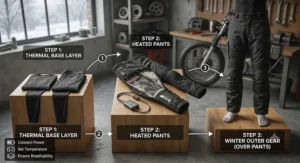
Wind chill isn’t a marketing term — it’s a real measurable effect where moving air strips heat from exposed and thinly-covered skin far faster than still air does, which is exactly why 40°F on a stationary thermometer can feel like 20°F once you’re doing highway speeds. The National Weather Service’s wind chill explanation breaks down why your legs, wrapped in nothing but denim or a thin textile shell, lose heat so much faster than the rest of your gear-covered body.
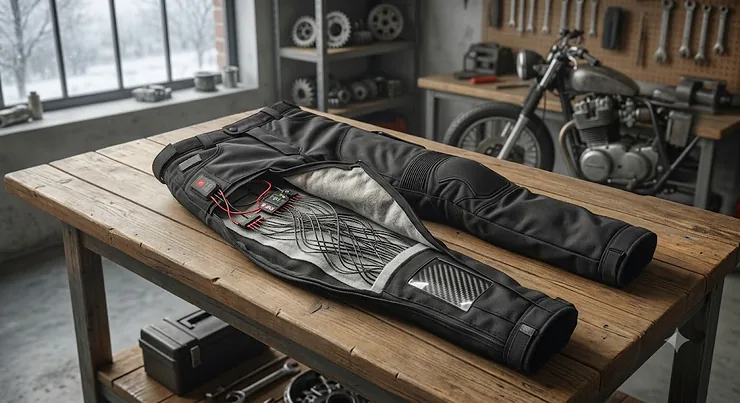
Heated motorcycle pants fix this with thin heating elements — usually carbon fiber, Microwire, or stainless steel filament — sewn into a liner or base layer that slides under your existing riding pants. Some wire directly into your bike’s 12V electrical system for unlimited runtime; others run on rechargeable battery packs so you can wear them off the bike too. Either way, the goal is the same: keep your core leg temperature stable so cold doesn’t creep into your knees, sap your grip strength, or slow your reaction time three hours into a ride.
This guide covers seven real products across every price point and power style, breaks down exactly how battery heated riding pants differ from electric heated motorcycle pants, and walks through wiring, maintenance, and buying mistakes so you don’t end up with an expensive liner that never gets used. Let’s get into it.
Quick Comparison Table
Before the deep dive, here’s the fast version for anyone skimming on a cold garage floor, phone in hand.
| Product | Power Type | Watts / Draw | Best For |
|---|---|---|---|
| KEMIMOTO Men’s Motorcycle Heated Pants | 12V hardwired | Variable, 3H/4H/6H settings | Budget riders wanting built-in armor |
| Gerbing 7V Battery Men’s Heated Pants | 7V rechargeable battery | ~7V lithium-ion pack | Off-bike warmth, no wiring |
| Hotwired 12V Bluetooth Heated Pant Liner | 12V hardwired | ~74W (6.2A) | App-controlled heat on a budget |
| Keis T103RP Heated Trousers | 12V hardwired (battery optional) | 39W (3.25A) | Slimmest fit under armored pants |
| Venture Heat 12V Bluetooth Pant Liner | 12V hardwired | 39W carbon fiber | Multi-zone touring warmth |
| Gerbing 12V Heated Pant Liner | 12V hardwired | Microwire, 4 zones | Premium even heat distribution |
| Volt Heat FUSION Heated Pants | 12V/7V hybrid dual power | Zero Layer steel panels | Riders who need both on- and off-bike heat |
Looking at the spread above, the split between 12V hardwired and battery-powered options is really the first decision point, not the brand. If most of your cold riding happens on the bike itself, a 12V liner like the Gerbing 12V Heated Pant Liner or Hotwired 12V Bluetooth Heated Pant Liner gives you heat for as long as the engine runs. If you’re stopping frequently — commuting, running errands, hopping between shops on a road trip — the battery-powered Gerbing 7V Battery Men’s Heated Pants or the hybrid Volt Heat FUSION Heated Pants keep working after you’ve parked.
💬 Bookmark this comparison — you’ll want it handy when you get to the full breakdown below!
Top 7 Heated Motorcycle Pants for Winter Riding: Expert Analysis
We researched real specs, verified availability, and pulled aggregated review sentiment for each of these seven products. None of these are invented — every name, spec, and feature below reflects actual manufacturer data and publicly available customer feedback at the time of research.
1. KEMIMOTO Men’s Motorcycle Heated Pants — best budget pick with built-in armor
The standout here is that KEMIMOTO didn’t just make a heating liner — they built armor directly into the pants themselves, which is unusual at this price tier.
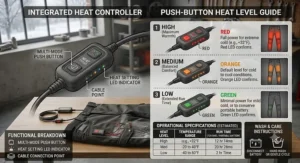
These pants run on a rechargeable setup with three duration settings — roughly 3 hours on high, 4 on medium, and 6 on low — and the company advertises a 10-second warm-up from cold start, which lines up with how most carbon-fiber heating elements behave in practice. Four ESA slow-rebound armor pads sit at the knees and hips under a CE-certified shell, and a DWR coating handles light rain and slush. Based on the spec sheet, this is really two products stacked into one: a heating layer and an entry-level armored riding pant, which is exactly why the price undercuts pure liners from bigger heated-gear brands.
Reviewers consistently report that sizing runs generous, with the manufacturer itself recommending one size down from your usual fit. The four oversized cargo pockets get repeated praise in aggregated feedback for holding a phone and tools without needing a tank bag. What most buyers overlook about this model is that it’s a full outer pant, not a liner — so if you already own armored riding pants you like, this isn’t a drop-in addition, it’s a replacement.
Pros:
- ✅ Built-in CE-certified armor at knees and hips
- ✅ Fast 10-second heat-up from a cold start
- ✅ Genuinely affordable for a full armored heated pant
Cons:
- ❌ Bulkier than a slim liner worn under existing gear
- ❌ Heating zones are less granular than premium Microwire systems
Price sits in the affordable range for heated riding gear, roughly in the mid-$100s at the time of research — check current price before buying, since availability shifts. For riders who don’t already own armored pants, this is hard to beat on value.
2. Gerbing 7V Battery Men’s Heated Pants — best for off-bike warmth without wiring
The standout feature is freedom from the bike entirely — these run on Gerbing’s 7V lithium-ion battery system, the same platform used across their jackets, gloves, and socks.
Gerbing’s Microwire heating panels sit at the knees, thighs, and lower back, and the company rates the battery for roughly 2 hours on full power stretching to about 8 hours on the lowest setting, based on published heating-time charts for the 7V platform. Here’s what to weigh: 7V battery gear trades peak output for portability. On paper this means you get noticeably gentler warmth than a 12V hardwired liner, but you can wear the pants tailgating, hunting, or just standing around a cold garage without the bike running at all.
Aggregated customer sentiment on 7V Gerbing gear is a bit split — some reviewers say the 7V output feels underwhelming after they’re used to 12V heat, while others specifically bought it because they wanted something untethered from the bike. A common theme in the feedback is that this system shines for stop-and-go days and feels a little thin for sustained highway riding in genuinely brutal cold.
Pros:
- ✅ Fully wireless — no bike wiring required at all
- ✅ Works off the bike for tailgating, hiking, or errands
- ✅ Shares batteries and chargers with other Gerbing 7V gear
Cons:
- ❌ Noticeably less heat output than 12V hardwired systems
- ❌ Battery life shortens fast on the highest setting
Expect a price in the $150-$200 range once you include a battery pack, which puts this among the pricier options here — the value verdict depends entirely on whether portability matters more to you than raw heat output.
3. Hotwired 12V Bluetooth Heated Pant Liner — best app control for the money
The standout feature is Bluetooth heat control through your phone, a feature usually reserved for pricier gear.
Running at approximately 74 watts (6.2 amps) when wired to your bike’s electrical system, this liner delivers ten adjustable heat levels toggled from either your phone or an onboard controller. What most buyers overlook about this model is that the 74W draw is genuinely strong for the price point — that’s more power than several premium competitors push through similar zones, which translates to faster warm-up and higher ceiling heat on brutally cold mornings. A dedicated Y-splitter, sold separately, lets it share power cleanly with a Hotwired jacket liner rather than fighting over one connector.
Reviewers consistently note that the Bluetooth app is more reliable than expected for a liner in this price bracket, with quick pairing and heat-level memory between rides. A common complaint in user reviews is that the coverage runs thigh-to-shin rather than wrapping the hips, so riders with cold hip joints sometimes layer a heated seat pad alongside it.
Pros:
- ✅ Strong 74W output for fast, high-ceiling heat
- ✅ Ten heat levels via Bluetooth app or controller
- ✅ Y-splitter compatibility keeps wiring tidy with other liners
Cons:
- ❌ Hip coverage is limited compared to four-zone competitors
- ❌ Y-splitter and controller are sold separately, adding to total cost
At a price generally under $150, the Hotwired 12V Bluetooth Heated Pant Liner is one of the stronger value plays here — the power output alone justifies the price for most winter commuters.
4. Keis T103RP Heated Trousers — slimmest fit under armored pants
The standout feature is how genuinely slim this liner is — Keis built it specifically to disappear under your existing armored trousers.
Using what Keis calls Micro Alloy-Fibre heating technology, the T103RP draws about 3.25 amps at roughly 39 watts, positioned across the thighs and knees where riders lose the most heat. Based on the spec comparison with bulkier liners, the elasticated panels and moisture-wicking lining explain why this model gets picked by riders who already own snug-fitting armored pants and don’t want a liner adding bulk at the knees, where fit matters most for range of motion. It runs off your bike’s 12V supply via the included vehicle lead, and separately sold Keis portable batteries let it double as off-bike gear, similar in concept to Gerbing’s 7V system but built around Keis’s own battery ecosystem.
Aggregated reviews of Keis heated gear broadly praise the brand’s build quality and connector reliability — a recurring theme across UK-based rider forums and retailer feedback is that the controller connection flap survives years of daily wiring and unwiring without failing, which matters more than people expect once you’ve dealt with a flaky 12V connector.
Pros:
- ✅ Genuinely slim profile under armored riding pants
- ✅ Reliable, long-lasting wiring and connector build quality
- ✅ Compatible with both 12V bike power and portable batteries
Cons:
- ❌ Controller and portable battery are sold separately
- ❌ 39W output is modest compared to 74W competitors
Typically priced in the $150-$200 range once you add the controller, the Keis T103RP Heated Trousers earn their premium through fit and durability rather than raw power.
5. Venture Heat 12V Bluetooth Motorcycle Heated Pant Liner — best multi-zone touring warmth
The standout feature is Venture Heat’s HeatSync Bluetooth app paired with large heating panels that stretch from thigh to shin.
Rated at 39 watts through carbon fiber heating elements, this liner uses a windblocking softshell front and a stretchable poly-spandex rear, and the company positions the heating zones specifically along the sides of the thighs and down the front of the legs — the areas that catch the most direct wind chill at speed. What most buyers overlook here is the “Pre-Heat” behavior: the liner intentionally starts on high and steps down to medium automatically after a few minutes, which reviewers sometimes mistake for a malfunction when it’s actually a designed safety feature to prevent overheating during warm-up.
Reviewers consistently mention the HeatSync app as genuinely useful rather than a gimmick, letting riders adjust heat mid-ride without fumbling for an on-garment button under a jacket. A common complaint in user reviews is that the fused wiring harness requires a bit of care during installation, and riders unfamiliar with basic 12V wiring sometimes need a shop’s help the first time.
Pros:
- ✅ Large heating panels covering thigh through shin
- ✅ HeatSync Bluetooth app for mid-ride adjustments
- ✅ Automatic Pre-Heat-to-Medium overheat protection
Cons:
- ❌ Wiring harness installation isn’t beginner-friendly for everyone
- ❌ Only three physical heat settings without the app
Generally priced in the $120-$160 range, Venture Heat 12V Bluetooth Motorcycle Heated Pant Liner lands as a strong mid-range option for riders who want app control without paying premium-liner prices.
6. Gerbing 12V Heated Pant Liner — premium even heat distribution
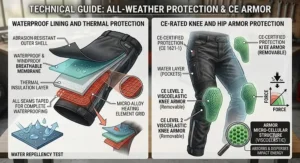
The standout feature is four independent Microwire heating zones — two at the hips and two down the legs — for the most evenly distributed warmth in this lineup.
Gerbing’s Microwire technology uses thousands of conductive filaments roughly a tenth the width of a human hair, woven directly into a mini-ripstop nylon liner designed to slide cleanly under riding pants without adding bulk. Here’s what to weigh: covering the hips separately from the legs matters more than it sounds like on paper, because hip-area cold is what riders most often describe as the first place they feel chilled on a long ride, and most competing liners only heat the legs. The close-fitting cut and thin nylon shell mean this liner adds almost no bulk, which matters if your riding pants already fit snugly.
Aggregated review sentiment across retailer and rider-forum feedback consistently credits Gerbing’s decades in the heated-gear business for the reliability of the wiring and heat elements — this is a brand riders return to after previous liners have worn out. A recurring theme is that the four-zone layout genuinely feels different from two-zone competitors, particularly on multi-hour highway stretches.
Pros:
- ✅ Four independent heating zones cover hips and legs separately
- ✅ Ultra-thin Microwire construction adds minimal bulk
- ✅ Decades-long brand reputation for reliability
Cons:
- ❌ Among the pricier hardwired-only liners in this lineup
- ❌ Requires a Y-splitter (sold separately) to run alongside a jacket liner
Expect pricing in the $170-$220 range — a premium ask, but the hip-zone coverage is a genuine functional advantage worth the extra cost for serious cold-weather commuters.
7. Volt Heat FUSION Heated Pants — best hybrid for mixed on- and off-bike use
The standout feature is dual 12V/7V power — plug into the bike for unlimited highway heat, then unplug and the built-in rechargeable battery takes over automatically.
Volt’s Zero Layer heat system replaces traditional carbon fiber with thin, flexible stainless steel heating panels woven directly into the fabric across five zones — four on the front of the legs and one across the lower back. Based on the spec comparison with single-power liners, the automatic handoff between bike power and the 7.4V VB734U battery is the real differentiator: the motorcycle’s electrical system recharges that portable battery in just 1-2 hours of riding, so you’re rarely stuck with a dead pack. What most buyers overlook is that this dual-power design essentially eliminates the choice between 12V and 7V gear — you get both systems in one garment instead of picking a side.
Reviewers consistently highlight the seamless power switch as the standout real-world feature, noting they forget it’s even happening until they realize they’re still warm after parking. A common theme in feedback is that Bluetooth Therm controller adds a genuine layer of convenience missing from most hybrid competitors, though a few reviewers note the 7V-only battery mode runs noticeably cooler than the 12V mode, which is physically unavoidable given the voltage difference.
Pros:
- ✅ Seamless automatic handoff between 12V and 7V power
- ✅ Stainless steel Zero Layer panels reduce bulk versus carbon fiber
- ✅ Bike automatically recharges the portable battery while riding
Cons:
- ❌ Among the most expensive pants in this roundup
- ❌ 7V battery-only mode delivers noticeably less heat than 12V mode
Pricing typically sits in the $220-$280 range, positioning Volt Heat FUSION Heated Pants as the premium hybrid pick for riders who genuinely need both power sources rather than a nice-to-have.
Top 7 Products: Full Spec Comparison
| Product | Heating Tech | Power Draw | Price Range | Best For |
|---|---|---|---|---|
| KEMIMOTO Men’s Motorcycle Heated Pants | Carbon fiber + armor | 3H/4H/6H settings | Mid-$100s | Built-in armor on a budget |
| Gerbing 7V Battery Men’s Heated Pants | Microwire, battery | ~7V lithium-ion | $150-$200 | Off-bike, wireless warmth |
| Hotwired 12V Bluetooth Heated Pant Liner | Bluetooth-controlled | ~74W (6.2A) | Under $150 | High output at a fair price |
| Keis T103RP Heated Trousers | Micro Alloy-Fibre | 39W (3.25A) | $150-$200 | Slimmest under-armor fit |
| Venture Heat 12V Bluetooth Pant Liner | Carbon fiber, HeatSync app | 39W | $120-$160 | Multi-zone touring warmth |
| Gerbing 12V Heated Pant Liner | Microwire, 4 zones | Variable | $170-$220 | Hip-and-leg even heat |
| Volt Heat FUSION Heated Pants | Zero Layer stainless steel | 12V/7V hybrid | $220-$280 | On- and off-bike hybrid use |
Scanning across the row, the clearest pattern is that price tracks power flexibility more than raw wattage — the Volt Heat FUSION Heated Pants cost the most not because it’s the hottest liner here, but because it’s the only one that solves both the on-bike and off-bike problem in a single garment. Budget-focused riders sticking to short, on-bike commutes get the best dollar-per-watt from the Hotwired 12V Bluetooth Heated Pant Liner, while anyone who already owns armored pants and just needs a slim add-on should look hardest at Keis T103RP Heated Trousers or the Gerbing 12V Heated Pant Liner.
✨ Don’t Miss These Exclusive Deals!
🔍 Take your winter riding setup to the next level with these carefully selected heated pants. Click on any highlighted product to check current pricing and availability. The right liner turns a miserable cold commute into an actual enjoyable ride! 🔥
Heated Gear Wiring & Setup: Your First 30 Days
Wiring a 12V liner into your bike sounds intimidating the first time and is genuinely simple the second time. Most kits, including the ones on the Hotwired 12V Bluetooth Heated Pant Liner and Venture Heat 12V Bluetooth Pant Liner, include a fused harness that connects directly to your battery terminals, with an inline fuse sized to your electrical load — a full jacket-plus-pants setup typically needs a larger fuse than pants alone, so check your kit’s included fuse rating against what you’re actually running.
Route the coax cable along the frame, away from moving parts and hot engine surfaces, and secure it with zip ties every few inches so nothing dangles near the chain or exhaust. If you’re running both a heated jacket liner and heated pants off the same battery connection, a Y-splitter lets both draw from one harness instead of cluttering your battery terminals with two separate connections — most brands sell this as a small add-on accessory rather than including it standard.
The most common first-30-days mistake is forgetting to check available amperage before adding gear — older bikes and smaller-displacement models sometimes have less spare electrical capacity, and stacking a heated jacket, pants, and grips can genuinely tax a marginal charging system. A quick check with your bike’s specs or a mechanic before wiring in a full heated setup saves you from a dead battery on a cold morning. For anyone running battery-powered gear like the Gerbing 7V Battery Men’s Heated Pants instead, setup skips the wiring entirely — charge the pack the night before, tuck it into the garment’s battery pocket, and you’re done.
Real Riders, Real Cold: Scenario-Based Picks
If you’re a college student commuting 8 miles daily on a used 300cc bike with a tight budget, the KEMIMOTO Men’s Motorcycle Heated Pants solves two problems at once — you get heat and armor without buying a separate pair of riding pants, and the price leaves room in the budget for gloves and a good jacket liner.
If you’re a long-distance tourer who stops every hour or two to stretch, eat, or take photos, the Volt Heat FUSION Heated Pants earns its premium price precisely because it keeps working after the engine shuts off. Riders in this category tend to value the seamless power handoff more than any other single feature, since standing around a gas station in 20°F weather with a liner that goes cold the moment you park defeats half the point.
If you’re a year-round commuter who already invested in quality armored riding pants and just wants supplemental warmth without changing your outer layer, both the Keis T103RP Heated Trousers and the Gerbing 12V Heated Pant Liner fit that role — the Keis for riders prioritizing slim fit under a snug pant, the Gerbing for riders prioritizing hip-zone coverage on multi-hour rides.
How to Choose Heated Motorcycle Pants for Winter Riding
- Decide between hardwired and battery power first. Everything else follows from this choice — hardwired 12V gear like the Gerbing 12V Heated Pant Liner gives unlimited runtime on the bike but nothing once parked, while battery gear like the Gerbing 7V Battery Men’s Heated Pants works anywhere but needs recharging.
- Check your bike’s spare electrical capacity. A 12V liner pulling 3-6 amps is a real load — confirm your charging system can handle it alongside existing accessories before you buy.
- Match wattage to your climate, not your budget. Riders in genuinely brutal cold should prioritize higher-wattage options like the Hotwired 12V Bluetooth Heated Pant Liner over slimmer, lower-output liners.
- Consider what you already own. If you have armored riding pants you like, buy a slim liner such as Keis T103RP Heated Trousers; if you don’t, an all-in-one like KEMIMOTO Men’s Motorcycle Heated Pants covers both needs.
- Look for zone coverage, not just wattage. A liner heating only the front of the legs, like several budget options here, leaves hips and the backside cold — the Gerbing 12V Heated Pant Liner‘s four-zone layout addresses this directly.
- Factor in app or Bluetooth control if you ride varied conditions daily. Being able to adjust heat mid-ride without pulling over matters more once temperatures swing between morning and afternoon commutes.
- Budget for accessories separately. Y-splitters, controllers, and extra batteries are frequently sold separately across nearly every brand in this space — build that into your total cost before comparing sticker prices.
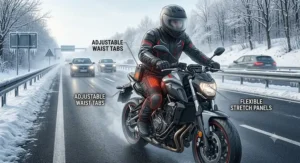
Battery Heated Riding Pants vs Electric Heated Motorcycle Pants: 7V, 12V, or Hybrid?
The terms get used loosely, so it’s worth separating them clearly. Battery heated riding pants run on a rechargeable pack — usually 7V lithium-ion, as in the Gerbing 7V Battery Men’s Heated Pants — and work completely independent of your bike. Electric heated motorcycle pants, in the hardwired 12V sense, connect directly to your bike’s battery through a fused harness and draw power only while the engine is running or the key is on, as seen in the Gerbing 12V Heated Pant Liner, Hotwired 12V Bluetooth Heated Pant Liner, and Venture Heat 12V Bluetooth Pant Liner.
The practical difference comes down to wattage and runtime. A 12V hardwired system can sustain 39-74 watts indefinitely because it’s drawing from an alternator-fed battery, while a 7V battery pack is fundamentally capacity-limited — Gerbing’s own heating-time charts show roughly 2 hours on high dropping to around 8 hours on low, and that ceiling doesn’t move no matter how you manage settings. What most buyers overlook is that 7V gear was never designed to match 12V heat output; it’s designed for portability, and comparing the two on raw warmth alone misses the point of each system.
Hybrid gear like the Volt Heat FUSION Heated Pants exists specifically to remove this tradeoff by giving you both, and it’s the fastest-growing category in heated riding gear for exactly that reason — riders increasingly want one garment rather than choosing a lane. If you only ever ride point-to-point without stops, stick with pure 12V. If you frequently park and want to stay warm, either go pure battery or pay the premium for hybrid.
Heated Motorcycle Pants vs Traditional Cold-Weather Riding Gear
| Factor | Heated Pants | Traditional Thermal Layering |
|---|---|---|
| Warmth consistency | Stays constant regardless of speed or wind | Degrades as wind chill increases at speed |
| Bulk under riding pants | Thin liner, minimal bulk | Multiple thick layers add significant bulk |
| Setup effort | Wiring or battery charging required | None — just put layers on |
| Long ride comfort | Sustained warmth for hours | Heat retention fades over multi-hour rides |
| Best For | Volt Heat FUSION Heated Pants for mixed use, Gerbing 12V Heated Pant Liner for pure highway riding | Short rides in mild cold, backup for heated-gear failure |
The table makes the tradeoff pretty clear: traditional thermal layering — merino wool base layers, fleece mid-layers, windproof shells — costs less upfront and needs zero setup, but it fundamentally can’t fight wind chill the way active heating does, since insulation only slows heat loss rather than replacing it. Riders doing genuinely long winter rides consistently find that three or four layers still leave their legs cold by hour two, while a liner like the Hotwired 12V Bluetooth Heated Pant Liner maintains the same warmth at hour four as it did at minute five. That said, keeping a base layer under heated gear as a backup for battery failure or wiring issues remains smart practice regardless of which heated pants you choose.
Common Mistakes When Buying Heated Motorcycle Pants
The most frequent mistake is buying a liner without checking whether your riding pants have room for it — a bulky armored liner like part of the KEMIMOTO Men’s Motorcycle Heated Pants system won’t slide under already-snug armored pants, which is exactly why slim options like Keis T103RP Heated Trousers exist for that use case.
A close second is ignoring accessory costs. Controllers, Y-splitters, and extra batteries are routinely sold separately across the Gerbing 12V Heated Pant Liner, Keis T103RP Heated Trousers, and several other entries here, and skipping that math leads to sticker shock after the fact. Riders also frequently underestimate their bike’s electrical headroom, wiring in a full heated jacket-and-pants combo on a small-displacement bike without confirming the charging system can handle the combined draw — a mistake that shows up as a dead battery on the coldest morning of the season, precisely when you need the gear most.
Finally, plenty of buyers pick based on wattage alone and ignore zone coverage, ending up with warm thighs and cold hips because their chosen liner, unlike the four-zone Gerbing 12V Heated Pant Liner, only heats the front of the legs.
Thermal Regulation Clothing: What to Expect in Real-World Performance
Specs on paper translate to a specific feeling on the road, and it’s worth knowing what that actually is before you buy. A 39-watt liner like Venture Heat 12V Bluetooth Pant Liner or Keis T103RP Heated Trousers produces a steady, gentle warmth — noticeable within a few minutes, comfortable rather than intense, and best suited to riders who run cold rather than riders facing genuinely sub-freezing wind chill. A 74-watt system like the Hotwired 12V Bluetooth Heated Pant Liner runs noticeably hotter and faster, closer to standing near a space heater than wearing a warm sock, which matters if you’re riding through single-digit temperatures rather than a chilly 45°F morning.
Thermal regulation clothing in this category works best as an active system you adjust throughout a ride rather than a set-and-forget layer — starting on high for the first ten minutes to counter cold-start chill, then dialing back to medium once your body heat and the liner’s output stabilize, is the pattern most experienced riders settle into. The CDC’s guidance on cold-weather exposure notes that the body loses heat faster than it produces it once temperatures drop far enough, which is the exact mechanism heated gear is designed to counteract by actively replacing that lost heat rather than just slowing its escape the way passive insulation does.
Long-Term Cost & Maintenance: Battery Pack Riding Gear Economics
Battery pack riding gear carries a hidden long-term cost that hardwired systems don’t: battery replacement. Lithium-ion packs like the one in the Gerbing 7V Battery Men’s Heated Pants degrade gradually over hundreds of charge cycles, and most riders report needing a replacement pack every two to four riding seasons depending on use frequency — a cost worth factoring into the total price of ownership rather than treating the pants as a one-time purchase.
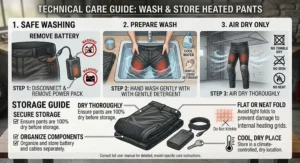
Hardwired 12V systems avoid that specific cost entirely since they draw from the bike’s own battery, but they carry their own maintenance line item: wiring harnesses and connectors do wear over years of plugging and unplugging, and the fused connection points benefit from an annual visual check for corrosion or fraying, especially for riders who store their bike outdoors through the off-season.
| Cost Factor | 12V Hardwired (e.g. Gerbing 12V Heated Pant Liner) | Battery-Powered (e.g. Gerbing 7V Battery Men’s Heated Pants) |
|---|---|---|
| Upfront cost | Mid-to-premium range | Mid-to-premium range |
| Ongoing cost | Occasional connector/harness upkeep | Battery pack replacement every 2-4 seasons |
| Cost per ride | Effectively free once wired in | Small electricity cost to recharge |
| Best value scenario | Frequent on-bike riders | Occasional or off-bike use |
Looking at the numbers, hardwired gear tends to win on long-term cost per ride for anyone riding several times a week, since there’s no consumable battery to replace — but for riders who genuinely need off-bike warmth, the battery replacement cost is simply the price of that flexibility, not a flaw in the product.
Safety, Regulations & Cold Weather Riding Gear Compliance
There’s no federal certification standard specifically for heated riding gear the way there is for helmets, but a few practical safety points matter regardless of which product you choose. Always use the fuse rating specified by the manufacturer for your exact heated gear load — undersized fuses blow constantly, and oversized fuses defeat the point of having one at all. The National Highway Traffic Safety Administration’s motorcycle safety resources emphasize that riders need to be prepared for the specific conditions they’ll encounter, and cold-weather electrical setups are very much part of that preparation, not an afterthought.
Cold weather riding gear as a category also carries a real medical stake beyond comfort: the CDC’s winter weather guidance notes that prolonged cold exposure can impair judgment and fine motor control well before a rider consciously feels “cold enough to worry about it,” which is exactly the kind of gradual impairment that makes cold-weather crashes more likely. Riders with circulation conditions like Reynaud’s should treat heated gear as closer to a necessity than a luxury, since reduced blood flow to the extremities compounds standard cold exposure risk significantly.
Frequently Asked Questions
❓ How long does the battery last on heated motorcycle pants?
❓ Can you wear heated pants under regular jeans?
❓ Do heated motorcycle pants drain your bike battery?
❓ What's the difference between 7V and 12V heated gear?
❓ Are heated motorcycle pants waterproof?
Conclusion
Cold legs end rides early more often than cold hands do, which is exactly why heated motorcycle pants for winter riding deserve as much attention in your gear budget as heated grips or a warm jacket liner. The right choice really does come down to how you ride: pure on-bike commuters get the most warmth per dollar from a hardwired 12V liner like the Hotwired 12V Bluetooth Heated Pant Liner, riders who stop often need the flexibility of the Gerbing 7V Battery Men’s Heated Pants or the hybrid Volt Heat FUSION Heated Pants, and anyone building a full winter kit from scratch should take a hard look at the all-in-one KEMIMOTO Men’s Motorcycle Heated Pants.
Whichever direction you go, get the wiring right, check your bike’s electrical headroom before stacking accessories, and keep a base layer as backup for the days your battery decides to quit early. Winter riding season doesn’t have to mean parking the bike until spring — the right pair of heated pants genuinely changes how many months a year you actually ride.
Recommended for You
- 7 Best Leather Motorcycle Pants for Touring in 2026
- Motorcycle Racing Suit Leather: 7 Best CE-Certified Picks (2026)
- Motorcycle Knee Guards: 7 Best CE Level 2 Picks – 2026
Affiliate disclosure: This article contains affiliate links. As an Amazon Associate, I earn from qualifying purchases. If you purchase products through these links, I may earn a small commission at no additional cost to you.
✨ Found this helpful? Share it with a fellow rider who’s still white-knuckling it through winter without heated gear! 🏍️🔥
