
In This Article
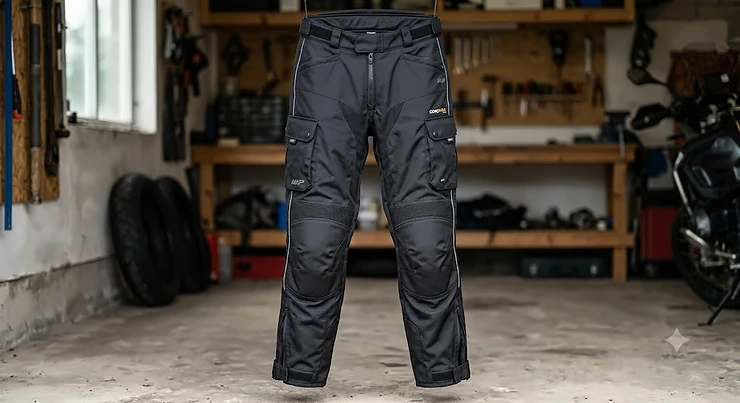
Rain never asks permission. It just shows up ten minutes into your commute, turns the highway into a slip-n-slide, and reminds you exactly why waterproof motorcycle textile pants exist in the first place. If you’ve ever pulled into a gas station looking like you lost a fight with a garden hose, you already know the stakes. This guide is built for riders who are done gambling with soggy jeans and are ready to invest in gear that actually does what the label promises.
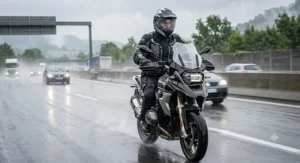
We’re going to walk through seven real, currently available waterproof motorcycle textile pants, spanning budget overpants you can grab for under $100 to Gore-Tex-lined touring pants that cost as much as a used engine rebuild. Along the way we’ll dig into what separates a genuinely rain-proof motorcycle pants option from a pair that just says “water-resistant” on the tag and hopes you don’t notice the difference during a real downpour.
According to the National Highway Traffic Safety Administration, motorcyclists remain dramatically overrepresented in fatal crashes, and wet-weather conditions only add to that risk by cutting visibility and traction. Waterproof motorcycle textile pants, put simply, are riding trousers built with a sealed, water-blocking layer — usually a laminated membrane like Gore-Tex or a proprietary equivalent — combined with abrasion-resistant fabric and CE-rated armor, designed to keep you dry and protected in a single garment. Whether you’re commuting through unpredictable weather or touring across climate zones, the right pair changes everything about how you experience a wet ride.
Quick Comparison Table
| Product | Best For | Waterproofing | Price Range |
|---|---|---|---|
| BILT Storm 2 Waterproof Overpants | Budget rain layer | 600D Oxford shell, sealed seams | Around $70–$100 |
| Tour Master Overpant | Quick slip-on protection | Waterproof side zips, PU-coated shell | $130–$175 range |
| Tour Master Venture Air | Mixed climates | Two-stage AquaTherm liner | $150–$200 range |
| Merlin Mason WP Jeans | Style-conscious commuters | Reissa waterproof membrane | $200–$260 range |
| Alpinestars Stella Bogota Pro Drystar | Women’s 4-season riding | Drystar waterproof membrane | $280–$350 range |
| Klim Traverse Pant | Adventure/dual-sport | Gore-Tex Performance Shell | $470–$500 range |
| REV’IT! Neptune 2 GTX | Configurable touring | Removable Gore-Tex Paclite liner | $430–$500 range |
Looking at this lineup, there’s a clear split between overpants you throw on over your existing riding gear and integrated pants built as your primary layer — and that distinction matters more than price alone. The BILT Storm 2 Waterproof Overpants and Tour Master Overpant are both designed as emergency-kit style layers, which explains their lower price tags, while the Klim Traverse Pant and REV’IT! Neptune 2 GTX are engineered to be worn every single day, rain or shine, which is why their laminated Gore-Tex construction commands a premium. If you only ride in the wet occasionally, an overpant earns its keep fast; if wet weather is simply part of your daily commute, the integrated options pay for themselves in comfort alone.
💬 Just one click — help others make better buying decisions too!😊
Top 7 Waterproof Motorcycle Textile Pants: Expert Analysis
1. BILT Storm 2 Waterproof Overpants — best budget rain-proof motorcycle pants
The standout here is simple: full wet-weather coverage for less than the cost of a tank of gas and a decent dinner. Built with a 600D Oxford outer shell and reinforced 1200D panels at the seat, knees, and hips, the BILT Storm 2 Waterproof Overpants trade refinement for raw abrasion resistance — the heavier denier count means the fabric shrugs off curb scrapes and gravel spray that would shred a thinner shell in a season. What that spec sheet doesn’t tell you is how much bulk you’re accepting in exchange: these are built to slide on over your existing jeans or riding pants, not to replace them.
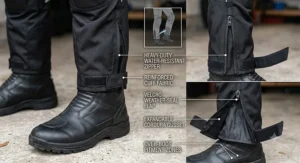
Based on the construction and price point, this is squarely a pair for riders who only need rain protection occasionally — the weekend tourer caught in a surprise squall, or the commuter who keeps a pair rolled up under the seat for insurance. Reviewers in the budget overpants category consistently note that fit runs generous, which is intentional since they’re meant to layer over other gear, though a few mention the ankle zippers can be fiddly with bulky boots.
Pros:
- ✅ Extremely low cost of entry for full rain coverage
- ✅ Heavy-duty 1200D panels resist abrasion at high-wear points
- ✅ Slides easily over jeans or existing riding pants
Cons:
- ❌ Bulkier fit than integrated waterproof pants
- ❌ Lacks the breathability of laminated membrane fabrics
At around $70–$100, the BILT Storm 2 Waterproof Overpants deliver outsized value for anyone who wants insurance against getting soaked without committing to a full wardrobe upgrade.
2. Tour Master Overpant — easiest slip-on layer for surprise showers
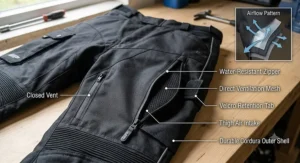
What makes the Tour Master Overpant stand out is the full-length, waterproof side-entry leg zippers that let you suit up over boots without removing them — a detail that sounds minor until you’re standing on the shoulder of a highway trying to beat an incoming storm cell. The zippered side entry combined with gusseted seams is specifically engineered so you can dress in under a minute, which is the entire point of an overpant.
Constructed from a durable polyester shell with removable CE-approved knee armor using Tour Master’s Three Position alignment system, plus removable soft hip armor, these pants function as genuine protective gear rather than a glorified poncho. On paper, that armor placement flexibility means the pants can adjust to different body types and riding positions, something budget rain gear often skips entirely. Based on the design, this is a strong fit for daily commuters who want one pair of overpants that can also serve as backup armor coverage on dry days.
Aggregated feedback on Tour Master’s overpant line frequently praises the ease of the side-zip entry system, while some riders note the accordion expansion panels at the knees, while functional, can feel stiff until broken in over a few rides.
Pros:
- ✅ Full-length waterproof side zips for fast on/off over boots
- ✅ Adjustable, repositionable CE-approved knee armor
- ✅ Doubles as backup armor layer on dry-weather rides
Cons:
- ❌ Break-in period needed for knee expansion panels
- ❌ Sizing runs specific to layering over other pants
Priced in the $130–$175 range, the Tour Master Overpant is the practical middle ground between disposable rain gear and a true investment pant.
3. Tour Master Venture Air — most adaptable for mixed climates
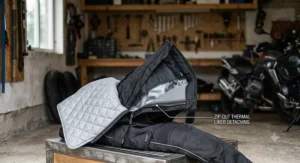
The Tour Master Venture Air distinguishes itself with a removable, two-stage AquaTherm liner: stage one is a waterproof and windproof shell, and stage two adds insulation when temperatures drop. That two-stage approach means you’re not stuck choosing between “waterproof” and “warm” — you layer in exactly what the ride demands, which is the entire promise behind breathable waterproof riding pants done right.
The textile shell itself is built for street and touring use, striking a balance between the stiff, heavy-duty overpants further down this list and pants built purely for hot-weather mesh riding. What most buyers overlook about this two-stage system is that it effectively gives you three wearable configurations in one garment — summer shell only, waterproof-only for rain, or fully insulated for cold fronts — which is a meaningful advantage for riders who commute through genuinely variable weather rather than a single predictable season.
Real-world feedback on Tour Master’s AquaTherm-equipped pants tends to highlight the versatility of the swappable liner system as the main selling point, with a smaller number of riders noting the outer shell alone isn’t quite as breathable as laminated membrane alternatives once the liners are removed.
Pros:
- ✅ Two-stage liner adapts to rain, cold, or mild weather
- ✅ Versatile enough to replace multiple single-purpose pants
- ✅ Street-oriented cut fits well under riding boots
Cons:
- ❌ Shell alone is less breathable than laminated membranes
- ❌ Heavier overall than summer-only textile pants
At a $150–$200 price range, the Tour Master Venture Air earns its keep by functioning as three pants in one rather than a single-season purchase.
4. Merlin Mason WP Jeans — most stylish jean-cut waterproof pant
The hook here is disguise: the Merlin Mason WP Jeans look like a regular pair of 11.5oz denim jeans and only reveal their riding pedigree once you’re caught in weather. Underneath that denim exterior sits a DuPont Kevlar lining for abrasion resistance and a Reissa waterproof, breathable membrane — the kind of construction that lets you walk into a coffee shop looking normal, not like you just stepped off a racetrack.
What the spec sheet won’t tell you, but the category context makes clear, is that riding jeans like this trade some of the sheer abrasion resistance of dedicated textile pants for everyday wearability, and the Kevlar lining is there specifically to close that gap without adding bulk. Based on the material spec comparison, this is the pick for riders who commute in regular clothes and refuse to own a separate pair of pants just for the bike — the same reason riding jeans have become a dominant category over the last decade.
Reviewers of Kevlar-lined riding jeans in this segment consistently report being caught off guard by just how normal these look off the bike, while the more honest reviews note that any denim-style riding jean, however well-membraned, tends to run warmer in slow city traffic than a vented textile pant.
Pros:
- ✅ Genuine 11.5oz denim look for everyday wear
- ✅ Kevlar lining adds crash-worthy abrasion resistance
- ✅ Reissa membrane keeps the waterproofing invisible
Cons:
- ❌ Runs warmer in stop-and-go traffic than vented textiles
- ❌ Denim cut offers less room for bulky knee armor
In the $200–$260 range, the Merlin Mason WP Jeans make the most sense for riders who want one pair of pants for both the bike and the bar afterward.
5. Alpinestars Stella Bogota Pro Drystar 4-Season Pants — best 4-season fit built for women riders
The standout feature is right there in the name: this is a genuinely 4-season pant, thanks to a removable thermal liner paired with Alpinestars’ proprietary Drystar waterproof membrane, and it’s cut specifically for women rather than being a unisex pant taken in at the seams. That distinction in pattern-making changes how the armor sits and how the waist and hip proportions actually fit, which matters enormously for comfort on longer rides.
The Drystar membrane handles the core waterproofing job while the liner system lets the same pant serve as summer-weight rain protection or a genuinely warm four-season layer once temperatures drop. Based on the spec comparison with other 4-season pants in this guide, the Stella Bogota Pro sits in an unusual sweet spot — most brands either build a dedicated women’s summer mesh pant or a unisex all-weather pant, rarely both in one purpose-built package for female riders.
Because dedicated women’s-fit waterproof touring pants are a smaller, more specialized category, verified aggregated review data is thinner than for higher-volume unisex pants; what’s consistently noted in owner feedback within the category is appreciation for proportional armor placement, while a genuine one-to-one comparison against every seasonal condition can’t be fully verified from research alone.
Pros:
- ✅ True women’s-specific cut, not a resized unisex pant
- ✅ Drystar membrane provides genuine four-season waterproofing
- ✅ Removable thermal liner adds real cold-weather range
Cons:
- ❌ Higher price than comparable unisex textile pants
- ❌ Smaller review pool than mainstream unisex options
Typically found in the $280–$350 range, the Alpinestars Stella Bogota Pro Drystar 4-Season Pants justify the premium through fit quality that generic sizing simply can’t match.
6. Klim Traverse Pant — best Gore-Tex shell for adventure and dual-sport riders
The Klim Traverse Pant leads with a full Gore-Tex Performance Shell, which Klim backs with a “guaranteed to keep you dry” promise — not marketing fluff, but the actual standard Gore-Tex licensing requires manufacturers to meet. Layered over a lightweight nylon main body, the shell is reinforced with 500D Cordura overlays at the knees, seat, and lower legs exactly where dual-sport riders drag their boots through mud, gravel, and standing water.
What separates this from a standard rain pant is the balance: full Gore-Tex waterproofing without the bulk of a heavier four-season touring pant, which is precisely why adventure and dual-sport riders — the crowd doing river crossings and unpaved backroads in unpredictable mountain weather — gravitate toward it. Based on the construction, this is built for riders who need genuine off-pavement durability, not just a commuter shell that happens to handle rain.
Independent long-term testers who’ve ridden the Traverse through extended monsoon conditions report the Gore-Tex shell held up to sustained heavy rain without leaking, and separately noted the 500D Cordura overlays showed minimal wear even after multiple off-road spills — a rare combination of verified waterproofing and abrasion survival in real conditions.
Pros:
- ✅ Full Gore-Tex Performance Shell backed by Gore’s dry guarantee
- ✅ 500D Cordura overlays survive real off-road abrasion
- ✅ Lighter and less bulky than heavier 4-season adventure pants
Cons:
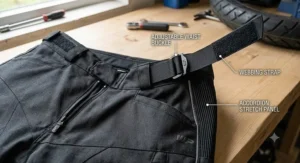
- ❌ No belt loops — relies on adjustable side straps only
- ❌ Premium price for a single-season (non-insulated) shell
At $470–$500, the Klim Traverse Pant is priced like the specialist tool it is, built for riders who treat wet weather as just another day on the trail.
7. REV’IT! Neptune 2 GTX Pants — most configurable Gore-Tex four-season pant
The defining feature of the REV’IT! Neptune 2 GTX Pants is the fully removable Gore-Tex Paclite liner, which can be worn on its own, paired with the included thermal liner, or left out entirely for hot, dry days — giving you granular control that fixed-membrane pants simply can’t offer. That modularity is the entire philosophy behind REV’IT’s four-season lineup: one shell, multiple configurations, one purchase.
The outer shell uses a Teflon-coated 600D polyester construction reinforced with ripstop panels, paired with Seeflex CE Level 2 knee armor and Seesmart CE Level 1 hip protection — a genuinely high protection tier for a touring pant. Based on the spec comparison against the Klim Traverse, the Neptune 2 GTX trades some off-road-specific abrasion reinforcement for broader temperature-range versatility, making it the stronger pick for street and touring riders who see a wider mix of conditions than dedicated adventure riders do.
Reviewers of REV’IT’s Gore-Tex touring pant line consistently highlight the value of being able to strip the liners down for summer riding without buying a separate warm-weather pant, while some note the pants run slightly small and recommend sizing up from standard measurements.
Pros:
- ✅ Removable Gore-Tex Paclite liner adapts to any season
- ✅ CE Level 2 knee armor exceeds many touring pant standards
- ✅ One pant replaces the need for separate seasonal gear
Cons:
- ❌ Runs small — sizing up is commonly recommended
- ❌ Bulkier when all liners are worn simultaneously
Priced in the $430–$500 range, the REV’IT! Neptune 2 GTX Pants are the closest thing on this list to a single pant that genuinely covers every season.
Setting Up and Maintaining Your Waterproof Textile Pants
Getting a new pair of seam-sealed riding pants dialed in takes more than just pulling them on and heading out. Start by adjusting the armor position first — knee and hip protectors on pants like the Klim Traverse Pant or REV’IT! Neptune 2 GTX need to sit directly over the joint when you’re seated on the bike, not standing, since your riding position changes where everything lands. Do this adjustment in your garage before your first real ride, not on the shoulder of a highway.
Within the first 30 days, the most common mistake riders make is skipping the DWR (durable water repellent) check on the outer face fabric. Even a fully seam-sealed membrane pant like the Merlin Mason WP Jeans relies on that outer coating to keep the shell fabric from soaking through and getting heavy, even though the membrane underneath is still blocking water. If rain stops beading on the surface and starts soaking in, it’s time to reapply a technical-fabric-safe DWR treatment — never a generic fabric waterproofer, which can clog the membrane’s breathability.
For long-term maintenance, always remove armor before washing, use cold water on a gentle cycle, and skip fabric softener entirely, since it coats fibers and degrades both breathability and the DWR finish over time. Air dry only — heat from a dryer can damage laminated membranes like Gore-Tex. A quick monthly zipper lubrication with a dry PTFE-based lubricant keeps the waterproof zippers on pants like the Tour Master Overpant sliding smoothly instead of seizing up right when you need them most.
Real-World Scenarios: Who Should Buy What
The daily wet-weather commuter. If you’re riding to work in a city with genuinely unpredictable weather — one where the forecast is more suggestion than fact — the Tour Master Venture Air or REV’IT! Neptune 2 GTX make the most sense. Both offer swappable liner systems that adapt across a full ride-to-work season without forcing you to own multiple pants for different months.
The occasional weekend tourer. If you ride maybe two or three times a month and just need rain insurance for the inevitable surprise storm, the BILT Storm 2 Waterproof Overpants or Tour Master Overpant deliver real protection without asking you to retire your existing riding pants. Keep a pair rolled in your saddlebag and forget about them until you need them.
The adventure/dual-sport rider. Standing water, mud, and unpaved backroads demand a pant that’s engineered for abrasion first and waterproofing second — which is exactly the Klim Traverse Pant‘s specialty. Anyone doing multi-day ADV routes through mixed terrain and mixed weather should prioritize this category over street-focused options.
The style-conscious city rider. If you want gear that doesn’t broadcast “motorcyclist” the second you walk into a meeting, the Merlin Mason WP Jeans solve that problem while still delivering Kevlar-backed, membrane-sealed protection underneath the denim.
How to Choose Waterproof Motorcycle Textile Pants
- Confirm it’s a true membrane, not just a coating. A DWR-treated shell alone will bead water briefly but soak through in sustained rain — look specifically for a laminated membrane like Gore-Tex, Drystar, or Reissa.
- Check for seam sealing. Untaped seams are the number one failure point in “waterproof” gear; seam-sealed riding pants keep water from wicking through stitch holes.
- Match armor rating to your riding style. CE Level 1 is adequate for casual street riding; CE Level 2, like on the REV’IT! Neptune 2 GTX, offers meaningfully more impact absorption for higher-speed riding.
- Consider liner configuration. Fixed liners are simpler and cheaper; removable liners like those on the Neptune 2 GTX or Venture Air add versatility across seasons at a higher price.
- Think about how you’ll wear it. Overpants layer over existing gear for occasional use; integrated pants replace your everyday riding pants and typically fit and breathe better long-term.
- Verify sizing against your actual riding position. Many textile pants, including several on this list, run small or fit differently seated versus standing — check brand-specific sizing notes before buying.
- Factor in abrasion zones for your terrain. Street riders can prioritize comfort; off-road and ADV riders should weight Cordura overlay placement and denier count more heavily.
Common Mistakes When Buying Waterproof Motorcycle Textile Pants
The single most common mistake is confusing “water-resistant” with “waterproof.” Water-resistant fabrics with a DWR coating alone — no membrane — will fail in a sustained downpour, full stop. Read the actual construction details, not just the marketing headline, before assuming a pair of textile pants for wet climates will actually keep you dry on a real ride.
The second mistake is buying based on price alone without matching the pant to actual riding frequency. Spending $500 on a Klim Traverse Pant makes little sense if you ride in the rain twice a year; conversely, relying on a $70 overpant as your only rain protection for a daily 40-mile commute will wear out fast and leave you exposed on the days you forget to pack it.
A third overlooked issue is skipping armor entirely to save money. Waterproofing protects you from weather; armor protects you from the road. A pant that’s bone dry but offers no CE-rated knee or hip protection isn’t actually doing its full job as protective riding gear.
Waterproof Textile Pants vs Leather Pants
Leather has long been the gold standard for pure abrasion resistance, and it still is — nothing textile fully replicates the slide protection of quality cowhide in a low-side crash. But leather isn’t inherently waterproof, and it degrades badly when repeatedly soaked and dried without careful conditioning, which makes it a poor daily choice for wet-weather commuting.
Waterproof motorcycle textile pants close that gap differently: modern laminated membranes like Gore-Tex or Drystar deliver genuine, sustained waterproofing that leather simply can’t match without an added rain suit layered on top. Textile pants also breathe better across temperature swings, thanks to venting zippers and swappable liners, something rigid leather struggles to offer. For riders prioritizing all-weather versatility and daily practicality, textile wins; for riders prioritizing maximum abrasion resistance in dry, high-speed conditions like track days, leather still holds the edge.
The honest verdict: most street and commuting riders are better served by a quality waterproof textile pant, reserving leather for dry-weather sport riding where its abrasion advantage actually gets used.
What to Expect: Real-World Performance in Wet Climates
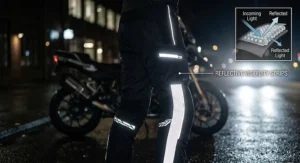
Specs on a box are one thing; riding through an actual storm is another. In practice, a properly seam-sealed pant with a genuine membrane — think the Klim Traverse Pant or Alpinestars Stella Bogota Pro Drystar — will keep your legs completely dry through hours of sustained highway rain, provided the DWR coating on the outer shell hasn’t worn down. What you will still feel is the drop in temperature that comes with wet roads and evaporative cooling off the fabric surface, which is why a removable thermal liner earns its keep in genuinely wet climates rather than just warm ones.
Breathable waterproof riding pants also behave differently at highway speed versus stop-and-go traffic. At speed, airflow through vents does real work moving moisture out; in slow city traffic, that airflow drops off and even a well-membraned pant like the Merlin Mason WP Jeans will feel warmer and more humid inside. This is normal physics, not a product flaw — no waterproof membrane can defy the basic tradeoff between blocking liquid water and venting body heat when there’s no airflow to help it along.
Features That Actually Matter (And Those That Don’t)
Actually matters: a genuine laminated membrane (Gore-Tex, Drystar, Reissa) over cheap DWR-only coatings; seam sealing at every stitch line; CE-rated armor at the knees and hips; and denier count in high-wear zones like the seat and inner knee.
Doesn’t matter much: flashy color-blocking or “tactical” styling cues with no functional purpose; the number of exterior pockets, which rarely affects how the pant performs in rain; and marketing claims like “military-grade” that carry no verifiable testing standard behind them.
The GORE-TEX membrane technology explainer is a useful reference point here — the actual engineering behind a genuine membrane (billions of microscopic pores that block liquid water while venting sweat vapor) is what separates real waterproof performance from a coating that just delays the inevitable soak-through.
Long-Term Cost & Maintenance
Cheaper overpants like the BILT Storm 2 Waterproof Overpants cost less upfront but typically need DWR reproofing more frequently and may not hold up structurally beyond a few seasons of regular use, given their lighter construction focus. Premium Gore-Tex pants like the REV’IT! Neptune 2 GTX or Klim Traverse Pant carry a much higher purchase price, but the laminated membrane itself is generally engineered to last the lifetime of the garment, with only the surface DWR needing periodic renewal — meaningfully lowering the total cost of ownership if you ride year-round.
Cost-per-wear math favors the premium end for daily riders: a $480 pant worn 150+ times a year works out to a few dollars per ride, while a budget overpant that needs replacing every two seasons because of daily wear may cost more over five years than expected. Occasional riders flip that math — an overpant used a dozen times a year easily outlasts its low purchase price.
Safety, Regulations & Compliance Guide
CE certification is the standard to look for on any pant claiming real protective performance — look for ratings under EN 17092, which classifies motorcycle protective clothing by abrasion, tear, and armor performance. Pants like the REV’IT! Neptune 2 GTX carry a Class AA rating, indicating a higher protection tier suited to regular road riding, while lighter garments may only meet lower classes appropriate for casual, low-speed use.
Waterproofing itself isn’t separately regulated the way armor is, which is exactly why marketing language varies so widely between brands. According to Harley-Davidson’s official riding-in-the-rain guidance, a properly fitted rain suit or waterproof pant paired with gloves genuinely reduces fatigue and cold-related distraction on wet rides — both of which are safety factors, not just comfort ones. Always verify current CE documentation on the product listing itself, since armor and rating specifications can be updated between model years.
Frequently Asked Questions
❓ Are waterproof motorcycle textile pants actually 100% waterproof?
❓ Can I wear waterproof textile pants in hot weather?
❓ How often should I reproof waterproof motorcycle pants?
❓ Are overpants as protective as integrated waterproof riding pants?
❓ What's the difference between Gore-Tex and other waterproof membranes?
Conclusion
Rain-proof motorcycle pants aren’t a luxury item anymore — they’re a practical answer to a problem every rider eventually faces, whether that’s a surprise afternoon storm or a genuinely wet climate you ride through every week. Across this list, the throughline is consistent: a real membrane, sealed seams, and CE-rated armor separate gear that actually works from gear that just claims to.
Budget riders get real, usable protection from the BILT Storm 2 Waterproof Overpants and Tour Master Overpant. Riders who want more day-to-day versatility should look at the Tour Master Venture Air or Merlin Mason WP Jeans. And anyone riding through genuinely unpredictable or extended wet seasons — commuters and adventure riders alike — will get the most long-term value out of the Alpinestars Stella Bogota Pro Drystar, Klim Traverse Pant, or REV’IT! Neptune 2 GTX. Pick based on how often you actually ride in the rain, not just how bad this week’s forecast looks, and you’ll end up with gear that earns its place in your closet for years.
Recommended for You
- Women’s Armored Motorcycle Pants: 7 Best Picks for 2026
- Heated Motorcycle Pants for Winter Riding: 7 Best Picks (2026)
- 7 Best Leather Motorcycle Pants for Touring in 2026
Disclaimer: This article contains affiliate links. As an Amazon Associate, I earn from qualifying purchases. If you purchase products through these links, we may earn a small commission at no additional cost to you.
✨ Found this helpful? Share it with your friends! 💬🤗
