
In This Article
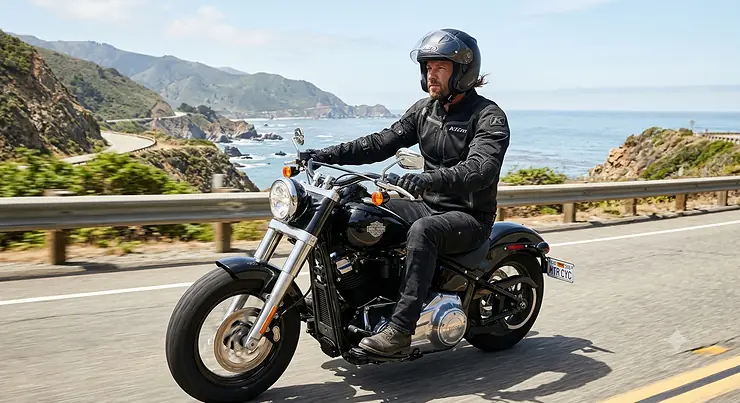
Summer riding has a math problem. The hotter it gets, the more tempting it is to zip down to a T-shirt, and the more your gear needs to actually work with you instead of against you. That’s the whole pitch behind a ventilated motorcycle jacket: mesh panels, zippered vents, and air channels that let highway wind do the cooling so you’re not arriving at every stoplight looking like you just left a sauna. A ventilated motorcycle jacket is a riding jacket built with mesh panels, perforated zones, or zippered vents designed to move air across your torso and arms while still carrying CE-rated armor and abrasion-resistant material. That’s the short version — the rest of this guide gets into which ones are actually worth your money.
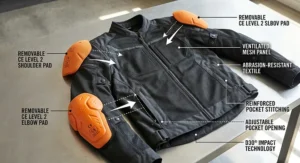
We dug into real product listings, manufacturer spec sheets, and aggregated review sentiment across seven genuine jackets currently sold in the U.S., spanning budget mesh options under $200 to premium performance builds north of $450. Whether you’re commuting through stop-and-go city heat or covering 300 miles of open highway in July, there’s a specific combination of vent placement, mesh density, and armor that fits your ride. Motorcyclists remain disproportionately represented in fatal traffic crashes compared to other vehicle types, which is exactly why “just wear a hoodie in the heat” isn’t a real strategy — protection and ventilation have to coexist. For a fuller picture of the risk landscape riders face, NHTSA’s motorcycle safety data is worth a look. Let’s get into the picks.
Quick Comparison Table
| Jacket | Best For | Ventilation Style | Price Range |
|---|---|---|---|
| Klim Induction Pro | Best overall airflow + protection | Full mesh, micromesh stretch zones | $450-550 |
| Fly Racing Coolpro Mesh | Best budget entry point | Direct-air mesh panels | $140-170 |
| Icon Airform | Best all-around mid-range | Perforated shell + mesh liner | $200-230 |
| Alpinestars T-GP Plus R V2 Air | Best for sport/naked bike riders | Perforated softshell, sport cut | $260-300 |
| Tourmaster Intake Air 5.0 | Best 3-season versatility | Armor-Link mesh + removable liner | $220-240 |
Looking at this lineup, the Klim Induction Pro earns its price tag through the widest mesh coverage and the most sophisticated armor integration, while the Fly Racing Coolpro Mesh proves you don’t need to spend $400 to get real airflow and CE protection. Riders splitting time between commuting and weekend sport riding should lean toward the Alpinestars T-GP Plus R V2 Air, since its tighter cut and perforated softshell hold up better at highway speed than a loose mesh bomber.
💬 Already have a favorite? Tap through and compare current pricing before you decide!😊
Top 7 Ventilated Motorcycle Jackets: Expert Analysis
1. Klim Induction Pro — widest mesh coverage in its class
The Klim Induction Pro leans hard into one idea: airflow without giving up abrasion resistance, and it mostly delivers. The jacket is built from Karbonite industrial-grade nylon mesh with 600D Cordura overlays at the cuffs and key wear zones, plus micromesh stretch panels at the sides and shoulders that flex with your riding position instead of fighting it. In practice, that mesh density means air moves through the chest and back even at city speeds, not just highway velocity — something thinner budget mesh jackets struggle with below 40 mph. The armor uses D3O Evo XT in the elbows and shoulders with a D3O back pad, all housed in cooling stretch-mesh pockets so the padding itself doesn’t become a heat trap, which is a smart detail most competitors skip. This is the jacket for riders who log serious summer mileage and don’t want to choose between staying cool and staying protected. Reviewers consistently note that the airflow rivals fully open mesh jackets despite the reinforced construction, though several mention the jacket runs slightly heavier than ultralight alternatives because of all that reinforcement. On paper, that trade-off is the point: this is a high ventilation riding jacket that hasn’t sacrificed durability to get there.
Pros:
- ✅ Class-leading mesh coverage across chest, back, and arms
- ✅ D3O armor housed in dedicated cooling mesh pockets
- ✅ CE AA-rated construction with genuine Cordura reinforcement
Cons:
- ❌ Heavier than minimalist mesh jackets in the same category
- ❌ Premium price puts it out of reach for casual riders
Expect to pay in the $450-550 range depending on colorway and retailer promotions at the time of research — a steep ask, but one that holds up if you ride four seasons a year in a hot climate.
2. Fly Racing Coolpro Mesh — most affordable real airflow
Riders who assume budget mesh jackets mean thin protection should look twice at the Fly Racing Coolpro Mesh. It uses a straightforward direct-air mesh construction across the torso and sleeves, meaning there’s minimal solid fabric blocking wind from reaching your skin once you’re moving. The removable CE-rated shoulder and elbow armor keeps the price down without pretending safety doesn’t matter, and the adjustable waist and cuff straps help compensate for the looser fit that budget mesh jackets often ship with. What most buyers overlook about this tier of jacket is that thinner mesh isn’t automatically worse — it just means less structural fabric between vents, so airflow at low speed can actually edge out pricier options with smaller vent zones. Aggregated review sentiment points to strong satisfaction on value and comfort, with a recurring theme that sizing runs a touch large, so ordering down a size is common advice. Cons show up mainly in long-term durability, where thinner mesh shows wear faster on jackets ridden daily for years.
Pros:
- ✅ Genuine direct-air mesh at an entry-level price
- ✅ Removable CE armor at shoulders and elbows
- ✅ Lightweight feel ideal for stop-and-go city heat
Cons:
- ❌ Mesh shows wear faster under daily long-term use
- ❌ Sizing runs large according to multiple reviewers
At around $140-170, this is the jacket to recommend to a new rider who needs real protection on a tight budget.
3. Icon Airform — best balance of style and breathable moto jacket construction
The Icon Airform sits in that sweet spot where a jacket looks like streetwear but performs like gear, combining a perforated main shell with a mesh liner rather than going full open-mesh. That construction choice matters in practice: it flows less raw air than the Klim or Fly Racing picks, but it blocks road grit and bugs better, which riders doing longer highway stretches tend to appreciate. CE armor sits at the shoulders and elbows with a back protector pocket, and the low-profile collar avoids the chafing that plagues stiffer jackets during long rides. Based on the spec comparison, this jacket earns its reputation less from having the single best airflow and more from nailing the everyday compromise between comfort, looks, and coverage. Reviewers frequently mention the fit runs true to size and that the perforation pattern keeps things comfortable into the mid-90s Fahrenheit, though a few note it’s not quite enough for triple-digit desert riding without a base layer swap.
Pros:
- ✅ Streetwear-style cut that doesn’t scream “riding gear”
- ✅ Perforated shell blocks debris better than open mesh
- ✅ True-to-size fit reported across multiple reviews
Cons:
- ❌ Less airflow than fully mesh competitors at low speed
- ❌ Struggles in extreme heat without a moisture-wicking base
Pricing typically lands in the $200-230 range, making it a strong mid-tier pick for riders who split time between commuting and weekend rides.
4. Alpinestars T-GP Plus R V2 Air — sharpest cut for sport and naked bike riders
If your riding position leans forward over the tank, the Alpinestars T-GP Plus R V2 Air is built around that posture instead of a relaxed commuter stance. Its laser-perforated softshell delivers ventilation levels close to mesh while keeping a slimmer, more aerodynamic profile that doesn’t flap at speed — a real issue with looser mesh bombers on sportbikes. The pre-curved sleeves and stretch panels at the elbows mean the jacket moves with an aggressive riding crouch rather than bunching up, and CE armor at the shoulders and elbows comes standard with a back protector pocket for an upgrade. What most buyers overlook about performance-cut jackets like this one is that a tighter fit isn’t just about looks — a jacket that doesn’t billow in the wind actually improves high-speed stability and reduces fatigue on long rides. Reviewers consistently praise the fit for sport-riding posture, while the most common complaint is that the tighter cut runs less forgiving for riders who prefer a relaxed, upright commuting stance.
Pros:
- ✅ Laser-perforated softshell rivals mesh airflow
- ✅ Aerodynamic cut reduces flapping at highway speed
- ✅ Pre-curved sleeves built for a forward riding posture
Cons:
- ❌ Tighter fit less comfortable for upright commuting
- ❌ Premium pricing compared to commuter-focused mesh jackets
Expect a price range around $260-300, positioning it as the go-to cool flow riding jacket for sport and naked bike owners specifically.
5. Tourmaster Intake Air 5.0 — most adaptable across three seasons
The Tourmaster Intake Air 5.0 takes a different approach than pure summer jackets: it pairs Armor-Link mesh and 1680 denier ballistic polyester with a removable Aquatherm two-stage waterproof liner and insulated vest, so the same jacket that vents heat in July can button up for a chilly morning ride in October. Newly designed Armadillo CE-approved armor covers the shoulders and elbows, backed by an articulated back protector, which is more coverage than several jackets twice its price offer. Here’s what to weigh: if you only ride in peak summer, dedicated mesh jackets edge this one out on raw airflow, but if your riding season stretches from spring through fall, the versatility likely saves you from buying two separate jackets. Aggregated feedback highlights the value of the layering system and notes the jacket runs true to size across most reports, with occasional mentions that the liner system adds bulk when both layers are stuffed into panniers.
Pros:
- ✅ Removable waterproof and insulated liners extend usability
- ✅ Armadillo CE armor plus articulated back protector included
- ✅ Strong value for riders spanning multiple seasons
Cons:
- ❌ Less raw airflow than dedicated summer-only mesh jackets
- ❌ Liner system adds bulk when packed for travel
At $220-240, it’s a smart pick for anyone who wants one jacket to cover most of the riding calendar.
6. Joe Rocket Alter Ego 4.1 — most modular, three-jacket-in-one design
The Joe Rocket Alter Ego 4.1 takes the “one jacket, multiple seasons” concept further with its MetaSport II system: a CE-armored, Free Air mesh inner jacket that zips into a fully waterproof Rock Tex outer shell, plus a removable quilted vest liner for cold mornings. The Variable Flow ventilation system uses waterproof zippers on the outer shell, so even the rain layer doesn’t fully choke off airflow once temperatures climb. What the spec sheet won’t tell you, but reviewers note, is that swapping between the three configurations takes some practice the first few rides — it’s not as instant as a single zip-out liner. Once you’re used to it, though, this becomes one of the more flexible ventilated motorcycle jacket options for riders who commute through genuinely unpredictable weather rather than committing to a pure summer setup.
Pros:
- ✅ Three-layer system adapts from summer mesh to full rain gear
- ✅ Variable Flow ventilation built into waterproof outer zippers
- ✅ CE armor plus removable spine protection included
Cons:
- ❌ Learning curve for swapping between the three configurations
- ❌ Heavier overall than single-purpose mesh jackets
Pricing generally sits in the $220-250 range, which is reasonable given it’s functionally three jackets bundled into one.
7. Cortech GX-Sport Air 5.0 — best value for performance-cut mesh
Rounding out the list, the Cortech GX-Sport Air 5.0 takes the performance-cut approach of pre-curved, rotated sleeves and pairs it with a genuinely functional mesh construction rather than treating airflow as an afterthought. Removable CE-approved armor sits at the elbows and shoulders, backed by an articulated triple-density back protector, and accordion stretch panels at the waist and elbow add mobility without opening gaps in the armor coverage. The jacket includes an Aqua-Therm two-stage waterproof and insulated liner that can be pulled entirely, turning it into close to a direct air motorcycle jacket for peak summer days. Reviewers frequently mention this as one of the better values in its price bracket, noting solid airflow and a comfortable riding-position cut, though a handful point out the stock liner feels basic compared to pricier three-season jackets.
Pros:
- ✅ Performance riding cut with pre-curved, rotated sleeves
- ✅ Removable liner reveals near-direct-air mesh underneath
- ✅ Triple-density back protector exceeds many rivals at this price
Cons:
- ❌ Stock liner quality feels basic versus premium competitors
- ❌ Less brand recognition than Icon or Alpinestars
Priced around $200-230, it’s a strong contender for riders who want a sport cut without paying Alpinestars-level money.
Getting the Most Airflow: Setup, Break-In & Maintenance
A ventilated motorcycle jacket only performs as advertised if you actually configure it correctly. On the first ride, open every zippered vent fully — chest, back, and sleeve vents all work together to create airflow, and leaving even one closed disrupts the pressure differential that pulls air through. Most riders make the mistake of only opening the front chest vents and wondering why their back still overheats; the exhaust vents at the back or underarm are what actually let hot air escape once it’s pulled in. During the first 30 days, wash mesh panels by hand or on a gentle cycle to avoid stretching, since aggressive machine washing can loosen mesh weave over time and reduce structural integrity. Check armor pocket placement every few rides in the beginning — new jackets sometimes need the internal padding adjusted until the CE armor sits correctly over your actual shoulder and elbow joints rather than sliding during wear.
For ongoing maintenance, re-apply a DWR (durable water repellent) treatment to any treated outer panels once or twice per season, since summer sweat and sunscreen residue break down factory coatings faster than most riders expect. Inspect zippers on your zippered vent motorcycle jacket every month during heavy summer use — grit and road dust are the most common cause of stuck vent zippers, and a quick wipe-down prevents that annoying mid-ride jam.
Which Rider Are You? Real-World Ventilation Scenarios
Picture a college student commuting 8 miles daily through downtown traffic in July heat, stopping at a dozen lights along the way. Low-speed airflow matters more than outright top-end ventilation here, so a budget mesh jacket like the Fly Racing Coolpro Mesh makes sense — it flows air even when you’re barely moving, and the lower price fits a student’s wallet better than premium gear.
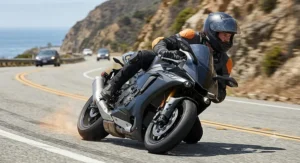
Now picture a weekend sportbike rider hitting canyon roads at 60-plus mph. Wind resistance and fit matter as much as raw mesh coverage, which is exactly why the Alpinestars T-GP Plus R V2 Air‘s aerodynamic, perforated-softshell design outperforms a baggy mesh bomber that flaps and drags at speed.
Finally, picture a touring rider covering 300 miles across three states in a single day, starting in cool morning air and ending in blistering afternoon heat. That rider needs adaptability more than peak airflow, making the Tourmaster Intake Air 5.0 or Joe Rocket Alter Ego 4.1 the more sensible choice thanks to their removable liner systems.
✨ Find Your Match Today!
🔍 Compare current pricing on the jacket that fits your actual riding pattern — not just the one with the flashiest spec sheet.
What Is a Ventilated Motorcycle Jacket?
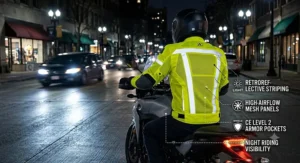
A ventilated motorcycle jacket is riding gear built with mesh panels, perforated zones, or zippered vents specifically designed to move air across the rider’s torso and arms during motion, while still incorporating CE-rated armor and abrasion-resistant material at high-impact zones. Unlike a standard leather or solid textile jacket, ventilation-focused designs prioritize breathability without eliminating crash protection, which is the entire reason serious summer riders choose them over a plain shirt or unarmored jacket.
The category spans a spectrum: fully open mesh jackets sit at one end, offering maximum airflow motorcycle jacket performance at the cost of some wind-blocking ability, while perforated softshell or leather jackets sit at the other, trading some airflow for better abrasion resistance and weather resistance. Most riders land somewhere in the middle depending on climate and riding style.
How to Choose a Ventilated Motorcycle Jacket
- Match mesh density to your climate. Riders in consistently hot, dry regions benefit from more open mesh, while humid climates may do better with a moderate mesh-to-solid-fabric ratio that still blocks some road debris.
- Prioritize CE armor level over mesh percentage. A jacket with 90% mesh but no real armor isn’t safer than a well-vented jacket with CE Level 1 or 2 protection — check certification before checking airflow claims.
- Consider vent placement, not just vent count. Chest intake vents paired with back or underarm exhaust vents create better airflow than several vents clustered in one zone.
- Test the fit around armor zones. Loose mesh jackets can let shoulder and elbow armor shift out of position during a fall, which defeats the point of having it.
- Factor in your typical speed range. Low-speed city commuters benefit from open direct-air mesh, while highway and sport riders often do better with perforated softshell that resists flapping.
- Check for a removable liner if you ride multiple seasons. A high ventilation riding jacket with a zip-out liner covers more of the calendar than a summer-only design.
- Read aggregated reviews for durability, not just comfort. Mesh weave quality varies significantly, and long-term wear resistance often separates budget jackets from mid-range ones more than day-one comfort does.
Ventilated Motorcycle Jacket vs Traditional Leather Jacket
| Factor | Ventilated Mesh Jacket | Traditional Leather Jacket |
|---|---|---|
| Airflow | High to very high | Minimal to none |
| Abrasion resistance | Good to very good (varies by denier) | Excellent |
| Weight | Lighter | Heavier |
| Best For | Hot climates, city and highway summer riding | Cold weather, track days, maximum slide protection |
The comparison above isn’t really about which jacket is “better” — it’s about matching gear to conditions. A Klim Induction Pro or Cortech GX-Sport Air 5.0 will keep a rider functional and alert through a 95-degree afternoon in a way no leather jacket can, while leather still wins outright on raw abrasion resistance during a low-speed slide. Riders who do both summer commuting and occasional track days often end up owning one of each rather than forcing a single jacket to do both jobs.
Vent Design Deep Dive: Air Channels, Zippered Vents & Panel Placement
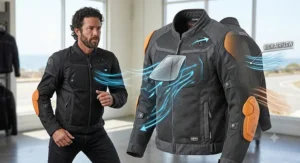
Not all vents are created equal, and understanding air channel riding jacket design explains why two jackets with similar mesh percentages can feel completely different on the road. The best designs route air intentionally: intake vents at the chest or shoulders capture oncoming wind, internal air channels guide that airflow across the torso, and exhaust vents at the back or underarms let hot air escape rather than pooling under the jacket.
Zippered chest vent placement matters more than most riders realize. Vents positioned too low catch less direct airflow at typical riding postures, while vents angled toward the direction of travel — rather than straight down — capture noticeably more wind. A jacket with zippered vents motorcycle riders can adjust on the move, rather than fixed mesh-only zones, offers more control across a wider temperature range, since you can dial airflow up on a hot stretch and partially close it during a cooler evening ride home. Ventilation panel motorcycle jacket construction that uses stretch mesh at pressure points (underarms, lower back) tends to outperform static perforated panels in the same location, simply because stretch mesh flexes open slightly with rider movement, widening the effective airflow path.
Common Mistakes When Buying a Ventilated Motorcycle Jacket
The single biggest mistake is prioritizing mesh percentage over armor certification — a jacket that’s 80% open mesh but carries no CE-rated protection isn’t a safer summer option, it’s just a windbreaker with a motorcycle logo. Another common error is buying based on looks alone without checking vent placement, which leaves riders wondering why a jacket that “looks ventilated” still runs hot in stop-and-go traffic. Sizing is a frequent stumble too: several jackets in this guide run large or small compared to standard sizing charts, and skipping the brand’s specific size chart in favor of “my usual size” leads to armor sitting in the wrong place. Finally, riders sometimes skip trying the jacket while seated in a riding position, which matters because a jacket that fits standing up can bunch or gap once you’re leaned over handlebars.
Features That Actually Matter (And Those That Don’t)
Real CE-rated armor, adjustable fit points at the waist and cuffs, and multi-directional vent placement (intake plus exhaust) all matter — they directly affect protection and how much actual cooling you feel at riding speed. Reflective piping matters more than riders give it credit for, since conspicuity gaps are a documented factor in crashes involving motorcycles and other vehicles.
What matters less: raw mesh percentage as a single number, without context on placement, and marketing terms like “aerospace-grade” material that don’t correspond to any actual CE certification. A jacket claiming “maximum ventilation” without listing an armor standard is a marketing headline, not a spec.
Long-Term Cost & Maintenance
A $150 budget mesh jacket and a $500 premium jacket rarely age the same way. Cheaper mesh weaves tend to loosen or fray at stress points (elbows, underarms) within two to three riding seasons of regular use, while reinforced Cordura overlays on premium jackets typically hold structural integrity considerably longer. Cost-per-season is the more useful number than sticker price alone: a $220 jacket that lasts five seasons of regular riding costs less annually than a $150 jacket replaced every two years. Armor foam also degrades with heat and UV exposure over time regardless of price point, so budget in a replacement CE pad every few years as part of total ownership cost, not just the jacket itself.
Safety, CE Ratings & Regulations Guide
CE certification for motorcycle protective clothing in the U.S. and Europe generally follows the EN 17092 framework, which replaced the older EN 13595 standard and classifies gear by intended use rather than by a single protection tier. For a deeper breakdown of how these classifications work, the EN 17092 overview from Eurofins is a solid technical reference. In practice, look for a garment tag listing Class A, AA, or AAA rather than trusting a brand’s own “armored” claim at face value.
Heat itself is a legitimate safety consideration, not just a comfort issue — overheating impairs reaction time and judgment during a ride, which is part of why occupational health researchers flag heat-related illness symptoms as a genuine risk anytime protective equipment traps body heat during physical activity. A properly ventilated jacket isn’t just about comfort; it’s a legitimate fatigue and alertness factor on long summer rides.
Frequently Asked Questions
❓ Are ventilated motorcycle jackets actually safe in a crash?
❓ How much mesh coverage is enough for hot weather riding?
❓ Can I wear a ventilated motorcycle jacket in cooler weather too?
❓ Do zippered vents actually make a noticeable difference?
❓ Is a more expensive ventilated motorcycle jacket always better?
Conclusion
Choosing a ventilated motorcycle jacket really comes down to matching mesh density, vent placement, and armor level to how and where you actually ride. The Klim Induction Pro makes sense for serious summer mileage riders who want the best airflow without cutting corners on protection, while the Fly Racing Coolpro Mesh proves a tight budget doesn’t mean skipping CE armor. Sport riders should lean toward the Alpinestars T-GP Plus R V2 Air‘s aerodynamic cut, and anyone riding across multiple seasons will get more mileage — literally — out of the Tourmaster Intake Air 5.0 or Joe Rocket Alter Ego 4.1‘s layering systems. Whichever direction you go, prioritize real CE certification over marketing language, and check current pricing before buying since all figures here are ranges based on research at time of writing, not locked-in prices.
Recommended for You
- 7 Best Summer Motorcycle Jacket Mesh Picks to Beat the Heat (2026)
- Best Mesh Motorcycle Jacket 2026: 7 Picks That Won’t Cook You
- Commuter Motorcycle Jacket: 7 Picks That Won’t Wreck 2026
Disclaimer: This article contains affiliate links. As an Amazon Associate, I earn from qualifying purchases. If you purchase products through these links, we may earn a small commission at no additional cost to you.
✨ Found this helpful? Share it with your friends! 💬🤗
