
In This Article
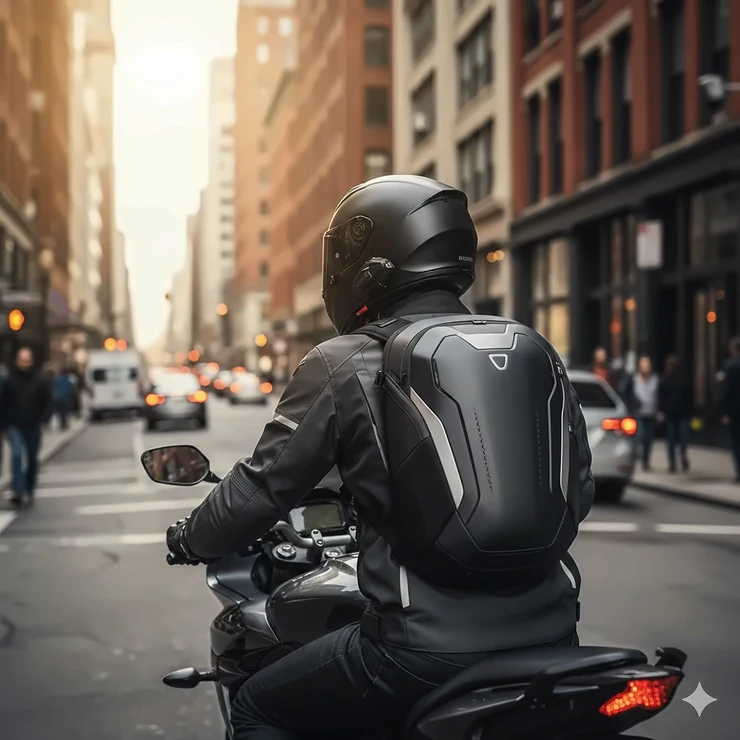
Let me paint you a picture: It’s Monday morning, you’re weaving through gridlock on your bike while cars sit motionless, and everything you need for the workday is riding safely on your back. That’s the freedom a proper motorcycle backpack for commuting delivers.
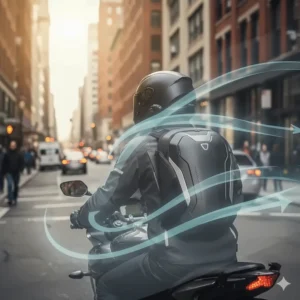
Here’s the thing though—not every backpack is built for two-wheeled transport. I’ve tested dozens over the years, and the difference between a generic bag and a purpose-built motorcycle backpack for work is night and day. We’re talking about gear that won’t turn into a wind-catching parachute at highway speeds, straps that distribute weight away from your shoulders during that 45-minute commute, and compartments that actually protect your laptop when you hit that pothole you didn’t see coming.
The right motorcycle laptop backpack transforms your daily ride from a logistical challenge into the highlight of your morning. According to NHTSA motorcycle safety data, over 8.8 million motorcycles are registered in the United States, with a growing number of riders choosing two wheels for their daily commute. Whether you need a daily commuter motorcycle bag for a quick 15-minute zip to the office or a business motorcycle backpack for longer hauls, choosing the right pack matters more than you might think.
In this guide, I’ll walk you through seven battle-tested options that actually work for real-world commuting—from budget-friendly choices to premium professional rider backpack selections that justify every penny.
Quick Comparison Table
| Backpack Model | Capacity | Laptop Size | Waterproof | Price Range | Best For |
|---|---|---|---|---|---|
| Kriega R25 V2 | 25L | 17″ | Yes (roll-top) | $200-250 | Premium all-weather commuting |
| OGIO Mach 5 | 24L (expandable) | 15″ | Water-resistant | $150-200 | Feature-rich professional use |
| Timbuk2 Parker | 26-35L | 15″ | Ultra water-resistant | $120-160 | Expandable versatility |
| KEMIMOTO 37L | 37L | 15.6″ | Yes (with cover) | $60-80 | Budget-conscious riders |
| Alpinestars Commuter | 22L | 13.3″ | Water-resistant | $90-130 | Urban professionals |
| OGIO Mach 1 | 22L | 15″ | Water-resistant | $100-140 | Aerodynamic commuting |
| Seibertron Helmet | 35L+ | Varies | Yes (900D fabric) | $50-75 | Budget + helmet storage |
💬 Just one click – help others make better buying decisions too! 😊
Top 7 Motorcycle Backpack for Commuting: Expert Analysis
1. Kriega R25 V2 Backpack – Premium All-Weather Champion
The Kriega R25 V2 represents the gold standard in motorcycle backpack for work scenarios. This British-engineered marvel features ultra-durable 420D and 1000D Cordura construction that laughs in the face of daily abuse.
What sets the Kriega R25 V2 apart is its revolutionary Quadloc harness system—instead of putting stress on your shoulders, it transfers weight to your chest and torso. I’ve ridden 200+ miles in a single day with this pack fully loaded, and my neck felt fine. The waterproof 20-liter main compartment uses a secure roll-top closure with a removable taped-seam liner, keeping your 17-inch laptop bone-dry even in torrential downpours.
Key Specifications:
- Capacity: 25 liters total
- Laptop compartment: Fits up to 17″
- Materials: 420D Cordura LITE + 1000D Cordura base
- Weight: Approximately 3.3 lbs
Customer Feedback: Riders consistently praise the comfort during long rides and true waterproof performance. Some mention the premium price, but most agree it’s worth the investment for daily commuters.
✅ Pros:
- Industry-leading Quadloc harness eliminates shoulder strain
- Genuinely waterproof main compartment
- Lifetime reputation for durability
❌ Cons:
- Premium price point ($200+)
- Limited organization pockets vs competitors
Price Range: $200-250
2. OGIO No Drag Mach 5 – The Feature-Packed Professional
The OGIO No Drag Mach 5 takes the already excellent Mach platform and kicks it into overdrive. This is the motorcycle backpack with laptop compartment that serious commuters dream about.
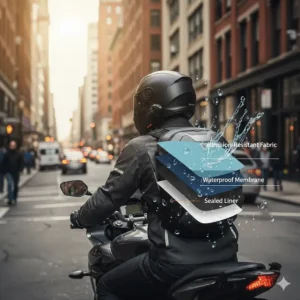
The OGIO Mach 5 boasts a streamlined single-shot molded exterior that won’t deform from wind shear—crucial when you’re cruising at 70 mph on the highway. The removable fleece-lined hip accessory pouch gives you quick-access storage for toll money or your phone, while the U-shaped expansion gusset lets you increase carrying volume when needed. The dedicated shoe storage compartment is pure genius for commuting professionals who need to change into office-appropriate footwear.
Key Specifications:
- Capacity: 1350 cu.in. (22L) expandable to 1475 cu.in. (24L)
- Laptop compartment: Padded sleeve for 15″ devices
- Special features: 360-degree reflective piping, dedicated helmet visor sleeve
- Weight: 3.5 lbs
Customer Feedback: Professional riders love the organizational options and aerodynamic design. The molded back panel keeps items from poking into your spine during rides.
✅ Pros:
- Superior aerodynamics reduce fatigue
- Dedicated shoe compartment for professionals
- 360-degree reflective safety features
❌ Cons:
- Heavier than minimalist options
- Premium features command premium pricing
Price Range: $150-200
3. Timbuk2 Parker Commuter Backpack – The Expandable Transformer
San Francisco-born Timbuk2 Parker Commuter Backpack brings cycling messenger heritage to the motorcycle world. This daily commuter motorcycle bag expands from a sleek 26-liter profile to a spacious 35 liters when you need extra capacity.
What makes the Timbuk2 Parker special is its ultra water-resistant drop liner combined with a zip-away rain fly—double protection for those unexpected weather changes. The woven mesh reflective panel keeps you visible during night commutes, while the air mesh back panel prevents that sweaty-back syndrome we all hate. As a bonus, Timbuk2’s lifetime warranty backs every stitch.
Key Specifications:
- Capacity: 26L (unexpanded) to 35L (expanded)
- Laptop compartment: Fits 15″ with side access
- Materials: Cordura nylon with coated detail
- Construction: Made with recycled materials
Customer Feedback: Commuters appreciate the expansion capability for grocery runs after work and the lifetime warranty. The magnetic pocket with key keeper gets special mentions for convenience.
✅ Pros:
- Expandable design handles variable loads
- Lifetime warranty from established brand
- Excellent wet-weather protection
❌ Cons:
- Expansion mechanism adds bulk when empty
- Less moto-specific than purpose-built options
Price Range: $120-160
4. KEMIMOTO 37L Helmet Backpack – Budget Champion with USB
The KEMIMOTO 37L Motorcycle Helmet Backpack proves you don’t need to spend $200 to get quality performance. This business motorcycle backpack delivers impressive features at a wallet-friendly price point.
The KEMIMOTO 37L includes a creative USB charging port design—connect your power bank inside, and charge devices while riding without fumbling with cables. The dedicated helmet compartment fits full-face, modular, or open-face helmets, plus there’s room for a 15.6-inch laptop. The included rain cover transforms this water-resistant pack into a waterproof fortress when storms roll in.
Key Specifications:
- Capacity: 37 liters
- Laptop compartment: Padded sleeve for 15.6″ devices
- Special features: USB charging port, dedicated helmet storage, rain cover included
- Construction: Durable polyester fabric
Customer Feedback: Value-conscious riders praise the helmet storage capability and USB port functionality. The ergonomic harness design impressed testers who expected basic straps at this price point.
✅ Pros:
- Exceptional value under $80
- USB charging port for devices
- Generous 37L capacity with helmet storage
❌ Cons:
- Build quality doesn’t match premium brands
- Less refined aesthetics
Price Range: $60-80
5. Alpinestars Commuter Backpack – Urban Professional’s Choice
The Alpinestars Commuter Backpack brings motorsports DNA to your daily grind. This professional rider backpack strikes an elegant balance between technical performance and office-appropriate aesthetics.
Constructed from water-resistant 840D ballistic nylon twill with 420D honeycomb nylon reinforcements, the Alpinestars Commuter handles daily abuse while looking sharp. The side laptop compartment deserves special mention—you can access your device without opening the main compartment, brilliant for airport security or quick coffee shop setups. The self-locking waterproof zipper on the main compartment adds another layer of weather protection.
Key Specifications:
- Capacity: Approximately 22 liters
- Laptop compartment: Side-access pocket fits 13.3″ devices
- Materials: 840D ballistic nylon + 420D honeycomb nylon
- Features: Sternum strap and hideaway waist strap
Customer Feedback: Business professionals appreciate the clean aesthetic and numerous organizational pockets. Riders note it works equally well for motorcycle commuting and air travel.
✅ Pros:
- Professional appearance for business settings
- Excellent pocket organization
- Side laptop access is incredibly convenient
❌ Cons:
- Smaller laptop capacity (13.3″ max)
- Premium pricing for moderate capacity
Price Range: $90-130
6. OGIO No Drag Mach 1 – The Aerodynamic Essential
The OGIO No Drag Mach 1 represents the entry point to OGIO’s legendary Mach series. This motorcycle laptop backpack delivers core aerodynamic performance without the premium features (or price) of the Mach 5.
The OGIO Mach 1 features the same streamlined single-shot molded exterior as its bigger siblings, preventing wind-induced deformation at speed. The shoulder gasket conforms perfectly to your body, increasing aerodynamics and comfort. With a padded interior laptop sleeve for 15-inch devices and a nearly waterproof exterior, it covers the essentials that commuters actually need.
Key Specifications:
- Capacity: 1350 cubic inches (22L)
- Laptop compartment: Padded sleeve for 15″ devices
- Design: Streamlined molded exterior
- Weight: 1 lb (incredibly light!)
Customer Feedback: Riders love the lightweight design and effective aerodynamics. The minimalist approach means you get performance without unnecessary weight or bulk.
✅ Pros:
- Exceptionally lightweight at just 1 lb
- Proven aerodynamic design
- Solid value for OGIO quality
❌ Cons:
- Basic organization vs Mach 5
- No expansion capability
Price Range: $100-140
7. Seibertron Waterproof Helmet Backpack – The Budget Workhorse
The Seibertron Waterproof Large Capacity Molle Motorcycle Helmet Backpack wins the value category hands down. This motorcycle backpack for commuting delivers shocking capability for under $75.
The Seibertron Helmet Backpack features genuine 900D waterproof fabric construction with a MOLLE system for modular attachments. The helmet compartment accommodates full-face, half-face helmets, or even a basketball if you’re heading to the gym after work. Multiple compression straps let you adjust the pack’s size based on your load—compact for light days, expanded for weekend trips.
Key Specifications:
- Capacity: 35+ liters (adjustable with compression straps)
- Construction: 900D waterproof fabric
- System: MOLLE modular attachment points
- Features: High-strength alloy zippers, multiple straps for sissy bar mounting
Customer Feedback: Budget-conscious riders rave about the quality-to-price ratio. Construction workers and tradespeople especially appreciate the rugged durability and helmet storage for job sites.
✅ Pros:
- Unbeatable value under $75
- True waterproof main fabric
- MOLLE system for customization
❌ Cons:
- Abundance of straps can be overwhelming
- Bulkier profile than sleeker options
Price Range: $50-75
Understanding Motorcycle Backpack Technology
What Makes a Motorcycle Backpack Different?
Regular backpacks weren’t designed for 70 mph wind resistance or the forward-leaning riding position. Purpose-built motorcycle backpack for commuting options incorporate several critical features:
Aerodynamic Design reduces wind resistance and prevents the parachute effect that causes neck strain. Streamlined profiles and compression systems keep loads tight against your body.
Harness Systems matter enormously. Traditional shoulder straps transfer all weight to your shoulders and neck—fine for walking, terrible for riding. Advanced systems like Kriega’s Quadloc or OGIO’s shoulder gasket designs distribute weight to your chest and torso, eliminating pressure points.
Weather Resistance isn’t optional when your electronics and documents are at stake. Look for welded seams, waterproof zippers, or roll-top closures that actually keep water out, not just “water-resistant” marketing claims.
According to Wikipedia’s motorcycle commuting article, the Taichung City government describes motorcycle commuting as offering higher flexibility with lower costs, which explains its growing popularity worldwide.
Key Features to Prioritize
1. Laptop Protection (The Non-Negotiable)
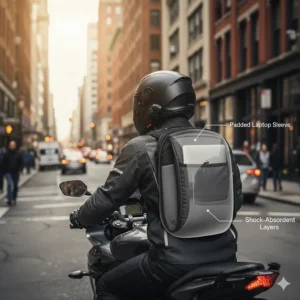
Your motorcycle backpack with laptop compartment needs dedicated, padded protection. I’ve seen too many cracked screens from riders who thought a regular backpack would suffice. Look for:
- Suspended padded compartments that don’t touch the bag’s exterior
- Soft-lined interiors to prevent scratches
- Secure closures (elastic straps or Velcro) to prevent shifting
- Easy access options for airport security
2. Weight Distribution Systems
The secret to comfortable commuting lies in where weight sits. Budget packs rely on traditional shoulder straps. Premium options use:
- Chest straps that lock the pack to your torso
- Waist belts (sometimes removable) that transfer weight to hips
- Load-lifter straps that pull weight closer to your body
- Sternum straps that prevent shoulder strap migration
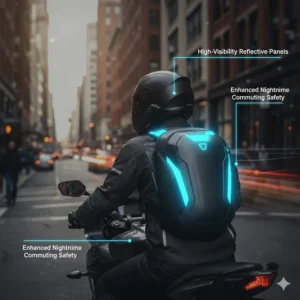
3. Visibility and Safety Elements
Motorcyclists face unique visibility challenges. Your daily commuter motorcycle bag should include:
- Reflective panels or piping visible from 360 degrees
- High-visibility color options
- Mounting points for LED lights or blinkers
- Reflective logo treatments
Research from NHTSA safety statistics indicates that motorcyclists are about 28 times more likely per vehicle mile traveled to die in crashes compared to passenger car occupants, making visibility enhancements crucial.
Choosing the Right Size for Your Commute
Capacity Planning by Commute Type
Urban Short Commute (15-25L): Perfect for riders who just need laptop, lunch, and daily essentials. The OGIO Mach 1 or Alpinestars Commuter excel here.
Standard Commute (25-30L): Ideal for riders carrying change of clothes, gym gear, or bulkier items. Kriega R25 V2 and Timbuk2 Parker fit this category perfectly.
Extended Commute or Multi-Purpose (35L+): For riders who run errands after work or need weekend capability. KEMIMOTO 37L and Seibertron options provide maximum versatility.
Fit and Comfort Considerations
The best motorcycle backpack for work disappears during your ride. Here’s how to ensure proper fit:
Torso Length Matters: Measure from your C7 vertebra (the bumpy one at the base of your neck) to your iliac crest (top of hip bones). Most packs are designed for 15-19 inch torsos, but premium options offer adjustability.
Load Testing: Before committing, load the pack with your typical gear and wear it around your house for 20 minutes. Pressure points that seem minor while standing become major issues after 30 minutes of riding.
Riding Position Compatibility: Put the pack on, then sit in your riding position. Does anything dig into your back? Can you still look over your shoulder for lane changes? These real-world tests matter more than specs.
Weatherproofing: Separating Marketing from Reality
Understanding Water Resistance Ratings
The motorcycle backpack industry loves vague terms like “water-resistant” or “weather-protected.” Here’s what they actually mean:
Water-Resistant: Fabric has a coating that resists light rain for 15-30 minutes. Not suitable for commuting in serious weather.
Water-Repellent: DWR (Durable Water Repellent) coatings cause water to bead and roll off. Works for moderate rain but will eventually wet through.
Waterproof: Sealed construction with welded seams or roll-top closures that prevent water entry. Genuinely protects in downpours. Look for IP ratings when available.
Best Practice: Even with “waterproof” packs, use dry bags for critical electronics. A $15 dry bag saves a $1,500 laptop.
Rain Cover Reality Check
Many backpacks include rain covers—those bright yellow shells that slip over the pack. They’re better than nothing but have limitations:
- Deploy them BEFORE the rain starts (good luck with that)
- They can catch wind and balloon at highway speeds
- Seams and zippers remain vulnerable
- They’re easy to lose when you stuff them back in the pocket
Premium options like the Kriega R25 V2’s integrated waterproof liner beat add-on covers every time.
Organization and Access: Daily Life Details
Smart Pocket Placement
Your morning routine shouldn’t involve unpacking your entire bag to find your wallet. Well-designed motorcycle laptop backpack options feature:
Quick-Access Pockets: Top or front pockets for items you grab frequently—phone, wallet, keys, sunglasses. OGIO’s fleece-lined valuables pocket exemplifies this.
Main Compartment Design: Clamshell-opening bags (like Timbuk2 Parker) let you see everything instantly. Top-loading designs are more secure but require rummaging.
Laptop Access: Side-entry pockets (like Alpinestars Commuter) are brilliant for airport security or coffee shop setups where you don’t want to expose your entire pack contents.
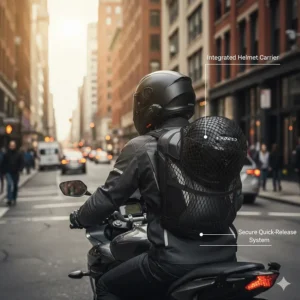
Helmet Storage: If you lack secure helmet storage at work, integrated helmet carry systems (KEMIMOTO, Seibertron) are game-changers. External mesh holders work but leave your helmet exposed.
Cable Management Systems
Modern commuters carry laptops, phones, power banks, and earbuds—all with cables. Look for:
- Internal organization panels with elastic loops
- Dedicated cable pockets to prevent tangling
- USB passthrough ports (KEMIMOTO) for charging devices without opening the pack
- Removable electronics organizers you can grab quickly
Durability: Materials That Actually Last
Fabric Technology Decoded
Cordura Nylon: The gold standard in motorcycle gear. Numbers like 420D, 900D, or 1000D indicate thread density—higher numbers mean tougher fabric but more weight. Kriega’s mix of 420D and 1000D optimizes durability where needed.
Ballistic Nylon: Originally developed for military flak jackets, it’s incredibly abrasion-resistant. Alpinestars uses 840D ballistic nylon for excellent wear resistance.
Polyester Blends: More affordable than Cordura but less abrasion-resistant. Fine for occasional use; questionable for daily commuting. KEMIMOTO uses quality polyester that outperforms its price point.
Zipper Quality (The Weak Link)
I’ve seen $200 backpacks fail because of cheap zippers. Quality indicators:
YKK Zippers: Industry standard for reliability. If a manufacturer uses YKK, they’ll mention it prominently.
Self-Locking Waterproof Zippers: Like Alpinestars’ implementation, these prevent accidental opening and improve weather resistance.
Oversized Pulls: Easier to grab with gloved hands—a small detail that matters during winter commutes.
Zipper Garages: Protected endpoints prevent snags and extend zipper life significantly.
Professional Appearance: When You Can’t Look Like a Rider
Some workplaces embrace motorcycle culture. Others? Not so much. If you need a business motorcycle backpack that won’t raise eyebrows in corporate America:
Minimalist Aesthetics: Alpinestars Commuter and Timbuk2 Parker avoid obvious “motorcycle” branding. They look like premium tech backpacks that happen to work brilliantly on bikes.
Color Choices: Black or charcoal options blend into professional settings. Save the high-vis yellow for weekend rides.
Modular Systems: Removable waist straps and sternum straps let you transition from moto mode to professional appearance instantly.
Quick-Change Capability: Keep dress shoes and blazer at the office, commute in riding gear, transform in 5 minutes. This approach requires less pack capacity but more planning.
Safety Considerations Beyond Visibility
Load Distribution and Riding Dynamics
An improperly loaded motorcycle backpack for commuting affects your bike’s handling more than you’d think. Physics doesn’t care about convenience:
High Loads Raise Center of Gravity: Heavy items packed high make the bike feel top-heavy in turns. Pack heavy items close to your back and low in the bag.
Lateral Movement Kills Control: Loose items shifting side-to-side during cornering or emergency maneuvers can upset balance. Use compression straps religiously.
Emergency Maneuver Limitations: A fully loaded 37L pack limits how quickly you can duck or move during emergency situations. Consider split loading—bike luggage plus smaller backpack.
Impact Protection Reality
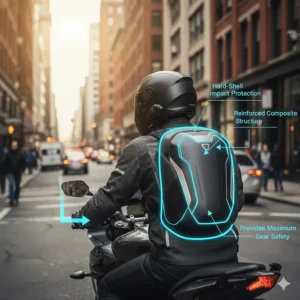
Let’s address the uncomfortable truth: In a serious crash, what’s in your backpack matters. Hard objects (laptops, water bottles, tools) can cause injury if they impact your back. Consider:
- Back panel padding provides some cushioning but isn’t body armor
- Strategic packing puts soft items (clothing) between hard objects and your spine
- Some riders add aftermarket back protectors underneath their backpack
NHTSA data shows 6,335 motorcyclists were killed in 2023, emphasizing the importance of comprehensive safety practices beyond just backpack choice.
Climate-Specific Considerations
Hot Weather Commuting
Summer creates unique challenges for motorcycle backpack for work scenarios:
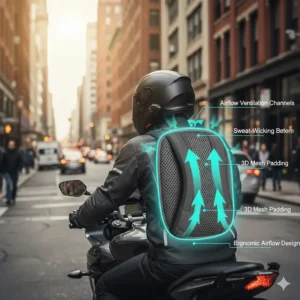
Ventilation: Mesh back panels (Timbuk2 Parker, Alpinestars) create air channels to reduce sweat. Some designs use “chimney” effects to pull air through.
Material Selection: Lighter colors reflect heat better than black. Breathable fabrics prevent the greenhouse effect against your back.
Hydration Integration: Most quality packs accommodate hydration bladders. Staying hydrated during summer commutes isn’t optional—it’s safety-critical.
The Sweat Factor: Even the best ventilated pack causes some sweating. Keep a spare shirt at the office or embrace the moisture-wicking base layer lifestyle.
Cold Weather Solutions
Winter commuting requires different thinking:
Insulation Consideration: Your pack creates insulation against your back—sometimes too much. Layer appropriately underneath.
Frozen Zippers: Premium YKK zippers resist freezing better than cheap alternatives. A frozen zipper at a gas stop ruins your day.
Grip with Gloves: Oversized zipper pulls and magnetic closures (Timbuk2) work much better when you’re wearing winter gloves.
Rain and Snow: Waterproof becomes critical. Wet gear in freezing temperatures creates miserable conditions and potential safety issues.
Maintenance: Making Your Investment Last
Regular Cleaning Protocols
Quality backpacks last years with proper care:
Monthly Quick Clean:
- Empty completely and shake out debris
- Wipe interior with damp cloth
- Spot clean exterior stains immediately
- Air dry thoroughly before storage
Seasonal Deep Clean:
- Remove all detachable components
- Hand wash with mild soap (check manufacturer recommendations)
- Never machine wash unless explicitly stated
- Air dry completely—avoid direct heat
- Treat zippers with zipper lubricant
- Reapply DWR coating if water no longer beads
Storage Best Practices
Between Rides: Don’t leave your pack compressed. Loosen all straps and hang it to maintain shape and prevent mildew.
Long-term Storage: Clean thoroughly, store partially packed to maintain structure, use desiccant packets to prevent moisture, avoid direct sunlight which degrades fabrics.
Zipper Care: The most common failure point deserves attention. Periodically run a graphite pencil along zipper teeth or use proper zipper lubricant. Replace damaged zippers immediately—they only get worse.
Price vs. Value: When to Splurge, When to Save
Budget Tier ($50-90): Smart Shopping
Best Options: Seibertron Helmet Backpack, entry KEMIMOTO models
What You Get: Basic weather resistance, functional organization, adequate materials for occasional use
What You Sacrifice: Refined ergonomics, premium zippers, advanced harness systems, long-term durability guarantees
Right For: Occasional commuters, riders with short commutes, those testing motorcycle commuting before committing
Mid-Range ($90-160): Sweet Spot
Best Options: OGIO Mach 1, Alpinestars Commuter, Timbuk2 Parker
What You Get: Proven materials, better ergonomics, improved weather resistance, brand warranties
What You Sacrifice: Cutting-edge features, truly waterproof construction, ultimate weight distribution
Right For: Regular commuters, riders wanting reliability without premium pricing, those balancing features and budget
Premium Tier ($160-250+): Investment Pieces
Best Options: Kriega R25 V2, OGIO Mach 5
What You Get: Advanced harness systems, genuinely waterproof construction, lifetime durability expectations, refined details throughout
What You Sacrifice: Only your money—these deliver everything
Right For: Daily all-weather commuters, riders logging serious miles, professionals who need bulletproof reliability
The Math: A $200 pack lasting 10 years costs $20 per year. A $60 pack lasting 2 years costs $30 per year. Premium isn’t always more expensive long-term.
Alternatives and Complementary Solutions
Tank Bags and Tail Bags
Sometimes a backpack isn’t the answer. Consider:
Tank Bags: Keep weight on the bike, not your back. Magnetic or strap-mounted options offer 5-20L capacity. Downside: Limited to one bike, can scratch tank.
Tail Bags: Larger capacity (20-40L+) mounts behind the seat. Great for touring but requires bungee cord mastery.
Combined Approach: Small backpack (laptop, valuables) plus tail bag (gym clothes, groceries) distributes weight optimally.
Messenger Bags vs. Backpacks
Messenger Pros: Quick access, professional appearance, easier to swing around to front at stops
Messenger Cons: Asymmetric weight distribution, shoulder fatigue, less stable at speed
Verdict: Backpacks win for serious commuting, messengers work for very short urban rides
Sissy Bar and Luggage Rack Solutions
If your bike has a sissy bar or rear rack, the Seibertron and some KEMIMOTO models include mounting straps. This hybrid approach:
- Removes weight from your back entirely
- Requires bike-specific mounting capability
- Works brilliantly for longer commutes or touring
Breaking In Your New Pack
The First 100 Miles
New backpacks aren’t ready for prime time. Here’s the break-in process:
Week 1: Light Loads – Wear around the house, adjust all straps, identify pressure points
Week 2: Gradual Loading – Add weight progressively, test on short rides, fine-tune adjustments
Week 3: Full Load Testing – Pack everything you’ll actually carry, ride your full commute route, make final adjustments
Common Adjustments:
- Shoulder straps usually need shortening after break-in
- Sternum straps often sit higher than you initially think
- Load lifter straps make enormous difference once properly adjusted
- Waist belts should sit on hip bones, not waist
Dialing In the Perfect Fit
Professional pack fitting follows this sequence:
- Loosen everything completely
- Load the pack with actual gear (5-10 lbs minimum)
- Shoulder straps – Adjust so pack sits high on shoulders
- Waist belt – Tighten around hip bones
- Load lifters – Pull at 45-degree angle to bring load closer
- Sternum strap – Clip about 2 inches below collarbone
- Test ride – Make micro-adjustments after 15 minutes
Common Mistakes to Avoid
Overpacking Syndrome
Bigger isn’t always better. Common overpacking problems:
- The “Just in Case” Trap: That extra jacket you never need adds 2 pounds
- Gym Clothes Daily: Keep shower kit and shoes at work, carry minimal gym wear
- Book Collection: Digital reading weighs nothing
- Tool Kit Excess: Basic multitool beats full socket set for commuting
The 80/20 Rule: You use 20% of what you pack 80% of the time. Identify that 20% and leave the rest.
Strap Neglect
Compression straps aren’t decoration. Use them to:
- Stabilize load during aggressive riding
- Reduce pack profile when lightly loaded
- Attach helmet, jacket, or overflow items
- Improve aerodynamics by eliminating empty space
Weather Overconfidence
“It probably won’t rain” ranks among famous last words. Always have:
- Rain cover deployed before weather hits
- Critical electronics in waterproof dry bags
- Knowledge of where your pack’s weak points are
- Realistic expectations about “water-resistant” ratings
Environmental and Sustainability Considerations
Eco-Friendly Options
Timbuk2 leads here with packs made from recycled materials and local manufacturing to reduce emissions. Their commitment includes:
- 100% recycled shipping bags
- Manufacturing proximity to reduce carbon footprint
- Partnerships promoting ethical labor
- Products using fewer chemicals and less water
The Durability Angle: The most sustainable backpack is one that doesn’t need replacing. Premium brands like Kriega offering 10-year warranties beat buying cheap packs repeatedly.
Repair vs. Replace Culture
Quality manufacturers support repairs:
- Kriega and Timbuk2 offer repair services
- Many issues (broken zippers, torn straps) cost $20-40 to fix professionally
- Local shoe repair shops often handle backpack repairs for less
- YouTube tutorials enable DIY fixes for motivated riders
Environmental Math: Repairing a $200 pack for $40 beats buying a new $100 pack in both cost and environmental impact.
Future-Proofing Your Purchase
Tech Integration Trends
Modern motorcycle backpack with laptop compartment designs increasingly feature:
USB Charging Ports: KEMIMOTO’s implementation lets you charge devices without opening the pack. Expect this to become standard.
RFID Protection: Built-in RFID-blocking pockets protect against electronic pickpocketing—increasingly common in urban areas.
LED Integration: Some packs now include built-in LED strips or mounting points for aftermarket lights.
Smart Fabric: Emerging materials with temperature regulation or self-cleaning properties may hit mainstream in 2-3 years.
Modular Systems
The future favors flexibility:
- Detachable laptop sleeves you can grab at coffee shops
- Removable organization panels
- Compatible accessory pouches
- Cross-brand compatibility (slowly emerging)
How to Choose the Perfect Motorcycle Backpack for Commuting
Step 1: Assess Your Actual Needs
Daily Carry Inventory:
- Laptop size (measure diagonally)
- Documents and folders
- Lunch and drinks
- Gym clothes (if applicable)
- Tools and safety gear
- Personal items (wallet, phone, keys)
Commute Profile:
- Distance and duration
- Weather exposure
- Bike type and riding position
- Storage at destination
- Multi-purpose requirements
Step 2: Prioritize Non-Negotiables
Everyone has different must-haves. Common priorities:
Waterproof Protection: Critical for electronics and formal wear
Laptop Security: If you carry expensive tech daily
Comfort: Essential for rides over 30 minutes
Professional Appearance: Depends on workplace culture
Value: Budget constraints are real
Step 3: Test Multiple Options
Online reviews help, but nothing beats trying packs with your actual gear. Many motorcycle shops let you test packs during short rides.
Testing Checklist:
- Load it with real gear
- Wear for 20+ minutes
- Simulate riding position
- Check mirror visibility
- Test all zippers and pockets
- Evaluate adjustment range
Step 4: Calculate Total Cost of Ownership
Initial Purchase + Expected Lifespan × Replacement Frequency = True Cost
Example: $75 budget pack lasting 2 years = $37.50/year × 10 years = $375 $200 premium pack lasting 10 years = $20/year × 10 years = $200
Premium often costs less long-term.
Step 5: Buy and Commit to Break-In
Once you’ve chosen, give it a fair chance through the 100-mile break-in period. Most packs reveal their true character after proper adjustment and adaptation.
FAQ
❓ How big should my motorcycle backpack for work be?
❓ Are expensive motorcycle backpacks worth the money?
❓ Can I use a regular laptop backpack for motorcycle commuting?
❓ What's the difference between water-resistant and waterproof motorcycle backpacks?
❓ How do I prevent neck and shoulder pain when commuting with a backpack?
Conclusion: Making Your Choice
After testing dozens of options and logging thousands of commuting miles, the perfect motorcycle backpack for commuting depends on your specific situation. There’s no universal “best” option—only the best choice for your unique needs.
For Premium All-Weather Performance: The Kriega R25 V2 justifies its $200+ price through genuinely waterproof protection, revolutionary Quadloc harness comfort, and legendary durability. Daily commuters in rainy climates, this is your pack.
For Feature-Rich Professionals: The OGIO No Drag Mach 5 delivers exceptional organization, aerodynamics, and that dedicated shoe compartment corporate riders dream about. The $150-200 investment pays dividends in daily convenience.
For Budget-Conscious Value: The KEMIMOTO 37L Helmet Backpack and Seibertron Waterproof prove quality doesn’t require premium pricing. Both offer impressive capability under $80, perfect for newer riders or occasional commuters.
For Urban Professionals: The Alpinestars Commuter and Timbuk2 Parker balance technical performance with boardroom-appropriate aesthetics. Your coworkers won’t know you just rode through downtown traffic.
For Aerodynamic Efficiency: The OGIO Mach 1 strips away excess features to deliver core performance at a fair price. Minimalist riders appreciate the focused design.
Remember, the best motorcycle laptop backpack is the one you’ll actually use consistently. A $200 pack gathering dust helps nobody—a $80 pack you ride with daily wins every time. Start with your actual needs, prioritize accordingly, and choose gear that makes commuting something you look forward to rather than endure.
Your morning ride should be the highlight of your day, not a logistical nightmare. The right professional rider backpack transforms that equation completely.
Recommended for You
- 7 Best Motorcycle Tool Bags 2026
- 7 Best Motorcycle Leg Bags 2026: Expert Reviews & Guide
- 7 Best Motorcycle Handlebar Bags for Touring 2026
Disclaimer: This article contains affiliate links. If you purchase products through these links, we may earn a small commission at no additional cost to you.
✨ Found this helpful? Share it with your riding buddies! 💬🤗
