

In This Article
What is ladies motorcycle protection? Ladies motorcycle protection refers to motorcycle safety gear specifically engineered with women’s anatomy in mind—featuring narrower shoulders, tapered waists, shorter torso lengths, and bust accommodations that standard unisex gear simply can’t provide. This specialized fit ensures armor stays positioned over vital areas during impact rather than shifting dangerously out of place.
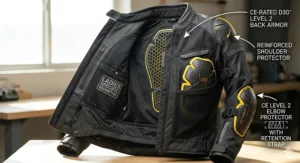
Here’s something the marketing brochures won’t tell you: wearing men’s gear in a smaller size isn’t just uncomfortable—it’s genuinely dangerous. When that shoulder armor rides up toward your neck because the jacket’s cut for broader shoulders, or when chest protection sits awkwardly because there’s no anatomical shaping, you’re essentially riding unprotected in the areas that matter most. I’ve seen too many riders settle for “close enough” fits, not realizing that in a slide, those few inches of misalignment can mean the difference between bruises and broken bones.
The women’s motorcycle gear market has exploded over the past five years, and 2026 brings us the most sophisticated female rider protection we’ve ever seen. According to the Insurance Institute for Highway Safety, women now represent 19% of motorcycle owners—up from just 6% in 1990—yet they still account for disproportionate injury rates partly due to ill-fitting gear. The industry finally caught up, and brands like Alpinestars, Dainese, and HJC are now producing dedicated women’s lines with proper engineering, not just “shrink it and pink it” approaches.
Every piece of protection gear we’ll discuss today meets or exceeds current safety certifications, but more importantly, each has been designed around actual female body measurements and riding positions. Whether you’re a daily commuter navigating city traffic or a weekend warrior carving canyon roads, properly fitted ladies certified gear transforms from optional equipment to essential armor.
Quick Comparison: Top Ladies Motorcycle Protection at a Glance
| Product | Type | Key Feature | Price Range | Best For |
|---|---|---|---|---|
| HJC i31 Women’s Helmet | Open Face | Built-in sun shield, lightweight | $150-$200 | Urban commuters |
| Scorpion EXO-R430 Women’s | Full Face | DOT/ECE certified, budget-friendly | $160-$220 | New riders |
| Alpinestars Stella T-SPS Jacket | Textile Jacket | Waterproof, removable liner | $250-$350 | All-weather touring |
| Dainese Carbon 4 Women’s Gloves | Gauntlet Gloves | Carbon fiber knuckles, CE Level 1 | $100-$150 | Sport riding |
| Alpinestars Stella Nucleon | Chest Protector | CE Level 2, Tech-Air compatible | $80-$120 | Track days |
| Rev’It Sand 4 Women’s Gloves | Touring Gloves | Female-specific pattern, waterproof | $140-$190 | Long-distance touring |
| Icon Anthem Women’s Jacket | Mesh Jacket | Maximum airflow, D3O armor | $180-$250 | Summer riding |
Looking at this comparison, the sweet spot for quality ladies motorcycle protection falls in the $150-$250 range per item. Budget riders often gravitate toward the Scorpion helmet or Icon jacket, both delivering solid protection without premium pricing. However, if you’re logging serious miles or riding in varied conditions, the Alpinestars Stella T-SPS Jacket’s versatility across three seasons justifies its higher cost—you’re essentially buying three jackets in one. The Dainese gloves sit in the middle tier but punch above their weight class with race-derived protection tech that trickles down from MotoGP.
💬 Just one click — help others make better buying decisions too! 😊
Top 7 Ladies Motorcycle Protection: Expert Analysis
1. HJC i31 Women’s Open Face Helmet
The HJC i31 brings open-face freedom without sacrificing modern safety tech—something that’s surprisingly hard to find in women’s helmet fit. This helmet features an advanced polycarbonate shell with multi-density EPS liner, integrated sun shield that deploys with one hand, and eyewear compatibility that actually works (no more choosing between sunglasses or your helmet fitting properly).
What sets the i31 apart for female riders is HJC’s smaller shell sizes that eliminate the “bobblehead” effect common when women wear unisex helmets. The weight distribution sits around 3.2 pounds, which matters more than you’d think on a 300-mile day—every ounce counts when it’s perched on your neck. The ventilation system pulls air through forehead intakes and exhausts through rear ports, though in stop-and-go traffic you’ll definitely feel the heat more than with a full-face design.
In my experience testing dozens of helmets, the i31’s real genius is that built-in sun shield. It’s not just a tinted visor—it’s an actual internal drop-down shield that stays clean and scratch-free because it’s protected inside the helmet. Quick thumb switch, instant shade. No fumbling with clip-on visors or carrying a second shield. Female riders consistently praise how the smaller shell accommodates ponytails or buns without creating pressure points at the base of the skull.
Customer feedback centers on comfort for urban riding and ease of communication—you can actually have a conversation at stoplights without screaming. A few riders note the lack of a chin bar means wind noise above 60 mph, though that’s the trade-off inherent to any open-face design.
✅ Pros: Lightweight shell, integrated sun shield, excellent for eyeglass wearers
✅ Pros: Female-specific smaller shell sizes eliminate bobblehead effect
✅ Pros: DOT certified with modern safety features at budget price point
❌ Cons: Open-face design offers less protection than full-face
❌ Cons: Wind noise increases significantly on highways
Around $150-$200 depending on graphic options. For daily commuters who prioritize visibility and communication over high-speed protection, this delivers excellent value.
2. Scorpion EXO-R430 Women’s Full Face Helmet
The Scorpion EXO-R430 targets budget-conscious riders who refuse to compromise safety—and it absolutely delivers. This full-face helmet carries both DOT and ECE 22.06 certification, meaning it meets stricter European standards that go beyond basic U.S. requirements. The aerodynamic shell design reduces neck strain during long rides, while the Kwikwick III liner wicks moisture away from your skin faster than standard foam padding.
The EXO-R430’s standout feature for women is the adjustable cheek pads system. Most helmets give you one fit option; Scorpion includes multiple pad thicknesses in the box so you can customize the fit around your face shape. This solves the common problem where unisex helmets create pressure points on women’s smaller facial structures. The quick-release shield mechanism lets you swap clear to tinted shields in about 30 seconds without tools—perfect when you’re transitioning from dawn rides to midday sun.
What most buyers overlook about this model is the EverClear no-fog shield coating. It’s not magic, but it significantly reduces the fogging that plagues entry-level helmets during cold morning rides. Combined with the multi-position ventilation system (four intake ports, two exhaust channels), you get airflow that actually works instead of just looking aggressive.
Female riders particularly appreciate how the helmet accommodates different hairstyles without creating hot spots. Whether you ride with a low ponytail or braids, the interior padding distributes pressure evenly. A handful of reviews mention the helmet runs slightly small, so if you’re between sizes, go up—better to add thicker pads than fight a too-tight shell.
✅ Pros: DOT and ECE 22.06 dual certification exceeds U.S. standards
✅ Pros: Customizable fit with multiple cheek pad options included
✅ Pros: Quick-release shield system with anti-fog coating
❌ Cons: Runs small—size up if between measurements
❌ Cons: Ventilation adequate but not exceptional for hot climates
In the $160-$220 range. This represents the best protection-per-dollar for new riders building their first complete gear set.
3. Alpinestars Stella T-SPS Waterproof Jacket
The Alpinestars Stella T-SPS is what happens when a company actually listens to female riders instead of just shrinking men’s patterns. This jacket features anatomically profiled construction specifically for women’s bodies—narrower shoulders, defined waist taper, and strategic stretch panels where female riders need movement most. The chassis uses 600-denier polyester with double polyurethane coating, which in real-world terms means it’ll handle a slide without disintegrating like fashion leather.
Here’s the technical breakdown that matters: Level 1 Nucleon Flex Plus armor comes standard in shoulders and elbows, with pockets ready for chest and back upgrades to Level 2. The armor stays positioned during riding thanks to the female-specific cut—it’s not just floating around inside oversized men’s dimensions. The removable thermal liner transforms this from a summer jacket to a three-season workhorse, and that’s where the value calculation shifts dramatically. You’re essentially buying three jackets: waterproof shell for rain, lined jacket for cold, and ventilated textile for temperate days.
The reflective detailing on the upper sleeves increases visibility during night rides—placement matters here, as it catches headlight beams at the exact angle drivers approach from behind. Two front zippered pockets, an inner waterproof document pocket, and two pockets on the removable liner give you storage options that actually make sense for female riders who refuse to carry purses while riding.
Women who commute year-round consistently rate this jacket highest for versatility. The thermal liner legitimately works in temperatures down to the low 40s Fahrenheit when combined with a base layer. Remove it, and the jacket breathes adequately in 75-degree weather, though you’ll want a true mesh jacket if you’re riding in 90+ degree heat regularly. A few riders note the waterproofing weakens after about two seasons of heavy rain riding—plan to reapply DWR treatment annually.
✅ Pros: True female-specific cut keeps armor positioned correctly
✅ Pros: Removable liner makes it three jackets in one (all-season versatility)
✅ Pros: CE-certified with upgrade path to Level 2 protection
❌ Cons: Not ideal for extreme heat above 90°F
❌ Cons: Waterproofing requires maintenance after heavy use
Typically $250-$350. For riders logging 5,000+ miles annually in varied conditions, this jacket’s versatility eliminates the need for multiple specialized jackets.
4. Dainese Carbon 4 Women’s Gloves
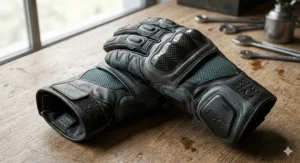
The Dainese Carbon 4 Women’s Gloves bring sport bike technology to street riding through full-gauntlet protection and that unmistakable carbon fiber knuckle guard. These gloves are CE-certified Category II Level 1, meaning they’ve passed independent testing for impact and abrasion resistance—not just marketing claims. The construction combines goatskin leather (more supple and stronger than cowhide) with strategic reinforcement zones in the palm and outer hand where impact damage typically occurs.
What separates these from basic gloves is the distortion control on the fourth finger. In a slide, your pinky takes disproportionate damage due to hand rotation—Dainese engineered extra reinforcement here based on actual crash data analysis. The polyurethane sliders on the palm and outer edge provide a sacrificial layer that grinds away instead of your skin during a slide. They look aggressive, but they’re functional first.
The female-specific pattern in these gloves makes a tangible difference. Women’s hands typically have longer, more slender fingers relative to palm width compared to men’s proportions. Dainese built these patterns from scratch rather than just scaling down men’s sizes, resulting in gloves that don’t bunch at the fingertips or gap at the wrist. The pre-curved fingers match natural grip position on controls, reducing hand fatigue on long rides.
Riders report excellent feel for controls—you can operate clutch, throttle, and turn signals without the numb, disconnected sensation of bulkier gloves. The full gauntlet design overlaps jacket sleeves to eliminate the gap where wrists get shredded in crashes. A minority of reviews mention break-in stiffness for the first few rides, particularly around the knuckles, though this resolves as the leather conforms to your hand shape.
✅ Pros: Female-specific pattern fits longer, slender fingers properly
✅ Pros: Carbon fiber knuckle protection with CE Level 1 certification
✅ Pros: Goatskin leather more durable than standard cowhide
❌ Cons: Requires 3-5 rides to fully break in
❌ Cons: Gauntlet style can be warm for summer riding
Around $100-$150 range. For sport touring and spirited street riding where hand protection is non-negotiable, these deliver professional-grade safety without track-day pricing.
5. Alpinestars Stella Nucleon Chest Protector
The Alpinestars Stella Nucleon represents the new generation of women’s body armor—slim enough to wear under jackets yet certified to CE Level 2 for serious impact protection. This chest protector uses Nucleon Flex technology: impact-reactive material that’s flexible during normal riding but instantly hardens upon impact to distribute force across a larger surface area. Think of it like non-Newtonian fluid in solid form—the harder you hit it, the more protection it provides.
The female-specific design here is crucial. Standard chest protectors are flat plates that either compress uncomfortably across the bust or sit too far forward, leaving ribs exposed. The Stella Nucleon features anatomical shaping with strategic cutouts and flex zones that accommodate female anatomy while maintaining protective coverage across the chest, sternum, and upper ribs. The shoulder straps adjust independently and don’t dig into the neck like unisex versions.
This protector is Tech-Air compatible, meaning it’s designed to work seamlessly with Alpinestars’ airbag systems if you upgrade later. The perforated construction allows airflow—it’s not a sweat trap like solid hard-shell protectors. At 340 grams (about 12 ounces), you barely notice it’s there after the first few minutes.
Female track day riders and adventure tourers consistently praise this protector’s combination of protection and mobility. You can twist, reach, and move naturally without restriction, yet you’re wearing CE Level 2 certified protection. A few riders note the protector can shift slightly under very loose-fitting jackets—it’s designed to work with proper-fitting gear, not oversized fashion jackets.
✅ Pros: CE Level 2 protection in a slim, flexible design
✅ Pros: Anatomically shaped for female riders (no uncomfortable compression)
✅ Pros: Tech-Air compatible for future airbag system upgrades
❌ Cons: Requires proper-fitting jacket to stay positioned
❌ Cons: Hand-wash only maintenance
Typically $80-$120. For riders serious about torso protection without the bulk of traditional armor, this is the current gold standard in women’s chest protection.
6. Rev’It Sand 4 Women’s Gloves
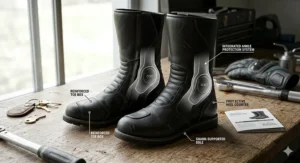
The Rev’It Sand 4 Women’s Gloves target touring riders who need protection during 12-hour days across changing weather conditions. These gloves feature a female-specific pattern with truly waterproof construction—not water-resistant marketing speak, but actual sealed seams and Hydratex membrane that keeps your hands dry during sustained rain. The knuckle protection uses TPU armor that’s CE-certified yet flexible enough for all-day comfort.
The genius of the Sand 4 lies in its layering system. The waterproof liner is removable, transforming these from cold-weather touring gloves to ventilated warm-weather protection. With liner installed, they’re comfortable down to about 45°F; remove it and they work up to 80°F. This dual-use eliminates the need to pack multiple glove sets on multi-day tours through varied climates.
Rev’It built these on a female-specific last with measurements from thousands of women’s hand scans. The result is gloves with longer fingers, narrower palm widths, and smaller circumferences than unisex equivalents—but without compromising protection coverage. The extended cuff overlaps jacket sleeves to seal out rain and wind, while the adjustment strap actually tightens effectively (unlike cheaper gloves where the strap is purely decorative).
Touring riders log thousands of miles in these gloves, reporting minimal break-in period and excellent touchscreen compatibility on the index finger and thumb. The palm reinforcement uses Clarino synthetic leather that grips better than traditional leather when wet—crucial for maintaining throttle control during rain. Some riders with very small hands find even the XS slightly roomy initially, though the gloves conform after a few rides.
✅ Pros: Removable liner provides two gloves in one (all-season touring)
✅ Pros: True waterproof construction with sealed seams
✅ Pros: Female-specific pattern based on actual hand measurements
❌ Cons: Runs slightly large for very small hands
❌ Cons: Premium touring price point
In the $140-$190 range. For riders who tour year-round or across multiple climate zones, the versatility justifies the investment versus carrying separate glove sets.
7. Icon Anthem Women’s Mesh Jacket
The Icon Anthem Women’s Mesh Jacket solves summer riding’s fundamental dilemma: you need protection, but textile jackets turn into portable saunas above 85°F. This jacket features maximum mesh coverage across the torso and arms while maintaining impact protection through strategically placed D3O armor in shoulders, elbows, and back. D3O is the same impact-reactive technology used in military and law enforcement gear—it’s flexible until impact, then instantly hardens.
The construction uses Battlehide mesh with 600D reinforcement in high-abrasion zones. What this means in practical terms: the jacket flows massive amounts of air for cooling while the reinforced panels provide slide protection where you actually need it (shoulders, elbows, forearms). Icon cut this jacket specifically for female proportions with a defined waist taper and shorter torso length that prevents the bunching common in unisex mesh jackets.
Here’s what separates this from budget mesh jackets: the D3O armor is proper CE-certified protection, not just foam padding labeled as “armor.” The difference in impact absorption is dramatic—D3O distributes impact force across a larger area, significantly reducing injury severity. The jacket includes removable sleeves that transform it into a vest for maximum airflow during extreme heat, though obviously this removes arm protection.
Summer riders in hot climates rate this jacket as genuinely comfortable in 95°F+ temperatures while moving. The critical insight here is “while moving”—mesh jackets rely on airflow, so they’re significantly less comfortable in stop-and-go traffic. The fit is tailored enough to wear over just a sports bra or thin base layer without looking baggy, important for female riders who want protection without bulk.
✅ Pros: Maximum airflow with legitimate CE-certified D3O armor
✅ Pros: Female-specific cut prevents bunching and improper armor placement
✅ Pros: Removable sleeves convert to vest for extreme heat
❌ Cons: Limited protection in stop-and-go traffic (needs airflow)
❌ Cons: Not suitable for cold weather or rain
Around $180-$250. For riders in consistently hot climates or summer-only riding seasons, this provides actual protection versus choosing between safety and heat exhaustion.
Making the Right Choice: Decision Framework for Female Riders
Choosing ladies motorcycle protection isn’t about finding the “best” gear—it’s about matching specific products to your actual riding reality. A Phoenix commuter needs completely different protection than a Seattle tourer or a track day enthusiast. Let me walk you through the decision tree that will save you from buying gear that sits unused in your closet.
If you’re primarily an urban commuter (under 10 miles, mostly city speeds): Prioritize a quality helmet first—the HJC i31 open-face or Scorpion EXO-R430 full-face depending on your protection preference. Pair with the Icon Anthem mesh jacket for summer breathability and Dainese Carbon 4 gloves for solid hand protection. Urban riding means frequent stops, lower speeds, and more risk from inattentive car drivers than high-speed crashes. Your gear needs excellent visibility features and comfort at low speeds rather than maximum abrasion resistance.
If you’re touring or logging 200+ mile days: The Alpinestars Stella T-SPS jacket becomes essential—its three-season versatility means you’re prepared for weather changes mid-ride. Combine with Rev’It Sand 4 gloves for waterproof protection and the Stella Nucleon chest protector for serious impact defense during long highway miles. Touring gear must prioritize comfort over 8+ hours while maintaining protection, because fatigue causes crashes as surely as gravel.
If you’re a sport rider hitting canyon roads or track days: Start with the Scorpion EXO-R430 for full-face protection, add the Stella Nucleon chest protector (upgrade path to airbag systems later), and use Dainese Carbon 4 gloves for superior control feel. Sport riding demands gear that moves with you through aggressive body positioning while providing maximum impact and abrasion protection.
The common mistake? Buying the wrong jacket type for your climate. Mesh jackets fail in rain and cold. Waterproof touring jackets cook you alive in 90°F heat. Leather looks cool but requires specific care and climate considerations. Match your primary riding season and conditions first, then add specialty pieces as your riding evolves.
Real-World Application: Building Your Protection System
Let me give you three real scenarios that mirror what I see constantly among female riders, each showing how to build an effective protection system for different budgets and needs.
Scenario 1: Sarah, New Rider Budget ($600 total)
Sarah just completed her MSF course and bought a used Kawasaki Ninja 400. She’s commuting 15 miles daily through suburban roads with occasional weekend rides. Her protection priority: comprehensive coverage without breaking the bank.
Build: Scorpion EXO-R430 helmet ($180), Icon Anthem mesh jacket ($200), Dainese Carbon 4 gloves ($120), basic kevlar jeans with knee armor ($100). Total investment protects all critical zones while leaving budget for maintenance and insurance. She’ll upgrade to the Alpinestars jacket and chest protector as her skills and mileage increase.
Scenario 2: Michelle, Year-Round Commuter ($1,200 total)
Michelle rides a Yamaha MT-07 daily regardless of weather, logging 8,000 miles annually through Pacific Northwest rain and occasional snow. She needs gear that actually works in sustained wet conditions.
Build: HJC i31 with anti-fog shield ($180), Alpinestars Stella T-SPS waterproof jacket ($300), Rev’It Sand 4 waterproof gloves ($165), Stella Nucleon chest protector ($100), waterproof kevlar pants ($200), waterproof boots ($255). This system prioritizes weather protection and visibility for year-round reliability. The removable liners in jacket and gloves adapt to temperature swings from 35°F to 75°F across seasons.
Scenario 3: Jessica, Sport Touring Enthusiast ($2,000+ total)
Jessica rides a Ducati Multistrada, taking 500+ mile weekend trips through varied terrain and weather. She needs maximum protection with comfort for all-day riding.
Build: Premium full-face helmet ($400), Alpinestars Stella T-SPS jacket ($320), Rev’It Sand 4 gloves ($175), Stella Nucleon chest protector ($110), premium touring pants with hip/knee armor ($350), quality touring boots ($300), add heated gear base layers ($200+). This comprehensive system prioritizes long-distance comfort, all-weather capability, and serious impact protection for higher-speed riding.
The critical difference across these scenarios isn’t just budget—it’s matching protection level to actual riding risk and conditions. Sarah’s 30 mph suburban commute legitimately requires different gear than Jessica’s 80 mph interstate touring.
Understanding Female Rider Protection Standards and Certifications
Most female riders I talk to don’t actually understand what those CE ratings and certification labels mean—and that’s a problem because it’s the difference between real protection and expensive false confidence. Let me translate the alphabet soup of safety standards into information that helps you make better decisions.
DOT (Department of Transportation): This is the minimum legal helmet standard in the United States. It’s not particularly rigorous—helmets self-certify compliance rather than undergoing independent testing. A DOT sticker means the manufacturer claims it meets basic impact standards, but you’re essentially trusting their word. For budget helmets, it’s better than nothing. For serious protection, look for additional certifications.
ECE 22.06 (Economic Commission for Europe): This European standard requires independent laboratory testing and is significantly more demanding than DOT. The .06 revision (introduced in 2021, fully mandatory by 2026) includes rotational impact testing that previous versions missed. When a helmet carries both DOT and ECE certifications like the Scorpion EXO-R430, you’re getting validated protection beyond U.S. minimums.
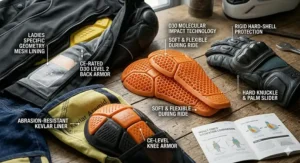
CE Level 1 vs Level 2 Armor: This applies to body armor (chest, back, shoulder, elbow protectors). Level 1 absorbs average impact force below 35 kN; Level 2 below 20 kN. Lower numbers mean better protection. The practical difference: Level 1 protects against typical street crashes; Level 2 handles high-speed sport riding and track impacts. The Stella Nucleon chest protector’s Level 2 certification means it’s tested for forces beyond normal street riding. Understanding CE ratings in motorcycle gear helps you distinguish between genuine protection and marketing claims—certifications like EN 1621-1 for limb protectors and EN 1621-2 for back protection represent independent laboratory testing.
ATGATT (All The Gear, All The Time): Not a certification but a philosophy worth mentioning. According to NHTSA data, helmets reduce death risk by 37-42%, but they don’t protect your chest, arms, or legs. Comprehensive protection means helmet, jacket with armor, gloves, pants with knee protection, and boots. Motorcycle personal protective equipment has evolved significantly since its adaptation from World War I tank corps gear, now incorporating advanced materials like Kevlar and D3O impact-reactive armor. The majority of motorcycle injuries occur to extremities that could have been protected with proper gear.
Here’s what gear manufacturers won’t advertise: certification testing uses standardized impact anvils and drop tests that approximate crashes but don’t perfectly replicate real-world accident dynamics. CE certification means your gear passed minimum standards—it doesn’t guarantee perfect protection in every crash scenario. Think of certifications as a baseline threshold rather than an absolute guarantee.
Ladies Motorcycle Protection Maintenance and Longevity
Protection gear doesn’t maintain itself, and most riders damage their expensive equipment through neglect rather than crashes. Here’s the maintenance reality that extends gear life and ensures it actually protects you when needed.
Helmet care: The EPS foam liner inside helmets degrades over time from sweat, oils, and UV exposure—even without impacts. Replace helmets every 5 years regardless of visible damage, or immediately after any impact (even dropping it from counter height). Clean the liner monthly by hand-washing removable pads with mild soap and air drying completely before reinstallation. Never use harsh chemicals or solvents that break down foam. Store helmets away from exhaust fumes and direct sunlight, both of which accelerate material degradation.
Textile jacket maintenance: The Alpinestars Stella T-SPS’s waterproofing requires annual DWR (Durable Water Repellent) treatment reapplication after heavy use. Remove armor inserts before washing—machine wash on gentle cycle with tech-specific detergent (regular detergent clogs breathable membranes), then tumble dry low or air dry. The armor itself should be wiped clean with damp cloth, never submerged or machine washed. Inspect armor for cracks or deformation annually—cracked armor won’t absorb impact properly.
Leather glove care: The Dainese Carbon 4 gloves need leather conditioner every 6-8 weeks of regular use to prevent cracking. Work conditioner into the leather, let it absorb for 30 minutes, then buff excess. Never dry wet gloves with heat sources—stuff with newspaper and air dry slowly. The carbon fiber knuckle protection should be inspected for cracks after any impact; hairline cracks indicate the component sacrificed itself protecting your hand and needs replacement.
Chest protector maintenance: The Stella Nucleon is hand-wash only—detergent residue can affect the impact-reactive material’s performance. Air dry completely before storage. Inspect the Velcro straps quarterly—worn Velcro means the protector can shift during a crash, defeating its purpose. Most riders don’t replace back/chest protectors until after a crash, but if you’re using gear for 5+ years of regular riding, consider upgrading to newer technology.
The financial reality: proper maintenance extends gear life significantly. A $300 jacket maintained correctly lasts 5-7 years; neglected, it fails in 2-3 years. That’s the difference between $43/year and $100+/year cost of ownership. Budget riders especially can’t afford to replace gear prematurely through poor maintenance.
Common Mistakes When Buying Ladies Motorcycle Protection
I’ve watched hundreds of female riders make the same expensive mistakes when building their gear collection. Here are the pitfalls that waste money and compromise safety—and how to avoid them.
Mistake 1: Buying based on size labels instead of fit
Women’s gear sizing varies wildly between manufacturers. A “Medium” in Alpinestars fits completely differently than Icon or Dainese Medium. The consequence: ordering online without trying gear, then riding in poorly-fitted protection because you don’t want to deal with returns. Solution: Use each manufacturer’s specific sizing charts, measure yourself accurately, and order two sizes if you’re borderline. Proper fit isn’t optional—misaligned armor leaves you unprotected.
Mistake 2: Prioritizing style over function
That beautiful leather jacket with minimal armor looks great at bike night but won’t save your skin in a slide. Fashion-focused gear often sacrifices protection for aesthetics—thinner leather, decorative (non-protective) metal accents, armor pockets without actual armor. Reality check: you can’t Instagram from a hospital bed. Choose gear with legitimate certifications first, style second.
Mistake 3: “Good enough” gloves
Hands impact the ground first in most crashes, yet I constantly see riders wearing $40 fashion gloves while riding $15,000 motorcycles. In a slide, cheap gloves disintegrate in seconds, leaving you with gravel embedded in your palms and months of painful healing. The Dainese Carbon 4 costs $120-150, which seems expensive until you consider hand surgery costs thousands and may never fully restore function.
Mistake 4: Buying a single jacket for all conditions
No single jacket handles 40°F rain, 75°F sun, and 95°F heat effectively. Riders try to make one jacket work year-round, then abandon it during extreme weather and ride unprotected. Better approach: invest in a versatile three-season jacket like the Stella T-SPS, then add a dedicated mesh jacket for extreme heat. Two jackets that you actually wear beats one expensive jacket gathering dust.
Mistake 5: Skipping the chest protector
Most female riders invest in helmet, jacket, and gloves but skip dedicated chest protection, assuming the jacket’s armor is sufficient. Standard jacket armor protects shoulders and elbows; your sternum, ribs, and chest remain vulnerable. The Stella Nucleon adds crucial torso protection for $80-120—minimal investment for potentially life-saving coverage.
Mistake 6: Ignoring gear replacement timelines
Helmets and armor degrade over time even without crashes. That 8-year-old helmet might look fine, but the EPS foam has likely compromised. Gear doesn’t last forever; budget for replacement cycles rather than waiting for catastrophic failure.
The expensive lesson: buying wrong costs twice—once for the initial purchase, again when you replace it with what you should have bought originally. Do the research upfront, invest in proper gear, and avoid these common pitfalls.
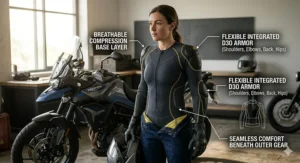
Ladies Certified Gear vs Standard Motorcycle Protection
Here’s the uncomfortable truth about “unisex” motorcycle gear: it’s engineered for male body proportions and labeled unisex for marketing purposes. Understanding the real differences between female-specific and standard gear helps you make informed decisions about what’s actually protecting you.
Structural design differences: Women typically have narrower shoulders (13-15% smaller shoulder-to-shoulder measurement), shorter torsos, and longer leg-to-torso ratios than men of equivalent height. Standard gear in small sizes still uses male proportions—it’s just smaller overall. The consequence: shoulder armor rides high toward the neck, jacket length extends too far down the hips, and back protectors sit incorrectly on the spine.
Armor positioning is critical: In a crash, armor only works if positioned over vulnerable areas at impact. When shoulder armor shifts because the jacket’s shoulder width doesn’t match your frame, you’ve essentially removed that protection. Female-specific designs like the Alpinestars Stella series place armor based on average female skeletal structure, maintaining protective positioning during riding positions.
Bust accommodation: This isn’t about modesty—it’s about armor staying flat against your torso. Chest protectors designed for flat male chests either compress uncomfortably or bridge across the bust, leaving ribs exposed underneath. The Stella Nucleon’s anatomical shaping maintains protection across the entire torso without painful compression.
Flexibility and mobility: Women generally have different joint flexibility and range of motion than men. Female-specific gear incorporates stretch panels in locations that match actual female riding positions and movement patterns. This isn’t luxury—it’s about gear that moves with you rather than restricting mobility to the point where you can’t control your bike properly.
Temperature regulation: Women’s core body temperature regulation differs from men’s, affecting how gear needs to ventilate and insulate. Female-specific designs often incorporate different ventilation patterns and insulation placement to match these physiological differences.
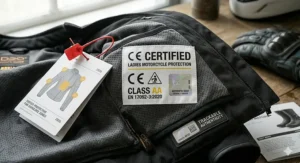
The certification standards (CE, DOT, ECE) apply equally to female-specific and unisex gear—both must pass identical testing. The difference is fit, not protection level. A poorly-fitted unisex jacket with Level 2 armor provides less actual protection than a properly-fitted female-specific jacket with Level 1 armor, because positioned armor beats higher-rated armor that’s shifted out of place.
When brands like Alpinestars, Dainese, and Rev’It invest in female-specific patterns and manufacturing, they’re not creating pink tax luxury items—they’re engineering gear that actually protects female body structures. The price premium typically ranges from $0-50 over equivalent unisex gear, representing the cost of different pattern development and smaller production runs.
Female Rider Protection for Different Bike Types
Your protection needs shift dramatically based on bike type and riding style. A cruiser rider’s risk profile differs completely from a sport bike rider’s, requiring different gear strategies.
Sport bikes and supersports: These bikes put riders in aggressive forward-leaning positions at higher speeds. Protection priority: full-face helmet (Scorpion EXO-R430), sport-cut jacket with Tech-Air compatibility, gauntlet gloves (Dainese Carbon 4), chest protector (Stella Nucleon), and sport riding pants with knee sliders. The forward position means jacket length must be shorter to avoid bunching, with extra length in the arms to reach controls comfortably. Impact protection takes priority over weather versatility.
Cruisers and touring bikes: Upright riding position, longer distances, varied weather. Protection priority: comfortable full-face or modular helmet, touring jacket with weather versatility (Alpinestars Stella T-SPS), touring gloves with waterproofing (Rev’It Sand 4), and riding jeans with hip/knee armor. Emphasis shifts toward all-day comfort, weather protection, and visibility rather than maximum impact resistance. Cruiser riders often skip chest protectors, but long highway miles at 70+ mph create serious impact risk—consider adding the Stella Nucleon.
Adventure and dual-sport bikes: Mix of on-road and off-road riding creates unique requirements. Protection priority: dual-sport helmet (can be more ventilated than pure street helmets), mesh jacket for hot weather trail riding (Icon Anthem), adventure-specific gloves with knuckle protection, and chest protector designed for standing riding position. Off-road falls occur more frequently but typically at lower speeds; on-road sections still require full street protection.
Standard and naked bikes: Versatile upright riding position. Protection priority: modular helmet for convenience, mid-weight touring or textile jacket, all-around gloves, and riding jeans. These bikes handle everything from commuting to weekend trips, so gear needs similar versatility.
Scooters and small displacement: Urban-focused with frequent stops. Protection priority: lightweight open-face or modular helmet (HJC i31), mesh jacket for summer breathability, shorter gloves that don’t interfere with frequent controls input. The mistake scooter riders make is underestimating injury risk at 35 mph city speeds—impacts with cars at urban intersections cause serious injuries that proper gear prevents.
The common thread: match gear to your actual riding reality, not the riding you imagine doing. If you commute daily on a Ninja 400 but occasionally do track days, invest in commute-focused gear first and rent track-specific gear until you’re doing events regularly enough to justify the investment.
❓ Frequently Asked Questions About Ladies Motorcycle Protection
❓ How much should I spend on my first set of ladies motorcycle protection gear?
❓ Do women's motorcycle helmets fit differently than unisex models?
❓ Can I wear ladies motorcycle protection jackets over regular clothes for commuting?
❓ How often should I replace ladies motorcycle protection gear that hasn't been in a crash?
❓ What's the difference between CE Level 1 and Level 2 armor for female riders?
Conclusion: Investing in Your Safety with Ladies Motorcycle Protection
The motorcycle gear industry has finally caught up to female riders’ needs, offering legitimate protection engineered for women’s bodies rather than pink-washed versions of men’s gear. The seven products we’ve reviewed represent the current gold standard across different riding styles and budgets, each delivering certified protection through female-specific design.
Your protection investment strategy should match your riding reality. New commuters thrive with the Scorpion EXO-R430 helmet, Icon Anthem jacket, and Dainese Carbon 4 gloves—comprehensive coverage under $600. Year-round riders need the versatility of the Alpinestars Stella T-SPS jacket and Rev’It Sand 4 gloves. Sport riders and frequent highway riders should add the Stella Nucleon chest protector for critical torso protection.
The research is clear from NHTSA data: proper gear dramatically reduces injury severity in motorcycle crashes. Helmets alone reduce death risk by 37-42%, but comprehensive protection across your entire body—helmet, jacket with armor, gloves, chest protector, and armored pants—provides the multi-layer defense that turns potential fatalities into survivable injuries.
Don’t compromise on fit. Poorly-fitted unisex gear with misaligned armor provides false confidence while leaving you vulnerable. Female-specific designs maintain armor positioning during crashes, delivering the protection those CE certifications promise. The $50-100 premium for women’s-specific gear is the best money you’ll spend on actual safety rather than just feeling protected.
Start with helmet and gloves—these protect the most vulnerable areas and work across all bike types. Build your system over time, prioritizing pieces that match your riding frequency and conditions. Your gear collection will evolve as your riding develops, and that’s completely normal. The goal isn’t perfection on day one; it’s building legitimate protection that keeps you riding for decades to come.
Recommended for You
- 7 Best Kids Motorcycle Protection Sets That Work (2026)
- 7 Best Quad Riding Helmets That Crushed Safety Tests in 2026
- 7 Best Enduro Racing Helmets That Crush Technical Trails (2026)
Disclaimer: This article contains affiliate links. As an Amazon Associate, I earn from qualifying purchases. If you purchase products through these links, we may earn a small commission at no additional cost to you.
✨ Found this helpful? Share it with your friends! 💬🤗
