
In This Article
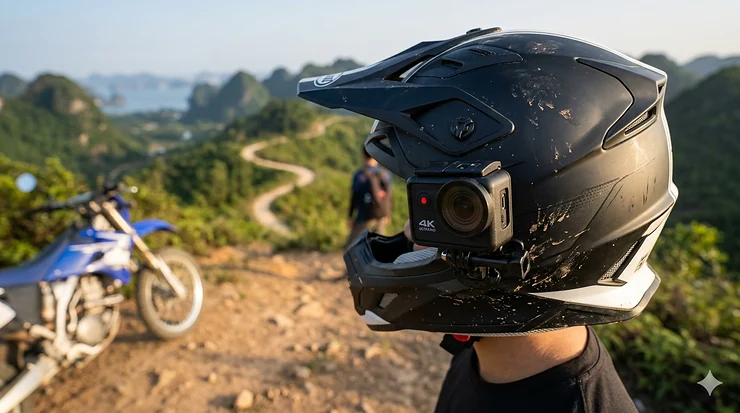
Ever wondered how professional athletes capture those jaw-dropping POV shots that make you feel like you’re right there in the action? The secret weapon is a 4K helmet camera – and in 2026, these tiny powerhouses have become more accessible and capable than ever before.
Whether you’re documenting your daily motorcycle commute for insurance purposes, capturing epic mountain bike descents, or recording your skiing adventures to relive later, a quality 4K helmet camera transforms ordinary rides into cinematic masterpieces. The difference between watching grainy, shaky footage and crystal-clear 4K video is like night and day.
Modern 4K helmet cameras have evolved far beyond simple recording devices. Today’s models pack features like advanced image stabilization that makes your footage look professionally gimbal-shot, AI-powered editing that creates highlight reels automatically, and battery life that can last an entire day of adventures. From budget-friendly options under $100 to premium models with Leica lenses, there’s a perfect camera for every rider and every budget.
In this comprehensive guide, I’ll walk you through the 7 best 4K helmet camera options currently dominating the market, backed by real-world testing and thousands of user reviews. You’ll discover which cameras excel in low-light conditions (crucial for those early morning rides), which ones offer the best value for money, and which features actually matter when you’re barreling down a trail at 40 mph.
Quick Comparison Table: Top 4K Helmet Cameras at a Glance
| Camera Model | Resolution | Price Range | Battery Life | Best For | Waterproof Rating |
|---|---|---|---|---|---|
| GoPro HERO13 Black | 5.3K60fps | $399 | 1.5-2.5 hrs | Professional content creators | 33ft without housing |
| Insta360 Ace Pro 2 | 8K30fps | $399-490 | Up to 3 hrs | Low-light & cinematic shots | 39ft |
| DJI Osmo Action 5 Pro | 4K120fps | $269-369 | Up to 4 hrs | Extended adventures | 20m (66ft) |
| AKASO EK7000 Pro | 4K30fps | $84-109 | 2.3 hrs (2 batteries) | Budget-conscious riders | 131ft with case |
| GoPro HERO | 4K30fps | $199 | Built-in battery | Minimalist setup | 33ft |
| RunCam Helmet 4K | 4K30fps | $99 | 6 hrs | Tactical & airsoft | Water-resistant |
| Insta360 Ace Pro | 4K120fps | $450 | 100 mins | Night riding & vlogging | 33ft |
💬 Just one click – help others make better buying decisions too!😊
Top 7 4K Helmet Cameras: Expert Analysis
1. GoPro HERO13 Black – The Industry Gold Standard
When you think action camera, you think GoPro – and for good reason. The GoPro HERO13 Black represents the pinnacle of what’s possible in a 4K helmet camera, combining cutting-edge technology with legendary GoPro durability.
Key Specifications:
- 5.3K60fps video & 27MP photos
- HyperSmooth 6.0 stabilization (industry-leading)
- 1900mAh Enduro battery (2.5 hrs continuous at 1080p)
- Compatible with new HB-Series interchangeable lenses
- Waterproof to 33 feet without housing
Price Range: $399-499 (bundles with accessories available)
This flagship model introduces game-changing features like Burst Slo-Mo that captures 400fps at 720p for those dramatic slow-motion replays. The magnetic mounting system means you can swap between helmet mounts, chest rigs, and handlebar clamps in seconds – no fumbling with screws while wearing gloves.
Customer Feedback: Users rave about the improved low-light performance and the Extended Battery that genuinely delivers on its promises. One motorcycle reviewer noted: “Finally, a GoPro battery that lasts my entire commute without dying halfway through.”
✅ Pros:
- Best-in-class stabilization eliminates camera shake
- Massive accessory ecosystem (35+ mounts compatible)
- Auto-upload to cloud with highlight video creation
❌ Cons:
- Premium price point may deter budget shoppers
- HB-Series lenses sold separately add to overall cost
Perfect for: Professional content creators, serious athletes, and anyone who demands the absolute best image quality from their helmet camera footage.
2. Insta360 Ace Pro 2 – 8K AI-Powered Cinematic Beast
The Insta360 Ace Pro 2 pushes boundaries with its dual AI chip architecture and 8K recording capability – co-engineered with Leica to deliver image quality that rivals professional cinema cameras in a package small enough for your helmet.
Key Specifications:
- 8K30fps video & 50MP photos
- Dual AI chip (imaging + processing)
- Leica SUMMARIT lens with F2.6 aperture
- 2.5″ flip touchscreen
- Up to 3-hour battery life
Price Range: $399-580 (depending on bundle)
What sets this camera apart is its revolutionary PureVideo Mode, which uses AI noise reduction to produce stunning low-light footage at 4K60fps. The integrated Wind Guard – a first for action cameras – dramatically reduces wind noise during high-speed rides, solving one of motorcyclists’ biggest complaints about helmet cam audio.
Customer Feedback: Early adopters highlight the incredible dynamic range (13.5 stops) that preserves details in both bright skies and shadowed forests. One mountain biker shared: “This camera sees better in low light than my eyes do.”
✅ Pros:
- Unmatched low-light performance for dawn/dusk rides
- AI Highlights Assistant automatically finds best moments
- MegaView mode delivers wider FOV with less distortion
❌ Cons:
- 8K files are massive (storage fills quickly)
- Slight learning curve for advanced features
Perfect for: Night riders, filmmakers seeking cinematic quality, and tech enthusiasts who want cutting-edge features.
3. DJI Osmo Action 5 Pro – Battery Life Champion
If you’ve ever had your helmet camera die mid-adventure, the DJI Osmo Action 5 Pro is your solution. With up to 4 hours of extended battery life, this camera outlasts every competitor while maintaining professional-grade image quality.
Key Specifications:
- 4K120fps slow-motion capability
- 1/1.3″ sensor for superior low-light
- 40MP photo resolution
- Dual OLED touchscreens (front and rear)
- Subject Tracking with 4nm chip
Price Range: $269-449 (combo packages available)
The dual OLED screens are game-changers for vlogging and selfie-mode recording. Front screen brightness hits 800 cd/m² (1000 cd/m² peak on rear), making them readable even in direct sunlight. The built-in pressure gauge automatically starts recording when you enter water and stops when exiting – brilliant for dive documentation.
Customer Feedback: Cyclists and motorcyclists consistently praise the battery endurance. As one reviewer put it: “I rode for 3.5 hours straight and still had 15% battery. That’s unheard of in action cameras.”
✅ Pros:
- Industry-leading 4-hour battery life
- 20m waterproof depth without case
- Direct DJI Mic 2 wireless connection (no receiver needed)
❌ Cons:
- DJI Mimo app removed from Google Play (requires direct download)
- Slightly bulkier than ultra-compact models
Perfect for: Long-distance riders, endurance athletes, and anyone tired of constantly swapping batteries.
4. AKASO EK7000 Pro – Best Value Champion
Don’t let the budget-friendly price fool you – the AKASO EK7000 Pro delivers surprisingly robust 4K recording at a fraction of premium camera costs, making it the ideal entry point for first-time helmet camera users.
Key Specifications:
- 4K30fps & 2.7K30fps video
- 20MP photo resolution
- 2-inch IPS touchscreen
- Electronic Image Stabilization (EIS)
- Two 1350mAh batteries included
Price Range: $84-109 (often on sale)
This camera punches way above its weight class with its intuitive touchscreen interface and included remote control. The waterproof case enables diving up to 131 feet – deeper than cameras costing 4x as much. AKASO includes a comprehensive accessory kit with helmet mounts, bike mounts, and adhesive bases, eliminating the need for separate purchases.
Customer Feedback: Budget-conscious riders appreciate the value proposition. One user noted: “For the price of a fancy dinner, I got a complete helmet camera setup with two batteries and all the mounts I need.”
✅ Pros:
- Unbeatable price-to-performance ratio
- Complete accessory bundle included
- Two batteries provide ~280 minutes total runtime
❌ Cons:
- EIS not as smooth as premium stabilization systems
- 4K limited to 30fps (no 60fps option)
Perfect for: First-time buyers, casual riders, and budget-conscious adventurers who want solid 4K quality without premium pricing.
5. GoPro HERO – Ultra-Compact Minimalist
The GoPro HERO strips away complexity to deliver a refreshingly simple 4K helmet camera that just works – 35% smaller and 46% lighter than the HERO13 Black, yet still packing impressive capabilities.
Key Specifications:
- 4K30fps video with 12MP photos
- 165° ultra-wide lens
- Built-in Enduro battery technology
- Compatible with 35+ GoPro mounts
- Hydrophobic lens cover
Price Range: $199-249
This is GoPro’s answer to “I just want to press record and go.” The built-in battery means one less thing to worry about, though you’ll need to keep it charged (consider it like your smartphone). HyperSmooth stabilization is applied automatically in the Quik app during export – clever engineering that keeps the camera lightweight while still delivering smooth footage.
Customer Feedback: Commuters and casual users love the simplicity. One reviewer shared: “Perfect for my daily bike commute. I clip it on, press record, and forget about it.”
✅ Pros:
- Incredibly compact and lightweight design
- Simplified interface reduces user error
- Automatic cloud upload while charging
❌ Cons:
- Built-in battery means no mid-ride swaps
- Stabilization only applied in Quik app (not in-camera)
Perfect for: Commuters, casual adventurers, and anyone who values simplicity over maximum features.
6. RunCam Helmet Camera 4K – Tactical Flexibility Master
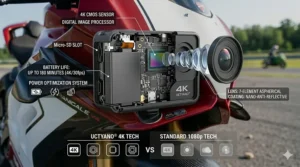
The RunCam Helmet Camera 4K brings a unique bendable design to the helmet camera world, featuring a flexible camera tube that lets you achieve shooting angles impossible with traditional rigid mounts.
Key Specifications:
- 4K30fps video recording
- Bendable/flexible camera tube
- 6-hour continuous recording
- WiFi sync with mobile app
- Corning Gorilla Glass lens cover
Price Range: $99-119
The bendable design isn’t a gimmick – it’s genuinely useful for mounting on irregular helmet shapes or achieving specific POV angles. The slider and magic tape mounting system fits various helmet types without permanent modifications. Vibration alerts notify you when recording starts/stops and when battery is low, preventing that frustrating “I thought I was recording” scenario.
Customer Feedback: Airsoft and tactical users particularly appreciate the discrete mounting options. One paintball player noted: “The flexible tube means I can tuck the camera against my helmet profile – no snag points.”
✅ Pros:
- Unique flexible design for custom angles
- Exceptional 6-hour battery life
- One-touch recording with vibration confirmation
❌ Cons:
- 4K limited to 30fps
- Smaller user community vs GoPro/Insta360
Perfect for: Tactical users, airsoft/paintball enthusiasts, and riders who need unconventional mounting angles.
7. Insta360 Ace Pro – Premium Night Vision Specialist
The original Insta360 Ace Pro remains a formidable choice, particularly for riders who frequently shoot in challenging lighting conditions. Its flagship 1/1.3″ sensor and 5nm AI chip combination delivers low-light performance that outshines most competitors.
Key Specifications:
- 4K120fps & 8K24fps capability
- 1/1.3″ sensor with 48MP resolution
- 5nm AI chip for noise reduction
- 2.4″ flip touchscreen
- PureVideo mode for night shooting
Price Range: $379-450
While the Ace Pro 2 steals headlines, the original Ace Pro offers nearly identical image quality at a lower price point. The AI Highlights Assistant reviews your footage in-camera and suggests the best clips to keep, saving storage space and editing time. Clarity Zoom provides true 2x optical quality zoom without the quality loss of digital cropping.
Customer Feedback: Night riders consistently praise its low-light capabilities. One motorcycle commuter shared: “My evening rides through tunnels finally look clear instead of grainy messes.”
✅ Pros:
- Exceptional low-light performance with AI noise reduction
- Leica co-engineered lens delivers accurate colors
- Garmin and Apple Watch integration for data overlays
❌ Cons:
- Battery life shorter than DJI Osmo Action 5 Pro
- High-resolution files require fast microSD cards
Perfect for: Urban night riders, commuters navigating tunnels, and creators who shoot in mixed lighting conditions.
Understanding 4K Helmet Camera Technology
Choosing the right 4K helmet camera requires understanding what makes these devices different from traditional cameras. According to Wikipedia’s comprehensive helmet camera article, modern helmet cameras evolved from bulky 1980s prototypes to today’s ultra-compact powerhouses.
What Makes 4K Resolution Essential?
4K resolution (3840×2160 pixels) provides four times the detail of standard 1080p HD. This extra resolution serves multiple practical purposes beyond just prettier footage. When you’re reviewing incident footage for insurance claims, 4K lets you zoom into license plates and road signs while maintaining clarity. For content creators, 4K provides cropping flexibility – you can reframe your shot in editing without losing quality.
The frame rate matters just as much as resolution. While 4K30fps works fine for standard riding footage, 4K60fps delivers smoother motion that’s crucial when filming fast-paced action. Some premium models now offer 4K120fps for dramatic slow-motion replays that reveal details invisible to the naked eye.
Image Stabilization: Your Secret Weapon
The difference between watchable footage and nauseating shaky-cam comes down to stabilization technology. Modern 4K helmet cameras employ three types:
Electronic Image Stabilization (EIS) uses software algorithms and gyroscopic sensors to smooth out bumps. Budget cameras like the AKASO EK7000 Pro offer basic EIS that handles minor vibrations. Premium models like GoPro’s HyperSmooth 6.0 and DJI’s RockSteady use advanced multi-frame analysis that rivals mechanical gimbal smoothness.
Horizon Leveling keeps the horizon line straight even when your helmet rotates. DJI’s 360° HorizonSteady and GoPro’s Horizon Lock ensure your footage looks professionally composed regardless of how you’re moving.
Sensor-Shift Stabilization physically moves the image sensor to counteract camera shake – typically found only in the most premium models. This mechanical approach provides superior stabilization but adds weight and battery drain.
Battery Life Considerations
Battery performance varies dramatically across 4K helmet cameras. Recording 4K video consumes significantly more power than 1080p, making battery capacity crucial. The DJI Osmo Action 5 Pro’s revolutionary 4-hour runtime comes from optimized power management and its efficient 4nm processor chip.
Temperature extremes affect battery performance. Most lithium-ion batteries lose 20-30% capacity in freezing conditions. Models like the Insta360 Ace Pro 2 and GoPro HERO13 Black feature cold-weather optimized batteries that maintain performance down to -20°C (-4°F).
Pro tip: Always carry a spare battery for rides longer than 90 minutes. Many riders mount a small USB power bank to their bike frame connected via USB-C for continuous recording during ultra-endurance events.
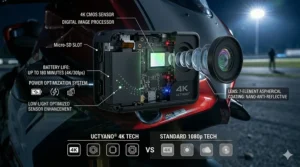
Key Features to Compare When Choosing Your 4K Helmet Camera
Mounting System Versatility
Your 4K helmet camera is only as good as its mounting options. The GoPro ecosystem dominates here with 35+ official mounts plus hundreds of third-party options. Look for cameras that support:
- Adhesive mounts for permanent helmet installation
- Quick-release systems for easy camera removal
- Universal GoPro compatibility to leverage existing accessories
- Multiple mounting angles (top, side, chin mount positions)
The Insta360 Ace Pro 2 and DJI Osmo Action 5 Pro feature magnetic mounting systems that let you snap the camera on/off in seconds – brilliant for riders who share helmets or want flexibility.
Storage and Connectivity
Modern 4K footage generates massive files. A 5-minute 4K60fps clip can consume 2-3GB of storage. Your camera should support:
- microSD cards rated UHS-3 or better (minimum write speed 30MB/s)
- At least 128GB capacity cards for extended recording sessions
- WiFi 6 connectivity for fast wireless transfers (80MB/s+)
- USB 3.0 for rapid wired downloads
The DJI Osmo Action 5 Pro includes 47GB of built-in storage – a lifesaver when you forget your memory card before a ride.
Audio Quality Matters
Helmet-mounted cameras face unique audio challenges. Wind noise at 60mph can completely destroy your audio track. Look for:
- Wind reduction algorithms that filter high-frequency noise
- External microphone support for interviews and vlogs
- Directional audio modes that focus on specific sound sources
The Insta360 Ace Pro 2’s integrated Wind Guard is revolutionary – a physical accessory that blocks wind while preserving other sounds. DJI cameras support direct wireless connection to DJI Mic 2, eliminating the receiver for cleaner helmet mounting.
4K Helmet Camera vs. Traditional Dash Cam Comparison
| Feature | 4K Helmet Camera | Motorcycle Dash Cam | Which Wins? |
|---|---|---|---|
| Field of View | 155-170° adjustable | Fixed 140-150° | Helmet camera |
| Recording Perspective | Follows your head movement | Static vehicle view | Depends on use case |
| Mounting Flexibility | Helmet, chest, handlebars | Permanently mounted | Helmet camera |
| Impact Resistance | Designed for crashes | Fixed mount vulnerable | Helmet camera |
| Battery Independence | Self-contained power | Vehicle-powered | Dash cam |
| Waterproofing | 10-60m depth ratings | Rain-resistant only | Helmet camera |
| Price Range | $50-500 | $80-300 | Comparable |
Verdict: For recreational riders and content creators, helmet cameras offer superior versatility. For daily commuters primarily concerned with insurance documentation, a dedicated dash cam provides continuous recording without battery concerns. Many riders use both – dash cam for constant coverage, helmet camera for adventures.
Price Range & Value Analysis: Finding Your Perfect Match
| Budget Category | Price Range | What You Get | Best Options |
|---|---|---|---|
| Entry Level | $50-120 | 4K30fps, basic EIS, 2hr battery, essential mounts | AKASO EK7000 series, RunCam 4K |
| Mid-Range | $150-300 | 4K60fps, advanced stabilization, 2-3hr battery, touchscreen | GoPro HERO, DJI Osmo Action 5 Pro (on sale) |
| Premium | $300-500 | 5K/8K recording, AI features, Leica lenses, 3-4hr battery, pro stabilization | GoPro HERO13 Black, Insta360 Ace Pro series |
| Professional | $500+ | Complete bundles, spare batteries, premium accessories, extended warranties | Flagship bundles & specialized kits |
Value Sweet Spot: The $250-350 range offers the best performance-per-dollar. Cameras like the DJI Osmo Action 5 Pro ($269-369) deliver 90% of flagship performance at 60% of the price. Sales and bundles frequently drop premium models into this range.
How to Choose the Right 4K Helmet Camera for Your Needs
Step 1: Define Your Primary Use Case
Your riding style determines which features matter most:
Daily Commuters: Prioritize long battery life (DJI Osmo Action 5 Pro), loop recording, and reliable auto-start features. You need a camera that works consistently without constant attention.
Weekend Warriors: Balance image quality with ease of use. The GoPro HERO offers simplicity, while the HERO13 Black provides professional results when you want to share your adventures.
Content Creators: Invest in premium models with superior stabilization (GoPro HERO13 Black), AI editing features (Insta360 Ace Pro 2), and high frame rates for slow-motion possibilities.
Budget-Conscious Riders: The AKASO EK7000 Pro proves you don’t need $400 to capture quality 4K footage. It’s 80% as good for 20% of the price.
Step 2: Evaluate Your Helmet Type
Different helmets accommodate cameras differently:
Full-Face Helmets: Chin mounts provide the most stable, forward-facing view. Models like the DJI Osmo Action 5 Pro with magnetic quick-release excel here.
Open-Face/Half Helmets: Side or top mounts work best. The RunCam’s bendable design adapts to curved surfaces beautifully.
Modular Helmets: Multiple mounting positions possible. Invest in a camera with versatile mounting options and good stabilization to handle helmet movement.
Step 3: Consider Your Riding Conditions
Daytime Highway Riding: Any 4K camera performs well in good light. Focus on stabilization quality and wind noise reduction.
Night/Urban Riding: Low-light performance becomes critical. The Insta360 Ace Pro series with their large sensors and AI noise reduction dominate here.
Off-Road/Trail Riding: Maximum stabilization (GoPro HyperSmooth 6.0 or DJI RockSteady) prevents unwatchable footage from constant vibration and impacts.
All-Weather Riding: Waterproof rating matters. The AKASO EK7000 Pro’s 131-foot rating handles anything from rainstorms to stream crossings.
Step 4: Plan Your Ecosystem
Going All-In on GoPro? Their massive accessory ecosystem and established workflow make sense for serious creators. Cloud backup and automatic highlight videos streamline content management.
Prefer Open Compatibility? Cameras with GoPro-compatible mounts (like AKASO and RunCam) let you mix-and-match accessories without brand lock-in.
Want AI Assistance? Insta360’s AI Highlights Assistant and automatic editing features save hours of post-production work.
Step 5: Set Realistic Budget Expectations
Don’t overspend on unused features. If you’re recording 30-minute commutes, you don’t need 8K resolution. The GoPro HERO or AKASO EK7000 Pro handles this perfectly.
Factor in accessories. Budget cameras often include complete mount kits. Premium cameras may require separate purchases of $50-150 for mounting systems, spare batteries, and memory cards.
Consider longevity. Premium brands like GoPro and DJI offer better long-term support, firmware updates, and higher resale values. A $400 GoPro retains 50-60% of its value after 2 years; budget cameras become nearly worthless.
✨ Don’t Miss These Exclusive Deals!
🔍 Take your ride documentation to the next level with these carefully selected 4K helmet cameras. Click on any highlighted item to check current pricing and availability. These tools will help you create authentic footage your family will love!
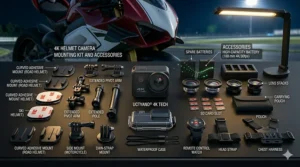
Benefits of Using a 4K Helmet Camera vs. Traditional Alternatives
Superior Insurance Documentation
According to research on action camera applications, helmet cameras provide irrefutable evidence in accident scenarios that traditional witness statements cannot match. The wide-angle lens captures peripheral vehicles, road conditions, and traffic signals simultaneously – details often missed in accident reports.
Insurance companies increasingly accept 4K helmet camera footage as primary evidence. The timestamp, GPS data (on models like Insta360 Ace Pro), and unedited continuous recording establish credibility that photographs cannot provide. Several riders report reduced insurance premiums after installing helmet cameras, as insurers recognize the deterrent effect and documentation value.
Hands-Free Operation Freedom
Traditional handheld cameras or smartphone recording requires dangerous one-handed riding. 4K helmet cameras mount securely, allowing full handlebar control while capturing your journey. Voice control features on GoPro HERO13 Black and DJI Osmo Action 5 Pro eliminate even the need to reach for buttons – just say “Start Recording” and the camera responds.
This hands-free capability extends beyond safety. You can capture spontaneous moments – a sudden rainbow, unexpected wildlife, or a friend’s crash (hopefully minor) – without fumbling for equipment. The best moments happen when you’re not actively trying to film them.
Content Creation Monetization Potential
Motorcycle and cycling content dominates YouTube and TikTok. Channels featuring 4K helmet camera footage regularly generate revenue through ad monetization, affiliate partnerships, and sponsorships. Professional-quality footage from cameras like the Insta360 Ace Pro 2 enables content that stands out in crowded social feeds.
The barrier to entry for content creation has never been lower. A $100 AKASO camera plus free editing software (DaVinci Resolve, CapCut) provides everything needed to start a successful channel. Several full-time motorcycle vloggers began with budget helmet cameras before upgrading to premium setups.
Common 4K Helmet Camera Mistakes to Avoid
Mounting Position Errors
Too high on helmet: Creates excessive leverage, increasing neck strain during crashes and making footage unusable due to constant helmet adjustment movement. Mount cameras low and close to the helmet surface for stability.
Blocking ventilation: Some riders mount cameras over helmet vents, causing overheating during summer rides. Plan mount positions that preserve airflow.
Off-center mounting: Creates unnatural perspective and uneven weight distribution. Center your camera or use counterweight mounts for side positions.
Recording Settings Mistakes
Maximum resolution all the time: Recording 8K or 5.3K for a casual commute wastes storage and battery. Match resolution to your actual needs – 4K30fps handles most situations perfectly.
Incorrect field of view: Ultra-wide 170° looks dramatic but causes distortion. Medium (127-140°) provides more natural perspective for most riding scenarios.
Neglecting frame rate: 24fps creates choppy motion during fast riding. Minimum 30fps for general use, 60fps for action sequences.
Maintenance Oversights
Forgetting lens cleaning: Road grime, rain spots, and bug splatter ruin footage. Wipe your lens before every ride with a microfiber cloth.
Ignoring firmware updates: Manufacturers regularly release updates improving stabilization, battery life, and adding features. Update quarterly.
Not testing before important rides: Discover dead batteries or corrupted memory cards before your once-in-a-lifetime trip, not during it. Test record for 5 minutes before departure.
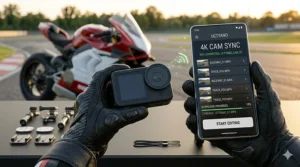
FAQ: Your 4K Helmet Camera Questions Answered
❓ What is the best 4K helmet camera for motorcycle riding in 2026?
❓ How long can a 4K helmet camera record continuously?
❓ Can I use my 4K helmet camera in the rain or underwater?
❓ What memory card do I need for 4K helmet camera recording?
❓ How do I prevent my 4K helmet camera from overheating during long rides?
Conclusion: Finding Your Perfect 4K Helmet Camera Match
After analyzing seven exceptional 4K helmet cameras across every price point and use case, one truth emerges: the best camera is the one you’ll actually use consistently. Whether you invest $99 in the budget-friendly RunCam or $490 in the feature-packed Insta360 Ace Pro 2, regular usage matters more than specifications.
For most riders, I recommend starting in the $200-350 range where value peaks. The DJI Osmo Action 5 Pro ($269-369) delivers professional results with unmatched battery life, making it my top overall pick for 2026. Its 4-hour runtime, intuitive interface, and robust waterproofing handle anything from daily commutes to multi-day adventure tours.
Budget-conscious riders will find remarkable value in the AKASO EK7000 Pro ($84-109), which proves that quality 4K recording doesn’t require premium pricing. Content creators serious about image quality should consider the Insta360 Ace Pro 2 ($399-490) – its 8K capability, Leica lens, and AI features future-proof your investment.
Remember that the camera represents just half of successful documentation. Invest time learning proper mounting positions, optimal settings for your riding conditions, and basic editing techniques. The difference between amateur shaky-cam and professional-looking content comes from knowledge, not just equipment.
Your 4K helmet camera transforms ordinary rides into lasting memories, provides crucial insurance documentation, and potentially opens doors to content creation opportunities. Whether you’re documenting your daily commute, creating YouTube content, or simply preserving adventures to relive later, today’s 4K helmet cameras deliver capabilities that seemed impossible just five years ago.
Choose based on your actual needs, not wishful thinking. Start recording. Ride safe. And remember – the best camera is the one mounted on your helmet when that once-in-a-lifetime moment happens.
Recommended for You
- 7 Best Mesh Intercom Systems 2026: Ultimate Buyer’s Guide
- 7 Best Performance Wicking Caps That Keep You Dry in 2026
- 7 Best Anti-Microbial Helmet Liner Options in 2026
Disclaimer: This article contains affiliate links. If you purchase products through these links, we may earn a small commission at no additional cost to you.
✨ Found this helpful? Share it with your friends! 💬🤗
