
In This Article
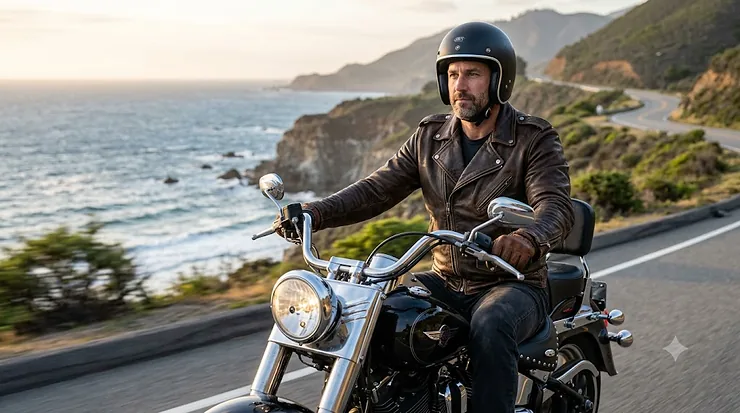
Picking out a cruiser motorcycle leather jacket sounds simple until you actually start scrolling through Amazon at 11 p.m. with forty tabs open. Snap closures or zippers? Side laces or a straight cut? Vented panels or a sealed shell that’ll roast you alive in July? I’ve been down that rabbit hole more times than I’d like to admit, and the honest truth is that most of the confusion disappears once you know what each style is actually built for.
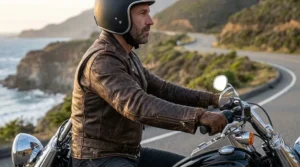
This guide skips the marketing fluff and gets into the specifics: seven real jackets currently sold on Amazon, what each one is genuinely good at, who should buy it, and who should keep looking. Whether you’re after a classic American biker jacket for weekend rides on a Softail, a heavy leather cruiser jacket for year-round commuting, or something with a bit of old-school flair like fringe and conchos, there’s a practical match in this list rather than a generic “top picks” rundown.
We’ll also cover sizing pitfalls, how to separate marketing buzzwords from features that matter, and a few maintenance habits that add years to a jacket’s life. Buckle up — or rather, zip up.
What Is a Cruiser Motorcycle Leather Jacket?
A cruiser motorcycle leather jacket is a leather riding jacket cut for relaxed, upright seating positions typical of cruiser and V-twin style motorcycles. Unlike sportbike leathers, which hug the body for a forward lean, cruiser jackets favor a roomier cut, classic styling cues like snap collars or side laces, and a silhouette borrowed from mid-century biker culture.
Quick Comparison Table
| Category | Pick | Leather Type | Best For |
|---|---|---|---|
| Best Overall | REVOLT CE Armor Jacket | Buffalo, 1.2-1.3mm | Long-distance riders wanting certified protection |
| Best Budget | Xelement B7100 ‘Classic’ | Top grade cowhide | New riders, first jacket purchase |
| Best for Hot Weather | Milwaukee Leather LKM1720 | Drum-dyed cowhide | Daily commuters in warm climates |
| Best Vintage Style | Milwaukee Leather SH1011 Brando | Premium leather | Riders chasing a classic biker look |
| Best Old-School Western | PERRINI Fringe Jacket | Solid buffalo, 1.3-1.4mm | Chopper and retro builds |
Looking at the table, the clearest split is between protection-first buyers and style-first buyers. If you log highway miles regularly, the CE-armored REVOLT jacket earns its higher price through certified impact protection that the others simply don’t include. Riders shopping on a tighter budget for a first jacket, on the other hand, get most of the classic look from the Xelement B7100 without paying for features they may not use yet.
✨ Don’t Miss These Exclusive Deals!
💬 Just one click — help others make better buying decisions too!😊
Top 7 Cruiser Motorcycle Leather Jackets — Expert Analysis
| Jacket | Leather | Closure | Price Range | Best For |
|---|---|---|---|---|
| Milwaukee Leather LKM1720 | Drum-dyed cowhide | Zipper, vented | $130-$180 | Hot-weather commuting |
| Milwaukee Leather SH1011 | Premium cowhide | Side laces, snap collar | $150-$220 | Vintage Brando styling |
| Xelement B7100 ‘Classic’ | Top grade cowhide | Snap button | $90-$130 | First-time buyers |
| Xelement B7201 ‘Speedster’ | Buffalo, 1.2-1.3mm | Side laces, vented | $140-$190 | Patch-friendly club riders |
| REVOLT CE Armor Jacket | Buffalo, 1.2-1.3mm | Zipper, vented | $180-$260 | All-season, armored touring |
| PERRINI Fringe Jacket | Solid buffalo, 1.3-1.4mm | Snap-down collar | $150-$220 | Western/chopper style |
| Milwaukee Leather MLM1520 | High-end cowhide | Zipper, vented | $170-$230 | Storage-heavy day rides |
This spread covers the three price tiers riders usually shop in: under $150 for a first jacket, the $150-$200 sweet spot most cruiser owners land on, and $200-plus for armored or premium builds. Notice that ventilation shows up in five of the seven jackets — a sign that even traditional leather styling has adapted to the reality that most riders aren’t touring through Montana in January.
1. Milwaukee Leather LKM1720 — Dual Utility Pocket Vented Cruiser Biker Jacket
The standout here is the zippered chest-and-back venting paired with an action-back panel, which is a big deal if you commute through summer traffic. The drum-dyed cowhide is on the thinner side compared to premium tiers, but that’s exactly why it breathes better and breaks in faster — what most buyers overlook is that thinner, well-tanned leather isn’t automatically worse leather, it’s a different trade-off. The action back also matters more than it sounds: it adds pleating across the shoulder blades so reaching forward to a cruiser’s wide bars doesn’t pull the jacket tight across your back, which keeps the upright riding position jacket fit comfortable on longer rides.
This is the jacket I’d point a daily rider toward if their commute runs hot and they want a classic biker silhouette without the premium price tag. Riders who bought it generally praise the airflow and the dual utility pockets for keeping a phone and wallet accessible, though a few mention the jacket needs a short break-in period before the shoulders move freely.
Pros: strong ventilation, roomy utility pockets, true biker silhouette
Cons: thinner leather than premium tiers, liner isn’t removable on this trim
In the $130-$180 range, it’s one of the better value plays for anyone prioritizing comfort over armor.
2. Milwaukee Leather SH1011 — Classic Brando Premium Leather Jacket w/Side Laces
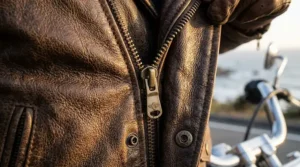
This one leans hard into old school leather biker jacket territory, and the side laces are the feature that actually earns that label. In my experience, side-lace panels do something sizing charts can’t: they let you cinch the waist two to three inches tighter without buying a smaller size that’s snug everywhere else. Combined with the snap collar, you get a silhouette closer to the original Brando-era jackets than almost anything else on this list.
This is the pick for riders who care about looking the part of a classic American biker jacket as much as functioning like one — think weekend cruiser rides, club meetups, or just wanting a jacket that doesn’t scream “modern technical gear.” Feedback from buyers consistently calls out the leather quality as a step above entry-level lines, though the shoulders tend to run slightly large, so sizing down half a size is common advice.
Pros: vintage-correct styling, adjustable lace fit, quilted liner for cold rides
Cons: heavier leather needs longer break-in, fewer vents than commuter-style jackets
At $150-$220, it’s a strong mid-range buy for style-focused riders.
3. Xelement B7100 ‘Classic’ — Top Grade Leather Motorcycle Biker Jacket
The snap button closure is the headline feature, and it’s worth explaining why that matters beyond looks: snap-button collars and cuffs seal out wind better than a bare zipper edge, which keeps highway draft off your neck without needing a separate wind flap. That’s the kind of detail that doesn’t show up in a spec sheet but shows up in how the jacket actually feels at 60 mph.
This is squarely a first-jacket pick — the snap button closure leather jacket styling and zip-out liner give it real three-season usability at a price that won’t sting if your riding habits change in a year. Buyers tend to highlight the price-to-quality ratio as the main selling point, with the occasional note that the liner feels a bit bulky once temperatures climb.
Pros: lowest price point on this list, classic styling, removable liner
Cons: basic hardware compared to premium lines, no included armor
Sitting in the $90-$130 range, it’s the easiest entry point for new riders building out their first gear.
4. Xelement B7201 ‘Speedster’ — Top Grade Leather Jacket w/ Zip-Out Lining
What sets the Speedster apart is its patch-access interior zippers — small openings sewn behind the outer shell that let you sew a club patch or backing without unstitching the lining. For chopper rider leather jacket fans who plan to personalize their gear over time, that’s genuinely useful and uncommon below the $200 mark.
It’s built for riders who want more airflow than the B7100 without stepping up to premium pricing, and the dual concealed-carry pockets do double duty as secure everyday storage even if you never use them for their stated purpose. Owners frequently mention the adjustable side laces as the deciding factor over competitors at the same price.
Pros: good ventilation, patch-friendly interior, adjustable side-lace fit
Cons: liner is permanently attached rather than removable, no armor included
In the $140-$190 bracket, this is the jacket for riders who want to add their own identity to a biker club style leather jacket over time.
5. REVOLT Men’s Motorcycle Jacket — Natural Buffalo Leather, CE Armor
This is the only jacket on the list with certified CE armor, and that single fact changes who it’s for. The five-piece removable armor at the shoulders, elbows, and back means this jacket meets a recognized protective standard rather than relying on leather thickness alone — the spec sheet won’t tell you this, but certified armor and “thick leather” are not interchangeable claims, and only one of them is independently tested.
The removable thermal liner pushes this into genuine all-season territory, which is rare for a harley style leather jacket built around classic cruiser looks rather than technical touring gear. I’d point any rider logging serious highway miles toward this one first, even with the higher price tag, because it’s the only option here built to a verifiable safety spec rather than tradition alone. Reviewers consistently mention the versatility across seasons as the top selling point, with a few noting the armor adds noticeable bulk compared to unarmored jackets.
Pros: CE-certified armor, removable all-season liner, strong ventilation
Cons: heavier and pricier than minimalist cruiser styles
At $180-$260, it delivers the best protection-per-dollar on this list, even if it’s not the cheapest entry point.
6. PERRINI Fringe Motorcycle Riding Leather Jacket
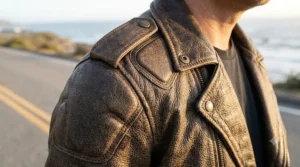
The fringe leather motorcycle jacket look is the entire point here, and it’s worth noting the fringe panel is cut from solid leather rather than stitched-on strips — a detail that affects how it ages, since solid panels won’t fray or separate at the seams the way patchwork fringe eventually does. The snap-down collar is a nice practical touch for a style-first jacket, keeping the lapel from flapping at speed.
This is a western style leather moto jacket built for riders assembling a deliberate chopper or retro aesthetic rather than a daily commuter. It’s genuinely less suited to summer city riding given the heavier 1.3-1.4mm leather, but for the right build, the look is hard to replicate with anything else on this list. Buyers consistently single out the fringe and concho hardware as the reason they bought it, while a recurring sizing note suggests ordering one size up.
Pros: unmistakable retro/western styling, heavy genuine leather, snap-down collar
Cons: runs warm for summer riding, no included armor or vents
Priced around $150-$220, it’s a style-driven buy rather than a technical one — and that’s fine, as long as you know that going in.
7. Milwaukee Leather MLM1520 — High End Leather Utility Pocket Vented Cruiser Jacket
This sits at the top of Milwaukee’s cruiser lineup, and the extra utility pockets are the real differentiator — enough zippered storage to skip a tank bag on short rides, which matters more than it sounds once you’re juggling a phone, wallet, and keys at a gas stop. The vented chest and back panels carry over from the brand’s other cruiser models but with noticeably better hardware finish.
This is the pick for riders who want Milwaukee’s polished, less “raw” look along with genuinely useful storage, without jumping to an armored jacket like the REVOLT. Customers frequently compare it favorably against Milwaukee’s entry-level lines, citing the hardware and stitching as the clearest upgrade, though a few mention it runs slightly long in the body.
Pros: premium finish and hardware, generous pocket storage, solid ventilation
Cons: pricier than Milwaukee’s entry models, longer body cut than some riders expect
At $170-$230, it’s the choice for riders who’ve already decided on the brand and want the nicest version of that look.
Benefits vs. Traditional Alternatives
| Option | Abrasion Resistance | Weather Versatility | Style | Best For |
|---|---|---|---|---|
| Cruiser Leather Jacket | High | Moderate (vented options help) | Classic biker | Most cruiser riders |
| Textile/Mesh Jacket | Moderate | High | Modern/technical | Hot climates, long touring |
| Denim/Casual Jacket | Low | Low | Casual | Short, low-speed rides only |
The comparison makes the trade-off obvious: leather wins decisively on abrasion resistance, which is the single biggest factor in road-rash injuries during a slide, while textile gear flexes better across temperature swings. Denim looks the part in movies but offers a fraction of the protection of either leather or purpose-built textile, so it’s worth treating as a style choice rather than a safety one. According to Wikipedia’s overview of motorcycle protective equipment, leather garments use thicker, stronger hide than fashion leather, and not all leather types resist abrasion equally — which is exactly why thickness and tanning method matter more than brand name alone.
Practical Usage Guide
A new leather jacket needs roughly 5-10 wears before it stops feeling stiff across the shoulders and back panel. During that break-in period, avoid forcing zippers closed under tension — let the leather relax into the shape of your body first. For maintenance, condition the leather every 3-4 months with a leather-specific conditioner, more often if you ride in dry or sunny climates where leather dries out fastest.
Store the jacket on a wide, padded hanger rather than a wire one, since narrow hangers create pressure points that crease the shoulders over time. If the jacket gets rained on, let it air dry away from direct heat — a radiator or hair dryer will cause the leather to stiffen and crack prematurely. Common first-month mistakes include over-conditioning (which can darken or soften leather too much) and skipping zipper lubrication, which leads to sticking zippers on vented panels within the first season.
Real-World Scenario: Which Jacket Fits Your Ride?
The daily commuter: Riding 10-15 miles each way through city heat calls for ventilation above everything else. The Milwaukee Leather LKM1720 or the Xelement B7201 both prioritize airflow without sacrificing the classic cut.
The weekend cruiser: If you’re putting on 100-150 miles on Saturdays with your local riding group, style and comfort matter as much as technical features. The Milwaukee Leather SH1011 or the PERRINI fringe jacket both deliver a strong look for shorter, lower-speed rides.
The long-distance tourer: Logging 300+ miles in a sitting changes the calculus entirely — certified armor and a removable liner stop being nice-to-haves and start being the deciding factor. The REVOLT CE Armor jacket is the clear match here.
How to Choose a Cruiser Motorcycle Leather Jacket
- Decide your riding distance first. Short commutes favor ventilation; long highway stretches favor armor and liners.
- Check the leather thickness. Anything under 1.0mm trades protection for comfort; 1.2-1.4mm is the cruiser sweet spot.
- Try the reach test before buying. Sit in a riding position and reach forward — the jacket shouldn’t pull tight across your shoulders.
- Look for armor pockets even if armor isn’t included. Aftermarket CE armor can usually be added later.
- Match the closure style to your climate. Snap collars block wind better; zippered vents matter more in heat.
- Read sizing notes, not just the size chart. Several jackets on this list run large or small in specific areas.
- Budget for conditioning products. A $20 leather conditioner protects a $150+ jacket investment.
Common Mistakes When Buying a Cruiser Leather Jacket
The most common error is sizing by chest measurement alone and ignoring shoulder mobility — a jacket that fits flat on a hanger can still bind painfully once you’re leaned forward on the bike. A close second is assuming “leather” automatically means “protected,” when many countries only mandate helmets by law, not jackets, gloves, or pants, leaving the actual protective quality entirely up to the buyer’s research.
Buyers also frequently skip checking for armor pockets, assuming they’ll never want armor, only to regret it after a longer ride or a close call. Finally, over-ordering size “to be safe” backfires with side-lace and snap-button styles especially, since these jackets are specifically designed to be adjusted at the seams rather than sized loose.
Cruiser Leather Jacket vs. Sport/Touring Jacket
Sport and touring jackets are cut for a forward-leaning riding position, with pre-curved sleeves and a shorter back hem. Cruiser jackets, by contrast, are cut roomier through the chest and longer in the back to stay comfortable in an upright seating position — exactly the kind of upright riding position jacket fit that V-twin and cruiser bikes are designed around.
Touring jackets typically pack more weatherproofing and storage for multi-day trips, while cruiser leather jackets lean into classic styling and shorter rides. Neither is objectively better; the right choice depends entirely on riding posture and trip length rather than brand reputation.
Features That Actually Matter (And Those That Don’t)
Matters: leather thickness and tanning quality, armor pockets, ventilation placement, and YKK-grade zippers, which resist sticking far longer than generic hardware.
Doesn’t matter much: excessive branded hardware, decorative stitching patterns, and “racing-inspired” styling on a jacket that will never see a track. A recent motorcycle gear guide notes that leather offers the best abrasion resistance of any jacket material but runs warmer in summer and costs more upfront than textile alternatives — a trade-off worth weighing honestly rather than getting distracted by cosmetic extras.
Long-Term Cost & Maintenance
A well-maintained leather cruiser jacket can last 10-15 years, which puts the real cost-per-wear well below cheaper jackets replaced every two or three seasons. Budget roughly $15-$25 per year for conditioning products, plus occasional zipper repair if you ride frequently in dusty or sandy conditions. Compared to replacing a budget textile jacket every few seasons, the upfront cost of a quality leather jacket typically evens out within four to five years of regular riding.
Safety, Regulations & Compliance Guide
Helmet laws vary significantly by state, but jacket and glove use generally isn’t legally mandated, even though NHTSA notes that motorcyclists remain heavily overrepresented in traffic fatalities. That gap between “legal” and “actually protective” is exactly why choosing gear based on real abrasion resistance, not just legal minimums, matters. For broader safety context and current rider statistics, the NHTSA’s motorcycle safety resources are a solid starting point before any gear purchase.
If you do want certified protection rather than relying on leather thickness alone, look specifically for jackets advertising CE armor ratings, since that’s currently the most recognized independent standard for impact protection in riding jackets.
✨ Don’t Miss These Exclusive Deals!
🔍 Take your riding gear to the next level with these carefully selected jackets. Click on any highlighted pick to check current pricing and availability!
FAQ
❓ How do I know what size cruiser motorcycle leather jacket to buy?
❓ Is leather or textile better for a cruiser motorcycle jacket?
❓ How long does a leather motorcycle jacket last?
❓ Can you wear a cruiser leather jacket without armor?
❓ How should a leather motorcycle jacket fit?
Conclusion
Choosing a cruiser motorcycle leather jacket really comes down to two honest questions: how far do you actually ride, and how much do you care about classic styling versus certified protection? Riders covering serious highway miles get the most value from the REVOLT’s CE-armored, all-season build, while weekend cruisers and style-focused riders will get more enjoyment out of options like the Milwaukee Leather SH1011 or the PERRINI fringe jacket.
None of the seven jackets here is the “wrong” choice — they’re built for different riders and different rides. What matters is matching the jacket’s strengths to your actual riding habits rather than buying on looks alone and hoping the fit works out. Spend the extra five minutes checking sizing notes and armor pockets before you buy, and you’ll avoid the most common regret buyers mention in reviews.
Recommended for You
- Sport Leather Moto Jacket: 7 Best Picks for 2026
- 7 Best Men’s Leather Biker Jackets in 2026: Top Picks That Last
- 7 Best Ladies Leather Biker Jackets for Real Riders (2026)
Disclaimer: This article contains affiliate links. As an Amazon Associate, I earn from qualifying purchases. If you purchase products through these links, we may earn a small commission at no additional cost to you.
✨ Found this helpful? Share it with your friends! 💬🤗
