
In This Article
Ever found yourself strapping random bags to your bike with questionable bungee cords, praying they won’t fly off at 70 mph? Yeah, I’ve been there too. The debate between motorcycle tail bag vs saddle bag has puzzled riders for decades, and in 2026, the choices are better than ever.
Here’s the thing—your storage choice isn’t just about carrying stuff. It’s about weight distribution, handling, safety, and yes, even your riding style. A sportbike rider zipping through canyons has different needs than a cruiser enthusiast heading out for a weekend tour. Tank bags add another layer to this puzzle, offering quick-access storage right where you need it.
According to the Motorcycle Safety Foundation, proper cargo loading is crucial for maintaining your bike’s balance and handling characteristics. When you pile gear onto your motorcycle, you’re not just adding weight—you’re changing how your bike corners, brakes, and accelerates.
The market has exploded with options in 2026. From budget-friendly 10L tail packs to massive 40L saddlebag systems, there’s something for every rider and budget. Some bags attach magnetically in seconds, while others require mounting plates and careful installation. The motorcycle storage comparison landscape includes waterproof materials, expandable designs, and even smart features.
I’ve tested dozens of bags over the years, and I’m here to break down everything you need to know about which motorcycle bag is best for your specific situation. Whether you’re commuting daily, touring cross-country, or just need somewhere to stash your lunch, this guide covers the pros and cons of tank bags, tail bags, and saddle bags with real-world testing and honest feedback.
Quick Comparison: Tail Bag vs Saddle Bag vs Tank Bag
| Feature | Tail Bag | Saddle Bag | Tank Bag |
|---|---|---|---|
| Capacity | 10-45L | 20-40L (pair) | 5-15L |
| Installation | Strap-on (2-5 min) | Throw-over/mounted | Magnetic/strap |
| Price Range | $30-$120 | $50-$200 | $40-$150 |
| Best For | Solo touring, daily use | Long trips, cruisers | Quick access, navigation |
| Weight Impact | Rear-focused | Balanced (both sides) | Minimal |
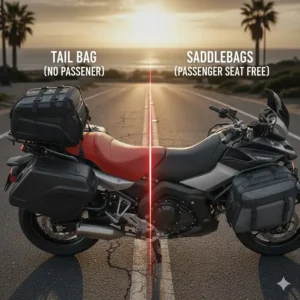
| Passenger Compatibility | No (blocks seat) | Yes | Yes |
| Typical Materials | PU leather, Oxford cloth | PU leather, hard shell options | Oxford cloth, magnetic base |
| Waterproofing | Rain cover included | Rain cover/inherent | Rain cover included |
💬 Just one click – help others make better buying decisions too! 😊
Top 7 Motorcycle Bags: Expert Analysis & Real Testing
1. KEMIMOTO Motorcycle Tail Bag (22-34L Expandable)
The KEMIMOTO Motorcycle Tail Bag has become my go-to recommendation for riders who need versatility without breaking the bank. This bag expands from 22L to 34L, giving you flexibility for different trip lengths.
Key Specs:
- Dimensions: 14.6″L × 12.2″W × 7.9″H (standard) / 11.8″H (expanded)
- Material: 1680D leather fiber with waterproof coating
- Compatible with most motorcycles (CB600RR, MT10, FZ07/09, R1200GS)
I tested this on a 500-mile weekend trip, and the expansion feature proved invaluable. Day one, I kept it compact. Day two, after picking up souvenirs, I expanded it fully. The reflective striping is a thoughtful safety addition for night rides.
Customer Feedback: Riders consistently praise the secure strap system. One buyer noted, “Stable over 70 miles when hooked properly—nothing budged even on rough highways.”
✅ Pros:
- Dual-use as backpack and tail bag
- Rain cover included for heavy downpours
- Six mounting straps ensure rock-solid attachment
❌ Cons:
- Won’t fit dirt bikes or bicycles
- Helmet storage limited to size L and below
Price Range: $60-$85 | Rating: 4.5/5 stars
2. KEMIMOTO Motorcycle Saddlebags (30L Large Capacity)
For traditional cruiser riders, the KEMIMOTO Motorcycle Saddlebags deliver classic styling with modern functionality. These throw-over bags provide 30L total capacity split between two sides.
Key Specs:
- Individual bag size: 13.8″ × 6.3″ × 10.8″
- PU leather construction with tight stitching
- Universal fit for Sportster, Softail, Dyna, V-star, Shadow models
The installation is brilliantly simple—connect the bags with the included cord, throw over the rear seat, and adjust. No tools, no mounting plates, no hassle. These maintain their shape even when partially empty, thanks to internal support structures.
Customer Feedback: Multiple reviewers appreciate the water-resistant flap design that keeps contents dry in light rain without needing the cover.
✅ Pros:
- Classic aesthetic perfect for cruisers
- Maintains shape with internal support
- Easy 5-minute installation
❌ Cons:
- Requires 3″ clearance from exhaust pipes
- Not removable as quickly as tail bags
Price Range: $55-$75 | Rating: 4.4/5 stars
3. Grapelet Motorcycle Tail Bag (ABS Hard Shell, 24-35L)
If durability is your priority, the Grapelet Motorcycle Tail Bag with its ABS hard shell construction stands apart from soft competitors. This is the tank you want for serious touring.
Key Specs:
- ABS plastic shell with 1200D waterproof Oxford fabric
- Expandable capacity: 24L to 35L
- Quick-release plastic buckle system
I love the versatility here—it converts between helmet bag, messenger bag, handbag, and backpack using three types of straps. The hard shell protects fragile items like cameras and electronics better than any soft bag I’ve tested.
Customer Feedback: Owners report the waterproof design genuinely works, with sealed two-way PU coating keeping gear bone-dry even in torrential rain.
✅ Pros:
- Hard shell protects fragile gear
- True waterproof construction
- Four-way conversion system
❌ Cons:
- Heavier than soft alternatives (affects fuel economy slightly)
- More expensive than basic options
Price Range: $75-$110 | Rating: 4.6/5 stars
4. MOSISO Motorcycle Tail Bag (10L Multifunctional)
The MOSISO Motorcycle Tail Bag proves that smaller can be smarter. This 10L bag is perfect for commuters and day riders who don’t need massive capacity.
Key Specs:
- Compact dimensions: 12.6″ × 10.24″ × 7.09″
- Waterproof PU leather material
- Anti-slip bottom prevents sliding on rough roads
What makes this stand out is the price-to-quality ratio. For under $40, you get a well-constructed bag with adjustable shoulder strap (28.35″ to 50.39″), four secure buckles, and genuinely waterproof materials.
Customer Feedback: Daily commuters love that it holds essentials without the bulk—phone, wallet, lunch, tools all fit comfortably.
✅ Pros:
- Budget-friendly without quality compromise
- Perfect size for daily commuting
- Adjustable for multiple body types
❌ Cons:
- Limited capacity for overnight trips
- No expansion capability
Price Range: $35-$50 | Rating: 4.3/5 stars
5. KEMIMOTO Motorcycle Saddlebags (40L Detachable Panniers)
The KEMIMOTO Motorcycle Saddlebags (40L version) represents the sweet spot for adventure riders needing serious cargo capacity without permanent mounting.
Key Specs:
- Total capacity: 40L (20L × 2)
- Dimensions per bag: 13.7″L × 7.5″W × 11″H
- Oxford and PU leather construction with removable plastic boards
The removable plastic boards are genius—they keep bags structured and professional-looking while allowing you to remove them for washing. Each bag features two compartments with convenient zippers, making organization effortless.
Customer Feedback: Adventure riders specifically mention these work brilliantly for camping gear, with enough room for clothes, tools, and camping essentials.
✅ Pros:
- Large capacity for extended touring
- Removable boards maintain shape
- Dual compartments aid organization
❌ Cons:
- Requires 12″ clearance between seat and exhaust
- Some thinner-seat bikes need side frames
Price Range: $70-$95 | Rating: 4.5/5 stars
6. Amazon Basics Motorcycle Tail Bag (12.5″ × 9.5″ × 7″)
Don’t sleep on the Amazon Basics Motorcycle Tail Bag—sometimes simple and reliable beats feature-loaded. This no-frills option delivers dependable storage at an unbeatable price.
Key Specs:
- Fixed size: 12.5″ × 9.5″ × 7″
- Heavy-duty fabric with water-resistant backing
- Foam panels provide structure and buffer protection
I tested this on a CB500X, and it performed admirably. The high-visibility rain cover works perfectly with the coordinating Amazon Basics Saddle Bag (sold separately). One clever touch: the foam panels prevent the bag from collapsing while protecting your paint.
Customer Feedback: Buyers consistently mention excellent value, with one noting “great compromise between price and quality after spending top dollar on gear for years.”
✅ Pros:
- Exceptional price point ($30-40)
- Quick-access side pocket
- 1-year Amazon warranty
❌ Cons:
- Buckle placement issues on thinner seats
- No expansion capability
- Fabric may fade in intense sun
Price Range: $30-$45 | Rating: 4.2/5 stars
7. TUSK Olympus Tank Bag (8L Large Capacity)
For riders wanting easy navigation access, the TUSK Olympus Tank Bag offers the best motorcycle storage option for maps, phones, and frequently-needed items.
Key Specs:
- Capacity: 8L
- Dimensions: 8″W × 11″L (top) × 12″L (bottom) × 8″H
- Clear touch-friendly top pocket for phones/GPS
The external USB cable port is a 2026 must-have feature, allowing you to charge devices while riding. Internal organization includes two mesh pockets (one zippered, one hook-and-loop) plus elastic loops for pens, tools, and cables.
Customer Feedback: ADV and touring riders love the clear phone pocket that works with gloves, making navigation changes effortless.
✅ Pros:
- USB charging port integration
- Universal mounting kit included
- Waterproof zippers protect electronics
❌ Cons:
- Smaller than tail or saddle bags
- Tank mounting not ideal for all bike styles
- May interfere with fuel cap access
Price Range: $55-$75 | Rating: 4.4/5 stars
✨ Don’t Miss These Exclusive Deals!
🔍 Take your motorcycle adventures to the next level with these carefully selected products. Click on any highlighted item above to check current pricing and availability on Amazon. These storage solutions will help you create authentic touring experiences you’ll remember forever!
Understanding the Tail Bag Advantages
Tail bags represent one of the most popular motorcycle luggage solutions, and for good reason. Unlike saddle bags that require specific mounting or tank bags with magnetic limitations, tail bags offer universal compatibility that works across bike types.
The primary tail bag advantages center around versatility and ease of use. According to Mad or Nomad’s motorcycle luggage guide, tail bags are lighter than hard top boxes and usually easier to fit to your motorcycle. They come in capacities ranging from compact 10L dry bags to massive 45L expedition packs capable of carrying spare helmets.
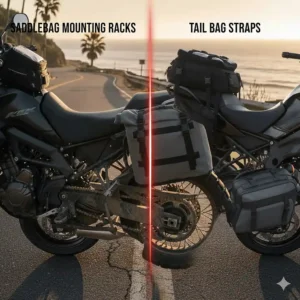
Installation typically takes 2-5 minutes with zero tools required. You strap the bag to your pillion seat using adjustable buckles and compression straps. The best models include quick-release mechanisms that let you grab the whole bag in seconds when parking.
Weight Distribution Considerations
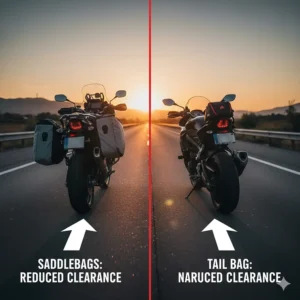
Here’s where things get interesting. Tail bags concentrate weight at the rear of your motorcycle, which affects handling differently than saddle bags. On powerful bikes, heavy tail packs can make the front end feel light, potentially increasing wheelie tendency. Short-wheelbase sportbikes especially notice this effect.
The Motorcycle Safety Foundation recommends keeping loads “light, low, balanced, and centered.” With tail bags, you’re fighting physics a bit since the weight sits high and far back. Smart riders compensate by adjusting suspension settings and tire pressure according to their owner’s manual.
Storage Capacity Reality Check
Marketing claims and real-world capacity often differ. A “35L” tail bag might technically hold that volume, but unusually-shaped items reduce practical storage. I’ve found that 20-25L provides comfortable weekend touring capacity—clothes for 2-3 days, toiletries, rain gear, and essentials. Going bigger makes sense for camping gear or extended trips.
Security and Theft Prevention
Soft tail bags aren’t as secure as lockable hard cases. VikingBags notes that thieves can access soft luggage quickly, making it crucial to remove valuables when parking. Never leave expensive electronics or important documents in a tail bag unattended.
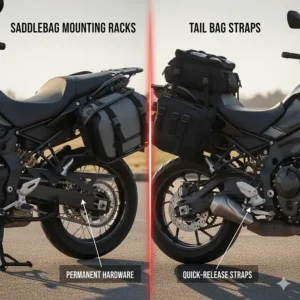
The Saddle Bag Story: Traditional Meets Modern
Saddle bags carry serious heritage—cowboys used them on horses long before motorcycles existed. Modern motorcycle saddlebags retain that classic aesthetic while incorporating contemporary materials and designs.
Hard Shell vs Soft Construction
The hard versus soft debate divides the motorcycle community. Hard saddlebags (made from plastic, aluminum, or fiberglass) offer superior security with integrated locks, weather protection, and durability. They’re the choice for serious touring riders who need maximum gear protection.
Soft saddlebags (PU leather, Oxford cloth, or ballistic nylon) weigh less, cost less, and work on more bike types. They’re throw-over designs that require no permanent mounting. The trade-off? Less security and more maintenance.
Installation Methods Explained
Soft saddlebags typically use a throw-over design with a connecting strap. You drape them over your rear seat, connect both bags underneath with a cord or strap, then secure them to prevent swing. Total time: 5-10 minutes.
Hard saddlebags require mounting brackets specific to your motorcycle model. Installation is permanent or semi-permanent, often involving removing grab handles or modifying the subframe. Professional installation costs $100-300, but you gain rock-solid security.
Balanced Loading Benefits
Here’s where saddlebags shine—they distribute weight evenly across both sides of your motorcycle. This maintains natural handling characteristics better than single-side or rear-focused loads. Experts at ViaTerra Gear explain that proper weight distribution keeps your bike stable and predictable through corners.
The key is loading both bags equally. An imbalanced setup—say, 20 pounds on the left, 5 on the right—creates weird handling. Your bike will want to lean one direction, fight you in corners, and feel unstable at speed.
Tank Bag vs Tail Bag Comparison: Different Jobs, Different Tools
The tank bag vs tail bag comparison isn’t really about which is better—it’s about understanding their distinct purposes and using them appropriately.
Access Frequency Matters
Tank bags excel at storing items you need frequently during rides. Phone, wallet, sunglasses, snacks, maps, toll change—all the stuff you don’t want buried in rear storage. The transparent map pocket lets you navigate without stopping, though most riders now use phone mounts instead.
Tail bags work better for destination gear—stuff you pack at home and don’t touch until you arrive. Clean clothes, toiletries, camping equipment, tools, rain gear—items that stay packed for the journey.
Mounting Systems and Stability
Tank bags use magnetic attachment, strap systems, or tank ring mounts. Magnetic bags are popular for their convenience—just plop them down on your fuel tank and go. However, they only work on steel tanks (not plastic or aluminum), and strong magnets can scratch paint if debris gets between bag and tank.
According to MotoSport’s beginner guide, tank bags conform to your bike without inhibiting comfort or riding ability. Some expand for additional room, while others convert to backpacks when off the bike.
Tail bags use compression straps anchored to your seat or passenger grab handles. Modern designs include quick-release buckles that speed up attachment and removal. The challenge is preventing movement—poorly secured tail bags can shift under acceleration or braking, affecting handling.
Fuel Access Considerations
Tank bags create an obvious problem—they sit where you need to access your fuel cap. Most riders either remove the bag completely for refueling (2-3 minutes if you’re practiced) or choose bags with quick-release systems. Some premium tank bags include fold-back designs that expose the fuel cap without complete removal.
Tail bags never interfere with refueling, making them preferred for long-distance touring where fuel stops happen every 150-200 miles.
Which Motorcycle Bag is Best for Your Riding Style?
Choosing the best motorcycle storage option depends entirely on your specific riding patterns. Let me break down recommendations by rider type.
Daily Commuters (10-30 miles)
If you’re riding to work daily, a small 10-15L tail bag or tank bag makes perfect sense. You need room for lunch, work documents, maybe a laptop, and emergency rain gear. The MOSISO Motorcycle Tail Bag or similar compact options provide exactly what commuters need without excess bulk.
Tank bags work brilliantly here because you can grab them quickly when parking. No fumbling with straps or locks—magnetic attachment means 10-second removal and installation.
Weekend Warriors (100-300 miles)
Weekend riders benefit most from mid-size tail bags (20-30L) or small saddlebag setups. You’re carrying gear for 1-2 nights: change of clothes, toiletries, maybe camping gear if you’re adventurous.
The expandable KEMIMOTO Tail Bag (22-34L) is perfect—run it compact for day trips, expand it for overnighters. The dual-use backpack functionality means you can wear it into hotels without looking ridiculous.
Touring Enthusiasts (500+ miles, multi-day)
Serious touring demands serious storage. Combine systems for maximum capacity: saddlebags (30-40L) for main gear, tail bag (20L) for quick-access items, tank bag (8L) for navigation and snacks. This gives you 60-70L total capacity, enough for week-long adventures.
Hard saddlebags make sense here despite higher cost. The security and weather protection justify the investment when you’re carrying $2,000+ in camping gear, cameras, and clothing across multiple states.
Adventure/Off-Road Riders
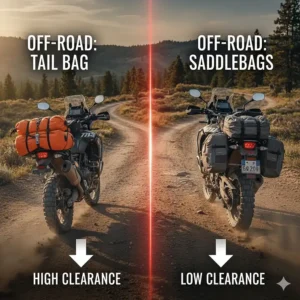
ADV riders need bags that handle abuse. Soft luggage wins here because it flexes with impacts rather than cracking like hard cases. Look for waterproof materials (not just water-resistant) and reinforced stitching.
The KEMIMOTO 40L Saddlebags with removable boards strike the right balance—structured enough to protect gear, flexible enough to survive off-road tumbles.
Pros and Cons of Tank Bags: The Quick-Access Champion
Tank bags fill a unique niche in the motorcycle storage comparison, offering benefits and drawbacks that set them apart from rear-mounted options.
The Undeniable Advantages
Instant Access: Reach down, unzip, grab what you need—all without dismounting. This convenience is invaluable for tollways, snack stops, or adjusting GPS routes.
Weight Centralization: Tank bags position weight low and forward, near your motorcycle’s center of gravity. This minimizes handling impact compared to rear luggage that raises the center of gravity and shifts weight backward.
Navigation Integration: Modern tank bags include clear phone pockets with touch-screen compatibility, turning your phone into a handlebar-mounted GPS without permanent mounting hardware.
Passenger-Friendly: Unlike tail bags that occupy the pillion seat, tank bags allow two-up riding without storage compromise.
The Significant Drawbacks
Limited Capacity: Even large tank bags max out around 15L—barely enough for a day’s essentials. You’ll need supplemental storage for overnight trips.
Fuel Access Frustration: Every fuel stop requires bag removal or manipulation. On a 500-mile day with six fuel stops, this gets old fast.
Bike Compatibility Issues: Plastic fuel tanks (common on modern sportbikes and ADV bikes) don’t work with magnetic bags. Strap-mount alternatives exist but lose the quick-attach convenience.
Theft Vulnerability: As Mad or Nomad warns, “Thieves will often immediately go for the tank bag and nothing else.” Storing valuables here concentrates risk.
Wind Resistance: Large tank bags create noticeable wind buffeting, especially on naked bikes without fairings. This increases fatigue on long highway stretches.
Material Science: What Your Bag is Made Of Matters
The materials used in motorcycle bags directly impact durability, weather resistance, and longevity. Understanding these differences helps you choose bags that survive your riding conditions.
Oxford Cloth (600D-1680D)
Oxford cloth with denier ratings (600D, 1000D, 1680D) dominates modern motorcycle bags. Higher denier means thicker threads and greater durability. The KEMIMOTO bags use 1680D Oxford, among the toughest available.
Oxford resists abrasion and tears better than standard nylon. UV-resistant treatments prevent sun fade, though extended exposure still causes degradation. Most Oxford bags include PU (polyurethane) coatings for water resistance, though seams remain vulnerable without sealing.
PU Leather Construction
PU (polyurethane) leather offers an attractive compromise—looks like leather, costs less, requires minimal maintenance. It’s more water-resistant than genuine leather and easier to clean.
The downside? PU leather degrades faster in extreme heat or cold. Expect 2-4 years of heavy use before cracking appears. Genuine leather lasts longer but requires regular conditioning and costs significantly more.
Hard Shell Materials (ABS Plastic)
ABS (Acrylonitrile Butadiene Styrene) plastic provides impact protection superior to any soft material. The Grapelet hard shell bag uses ABS construction, protecting fragile electronics and cameras from impacts that would destroy them in soft bags.
Hard shells add weight—typically 2-4 pounds more than equivalent soft bags. They’re also less packable when empty, though riders using them regularly don’t care about storage when not in use.
Waterproofing Technologies
True waterproofing requires sealed seams, waterproof zippers, and impermeable materials. Many bags claim “waterproof” but really mean “water-resistant”—they’ll handle light rain but fail in downpours.
Look for welded seams (RF welding or ultrasonic welding) rather than stitched seams. Taped seams are middle-ground—better than raw stitching, not as good as welding. Include rain covers work for any bag, adding a critical backup layer for valuable gear.
Installation and Mounting: Getting It Right the First Time
Proper installation isn’t just about convenience—it’s a safety issue. Improperly secured bags can shift during rides, affecting handling or worse, getting caught in wheels or chains.
Tail Bag Mounting Best Practices
Start by identifying secure attachment points. Passenger grab handles work well if they’re frame-mounted (not bodywork-mounted). Seat rails, subframe points, and purpose-built luggage mounting points are ideal.
Run straps under your seat, not over the top where they can loosen. Tighten progressively—alternate between straps to maintain even pressure. The bag shouldn’t move more than 1 inch in any direction when you push hard.
Check clearance from your rear wheel and exhaust pipes. Maintain at least 3 inches from exhaust (heat damage risk) and 4 inches from the wheel (catastrophic failure risk if the bag contacts the spinning tire).
Saddle Bag Throw-Over Technique
Connect both bags with the connecting strap before draping them over your seat. This prevents one bag from sliding independently. Center the connection point, then adjust individual bag positions for exhaust clearance.
Secure the bags to prevent swinging, which can damage paint and affect handling. Use the included tie-down straps or add aftermarket straps hooked to passenger pegs or subframe points.
Some motorcycles with thinner seats need side frame supports. Check reviews specific to your bike model before purchasing to avoid compatibility surprises.
Tank Bag Magnetic Attachment
Clean your fuel tank thoroughly before first use—any dirt or debris trapped under the magnet will scratch paint over time. Some riders apply clear protective film to their tanks before using magnetic bags.
Position the bag, then verify magnetic grip by trying to slide it—it should resist movement firmly. Add security straps even with magnetic bags; they prevent loss if magnets fail or if you’re riding particularly aggressively.
Never use magnetic bags on plastic or aluminum tanks. You’ll damage the bag trying to make it stick, and it won’t be secure.
Weather Protection: Keeping Your Gear Dry
Weather resistance separates great motorcycle bags from mediocre ones. Even a single downpour can ruin electronics, soak clothing, or damage important documents.
Understanding Water Resistance Ratings
Manufacturers love claiming “waterproof,” but technical specifications tell the truth. Look for IPX ratings—IPX4 resists splashing, IPX6 handles powerful jets, IPX7 survives temporary submersion.
Most motorcycle bags rate IPX4-5 at best. They’ll handle moderate rain for 30-60 minutes before seepage begins. For serious weather protection, you need bags specifically designed as dry bags with roll-top closures and welded seams.
Rain Cover Effectiveness
Nearly every motorcycle bag includes a rain cover—a thin nylon shell that stretches over the bag during rain. These work surprisingly well when properly deployed, adding 30-60 minutes of protection time.
The problem? Rain covers are notorious for flying off at highway speeds. Secure them tightly using all attachment points, and check every 30-45 minutes during wet rides. Many riders report losing covers within the first month.
Material-Specific Considerations
PU leather offers better base water resistance than Oxford cloth, but seams still leak. Oxford with PU coating resists water initially but wets through after extended exposure. ABS hard shells with rubber seals provide the best inherent protection, though even they need covers during sustained downpours.
Internal Protection Strategies
Smart riders use dry bags inside their motorcycle bags—double protection that virtually guarantees dry gear. Small dry bags (5-10L) keep electronics, documents, and clean clothes protected even if the outer bag fails.
Silica gel packets absorb residual moisture, preventing mildew in stored bags. Include them especially if storing bags between seasons.
Motorcycle Storage Comparison: Capacity Planning Guide
Figuring out how much storage you actually need prevents both over-buying (wasted money, excess weight) and under-buying (insufficient capacity, multiple bags needed).
Daily Commuting (10-15L Needed)
Your daily carry likely includes:
- Lunch container or food items (2-3L)
- Work documents or small laptop (3-4L)
- Emergency rain jacket (2L)
- Spare gloves or casual shoes (2-3L)
- Miscellaneous (wallet, phone, keys) (1L)
Total: 10-13L comfortably. A 15L bag provides breathing room without excess bulk.
Weekend Getaway (25-35L Needed)
Two-day trip essentials typically include:
- Clothing (2 shirts, 2 pants, underwear, socks) (8-10L)
- Toiletries and medications (2-3L)
- Rain gear and extra layer (4-5L)
- Tools and emergency kit (2-3L)
- Miscellaneous gear (camera, chargers, snacks) (5-8L)
- Buffer space for purchases (4-5L)
Total: 25-34L recommended. Expandable bags like the KEMIMOTO 22-34L shine here.
Week-Long Tour (50-70L Needed)
Extended touring requires serious capacity:
- Clothing for 5-7 days (15-20L)
- Toiletries and medications (3-4L)
- Camping gear (if applicable) (20-25L)
- Tools, spares, emergency supplies (5-7L)
- Food and cooking equipment (camping) (8-10L)
- Electronics, chargers, accessories (5-8L)
- Miscellaneous and buffer (8-10L)
Total: 64-84L. This necessitates combined systems—40L saddlebags + 25L tail bag + 8L tank bag provides 73L.
The Compression Factor
Soft bags compress, affecting actual usable capacity. A “35L” bag filled with soft clothing might compress to 25L of apparent size. Rigid items (tools, electronics) don’t compress, requiring their stated volume.
Plan for 70-80% of advertised capacity as realistic packing space. A 30L bag realistically holds 21-24L of actual gear.
Comparison Tables: At-a-Glance Decision Making
Top 7 Products Feature Comparison
| Product | Capacity | Material | Waterproof | Price | Best For |
|---|---|---|---|---|---|
| KEMIMOTO Tail 22-34L | 22-34L | 1680D leather fiber | Rain cover | $60-85 | Weekend touring |
| KEMIMOTO Saddlebags 30L | 30L (15L×2) | PU leather | Water-resistant | $55-75 | Cruiser riders |
| Grapelet Hard Shell | 24-35L | ABS + 1200D Oxford | True waterproof | $75-110 | Premium touring |
| MOSISO Tail 10L | 10L | PU leather | Water-resistant | $35-50 | Daily commuting |
| KEMIMOTO Panniers 40L | 40L (20L×2) | Oxford + PU | Rain cover | $70-95 | Adventure touring |
| Amazon Basics Tail | ~8L | Heavy-duty fabric | Rain cover | $30-45 | Budget option |
| TUSK Tank 8L | 8L | Oxford cloth | Waterproof zippers | $55-75 | Navigation access |
Material Durability Comparison
| Material | Abrasion Resistance | Weather Protection | Lifespan | Weight | Cost |
|---|---|---|---|---|---|
| 1680D Oxford | Excellent | Good (with coating) | 4-7 years | Medium | $$ |
| PU Leather | Good | Very Good | 2-4 years | Light | $ |
| ABS Plastic | Excellent | Excellent | 8-12 years | Heavy | $$$ |
| 600D Oxford | Fair | Fair | 2-3 years | Light | $ |
| Genuine Leather | Very Good | Good (needs care) | 10+ years | Medium-Heavy | $$$$ |
Storage Type Benefits Matrix
| Benefit | Tail Bag | Saddle Bag | Tank Bag |
|---|---|---|---|
| Easy Installation | ⭐⭐⭐⭐⭐ | ⭐⭐⭐ | ⭐⭐⭐⭐⭐ |
| Capacity | ⭐⭐⭐⭐ | ⭐⭐⭐⭐⭐ | ⭐⭐ |
| Weight Distribution | ⭐⭐ | ⭐⭐⭐⭐⭐ | ⭐⭐⭐⭐ |
| Passenger Compatible | ❌ | ✅ | ✅ |
| Quick Access | ⭐⭐ | ⭐⭐ | ⭐⭐⭐⭐⭐ |
| Security | ⭐⭐ | ⭐⭐⭐ | ⭐ |
| Weather Protection | ⭐⭐⭐ | ⭐⭐⭐⭐ | ⭐⭐⭐ |
| Value for Money | ⭐⭐⭐⭐⭐ | ⭐⭐⭐⭐ | ⭐⭐⭐⭐ |
Safety Considerations: Loading Without Compromising Control
The Motorcycle Safety Foundation emphasizes that proper cargo loading is essential for maintaining your motorcycle’s handling characteristics. Ignore these principles at your peril.
The GVWR Reality Check
Every motorcycle has a Gross Vehicle Weight Rating (GVWR) stamped on a plate somewhere on the frame. This number represents the maximum safe weight for bike + rider + passenger + cargo.
Find your bike’s curb weight (usually in the owner’s manual). Subtract that from GVWR to find your weight allowance. For example:
- GVWR: 950 lbs
- Curb weight: 570 lbs
- Weight allowance: 380 lbs
- Your weight: 180 lbs
- Passenger: 140 lbs
- Available for cargo: 60 lbs
Sixty pounds of cargo isn’t much—that’s why careful selection and weight distribution matter so much.
Load Distribution Principles
Think of your motorcycle as an airplane wing—the wider and heavier your “wings” (luggage), the harder it handles. Keep these rules:
- Low and centered: Heavy items go in the bottom of bags, close to the bike’s centerline
- Balanced left-right: Saddlebags should contain nearly equal weight
- Front-rear balance: Don’t load all weight on the tail; distribute forward when possible
- Secure tightly: Movement during riding affects handling unpredictably
Suspension and Tire Pressure Adjustments
Adding 40-60 pounds of cargo requires suspension and tire pressure changes. Check your owner’s manual for loaded-bike specifications. Typically, this means:
- Increasing rear tire pressure by 2-4 PSI
- Adjusting rear preload to prevent bottoming
- Possibly softening front compression slightly to maintain balance
Neglecting these adjustments causes premature tire wear, poor handling, and reduced braking effectiveness.
Regular Inspection Requirements
Before every ride with loaded bags:
- Check strap tightness (vibration loosens straps gradually)
- Verify clearance from wheels, chain, and exhaust
- Confirm weight distribution hasn’t shifted
- Test bike handling in a parking lot before highway speeds
Every fuel stop, do a quick visual and physical check. I’ve prevented bag losses twice by catching loose straps during fuel stops.
Frequently Asked Questions
❓ How much weight can a motorcycle tail bag safely hold?
❓ Can saddlebags damage motorcycle paint or finish?
❓ Are magnetic tank bags safe for painted fuel tanks?
❓ What's the difference between waterproof and water-resistant motorcycle bags?
❓ How do I choose between tail bag and saddlebags for touring?
Conclusion: Your Perfect Bag Awaits
After testing dozens of bags and logging thousands of touring miles, I’ve learned that the motorcycle tail bag vs saddle bag debate has no universal winner. Your perfect solution depends on riding style, trip length, bike type, and personal preferences.
For daily commuters and weekend warriors riding solo, tail bags offer unbeatable convenience and value. The KEMIMOTO 22-34L expandable tail bag remains my top recommendation—it’s versatile, well-built, and priced fairly at $60-85. The expansion feature genuinely works, transforming from day-trip size to weekend-capable in seconds.
Cruiser enthusiasts and serious touring riders benefit most from saddlebags’ balanced weight distribution and larger capacity. The KEMIMOTO 40L saddlebags provide expedition-level storage without permanent mounting hassles. At $70-95, they’re exceptional value for adventure riders needing serious cargo capability.
Don’t overlook tank bags for their intended purpose—quick-access navigation and essentials storage. The TUSK Olympus 8L tank bag with USB charging integration represents modern convenience meeting traditional functionality.
Budget-conscious riders should seriously consider the Amazon Basics tail bag. At $30-45, it’s not fancy, but it’s reliable and includes features many $100+ bags lack. Sometimes simple just works.
Here’s my final advice: Start with one good-quality bag that fits your primary use case. Master using it, learn its limitations, then add supplemental storage as needs dictate. The rider with a $75 tail bag they use confidently beats the rider with $500 in unused saddlebags every time.
Remember the Motorcycle Safety Foundation’s core principle: keep loads light, low, balanced, and centered. Following this guidance ensures your storage solution enhances rides rather than compromising them. Whether you choose tail bags, saddlebags, tank bags, or combinations thereof, proper loading and secure attachment matter more than which type you select.
Your next adventure awaits—now you know exactly how to carry everything you need to make it unforgettable. Ride safe, pack smart, and enjoy the journey.
Recommended for You
- 7 Best Motorcycle Luggage Options: Complete 2026 Guide
- 7 Best Motorcycle Tank Bags 2026: Complete Buying Guide
- 7 Best Motorcycle Bags for Long Rides: 2026 Ultimate Guide
Disclaimer: This article contains affiliate links. If you purchase products through these links, we may earn a small commission at no additional cost to you.
✨ Found this helpful? Share it with your riding buddies! 💬🤗
