
In This Article
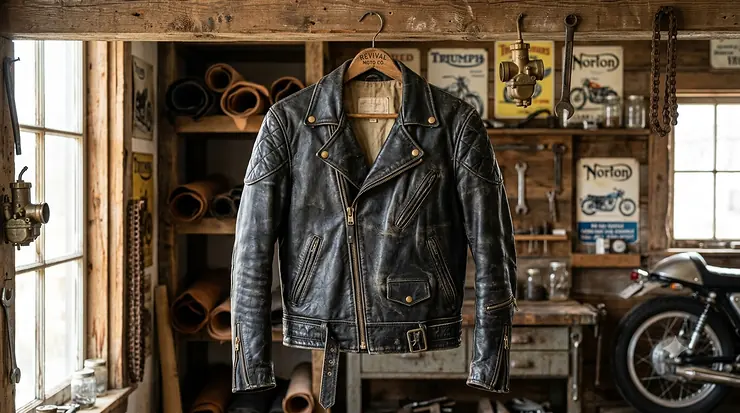
There’s a reason a beat-up leather jacket still stops people on the sidewalk sixty years after Marlon Brando zipped one up for a movie about a motorcycle gang. A retro motorcycle leather jacket isn’t just outerwear — it’s a piece of hardware that happens to look good, built from thick hide, asymmetrical zippers, and snap-down collars that were engineered for wind, not vibes. What is a retro motorcycle leather jacket? In short, it’s a riding jacket styled after 1950s-1970s motorcycle fashion — think Perfecto silhouettes, cafe racer cuts, or side-lace police styles — updated with modern leather tanning and, in the better ones, CE-rated armor sewn in where you actually need it.
That last part matters more than most shoppers realize. A jacket can nail the aesthetic and still leave your elbows exposed on asphalt, which is why arms and legs should be completely covered when riding a motorcycle, ideally with leather or heavy denim, according to the National Highway Traffic Safety Administration. This guide breaks down seven real, currently available retro motorcycle leather jackets — from a $150 commuter-friendly cafe racer to a $700-plus American-made icon — so you can match your budget, riding style, and decade of choice without gambling on a listing photo. We’ll cover fit, leather weight, armor, and where each one actually shines on the road, not just on Instagram.
Quick Comparison Table
| Jacket | Style Era | Leather | CE Armor | Price Range | Best For |
|---|---|---|---|---|---|
| Schott NYC 618 Perfecto | 1950s biker | Steerhide, 3-3.5oz | No (add-on) | $700-$800 range | Purists who want the original |
| Roland Sands Ronin CE | 1960s-70s cafe racer | Waxed cowhide, ~1mm | Yes, built-in | $650-$750 range | Daily riders wanting style + safety |
| Merlin Hixon II | British heritage cafe racer | Naked cowhide, 1.2-1.3mm | Yes, D3O AA | $450-$550 range | Riders who want AAA-adjacent protection |
| Milwaukee Leather LKM1701 | 1960s side-lace | Buffalo leather, 1.2-1.3mm | Yes, built-in | $150-$220 range | Budget riders who still want armor |
| Highway 21 Gasser | 1950s board-track racer | Genuine leather, weatherproofed | Yes, removable | $390-$425 range | All-weather commuters |
| Vance Leathers HMM532 | Cafe racer commuter | Leather, removable armor | Yes, removable | $150-$200 range | First-time buyers on a budget |
| Vance Leathers “Maya” VL650 | 1970s fitted biker | Lightweight leather | No | $150-$200 range | Women riders wanting a tailored fit |
Looking at the spread above, the gap between the Schott 618 and the Vance HMM532 isn’t really about looks — both nail the vintage silhouette — it’s about what happens if you go down. Riders who want armor without paying premium-brand money should look hardest at the Highway 21 Gasser or the Milwaukee LKM1701, both of which bake CE-rated protection into a genuinely low price point. If budget isn’t the constraint, the Merlin Hixon II hits a sweet spot most shoppers miss: British-made heritage styling with D3O armor that outperforms the base CE tier most competitors ship with.
💬 Just one click — help others make better buying decisions too!😊
💬 Found a jacket that fits your vibe already? Bookmark this table — you’ll want it when you compare sizes later.😊
Top 7 Retro Motorcycle Leather Jackets: Expert Analysis
Below is our full rundown of seven real retro motorcycle leather jacket options currently sold in the US, spanning budget, mid-range, and premium tiers, plus a dedicated women’s pick. Every product mention here reflects publicly available specs and aggregated review sentiment — we did not test these jackets ourselves, so where individual owner experience matters, we say so explicitly.
1. Schott NYC 618 Perfecto Steerhide — the original 1928 design, still made in the USA
Every retro motorcycle leather jacket on this list technically owes its existence to this one. Schott’s 618 traces its lineage to 1928, when Irving Schott designed what’s considered the first motorcycle jacket and named it “Perfecto” after his favorite cigar — and the pattern has barely changed since. The jacket is built from US-sourced, drum-dyed, hand-cut heavyweight steerhide, running roughly 3 to 3.5 ounces, which in practice means it starts out stiff and takes real effort to break in — this isn’t a jacket you wear once and love; it’s one you wear for a decade and then love. What most buyers overlook about the 618 is that its bi-swing back panels and underarm grommet venting exist specifically to fight the restrictive feel that heavy leather usually creates, so despite the tank-like hide, it doesn’t fight you on the bike.
Based on the spec comparison with lighter cafe racer options on this list, the 618 trades flexibility for sheer abrasion resistance — steerhide simply shrugs off pavement better than thinner cowhide. Reviewers consistently note that sizing runs tight and that Schott recommends going up a size for the classic “bad boy” fit; several owner forums also mention the collector’s-item resale value these jackets hold decades later, which is rare in motorcycle apparel. This is the pick for purists who want zero compromise on authenticity and don’t mind a multi-month break-in period.
Pros:
✅ Original 1928 pattern with unmatched heritage credibility
✅ Steerhide offers serious real-world abrasion resistance
✅ Made in the USA with lifetime-grade hardware
Cons:
❌ No CE armor included; must be added separately
❌ Long, sometimes uncomfortable break-in period
Prices typically land in the $700-$800 range depending on retailer and color, and given the decades of documented durability, that’s a reasonable long-term value verdict for a jacket you’ll likely still own in 2040 — check current price before you commit.
2. Roland Sands Ronin CE — cafe racer legend with armor built in from the factory
If the Schott 618 is the granddaddy, the Ronin CE is the jacket cafe racer riders actually reach for. It’s built from RSD’s “Airborne” hand-finished, washed, and waxed top-grain cowhide, running about 0.9 to 1.1mm thick — noticeably lighter and more supple than the Schott’s steerhide, which translates to a jacket that feels broken-in on day one instead of month six. The 2023 CE update matters here: the redesign added factory-fitted shoulder and elbow armor and pushed the safety rating up to a Double-AA classification, closing the one real gap in the original Ronin.
What the spec sheet won’t tell you, but a seven-year owner review makes clear, is how the jacket actually lives day to day: the perforated underarm panels can wear thin from repetitive riding abrasion over years of use, and one reviewer reported a seam splitting on the back panel with no crash involved — both easily patched, but worth knowing if you expect showroom-perfect leather after year three. On the plus side, that same long-term review noted the cowhide patinas beautifully over time, closer to a well-worn baseball glove than a stiff biker jacket. This is the jacket for riders who want cafe racer styling that also survives a real commute.
Pros:
✅ Factory CE armor with a Double-AA safety rating
✅ Soft, pre-broken-in leather feel from day one
✅ Iconic cafe racer silhouette that works off the bike too
Cons:
❌ Back protector sold separately, adding to total cost
❌ Long-term owners report occasional seam wear over years
Expect to pay in the $650-$750 range at full retail, though it’s frequently discounted — a strong value pick if you catch it on sale, and reasonable even at full price given the included armor.
3. Merlin Hixon II D3O Leather Jacket — British heritage cut with AA-rated protection
Merlin built its name on blending old-school British motorcycle styling with genuinely modern safety engineering, and the Hixon II is the clearest example. The shell is 1.2-1.3mm naked cowhide leather with a mesh lining for breathability and a removable 100g cross-quilted thermal liner, which in practice means this is one of the few jackets on this list built for three-season riding without swapping jackets. The armor story is the real differentiator: D3O LP1 shoulder and elbow protectors come pre-fitted and are CE compliant to EN1621, with the jacket itself certified to CE EN17092 Class AA — a genuinely high bar for a heritage-styled jacket.
Based on the spec comparison against the Milwaukee and Vance budget options later on this list, the Hixon II’s naked leather finish is a double-edged sword — reviewers and Merlin’s own care guide note it needs an aniline leather cleaner and conditioner periodically, unlike the sealed, low-maintenance finishes on cheaper jackets. Here’s what to weigh: if you want a jacket that looks properly vintage but is honest about needing occasional TLC, this delivers; if you want to buy it and forget it, look further down this list. It’s built for riders who take their gear as seriously as their bike.
Pros:
✅ D3O armor with a genuine CE EN17092 Class AA rating
✅ Naked cowhide develops real character and patina over time
✅ British Marton Mills tartan liner adds authentic heritage detail
Cons:
❌ Naked leather finish requires regular conditioning
❌ Sits at a higher price point than similarly styled US options
Check current pricing, which generally falls in the $450-$550 range — solid value for AA-rated armor and genuine heritage-brand construction.
4. Milwaukee Leather LKM1701 — old school retro leather biker jacket with CE armor for a fraction of the price
This is where the retro motorcycle leather jacket category gets genuinely accessible. The LKM1701 is built from premium buffalo leather at 1.2-1.3mm thickness, styled with a classic vintage side-lace design and CE-approved armor on the shoulders and elbows. That armor detail is worth sitting with: Milwaukee specifies the armor passes the highest-level EN1621-1 and EN1621-2 impact tests, which is a genuinely competitive safety spec for a jacket priced well under $250.
The spec sheet lists side laces and an asymmetrical front zipper as pure aesthetics, but here’s the practical read most listings skip: the adjustable side laces actually let you cinch the fit closer to your body as the leather stretches over months of wear, which matters because buffalo leather softens faster than steerhide but slower than lambskin. Reviewers consistently flag this as a strong first “real” leather jacket — sturdy enough to trust, forgiving enough on the wallet to not panic over the first scuff. It’s not going to patina like a $700 heirloom piece, but for riders who want CE armor and old-school styling without a four-figure commitment, it’s hard to beat.
Pros:
✅ CE-approved armor tested to EN1621-1 and EN1621-2 standards
✅ Adjustable side laces allow the fit to evolve with wear
✅ Concealed carry pockets add real everyday utility
Cons:
❌ Buffalo leather lacks the long-term durability of steerhide
❌ Quilted lining feels bulkier than premium cafe racer options
Typically found in the $150-$220 range, this is arguably the best value-per-dollar jacket on this entire list when armor is your top priority.
5. Highway 21 Gasser Jacket — throwback leather riding jacket built for board-track racing nostalgia
The Gasser leans hardest into a very specific decade of retro: the pre-war board-track and dirt-track racing scene, reinterpreted with genuinely modern materials. It’s constructed from premium 100% genuine leather with a removable Hydraguard thermal liner, removable CE armor in the shoulders and elbows, and a removable PE back protector, plus a 9-point ventilation system and Hydraguard weatherproof technology that’s windproof, waterproof, and breathable. That combination — genuine leather plus actual weatherproofing — is unusual at this price tier, where most competitors either skip the waterproofing or charge a premium for it.
What most buyers overlook here is the back protector: many jackets in this price range treat CE armor as a shoulder-and-elbow-only feature, but the Gasser ships with a removable PE back protector standard, which meaningfully closes a common protection gap. Based on the spec comparison against the Milwaukee LKM1701, the Gasser trades a bit of that jacket’s classic silhouette for more overtly technical venting and reflective piping — a reasonable trade if you ride in variable weather and want visibility at dusk. It reads as more “vintage racer” than “1950s outlaw biker,” so it’s worth trying both silhouettes before you decide which retro era actually suits you.
Pros:
✅ Removable CE armor plus a standard back protector
✅ Genuine weatherproofing rare at this price point
✅ Reflective piping improves low-light visibility
Cons:
❌ Leaner cafe-racer-adjacent cut may not suit larger frames
❌ Vintage racer look reads less “classic biker” than some rivals
Prices generally sit in the $390-$425 range, which is a fair value verdict once you factor in the included back protector most competitors sell separately.
6. Vance Leathers HMM532 High Mileage Commuter Cafe Racer — vintage cafe racer silhouette jacket built for daily riders
If the whole point of a cafe racer silhouette jacket is a trim, low-profile cut you can wear on and off the bike, the HMM532 nails the brief at a genuinely accessible price. It’s part of Vance’s “High Mileage” commuter line, specifically built as a men’s premium commuter cafe racer motorcycle leather jacket with removable CE armor — meaning you get real impact protection in a jacket clearly designed for everyday street riding rather than showroom display.
Reviewers consistently frame this as an entry point into cafe racer style rather than a forever jacket — the leather is thinner and the hardware less refined than the Roland Sands or Merlin options above, but the silhouette and the armor are both genuinely there. Here’s what to weigh: for a rider who isn’t sure yet whether they want to commit to the retro cafe racer look long-term, this is a low-risk way to find out before spending $500-plus on a heritage brand. The removable armor also means you can swap it into a warm-weather mesh liner setup for summer commuting, something most budget jackets don’t offer.
Pros:
✅ Removable CE armor at a genuinely budget-friendly price
✅ Trim cafe racer cut that layers well under a helmet and gloves
✅ Good entry point before committing to a premium heritage brand
Cons:
❌ Thinner leather than mid-range and premium options on this list
❌ Hardware and stitching feel less refined at close inspection
Expect a price in the $150-$200 range — solid value as a first cafe racer jacket, less so as a long-haul daily driver.
7. Vance Leathers “Maya” VL650 Ladies Fitted Jacket — retro biker styling tailored specifically for women riders
Most “unisex” retro motorcycle leather jackets are really just men’s patterns in smaller sizes, which is exactly the gap the Maya is built to close. It’s marketed as a ladies’ premium, soft, lightweight fitted motorcycle leather jacket, cut through the waist and shoulders specifically for a women’s frame rather than scaled down from a men’s block. That distinction matters more than marketing copy usually admits: a jacket cut for men’s proportions on a smaller body typically bunches at the shoulders and gaps at the waist, undermining both comfort and, more importantly, how well armor sits against the body.
Based on the spec comparison against the men’s-cut options above, the Maya prioritizes a lightweight, flexible feel over heavyweight abrasion resistance — a reasonable trade for city and short-commute riders, less so for highway touring, where a thicker hide and armor matter more. Reviewers in the retro riding-gear space consistently flag the scarcity of well-fitted women’s leather options as a persistent industry gap, which makes a purpose-cut piece like this notable on its own. If you’re a woman shopping this category, treat the lack of built-in CE armor as a real limitation and budget for a separate back protector if you plan to ride regularly.
Pros:
✅ Purpose-built women’s cut, not a scaled-down men’s pattern
✅ Lightweight leather that layers comfortably in warmer months
✅ Priced accessibly compared to premium women’s heritage jackets
Cons:
❌ No built-in CE armor; add a separate protector for real riding
❌ Lighter hide offers less abrasion resistance than touring jackets
Pricing typically falls in the $150-$200 range, a fair value for the fit and style, provided you budget for armor separately if safety is a priority.
What Makes a Jacket Truly “Retro”? Decades, Silhouettes & Details
“Retro” gets thrown around loosely in jacket listings, so it’s worth being specific. A classic 1970s motorcycle jacket typically means a slightly boxier cut, wide lapels, and often a belted waist — think the era right after cafe racer culture crossed over from British bike shops into mainstream fashion. Go back further and a 1960s style motorcycle leather jacket usually means a tighter, cleaner cafe racer profile: minimal hardware, a straight zip, and a silhouette built to disappear under a rider crouched over clip-on handlebars.
The details matter more than most buyers realize when spotting the difference. Snap-down lapels and an asymmetrical zipper point to 1950s Perfecto-style design (the Schott 618 above). A mandarin or stand-up collar with pre-curved sleeves signals cafe racer 1960s-70s influence (the Roland Sands Ronin and Merlin Hixon II). Side lacing and a half-belt usually trace back to 1960s American police-style jackets, which is exactly the lineage the Milwaukee LKM1701 draws from. None of these are wrong choices — they’re just different decades wearing the same category label, so knowing which silhouette you’re actually chasing saves you from buying the wrong era of “vintage.”
How to Choose a Retro Motorcycle Leather Jacket
- Decide which decade’s silhouette you actually want. A boxier 1970s cut fits differently under riding gear than a slim 1960s cafe racer profile, and no amount of styling fixes a jacket that fights your riding position.
- Check for CE armor before checking for style. A jacket can look period-perfect and still leave your shoulders unprotected — confirm EN 1621-rated armor is either included or compatible with an insert. 3Match leather weight to your riding frequency. Heavier steerhide (Schott) rewards daily riders with durability; lighter cowhide or lambskin (Vance, Roland Sands) suits occasional riders who want comfort and flexibility first.
- Confirm the CE garment rating, not just the armor rating. Class AA or AAA under EN 17092 reflects the whole jacket’s abrasion resistance, not just the padding inside it — the two ratings aren’t the same thing.
- Try before committing to a “snug” heritage fit. Brands like Schott intentionally size tight for the classic look; if you’re between sizes, sizing up is usually the safer call for comfort and layering.
- Budget for a break-in period with heavier hides. Steerhide and thick naked cowhide need weeks of wear to soften — don’t judge stiffness on day one as a defect.
- Factor maintenance into the real cost. Naked or aniline leather (Merlin) needs conditioning; treated or milled leather (Milwaukee, Highway 21) needs far less upkeep — pick based on how much gear maintenance you’ll realistically do.
✨ Ready to Find Your Perfect Fit?
🔍 Compare armor ratings, leather weights, and price ranges side by side before you buy. Click through on any jacket above to check current availability and lock in the retro silhouette that actually matches how you ride.
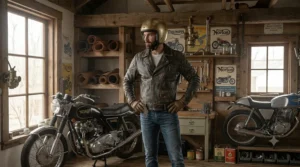
Heritage Brands vs Fast-Fashion Biker Jackets: What Heritage Brand Motorcycle Gear Actually Buys You
Not every “vintage-style” jacket on the market comes from a company that’s actually been building motorcycle gear for decades, and the difference shows up in ways a product photo can’t capture. Heritage brand motorcycle gear — Schott, Merlin, Roland Sands — typically means pattern engineering refined across generations of actual rider feedback, not a single design cycle chasing a trend. Schott, for instance, has been hand-cutting the Perfecto pattern in a New Jersey factory since the late 1920s, and that continuity shows up in details like bi-swing back panels that fast-fashion jackets simply don’t bother replicating because they’re expensive to engineer and invisible in a listing photo.
That said, heritage pricing isn’t automatically better value for every rider. A newer rider who isn’t sure they’ll stick with motorcycling for years is arguably better served by a well-reviewed budget option like the Vance HMM532 or Milwaukee LKM1701 — both borrow heavily from heritage silhouettes without the heritage price tag. The honest advice here: heritage brands earn their premium through proven long-term durability and resale value, but that premium only pays off if you’re riding often enough, and long enough, to wear the jacket in properly.
Vintage Look, Modern Protection: CE Certification & Safety Guide
A vintage look CE certified jacket is genuinely a different product from a jacket that merely looks like protective gear — the industry itself flags this distinction as a real risk. As one CE-certification explainer puts it plainly, motorcycle apparel is regulated as Personal Protective Equipment specifically because just because clothing looks strong doesn’t make it so in an emergency, and just because it feels sturdy doesn’t make it appropriate for riding speeds.
The current standard governing this is EN 17092, and the ratings break down clearly: Class AAA garments offer the greatest protection, Class AA a meaningful step down but still strong, and Class A meets only the minimum required protection for both impact and abrasion. Armor itself is rated separately: CE Level 2 armor caps transmitted impact force below 20 kN, while CE Level 1 armor’s threshold sits at 35 kN — meaning Level 2 armor absorbs more force before it reaches your body. When you’re comparing the jackets above, the Merlin Hixon II’s Class AA garment rating plus D3O armor genuinely outperforms a jacket that only advertises “CE armor” without a garment-level class — read the fine print, not just the marketing headline. For deeper detail on how these ratings are tested, RevZilla’s breakdown of CE ratings in motorcycle gear is a solid technical reference.
Cafe Racer Silhouette vs Classic Biker Cut: Which Fits Your Ride
A cafe racer heritage jacket leather build and a classic Perfecto biker cut solve different problems, even though both fall under “retro motorcycle leather jacket.” The cafe racer silhouette — seen in the Roland Sands Ronin, Merlin Hixon II, and Vance HMM532 above — is engineered around a forward-leaning riding position: pre-curved arms, a shorter hem so it doesn’t ride up when you’re crouched over clip-ons, and a trimmer torso that won’t balloon out when you sit forward on a cafe-style bike.
The classic biker cut — the Schott 618 and Milwaukee LKM1701 — assumes a more upright riding position typical of cruisers and standard-seat motorcycles. Cross-shop the wrong style and you’ll feel it immediately: a cafe racer jacket worn on a cruiser tends to ride up and expose your lower back at the seat, while a boxier biker-cut jacket on a cafe-style bike can bunch uncomfortably at the shoulders when you lean forward. As WebBikeWorld’s cafe racer jacket guide notes, this shorter, close-fitting cut is one of the few motorcycle jacket styles that isn’t fully cross-compatible with other riding positions. What most buyers overlook is that this is a functional decision, not just an aesthetic one — match the jacket’s cut to your bike’s riding position first, and let the retro styling be the second filter.
Practical Usage Guide: Breaking In, Maintaining & Waxing Your Leather
Getting real, lasting performance out of a retro motorcycle leather jacket comes down to three habits most owners skip in the first month. First, break-in: wear a stiff hide like steerhide or naked cowhide in short sessions initially — 20-30 minutes at a time — rather than committing to an all-day ride in a jacket that hasn’t softened yet, since stiff leather at the elbows and shoulders can genuinely restrict movement on the bike. Second, conditioning: a waxed leather finish motorcycle jacket, like the Roland Sands Ronin’s hand-oiled cowhide, actually needs less frequent conditioning than a naked or aniline finish (Merlin Hixon II), because the wax already seals some of the hide’s natural oils in — but both benefit from a leather conditioner every 3-6 months depending on riding frequency and climate.
Third, storage: never fold a leather motorcycle jacket for long-term storage — hang it on a wide, padded hanger away from direct sunlight, since UV exposure dries and cracks leather faster than almost anything else. A common first-30-days mistake is treating a new leather jacket like a fashion piece rather than gear — skipping the armor insert check, not testing the zipper under a real riding position, or storing it crumpled in a saddlebag. Catch these early and a well-chosen retro jacket will genuinely outlast several “technical” synthetic alternatives.
Real-World Scenario: Matching Riders to Retro Jackets
The daily commuter on a budget. A rider commuting 8-10 miles each way on a standard or naked bike, riding year-round in mixed weather, is best served by the Highway 21 Gasser or Milwaukee LKM1701 — both include CE armor at a genuinely accessible price, and the Gasser’s weatherproofing specifically earns its keep on rainy commutes.
The cafe racer purist chasing a specific decade. A rider who owns (or wants to look like they own) a stripped-down 1960s-70s cafe racer build should look hardest at the Roland Sands Ronin CE or Merlin Hixon II — both are cut specifically for a forward-leaning riding position and both include real armor, unlike many “cafe racer style” jackets that are cosmetic only.
The collector who rides occasionally but wants the real thing. A weekend rider with the budget and patience for a proper heritage piece — someone who values provenance as much as protection — is the ideal buyer for the Schott 618. It rewards long ownership and infrequent, careful use far more than it rewards daily abuse.
Common Mistakes When Buying a Retro Motorcycle Leather Jacket
The single most common mistake is buying on looks alone and assuming “leather jacket” automatically means “protective gear” — plenty of fashion-leather jackets share a silhouette with real motorcycle gear but carry zero CE certification. A second frequent error is ignoring fit-for-riding-position, discussed above; a gorgeous jacket that rides up at the waist on your specific bike isn’t actually the right jacket for you, regardless of how it photographs on a hanger. Third, buyers frequently skip checking whether armor is included, removable, or absent entirely — three very different value propositions that all get marketed with similar language. Finally, many first-time leather jacket buyers panic over the stiffness of a new, high-quality hide and return a genuinely good jacket before giving it a proper break-in period — patience here pays off more than almost any other decision in this category.
Long-Term Cost & Maintenance of a Heritage Leather Jacket
Total cost of ownership on a retro motorcycle leather jacket looks very different once you price in maintenance and lifespan, not just the sticker price. A $700 Schott 618, cared for properly, can realistically last 15-20+ years of regular wear, which works out to roughly $35-$47 per year of ownership — arguably cheaper per year than replacing a $180 budget jacket every 3-4 years as the leather and hardware wear out. That said, the budget math only favors heritage jackets if you’re actually riding often enough to justify the upfront cost; an occasional rider is often better served financially by a well-reviewed mid-range option like the Merlin Hixon II, which balances armor quality, leather durability, and price without the premium-brand markup. Conditioning products add a modest recurring cost — typically $15-$30 every few months for naked-leather jackets — but that’s a rounding error compared to replacing an entire jacket prematurely from neglect.
Frequently Asked Questions
❓ What is the difference between a retro and a modern motorcycle jacket?
❓ Is a leather motorcycle jacket warm enough for winter riding?
❓ Do retro motorcycle jackets come with CE-rated armor?
❓ How much should a good retro motorcycle leather jacket cost?
❓ How long does a leather motorcycle jacket last?
Conclusion
The best retro motorcycle leather jacket for you isn’t necessarily the one with the most heritage or the highest price — it’s the one whose silhouette matches your bike’s riding position, whose leather weight matches how often you actually ride, and whose armor situation you understand before you’re counting on it. If you want the real 1928 pattern and don’t mind a break-in period, the Schott 618 delivers unmatched provenance. If you want cafe racer styling with genuine factory armor, the Roland Sands Ronin CE and Merlin Hixon II both earn their price tags. And if budget is the deciding factor, the Milwaukee LKM1701, Highway 21 Gasser, and Vance Leathers options prove you don’t need a four-figure jacket to ride with real CE-rated protection.
Whichever direction you go, treat the “retro” label as a starting point for research, not a substitute for it — check the armor rating, check the cut against your bike, and give heavier hides the break-in time they need. Do that, and a good retro leather jacket will outlast several trend cycles of “technical” riding gear that came and went while yours just kept getting better with age.
✨ Found the retro jacket that fits your ride? Check current pricing and availability before your size sells out!
Recommended for You
- 7 Best Leather Touring Motorcycle Jackets in 2026
- Cruiser Motorcycle Leather Jacket: 7 Best Picks for 2026
- Sport Leather Moto Jacket: 7 Best Picks for 2026
Disclaimer: This article contains affiliate links. As an Amazon Associate, I earn from qualifying purchases. If you purchase products through these links, we may earn a small commission at no additional cost to you.
✨ Found this helpful? Share it with your friends! 💬🤗
